
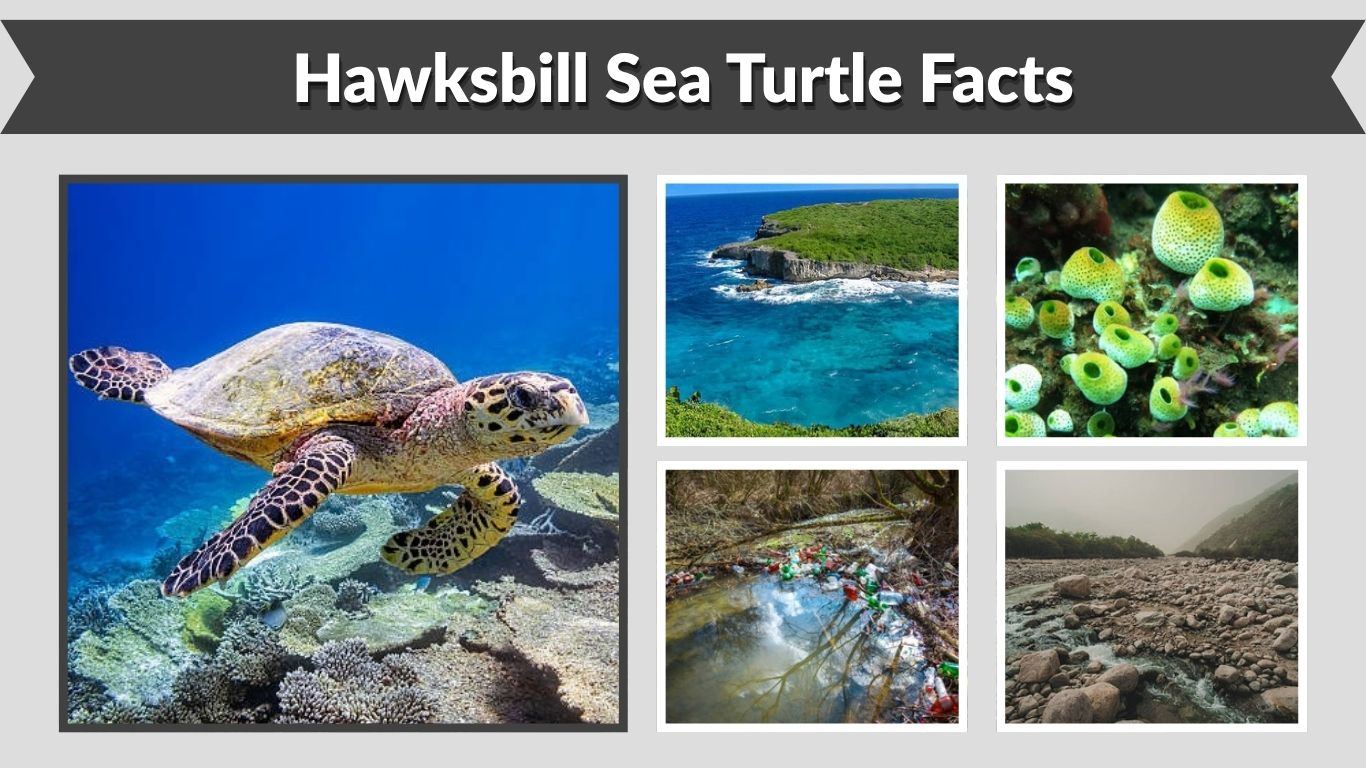
Hawksbill sea turtles are among the most beautiful and endangered sea turtles in the world. Known for their sharp beak, colorful shell, and close connection to coral reefs, these turtles play an important role in ocean ecosystems. From their sponge-based diet to their long migrations and rare nesting habits, here are 20 hawksbill sea turtle facts that explain why this species is so unique.
1. Hawksbill Sea Turtles Get Their Name From Their Beak
The hawksbill sea turtle has a narrow, pointed beak that looks similar to a hawk’s bill. This sharp beak helps the turtle reach into tight spaces in coral reefs to pull out food. It is one of the easiest ways to recognize the species.
Unlike some sea turtles with broader heads, hawksbills have a more pointed face. This shape is perfectly suited for feeding in reef cracks and crevices.
2. Their Scientific Name Is Eretmochelys Imbricata
The scientific name of the hawksbill sea turtle is Eretmochelys imbricata. The species belongs to the family Cheloniidae, which includes most hard-shelled sea turtles.
The word “imbricata” refers to overlapping plates, or scutes, on the turtle’s shell. These overlapping scutes are one of the hawksbill’s most famous features.
3. Hawksbills Are One of the Smaller Sea Turtles
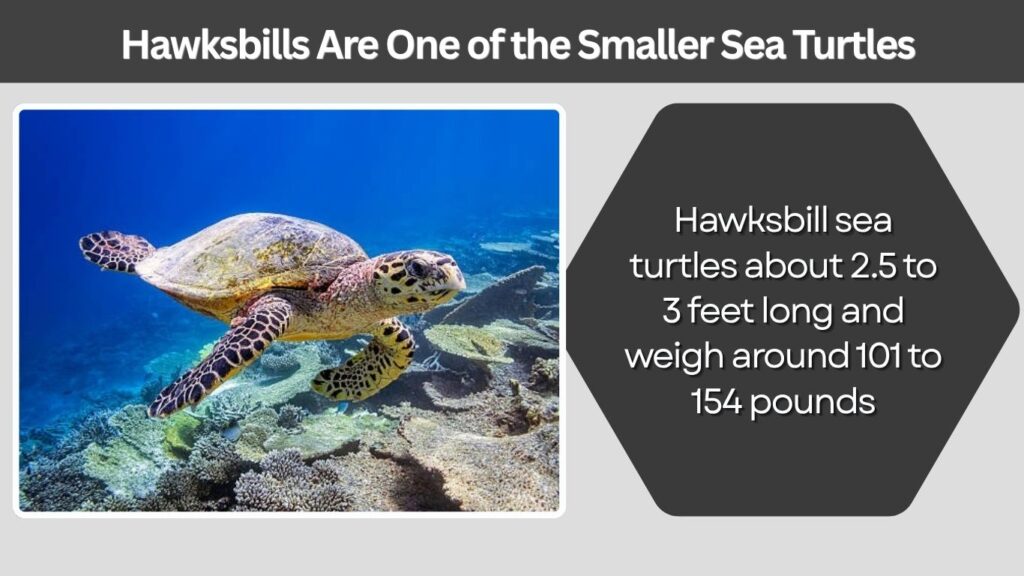
Hawksbill sea turtles are smaller than leatherbacks, loggerheads, and green sea turtles. Adults are usually about 2.5 to 3 feet long and weigh around 101 to 154 pounds, according to the Sea Turtle Conservancy.
Their smaller size helps them move around coral reefs and squeeze near ledges, caves, and rocky areas while feeding or resting.
4. Their Shell Is Colorful and Overlapping
One of the most interesting hawksbill sea turtle facts is that their shell can show shades of amber, brown, orange, yellow, black, and red. NOAA describes hawksbills as having mottled shells with overlapping scutes and serrated edges.
This shell pattern made hawksbills a major target for the illegal tortoiseshell trade. Many decorative items once came from hawksbill shells, which contributed heavily to their decline.
5. Hawksbill Sea Turtles Are Critically Endangered
Hawksbill sea turtles are critically endangered. WWF identifies illegal trade and habitat loss as major reasons for their decline.
Their endangered status is one of the most important facts about the species. Protecting hawksbills means protecting nesting beaches, coral reefs, migration routes, and feeding areas.
6. They Live in Tropical and Subtropical Oceans
Hawksbill turtles live in warm waters of the Atlantic, Pacific, and Indian Oceans. NOAA states that they are found in warm waters around the world, with large populations in the Caribbean, Indian, and Indo-Pacific regions.
They are especially linked to coastal waters, reefs, lagoons, islands, and tropical shorelines.
7. Coral Reefs Are Their Most Important Habitat
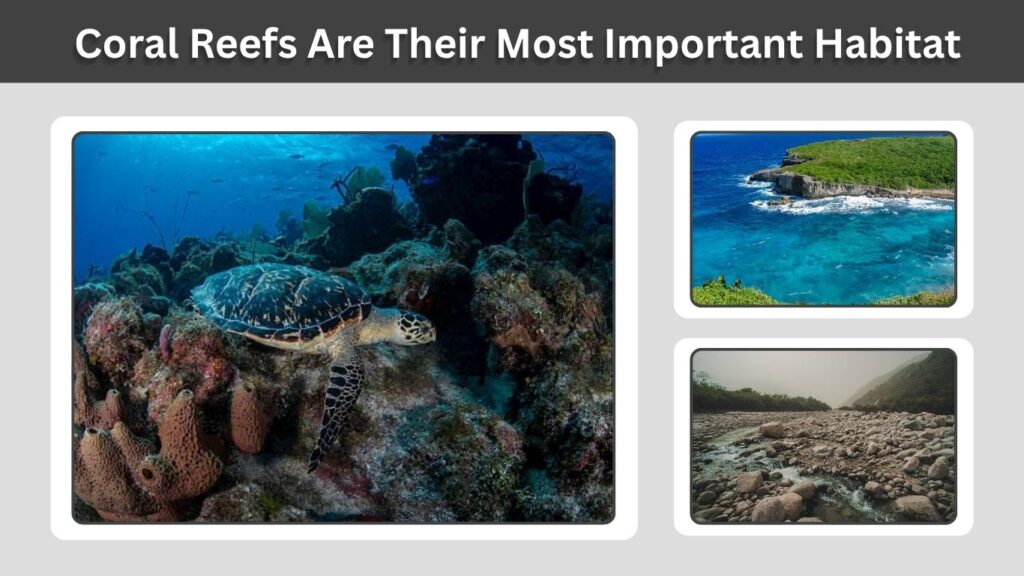
Hawksbills rely heavily on coral reefs. NOAA notes that they use nearshore foraging grounds, especially healthy coral reef habitats, and often shelter in reef ledges and caves.
Reefs give them food, cover, resting sites, and protection. This is why coral reef damage is a major threat to hawksbill survival.
8. Young Hawksbills Use Floating Seaweed Habitats
After hatching, young hawksbill turtles often enter open-ocean habitats. NOAA explains that hatchlings may shelter in floating algal mats and drift lines for about 1 to 5 years before moving into shallow coastal feeding grounds.
This early life stage is dangerous because young turtles face predators, storms, plastic pollution, and accidental stranding.
9. Hawksbills Mainly Eat Sponges
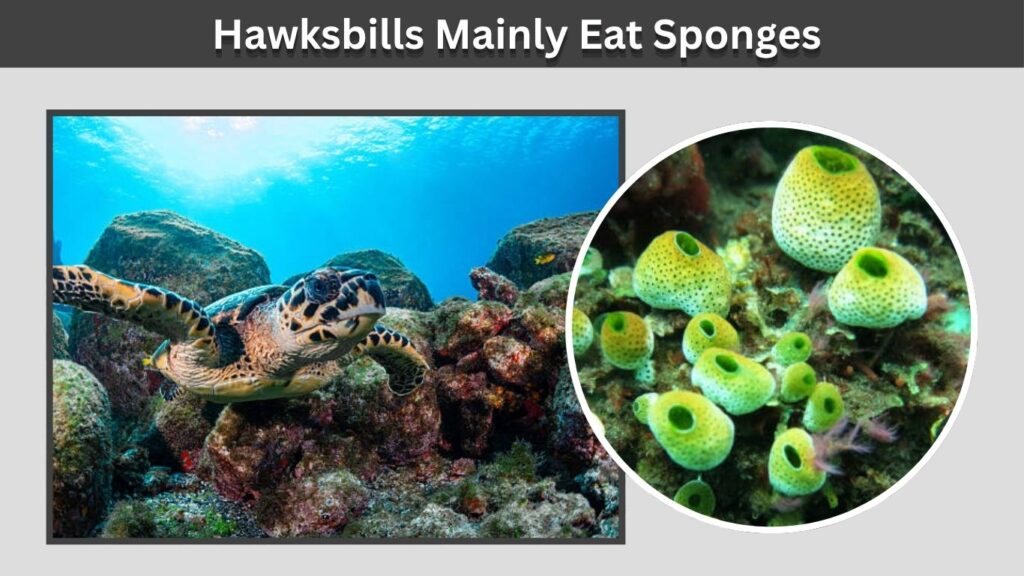
One of the coolest facts about hawksbill sea turtles is that they eat many sea sponges. Their narrow beak lets them pull sponges from reef crevices. NOAA says their diet consists mainly of reef sponges, though they may also eat algae, corals, mollusks, crustaceans, sea urchins, small fish, and jellyfish.
This diet makes them different from many other sea turtles.
10. They Help Keep Coral Reefs Healthy
By eating sponges, hawksbill sea turtles help maintain reef balance. Sponges can compete with corals for space, so hawksbills help prevent sponges from overwhelming reef areas.
This makes hawksbills important for coral reef ecosystems. Their role is one reason conservationists often describe them as a key reef species.
11. Hawksbills Can Eat Toxic Sponges
Some sponges eaten by hawksbills contain chemical compounds that would be harmful to many animals. Hawksbills can feed on these sponges without obvious harm, which gives them access to food that many other marine animals avoid.
However, this diet can make hawksbill meat unsafe for humans. Eating sea turtle meat is also illegal in many places and harmful to conservation efforts.
12. Hawksbill Sea Turtles Are Strong Migrators
Hawksbills can migrate long distances between nesting beaches and feeding habitats. NOAA reports that one female hawksbill traveled 1,160 miles from Buck Island Reef National Monument in the U.S. Virgin Islands to feeding habitat in Nicaragua.
Some populations travel shorter distances, while others cross large stretches of ocean.
13. Females Return to Beaches to Nest
Like other sea turtles, female hawksbills come ashore to lay eggs. They usually nest on sandy tropical beaches, often near coral reef habitats.
Females dig nests in the sand, lay eggs, cover them, and return to the ocean. The hatchlings later emerge and crawl toward the sea, often at night.
14. Nesting Is Rare in the Continental United States
Hawksbill nesting in the continental United States is rare. NOAA says nesting there is mostly restricted to southeast Florida and the Florida Keys. More significant U.S. nesting occurs in Puerto Rico and the U.S. Virgin Islands.
This makes every successful nest important, especially in areas where nesting numbers are low.
15. Hawksbills Do Not Live in Social Groups
Hawksbill sea turtles usually live alone. They may share the same reef area, feeding ground, or nesting beach, but they do not form permanent social groups.
Most of their life is spent independently swimming, resting, feeding, and migrating.
16. They Have Two Claws on Each Flipper
A useful hawksbill sea turtle fact for identification is that they have two claws on their flippers. The Sea Turtle Conservancy notes that hawksbills have two claws on their flippers and two pairs of prefrontal scutes in front of the eyes.
These details help researchers and rescuers distinguish hawksbills from other sea turtle species.
17. Their Mouth Shape Helps Them Feed in Reefs
The hawksbill’s mouth is not just for looks. Its narrow jaws and pointed beak act like a tool for reaching food hidden in coral reef cracks.
WWF describes hawksbills as mainly carnivorous turtles that use their narrow beaks to extract invertebrate prey from reef crevices, with sponges often making up a major part of the diet.
18. The Illegal Shell Trade Hurt Their Populations
Hawksbill shells were historically used to make jewelry, combs, ornaments, and other “tortoiseshell” products. This trade killed huge numbers of turtles and remains a threat in some regions.
Avoiding real tortoiseshell products is one of the simplest ways people can help protect hawksbills.
19. Plastic Pollution Is a Serious Threat
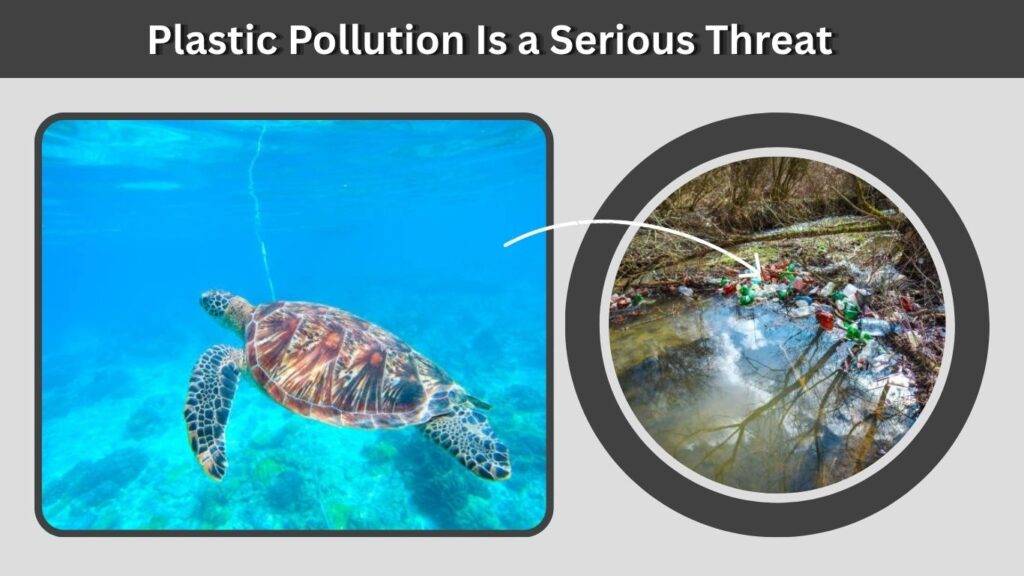
Plastic pollution harms hawksbill sea turtles at many life stages. Young turtles may live among floating seaweed and debris, where plastic pieces can be mistaken for food. Adults can also ingest plastic or become entangled in discarded fishing gear.
Plastic does not belong in marine habitats. Reducing single-use plastics and supporting cleanups can help lower this threat.
20. Hawksbill Sea Turtles Need Both Reefs and Beaches
A final important fact about hawksbill sea turtles is that they depend on more than one habitat. They need healthy beaches for nesting, open-ocean habitats as young turtles, and coral reefs or coastal areas as juveniles and adults.
Protecting only one part of their life cycle is not enough. Conservation must include beaches, reefs, fisheries, migration routes, and coastal communities.
Quick Fact Sheet
| Fact Category | Hawksbill Sea Turtle Information |
|---|---|
| Common name | Hawksbill sea turtle |
| Scientific name | Eretmochelys imbricata |
| Main habitat | Coral reefs and warm coastal waters |
| Main diet | Sponges and other reef organisms |
| Adult size | About 2.5 to 3 feet long |
| Adult weight | About 101 to 154 pounds |
| Conservation status | Critically endangered |
| Major threats | Shell trade, habitat loss, bycatch, pollution |
FAQs
What is a fun fact about hawksbill sea turtles?
A fun fact about hawksbill sea turtles is that they eat many sea sponges, including some that other animals avoid. Their sharp, bird-like beak helps them pull food from coral reef cracks, making them perfectly adapted for reef life.
Are hawksbill sea turtles endangered?
Yes, hawksbill sea turtles are critically endangered. They are threatened by illegal shell trade, loss of nesting beaches, coral reef decline, plastic pollution, fishing bycatch, and climate change. Their slow growth and long life cycle make recovery difficult.
What do hawksbill sea turtles eat?
Hawksbill sea turtles mainly eat sponges found on coral reefs. They may also eat algae, corals, mollusks, crustaceans, jellyfish, sea urchins, and other small reef animals. Their narrow beak helps them reach food in tight reef spaces.
Where do hawksbill sea turtles live?
Hawksbill sea turtles live in warm tropical and subtropical waters of the Atlantic, Pacific, and Indian Oceans. They are strongly linked to coral reefs, lagoons, rocky coastlines, and shallow coastal habitats where food and shelter are available.
What makes the hawksbill sea turtle special?
The hawksbill sea turtle is special because of its hawk-like beak, colorful overlapping shell, sponge-based diet, and role in coral reef health. It is also critically endangered, making it one of the most important sea turtles to protect.