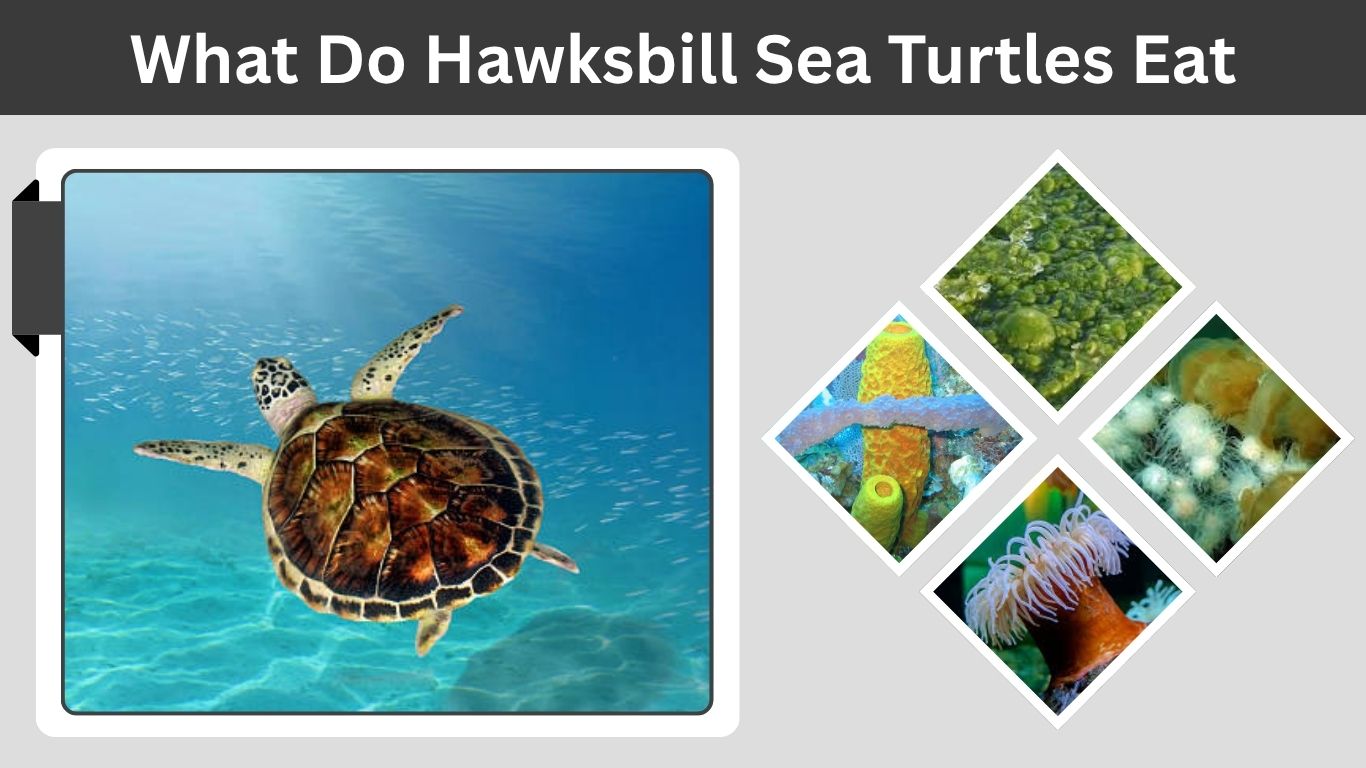
Hawksbill sea turtles are famous for their beautiful shells, sharp beak-like mouths, and close connection to coral reefs. But one of the most interesting things about them is their diet. Unlike many other sea turtles, hawksbills mainly eat marine sponges. They also feed on anemones, squid, shrimp, algae, jellyfish, and other small reef animals depending on their age and habitat.
What Do Hawksbill Sea Turtles Mainly Eat?
Hawksbill sea turtles mainly eat marine sponges. This makes them different from many other sea turtles. Green sea turtles are mostly herbivores as adults, loggerheads crush hard-shelled prey, and leatherbacks specialize in jellyfish. Hawksbills, however, are best known as sponge eaters.
Their diet is closely linked to coral reefs. Many sponges grow in reef cracks, under ledges, and on hard surfaces. Hawksbills use their narrow heads and pointed beaks to reach into these spaces and pull out food. This feeding style allows them to eat prey that many other marine animals cannot easily access.
Although sponges are their main food, hawksbill sea turtles are not limited to only one item. They may also eat:
- Sea anemones
- Soft corals
- Jellyfish
- Squid
- Shrimp
- Algae
- Tunicates
- Small reef invertebrates
Their exact diet can change depending on location, age, and food availability. A hawksbill living on a Caribbean reef may eat different sponge species than one living in the Indian Ocean or Pacific Ocean.
Hawksbill Sea Turtle Diet at a Glance
Hawksbill sea turtles are often described as carnivores or omnivores, but their diet is highly specialized. Adults are especially known for eating sponges, while younger turtles may consume a wider variety of small marine animals and floating food sources.
| Food Item | Do Hawksbills Eat It? | Notes |
| Marine sponges | Yes | Their main food, especially for adults |
| Sea anemones | Yes | Commonly listed as part of their reef diet |
| Squid | Yes | Eaten when available |
| Shrimp | Yes | Small crustaceans may be part of the diet |
| Jellyfish | Sometimes | Not their main food, but they may eat them |
| Coral | Sometimes soft coral | They do not mainly eat hard coral reefs |
| Seagrass | Occasionally/rarely | Not a main food like it is for green turtles |
| Fish | Rarely | They are not major fish hunters |
| Algae | Sometimes | May be eaten along with other reef foods |
Why Do Hawksbill Sea Turtles Eat Sponges?
Marine sponges are not easy food. Many contain tough fibers, sharp internal structures, or chemical defenses that make them unpleasant or dangerous for many animals. Hawksbill sea turtles are one of the few marine animals that can survive on a diet made mostly of sponges.
This gives them an important advantage. Since many animals avoid sponges, hawksbills have access to a food source with less competition. Their body and feeding behavior are adapted to this unusual diet.
Their Beak Helps Them Feed
The hawksbill gets its name from its sharp, curved mouth, which looks like a hawk’s beak. This beak is not just for appearance. It helps the turtle reach into small reef spaces where sponges and other animals grow.
Their narrow head also helps them feed in coral reef crevices. Instead of biting large prey in open water, hawksbills carefully pick food from reef surfaces, ledges, and cracks.
Their Diet Helps Coral Reefs
Hawksbill sea turtles play an important role in reef ecosystems. Sponges can compete with corals for space. By eating sponges, hawksbills may help prevent some sponge species from taking over reef areas.
This is one reason hawksbills are sometimes considered important reef animals. Their feeding habits are not only about survival; they also help shape the reef community around them.
Do Hawksbill Sea Turtles Eat Coral?
Hawksbill sea turtles do not mainly eat hard coral. Their primary food is marine sponges, many of which grow on or around coral reefs. Because they feed directly on reef surfaces, people may think they are eating coral when they are actually biting sponges, anemones, or other small organisms attached to the reef.
However, hawksbills may eat soft corals or coral-like animals in some areas. This does not mean they destroy coral reefs as a main feeding strategy. Their relationship with reefs is more complex. They depend on healthy reefs for food and shelter, and their sponge-eating behavior may help maintain reef balance.
So, if the question is “do hawksbill sea turtles eat coral?” the best answer is: they may eat some soft coral or reef organisms, but they mainly eat sponges rather than hard coral.
Do Hawksbill Sea Turtles Eat Jellyfish?
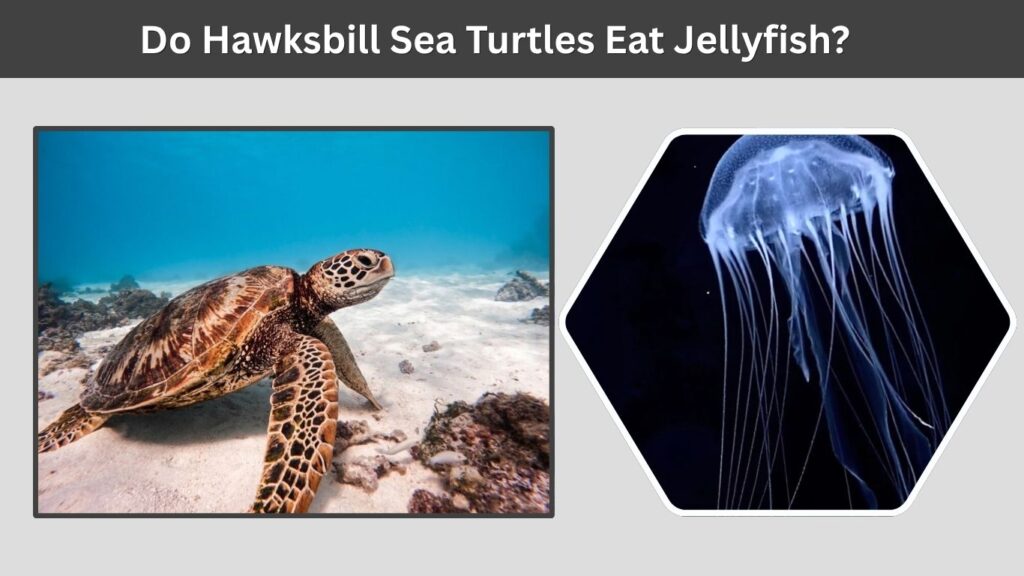
Yes, hawksbill sea turtles may eat jellyfish, but jellyfish are not their main food. Leatherback sea turtles are the species most strongly known for eating jellyfish. Hawksbills are much more specialized for eating sponges and reef animals.
Still, hawksbills can be flexible feeders. If jellyfish or similar soft-bodied animals are available, they may eat them. Their diet can include a mix of soft marine animals, especially when they are young or when sponge availability changes.
This flexibility helps them survive in different reef and coastal environments, but it does not change the fact that sponges are the most important food for adult hawksbills.
Do Hawksbill Sea Turtles Eat Seagrass?
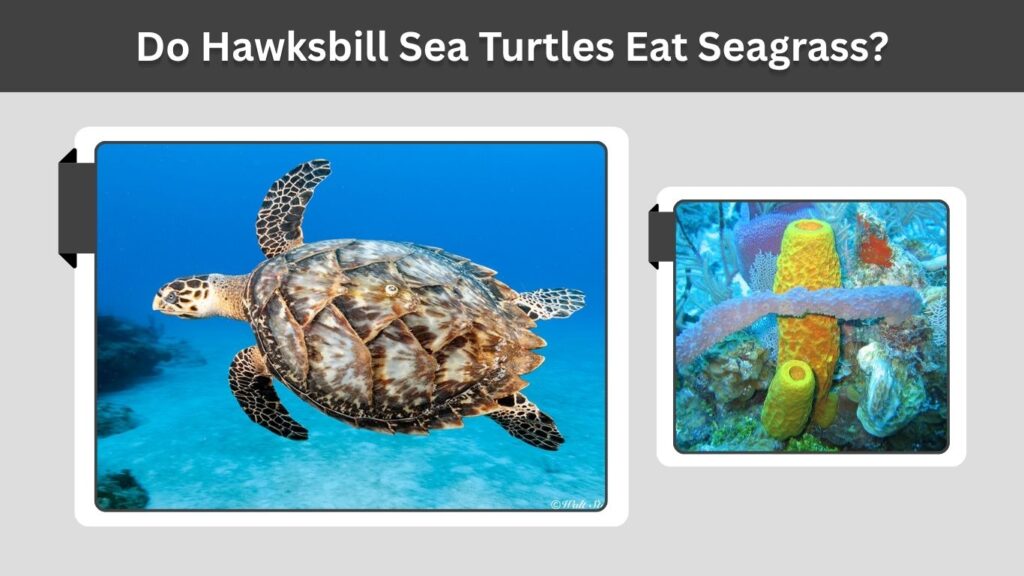
Hawksbill sea turtles may occasionally eat plant material such as algae or seagrass, but seagrass is not their main food. Adult green sea turtles are much more famous for grazing on seagrass and algae.
Hawksbills are usually associated with coral reefs rather than seagrass meadows. Their sharp beak and narrow head are better suited for picking food from reef cracks than for grazing large amounts of seagrass.
In areas where seagrass beds are close to reefs, hawksbills may pass through or feed on some available material. But if someone asks “do hawksbill sea turtles eat seagrass?” the clearest answer is: sometimes, but not as a major part of their diet.
How Do Hawksbill Sea Turtles Eat Their Food?
Hawksbill sea turtles eat by using their pointed beaks to bite, scrape, and pull food from reef surfaces. Their jaws are shaped for precision rather than crushing large shells. This allows them to reach into tight spaces where sponges and invertebrates are hidden.
Their feeding process usually looks like this:
- The turtle swims slowly around the reef.
- It searches cracks, ledges, and sponge-covered surfaces.
- It positions its head close to the reef.
- It uses its beak to bite or tear food loose.
- It swallows small pieces of sponge or other reef animals.
This careful feeding behavior is one reason underwater videos often show hawksbill sea turtles close to coral structures. They are not randomly biting the reef; they are selecting food from specific spots.
Hawksbill Sea Turtle Eating Habits
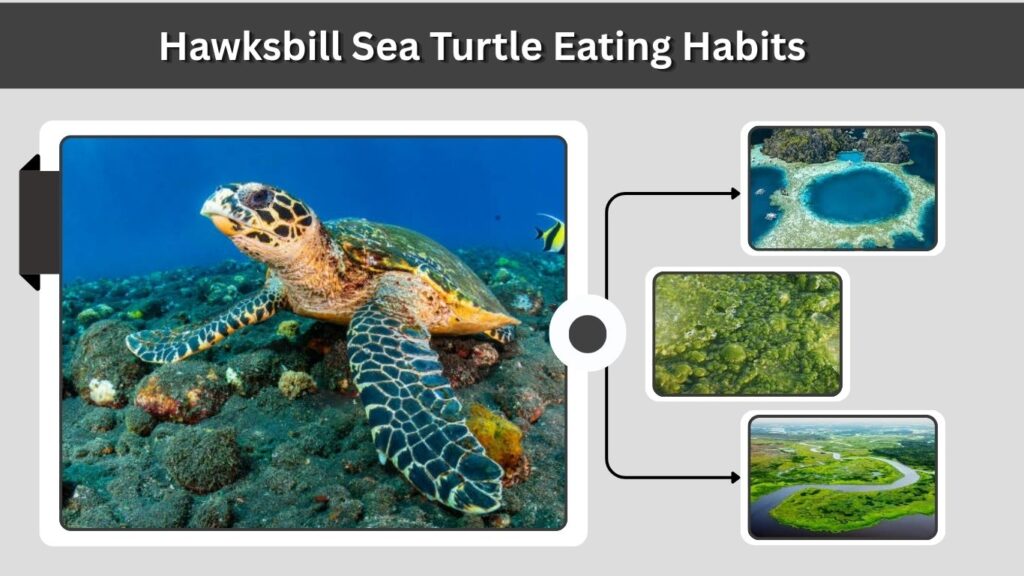
Hawksbill sea turtles spend much of their feeding time around coral reefs, rocky coastlines, lagoons, and other hard-bottom habitats. They are usually active during the day, although feeding behavior can vary by region and individual turtle.
Their eating habits are shaped by several factors:
Habitat
Hawksbills living near coral reefs have access to many sponge species and reef invertebrates. Turtles in lagoons, rocky areas, or estuaries may eat a slightly different mix of food.
Age
Young hawksbill sea turtles may eat a broader diet than adults. As they grow and settle into reef habitats, sponges often become more important.
Food Availability
If certain sponges are common, hawksbills may feed heavily on them. If food sources vary by season or location, they may eat more anemones, algae, jellyfish, or small invertebrates.
Reef Health
Healthy reefs provide more feeding opportunities. Damaged reefs may reduce the number of sponges and other organisms hawksbills depend on.
What Do Hawksbill Sea Turtles Eat in Costa Rica?
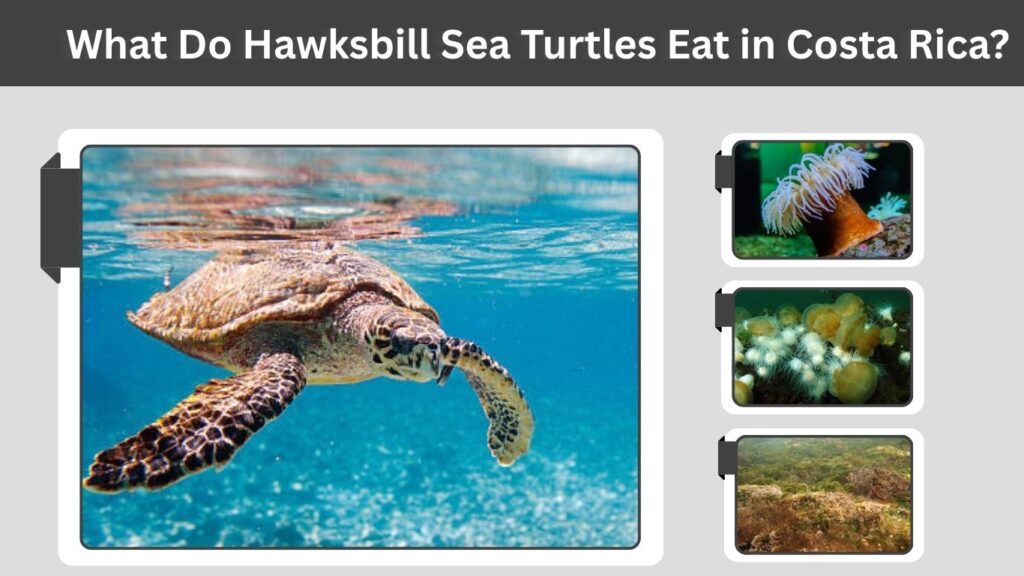
In Costa Rica and nearby tropical waters, hawksbill sea turtles are associated with coral reefs, rocky areas, coastal waters, and nesting beaches. Their diet in this region follows the same general pattern seen elsewhere: sponges are a major food source, along with other reef organisms.
Depending on the local habitat, hawksbills in Costa Rica may eat:
- Marine sponges
- Small crustaceans
- Sea anemones
- Algae
- Jellyfish
- Other soft-bodied reef animals
Costa Rica is important for sea turtle conservation, and protecting coastal and reef habitats helps support hawksbill feeding areas. Since hawksbills depend on reefs, damage from pollution, warming water, and coastal disturbance can affect what food is available to them.
What Kind of Fish Does the Hawksbill Sea Turtle Eat?
Hawksbill sea turtles are not known as major fish eaters. They may occasionally eat small fish or fish remains if available, but fish are not a central part of their diet. Their mouth shape is better suited for picking reef organisms than chasing fish.
Most of their animal food comes from slow-moving or attached organisms, such as sponges, anemones, tunicates, and other invertebrates. They may also eat shrimp or squid, but they are not active fish predators in the way some marine animals are.
So, when answering “what kind of fish does the hawksbill sea turtle eat?” it is better to explain that fish are not a major food source. Hawksbills mainly eat sponges and small reef animals instead.
What Animals Eat Hawksbill Sea Turtles?
Hawksbill sea turtles are predators of sponges and reef animals, but they are also prey for other animals, especially when they are young. Eggs and hatchlings face the greatest danger because they are small, soft, and easy to catch.
Animals that may eat hawksbill sea turtles include:
- Crabs
- Seabirds
- Raccoons
- Dogs
- Pigs
- Large fish
- Sharks
- Octopuses in some areas
Predators vary depending on the nesting beach and marine habitat. On land, eggs and hatchlings may be eaten by birds, mammals, and crabs. In the ocean, young turtles may be eaten by large fish and sharks.
Adult hawksbill sea turtles have fewer natural predators because of their size and hard shell. However, large sharks can still attack adult turtles.
What Eats Hawksbill Sea Turtle Eggs and Hatchlings?
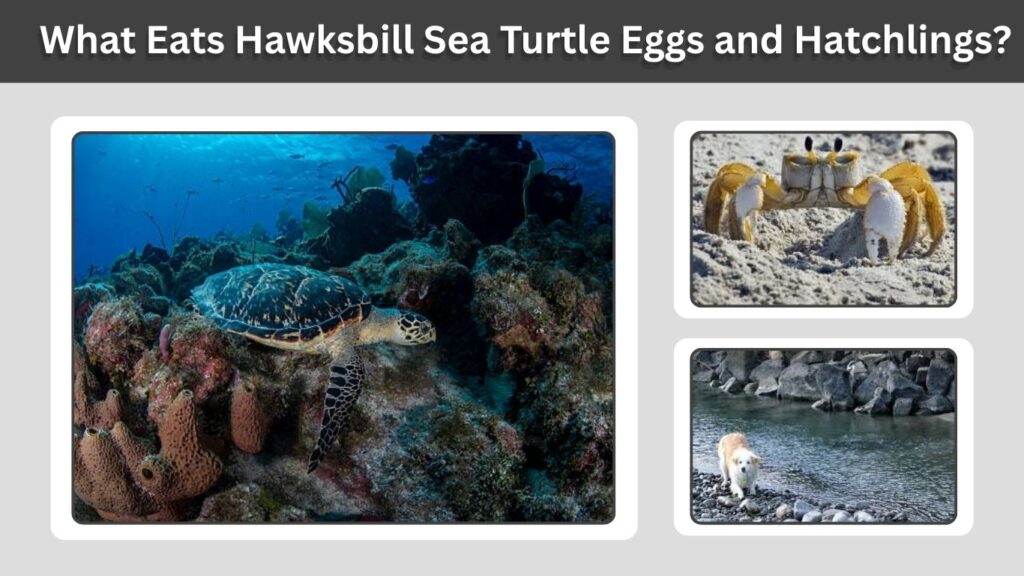
Eggs and hatchlings are the most vulnerable stages of a hawksbill’s life. Female turtles lay eggs in sandy nests, but the eggs may be eaten before they hatch. Once hatchlings emerge, they must crawl across the beach and reach the ocean, where more predators wait.
Common predators of eggs and hatchlings include:
- Ghost crabs
- Ants and insects
- Raccoons
- Feral pigs
- Dogs
- Seabirds
- Herons
- Large fish near shore
This is one reason sea turtles lay many eggs. Only a small number of hatchlings survive to adulthood. Protecting nesting beaches from predators, artificial lighting, and human disturbance can improve survival.
Are Hawksbill Sea Turtles Dangerous When Eating?
Hawksbill sea turtles are not dangerous to people when eating, but they should never be touched, chased, or fed. They are wild endangered animals, and disturbing them can interrupt natural feeding behavior.
Divers and snorkelers may see hawksbills feeding on reefs. The best thing to do is stay calm, keep distance, and observe quietly. Feeding or touching sea turtles can harm them and may also be illegal in protected areas.
Responsible wildlife viewing helps protect both the turtle and its habitat.
Why Their Diet Matters for Conservation
The hawksbill sea turtle’s diet is one of the reasons this species is so important to coral reef ecosystems. By eating sponges, hawksbills help influence reef structure and create space for other reef organisms. Their feeding habits connect them directly to reef health.
Unfortunately, hawksbills are critically endangered. Threats such as illegal shell trade, bycatch, habitat loss, coral reef decline, pollution, and climate change all affect their survival. When reefs are damaged, hawksbills lose feeding grounds. When nesting beaches are disturbed, future generations are at risk.
Protecting hawksbills means protecting the full food chain around them. Healthy reefs provide food for turtles, and turtles help maintain the balance of reef life.
FAQs
What do hawksbill sea turtles eat?
Hawksbill sea turtles mainly eat marine sponges. They also eat sea anemones, squid, shrimp, jellyfish, algae, soft corals, tunicates, and other small reef animals. Adult hawksbills are especially known for their sponge-based diet.
Do hawksbill sea turtles eat sponges?
Yes, hawksbill sea turtles eat sponges as their main food. Their sharp, narrow beak helps them reach sponges growing in coral reef cracks and crevices. This special diet makes them different from most other sea turtle species.
Do hawksbill sea turtles eat coral?
Hawksbill sea turtles do not mainly eat hard coral. They usually eat sponges and other organisms that grow on coral reefs. They may eat some soft corals or coral-like animals, but sponges are much more important in their diet.
What animals eat hawksbill sea turtles?
Hawksbill eggs and hatchlings may be eaten by crabs, seabirds, raccoons, pigs, dogs, and large fish. Adult hawksbills have fewer predators, but large sharks may attack them. Young turtles are much more vulnerable than adults.
How do hawksbill sea turtles eat?
Hawksbill sea turtles use their pointed beak-like mouths to pull food from coral reef cracks, ledges, and crevices. Their narrow heads help them reach hidden sponges and small reef animals that many other marine animals cannot easily access.