
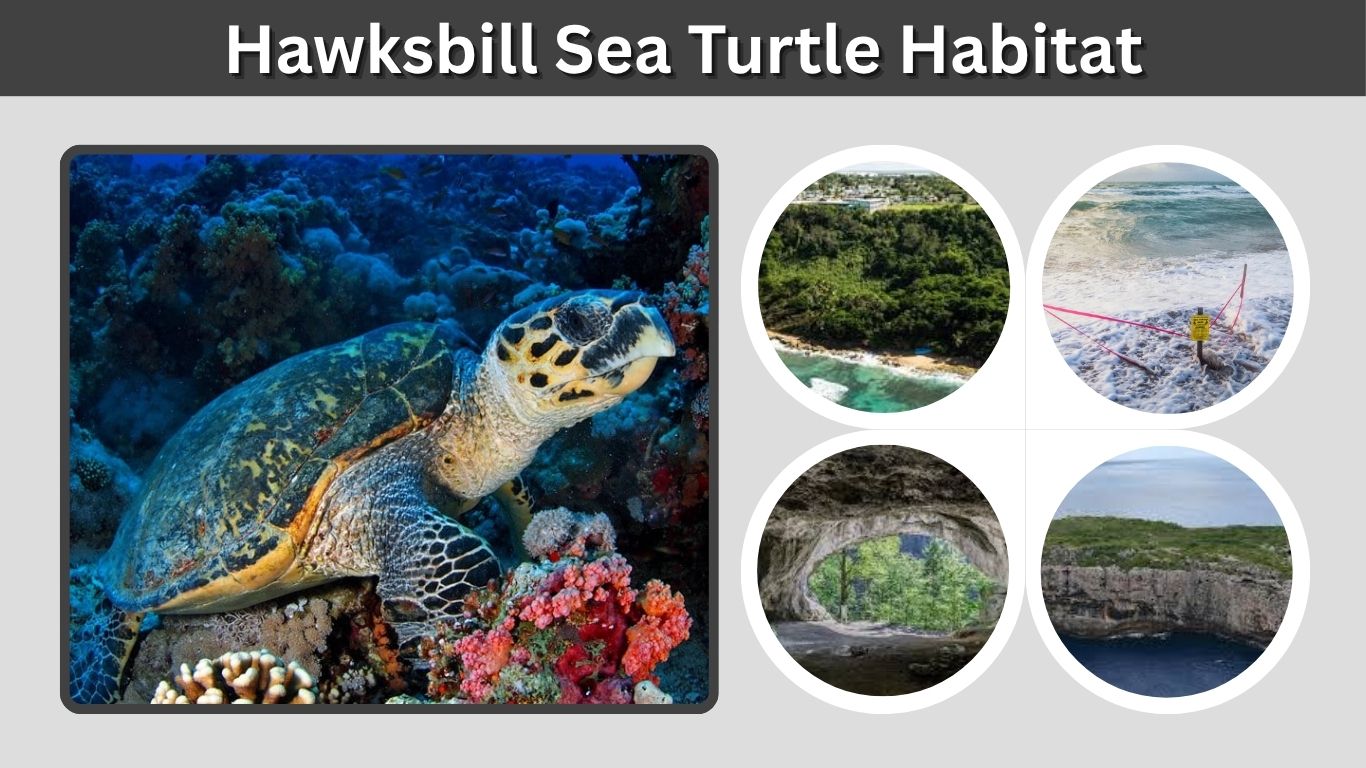
Hawksbill sea turtles live in some of the world’s warmest and most colorful marine environments. Best known for their close connection to coral reefs, these endangered turtles also use sandy nesting beaches, mangroves, seagrass beds, lagoons, rocky coastlines, and open ocean areas during different life stages. Understanding hawksbill sea turtle habitat helps explain why protecting reefs and beaches is essential for their survival.
What Is the Habitat of a Hawksbill Sea Turtle?
The habitat of a hawksbill sea turtle includes warm tropical and subtropical marine areas, especially coral reefs. Adult hawksbills are strongly associated with reef systems because reefs provide food, shelter, resting places, and protection from predators. Their narrow, pointed beak helps them reach into cracks and crevices in reefs to feed, especially on sponges.
However, coral reefs are not their only habitat. Hawksbill sea turtles also use rocky areas, lagoons, mangrove bays, seagrass beds, mud flats, and shallow coastal waters. Like many sea turtles, they move between habitats as they grow. Hatchlings begin life on sandy beaches, then enter the ocean, where young turtles may spend time in open-water environments before settling into coastal feeding grounds.
This makes the hawksbill sea turtle’s natural habitat more complex than a single place. It is a connected network of beaches, reefs, coastal waters, and ocean migration routes.
Where Hawksbill Sea Turtles Live in the World
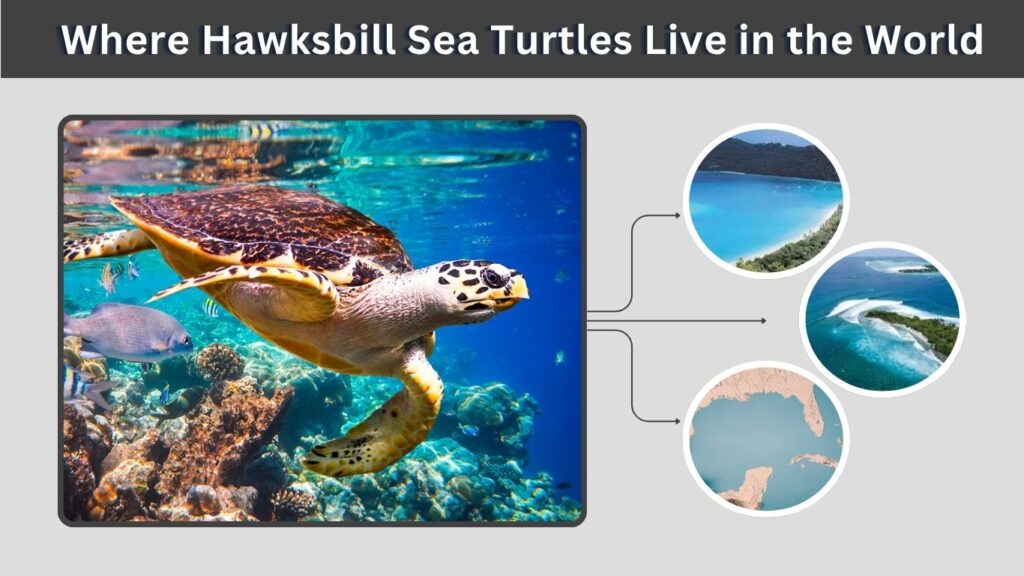
Hawksbill sea turtles are found across tropical and subtropical oceans around the world. Their range includes parts of the Atlantic, Pacific, and Indian Oceans. They are most often linked with warm coastal regions where coral reefs, nesting beaches, and shallow marine habitats are available.
Important hawksbill regions include:
- The Caribbean Sea
- The Gulf of Mexico
- The western Atlantic
- The Indian Ocean
- Southeast Asia
- Northern Australia
- The Pacific Islands
- Parts of the Red Sea
- Coastal areas of Central and South America
A hawksbill sea turtle habitat map would show a broad global range in warm waters, but their nesting and feeding areas are not evenly spread. Some regions have major nesting beaches, while others are mainly feeding or migration areas. For example, hawksbills may nest on remote sandy beaches but feed on nearby reefs or coastal foraging grounds.
Hawksbill Sea Turtle Habitat by Life Stage
Hawksbill turtles use different habitats as they move from hatchlings to adults. Their survival depends on each stage having the right environmental conditions.
| Life Stage | Main Habitat | Why It Matters |
| Eggs | Sandy nesting beaches | Warm sand protects eggs and supports embryo development |
| Hatchlings | Beach and nearshore waters | Hatchlings move from nest to sea and face high predator risk |
| Young juveniles | Open ocean or pelagic areas | Floating habitats may provide food and cover during early growth |
| Larger juveniles | Coastal reefs, seagrass beds, mangroves, lagoons | These areas offer food, shelter, and growth habitat |
| Adults | Coral reefs, rocky reefs, shallow coastal waters, nesting beaches | Adults feed, rest, mate, migrate, and reproduce in these habitats |
Nesting Beach Habitat
Female hawksbill sea turtles return to sandy beaches to lay eggs. These nesting beaches are usually in tropical regions and may be close to coral reef systems. Many females nest under or near beach vegetation, where sand conditions can be suitable for egg development.
Good nesting habitat needs:
- Dry sand above the high tide line
- Low disturbance from people and vehicles
- Limited artificial lighting
- Stable beach shape and sand depth
- Access from the sea without barriers
Coastal development, seawalls, beach erosion, and bright lights can make nesting beaches unsuitable. Artificial lighting is especially harmful because hatchlings naturally move toward the brightest horizon over the ocean. Lights from buildings or roads can confuse them and lead them away from the sea.
Juvenile Habitat
Young hawksbill sea turtles do not immediately live the same way adults do. After leaving the beach, hatchlings enter the ocean and may spend their early years in open-water habitats. During this stage, they are small and vulnerable, so floating vegetation, surface food sources, and ocean currents may influence where they travel.
As they grow larger, juvenile hawksbills begin using coastal habitats. These may include shallow reefs, lagoons, mangrove-lined bays, seagrass meadows, and hard-bottom areas. These habitats help juveniles find food while avoiding predators.
Adult Feeding Habitat
Adult hawksbill sea turtles are most commonly found around coral reefs. Reefs provide the sponges and other invertebrates that make up much of their diet. Their strong, narrow beak allows them to pick food from tight reef spaces that many animals cannot reach.
Adult feeding habitat often includes:
- Coral reef slopes
- Reef ledges and caves
- Rocky coastlines
- Shallow lagoons
- Hard-bottom marine areas
- Seagrass and algal beds near reefs
Because adults depend so strongly on reefs, coral reef decline directly affects hawksbill survival.
Why Coral Reefs Are Essential to Hawksbill Habitat
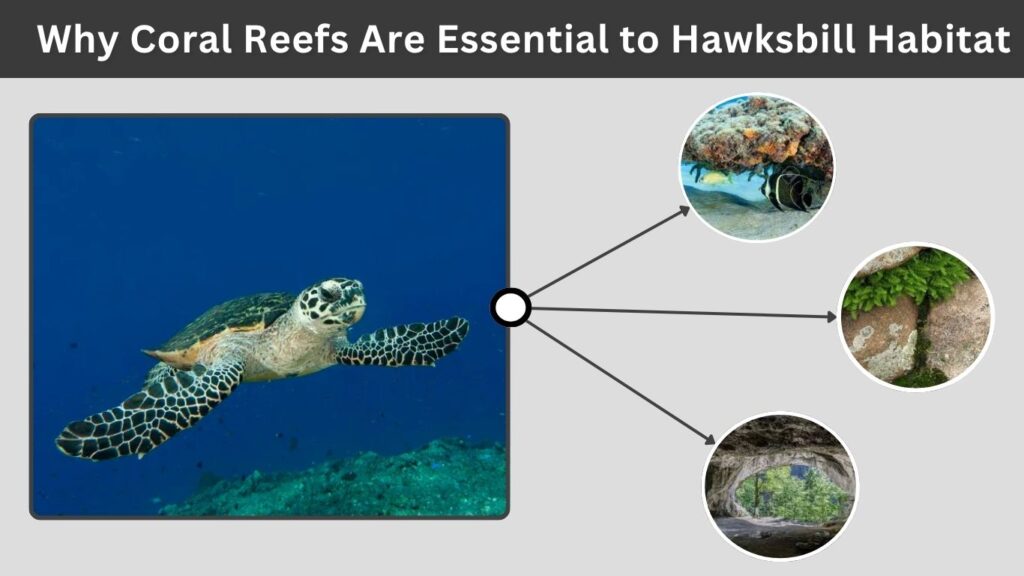
Coral reefs are one of the most important parts of hawksbill sea turtle habitat. These reefs function like underwater cities, offering shelter, feeding areas, and resting spaces. Hawksbills are often seen near reef ledges, caves, and crevices, where they can rest during the day or avoid predators.
Their diet also connects them closely to reefs. Hawksbills eat sponges, soft corals, sea anemones, algae, and other reef organisms. By feeding on sponges, they may help maintain reef balance because sponges can compete with corals for space.
Healthy coral reefs support hawksbills by providing:
- Reliable feeding areas
- Shelter from predators and strong currents
- Resting spaces under ledges or in caves
- Nearby coastal zones for movement and migration
- Reef ecosystems rich in marine life
When coral reefs are damaged by warming seas, pollution, disease, or destructive fishing, hawksbills lose both food and shelter.
Atlantic Hawksbill Sea Turtle Habitat
Atlantic hawksbill sea turtle habitat includes tropical and subtropical areas of the western Atlantic, Caribbean Sea, and Gulf of Mexico. The Caribbean is especially important because it contains coral reef systems, nesting beaches, mangrove areas, and coastal foraging grounds.
In U.S. waters, hawksbills are associated mainly with the Caribbean, Puerto Rico, the U.S. Virgin Islands, Florida, and rare nesting records in other southern coastal areas. In Florida, hawksbill sea turtle habitat is mostly linked to reefs and warm coastal waters, while nesting is uncommon compared with other sea turtle species.
The Atlantic population depends on a connected habitat system. A turtle may nest on one beach, feed near a reef, and migrate through waters that cross national boundaries. This is why hawksbill conservation requires international cooperation.
Hawksbill Sea Turtle Critical Habitat
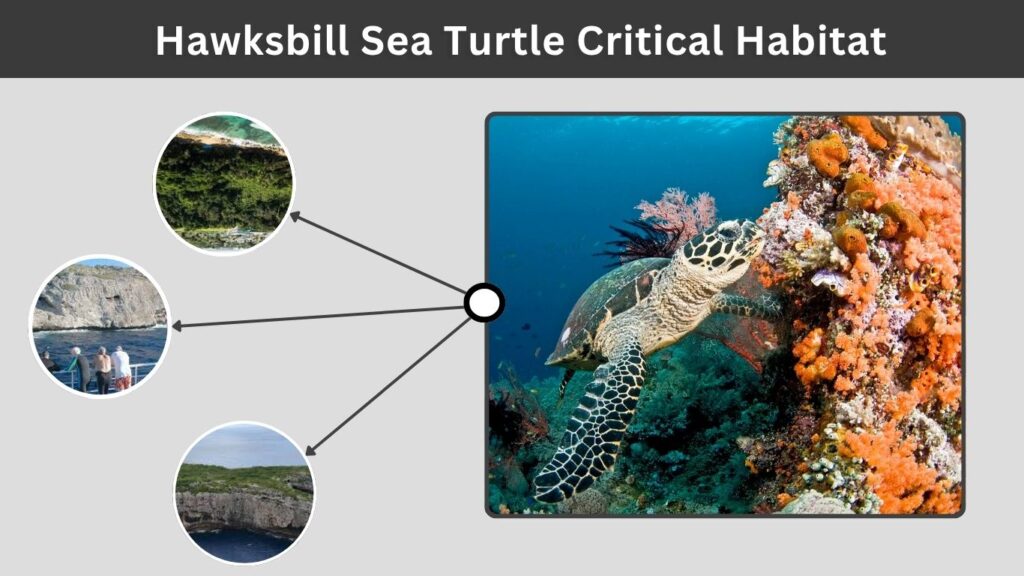
“Hawksbill sea turtle critical habitat” usually refers to legally recognized areas that are considered important for the species’ conservation. In the United States, critical habitat has been designated in parts of the U.S. Caribbean, including waters around Mona and Monito Islands in Puerto Rico.
Critical habitat does not mean hawksbills live only in those places. Instead, it highlights areas that are especially important for survival and recovery. These places may include feeding zones, reproductive areas, or marine environments with features the species needs.
Critical habitat protection helps by:
- Recognizing important turtle areas
- Guiding development and marine planning
- Reducing damage from human activity
- Supporting conservation decisions
- Protecting reef and coastal ecosystems
For readers searching “hawksbill sea turtle habitat USFWS” or “hawksbill sea turtle critical habitat,” this distinction is important. The general habitat is global, but critical habitat is a specific legal conservation term.
Hawksbill Sea Turtle Habitat Requirements
Hawksbill sea turtles need different habitat features depending on their age and activity. A nesting female needs a quiet sandy beach, while an adult feeding turtle needs healthy reef habitat. Juveniles may need sheltered coastal waters where food and cover are available.
Important habitat requirements include:
- Warm tropical or subtropical water
- Healthy coral reefs or hard-bottom feeding areas
- Sandy beaches for nesting
- Low levels of human disturbance
- Clean water with limited pollution
- Safe migration routes between habitats
- Coastal vegetation near some nesting beaches
- Minimal artificial lighting around nesting zones
Because hawksbills use several habitats, damage to any one part of their life cycle can affect the whole population. Protecting only nesting beaches is not enough if nearby reefs are dying. Protecting reefs is not enough if females cannot nest safely.
Hawksbill Sea Turtle Habitat Facts
Hawksbill habitat is fascinating because it changes throughout the turtle’s life. These facts help summarize the most important points:
- Adult hawksbills are strongly linked to coral reefs.
- Hatchlings begin life on sandy tropical beaches.
- Young hawksbills may spend time in open ocean habitats.
- Juveniles often move into coastal reefs, mangroves, and seagrass beds.
- Hawksbills use their pointed beaks to feed in reef cracks.
- Nesting beaches are often threatened by erosion and development.
- Coral reef decline is one of the biggest habitat-related threats.
- Hawksbills are found in warm waters across the Atlantic, Pacific, and Indian Oceans.
These facts also show why the phrase “hawksbill sea turtle natural habitat” does not refer to one simple location. Their natural habitat is a chain of connected marine and coastal environments.
Causes of Hawksbill Sea Turtle Habitat Disappearing
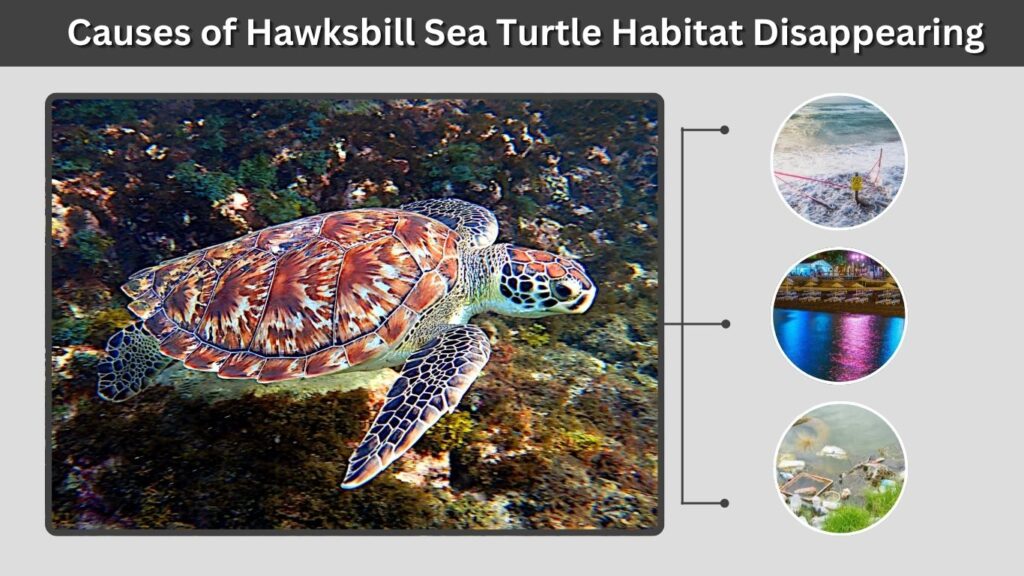
Hawksbill sea turtle habitat is disappearing because both nesting beaches and coral reefs are under pressure. Some threats are local, such as beachfront construction, while others are global, such as climate change.
Major causes include:
- Coastal development that removes or alters nesting beaches
- Seawalls and beach armoring that block natural sand movement
- Artificial lighting that disorients hatchlings
- Coral bleaching caused by warmer ocean temperatures
- Pollution from plastics, chemicals, and runoff
- Destructive fishing practices that damage reefs
- Boat traffic and coastal disturbance
- Sea level rise that reduces nesting beach area
Habitat destruction affects hawksbills in several ways. If nesting beaches disappear, females have fewer safe places to lay eggs. If reefs decline, adults and juveniles lose feeding and resting areas. If coastal waters become polluted, turtles may face lower food quality and greater health risks.
How Hawksbill Sea Turtles Adapt to Their Habitat
Hawksbill sea turtles have several adaptations that help them survive in reef and coastal environments. Their most recognizable feature is their sharp, narrow beak, which looks similar to a bird’s beak. This shape helps them reach into coral reef crevices to pull out sponges and other prey.
Their flattened body and strong flippers help them move through coastal waters and around reef structures. Their shell plates, known as scutes, overlap in a way that gives the shell a distinct pattern. This protective shell helps them navigate complex reef environments.
Hawksbills also show strong nesting behavior. Females return to suitable beaches to lay eggs, often in the same general region where they hatched. This connection to nesting habitat makes beach protection especially important.
What Is Harming Hawksbill Sea Turtle Habitat?
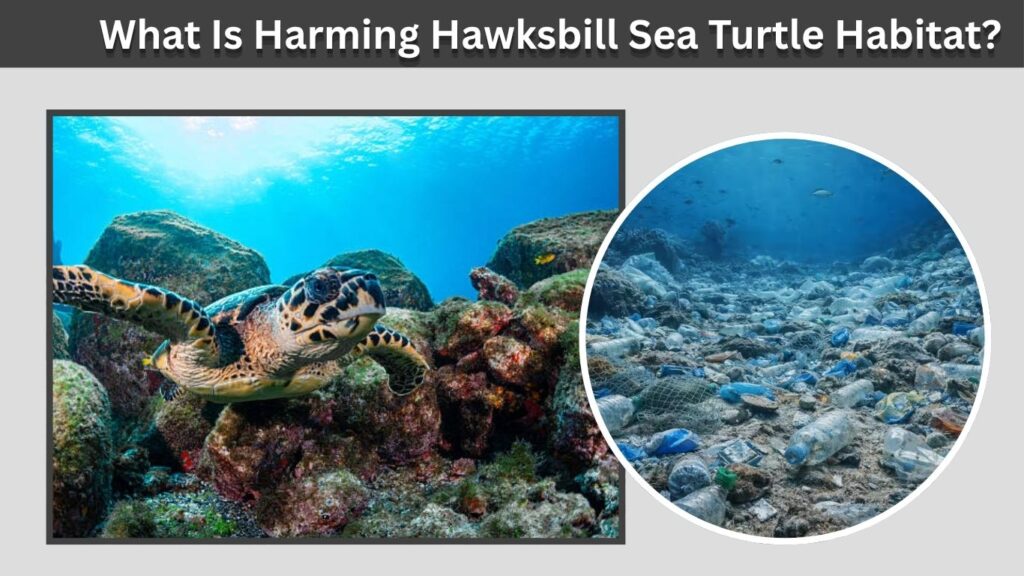
The biggest harms to hawksbill sea turtle habitat come from human activity and environmental change. Coral reefs are damaged by warming oceans, pollution, sediment runoff, and physical destruction. Nesting beaches are affected by tourism, construction, erosion, and lighting.
Climate change is a serious concern because it affects both land and sea habitats. Rising sea levels can shrink nesting beaches, while warmer waters increase coral bleaching. Warmer sand temperatures may also affect hatchling development.
Human disturbance can also make otherwise suitable habitat dangerous. A beach may have good sand, but if it is full of lights, vehicles, trash, or barriers, nesting success can drop. A reef may provide food, but if it is polluted or damaged, it may no longer support healthy turtle populations.
How to Protect Hawksbill Sea Turtle Habitat
Protecting hawksbill habitat requires action on beaches, reefs, and coastal waters. Since hawksbills migrate across large areas, conservation also depends on cooperation between countries and local communities.
Helpful protection steps include:
- Protect nesting beaches from development and erosion
- Reduce artificial lighting near nesting areas
- Keep beaches free of trash, vehicles, and obstacles
- Support coral reef restoration and marine protected areas
- Reduce plastic pollution and chemical runoff
- Follow responsible boating and snorkeling practices
- Avoid touching, chasing, feeding, or disturbing turtles
- Support laws against illegal trade in turtle shell products
Local actions matter because many hawksbill nesting and feeding areas are close to human communities. Cleaner beaches, healthier reefs, and responsible tourism can all improve habitat quality.
FAQs
What is the habitat of a hawksbill sea turtle?
The habitat of a hawksbill sea turtle includes coral reefs, sandy nesting beaches, mangroves, lagoons, seagrass beds, rocky areas, and warm coastal waters. Adults are most closely associated with coral reefs, while hatchlings and juveniles use different habitats as they grow.
Where do hawksbill sea turtles live?
Hawksbill sea turtles live in tropical and subtropical oceans worldwide. They are found in parts of the Atlantic, Pacific, and Indian Oceans, including the Caribbean, Southeast Asia, northern Australia, the Pacific Islands, and warm coastal regions near coral reefs.
Why do hawksbill sea turtles live near coral reefs?
Hawksbill sea turtles live near coral reefs because reefs provide food, shelter, and resting places. Their narrow beaks help them feed on sponges and other reef organisms hidden in cracks. Healthy reefs are especially important for adult hawksbills.
What is destroying hawksbill sea turtle habitat?
Hawksbill habitat is being damaged by coral reef decline, coastal development, beach erosion, sea level rise, pollution, artificial lighting, and destructive fishing practices. These threats reduce safe nesting beaches and destroy the reef habitats hawksbills use for food and shelter.
Do hawksbill sea turtles live in Florida?
Hawksbill sea turtles can be found in Florida waters, especially around warm reef habitats and the Florida Keys, but nesting is rare compared with other sea turtle species. Florida is part of their broader Atlantic range, though major nesting areas are more common in the Caribbean.