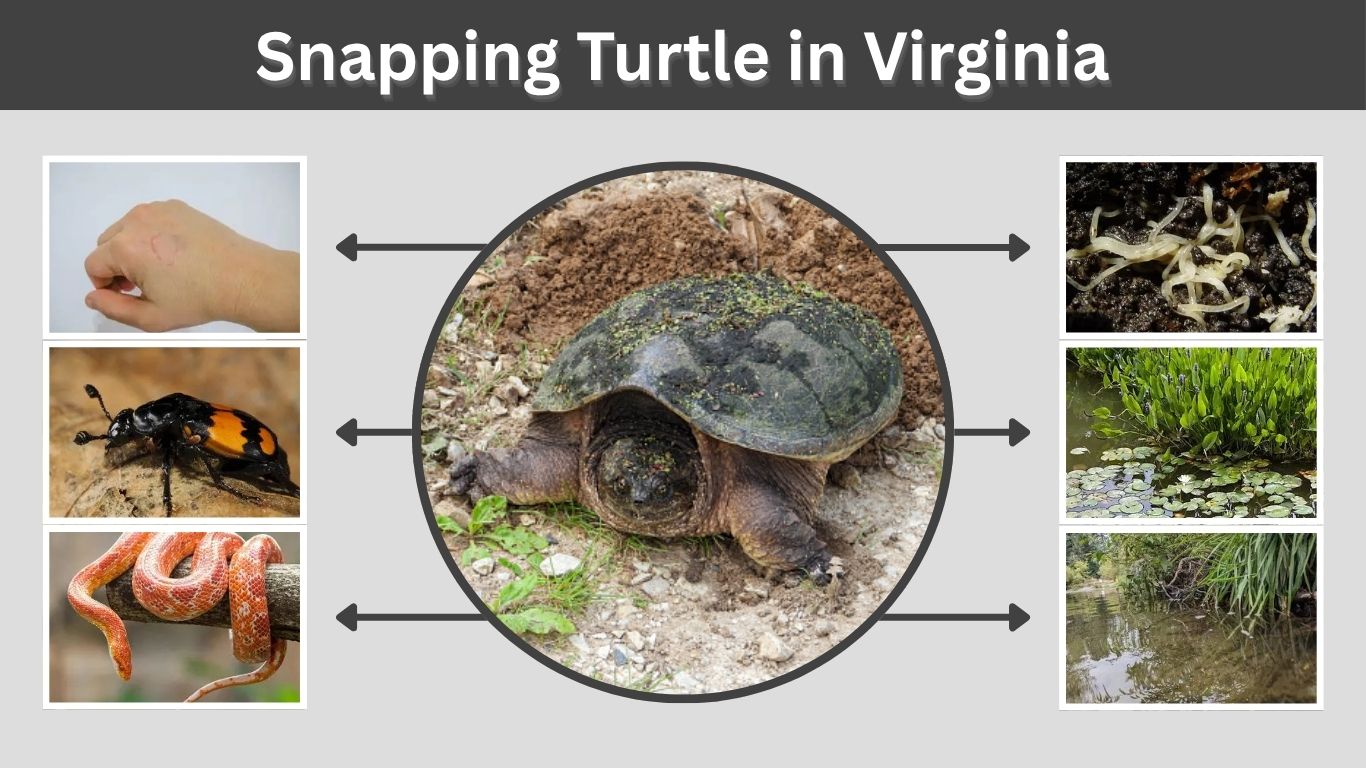
Snapping turtles in Virginia are powerful freshwater reptiles often seen in ponds, rivers, marshes, roadside wetlands, and sometimes crossing roads during nesting season. The common snapping turtle is native and found statewide, while alligator snapping turtles are not considered a normal native Virginia species. This guide explains how to identify Virginia snapping turtles, where they live, what they eat, when they lay eggs, and what state rules say about handling or harvesting them.
Are There Snapping Turtles in Virginia?
Yes, snapping turtles live across Virginia. The main snapping turtle species in the state is the common snapping turtle, also called the North American snapping turtle. It is one of the largest freshwater turtles in Virginia and can appear in both rural and suburban waterways.
Virginia DWR says the North American snapping turtle is found statewide, including some barrier islands, and lives in ponds, lakes, streams, rivers, swamps, freshwater marshes, and brackish marshes.
Common Snapping Turtle in Virginia
The common snapping turtle is the species most people see in Virginia. Its scientific name is Chelydra serpentina. It has a large head, strong jaws, a long tail, rough shell, and heavy body. In water, it may look calm and slow, but on land it can defend itself quickly.
Identification features include:
- Large head and thick neck
- Powerful hooked jaws
- Long tail with saw-like ridges
- Rough, dark brown, olive, or black shell
- Large claws on strong feet
- Smaller bottom shell than many other turtles
- Often covered with mud or algae
Young snapping turtles look like miniature adults. A baby snapping turtle in Virginia may have a rougher-looking shell, long tail, and sharp-looking head compared with painted turtles or sliders.
Where They Are Found in Virginia
Snapping turtles are highly adaptable. They can live in wild wetlands, farm ponds, slow rivers, reservoirs, roadside ditches, and neighborhood ponds. They prefer water with soft bottoms, vegetation, submerged logs, or places to hide.
You may see snapping turtles in:
- Northern Virginia ponds and streams
- James River wetlands
- Virginia Beach marshes and canals
- Shenandoah Valley waterways
- Coastal Plain swamps
- Backyard or farm ponds
- Roadside wetlands during nesting season
They spend most of their time in water. When seen on land, they are often moving between water bodies, searching for mates, or females looking for nesting sites.
Snapping Turtle West Virginia Note
West Virginia also has common snapping turtles. They live in many ponds, rivers, lakes, wetlands, and slow-moving waterways. However, regulations can differ between Virginia and West Virginia, so anyone asking about trapping, hunting, or possession should check the correct state wildlife agency before taking action.
Types of Snapping Turtles in Virginia
When people search for “types of snapping turtles in Virginia,” they usually want to know whether both common snapping turtles and alligator snapping turtles live there. In normal wildlife identification, Virginia is mainly associated with the common snapping turtle, not the alligator snapping turtle.
The Virginia Herpetological Society lists the North American snapping turtle among Virginia turtles. Its turtle list does not present the alligator snapping turtle as a regular Virginia native turtle species.
Common Snapping Turtle
The common snapping turtle is the true Virginia snapping turtle. It is widespread, tough, and able to survive in many aquatic habitats. Adults can become very large, especially old males.
Virginia DWR describes the snapping turtle as the Commonwealth’s largest freshwater turtle and says the state record is a 57-pound male with a shell length just over 18 inches.
This species is usually active from late March through October, although it can sometimes be seen in water during any month of the year. It may bask occasionally, but it is much more likely to stay hidden in water than painted turtles or sliders.
Alligator Snapping Turtle in Virginia
The alligator snapping turtle is a different species. It is much larger, more heavily armored, and has a more prehistoric appearance. It has a massive head, strongly hooked beak, and three raised ridges on the shell.
The U.S. Fish & Wildlife Service describes the alligator snapping turtle as the largest freshwater turtle in the United States and says it occurs in waterways of the Midwest, Southeast, and parts of the Southwest.
Alligator snapping turtles are not normally considered native residents of Virginia. If one is found in Virginia, it may be an escaped or released captive animal, or an unusual report that needs expert confirmation. Because identification mistakes are common, people should not assume a large common snapping turtle is an alligator snapping turtle.
Common vs Alligator Snapping Turtle
| Feature | Common Snapping Turtle | Alligator Snapping Turtle |
| Status in Virginia | Native and found statewide | Not a regular native Virginia species |
| Shell | Rough but less ridged in adults | Three strong ridges on shell |
| Head | Large, but less massive | Very large, heavy head |
| Tail | Long with saw-like ridge | Long and thick |
| Behavior | Often moves on land during nesting | More aquatic and bottom-dwelling |
| Virginia sightings | Common | Rare or questionable |
What Do Snapping Turtles Look Like?
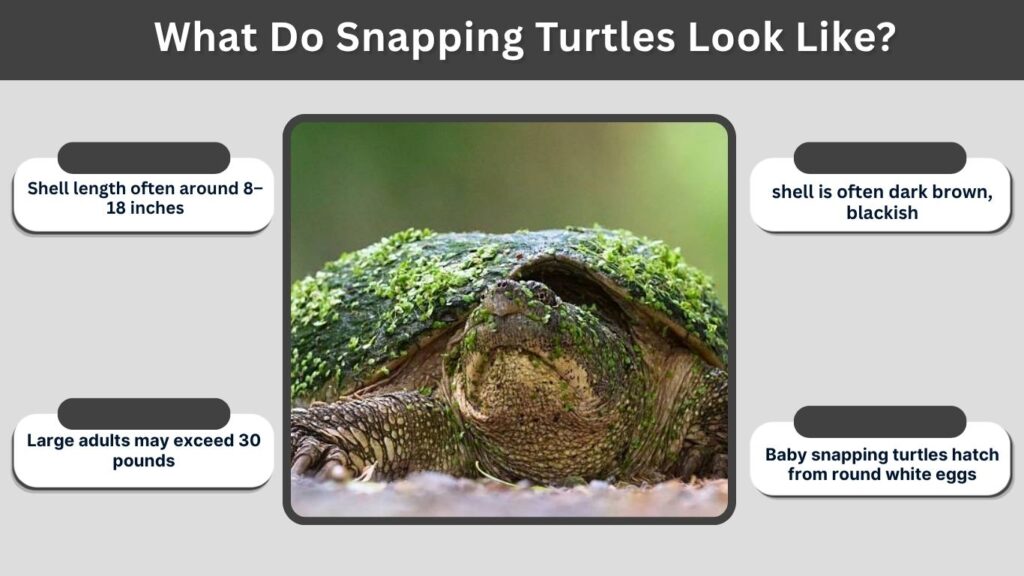
Snapping turtles look different from many common pond turtles. They do not have smooth, colorful shells like painted turtles. Instead, they often look muddy, rough, heavy, and ancient. Their strong jaws and long tails are the easiest clues.
A snapping turtle should always be viewed from a safe distance. It is not aggressive in water when left alone, but it can bite defensively if handled or cornered on land.
Size and Weight
Adult snapping turtles in Virginia can become very large. Many adults are smaller than record-size turtles, but even medium adults can look impressive. Males are usually larger than females.
Common size details:
- Shell length often around 8–18 inches
- Large adults may exceed 30 pounds
- Exceptional individuals can top 50 pounds
- Virginia’s record snapping turtle weighed 57 pounds
- Hatchlings are much smaller but still have long tails
A large snapping turtle in Northern Virginia, Virginia Beach, or the James River area is usually still a common snapping turtle, not an alligator snapping turtle.
Shell, Tail, and Head
The shell is often dark brown, blackish, or olive. Older turtles may look smoother than young turtles because ridges wear down over time. Many have algae or mud on the shell, helping them blend into the bottom of ponds and streams.
The tail is long and dinosaur-like, with raised scales along the top. The head is large, with a pointed snout and hooked upper jaw. The neck can stretch farther than many people expect, which is why handling them is risky.
Baby Snapping Turtle in Virginia
Baby snapping turtles hatch from round white eggs. They may be seen in late summer, early fall, or sometimes after overwintering in the nest. Hatchlings have a small shell, long tail, and sharp-looking face.
Do not take baby snapping turtles home. Wild turtles usually do best where they are found. If a baby turtle is crossing a road, the safest help is usually to move it only a short distance in the direction it was going, when traffic conditions allow.
Snapping Turtle Habitat in Virginia
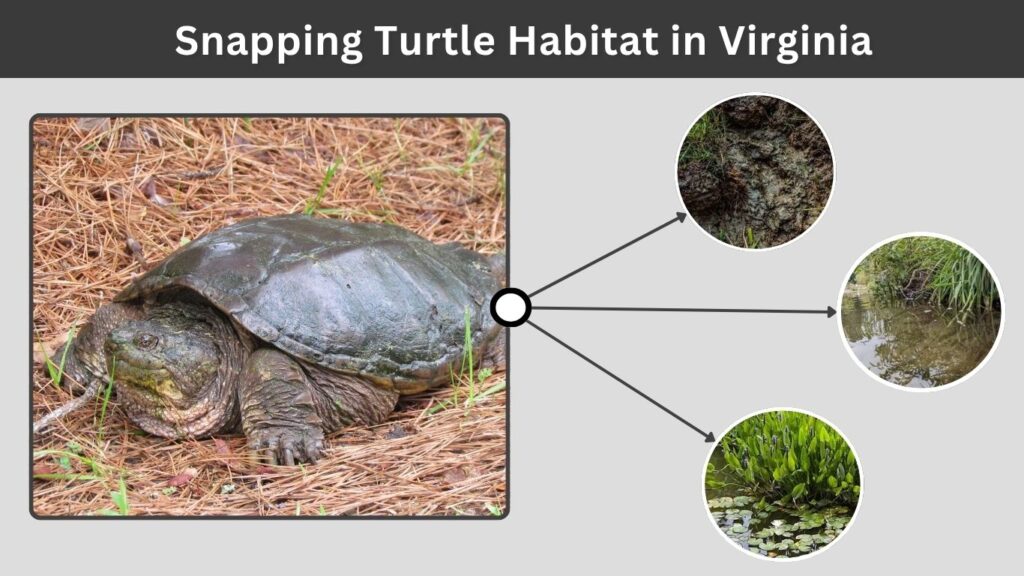
Snapping turtles live in many freshwater and slightly brackish habitats. They are not limited to deep wilderness areas. A snapping turtle can survive near farms, neighborhoods, golf courses, canals, and city parks if there is enough water and food.
The best habitat usually has slow water, soft muddy bottoms, aquatic plants, logs, roots, or banks where the turtle can hide and ambush prey.
Rivers, Ponds, and Marshes
Virginia snapping turtles use many water bodies. They may live in quiet rivers, reservoirs, ponds, lakes, swamps, and marshes. They are less visible than basking turtles because they often stay below the surface.
Good snapping turtle habitat includes:
- Soft mud for hiding
- Aquatic plants
- Fallen logs
- Overhanging banks
- Slow-moving water
- Fish, frogs, insects, and carrion
- Safe nesting areas nearby
They are important scavengers and predators. By eating dead animals, weak fish, insects, and other aquatic prey, they help clean and balance wetland ecosystems.
Snapping Turtles on Land in Virginia
Snapping turtles do go on land in Virginia. Females commonly leave water to lay eggs, usually around late spring or early summer. Males may also travel over land when moving between water bodies.
If you see one crossing a road, do not pick it up by the tail. That can injure the turtle’s spine. Also, never put your hands near the head. If help is necessary, experts often recommend moving the turtle in the direction it was already going, while keeping yourself safe.
Snapping Turtle Eggs in Virginia
Female snapping turtles dig nests on dry land. They may choose sandy soil, loose dirt, gravel edges, yards, gardens, or roadside areas. DWR states that egg laying usually occurs in June and the incubation period is about 80–90 days.
If you find snapping turtle eggs in Virginia, avoid disturbing them. Moving eggs can reduce survival because turtle embryos are sensitive to rotation and handling. If eggs are in a dangerous place, contact a licensed wildlife rehabilitator or Virginia DWR for guidance.
What Do Virginia Snapping Turtles Eat?
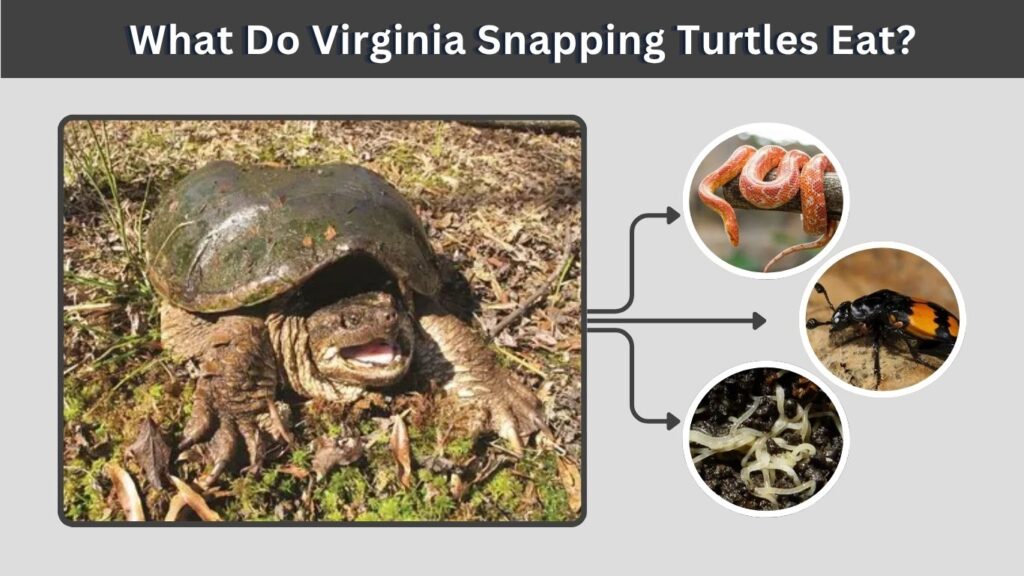
Snapping turtles are omnivores. They eat both animal and plant material. They are often seen as fierce predators, but they also scavenge dead animals and consume aquatic vegetation.
Their diet helps control some aquatic populations and removes carrion from the water. This makes them useful members of Virginia’s wetland ecosystems.
Natural Diet
Snapping turtles eat a wide variety of foods. Their exact diet depends on location, season, size, and available prey.
Common foods include:
- Fish
- Frogs
- Tadpoles
- Crayfish
- Aquatic insects
- Snails
- Worms
- Small snakes
- Carrion
- Aquatic plants
- Ducklings or small water birds on rare occasions
They often hunt by ambush. A snapping turtle may lie still in muddy water and strike when prey comes close.
Do They Harm Pond Fish?
Many pond owners worry that snapping turtles will destroy fish populations. In most cases, a few snapping turtles are not the main reason fish disappear. They often eat sick, injured, slow, or dead animals.
However, very small ornamental ponds with expensive koi or goldfish may be different. In those settings, a large snapping turtle can become a problem. Even then, removal should follow Virginia law and humane guidance.
Should You Feed Them?
Do not feed wild snapping turtles. Feeding can make them associate people with food, which increases conflict. It may also bring them closer to docks, swimming areas, or yards.
Feeding can cause:
- More turtle-human encounters
- Increased biting risk
- Poor diet habits
- Dependence on people
- Conflict with pets or pond owners
The best way to enjoy snapping turtles is to watch them from a distance.
Are Snapping Turtles Dangerous?
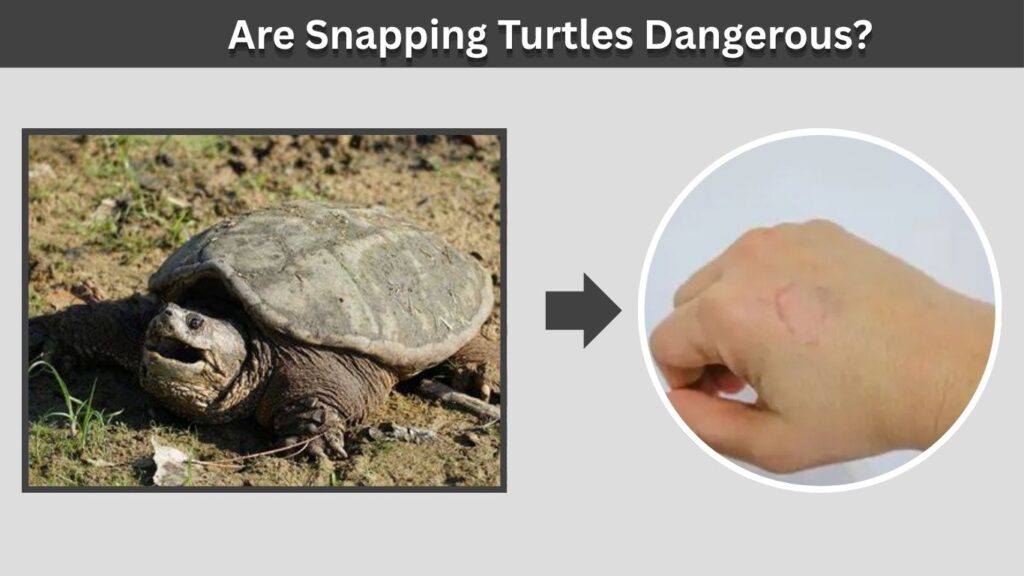
Snapping turtles are not monsters, but they deserve respect. In water, they usually avoid people. On land, they feel exposed and may defend themselves with a fast bite.
The main danger comes from people trying to touch, catch, move, tease, or pick them up incorrectly.
Bite Risk
A snapping turtle bite can cause serious injury. Their jaws are strong, and the neck can reach farther than expected. Children and pets should be kept away from large turtles on land.
Safety tips:
- Do not put hands near the head.
- Do not pick up by the tail.
- Do not tease with sticks.
- Keep pets away.
- Give the turtle space.
- Let it continue moving if it is safe.
- Call wildlife help for risky situations.
Most bites are preventable because they happen when someone tries to handle the turtle.
Are They Aggressive?
Snapping turtles are defensive, not naturally aggressive toward humans. In water, they usually swim away or hide. On land, they cannot escape as easily, so they may open their mouth, hiss, lunge, or snap.
This behavior means, “stay away.” It does not mean the turtle is chasing people. Giving it space solves most problems.
What to Do If You Find One
If you find a snapping turtle in Virginia, first decide whether it is actually in danger. A turtle in a pond, ditch, marsh, yard near water, or crossing land may be doing normal turtle behavior.
Best actions:
- Leave it alone if it is safe.
- Keep children and pets away.
- Let nesting females finish.
- Help road-crossing turtles only if it is safe.
- Move them only in the direction they were heading.
- Contact Virginia DWR or a licensed wildlife rehabilitator if injured.
Virginia DWR warns that relocating wildlife is illegal in Virginia, and moving turtles to “natural” habitats is usually a mistake.
Virginia Snapping Turtle Regulations
Snapping turtle laws in Virginia matter because this species has been harvested for food and commercial trade. Rules may change, so readers should always check the latest Virginia DWR regulations before trapping, killing, selling, or keeping any native turtle.
Virginia’s administrative code states that the daily limit for snapping turtles is five, they may only be taken from June 1 to September 30, and they must have a minimum curved-line carapace length of 13 inches. It also says snapping turtles may not be taken from designated stocked trout waters.
Is It Illegal to Kill Snapping Turtles in Virginia?
It is not accurate to say all killing or harvesting is always illegal, but it is regulated. You cannot simply kill, trap, sell, or collect snapping turtles however you want. Seasons, size limits, daily limits, location restrictions, license rules, and other wildlife laws may apply.
Because the user intent often includes “is it illegal to kill snapping turtles in Virginia,” the safest answer is this: do not kill or remove a snapping turtle unless you are fully following current Virginia DWR regulations. For nuisance situations, contact Virginia DWR or a qualified wildlife professional.
Snapping Turtle Season in Virginia
Based on Virginia administrative code, snapping turtles may only be taken from June 1 to September 30, with a daily limit of five and a minimum curved-line carapace length of 13 inches.
This does not mean every method or location is allowed. Other rules may apply depending on whether the take is recreational, commercial, on public land, on private property, or in special waters.
Selling or Commercial Harvest
Commercial harvest has been a concern in Virginia. DWR says more than 125,000 pounds of snapping turtles were reported as commercially harvested from Virginia waterways in 2013, and pregnant females can bring higher prices because eggs increase their value to farming operations.
Because snapping turtles grow slowly and females are important for future populations, overharvest can become a conservation problem. Anyone selling, buying, exporting, or commercially harvesting turtles should check DWR permit requirements and current regulations.
FAQs
Are there snapping turtles in Virginia?
Yes, snapping turtles are found throughout Virginia. The native species is the common snapping turtle, also called the North American snapping turtle. It lives in ponds, lakes, streams, rivers, swamps, marshes, and even some brackish habitats. Most Virginia snapping turtle sightings are this species.
Are there alligator snapping turtles in Virginia?
Alligator snapping turtles are not normally considered native or established in Virginia. Most large snapping turtles seen in Virginia are common snapping turtles. If someone reports an alligator snapping turtle in Virginia, it may be a misidentified large common snapper or a released captive animal.
Is it illegal to kill snapping turtles in Virginia?
Snapping turtle take is regulated in Virginia. State rules include a season, daily limit, minimum shell size, and restricted waters. Because laws can change and details matter, never kill, trap, keep, or sell snapping turtles without checking the latest Virginia DWR regulations first.
When do snapping turtles lay eggs in Virginia?
Snapping turtles in Virginia usually lay eggs around June. Females leave the water and dig nests in dry soil, sand, gravel, gardens, yards, or roadside areas. Incubation is commonly about 80–90 days, although weather and nest conditions can affect hatching time.
What should I do if I find a snapping turtle in my yard?
Leave it alone if it is not in danger. It may be nesting or traveling between water bodies. Keep pets and children away. Do not relocate it far away, and never pick it up by the tail. If it is injured or trapped, contact Virginia DWR or a licensed wildlife rehabilitator.