
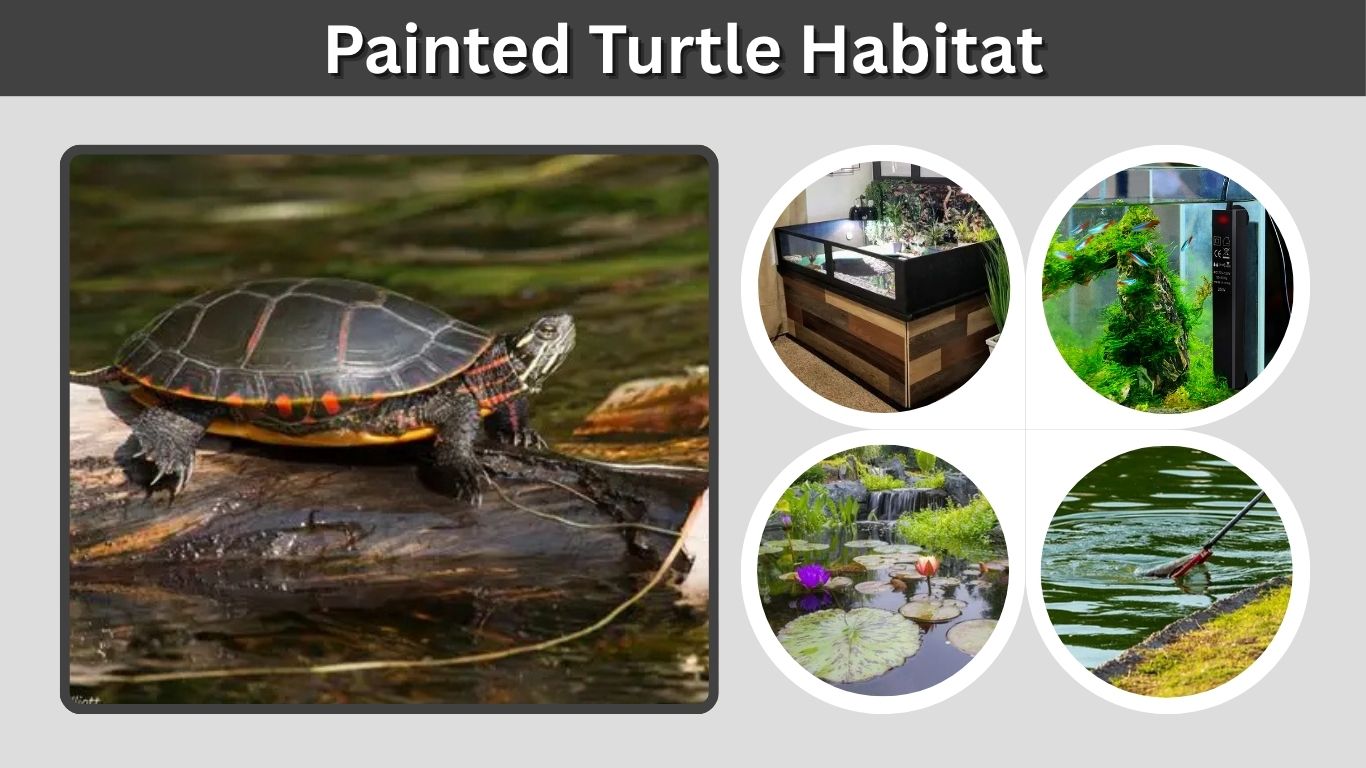
Painted turtles live in calm freshwater places where they can swim, bask, hide, and find food easily. Their habitat can be a natural pond, marsh, lake, slow stream, or a well-planned indoor tank. Whether you are learning about wild painted turtles or setting up a pet painted turtle habitat, the right water, basking area, heat, light, and space are essential.
Natural Painted Turtle Habitat
Painted turtles are freshwater turtles. In the wild, they prefer quiet water with soft bottoms, aquatic plants, sunny basking spots, and shallow areas. Their habitat must provide both water for swimming and dry surfaces for warming their bodies.
Where Painted Turtles Live in the Wild
Painted turtles are commonly found across North America. They live in ponds, lakes, marshes, wetlands, slow-moving rivers, and quiet streams. They usually avoid fast, deep, cold water because they need easy access to the surface and basking areas.
A good wild habitat often includes muddy bottoms, submerged plants, floating vegetation, and logs or rocks above the water. These places help painted turtles rest, hunt, hide from predators, and regulate their body temperature.
Freshwater Areas They Prefer
Painted turtles do best in slow, calm freshwater habitats. These areas usually have warm shallow edges and plenty of cover. They often choose places where sunlight reaches the water, because they spend many hours basking.
Common painted turtle habitats include:
- Ponds with muddy bottoms
- Marshes with aquatic plants
- Lakes with shallow shorelines
- Wetlands with soft vegetation
- Slow-moving streams and creeks
- Quiet river backwaters
These habitats support insects, small fish, aquatic plants, algae, and other food sources that painted turtles eat.
Why Basking Spots Matter
Basking is one of the most important parts of a painted turtle’s habitat. Painted turtles climb onto logs, rocks, branches, or shorelines to dry their shells and absorb heat from the sun.
Basking helps them digest food, stay active, and reduce shell problems. Without regular basking, a painted turtle may become weak or develop health issues. In the wild, they often bask in groups on floating logs or sunny banks.
Seasonal Habitat Changes
Painted turtles use their habitat differently throughout the year. During warm months, they are active in shallow water and bask often. In colder areas, they spend winter underwater, buried in mud or resting near the bottom of ponds and lakes.
They can survive winter by slowing down their body functions. This is why calm water with a muddy bottom is important in colder regions. A safe winter habitat must not freeze completely from top to bottom.
Painted Turtle Habitat by Type
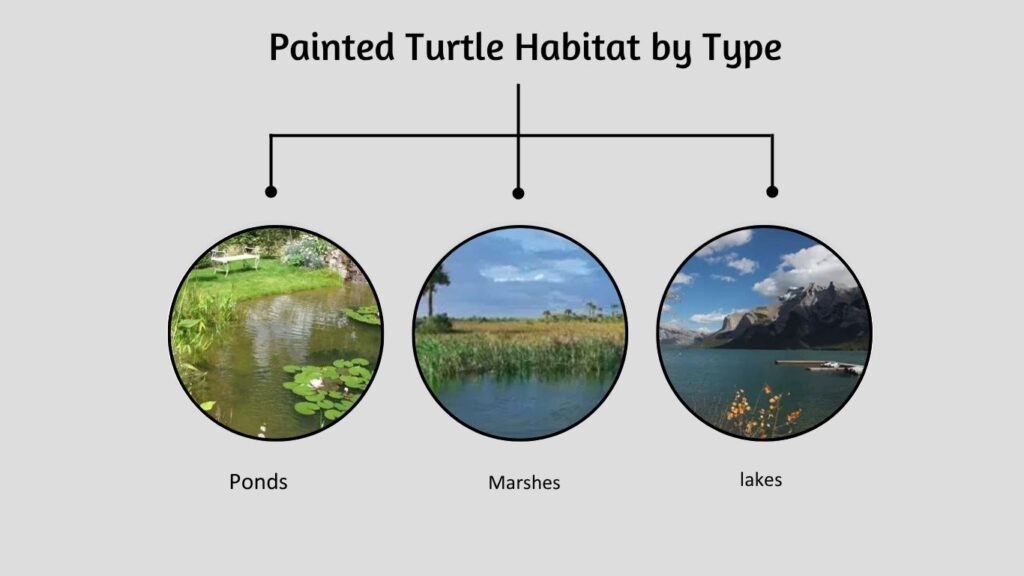
There are several painted turtle types, and their habitats are similar but not exactly the same. Eastern, western, midland, and southern painted turtles all need freshwater, basking spots, and access to food, but their natural ranges and local environments can vary.
Eastern Painted Turtle Habitat
Eastern painted turtles are often found in ponds, marshes, slow streams, and lakes in the eastern part of North America. They prefer quiet freshwater areas with many basking surfaces.
Their habitat usually includes soft mud, aquatic plants, and sunny logs. Eastern painted turtles are commonly seen basking in groups. They need shallow areas for feeding and deeper spots for hiding or overwintering.
Western Painted Turtle Habitat
Western painted turtles have a wide range and can live in many freshwater habitats. They are often found in ponds, lakes, reservoirs, marshes, and slow rivers.
They are adaptable but still need clean water, basking places, and safe nesting areas nearby. In some regions, western painted turtles may live in cooler climates, so deep water or muddy bottoms help them survive winter.
Midland Painted Turtle Habitat
Midland painted turtles usually live in quiet freshwater habitats such as ponds, wetlands, marshes, and slow streams. They are often found in areas with soft bottoms and plenty of aquatic vegetation.
Their habitat should include open water for swimming, plants for cover, and dry surfaces for basking. Midland painted turtles may use both shallow and deeper water depending on the season.
Southern Painted Turtle Habitat
Southern painted turtles are usually associated with warmer regions. They live in ponds, lakes, marshes, bayous, and slow waterways. Their habitat often has soft mud, floating plants, and sunny basking sites.
Because they live in warmer areas, southern painted turtles may stay active for longer parts of the year. However, they still need the same basic habitat features: clean water, warmth, basking access, and hiding places.
| Painted Turtle Type | Common Habitat | Key Habitat Features |
| Eastern painted turtle | Ponds, lakes, marshes, slow streams | Sunny logs, aquatic plants, soft mud |
| Western painted turtle | Lakes, ponds, reservoirs, wetlands | Open water, basking areas, winter refuge |
| Midland painted turtle | Wetlands, ponds, quiet creeks | Vegetation, shallow edges, muddy bottom |
| Southern painted turtle | Bayous, marshes, ponds, slow rivers | Warm water, floating plants, sunny basking spots |
Indoor Painted Turtle Habitat Setup
A pet painted turtle needs a carefully designed indoor habitat. A simple bowl or small container is not enough. Painted turtles are active swimmers, and they need strong filtration, warm water, UVB lighting, and a dry basking area.
Tank Size and Swimming Space
Painted turtles need a large tank with enough water to swim freely. Baby turtles can start in a smaller setup, but they grow quickly. Adult painted turtles need much more space.
A common rule is to provide at least 10 gallons of water for every inch of shell length. Bigger is always better because painted turtles swim often and create a lot of waste.
Habitat size tips:
- Hatchlings need shallow but safe swimming water
- Adults need deep water and wide swimming space
- Long tanks are better than tall narrow tanks
- The turtle must turn, dive, and surface easily
- More water helps keep the habitat cleaner
A cramped tank can cause stress, poor health, and dirty water problems.
Water Temperature and Cleanliness
Water temperature is very important in a painted turtle habitat. Most indoor setups should keep the water warm but not hot. A reliable aquarium heater can help maintain stable temperature.
Clean water is equally important. Painted turtles eat in water and produce waste, so their habitat needs a strong filter. A weak filter will quickly lead to cloudy water, bad smell, and unhealthy conditions.
You should also do regular water changes. Even with a filter, waste builds up over time. Clean water helps protect the turtle’s eyes, skin, and shell.
Basking Dock and Heat Lamp
A painted turtle tank must include a dry basking area. The turtle should be able to climb out of the water completely and dry its shell. Floating docks, stable platforms, or custom basking areas can work well.
Above the basking spot, use a heat lamp to create a warm area. This allows the turtle to raise its body temperature after swimming. The basking dock should be easy to climb, stable, and large enough for the whole turtle.
UVB Lighting Needs
UVB light is necessary for pet painted turtles. It helps them process calcium and maintain strong bones and shells. Without UVB, turtles can develop serious shell and bone problems.
A UVB bulb should be placed above the basking area, following the bulb’s distance instructions. Replace the bulb as recommended, because UVB output becomes weaker over time even if the light still looks bright.
Outdoor Painted Turtle Habitat
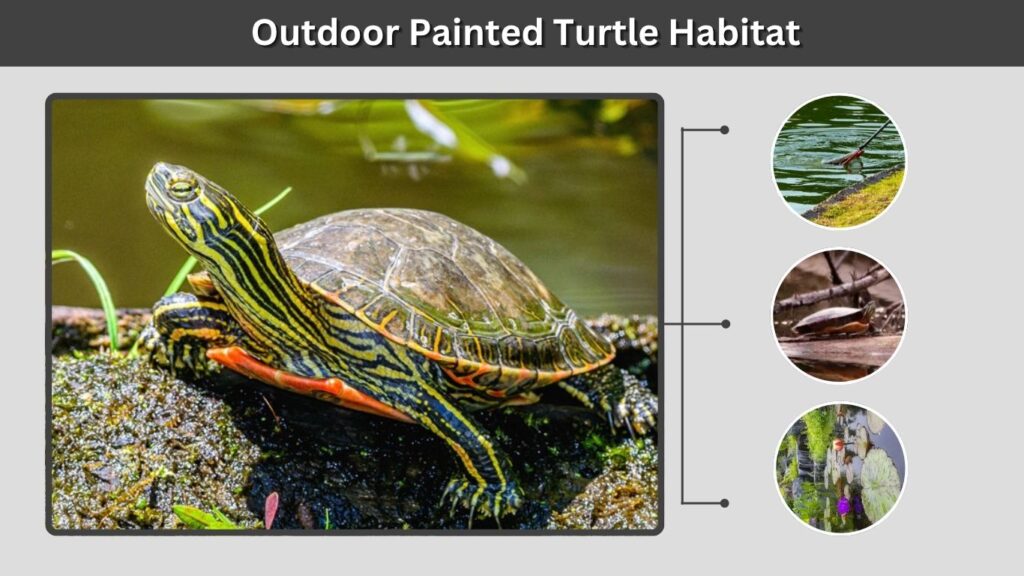
An outdoor painted turtle habitat can be very natural, but it must be safe. Outdoor ponds should offer clean water, basking areas, shade, plants, and protection from predators. The setup must also prevent escape.
Pond Design for Painted Turtles
Outdoor ponds should have both shallow and deeper areas. Shallow edges allow turtles to rest, feed, and warm up. Deeper areas help them feel secure and may protect them during cooler weather.
A good outdoor habitat may include:
- Clean freshwater pond area
- Sloped edges for easy access
- Logs, rocks, or platforms for basking
- Aquatic plants for cover
- Shaded areas to prevent overheating
- Secure fencing around the habitat
The pond should not have sharp objects or unsafe decorations that can trap the turtle.
Sunlight, Shade, and Shelter
Natural sunlight is excellent for painted turtles, but they also need shade. Too much direct sun can overheat a small outdoor pond. The turtle should be able to move between sunny and shaded areas.
Shelter is also important. Plants, rocks, and safe hiding areas help the turtle feel protected. A balanced outdoor habitat gives the turtle choices: swim, hide, bask, or rest.
Safety from Predators and Escape
Outdoor painted turtle habitats must be predator-proof. Raccoons, dogs, cats, birds, and other animals may harm turtles, especially hatchlings and juveniles.
Escape prevention is also important. Painted turtles can climb better than many people expect. Fencing should be secure, smooth, and buried slightly below the ground if needed.
Baby Painted Turtle Habitat
Baby painted turtles need the same basic things as adults, but their setup must be safer and easier to use. They are small, delicate, and more vulnerable to stress, poor water quality, and temperature changes.
Shallow Water for Hatchlings
Baby painted turtles need water deep enough to swim but not so deep that they struggle to reach the surface. Add resting spots near the surface so they can pause easily.
The water should be warm, clean, and filtered. Avoid strong currents because hatchlings can tire quickly. A gentle filter or adjusted flow is better for young turtles.
Small Basking Platform
A baby painted turtle needs a basking platform that is easy to climb. The ramp should not be too steep, and the surface should not be slippery. The baby turtle must be able to dry completely under heat and UVB light.
A good baby basking area should be:
- Easy to reach from the water
- Stable and not floating away too much
- Warm but not dangerously hot
- Big enough for the turtle’s full body
- Positioned under UVB and heat lamps
Check temperatures regularly to avoid overheating.
Hiding Places and Stress Control
Baby painted turtles feel safer when they have hiding places. Artificial plants, smooth rocks, and safe aquatic decorations can provide cover. Avoid small gravel because turtles may swallow it.
A calm habitat helps baby turtles eat better and grow well. Keep the tank away from loud noise, heavy foot traffic, and constant handling.
Painted Turtle Habitat Requirements
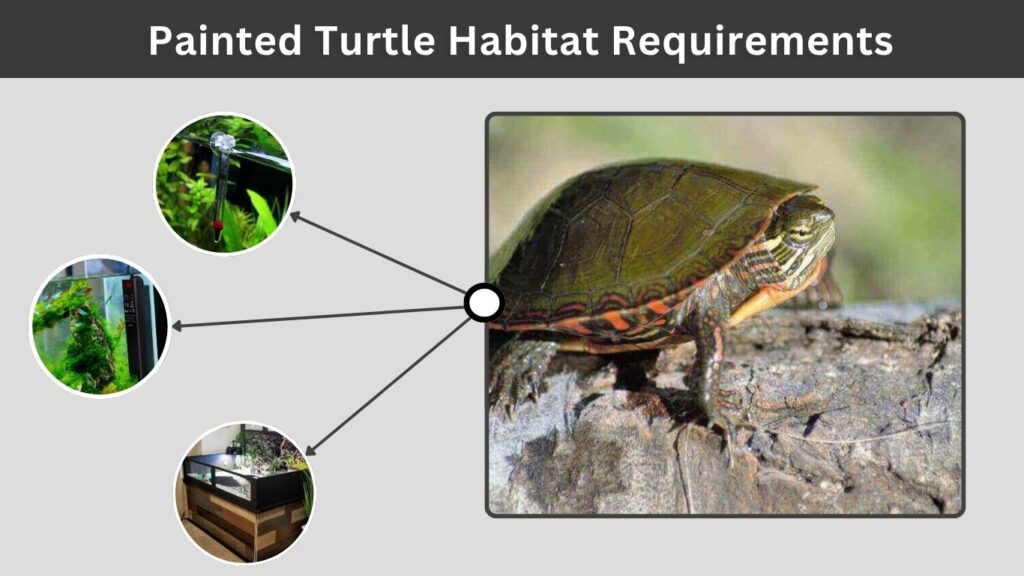
A healthy painted turtle habitat must meet several basic needs. These include space, clean water, basking access, heat, UVB light, and safe decorations. Missing one part can affect the turtle’s health over time.
Essential Items for a Pet Habitat
To set up a painted turtle habitat at home, you need more than water and a tank. Painted turtles are semi-aquatic reptiles, so their habitat must support both swimming and basking.
Basic painted turtle habitat items include:
- Large aquarium or indoor turtle tank
- Strong water filter
- Aquarium heater
- Dry basking dock
- Heat lamp
- UVB light
- Thermometer for water
- Thermometer for basking area
- Safe hiding places
- Water conditioner if needed
These items create a stable environment and help prevent common health problems.
Best Substrate and Decorations
Many keepers use a bare-bottom tank because it is easier to clean. Sand can also work, but it must be maintained carefully. Small gravel is not recommended because turtles may eat it.
Decorations should be smooth, stable, and safe. Avoid sharp rocks, small plastic pieces, or anything the turtle can get stuck under. Live or artificial aquatic plants can add cover, but they should not block swimming space.
Plants in the Habitat
Plants can make a painted turtle habitat feel more natural. In the wild, painted turtles use aquatic plants for cover and sometimes food. In a tank, plants also give the turtle places to explore.
However, painted turtles may bite, uproot, or eat plants. Choose safe aquatic plants and avoid anything toxic. Artificial plants should be strong enough that pieces do not break off easily.
Common Habitat Mistakes
Many painted turtle health problems come from poor habitat setup. A tank may look fine at first, but if it lacks heat, UVB, space, or filtration, the turtle can suffer over time.
Using a Tank That Is Too Small
A small tank becomes dirty fast and limits the turtle’s movement. Painted turtles need room to swim, dive, turn, and explore. A small habitat can also make it harder to create a proper basking area.
As the turtle grows, the habitat should be upgraded. Planning for adult size early can save money and prevent stress later.
Skipping UVB Light
Some owners use only a heat lamp, but heat and UVB are not the same. A painted turtle needs warmth for basking and UVB for calcium health.
Without UVB, shell growth may become weak or abnormal. This is one of the most serious mistakes in indoor painted turtle care.
Poor Water Quality
Dirty water can lead to odor, algae problems, skin irritation, eye issues, and shell trouble. Painted turtles are messy animals, so filtration must be strong.
To maintain clean water:
- Use a filter rated for more than the tank size
- Remove leftover food when possible
- Do partial water changes regularly
- Test water quality if problems continue
- Clean filter media carefully without destroying beneficial bacteria
Clean water is one of the strongest signs of a well-managed habitat.
FAQs
What is the best habitat for a painted turtle?
The best habitat for a painted turtle is a clean freshwater setup with plenty of swimming space, a dry basking area, heat, UVB lighting, and safe hiding places. In the wild, they prefer ponds, marshes, lakes, and slow streams with sunny logs and aquatic plants.
What do painted turtles need in their habitat?
Painted turtles need clean water, a strong filter, a basking dock, a heat lamp, UVB light, proper water temperature, and enough space to swim. They also benefit from hiding areas, safe plants, and a stable routine. A small bowl is not suitable for them.
Can painted turtles live in an outdoor pond?
Yes, painted turtles can live in an outdoor pond if the pond is safe, clean, and properly secured. It should include basking spots, shade, plants, and protection from predators. The pond must also prevent escape and support the turtle during seasonal temperature changes.
How do you make a baby painted turtle habitat?
To make a baby painted turtle habitat, use clean shallow water, a gentle filter, warm temperature, UVB light, and an easy-to-reach basking platform. Add safe hiding places and avoid strong currents. The baby turtle should be able to swim, rest, and climb out easily.
Do painted turtles need sand in their habitat?
Painted turtles do not require sand, but it can be used if maintained properly. Many keepers prefer a bare-bottom tank because it is easier to clean. Small gravel should be avoided because turtles may swallow it, which can cause serious health problems.