
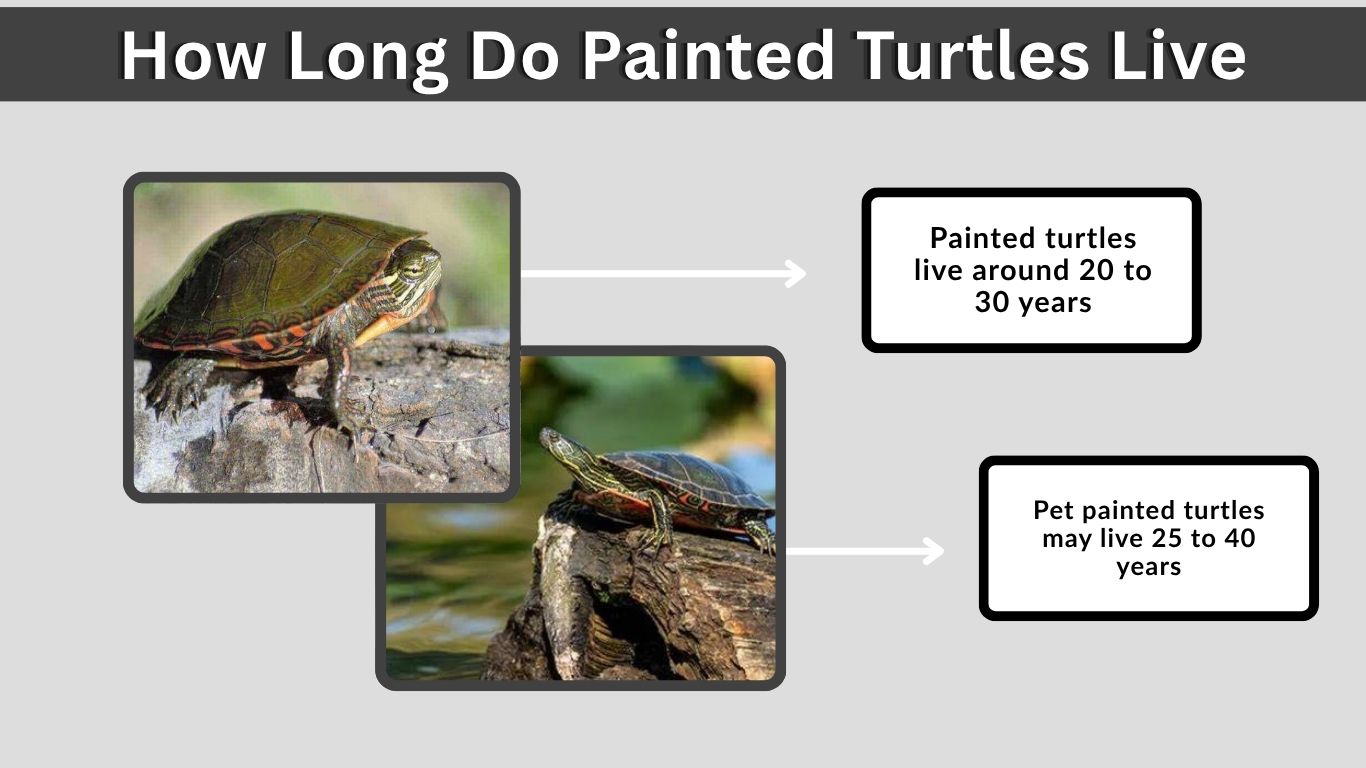
Painted turtles can live for many years when they have clean water, safe basking areas, good food, and protection from danger. In the wild, many painted turtles live around 20 to 30 years, while pet painted turtles may live 25 to 40 years with excellent care. Their lifespan depends on habitat, health, diet, temperature, predators, and how well their environment supports natural behavior.
Average Painted Turtle Lifespan
Painted turtles are long-lived reptiles. They do not grow quickly like many small pets, and they are not short-term animals. Anyone keeping one as a pet should understand that a painted turtle can be a decades-long responsibility.
How Long Do Painted Turtles Live in General?
Most painted turtles live around 20 to 30 years in normal conditions. Some may live longer, especially when they avoid predators, disease, poor water quality, and serious injury.
In captivity, painted turtles often have the chance to live longer because they are protected from many wild dangers. However, a pet turtle will only live well if its tank setup is correct. A small dirty tank, no UVB light, poor diet, or cold water can shorten its life.
Wild vs Captive Lifespan
Painted turtles in the wild face many risks. Eggs and hatchlings are often eaten by predators. Young turtles are also vulnerable to birds, raccoons, fish, snakes, and larger animals. Adults are tougher, but they can still suffer from habitat loss, road accidents, pollution, and harsh weather.
Pet painted turtles do not face most wild predators. They usually have regular food, stable water temperature, and a controlled environment. Because of this, they may live longer than many wild turtles if they receive proper care.
Lifespan at a Glance
| Painted Turtle Situation | Common Lifespan | Main Factors |
| Wild painted turtle | 20–30 years | Predators, habitat, weather, food |
| Pet painted turtle | 25–40 years | Tank size, diet, UVB, water quality |
| Baby painted turtle | Survival varies widely | Predation, temperature, care quality |
| Healthy adult painted turtle | 30+ years possible | Stable habitat and low stress |
How Long Do Painted Turtles Live in the Wild?
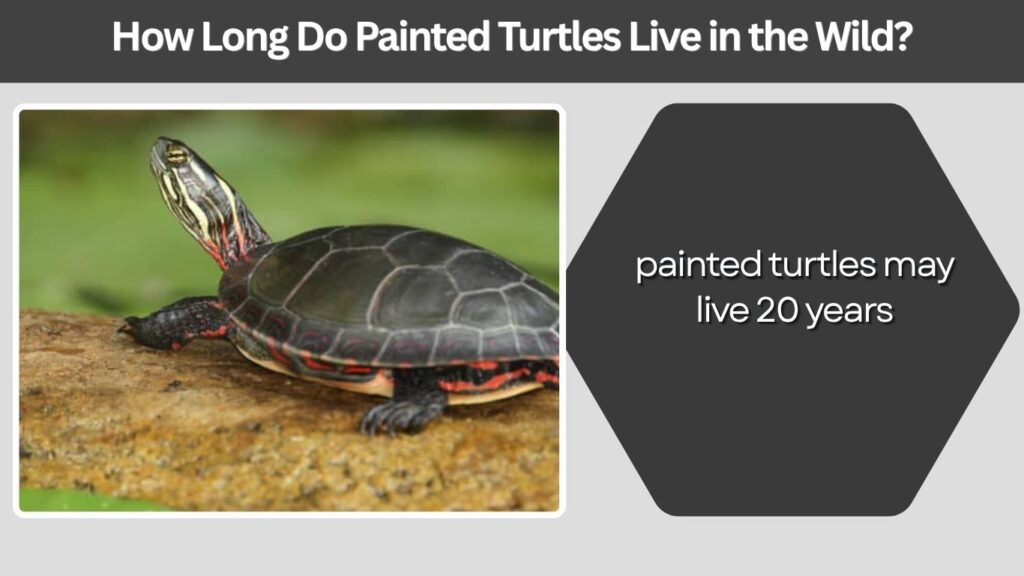
Wild painted turtles are strong survivors, but life outside is not easy. Their natural lifespan depends on where they live, how much food is available, and how many threats are around them.
Natural Lifespan in Ponds and Lakes
In good freshwater habitats, painted turtles may live 20 years or more. Calm ponds, marshes, lakes, wetlands, and slow streams provide food, shelter, basking sites, and muddy areas for winter survival.
A strong wild habitat usually includes:
- Clean freshwater
- Sunny basking logs
- Aquatic plants
- Soft muddy bottoms
- Safe nesting areas nearby
- Low pollution levels
- Plenty of insects and aquatic food
When these features are available, painted turtles have a better chance of reaching old age.
Why Many Wild Turtles Die Young
Many painted turtles never reach adulthood. The most dangerous stages are egg and hatchling stages. Eggs may be eaten by raccoons, foxes, skunks, birds, and other predators. Hatchlings are small and soft-shelled, making them easy prey.
Even after surviving the early stage, wild turtles still face risks. Cars are a major threat when females cross roads to nest. Pollution, fishing hooks, habitat destruction, and drought can also reduce survival.
Adult Survival in the Wild
Adult painted turtles are much safer than hatchlings because they have harder shells and stronger bodies. Once they reach adult size, they can live many more years.
Still, adult painted turtles need safe basking places and clean water. If a pond becomes polluted or dries up, they may be forced to move. Moving across land increases the chance of injury, dehydration, or road death.
How Long Do Painted Turtles Live in Captivity?
Painted turtles can live a long time in captivity, but only when their care is correct. A pet painted turtle is not a low-maintenance animal. It needs a large aquatic setup, heat, UVB, filtration, and a balanced diet.
Pet Painted Turtle Lifespan
A pet painted turtle can commonly live 25 to 40 years with proper care. Some individuals may live even longer. This means buying or adopting one is a long-term commitment.
Many pet turtles live shorter lives because their environment is not suitable. Common problems include tanks that are too small, dirty water, no basking area, and missing UVB light. These mistakes can lead to shell problems, weak bones, infection, and stress.
Life in a Tank
A painted turtle can live well in a tank if the tank is large enough and properly managed. It needs enough water to swim, a dry basking dock, a heat lamp, and UVB lighting.
Important tank needs include:
- Large aquarium or turtle tank
- Strong filter
- Warm water temperature
- Dry basking platform
- Heat lamp over the basking area
- UVB bulb for shell and bone health
- Safe decorations and hiding places
- Regular water changes
A clean, spacious tank can support a long and healthy life.
Captivity Does Not Always Mean Longer Life
Many people think captive turtles automatically live longer, but that is not always true. A wild turtle may live decades if its habitat is healthy. A pet turtle may die young if it is kept in poor conditions.
Captivity helps only when the owner provides the right care. Painted turtles need daily observation and regular maintenance. Their long lifespan depends more on habitat quality than simply being indoors.
Lifespan by Painted Turtle Type
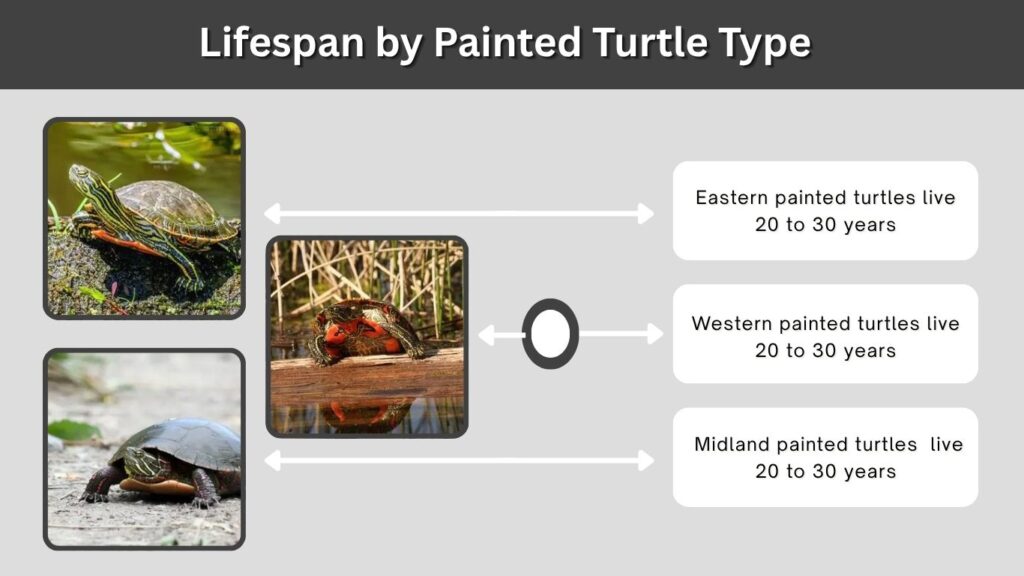
There are several types of painted turtles, including eastern, western, midland, and southern painted turtles. Their lifespans are generally similar, but local habitat and care can make a difference.
How Long Do Eastern Painted Turtles Live?
Eastern painted turtles usually live around 20 to 30 years in the wild. As pets, they may live 25 to 40 years with strong care.
They need clean water, basking warmth, and UVB light like other painted turtles. In the wild, eastern painted turtles often live in ponds, lakes, marshes, and slow streams. Their lifespan improves when they have safe nesting areas and low predator pressure.
How Long Do Western Painted Turtles Live?
Western painted turtles can also live around 20 to 30 years in natural habitats. In captivity, they may reach 30 years or more when kept in excellent conditions.
Western painted turtles are often larger than some other painted turtle types, so they may need extra tank space as pets. A cramped tank can increase stress and water quality problems, which may reduce lifespan.
How Long Do Midland Painted Turtles Live?
Midland painted turtles have a similar lifespan to other painted turtles. Many live 20 to 30 years in the wild, and well-kept pets may live longer.
Their natural habitats include wetlands, ponds, slow streams, and quiet freshwater areas. Clean water and good basking sites are important for their survival. As pets, they need proper lighting, filtration, and a healthy diet.
How Long Do Southern Painted Turtles Live?
Southern painted turtles may live around 20 to 30 years, depending on habitat and care. In captivity, they can live several decades if their tank is clean, warm, and properly lit.
Southern painted turtles are usually smaller than western painted turtles, but they still need a real aquatic setup. A small bowl or tiny aquarium is not enough for long-term health.
What Affects Painted Turtle Lifespan?
Painted turtle lifespan is not based on age alone. Their environment, food, light, temperature, and safety all affect how long they live. Good care can help prevent many common health problems.
Habitat Quality
Habitat is one of the biggest lifespan factors. In the wild, painted turtles need clean freshwater, basking logs, aquatic plants, and safe nesting areas. In captivity, they need a clean tank, strong filter, heat, UVB, and enough space.
Poor habitat can cause stress and disease. Dirty water may lead to eye problems, skin infections, and shell issues. Lack of basking can make the shell stay wet too long, increasing the risk of shell rot.
Diet and Nutrition
Painted turtles are omnivores, meaning they eat both animal and plant foods. Young turtles often eat more protein, while adults usually eat more plant material.
A healthy diet may include:
- Quality aquatic turtle pellets
- Leafy greens
- Aquatic plants
- Insects
- Worms
- Small fish in limited amounts
- Calcium sources when needed
A poor diet can cause weak shells, obesity, slow growth, or vitamin deficiency. Feeding only one type of food is not ideal.
UVB Light and Basking
UVB light is essential for painted turtles in captivity. It helps them use calcium properly, which supports strong bones and shells. Without UVB, turtles can develop serious health problems.
Basking is also necessary. Painted turtles need a dry area where they can warm up and fully dry their shell. The basking area should be warm enough to attract the turtle but not dangerously hot.
Predators and Accidents
Wild painted turtles face predators, especially during the egg and hatchling stages. Adult turtles are better protected, but they can still be harmed by raccoons, large birds, dogs, vehicles, fishing gear, and habitat destruction.
Pet turtles face different risks. They may be injured by unsafe tank decorations, falls, poor handling, other pets, or bad water conditions. Keeping the habitat safe is a major part of helping them live longer.
Signs of a Healthy Long-Lived Painted Turtle
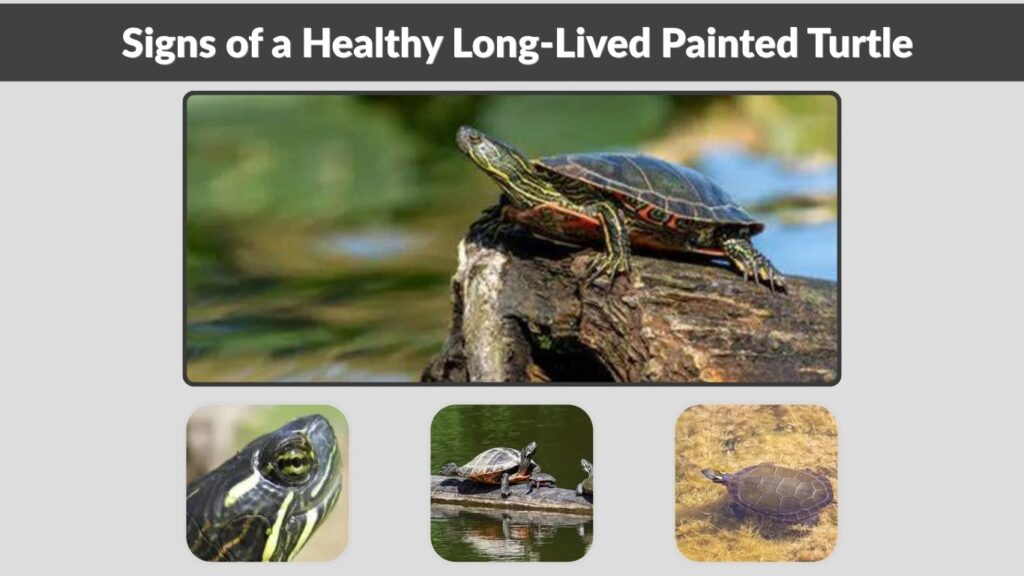
A painted turtle that lives a long life usually shows steady activity, good appetite, clear eyes, and a strong shell. Regular observation helps owners notice problems early before they become serious.
Healthy Behavior
A healthy painted turtle should swim normally, bask regularly, and respond to movement around the tank. It may be active during the day and rest at night.
Healthy signs include:
- Clear, open eyes
- Smooth swimming
- Regular basking
- Good appetite
- Firm shell
- Normal breathing
- Alert response to surroundings
A turtle that suddenly stops eating, avoids basking, floats oddly, or keeps its eyes closed may need attention.
Shell and Skin Condition
The shell should be firm and not soft, smelly, or covered in unusual patches. Some shedding is normal, but deep pits, white fuzzy areas, bleeding, or bad odor are warning signs.
Skin should look clean and not swollen. Minor shedding can happen, especially as turtles grow, but severe irritation may signal poor water quality or infection.
When to Seek Help
If a painted turtle shows signs of illness, it is better to act early. Reptiles often hide sickness until the problem becomes serious. A reptile veterinarian can help with diagnosis and treatment.
Warning signs include:
- Refusing food for a long time
- Swollen eyes
- Wheezing or bubbles from the nose
- Soft shell
- Shell wounds
- Floating sideways
- Extreme weakness
- Red or swollen skin
Fast action can protect a turtle’s long-term health.
How to Help a Painted Turtle Live Longer
A long lifespan starts with consistent care. Painted turtles need daily checks, clean water, correct lighting, and a proper diet. Small mistakes repeated over time can shorten their life.
Build the Right Tank Setup
A proper painted turtle tank should be large, filtered, heated, and equipped with basking and UVB areas. The turtle must be able to swim freely and climb out of the water with ease.
The tank should grow with the turtle. A hatchling setup will not be enough for an adult. Planning for adult size is one of the best ways to support long-term health.
Keep Water Clean
Clean water protects the turtle from many health problems. Painted turtles are messy eaters, so the filter should be strong enough for the tank. Regular partial water changes are also important.
Remove leftover food when possible. Check the filter often and clean it as needed. Cloudy or smelly water is a sign that the habitat needs attention.
Feed a Balanced Diet
A balanced diet helps painted turtles grow properly and stay strong. Use quality turtle pellets as part of the diet, but also include safe greens and occasional protein foods.
Avoid overfeeding. Too much food can cause obesity and dirty water. Adult painted turtles usually do not need to eat as often as babies, so feeding schedules should change with age.
FAQs
How long do painted turtles live as pets?
Pet painted turtles often live 25 to 40 years with proper care. Their lifespan depends on tank size, clean water, UVB lighting, basking heat, diet, and overall health. A poorly kept turtle may live much shorter, even if it is protected from wild predators.
How long do painted turtles live in the wild?
In the wild, painted turtles commonly live around 20 to 30 years. Many eggs and hatchlings do not survive because of predators, but adults can live a long time in clean ponds, marshes, lakes, and slow-moving freshwater habitats.
How long do western painted turtles live?
Western painted turtles usually live around 20 to 30 years in the wild. In captivity, they may live 30 years or longer with excellent care. Because they can grow larger than some painted turtle types, they need plenty of swimming space.
How long do eastern painted turtles live?
Eastern painted turtles can live around 20 to 30 years in natural habitats. As pets, they may live 25 to 40 years when kept in a clean, spacious tank with UVB light, a warm basking dock, and a balanced diet.
Can painted turtles live 40 years?
Yes, painted turtles can live close to 40 years in captivity when their care is excellent. Long life requires clean water, proper heating, UVB lighting, good food, enough space, and early treatment if health problems appear.