
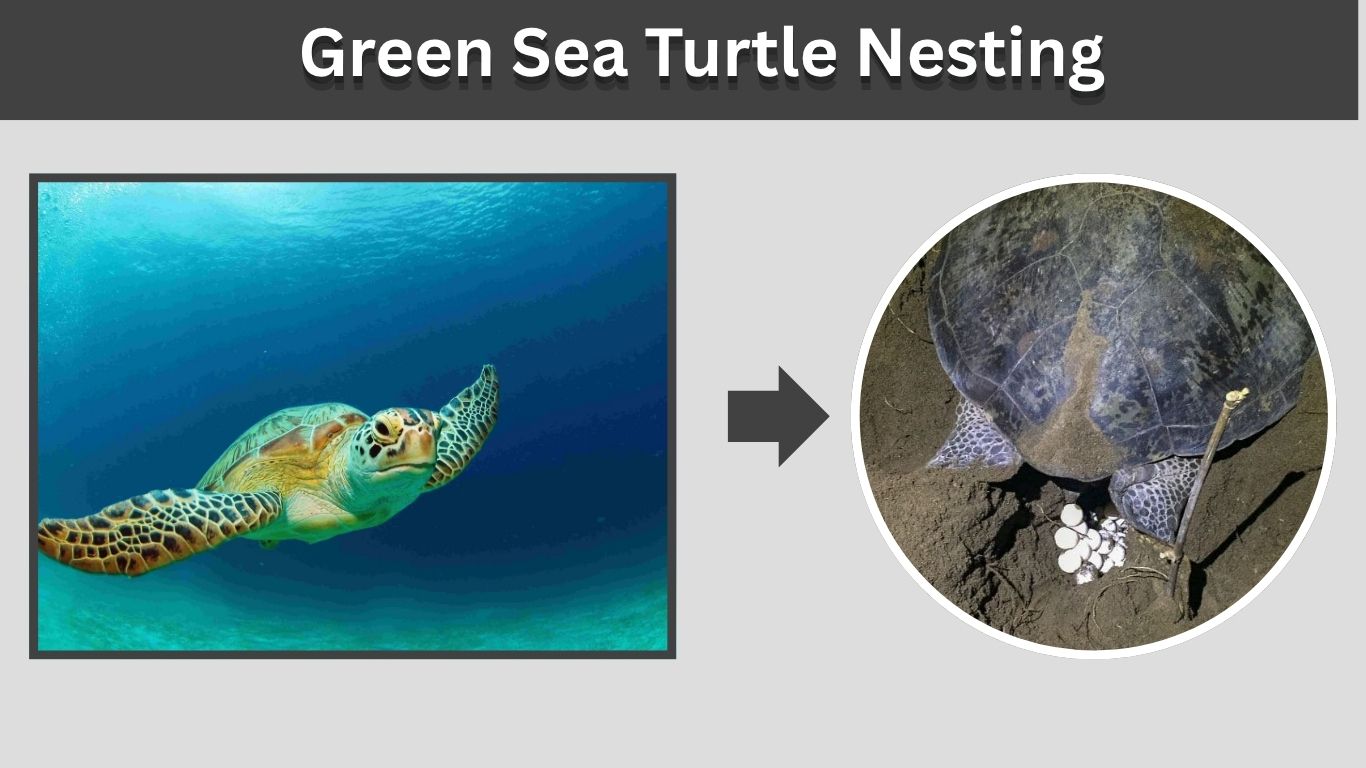
Green sea turtle nesting is one of the most important events in the life cycle of this ocean reptile. Adult females travel long distances to return to sandy beaches, dig nests, lay eggs, and leave the young to hatch on their own. Nesting season, beach choice, egg survival, and human disturbance all affect how many hatchlings safely reach the ocean.
What Is Green Sea Turtle Nesting?
Green sea turtle nesting is the process where adult female green turtles come ashore to lay eggs in sandy beach nests. Unlike their mostly marine life, nesting requires females to leave the water, crawl above the tide line, dig a chamber, deposit eggs, cover the nest, and return to the sea.
Green turtles are the largest hard-shelled sea turtles and are mostly herbivorous as adults, feeding mainly on seagrasses and algae. Their nesting behavior is closely tied to beach quality, temperature, moonlight, tides, and long-term memory of natal beaches. NOAA notes that female sea turtles eventually return to nesting beaches after years at sea.
Why Nesting Matters
Nesting beaches are critical because every green turtle begins life in a hidden sand chamber. If nesting beaches are lost to erosion, lighting, construction, storms, or sea level rise, future turtle populations can decline.
Healthy nesting areas provide:
- Dry sand above the high tide line
- Safe distance from waves and flooding
- Dark beaches with little artificial light
- Low human disturbance at night
- Suitable sand temperature for egg development
- Fewer predators and fewer obstacles for hatchlings
A single protected nesting beach can support thousands of eggs across a season, but only a small number of hatchlings survive to adulthood.
Green Sea Turtle Nesting Season
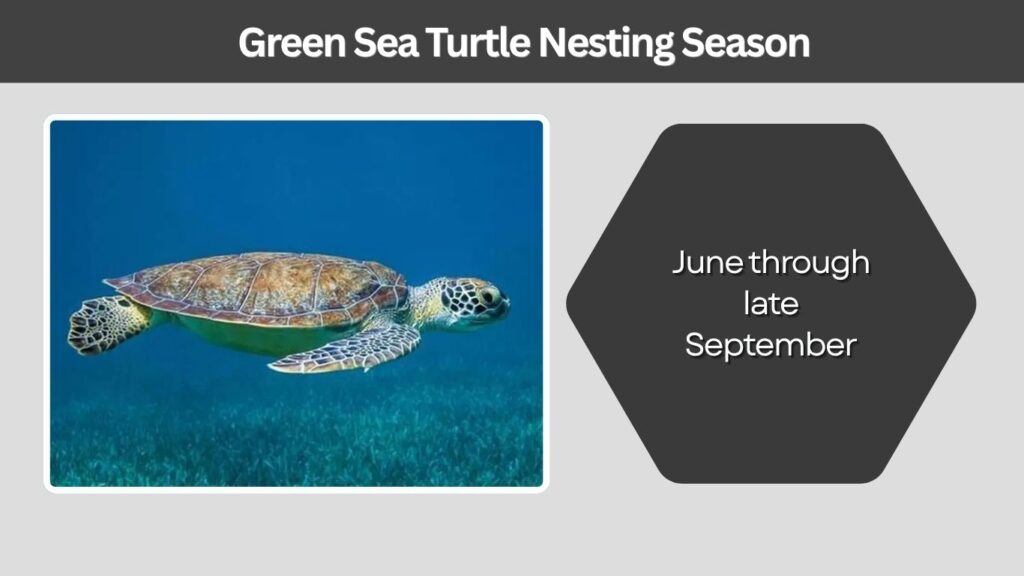
Green sea turtle nesting season changes by region. In warm tropical and subtropical areas, nesting may happen during different months depending on local climate, water temperature, rainfall, and beach conditions.
In Florida, green turtle nesting occurs mainly from June through late September. FWC reports that a female usually returns every two to three years and lays an average of 3.6 clutches in a nesting season, with about 128 eggs per clutch.
In Hawaii, green sea turtle nesting is underway during summer, with peak nesting from August through November, according to the Hawaii Department of Land and Natural Resources.
In Costa Rica’s Tortuguero area, green turtle nesting is strongly associated with the July to October period. Tortuguero is one of the most famous green turtle nesting sites in the Western Hemisphere.
| Nesting Location | Main Nesting Season | Important Note |
|---|---|---|
| Florida | June to late September | Females may lay several clutches in one season |
| Hawaii | Peak from August to November | Hawaiian green turtles are locally known as honu |
| Tortuguero, Costa Rica | July to October | Major nesting site for Atlantic green turtles |
| South Texas | Limited nesting records | Green turtles nest in small numbers in some areas |
When Do Green Sea Turtles Nest?
Green sea turtles usually nest at night. Darkness helps protect nesting females from heat stress and reduces the chance of disturbance. After coming ashore, the female slowly crawls to a suitable location, often above the high tide line, then begins digging.
The full nesting process may take one to three hours. If the turtle is disturbed by lights, people, noise, dogs, or obstacles, she may return to the sea without laying eggs. This is often called a false crawl.
Where Do Green Sea Turtles Nest?
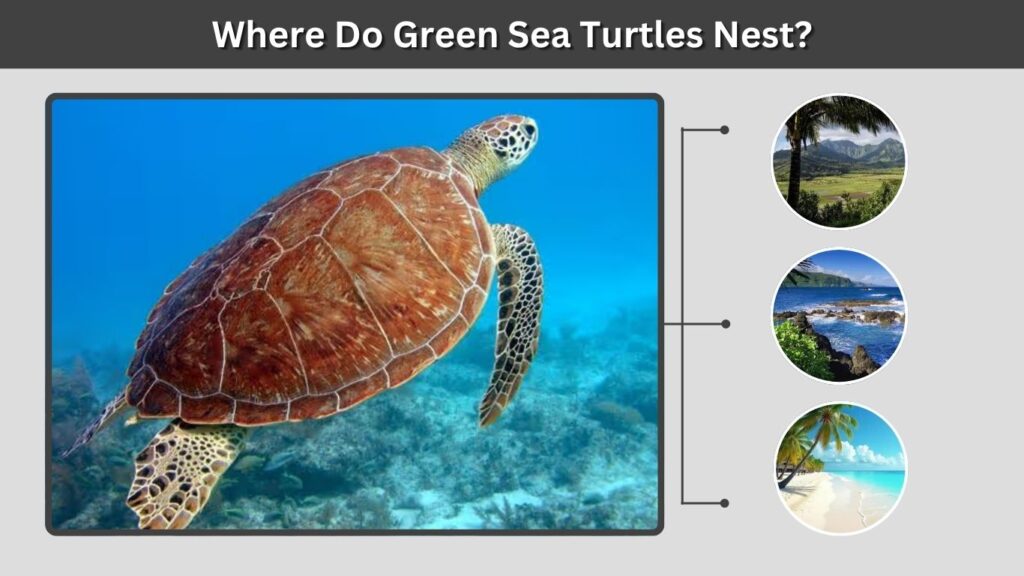
Green sea turtles nest on sandy beaches in tropical and subtropical regions around the world. They usually prefer quiet beaches with enough dry sand for nest chambers. Many females show strong site fidelity, meaning they often return to the same region or even the same beach where they previously nested.
Major green sea turtle nesting areas include Florida, Hawaii, Costa Rica, parts of the Caribbean, Mexico, Australia, and islands across the Pacific and Indian Oceans. Tortuguero, Costa Rica, is especially important because its long black-sand beach has supported green turtle research and monitoring for decades. The Sea Turtle Conservancy describes Tortuguero as a major nesting site for green turtles in the Western Hemisphere.
Green Sea Turtle Nesting Grounds
Good nesting grounds are not random. A female green turtle needs a beach that gives eggs a chance to incubate safely. The best nesting sites are usually wide, sandy, dark, and relatively undisturbed.
Common nesting ground features include:
- Sandy beaches that are easy to dig
- Areas above the normal high tide line
- Natural darkness for adult turtles and hatchlings
- Limited beach traffic at night
- Few hard barriers such as seawalls
- Stable sand that does not flood easily
- Access from the ocean without rocks or heavy debris
Because green sea turtles are long-lived and slow to mature, damage to nesting grounds can affect populations for many years.
Green Sea Turtle Nesting Behavior
Green sea turtle nesting behavior is slow, careful, and highly instinctive. The female leaves the water, crawls across the beach, chooses a nesting spot, clears loose sand, digs a body pit, and then uses her rear flippers to dig a deeper egg chamber.
Once the chamber is ready, she lays soft, round eggs. After laying, she covers the nest with sand and may scatter loose sand around the area to make the nest harder for predators to find. Then she returns to the ocean and does not care for the eggs or hatchlings.
Nesting Steps
The nesting process usually follows this pattern:
- The female comes ashore at night.
- She crawls above the tide line.
- She chooses a nesting location.
- She digs a body pit with her front flippers.
- She digs an egg chamber with her rear flippers.
- She lays a clutch of eggs.
- She covers and disguises the nest.
- She returns to the ocean.
A female may nest multiple times in one season, usually with intervals between nesting events. This strategy increases the chance that at least some eggs survive.
Green Sea Turtle Eggs and Incubation
Green sea turtle eggs are round, leathery, and usually white. They are not hard like bird eggs because they need flexibility inside the sandy nest. The eggs incubate underground, protected by sand from direct sun, wind, and many predators.
Temperature plays an important role in sea turtle development. Warmer sand generally produces more female hatchlings, while cooler sand tends to produce more males. This makes climate change and beach temperature serious concerns for future turtle populations.
How Many Eggs Are in a Green Sea Turtle Nest?
A green sea turtle nest often contains more than 100 eggs. In Florida, FWC reports an average clutch size of about 128 eggs. However, the number can vary depending on the female’s size, age, health, location, and nesting season.
Important egg facts:
- A female can lay several clutches in one season.
- Eggs usually stay buried for several weeks before hatching.
- Hatchlings emerge together, often at night.
- Baby turtles use natural light over the ocean to find the water.
- Artificial lights can confuse hatchlings and lead them inland.
Green Sea Turtle Hatchlings and Survival
After incubation, hatchlings break out of their eggs and climb upward through the sand. They usually emerge at night when the sand is cooler and predators may be less active. Once they reach the surface, they crawl quickly toward the brightest natural horizon, which should be the ocean.
The journey from nest to ocean is dangerous. Hatchlings may face crabs, birds, raccoons, dogs, tire tracks, beach furniture, holes in the sand, and artificial lighting. Even after reaching the water, they face fish, seabirds, and other marine predators.
Chance of Survival from Nest to Ocean
Many hatchlings may reach the water from a successful nest, but survival to adulthood is very low. Sea turtles use a high-number reproductive strategy: females lay many eggs because most young turtles will not survive.
Threats during the nest-to-ocean journey include:
- Predation by birds, crabs, and mammals
- Disorientation from artificial beach lighting
- Sand compaction from vehicles or heavy foot traffic
- Beach furniture blocking the path
- Storm washouts and flooding
- Plastic waste and coastal debris
- Human handling or disturbance
This is why beach protection during nesting and hatching season is so important.
Green Sea Turtle Nesting in Florida
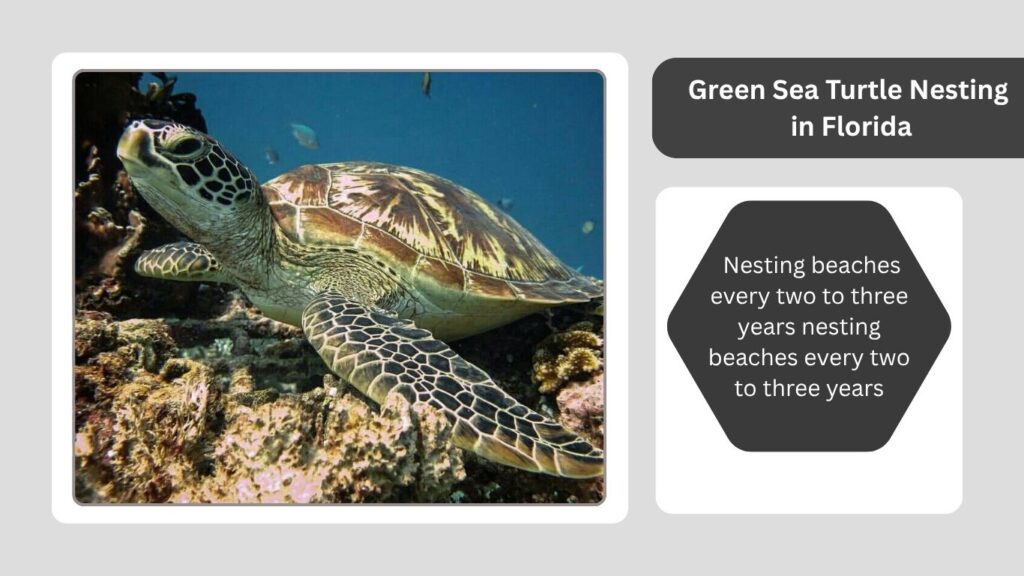
Florida is one of the most important green turtle nesting areas in the United States. Green turtle nesting there happens mainly from June through late September. Females often return to nesting beaches every two to three years and may lay multiple clutches during a season.
Florida also has long-term nesting surveys that help researchers track population trends. NOAA has reported that green turtle nesting in Florida has increased over the past 40 years, showing how protection, monitoring, and conservation laws can support recovery.
Do Green Sea Turtles Nest in Florida?
Yes, green sea turtles nest in Florida. They are especially known from Atlantic coast nesting beaches, although nesting data can vary by year and county. Florida’s nesting beaches are monitored by trained survey teams, conservation groups, and wildlife agencies.
To protect nests in Florida:
- Keep lights off or use turtle-friendly lighting near beaches.
- Remove beach chairs, umbrellas, and toys at night.
- Never touch nesting turtles or hatchlings.
- Fill holes and flatten sandcastles before leaving.
- Keep dogs away from nesting areas.
- Follow marked nest signs and local rules.
Green Sea Turtle Nesting in Hawaii and Costa Rica
Hawaii and Costa Rica are both important places for green sea turtle nesting, but their seasons and nesting patterns differ.
In Hawaii, green sea turtles are called honu. Nesting activity has increased in recent years, and peak nesting is reported from August through November. Hawaiian green turtles are protected by state and federal laws.
In Costa Rica, Tortuguero is one of the world’s best-known places to see green sea turtle nesting. The nesting season is commonly described from July to October, and long-term monitoring has been carried out there for decades.
Why Tortuguero Is Famous
Tortuguero is famous because of its long beach, historic research, and large number of nesting green turtles. The area has played a major role in sea turtle conservation science. Visitors can sometimes observe nesting through guided tours, but strict rules are needed to avoid disturbing turtles.
Responsible viewing means staying quiet, avoiding flashlights, following guides, and never touching turtles or eggs.
Threats to Green Sea Turtle Nesting Beaches
Green sea turtle nesting beaches face many natural and human-caused threats. Some threats destroy nests directly, while others reduce hatchling success or stop females from nesting.
Major threats include:
- Coastal development and beach armoring
- Artificial lights near nesting beaches
- Sea level rise and beach erosion
- Strong storms and nest flooding
- Human disturbance during nesting
- Illegal egg collection in some regions
- Predators around nesting beaches
- Plastic pollution and beach debris
- Climate change increasing sand temperature
Sea level rise and erosion are especially serious because they can reduce the amount of dry nesting beach available. When beaches become narrow or frequently flooded, eggs may drown or fail to develop.
How to Protect Green Sea Turtle Nests
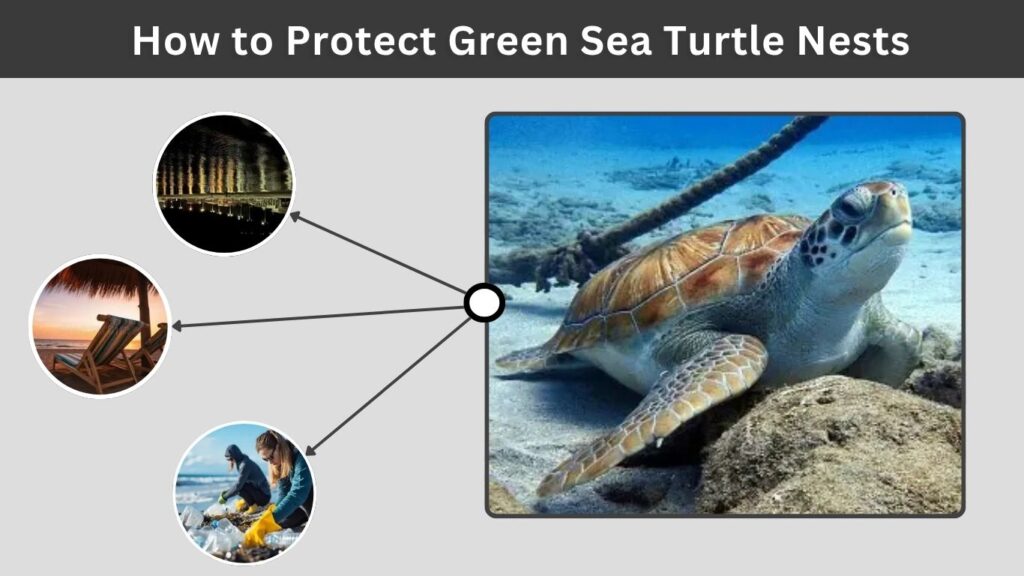
Protecting green sea turtle nests requires action from local communities, tourists, homeowners, and conservation agencies. Simple beach behavior can make a big difference during nesting season.
Helpful actions include:
- Turn off beachfront lights at night.
- Use red or amber turtle-safe lighting where required.
- Keep beaches clean and free of plastic.
- Remove beach furniture before sunset.
- Do not walk on marked nests.
- Never dig up eggs or move hatchlings.
- Stay far away from nesting females.
- Report injured turtles or disturbed nests to local wildlife authorities.
- Support protected beaches and conservation programs.
Green sea turtles have survived for millions of years, but their nesting success now depends heavily on how people manage beaches.
FAQs
When is green sea turtle nesting season?
Green sea turtle nesting season depends on location. In Florida, nesting occurs mainly from June through late September. In Hawaii, peak nesting is often August through November. In Tortuguero, Costa Rica, green turtle nesting is commonly seen from July to October.
Where do green sea turtles nest?
Green sea turtles nest on sandy tropical and subtropical beaches. Important nesting areas include Florida, Hawaii, Costa Rica, the Caribbean, Mexico, Australia, and many Pacific and Indian Ocean islands. Females often return to the same general beach area used in previous nesting seasons.
How many eggs are in a green sea turtle nest?
A green sea turtle nest commonly contains more than 100 eggs. In Florida, the average clutch is reported at about 128 eggs. A female may lay several clutches in one season, which improves the chance that some hatchlings survive.
Do green sea turtles sit on their nests?
No, green sea turtles do not sit on their nests like birds. After laying eggs and covering the nest with sand, the female returns to the ocean. The eggs incubate underground, and hatchlings must emerge and reach the sea without parental care.
Why do hatchlings go toward the ocean?
Green sea turtle hatchlings usually move toward the brightest natural horizon, which should be moonlight or starlight reflecting over the ocean. Artificial lights from homes, roads, and hotels can confuse hatchlings and lead them away from the water.