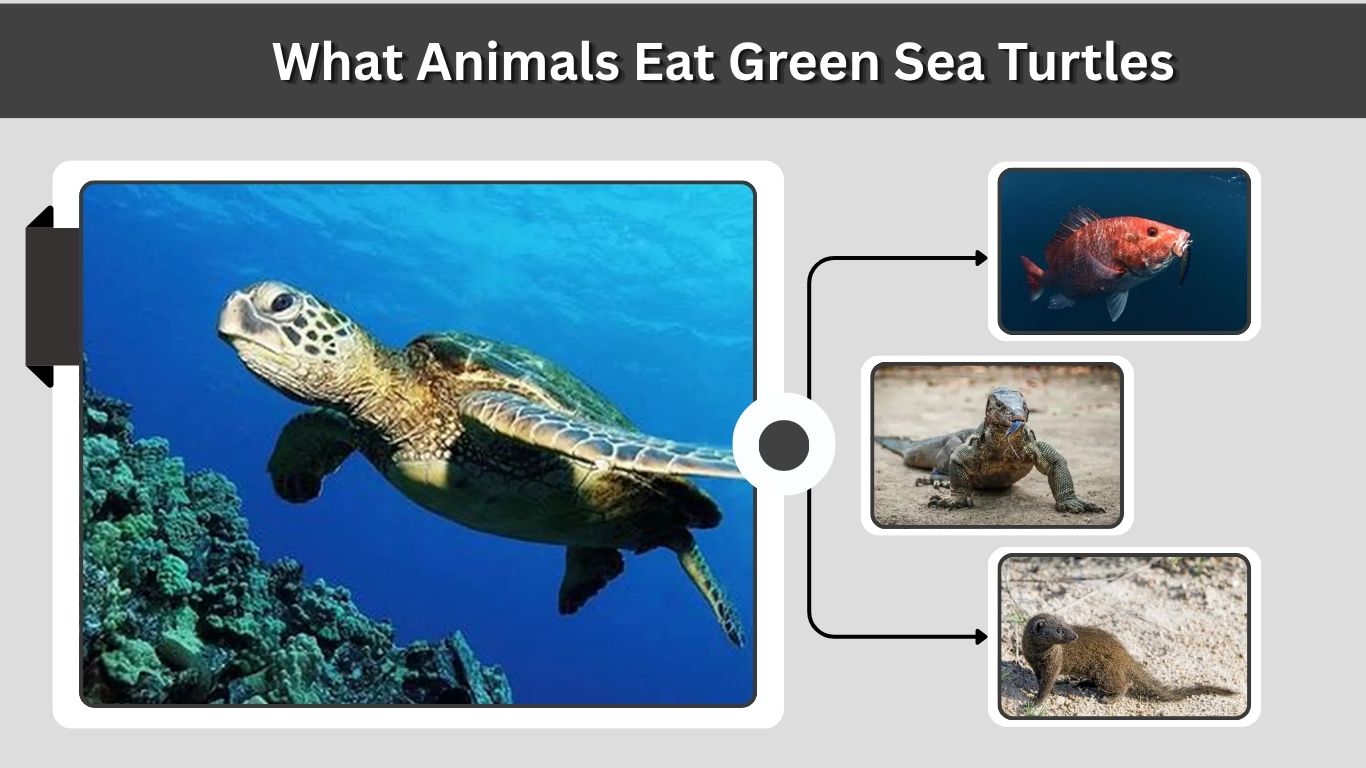
Green sea turtles are large marine reptiles, but they are not safe from predators at every stage of life. Their eggs, hatchlings, juveniles, and even adults can be eaten by different animals. Baby turtles face the highest danger because they are small, soft-bodied, and exposed on beaches and in shallow water. Adult green sea turtles have fewer natural predators, but sharks and large marine hunters can still attack them.
What Type of Animal Is a Green Sea Turtle?
Green sea turtles are marine reptiles that spend most of their lives in warm ocean waters. They belong to the animal kingdom, the reptile class, and the sea turtle group. Like other reptiles, they breathe air, lay eggs, have scaly skin, and depend on external temperatures to help regulate body heat.
Unlike land turtles, green sea turtles are built for life in the ocean. Their front limbs are shaped like flippers, helping them swim long distances. They cannot pull their head and flippers fully inside the shell like many freshwater turtles can. This makes them fast swimmers but also leaves them exposed to some predators.
Green Sea Turtle Animal Classification
- Kingdom: Animalia
- Phylum: Chordata
- Class: Reptilia
- Order: Testudines
- Family: Cheloniidae
- Genus: Chelonia
- Species: Chelonia mydas
Green sea turtles are mostly herbivorous as adults. They feed mainly on seagrass and algae, which is one reason they are called “green” turtles. The name does not come from the shell color but from the greenish fat inside their body, influenced by their plant-based diet.
What Animals Eat Green Sea Turtle Eggs?
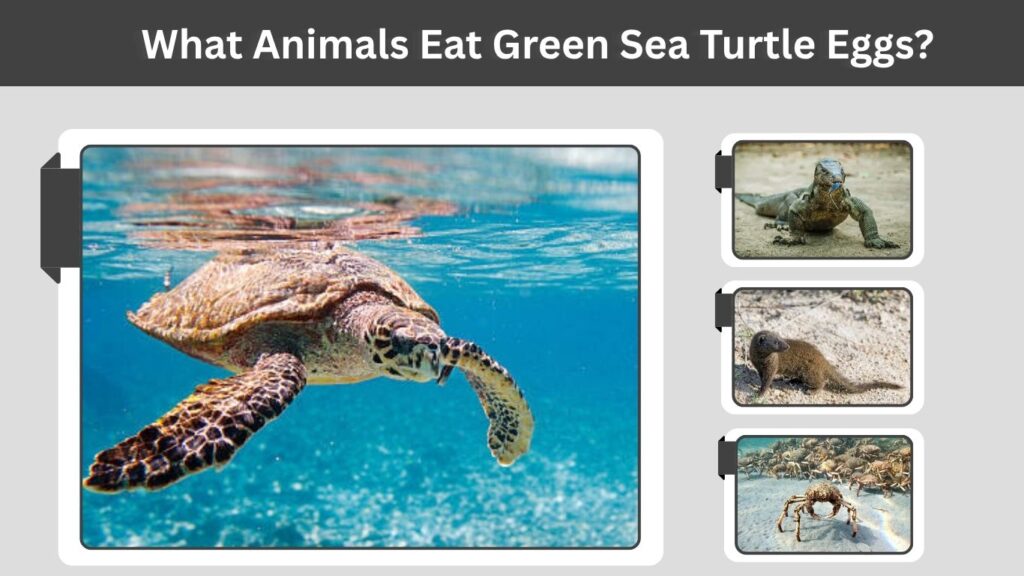
Green sea turtle eggs are among the easiest targets for predators. A female turtle lays her eggs in a sandy beach nest and then returns to the ocean. She does not guard the eggs, so predators may dig up the nest before the hatchlings develop.
Many animals use smell to locate buried turtle eggs. Once a nest is found, a predator may eat many eggs at once. In some nesting areas, egg predation can be a major reason for low hatching success.
Animals That Dig Up Green Sea Turtle Eggs
Common egg predators include:
- Raccoons
- Foxes
- Coyotes
- Wild dogs
- Feral pigs
- Mongooses
- Monitor lizards
- Crabs
- Ants
- Birds
- Rats
In coastal areas near human development, raccoons, dogs, and rats may become especially serious threats. When people leave food trash on beaches, it can attract more predators. These animals may then discover sea turtle nests more easily.
Eggs are rich in nutrients, so they are valuable food for many beach animals. This is why conservation teams often mark nests, install predator screens, or move at-risk nests in some protected areas.
What Animals Eat Green Sea Turtle Hatchlings?
Green sea turtle hatchlings face danger as soon as they leave the nest. After digging out of the sand, they must crawl across the beach to reach the ocean. This short journey can be one of the most dangerous parts of their life.
Hatchlings are small, slow on land, and easy to spot. Many predators wait near nesting beaches during hatching season. Some hatchlings are eaten before they even reach the water. Others are attacked in the surf zone or shortly after entering the sea.
Main Predators of Hatchlings
Hatchling green sea turtles may be eaten by:
- Ghost crabs
- Raccoons
- Foxes
- Coyotes
- Feral dogs
- Seagulls
- Herons
- Frigatebirds
- Crows
- Fish
- Sharks
- Eels
- Octopuses
Birds often attack hatchlings during the beach crawl. Crabs may pull them into burrows or injure them before they reach the water. In the ocean, fish and other marine predators quickly take advantage of the small, soft young turtles.
Because so many hatchlings are eaten, green sea turtles lay many eggs. This helps balance the high death rate during early life. Still, only a small percentage of hatchlings survive long enough to become adults.
What Animals Eat Juvenile Green Sea Turtles?
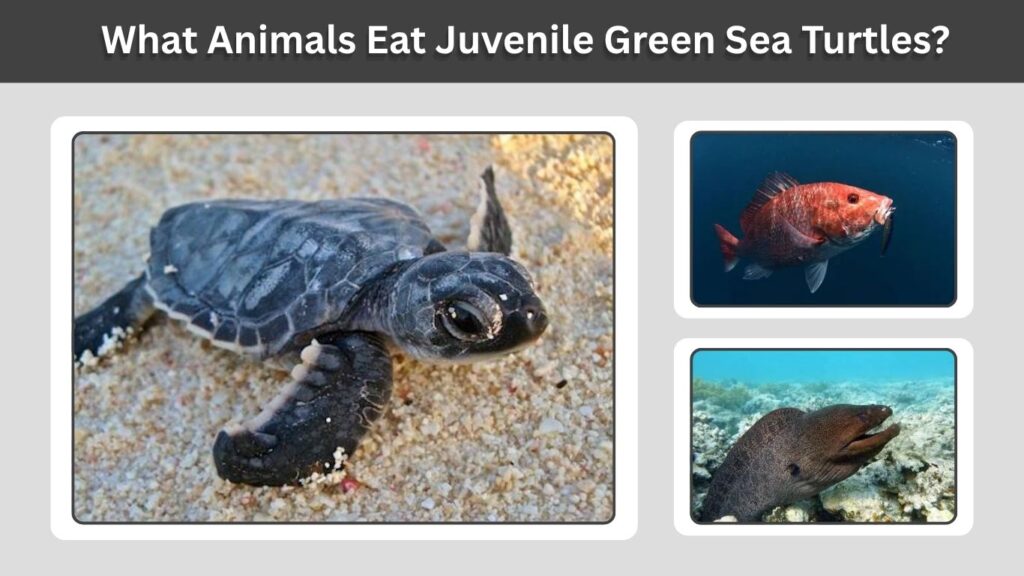
Juvenile green sea turtles are larger than hatchlings, but they are still vulnerable. Young turtles often spend time in floating seaweed mats, shallow coastal areas, reefs, lagoons, and seagrass beds. These habitats provide food and cover, but predators are still present.
Juveniles have harder shells than hatchlings, but their shells are not enough to protect them from strong jaws. Large fish, sharks, and marine mammals may attack them. In some places, birds may also prey on smaller juveniles near the surface.
Juvenile Turtle Predators
Juvenile green sea turtles may be hunted by:
- Tiger sharks
- Reef sharks
- Large groupers
- Barracudas
- Large snappers
- Moray eels
- Killer whales in some regions
- Large seabirds near shallow water
As juvenile turtles grow, their survival chances improve. Their shells become stronger, their swimming ability improves, and they become harder for many predators to swallow. However, they are still at risk in open water and predator-rich coastal habitats.
What Animals Eat Adult Green Sea Turtles?
Adult green sea turtles have fewer natural predators than eggs, hatchlings, or juveniles. Their large size and hard shell protect them from many animals. However, adult turtles are not completely safe. Some powerful marine predators can still attack them.
The most important natural predator of adult green sea turtles is the tiger shark. Tiger sharks have strong jaws and sharp teeth that can crush or tear through tough prey. In places like Hawaii and Australia, tiger sharks are known to prey on sea turtles.
Adult Green Sea Turtle Predators
Adult green sea turtles may be eaten or attacked by:
- Tiger sharks
- Great white sharks
- Bull sharks
- Large reef sharks
- Killer whales in some areas
- Large crocodiles in rare coastal habitats
Shark attacks often leave scars on adult turtles. Some turtles survive attacks with missing flippers or damaged shells. Others are killed and eaten. Adult green sea turtles are strong swimmers, but they must surface to breathe, which can expose them to predators.
How Do Green Sea Turtles Avoid Predators?
Green sea turtles have several natural defenses, although these defenses are not perfect. Their main protection is their shell, which covers much of the body. Adult turtles also rely on swimming speed, diving ability, camouflage, and large size.
Hatchlings have fewer defenses. Their best strategy is to emerge together in large numbers, usually at night. This is called predator swamping. When many hatchlings leave the nest at once, predators may eat some, but others have a better chance of escaping.
Green Sea Turtle Defense Methods
Green sea turtles avoid predators by using:
- Hard shells for body protection
- Strong flippers for fast swimming
- Dark nighttime nesting and hatching behavior
- Camouflage in seagrass and reef habitats
- Group emergence by hatchlings
- Long-distance swimming to safer feeding areas
Adult turtles also reduce danger by feeding in areas where they can escape quickly. However, when they come to the surface for air or rest in shallow water, they may become easier targets for sharks.
Green Sea Turtles and Other Marine Animals
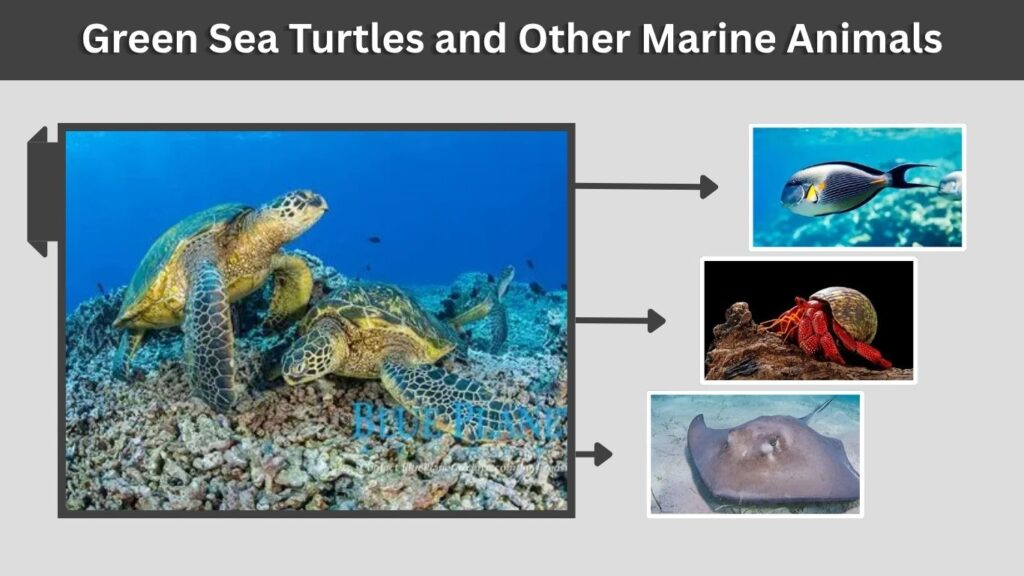
Green sea turtles interact with many animals in the ocean. Some animals are predators, while others share habitat or even benefit from the turtle’s presence. Green turtles often live around seagrass beds, coral reefs, lagoons, and coastal feeding areas.
Their grazing helps keep seagrass beds healthy. By eating seagrass, green turtles encourage new growth and help maintain the balance of the ecosystem. Healthy seagrass beds provide shelter and food for fish, crabs, shrimp, and many other marine animals.
Animals That Live Near Green Sea Turtles
Green sea turtles may share habitat with:
- Reef fish
- Parrotfish
- Surgeonfish
- Rays
- Crabs
- Shrimp
- Jellyfish
- Seabirds
- Sharks
- Dolphins
- Seagrass invertebrates
Some fish may clean algae or parasites from turtle shells. This type of interaction can benefit the turtle while giving small fish a food source. In reef areas, turtles are part of a larger ocean community.
What Animals Do Green Sea Turtles Eat?
Adult green sea turtles mostly eat plants, especially seagrass and algae. However, young green turtles may eat more animal matter than adults. Juveniles can feed on small marine animals while they are growing.
This means green sea turtles are not major predators like sharks, but they still interact with small animals as part of their diet, especially early in life.
Foods Green Sea Turtles May Eat
Green sea turtles may eat:
- Seagrass
- Algae
- Seaweed
- Sponges
- Jellyfish
- Small crustaceans
- Small mollusks
- Worms
- Fish eggs
As they mature, their diet becomes more plant-based. Their grazing behavior is important for ocean habitats because it helps prevent old seagrass from becoming too dense and unhealthy.
Why Are Green Sea Turtles Endangered?
Green sea turtles are endangered in many parts of the world because of both natural and human-caused threats. Predators are part of the natural ecosystem, but human pressure has made survival harder.
Natural predators usually affect eggs and hatchlings. Human threats, however, can affect every life stage. Fishing gear, boat strikes, plastic pollution, coastal development, illegal egg collection, and climate change can all reduce green turtle populations.
Major Threats to Green Sea Turtles
Important threats include:
- Accidental capture in fishing nets and hooks
- Loss of nesting beaches
- Artificial lights confusing hatchlings
- Egg poaching in some areas
- Plastic bags mistaken for food
- Boat strikes
- Climate change
- Sea level rise
- Beach erosion
- Pollution and disease
When adult females are killed, the impact is especially serious because they are the ones producing future generations. Green sea turtles take many years to mature, so population recovery is slow.
Are Predators Bad for Green Sea Turtles?
Predators are not “bad” for green sea turtles. They are a natural part of the ecosystem. Crabs, birds, sharks, and fish have always eaten turtle eggs, hatchlings, and sometimes adults. This natural predation helps maintain balance in coastal and marine food webs.
The real problem happens when human activity increases predator pressure. For example, garbage near beaches can attract raccoons, rats, and dogs. Beach development can reduce nesting space and make nests easier for predators to find. Artificial lights can cause hatchlings to crawl in the wrong direction, giving predators more time to catch them.
Natural predation is expected. Human-caused disturbance is what makes survival more difficult.
How People Can Help Green Sea Turtles Survive
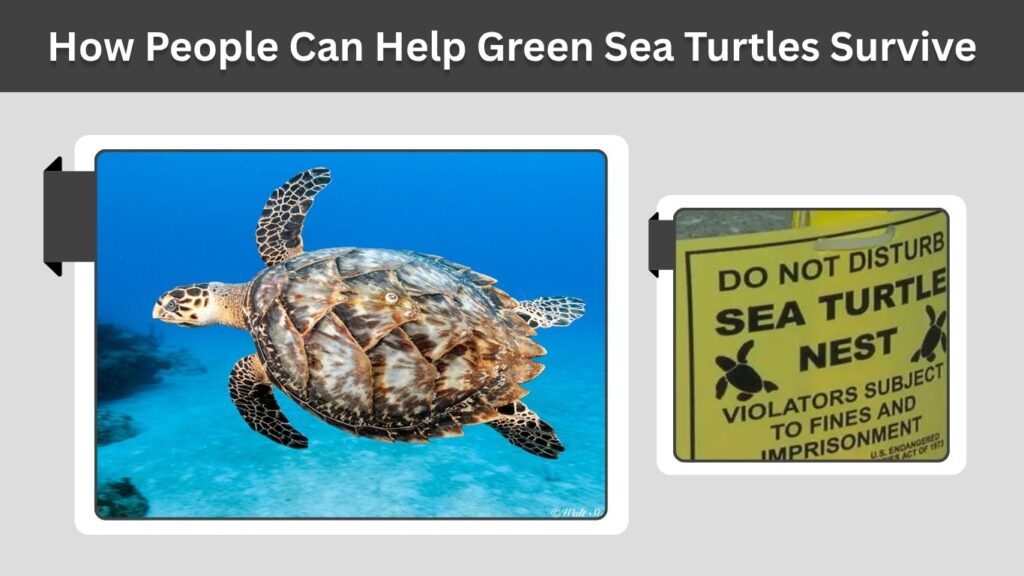
People can help green sea turtles by protecting nesting beaches and reducing danger in the ocean. Small actions during nesting season can save many hatchlings.
Beach visitors should avoid disturbing marked nests, keep lights off at night, remove beach furniture, and never touch hatchlings. Boaters should watch for turtles near the surface. Fishers can use turtle-safe gear and follow local rules to reduce accidental capture.
Protecting green sea turtles also protects many other marine animals. Healthy turtles support seagrass beds, coral reef systems, and coastal biodiversity.
FAQs
What animal eats green sea turtles?
Tiger sharks are one of the main predators of adult green sea turtles. Hatchlings and eggs are eaten by many animals, including crabs, birds, raccoons, foxes, fish, and dogs. Young turtles may also be eaten by large fish, sharks, and eels.
What animals eat green sea turtle eggs?
Green sea turtle eggs are eaten by raccoons, foxes, coyotes, dogs, pigs, mongooses, monitor lizards, crabs, rats, ants, and some birds. These animals often dig into sandy nests and eat the eggs before they hatch.
What animals eat baby green sea turtles?
Baby green sea turtles are eaten by crabs, gulls, herons, crows, raccoons, foxes, dogs, fish, eels, octopuses, and small sharks. Hatchlings are most vulnerable while crawling from the nest to the ocean and during their first days at sea.
Do green sea turtles eat animals?
Yes, young green sea turtles may eat small animals such as jellyfish, worms, crustaceans, mollusks, and fish eggs. Adult green sea turtles are mostly herbivores and feed mainly on seagrass, algae, and seaweed.
Why are green sea turtles endangered?
Green sea turtles are endangered because of fishing gear, boat strikes, plastic pollution, illegal egg collection, coastal development, artificial beach lights, disease, climate change, and loss of nesting habitat. Natural predators affect them too, but human threats are the biggest problem.