
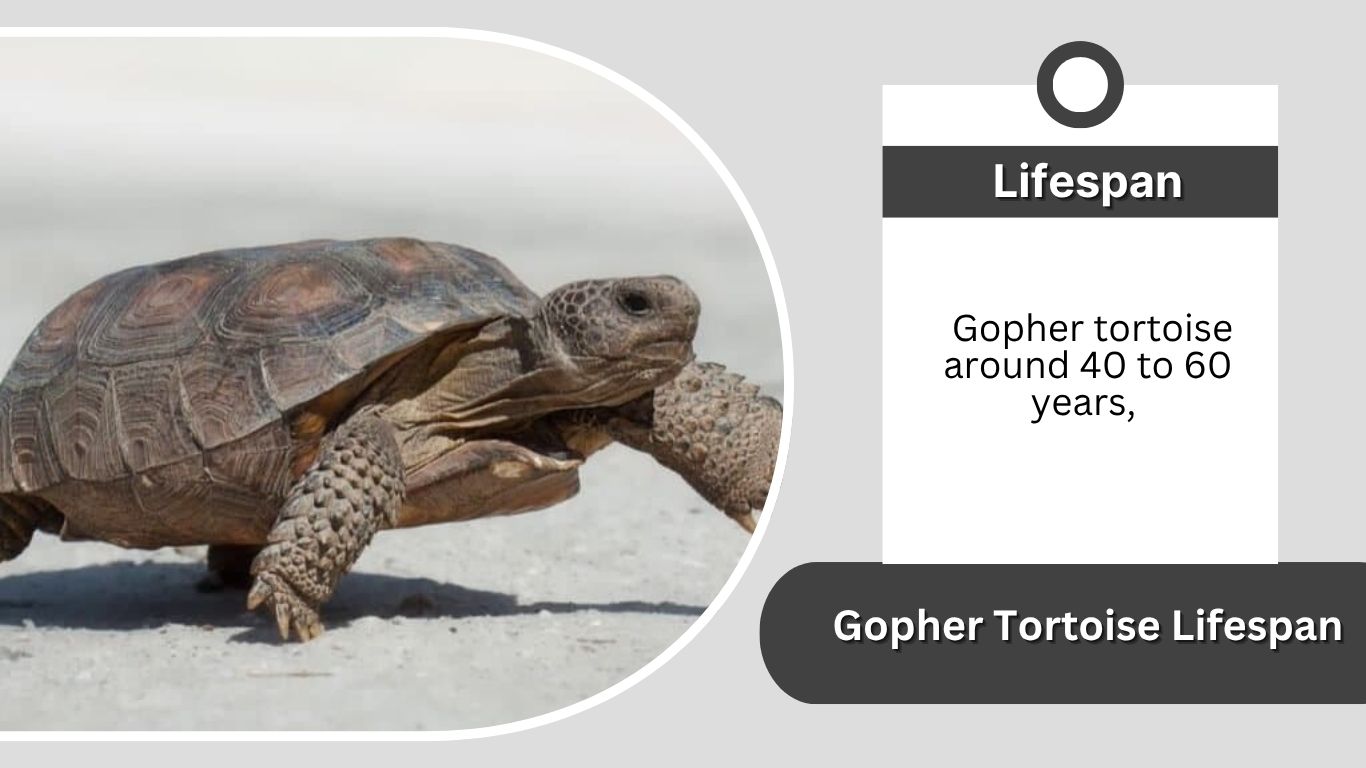
The gopher tortoise is one of the longest-living reptiles in the southeastern United States. Many people are surprised to learn that this slow-moving land tortoise can live for several decades in the wild and even longer in protected care. Its lifespan depends on habitat quality, predators, disease, food supply, and human disturbance. Understanding the gopher tortoise lifespan also explains why conservation is so important for this threatened keystone species.
How Long Do Gopher Tortoises Live?
The average gopher tortoise lifespan is usually measured in decades, not years. These tortoises grow slowly, mature late, and can survive for a long time when they have safe habitat and enough food.
Most reliable wildlife sources place the wild lifespan of a gopher tortoise around 40 to 60 years, while some estimates say they may live 50 to 80 years under good conditions. In captivity or long-term protected care, gopher tortoises may live 90 years or more. FWC states that gopher tortoises can live 40 to 60 years in the wild, while captive tortoises may live 90+ years.
| Lifespan Type | Estimated Age Range |
| Wild gopher tortoise lifespan | 40–60 years commonly reported |
| Possible wild upper range | Around 50–80 years |
| Captive gopher tortoise lifespan | 90+ years possible |
| Known long-lived example | Over 100 years in protected care |
Wild Lifespan
In the wild, gopher tortoises face many natural and human-related risks. Hatchlings and eggs are especially vulnerable to predators, weather, and habitat changes. Adults are much safer than young tortoises, but they still face threats from cars, habitat loss, disease, illegal handling, and construction activity.
A wild gopher tortoise that survives the early years has a much better chance of living for decades. This is why adult tortoises are so important to population survival. They reproduce slowly, so losing mature adults can affect local populations for many years.
Captive Lifespan
The gopher tortoise lifespan in captivity can be much longer than in the wild because the animal is protected from predators, vehicles, starvation, and many habitat dangers. UF/IFAS notes that gopher tortoises can live 60 or more years in the wild and up to 100 years in captivity.
However, this does not mean gopher tortoises should be kept as pets. In places such as Florida, gopher tortoises are protected, and keeping or moving them without permission can be illegal. Captive longevity usually refers to permitted wildlife facilities, museums, sanctuaries, or research settings.
Why Do Gopher Tortoises Live So Long?
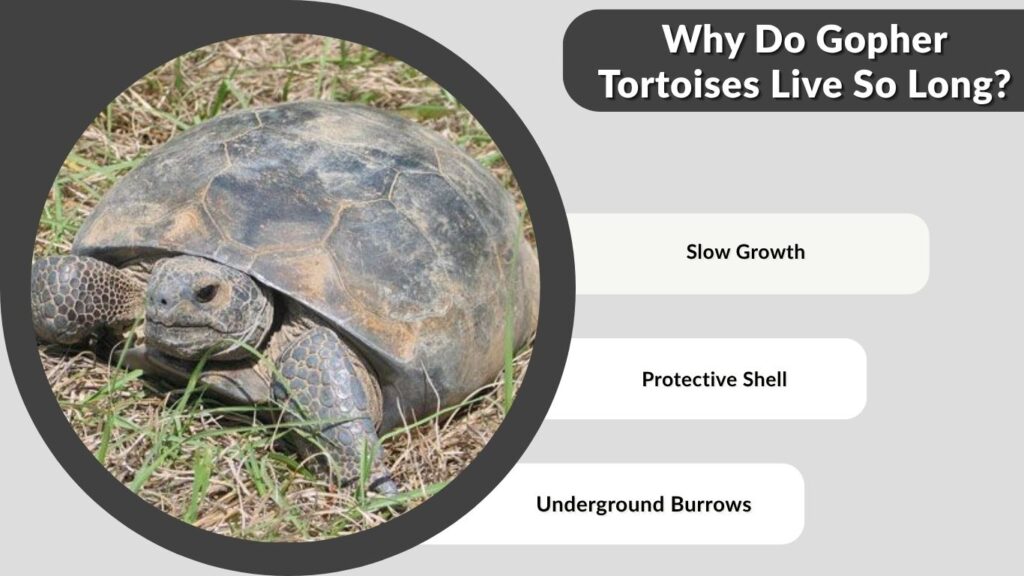
Gopher tortoises live long lives because they have a slow life strategy. They do not grow quickly, reproduce rapidly, or depend on short-term survival. Instead, they mature slowly and may reproduce over many years.
This slow lifestyle is common in tortoises. Their hard shells, burrowing behavior, and ability to survive dry conditions help protect them from many threats.
Slow Growth
Gopher tortoises do not become adults quickly. FWC says males may reach adulthood at about 9 to 12 years of age, while females may take 10 to 21 years depending on local resources and latitude.
Because they mature late, gopher tortoise populations recover slowly after decline. If adults are killed or removed from an area, it can take many years for younger tortoises to replace them.
Protective Shell
A gopher tortoise’s shell helps protect it from many predators. Adult tortoises are much harder for predators to kill than eggs or hatchlings. This protection is one reason adults can live for decades once they pass the vulnerable early stage.
The shell also helps reduce injury from minor impacts, bites, and environmental stress. Still, it does not protect them from cars, heavy machinery, or illegal human handling.
Underground Burrows
The gopher tortoise is famous for digging deep burrows. These burrows protect tortoises from extreme heat, cold weather, wildfires, drought, and predators.
Burrows are also important for the ecosystem. The gopher tortoise is considered a keystone species because many other animals use its burrows for shelter. FWC says gopher tortoises share their burrows with more than 350 other species.
Gopher Tortoise Lifespan by Life Stage
A gopher tortoise’s chance of survival changes greatly from egg to adult. The first few years are the most dangerous, while adults have a much higher survival rate.
This is one reason long-lived adult tortoises are so valuable. A single adult female may contribute to the population over many breeding seasons.
| Life Stage | Age Range | Main Lifespan Challenge |
| Egg | Before hatching | Predators, flooding, nest damage |
| Hatchling | First year | Birds, mammals, snakes, dehydration |
| Juvenile | 1–9+ years | Predators, habitat quality, food supply |
| Adult | 9–21+ years | Roads, disease, development, relocation stress |
| Senior tortoise | 40+ years | Habitat loss, illness, injury |
Egg and Hatchling Stage
The egg and hatchling stages are the most fragile parts of the gopher tortoise life cycle. Females usually lay eggs in sandy soil, often near the burrow apron. Many eggs never hatch because predators dig them up or environmental conditions are poor.
Hatchlings are small and soft compared with adults. Their shells are not fully hardened, which makes them easy targets for predators. Many young tortoises do not survive to adulthood.
Juvenile Stage
Juvenile gopher tortoises are stronger than hatchlings but still vulnerable. They need open, sunny habitat with low-growing plants and sandy soil. If the habitat becomes too shaded or developed, young tortoises may struggle to find enough food and safe shelter.
This stage is important because juveniles are the future breeding population. Conservation programs often focus on improving habitat so young tortoises can survive long enough to become adults.
Adult Stage
Adult gopher tortoises have the best chance of long-term survival. Their larger size, hard shell, and established burrow help protect them. Once they become adults, they may live for several more decades.
Still, adult tortoises are not safe from human-caused threats. Roads, land clearing, habitat fragmentation, illegal relocation, and disease can shorten their lives.
Gopher Tortoise Lifespan Record
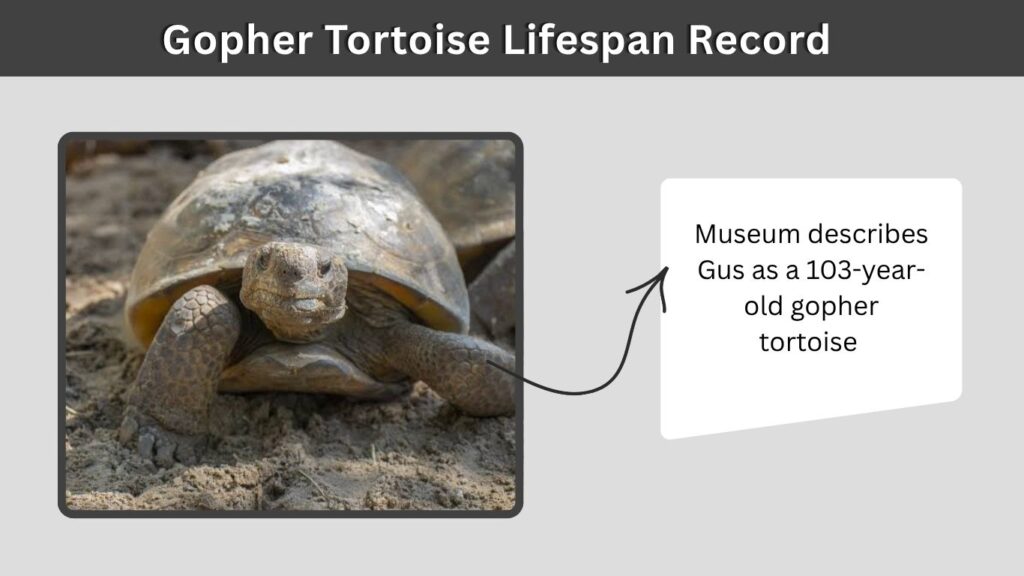
The longest gopher tortoise lifespan is usually discussed through famous individuals kept in protected care. One of the best-known examples is Gus, a gopher tortoise at the Nova Scotia Museum of Natural History.
The museum describes Gus as a 103-year-old gopher tortoise that was born and raised in Florida before coming to the museum in 1942. The museum has also described him as the oldest known living gopher tortoise.
This kind of record shows that gopher tortoises can live far beyond the average wild lifespan when protected from many natural and human dangers. However, Gus is not the normal lifespan for most wild gopher tortoises. A wild tortoise living 40 to 60 years is already considered long-lived.
What Can Shorten a Gopher Tortoise’s Lifespan?
Even though gopher tortoises are naturally long-lived, many threats can reduce their lifespan. Some threats affect eggs and hatchlings, while others affect adults.
The biggest problems are usually connected to habitat loss and human activity. The U.S. Fish and Wildlife Service describes gopher tortoises as a burrowing species found in sandy, open-canopy habitats, which means changes to land use can directly affect their survival.
Habitat Loss
Gopher tortoises need dry, sandy, open habitats where they can dig burrows and find low-growing plants. When forests become too dense, land is cleared, or natural areas are developed, tortoises may lose both shelter and food.
Habitat loss can also isolate populations. When tortoises are trapped in small patches of land, they may have fewer mates and fewer safe places to move.
Road Mortality
Roads are one of the most common dangers for adult gopher tortoises. A tortoise may cross a road while searching for food, mates, or nesting areas. Because they move slowly, they are easily hit by vehicles.
This is especially harmful because adults are the breeding members of the population. Losing one adult can have a bigger long-term effect than losing one young tortoise.
Predators
Predators are a major threat to eggs and hatchlings. Raccoons, foxes, snakes, birds, and other animals may eat eggs or young tortoises. Adult gopher tortoises have fewer natural predators because of their size and shell.
Predation is natural, but it becomes more serious when habitat is already damaged or fragmented. Poor habitat can make young tortoises easier to find and less able to hide.
Disease and Injury
Disease can also affect gopher tortoise lifespan. Respiratory disease, poor nutrition, wounds, and stress from improper handling or relocation may reduce survival.
A healthy tortoise in good habitat has a better chance of living for decades. A stressed tortoise in poor habitat may not reach its natural lifespan.
Do Gopher Tortoises Live Longer Than Other Turtles?
Gopher tortoises are land tortoises, not aquatic turtles. Compared with many common freshwater turtles, they often live longer, especially when they reach adulthood.
Many tortoise species are known for long lifespans because they grow slowly and have strong protective shells. The gopher tortoise follows this pattern, though it does not usually live as long as giant tortoises such as Galápagos or Aldabra tortoises.
Gopher Tortoise vs Turtle Lifespan
A common mistake is calling every shelled reptile a turtle. Technically, tortoises are a type of turtle, but gopher tortoises are land animals. They do not live in ponds and should never be placed in water like aquatic turtles.
Their land-based lifestyle, burrowing behavior, and slow growth all shape their lifespan. A gopher tortoise that lives in safe, dry habitat can survive for many decades.
How Conservation Helps Gopher Tortoises Live Longer
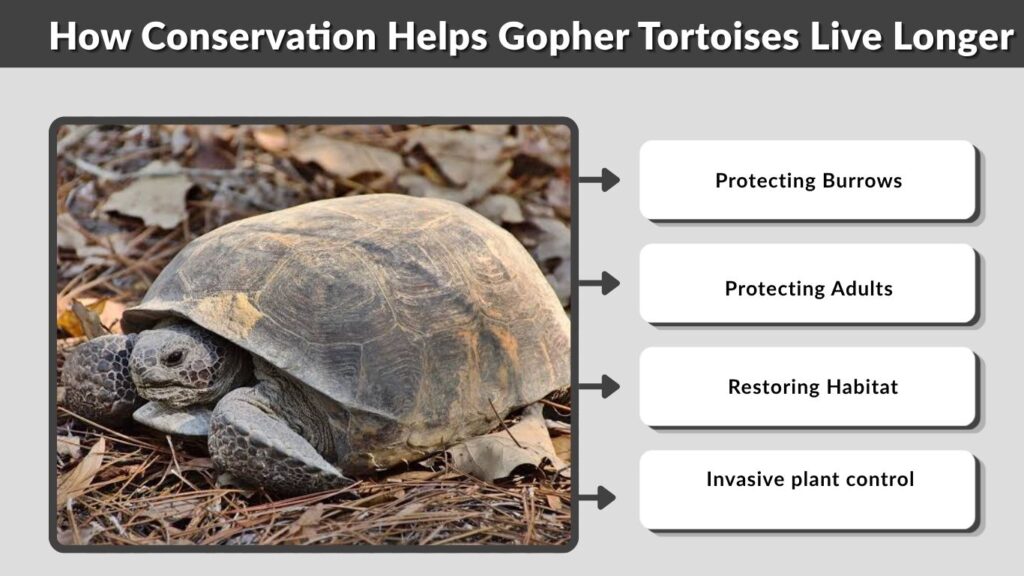
Conservation is important because gopher tortoises need stable habitat for many years. Since they mature slowly and live long lives, protecting adults and burrows is essential.
The Nature Conservancy lists the gopher tortoise lifespan as 40 to 60 years in the wild and 90 years in captivity, while also noting that the species depends on healthy southeastern habitats.
Protecting Burrows
Protecting burrows is one of the best ways to protect gopher tortoises. Burrows provide safety from heat, cold, predators, and fire. If a burrow is crushed, filled, or blocked, the tortoise may be injured or killed.
People should never dig into a gopher tortoise burrow or move a tortoise from its burrow without proper authorization.
Protecting Adults
Because adult gopher tortoises can live and reproduce for many years, protecting them is critical. Every adult has already survived the most dangerous part of life. Removing or killing adults weakens the population.
This is why wildlife agencies often focus on proper permitting, relocation rules, road safety, and habitat management.
Restoring Habitat
Good habitat helps gopher tortoises reach their full lifespan. Open canopy, sandy soil, native grasses, and low-growing plants all support healthy tortoise populations.
Controlled fire, invasive plant control, and careful land management can improve habitat quality. When habitat is restored, tortoises have better food, better nesting areas, and safer burrow sites.
FAQs
What is the average gopher tortoise lifespan?
The average gopher tortoise lifespan is often listed as 40 to 60 years in the wild. Some sources estimate that wild individuals may live 50 to 80 years under good conditions. In captivity or protected care, they may live 90 years or more.
What is the gopher tortoise lifespan in captivity?
The gopher tortoise lifespan in captivity can reach 90+ years, and some individuals may live over 100 years in protected care. This longer lifespan usually happens because the tortoise is protected from predators, roads, starvation, and habitat loss.
What is the longest gopher tortoise lifespan?
One famous long-lived gopher tortoise is Gus at the Nova Scotia Museum of Natural History. The museum describes Gus as a 103-year-old gopher tortoise and the oldest known living gopher tortoise.
Why do gopher tortoises live so long?
Gopher tortoises live so long because they grow slowly, have protective shells, use underground burrows, and follow a slow reproductive strategy. Once they survive the egg and hatchling stages, they have a much better chance of living for decades.
Do wild gopher tortoises live as long as captive ones?
Usually, no. Wild gopher tortoises face predators, cars, habitat loss, disease, drought, and human disturbance. Captive or protected tortoises may live longer because many of these threats are removed.