
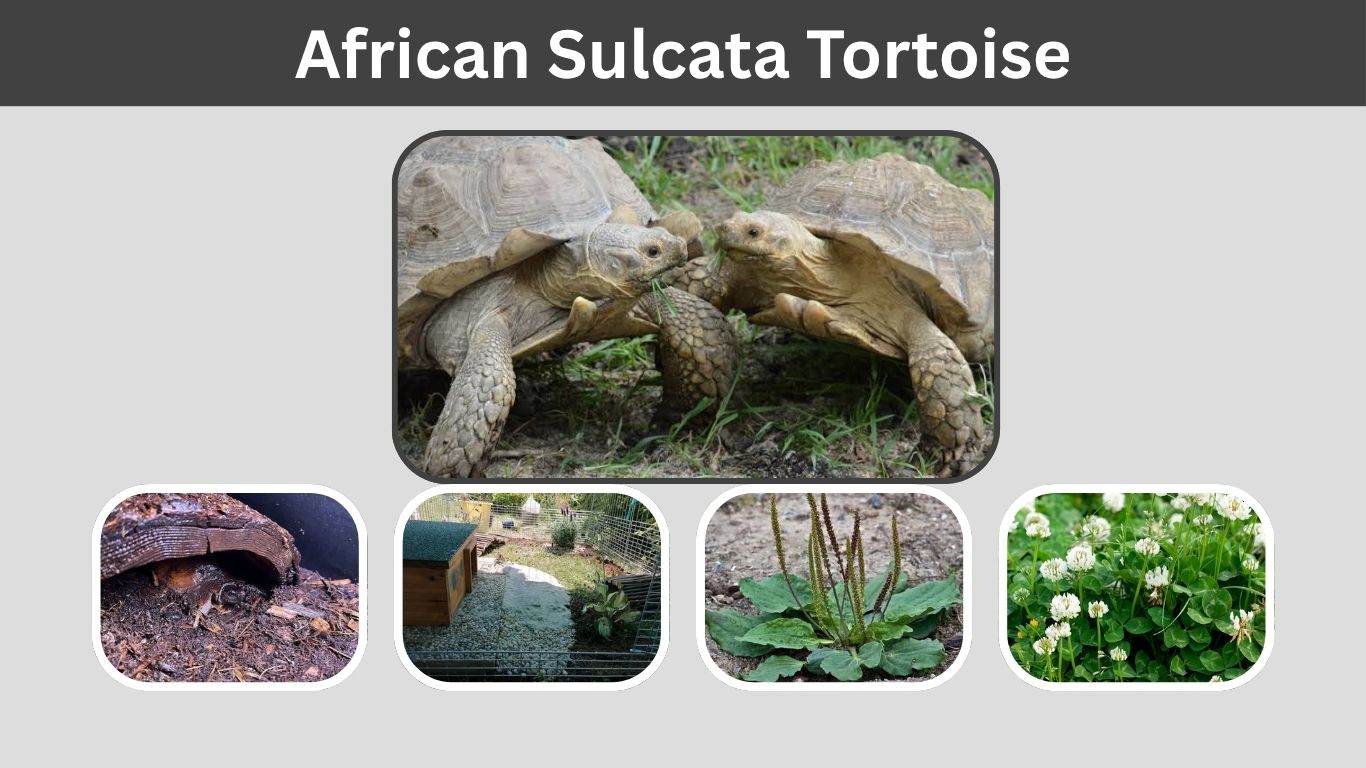
The African sulcata tortoise is one of the most impressive pet tortoises in the world, but it is also one of the most misunderstood. Also called the African spurred tortoise, this giant land tortoise grows very large, lives for decades, digs strongly, and needs a grass-based diet. Before buying or adopting one, owners should understand its full size, lifespan, enclosure needs, food, and long-term care.
What Is an African Sulcata Tortoise?
The African sulcata tortoise is a large land tortoise from dry regions of Africa. Its scientific name is Centrochelys sulcata, and it is commonly called the African spurred tortoise because of the noticeable spurs on its thighs. The IUCN Tortoise and Freshwater Turtle Specialist Group describes Centrochelys sulcata as one of the largest land chelonians, the largest living continental tortoise, and the largest tortoise in Africa.
| Quick Facts | African Sulcata Tortoise |
| Common names | African sulcata tortoise, African spurred tortoise |
| Scientific name | Centrochelys sulcata |
| Native region | Sahel and dry regions along the southern Sahara |
| Diet type | Herbivore/grazer |
| Adult size | Very large; males are usually larger |
| Lifespan | Often several decades |
| Pet difficulty | Advanced, because of size and housing needs |
African Spurred Tortoise vs Sulcata
The African spurred tortoise and sulcata tortoise are the same animal. “Sulcata” comes from the species name, while “African spurred tortoise” describes the spurs on the back legs.
Some older sources may also use the name Geochelone sulcata, but Centrochelys sulcata is commonly used in modern references.
Why They Are Popular
African sulcata tortoises are popular because babies are cute, active, and often easier to find than many other tortoise species. However, the small baby tortoise can become a very large adult that needs outdoor space, strong fencing, heated shelter, and decades of care.
WWF warns that sulcata tortoises are very long-lived, grow very large, and can quickly exceed what many keepers expect or can manage.
African Sulcata Tortoise Size
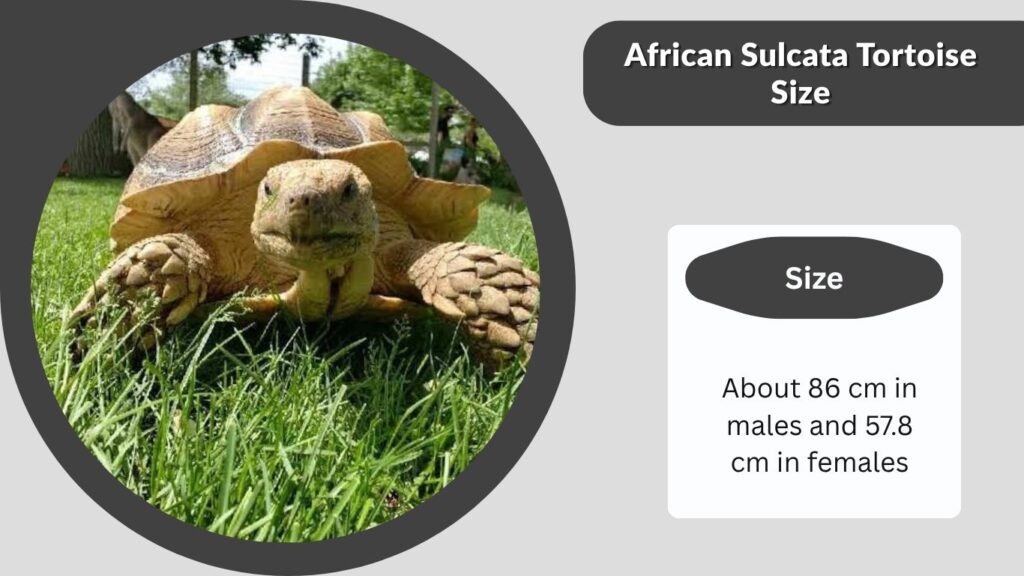
The African sulcata tortoise is not a small pet reptile. It is one of the largest tortoises a private owner may encounter in the pet trade.
Adult males are usually larger and heavier than females. The Tortoise and Freshwater Turtle Specialist Group reports that males may exceed 100 kg in body mass, with straight carapace length up to about 86 cm in males and 57.8 cm in females.
Full Grown African Sulcata Tortoise
A full grown African sulcata tortoise can be extremely heavy and powerful. Even if many pet individuals stay smaller than the largest wild-recorded sizes, they still become too large for most indoor enclosures.
A large adult sulcata can:
- Push weak fencing
- Dig under barriers
- Damage garden plants
- Knock over light objects
- Need a heated outdoor shelter
- Require a large grazing area
This is why sulcatas are often surrendered to rescues after they outgrow indoor setups.
Growth Chart Expectations
Sulcatas grow quickly when young, especially if they are overfed or kept in warm, rich conditions. Fast growth is not always healthy. Smooth, steady growth is better than rapid weight gain.
| Life Stage | General Size/Care Expectation |
| Hatchling | Small, delicate, needs humidity, hydration, UVB, and chopped grass-based foods |
| Juvenile | Grows quickly; needs more space, stronger diet control, and regular shell monitoring |
| Subadult | Starts becoming difficult to house indoors |
| Adult | Needs outdoor grazing space, strong fencing, and heated shelter in cooler weather |
African Sulcata Tortoise Lifespan
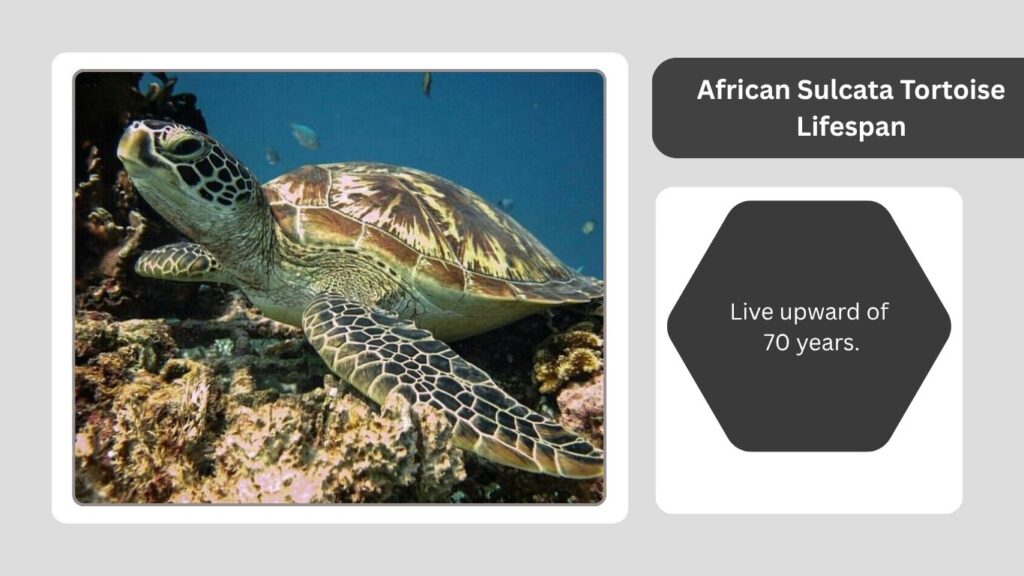
The African sulcata tortoise lifespan is one of the biggest reasons this species is a serious commitment. It is not a short-term pet.
Many care sources list sulcatas as living several decades, and good care can allow them to live much longer. Dublin Zoo says African spurred tortoises can live upward of 70 years.
How Long Do African Sulcata Tortoises Live?
A healthy sulcata tortoise may live 50 years or more, and some may reach 70 years or beyond. Lifespan depends on diet, hydration, shell health, temperature, enclosure quality, veterinary care, and genetics.
Poor care can shorten lifespan. Common problems include dehydration, pyramiding, metabolic bone disease, bladder stones, respiratory infections, and injuries from improper housing.
Long-Term Planning
Before buying a baby African sulcata tortoise, owners should think about what happens when the tortoise becomes huge and outlives the first owner. WWF recommends having a plan for the tortoise if the keeper can no longer care for it, such as another trusted home or a rescue shelter.
African Sulcata Tortoise Food and Diet
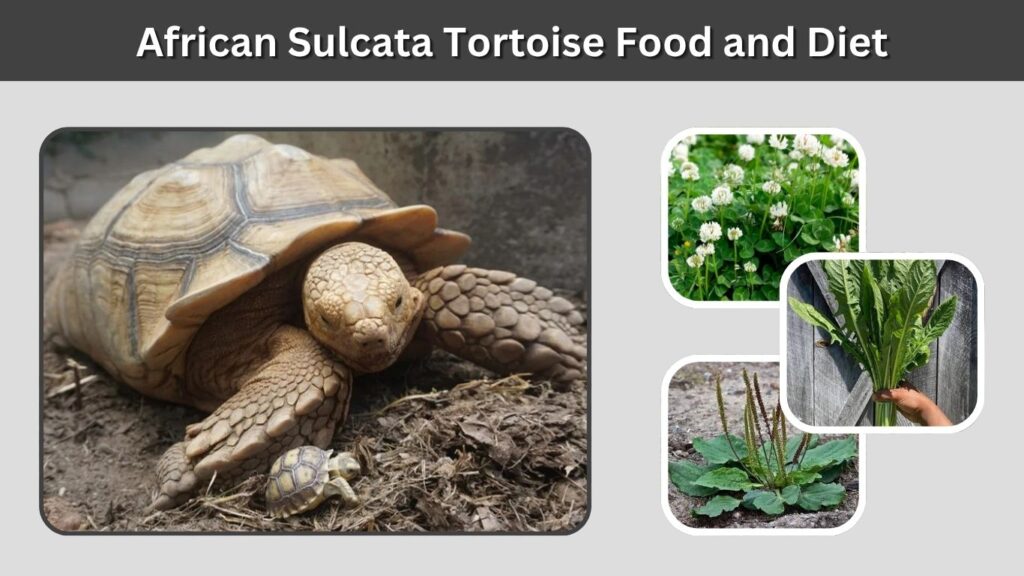
African sulcata tortoise food should be simple, fibrous, and grass-based. These tortoises are natural grazers, not fruit eaters or protein eaters.
San Diego Zoo says African spurred tortoises eat grasses, flowers, weeds, and cacti in their native habitat, and that excessive protein and poor calcium balance can cause serious health problems.
Best Food List
Good foods for an African sulcata tortoise include:
- Bermuda grass
- Orchard grass hay
- Timothy hay
- Meadow hay
- Dandelion greens
- Clover
- Plantain weed
- Hibiscus leaves and flowers
- Mulberry leaves
- Grape leaves
- Cactus pads
- Safe pesticide-free weeds
- Collard greens in moderation
- Escarole and endive in moderation
Grass and hay should make up the main diet. Leafy greens are helpful, but they should not replace rough grass and hay.
Foods to Avoid
Avoid high-protein, sugary, processed, or watery foods as regular items. Sulcatas should not be fed dog food, cat food, meat, insects, bread, rice, pasta, or frequent fruit.
MedVet recommends grasses and hay as the majority of a sulcata’s diet and warns that fruits should be rare because they are high in water and sugar.
Can African Sulcata Tortoises Eat Apples, Cucumbers, or Pumpkin?
Apples should only be a very rare treat, if offered at all. They are sugary and not part of the proper daily diet.
Cucumber is mostly water and does not provide the fiber sulcatas need. It should not be a staple food.
Pumpkin can be offered occasionally in small amounts, but it should not replace grass, hay, weeds, and cactus pads.
African Sulcata Tortoise Habitat and Enclosure
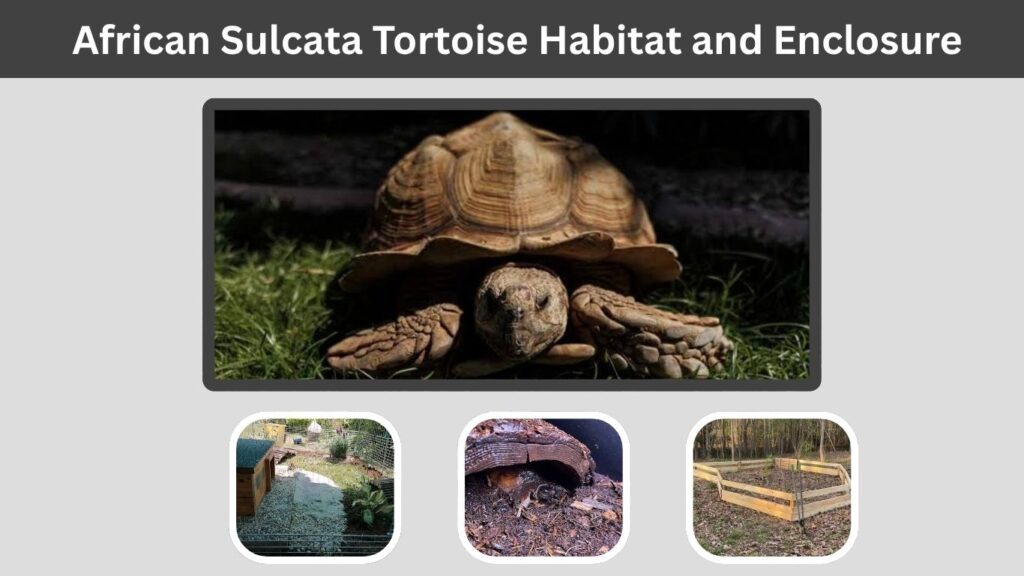
The natural African sulcata tortoise habitat is dry, open, and warm. In captivity, owners need to provide space, heat, UVB, safe substrate, and strong barriers.
San Diego Zoo notes that the spurred tortoise becomes inactive during extreme temperatures and retreats to underground dens; it also needs a spacious, well-heated, dry ecosystem in managed care.
Outdoor Housing
Adults usually need outdoor housing in suitable climates. A proper outdoor enclosure should include:
- Strong fencing
- Dig-proof barriers
- Dry shelter
- Heated night house in cooler areas
- Shade
- Sunny basking areas
- Safe grazing plants
- Clean water
- No toxic plants or pesticides
Sulcatas are powerful diggers. A weak fence or shallow barrier may not hold an adult.
Bedding and Substrate
African sulcata tortoise bedding should allow safe walking, digging, and moisture control. For indoor babies and juveniles, many keepers use safe soil-based or coco coir-based substrates that hold some humidity without staying wet.
Avoid slippery floors, cedar, pine shavings, dusty bedding, and anything the tortoise may eat dangerously. Outdoor adults often do best on natural soil and grass with safe shelter.
Temperature and UVB
Sulcatas need warmth and access to UVB light. Indoor tortoises need proper reptile UVB lighting and a basking area. Outdoor tortoises benefit from natural sunlight when temperatures are safe.
They should not be kept cold and damp. MedVet notes that sulcatas do not hibernate and should not be kept outdoors in chilly, damp weather.
African Sulcata Tortoise Pyramiding
Pyramiding is abnormal raised shell growth where the scutes develop a bumpy, pyramid-like shape. It is common in poorly managed captive sulcatas.
Pyramiding is not caused by one simple factor. Arizona Exotic Animal Hospital states that low humidity has been shown to be a very significant factor in sulcata tortoise pyramiding, with other contributors also involved.
Common Causes
Possible causes of pyramiding include:
- Low humidity for babies
- Chronic dehydration
- Too much protein
- Too many calories
- Poor calcium balance
- Poor UVB exposure
- Lack of exercise
- Too little natural grazing
- Rapid growth
A PubMed-indexed study on African spurred tortoises examined the effect of dietary protein and environmental humidity on pyramidal shell growth in hatchlings, showing why both diet and environment matter in young sulcatas.
Prevention
Prevention is easier than correction. Baby sulcatas need hydration, humidity, UVB, calcium, proper heat, and a high-fiber diet. Owners should focus on slow, steady growth rather than fast size gain.
Once shell pyramiding develops, the raised scutes usually do not become completely smooth again, but improved care can help healthier new growth develop.
African Sulcata Tortoise for Sale, Price, and Rescue
Many people search for an African sulcata tortoise for sale because babies are commonly available in some pet markets. However, buying one should not be an impulse decision.
The purchase price is often much smaller than the lifetime cost. A proper enclosure, heating, UVB, fencing, food, winter housing, and exotic-vet care can cost far more than the tortoise itself.
Buying vs Rescue
A rescue may be a better option for experienced keepers who have enough space. Many sulcatas are surrendered because owners did not expect their adult size.
Before buying or adopting, ask:
- Is the tortoise captive-bred?
- Is it eating well?
- Does it have smooth shell growth?
- Are the eyes clear?
- Is the nose free of discharge?
- Has it been checked by a reptile vet?
- Can you house it when it reaches full size?
- Do local laws allow ownership?
Male or Female African Sulcata Tortoise
Sexing young sulcatas can be difficult. Adult males are usually larger, may have longer tails, and often have a more concave plastron. Females are usually smaller with shorter tails.
For most pet owners, sex is less important than health, space, and long-term care ability. A male or female sulcata can still become a very large, demanding animal.
FAQs
Is the African spurred tortoise the same as a sulcata?
Yes. The African spurred tortoise and sulcata tortoise are the same species, Centrochelys sulcata. “Sulcata” is the common pet-trade name, while “African spurred tortoise” refers to the spurs on the back legs.
How big do African sulcata tortoises get?
African sulcata tortoises get very large. Males can become especially heavy, and the species is known as the largest tortoise in Africa. Some males may exceed 100 kg in body mass.
What do African sulcata tortoises eat?
African sulcata tortoises eat grasses, hay, weeds, flowers, cactus pads, and some leafy greens. Their diet should be high in fiber and low in protein. Fruit should be rare or avoided.
Do African sulcata tortoises hibernate?
No, sulcata tortoises do not truly hibernate like some temperate tortoise species. They need warm, dry housing during cold weather. In the wild, they may retreat into burrows and become inactive during extreme heat or dry periods.
Are African sulcata tortoises good pets?
They can be good pets only for experienced keepers with enough outdoor space, money, time, and long-term planning. They are not easy beginner pets because they grow huge, live for decades, dig strongly, and need specialized care.