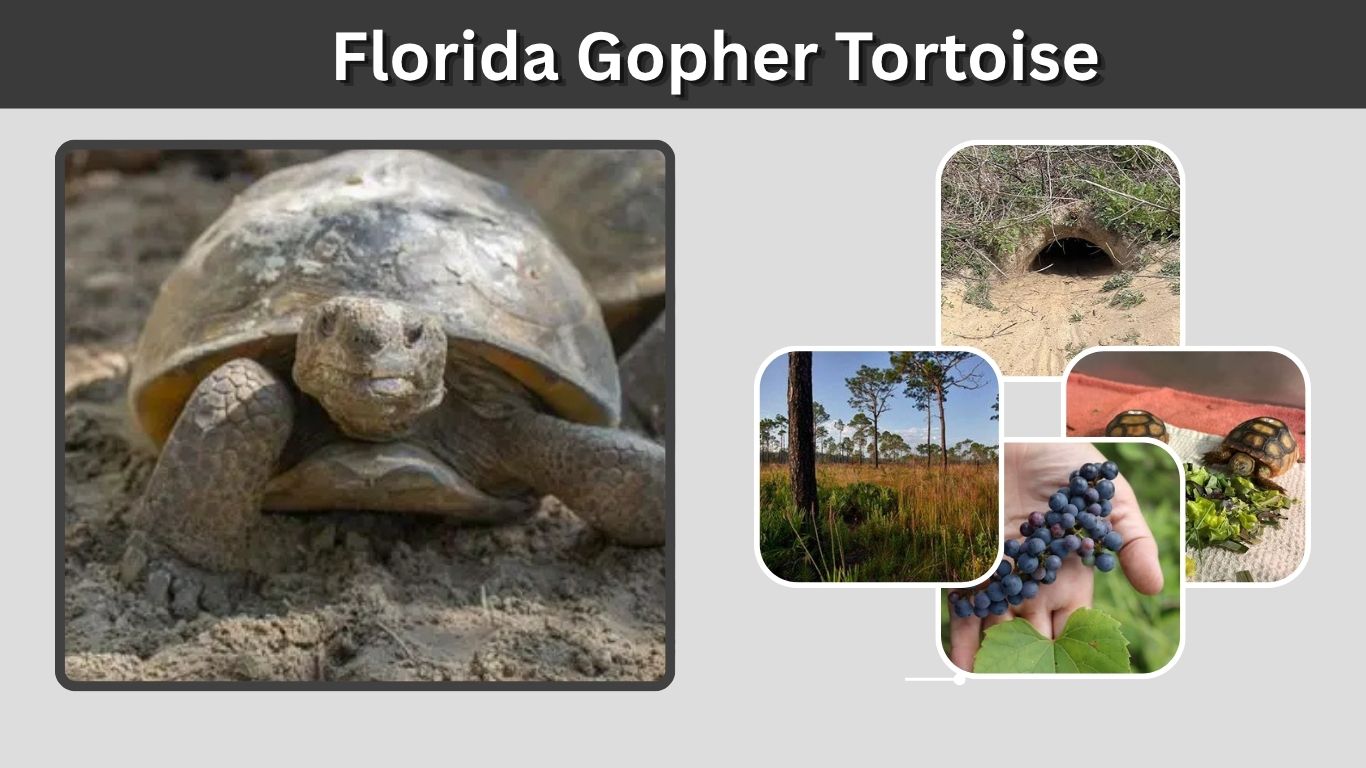
The Florida gopher tortoise is one of the most important reptiles in the state’s dry upland habitats. Known for its deep burrows, slow movement, and long life, this tortoise plays a major role in Florida’s ecosystem. It is also protected by state law, which means residents, landowners, builders, and visitors need to know what they can and cannot do around gopher tortoises and their burrows.
What Is the Florida Gopher Tortoise?
The Florida gopher tortoise is a land-dwelling reptile found in many parts of Florida. Unlike aquatic turtles, it lives mostly on dry land and digs underground burrows for shelter.
Gopher tortoises are long-lived reptiles that occupy upland habitats across Florida, including forests, pastures, yards, and other dry areas. They are listed as Threatened in Florida, and both the tortoise and its burrow are protected under state law.
| Florida Gopher Tortoise Quick Facts | Details |
| Scientific name | Gopherus polyphemus |
| Florida status | State-listed Threatened |
| Habitat | Dry uplands, scrub, sandhills, flatwoods, dunes |
| Diet | Low-growing plants, grasses, fruits, legumes |
| Burrow role | Shelter for more than 350 other species |
| Legal protection | Tortoises, eggs, and burrows are protected |
Identification
A gopher tortoise has a high, domed shell, thick legs, and strong front limbs made for digging. Adults are usually gray, brown, or dark tan. Their front legs look almost like small shovels, which helps them dig into sandy Florida soil.
Young gopher tortoises are often brighter in color than adults, with yellowish or orange-brown tones that fade as they mature. The species is built for life on land, so it should not be confused with freshwater turtles that live in ponds, lakes, or canals.
Why It Is Called a Gopher Tortoise
The word “gopher” refers to its digging behavior. A Florida gopher tortoise can dig a long underground burrow that provides protection from heat, cold, fire, drought, and predators.
These burrows are one of the main reasons the species is so important. They do not only protect the tortoise; they also create shelter for many other animals.
Where Do Gopher Tortoises Live in Florida?
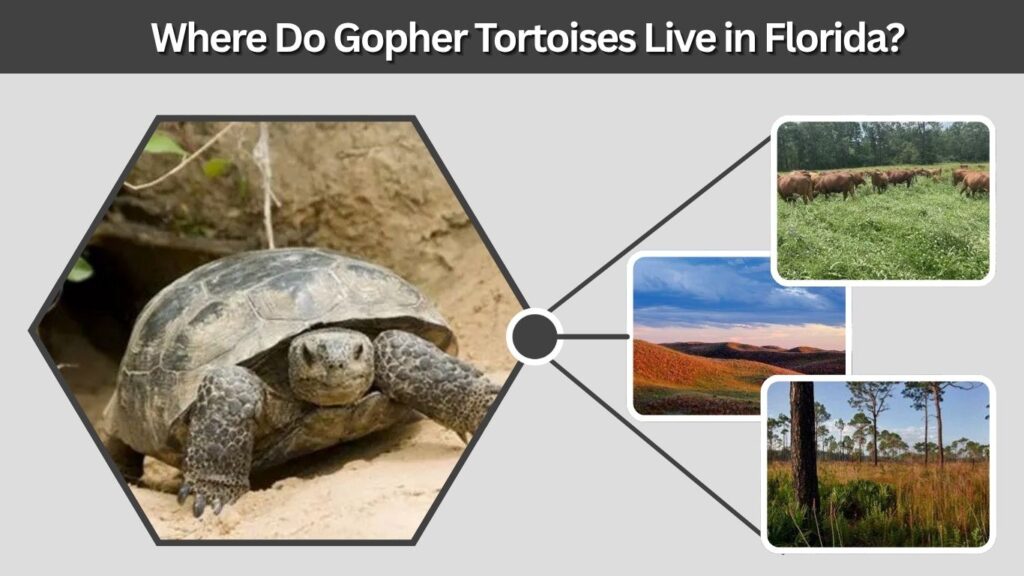
Gopher tortoises live in dry, sandy habitats where they can dig burrows and find low-growing plants to eat. They are more common in some parts of Florida than others.
UF/IFAS notes that gopher tortoises are found throughout much of Florida, except the southern tip, and they prefer dry habitats such as longleaf pine scrub, oak sandhills, oak hammocks, sand pine scrub, wiregrass flatwoods, dry prairies, and coastal dunes.
Common Florida Habitats
You may find gopher tortoises in:
- Pine flatwoods
- Scrub habitats
- Coastal dunes
- Dry prairies
- Sandhills
- Pastures
- Open yards near natural areas
- Roadsides near sandy uplands
They need sunny, open areas because sunlight helps them regulate body temperature. They also need plants close to the ground for feeding.
Florida Gopher Tortoise Burrows
A gopher tortoise burrow usually has a half-moon or oval-shaped entrance. The opening often looks wider than it is tall because it matches the shape of the tortoise’s shell. A mound of loose sand, called an apron, is usually found near the entrance.
If you see a burrow in Florida, do not step on it, dig into it, block it, or place objects near the entrance. Burrows may look empty, but they can still be used by tortoises or other wildlife.
Why Gopher Tortoises Are Important in Florida
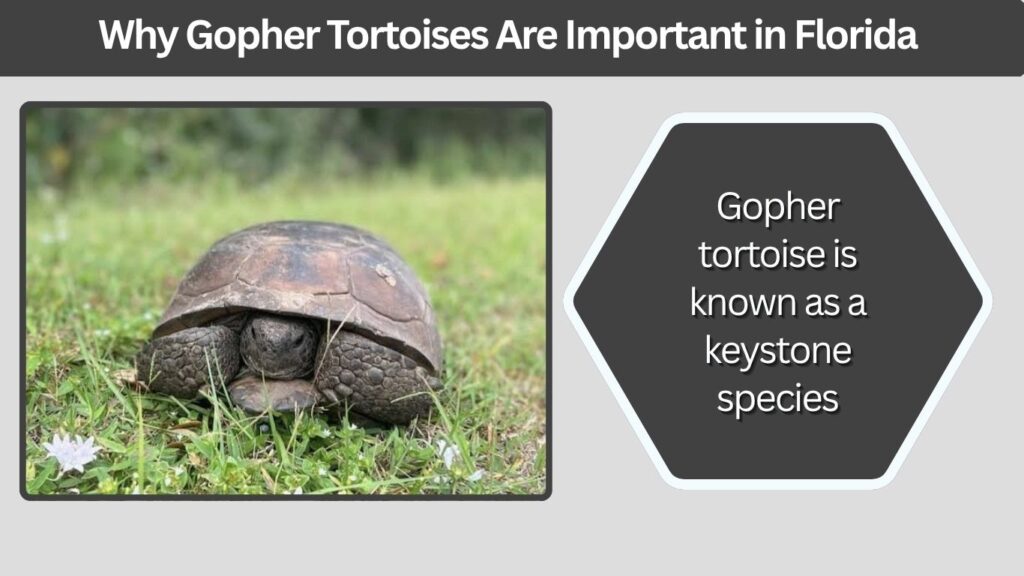
The gopher tortoise is known as a keystone species. That means many other animals depend on it for survival.
FWC states that gopher tortoises share their burrows with more than 350 other species, which is why they are considered a keystone species in Florida.
Animals That Use Gopher Tortoise Burrows
Gopher tortoise burrows may provide shelter for reptiles, mammals, insects, amphibians, and birds. Some animals use the burrows temporarily, while others may depend on them during harsh weather or danger.
Common burrow users include:
- Gopher frogs
- Burrowing owls
- Florida mice
- Indigo snakes
- Rabbits
- Insects
- Small lizards
- Other snakes
When gopher tortoise habitat disappears, these other species can also lose important shelter.
How They Help the Ecosystem
Gopher tortoises help Florida ecosystems in several ways. Their digging loosens soil, their burrows create shelter, and their grazing helps spread seeds from native plants.
UF/IFAS also notes that gopher tortoises help distribute seeds as they graze on low-growing plants.
Florida Gopher Tortoise Laws
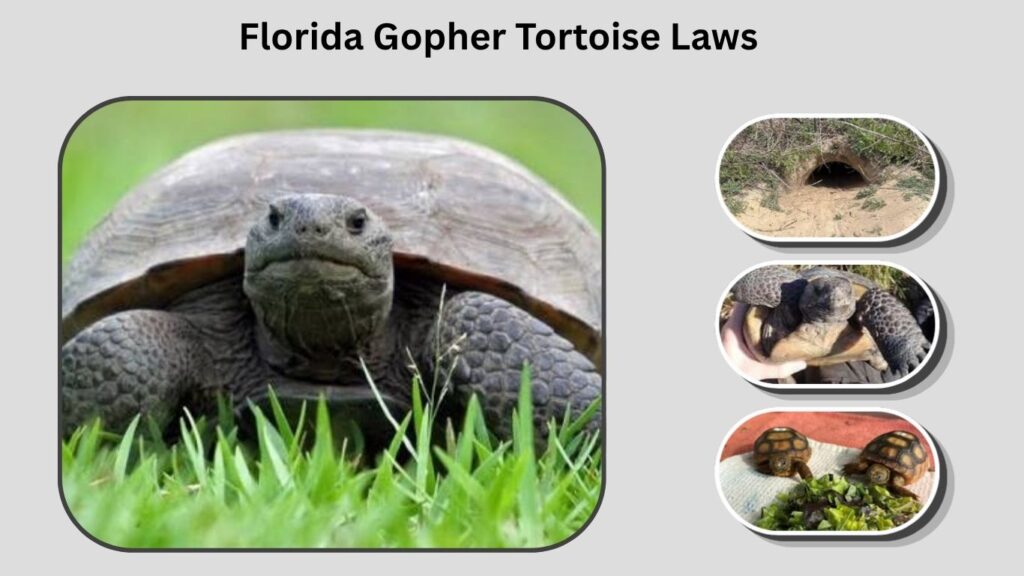
Florida gopher tortoise laws are strict because the species is protected. These rules apply to individuals, property owners, contractors, developers, and anyone working near a tortoise or burrow.
FWC says gopher tortoises are a threatened wildlife species protected under Chapter 68A-27 of the Florida Administrative Code. The agency also states that gopher tortoises must be relocated before land clearing or development, and property owners must obtain FWC permits before moving them.
What Is Illegal?
Under Florida rules, a person may not take, pursue, hunt, harass, capture, possess, sell, or transport a gopher tortoise or its eggs without authorization. It is also prohibited to molest, damage, or destroy gopher tortoise burrows unless allowed by an FWC permit or approved guidelines.
This means you should not:
- Pick up a gopher tortoise
- Keep one as a pet
- Sell or buy one
- Move one from your yard
- Destroy or fill a burrow
- Build over an active or potentially occupied burrow
- Harass, paint, feed, or disturb the tortoise
Are Gopher Tortoises Protected in Florida?
Yes. Gopher tortoises are protected in Florida because they are listed as Threatened at the state level. Their eggs and burrows are also protected.
FWC specifically states that it is against the law to kill, harass, or destroy gopher tortoises, their eggs, or their burrows.
Florida Gopher Tortoise Relocation
Gopher tortoise relocation is a major topic for Florida property owners and developers. If a tortoise or burrow is found on land planned for construction, clearing, grading, or development, the tortoise usually must be handled through the FWC permitting process.
FWC says both the tortoise and burrow are protected, and property owners must obtain permits before capturing and relocating tortoises.
When Is a Permit Needed?
A permit is generally needed before disturbing a burrow or doing work near a burrow. FWC’s permit page says a relocation permit must be obtained before disturbing burrows and conducting construction activities, and that disturbance includes work within 25 feet of a gopher tortoise burrow.
This is important for:
- Home building
- Land clearing
- Driveway work
- Commercial development
- Utility work
- Road projects
- Major landscaping
- Site grading
Can You Move a Gopher Tortoise Yourself?
No. You should not relocate a gopher tortoise yourself unless you are operating under proper FWC authorization. FWC states that handling and relocation of gopher tortoises is illegal unless done under a valid FWC permit.
If a tortoise is crossing a road, it is commonly advised to help only when it is safe and to move it in the direction it was already going, without taking it to a new area. For property, burrow, or construction situations, contact FWC or an authorized professional.
What Do Gopher Tortoises Eat in Florida?
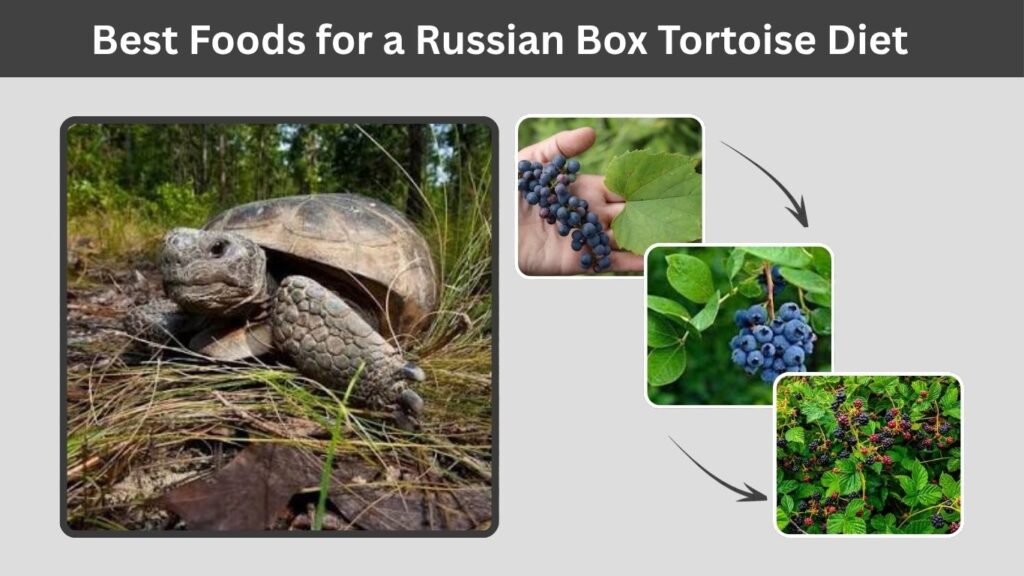
Gopher tortoises are herbivores, which means they mostly eat plants. Their diet changes depending on what is available in their habitat.
FWC says gopher tortoises feed on low-growing plants such as wiregrass, broadleaf grasses, gopher apple, and legumes. They usually forage within about 160 feet of their burrow but may travel farther if food is limited.
Common Foods
In Florida, gopher tortoises may eat:
- Wiregrass
- Broadleaf grasses
- Gopher apple
- Legumes
- Blackberries
- Blueberries
- Wild grape
- Prickly pear
- Native flowers
- Low-growing weeds
FWC’s tortoise-friendly plant guide also lists broadleaf grasses, wiregrass, prickly pear, wild grape, blackberry, and blueberry as plants gopher tortoises may graze on.
Can You Feed a Gopher Tortoise in Florida?
It is better not to feed wild gopher tortoises. Feeding can make them dependent on people, attract them into unsafe areas, or expose them to unhealthy foods.
Instead of feeding them directly, property owners can plant tortoise-friendly native plants and allow the tortoise to graze naturally. Manatee County’s gopher tortoise guidance says feeding is prohibited, but planting tortoise-friendly plants is encouraged.
Are Gopher Tortoises Endangered in Florida?
In Florida, the gopher tortoise is not listed as “Endangered” by the state; it is listed as Threatened. This distinction matters because many people search for “gopher tortoise endangered Florida,” but the current Florida status is Threatened.
FWC states that the gopher tortoise was reclassified as a State-designated Threatened species in 2007.
At the federal level, the gopher tortoise has different status depending on the population. The U.S. Fish and Wildlife Service says the species is protected in all states where it occurs, while western populations are federally listed as threatened under the Endangered Species Act.
How Many Gopher Tortoises Are Left in Florida?
Exact numbers are difficult because gopher tortoises live underground and are spread across public and private land. Some conservation sources estimate Florida has about 700,000 to 800,000 gopher tortoises, but population estimates vary by method and region.
Even with large numbers, the species remains at risk because development, road mortality, habitat loss, and poor habitat management can reduce local populations.
What To Do If You Find a Gopher Tortoise in Florida
Seeing a gopher tortoise in your yard or neighborhood is common in many parts of Florida. In most cases, the best thing to do is leave it alone.
FWC encourages people to report tortoise sightings through its Gopher Tortoise Sightings web app and to report sick, injured, dead, or illegally disturbed tortoises through the proper FWC channels.
If It Is in Your Yard
If a gopher tortoise lives in your yard, keep pets and children away from the burrow. Do not block the entrance, fence the tortoise in, or try to relocate it.
You can make your yard more tortoise-friendly by planting native, low-growing vegetation and reducing hazards such as loose netting, deep holes, or chemicals.
If It Is on a Construction Site
Stop work near the burrow and check FWC requirements before continuing. Construction, clearing, grading, or heavy equipment activity near a burrow may require a permit.
For landowners and builders, it is usually best to work with an authorized gopher tortoise agent or environmental consultant familiar with Florida permitting rules.
FAQs
Are gopher tortoises native to Florida?
Yes, gopher tortoises are native to Florida. They are part of the natural upland ecosystem and have lived in the Southeast for a very long time.
Can you own a gopher tortoise in Florida?
No, you generally cannot keep a wild gopher tortoise as a pet in Florida. Possession and transport without authorization can violate Florida law. Permits are usually for research, education, or special wildlife situations, not regular pet ownership.
Do gopher tortoises hibernate in Florida?
Gopher tortoises in Florida may become less active during cooler weather, especially in northern parts of the state, but they do not hibernate in the same deep way some northern animals do. They often remain inside their burrows during cold periods and come out when temperatures are suitable.
What should I do if a gopher tortoise is crossing the road?
Only help if it is safe. Move the tortoise in the same direction it was already going and do not take it to a new location. Never put a gopher tortoise in water because it is a land tortoise, not an aquatic turtle.
Is a Florida gopher tortoise burrow protected if the tortoise is not visible?
Yes. A burrow can be protected even when the tortoise is not visible. Gopher tortoises spend much of their time underground, and other animals may also be using the burrow. Do not dig, fill, crush, or disturb the burrow without proper authorization.