
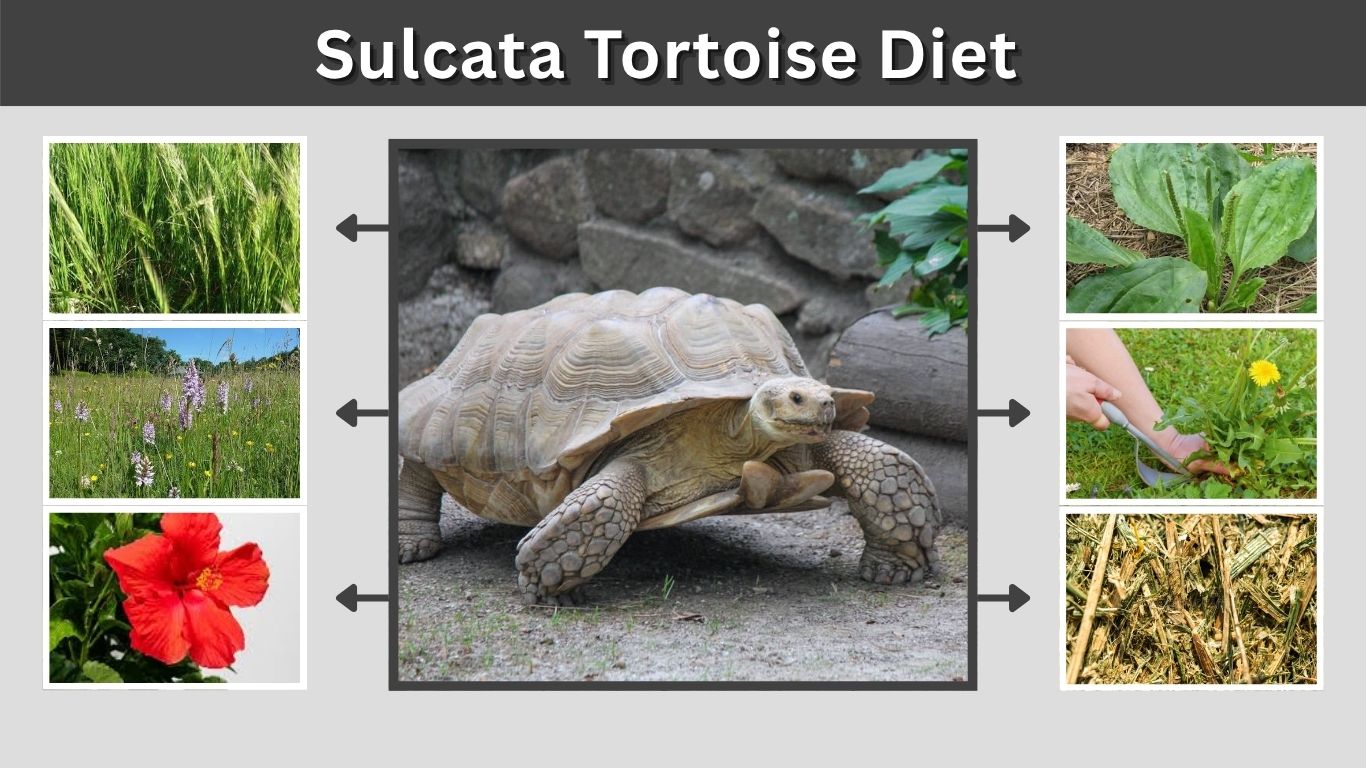
A healthy sulcata tortoise diet should be high in fiber, low in protein, low in sugar, and mostly based on grasses and hay. Also called the African spurred tortoise, this species is a natural grazer from dry regions of Africa. In captivity, the wrong diet can lead to shell pyramiding, obesity, bladder stones, and bone problems. A simple grass-based feeding plan is the safest way to keep a sulcata healthy.
What Is the Best Diet for a Sulcata Tortoise?
The best diet for a sulcata tortoise is mostly grass, hay, weeds, and safe leafy plants. This tortoise is not designed to eat fruit, dog food, cat food, or high-protein meals.
Veterinary care guides commonly recommend that grasses and hay make up the majority of a sulcata’s diet. MedVet says sulcata tortoises need access to grasses and hay for grazing and that this should make up about 90% of the diet.
Main Diet Ratio
A good sulcata tortoise diet should look like this:
| Food Type | Best Amount in Diet | Examples |
| Grasses and hay | 75–90% | Bermuda grass, orchard grass, timothy hay, meadow hay |
| Safe weeds and flowers | 5–15% | Dandelion, clover, hibiscus, rose petals, plantain |
| Leafy greens | Small rotation | Collard greens, turnip greens, escarole, endive |
| Commercial tortoise pellets | Optional small amount | Soaked grassland-style tortoise pellets |
| Fruit | Rare or avoided | Only tiny treats, not a staple |
| Animal protein | 0% | No meat, dog food, cat food, insects, or eggs |
Why Grass and Hay Matter Most
Sulcata tortoises are grazing reptiles. In the wild, they eat tough, fibrous plants such as grasses, weeds, flowers, and cactus. San Diego Zoo notes that African spurred tortoises eat grasses, flowers, weeds, and cacti in their native habitat.
This type of food keeps the digestive system moving properly. It also helps wear down the beak naturally and prevents the tortoise from gaining weight too quickly.
Why High Protein Is Dangerous
A sulcata tortoise should not eat animal protein. Foods like dog food, cat food, meat, insects, cooked eggs, and beans are too rich. Too much protein can cause fast growth, shell deformity, kidney stress, and other health problems.
A healthy sulcata diet should grow the tortoise slowly and steadily. Fast growth is not a sign of good care.
Sulcata Tortoise Diet Chart
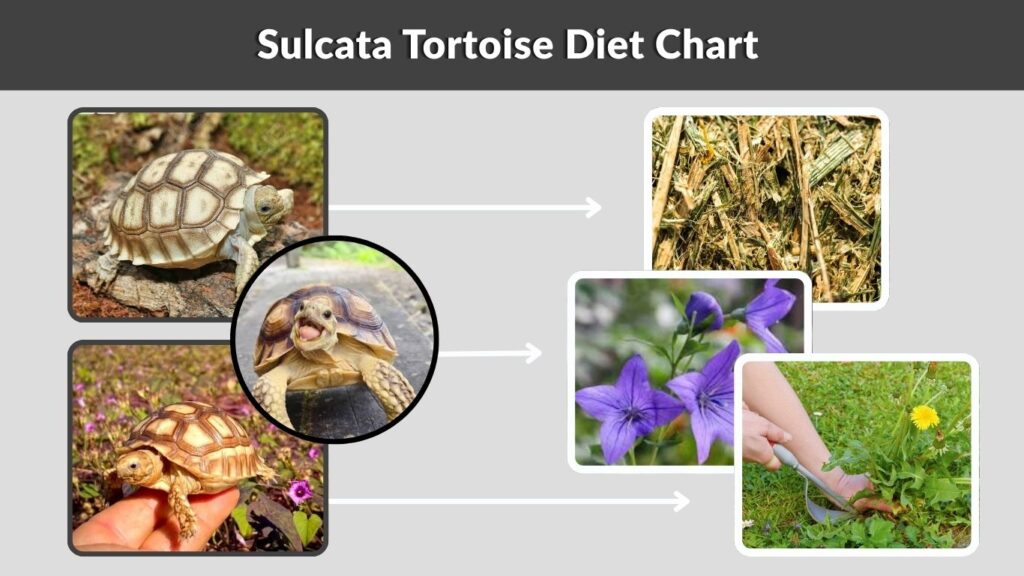
A diet chart helps owners avoid overfeeding rich foods. The goal is not to create a fancy menu, but to repeat the right food groups every day.
Sulcatas should graze often when outdoor conditions are safe. If the tortoise is kept indoors or in a dry lot, offer fresh hay and safe greens daily.
| Age/Stage | Daily Main Food | Extra Foods | Calcium |
| Hatchling/Baby | Chopped grasses, soft hay, safe weeds | Small leafy greens | Light calcium dusting several times weekly |
| Juvenile | Grass, hay, weeds | Greens and edible flowers | Calcium support as advised by a reptile vet |
| Adult | Grass pasture and hay | Weeds, flowers, cactus pads, limited greens | Cuttlebone or calcium source available |
| Winter/Indoor | Timothy, orchard, Bermuda, meadow hay | Soaked pellets and greens if grass is limited | Calcium and UVB are important |
Daily Diet Sheet
A simple sulcata tortoise diet sheet can include:
- Fresh grass or hay available daily
- Clean water available daily
- Safe weeds or leafy greens in rotation
- Edible flowers a few times weekly
- Cactus pads occasionally
- Calcium source available
- No fruit as a regular food
- No animal protein
This diet sheet works for most pet sulcatas, but a reptile veterinarian may adjust it if the tortoise is underweight, overweight, dehydrated, or recovering from illness.
Feeding Amount
For outdoor sulcatas, grazing is the most natural feeding method. They can eat grass throughout the day if the yard is pesticide-free and planted with safe grasses.
For indoor sulcatas, offer a pile of hay and greens roughly around the size of the tortoise’s shell, then adjust based on body condition and leftover food. A tortoise that leaves a lot of food may be getting too much. A tortoise that is always searching and losing weight may need more fiber-rich food.
Baby Sulcata Tortoise Diet
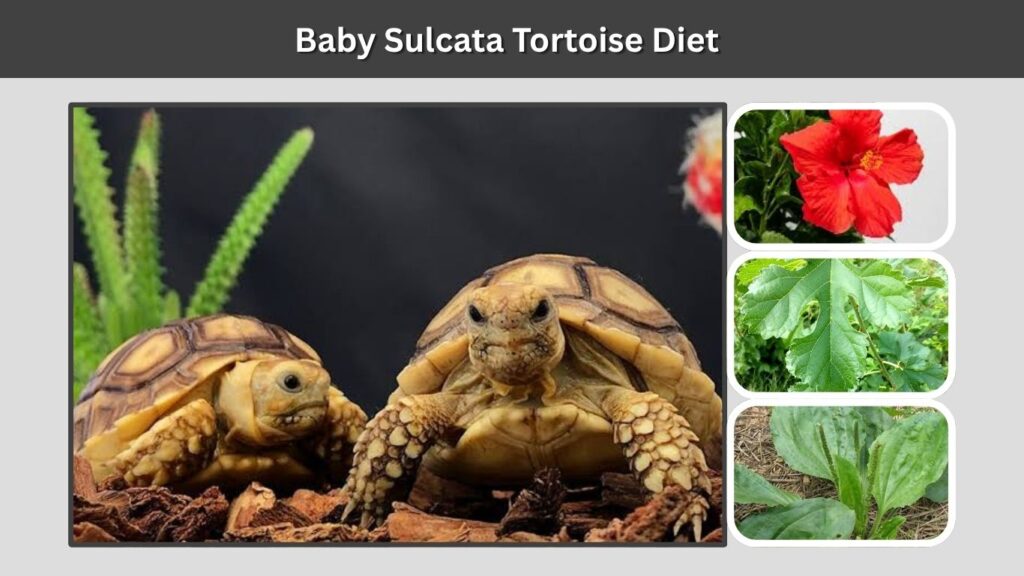
A baby sulcata tortoise diet should still be grass-based, but the food may need to be softer, chopped, or soaked slightly so the hatchling can eat it easily.
Baby sulcatas are often overfed soft grocery greens and fruit. This is a common mistake. Babies need fiber early in life, not a watery lettuce diet.
Best Foods for Baby Sulcatas
Good baby sulcata foods include:
- Young grass
- Finely chopped hay
- Dandelion greens
- Clover
- Plantain weed
- Hibiscus leaves and flowers
- Mulberry leaves
- Escarole
- Endive
- Small pieces of cactus pad
A baby sulcata should be introduced to hay early. If it refuses dry hay, try mixing finely chopped hay with moist greens until it starts eating more fiber.
Baby Diet Mistakes
Avoid giving baby sulcatas too much lettuce, cucumber, tomato, or fruit. These foods are watery and low in the fiber they need.
Also avoid letting the baby grow too fast. Smooth, steady shell growth is healthier than rapid weight gain. Juvenile sulcatas are especially sensitive to poor hydration, poor diet, and improper humidity. Reptifiles notes that juvenile sulcatas need higher humidity than many keepers expect, and chronic dehydration can contribute to shell pyramiding.
Juvenile and Adult Sulcata Tortoise Diet
A juvenile sulcata tortoise diet should slowly shift toward tougher grass, hay, and pasture grazing. Adult sulcatas are large animals and need large amounts of low-calorie, high-fiber food.
An adult sulcata should not be fed like a small indoor pet. It needs space to graze and a steady supply of roughage.
Juvenile Diet
Juveniles can eat many of the same foods as adults, but the food may need to be chopped or softened. Offer more hay as the tortoise grows.
Good juvenile foods include:
- Bermuda grass
- Timothy hay
- Orchard grass hay
- Meadow hay
- Dandelion
- Clover
- Grape leaves
- Hibiscus
- Cactus pads
- Collard greens in moderation
Arizona Exotic Animal Hospital recommends grasses and grass hay as the best diet for sulcatas and says commercial pelleted grass diets can be soaked and fed.
Adult Diet
Adult sulcatas should eat mostly grass and hay. If they live outdoors, a safe grazing yard is ideal. If fresh grass is limited, provide hay every day.
Good adult sulcata foods include Bermuda grass, orchard grass, timothy hay, western wheatgrass, edible weeds, cactus pads, and pesticide-free flowers. A veterinary care source from LafeberVet also describes sulcatas as needing a high-fiber diet mainly from broad leafy weeds and grass hays such as timothy and orchard grass.
Sulcata Tortoise Diet List
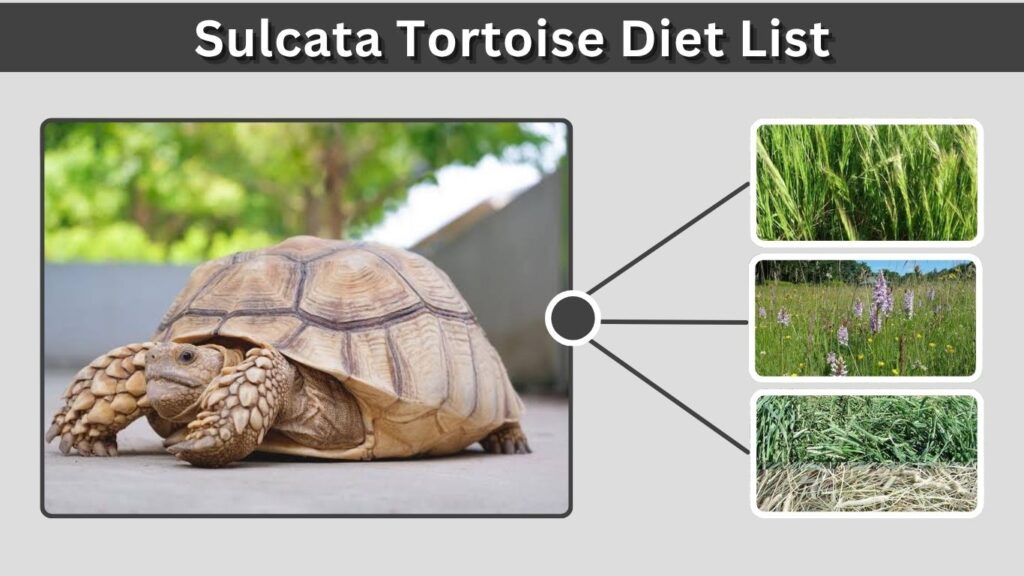
A good sulcata tortoise diet list should separate staple foods from occasional foods. Many foods are safe in small amounts but should not become the main diet.
Staple Foods
Staple foods are the safest daily choices:
- Bermuda grass
- Timothy hay
- Orchard grass hay
- Meadow hay
- Native pasture grasses
- Dandelion greens
- Clover
- Plantain weed
- Hibiscus leaves
- Mulberry leaves
- Grape leaves
- Cactus pads
These foods are close to the natural grazing diet of a sulcata tortoise.
Foods to Give in Moderation
Some foods are acceptable but should not replace grass and hay:
- Collard greens
- Mustard greens
- Turnip greens
- Escarole
- Endive
- Romaine lettuce
- Squash leaves
- Carrot tops
- Kale occasionally
- Spring mix without spinach
Leafy greens are useful when grass is limited, but too many grocery greens can make the diet too soft and low in fiber.
Foods to Avoid
Avoid these foods:
- Dog food
- Cat food
- Meat
- Insects
- Eggs
- Bread
- Rice
- Pasta
- Processed foods
- Spinach as a staple
- Iceberg lettuce
- Frequent fruit
- Avocado
- Rhubarb
- Toxic garden plants
- Pesticide-treated grass
MedVet warns against feeding mainly alfalfa hay because it is high in oxalates and may contribute to bladder stone problems.
Can Sulcata Tortoises Eat Fruit, Broccoli, Cucumber, or Tomatoes?
Many owners search for specific foods because sulcatas often eat almost anything offered. Just because a tortoise eats something does not mean it should be part of the regular diet.
Fruit, watery vegetables, and rich vegetables should be limited or avoided.
Fruit
Fruit should be rare or avoided. Sulcatas are not fruit-eating tortoises. Too much fruit adds sugar and moisture without enough fiber.
Fruits like strawberries, melon, banana, apple, and berries may be accepted, but they should not be part of the regular diet. Some keepers avoid fruit completely to protect digestion.
Broccoli
Broccoli is not toxic in tiny amounts, but it should not be a staple. It is not the right main food for a grazing tortoise. If offered, it should be occasional and mixed with better high-fiber foods.
Cucumber and Tomatoes
Cucumber is mostly water and has very little nutrition for a sulcata. Tomato is soft, watery, and more sugary than proper grazing foods. Neither should be a regular part of a sulcata tortoise diet.
If hydration is a concern, provide clean water, proper soaking for young tortoises, and moisture through safe greens instead of relying on cucumber or tomato.
Calcium, Water, and Supplements
Diet is only one part of healthy shell and bone growth. Sulcata tortoises also need calcium, UVB light, hydration, and proper temperature.
Without enough calcium and UVB, a sulcata can develop metabolic bone disease, soft shell growth, weakness, and deformity.
Calcium
Adult sulcatas need steady calcium in the diet. A cuttlebone can be left in the enclosure so the tortoise can nibble it. Calcium powder may also be used, especially for babies and juveniles.
Arizona Exotic Animal Hospital recommends dusting greens with calcium without vitamin D3 twice a week.
Water
Sulcatas come from dry regions, but they still need water. Always provide a shallow water dish. Babies and juveniles may also need regular warm soaks.
Outdoor adults may drink less often, but they should still have access to clean water. Dehydration can increase the risk of urinary and bladder problems.
Mazuri and Commercial Diets
Mazuri and other commercial tortoise diets can be useful as a supplement, especially when fresh grasses are limited. They should not replace hay and grazing.
If used, soak pellets before feeding and offer them in small amounts. Choose grassland-style tortoise formulas rather than high-protein foods.
FAQs
What is the best diet for a sulcata tortoise?
The best diet for a sulcata tortoise is mostly grasses and hay, with safe weeds, flowers, cactus pads, and limited leafy greens. A grass-based diet is healthier than a diet based on lettuce, fruit, or vegetables.
What should a baby sulcata tortoise eat?
A baby sulcata tortoise should eat chopped grasses, soft hay, safe weeds, dandelion, clover, hibiscus, cactus pad, and small amounts of leafy greens. Fruit and watery foods should not be regular foods.
Can sulcata tortoises eat timothy hay?
Yes, sulcata tortoises can eat timothy hay. Timothy hay, orchard grass hay, Bermuda grass, and meadow hay are good fiber sources. Some tortoises need time to learn to eat dry hay.
Can sulcata tortoises eat fruit?
Sulcata tortoises should not eat fruit regularly. Fruit is high in sugar and too soft for their natural grazing diet. If given at all, it should be a very rare treat.
Is Mazuri good for sulcata tortoises?
Mazuri or similar commercial tortoise diets can be used as a small supplement, especially when grass and hay variety is limited. It should be soaked before feeding and should not replace the main diet of grasses and hay.