
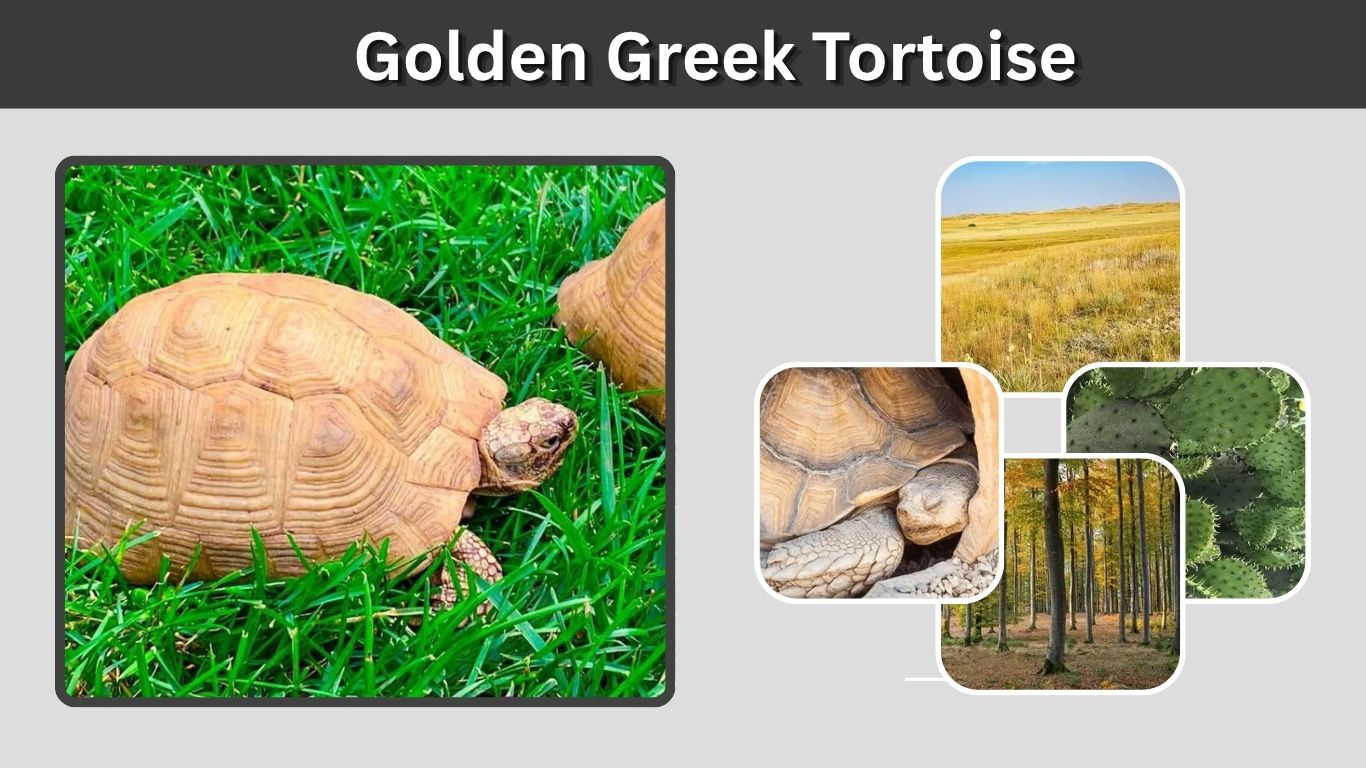
The golden Greek tortoise is a small, attractive Mediterranean tortoise often searched by pet owners because of its pale yellow or golden shell color. It belongs to the Greek tortoise group, Testudo graeca, and many golden Greeks in the pet trade are linked with T. g. terrestris. This tortoise can be hardy, long-lived, and rewarding, but it needs correct heat, UVB lighting, diet, humidity, and space to stay healthy.
What Is a Golden Greek Tortoise?
A golden Greek tortoise is not usually treated as a separate species. The name often describes a lighter-colored Greek tortoise with beige, yellow, tan, or golden tones. Because Greek tortoises vary by region and subspecies, care can also vary slightly between individuals.
Identification
- Golden, tan, beige, or yellowish shell color
- Dark markings on the shell plates
- Sturdy legs with large scales
- Spurs on the thighs, which help separate Greek tortoises from Hermann’s tortoises
- No tail spur
- Compact, rounded body shape
- Females are often larger than males
Greek tortoises are often confused with Hermann’s tortoises, but Greek tortoises usually have clear thigh spurs and lack the tail spur found in Hermann’s tortoises.
Personality
Golden Greek tortoises are usually active, alert, and curious. They may learn to recognize feeding routines, but they are not pets that enjoy frequent handling. Too much handling can cause stress, so they are best kept as observation pets. Captive-bred animals are usually a better choice than wild-caught tortoises because wild-caught individuals are more likely to be sick and their collection can harm wild populations.
Golden Greek Tortoise Size and Lifespan
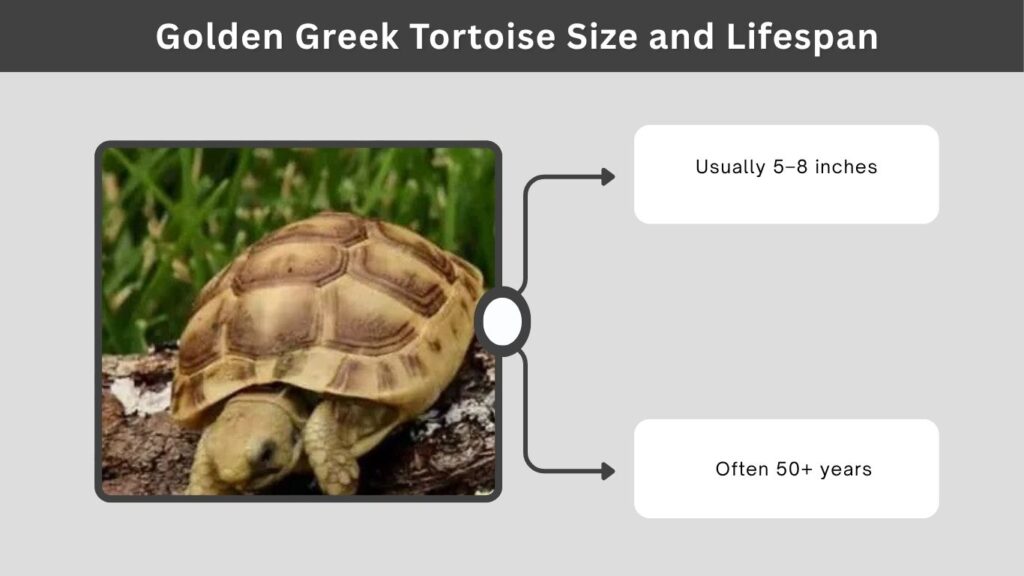
Golden Greek tortoises stay smaller than many large pet tortoises, but they still need plenty of floor space. Their long lifespan also means buyers should think carefully before getting one.
| Feature | Typical Range |
| Adult size | Usually 5–8 inches |
| Maximum size | Some Greek tortoises may reach up to 12 inches |
| Lifespan | Often 50+ years |
| Best owner type | Patient keeper ready for long-term care |
Full Grown Golden Greek Tortoise Size
Most full grown golden Greek tortoises are around 5–8 inches long, although size depends on genetics, sex, diet, and subspecies. Females often grow larger than males. A tortoise sold as a “dwarf golden Greek tortoise” should still be researched carefully, because seller names are not always scientific names.
How Long Do Golden Greek Tortoises Live?
A well-kept golden Greek tortoise can live for decades. Greek tortoise care guides commonly list lifespans of 50 years or more, and long lifespans make this species a serious long-term commitment.
Golden Greek Tortoise Care Sheet
Golden Greek tortoise care depends on recreating a warm, dry, secure habitat with access to UVB, a proper basking area, safe substrate, fresh water, and a high-fiber diet.
Enclosure and Substrate
An adult Greek tortoise needs a roomy enclosure with more floor space than height. A helpful rule is an enclosure about 10 times the tortoise’s length and 5 times its width, with bigger always better. Outdoor pens are excellent in suitable climates, but they must be predator-proof and escape-proof. Barriers should be buried because tortoises can dig.
Good substrate options include packed organic topsoil, cypress mulch, coconut coir, reptile soil, or a similar diggable mix. Avoid loose sand or gravel because they may be swallowed and cause impaction.
Temperature and UVB Lighting
Golden Greek tortoises need a temperature gradient so they can warm up and cool down naturally. A common setup includes a basking area around 90–95°F, a warm side around 80–85°F, and a cooler side around 70–75°F. At night, temperatures may drop into the 60s if the tortoise is healthy and the enclosure is dry.
UVB lighting is essential indoors because Greek tortoises need UVB to process calcium properly. Without proper UVB and calcium, they can develop metabolic bone problems. Replace UVB bulbs according to the manufacturer’s schedule because bulbs may stop producing useful UVB before they stop giving visible light.
Humidity and Water
Many Greek tortoises do well with moderate humidity, but the exact level can vary by subspecies. The enclosure should not stay wet, because poor ventilation and excessive dampness can increase the risk of shell and respiratory problems. Always provide clean, shallow water deep enough for drinking and soaking.
Golden Greek Tortoise Diet
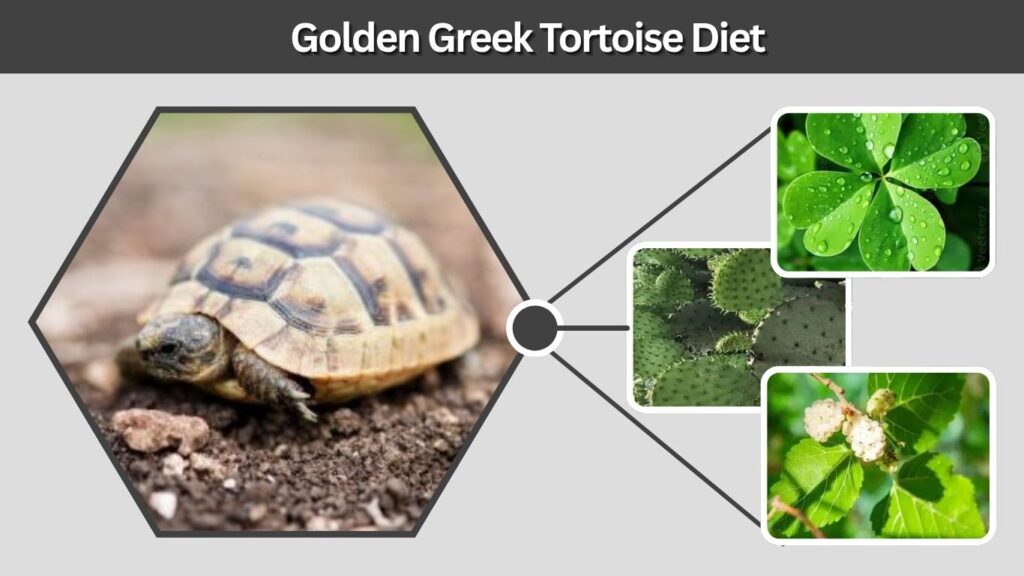
A golden Greek tortoise diet should be plant-based, high in fiber, high in calcium, and low in sugar and protein. In the wild, Greek tortoises graze on grasses, weeds, flowers, and other vegetation.
Best Foods
- Dandelion greens
- Endive
- Escarole
- Mustard greens
- Turnip greens
- Clover
- Mulberry leaves
- Cactus pads
- Safe grasses and weeds
- Hibiscus flowers
- Pesticide-free garden plants
Feed a wide variety instead of relying on one green. Calcium powder can be used several times per week, and some keepers also offer commercial tortoise pellets in moderation.
Foods to Avoid
Avoid meat, dairy, insects, dog food, cat food, avocado, onion, garlic, rhubarb, and mushrooms. Fruit should be rare because too much sugar can upset digestion. Iceberg lettuce is also poor as a staple because it has very little nutritional value.
Habitat, Hibernation, and Health

Greek tortoises come from a wide natural range across North Africa, Southern Europe, and Southwest Asia, living in habitats such as grasslands, forests, savannah-like areas, and scrubby environments. Because the group is so variable, golden Greek tortoise habitat needs may differ slightly between individuals.
Do Golden Greek Tortoises Hibernate?
Many Greek tortoises naturally brumate, which is the reptile version of hibernation. However, not every tortoise should be hibernated. Hibernation is only suitable for healthy species and individuals that naturally experience winter cooling, and sick tortoises should never be brumated. A reptile veterinarian should check the tortoise before any planned hibernation.
Common Health Problems
Watch for bubbling from the nose or mouth, swollen eyes, eye discharge, soft shell, shell damage, lack of appetite, wheezing, or unusual tiredness. These can point to respiratory infection, poor diet, shell problems, or incorrect temperatures. Regular reptile-vet checks are recommended.
Golden Greek Tortoise Price, For Sale, and Legal Notes
Golden Greek tortoise price depends on age, size, breeder reputation, health, and location. Captive-bred tortoises are usually the safest choice. Avoid very cheap listings, unclear origins, and sellers who cannot explain care, age, diet, and legal paperwork.
In the United States, federal rules generally prohibit commercial sale or public distribution of live turtles and tortoises under 4 inches, except for limited non-pet purposes such as bona fide scientific, educational, or exhibition use.
For California buyers, check current California Department of Fish and Wildlife rules before purchasing, importing, or transporting any tortoise. CDFW notes that restricted species permits are required for animals listed under Section 671(c), Title 14, CCR.
FAQs
Are golden Greek tortoises good pets?
Yes, golden Greek tortoises can be good pets for careful keepers. They are small, attractive, and active, but they need proper heat, UVB lighting, diet, space, and long-term commitment. They are not ideal for people who want a cuddly or frequently handled pet.
How big do golden Greek tortoises get?
Most golden Greek tortoises grow around 5–8 inches long. Some Greek tortoise subspecies can grow larger, with certain individuals reaching up to about 12 inches. Females are usually larger than males.
What do golden Greek tortoises eat?
They eat weeds, grasses, leafy greens, flowers, cactus pads, and safe pesticide-free plants. Good foods include dandelion greens, endive, escarole, clover, mustard greens, and mulberry leaves. Avoid meat, dairy, insects, avocado, onion, garlic, and too much fruit.
Do golden Greek tortoises hibernate?
Some Greek tortoises brumate in winter, but hibernation should only be done with healthy tortoises and proper preparation. Young, sick, underweight, or recently imported tortoises should not be hibernated without reptile-vet guidance.
How long do golden Greek tortoises live?
Golden Greek tortoises can live 50 years or more with proper care. Because they are long-lived reptiles, buying one should be treated as a long-term responsibility, not a short-term pet choice.