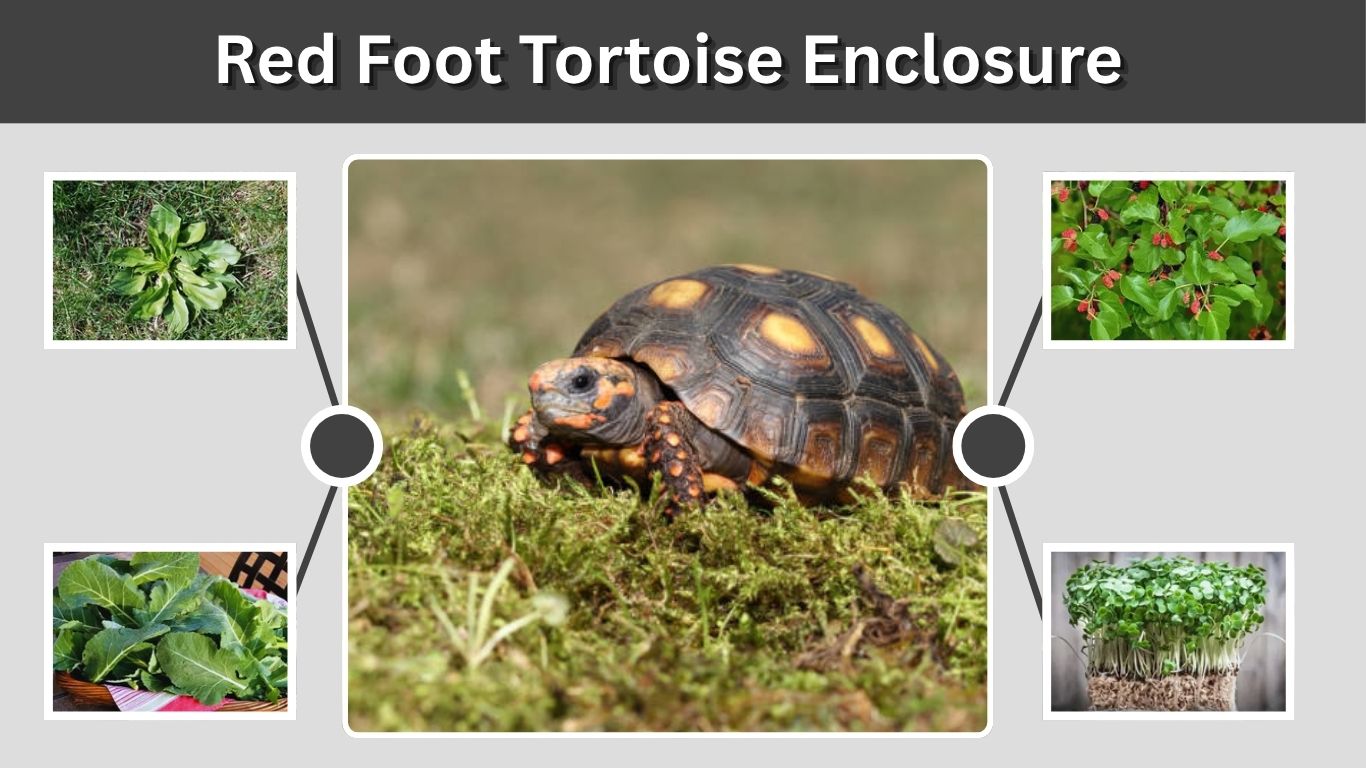
A red foot tortoise enclosure should be warm, humid, spacious, and secure. Unlike desert tortoises, red-footed tortoises come from tropical and subtropical habitats, so they need moisture, shade, hiding areas, and a soft forest-floor style setup. A good enclosure helps prevent stress, dehydration, shell problems, and poor growth. Whether you are building an indoor red foot tortoise enclosure or an outdoor pen, the goal is to copy a warm, shaded, humid habitat as closely as possible.
What Does a Red Foot Tortoise Enclosure Need?
A red footed tortoise enclosure needs more than a box with heat. It should include a temperature gradient, humid hide, UVB lighting, water dish, safe substrate, shelter, and enough room for walking. Red-footed tortoises naturally live in parts of South America, including forest, savanna, and grassland habitats, so they do best in enclosures with warmth, moisture, and cover.
Basic Enclosure Requirements
- Large floor space for daily movement
- Warm basking area with a cooler side
- High humidity, especially for babies and juveniles
- UVB lighting for indoor setups
- Shallow water dish for soaking and drinking
- Humid hide filled with moist moss or leaf litter
- Safe plants and shade for cover
- Solid walls to reduce escape attempts
Glass tanks are usually not ideal for larger tortoises because they are small, poorly ventilated, and may cause the tortoise to keep pushing against the clear sides.
Red Foot Tortoise Enclosure Size
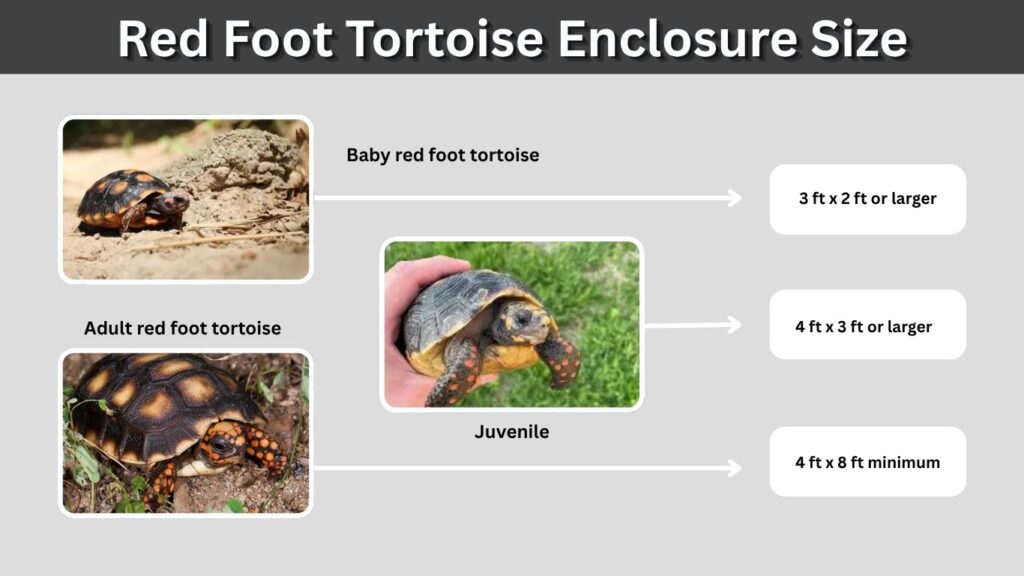
Enclosure size is one of the most searched topics because red foot tortoises need more walking space than many beginners expect. A small enclosure can lead to stress, poor muscle development, and pacing behavior. Arizona Exotic Animal Hospital recommends at least 4 feet by 8 feet for an adult outdoor enclosure, while juveniles can start in smaller indoor spaces but will need upgrades as they grow.
| Tortoise Stage | Minimum Enclosure Size | Best Setup |
| Baby red foot tortoise | 3 ft x 2 ft or larger | Closed, humid indoor setup |
| Juvenile | 4 ft x 3 ft or larger | Indoor table or large tub |
| Adult red foot tortoise | 4 ft x 8 ft minimum | Outdoor pen or large indoor room |
| Pair/group | Larger than 4 ft x 8 ft | Outdoor enclosure preferred |
How Big Should a Red Foot Tortoise Enclosure Be?
For an adult, bigger is always better. A 4 x 8 ft enclosure is a practical minimum, but a larger outdoor pen is ideal in warm climates. Red foot tortoises explore, forage, soak, hide, and thermoregulate throughout the day, so the enclosure should have open walking areas and shaded retreats.
Indoor Red Foot Tortoise Enclosure
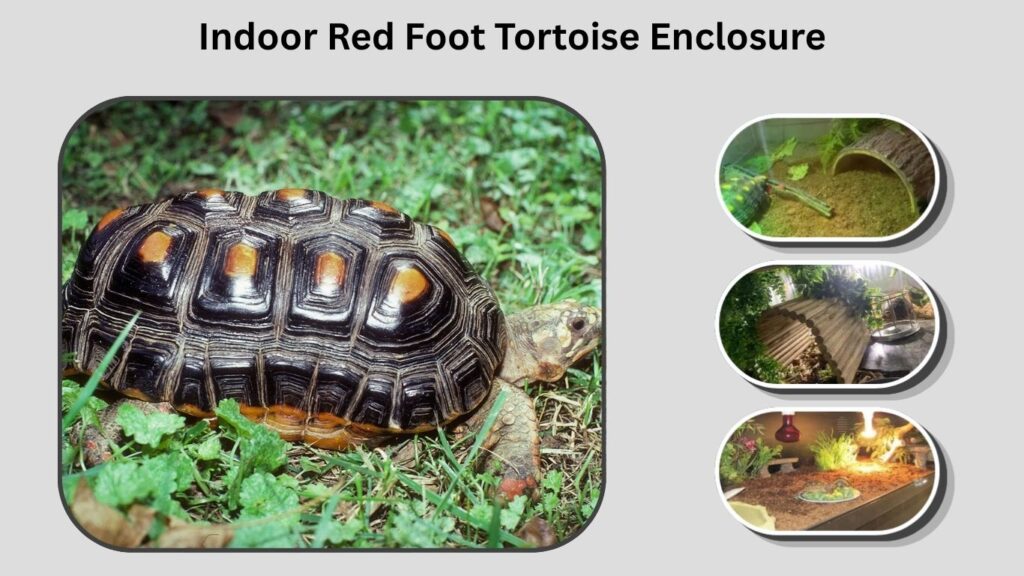
An indoor red foot tortoise enclosure is best for babies, juveniles, cold climates, or winter housing. The enclosure should hold humidity well but still allow airflow. Large plastic tubs, custom wooden tortoise tables with covered sections, grow tents, and PVC reptile enclosures can all work.
Indoor Setup Checklist
- Use a large tub, PVC cage, or custom wooden enclosure.
- Add 4 inches or more of moisture-holding substrate.
- Place a basking lamp on one side.
- Add UVB lighting across part of the enclosure.
- Keep a humid hide on the cooler or middle side.
- Use a shallow water tray that the tortoise can enter and exit safely.
- Add plants, cork bark, leaf litter, and hides for security.
Indoor red-footed tortoises need UVB exposure because UVB helps reptiles use calcium properly. ReptiFiles recommends daytime lighting and UVB for indoor red-footed tortoises, with lights on about 13 hours in summer and 11 hours in winter to mimic seasonal rhythms.
Outdoor Red Foot Tortoise Enclosure
An outdoor red foot tortoise enclosure is excellent in warm, humid climates. It gives natural sunlight, more space, and better enrichment. However, it must be escape-proof and predator-proof. Dogs, raccoons, rats, birds, and other animals can injure tortoises, especially babies.
Outdoor Enclosure Ideas
- Use solid wooden or block walls instead of see-through fencing.
- Bury the wall base several inches underground to reduce digging escapes.
- Add deep shade with shrubs, shade cloth, or small shelters.
- Include a heated shelter if nights drop too low.
- Provide a shallow soaking area.
- Plant edible, pesticide-free plants.
- Cover baby enclosures with secure mesh.
Arizona Exotics recommends solid walls because tortoises may keep trying to walk through visible barriers. Their care guide also suggests walls about 1.5 times the tortoise’s length and extending below ground to discourage escape.
Red Foot Tortoise Enclosure Temperature
Temperature is critical because tortoises rely on their environment to regulate body heat. The enclosure should have a warm area and a cooler area, not one flat temperature everywhere.
| Area | Recommended Range |
| Basking spot | 90–95°F |
| Warm side | 80–86°F |
| Cool side | 75–85°F |
| Night temperature | 68–75°F for adults |
ReptiFiles lists indoor basking temperatures around 90–95°F, ambient/cool-zone temperatures around 75–85°F, and nighttime temperatures around 68–75°F, with juveniles kept warmer at night than adults.
Avoid heat rocks because they can burn tortoises. Use overhead heat lamps, ceramic heat emitters, or radiant heat panels connected to a thermostat. Always measure temperatures with digital thermometers instead of guessing.
Humidity for a Red Footed Tortoise Enclosure
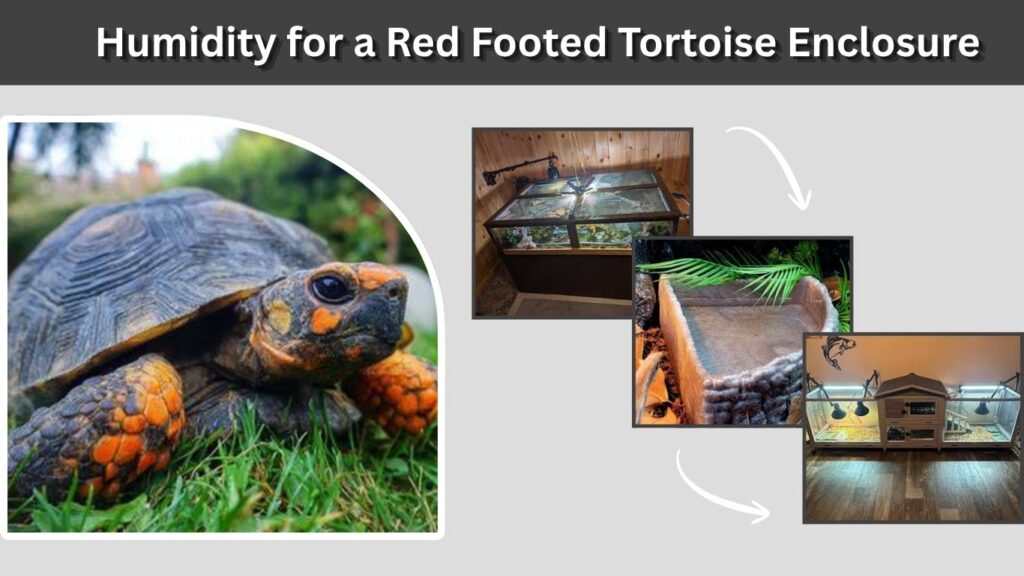
Humidity is one of the most important parts of a red footed tortoise enclosure setup. Red-footed tortoises are tropical animals and do best with higher humidity than desert species. Arizona Exotics recommends 70–90% humidity, while ReptiFiles also recommends indoor humidity around 70–90%, with temporary spikes higher being acceptable.
How to Keep Humidity High
- Use coconut coir, topsoil, cypress mulch, or leaf litter.
- Mist the enclosure daily.
- Keep part of the substrate slightly moist, not muddy.
- Add a humid hide with damp sphagnum moss.
- Use live plants to hold moisture.
- Cover part of the indoor enclosure to trap humidity.
For baby red foot tortoise enclosures, humidity is especially important because dry conditions can contribute to poor shell growth.
Best Substrate for Red Foot Tortoise Enclosure
The best substrate should feel like a soft forest floor. It must hold moisture without becoming soaked. Avoid sand, gravel, pine shavings, cedar shavings, and small bark pieces that may be swallowed.
Good substrate options include coconut coir, organic topsoil, cypress mulch, orchid bark, sphagnum moss, and leaf litter. Arizona Exotics recommends hardwood mulch mixed with coconut fiber, topsoil, and leaf litter, with enough depth for burrowing behavior.
Safe Plants for Red Foot Tortoise Enclosure
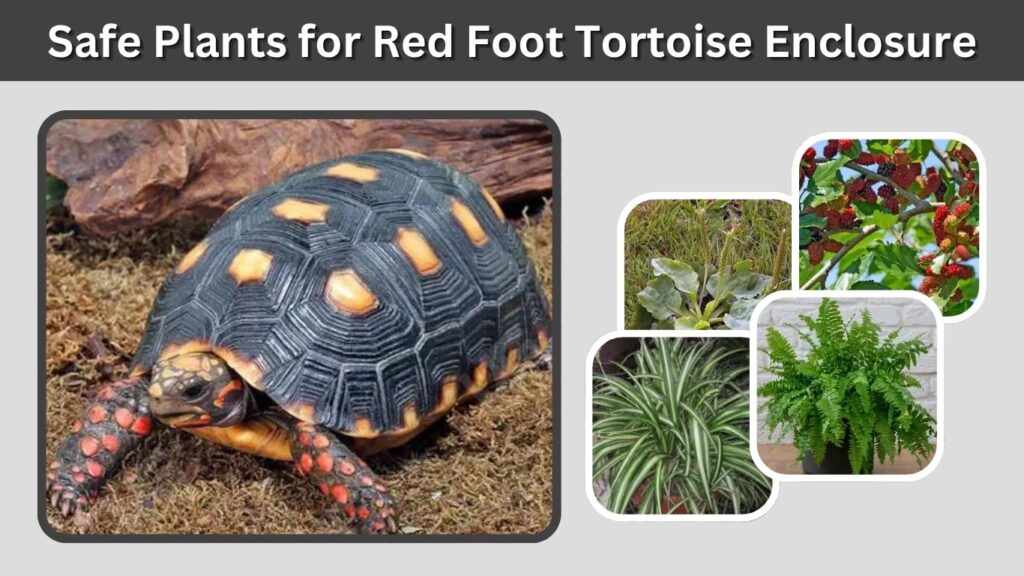
Live plants make the enclosure more natural, increase humidity, create shade, and give the tortoise places to hide. Only use pesticide-free plants. Wash plants well and avoid anything treated with fertilizers or chemicals.
Safe Plant Ideas
- Hibiscus
- Pothos, kept mostly as cover
- Spider plant
- Boston fern
- Mulberry leaves
- Dandelion
- Plantain weed
- Grape leaves
- Pansies
- Clover
Some plants may be eaten quickly, so many keepers grow plants in pots and rotate them. For outdoor enclosures, edible shrubs and dense shade plants are useful because they provide both food and cover.
DIY Red Footed Tortoise Enclosure Ideas
A DIY red footed tortoise enclosure can be better than a store-bought cage because most commercial cages are too small for adults. You can build a wooden indoor table, convert a raised garden bed, use a large plastic stock tank, or create a secure outdoor pen.
For indoor DIY setups, seal the wood with a reptile-safe waterproof sealant and use a pond liner to protect the base. For outdoor DIY setups, focus on solid walls, buried edges, shade, drainage, and predator protection.
Common Enclosure Mistakes
Many red foot tortoise problems come from poor enclosure design. A setup may look nice but still fail if it is too dry, too small, or too cold.
Mistakes to Avoid
- Keeping the tortoise in a dry desert-style setup
- Using a small glass aquarium for too long
- Skipping UVB lighting indoors
- Keeping the substrate dusty or bone dry
- Using unsafe plants or treated soil
- Providing no soaking dish
- Letting outdoor pens overheat in direct sun
- Housing babies outside without predator protection
FAQs
How big should a red foot tortoise enclosure be?
An adult red foot tortoise enclosure should be at least 4 feet by 8 feet, but larger is better. Babies and juveniles can start smaller, but they need upgrades as they grow. Outdoor enclosures are ideal in warm, safe climates.
Can a red foot tortoise live indoors?
Yes, a red foot tortoise can live indoors if the enclosure is large, warm, humid, and properly lit. Indoor setups need UVB lighting, a basking area, a humid hide, safe substrate, and a shallow water dish.
What humidity does a red foot tortoise enclosure need?
A red foot tortoise enclosure should usually stay around 70–90% humidity. Babies often need especially stable humidity. Use moist substrate, misting, live plants, and a humid hide to prevent the enclosure from becoming too dry.
What is the best substrate for a red foot tortoise?
The best substrate is a moisture-holding mix such as coconut coir, organic topsoil, cypress mulch, sphagnum moss, and leaf litter. Avoid sand, gravel, cedar, pine, and dusty bedding because they can cause health or safety problems.
Can red foot tortoises live outside?
Yes, red foot tortoises can live outside in warm, humid climates if the enclosure is secure. Outdoor pens need shade, sun, water, hiding places, solid walls, buried edges, and protection from predators. In cold weather, they need heated shelter or indoor housing.