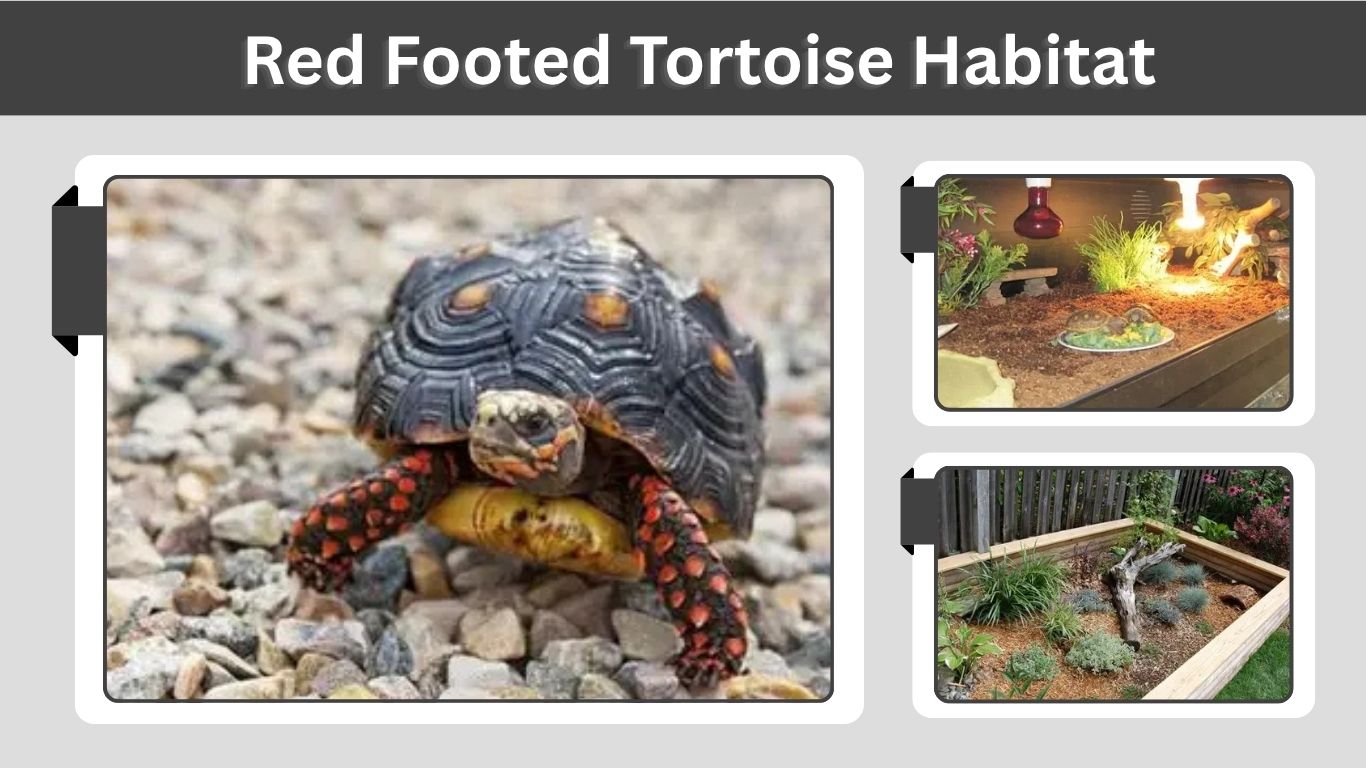
A red footed tortoise habitat should feel warm, humid, shaded, and natural. Unlike desert tortoises, red footed tortoises come from tropical and semi-tropical regions, so they need moisture, hiding areas, soft substrate, shallow water, and safe plants. A good habitat helps them stay active, hydrated, and healthy. Whether you keep one indoors, outdoors, or both, the setup should copy their natural forest-edge lifestyle as closely as possible.
Red Footed Tortoise Natural Habitat
In the wild, red-footed tortoises live across much of South America, from Panama to Argentina, and are also found on Trinidad and Barbados. Their natural habitat includes wet forests, dry forests, grasslands, and savanna areas.
Where They Live in the Wild
Red footed tortoises are often linked with forest edges, leaf litter, shaded clearings, and humid ground areas. They do not usually live in dry, open desert habitats. This is why pet enclosures should not be too dry, too bright, or too exposed.
What Their Habitat Tells Us
Their wild environment gives three important care clues:
- They need high humidity.
- They need shade and hiding places.
- They need room to walk, forage, and soak.
A plain dry box with a heat lamp is not enough for this tropical tortoise.
Best Red Footed Tortoise Habitat Setup
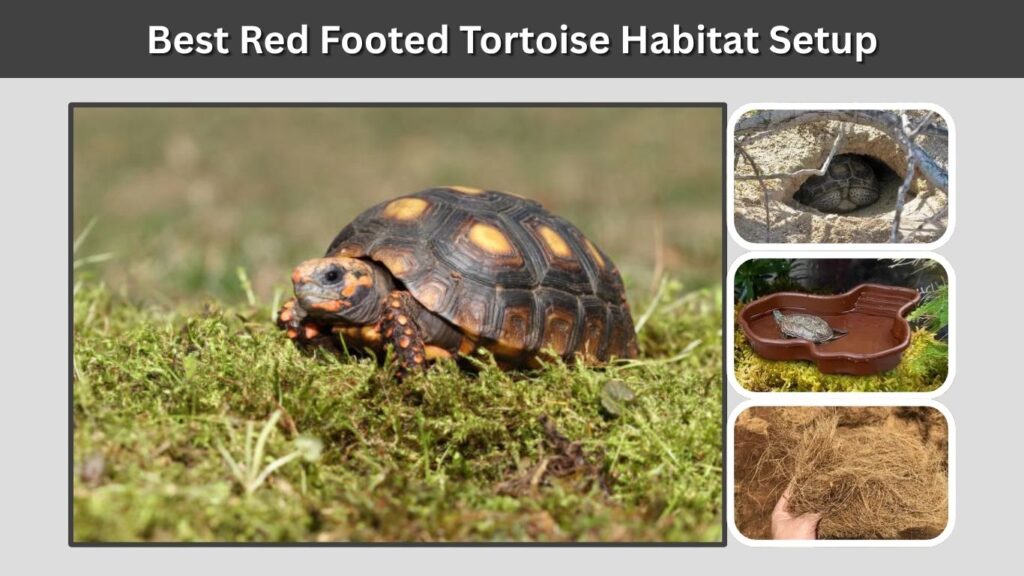
A good red foot tortoise habitat setup should include heat, humidity, substrate, water, plants, hides, and safe lighting. Red-footed tortoises are active ground-dwelling reptiles, so floor space matters more than height.
| Habitat Feature | Best Setup |
| Temperature | Warm basking area with cooler side |
| Humidity | High, tropical-style humidity |
| Substrate | Moist soil, coco fiber, mulch, leaf litter |
| Water | Shallow soaking dish |
| Lighting | UVB indoors, shade outdoors |
| Hides | At least 2 humid hiding spots |
| Plants | Safe, non-toxic plants only |
Temperature and Heat
For indoor habitats, a basking area around 90–95°F, an ambient/cool zone around 75–85°F, and a nighttime range around 68–75°F are commonly recommended for red-footed tortoises.
Use a thermometer on both the warm and cool sides. Avoid heating from below unless it is controlled by a thermostat, because tortoises can burn themselves if the heat source is unsafe.
Humidity
Red-footed tortoises need a humid habitat. Indoor humidity is often recommended around 70–90%, with a humid hide always available.
To hold humidity, use a deep moisture-retaining substrate, mist the enclosure, add leaf litter, and provide a shallow water area. The goal is warm and humid, not cold and wet.
Substrate
The best substrate for a red footed tortoise habitat is soft, natural, and able to hold moisture. Good choices include:
- Organic topsoil
- Coconut coir
- Cypress mulch
- Orchid bark
- Leaf litter
- Soil and coco fiber mix
Avoid cedar, pine shavings, dry sand, gravel, and slippery flooring. Substrate should be deep enough for digging and comfort.
Indoor Red Footed Tortoise Habitat
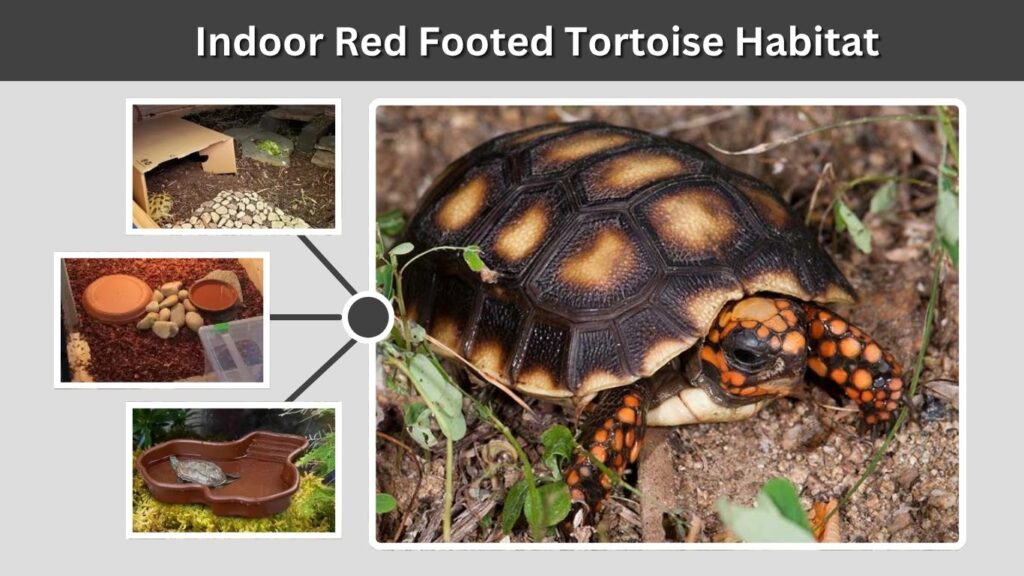
An indoor red footed tortoise habitat is useful for keepers in cold climates, apartments, or areas where outdoor housing is not safe year-round. Indoor enclosures must be large, humid, and easy to clean.
Indoor Enclosure Size
For adults, bigger is always better. An 8 ft x 4 ft enclosure is often used as a practical indoor size for larger red-footed tortoises or temporary indoor housing.
Glass tanks are usually too small and do not hold the right temperature and humidity well for adults. A closed or partially covered enclosure works better than an open tortoise table because it helps maintain humidity.
Indoor Habitat Checklist
Your indoor setup should include:
- UVB light
- Basking lamp
- Digital thermometer
- Hygrometer
- Moist substrate
- Shallow water dish
- Humid hide
- Safe plants or décor
- Flat feeding stone or tray
Keep the water dish low enough for the tortoise to enter and exit easily. Clean it daily because tortoises often soak and defecate in water.
Outdoor Red Footed Tortoise Habitat
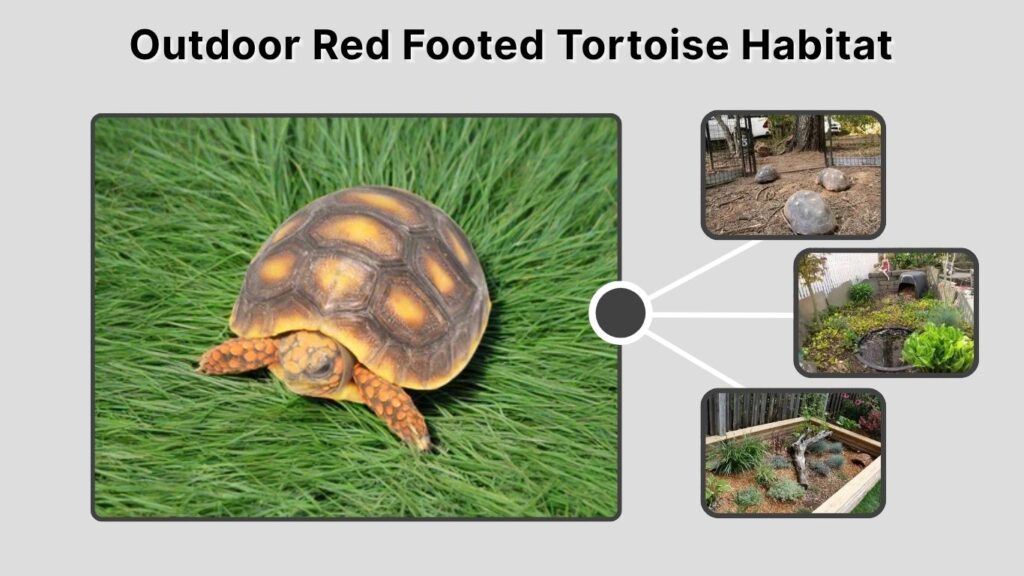
An outdoor red foot tortoise habitat is excellent in warm, humid climates. It gives natural sunlight, more space, fresh air, and enrichment. However, outdoor housing must be secure and weather-safe.
Outdoor Enclosure Needs
A safe outdoor habitat should have:
- Predator-proof fencing
- Buried fence edges to prevent escape
- Shaded areas
- Sunny basking spots
- Humid hides
- Shallow water
- Edible plants
- Dry shelter during heavy rain
Red footed tortoises should not be left outside in cold weather. If temperatures drop too low, bring them indoors or provide a heated shelter.
Best Outdoor Habitat Ideas
Create a natural layout with shaded corners, leaf piles, logs, planted areas, and open walking paths. Do not make the whole enclosure sunny. Red footed tortoises like shade and cover, so a mixed habitat is better than a bare lawn.
Plants for Red Footed Tortoise Habitat
Plants make the habitat more natural, increase humidity, and give the tortoise cover. Use only safe, pesticide-free plants. ReptiFiles notes that edible plants, hollow logs, branches, flat stones, dirt mounds, and mud holes can all be useful enrichment in a red-footed tortoise enclosure.
| Safe Plant Ideas | Use |
| Hibiscus | Shade and edible flowers |
| Dandelion | Grazing plant |
| Plantain weed | Edible ground cover |
| Mulberry leaves | Browse food |
| Pothos | Cover, if not heavily eaten |
| Spider plant | Indoor cover |
| Boston fern | Humidity and shade |
Always confirm plant safety before adding anything. Avoid toxic plants, treated nursery plants, and plants sprayed with pesticides or fertilizers.
Baby Red Foot Tortoise Habitat
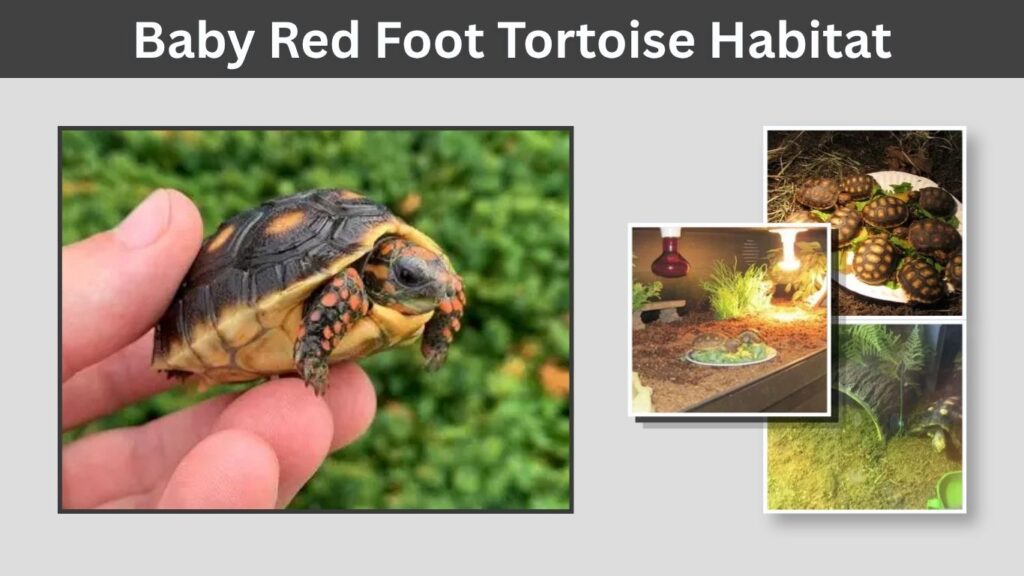
A baby red foot tortoise habitat should be smaller than an adult setup but still warm, humid, and secure. Babies dry out faster than adults, so humidity and soaking are very important.
Baby Habitat Tips
- Keep humidity high.
- Provide shallow water at all times.
- Use soft, moist substrate.
- Add a humid hide.
- Avoid deep water bowls.
- Keep temperatures stable.
- Do not house babies on dry pellets or bare floors.
Baby red footed tortoises need easy access to food, water, shade, and warmth. Check them daily because small tortoises can dehydrate quickly.
Cherry Head Red Foot Tortoise Habitat
Cherry head red foot tortoises are a smaller, colorful form of red-footed tortoise, often linked with Brazil. Their habitat needs are very similar to regular red footed tortoises. They still need warmth, humidity, shade, soft substrate, water, UVB indoors, and a secure enclosure.
Do not make the habitat drier just because the tortoise is smaller. Cherry heads also need a tropical-style setup with plenty of cover and moisture.
Common Habitat Mistakes
Many health problems start with poor habitat design. Avoid these common mistakes:
- Keeping the enclosure too dry
- Using a small glass tank for an adult
- Providing no humid hide
- Using toxic plants
- Keeping the tortoise cold and wet
- Using only dry hay or pellets as substrate
- Forgetting UVB lighting indoors
- Leaving outdoor tortoises exposed to predators
A good habitat should let the tortoise choose between warm, cool, wet, dry, shaded, and open areas.
FAQs
What is the best habitat for a red footed tortoise?
The best habitat is warm, humid, shaded, and spacious. It should include moist substrate, a basking area, UVB lighting indoors, shallow water, humid hides, and safe plants. Outdoor habitats are excellent in warm climates if they are secure and predator-proof.
Can red footed tortoises live outside?
Yes, red footed tortoises can live outside in warm, humid climates. They need shade, shelter, water, and secure fencing. In cold or dry climates, they should be brought indoors or kept in a heated indoor enclosure during unsafe weather.
What humidity does a red footed tortoise need?
Red footed tortoises do best with high humidity, often around 70–90% indoors. A humid hide should always be available. Low humidity can cause dehydration and shell problems, especially in baby tortoises.
What plants are good for a red footed tortoise habitat?
Good plant choices include hibiscus, dandelion, plantain, mulberry, spider plant, Boston fern, and other safe, pesticide-free plants. Always check plant safety before adding them, because some common houseplants and garden plants can be toxic.
How big should a red foot tortoise habitat be?
Adult red footed tortoises need a large floor-space enclosure. Bigger is better because they are active walkers. An indoor adult setup is often built around 8 ft x 4 ft or larger, while outdoor pens should offer even more room when climate allows.