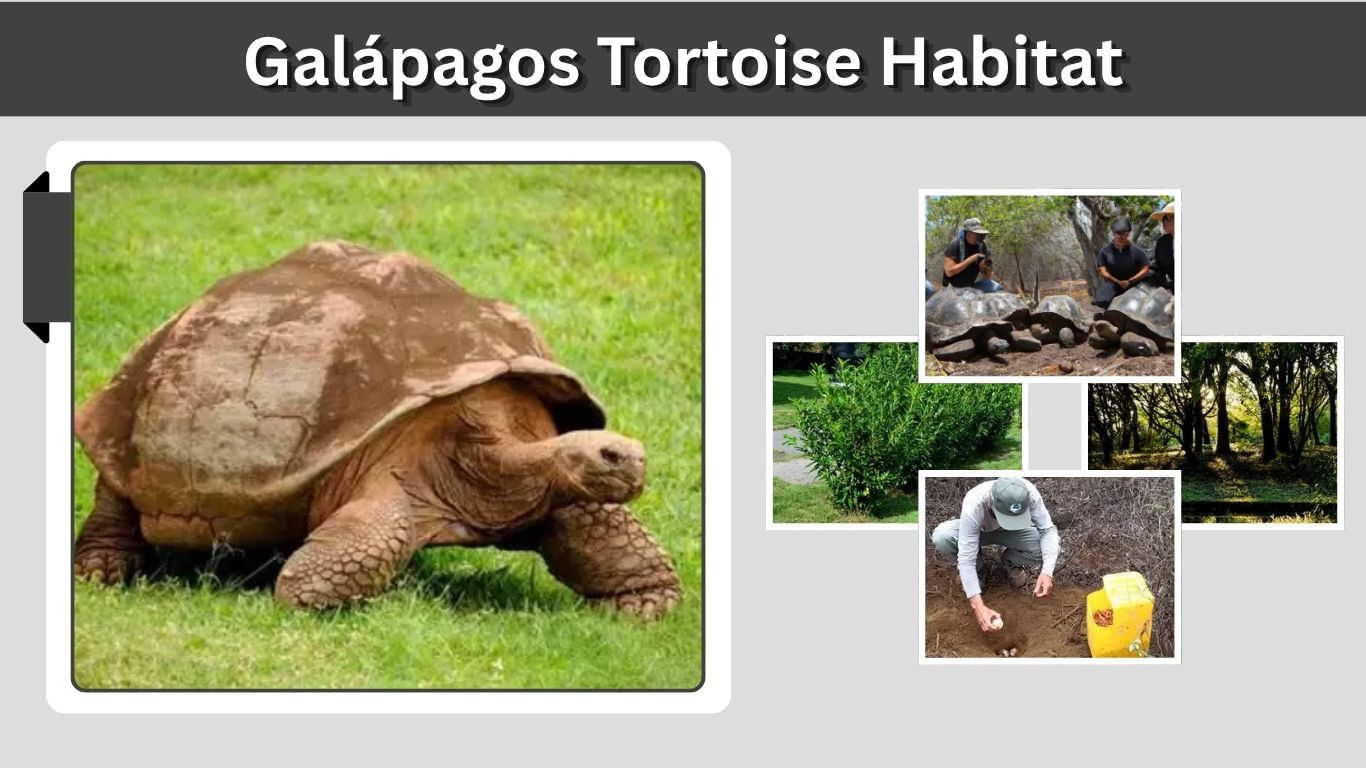
The Galápagos tortoise habitat includes volcanic highlands, dry lowlands, grasslands, shrublands, and humid forests across several islands in the Galápagos archipelago. These giant reptiles are specially adapted to survive in environments where food, water, and temperature can change dramatically throughout the year. Different tortoise populations live in different habitat types, which has influenced their shell shape, body size, feeding behavior, and movement patterns. Understanding their natural habitat helps explain how Galápagos tortoises became some of the most remarkable and long-lived reptiles on Earth.
Where Do Galápagos Tortoises Live?
Galápagos tortoises live naturally on the Galápagos Islands, a volcanic archipelago located in the Pacific Ocean west of mainland Ecuador. They are not evenly distributed across every island. Instead, separate populations developed on islands and volcanoes with different climates, elevations, and vegetation.
Today, wild populations occur on islands such as:
- Isabela
- Santa Cruz
- Santiago
- Española
- San Cristóbal
- Pinzón
Some populations occupy large sections of an island, while others are restricted to individual volcanoes or protected areas.
Because the islands are separated by ocean, tortoise populations became geographically isolated. Over many generations, they developed physical and behavioral differences suited to their local surroundings.
Main Types of Galápagos Tortoise Habitat
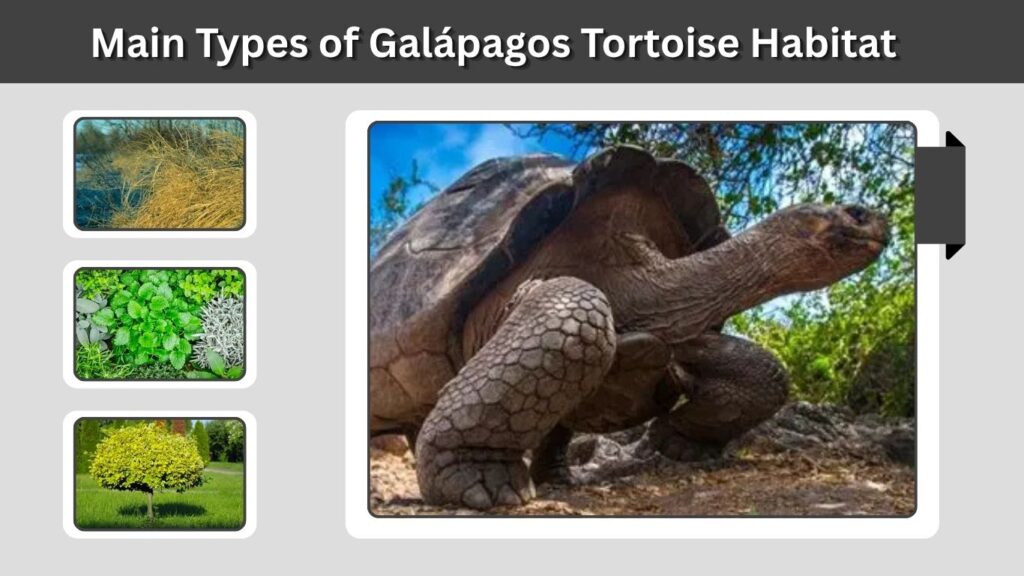
The Galápagos giant tortoise habitat is highly varied. Some tortoises live in humid mountain areas, while others survive in dry, rocky landscapes with limited vegetation.
Dry Lowland Habitat
Dry lowlands are found near the coast and at lower elevations. These areas usually have high temperatures, intense sunlight, rocky volcanic ground, and seasonal rainfall.
Vegetation may include:
- Cacti
- Thorny shrubs
- Dry grasses
- Small trees
- Low-growing herbs
Tortoises living in dry environments often travel considerable distances to locate food and water. During the dry season, they may depend heavily on cactus pads, fallen cactus fruit, and moisture-rich plants.
Dry lowland habitats can become extremely hot during the day. Tortoises may rest beneath shrubs, beside rocks, or in shaded depressions to avoid overheating.
Humid Highland Habitat
Humid highlands occur at higher elevations, especially on larger islands such as Santa Cruz and Isabela. These areas receive more moisture from clouds, mist, and seasonal rainfall.
Highland habitats commonly contain:
- Grasses
- Ferns
- Mosses
- Shrubs
- Small forests
- Mud pools
The cooler temperatures and greater plant growth provide abundant food. Dome-shaped tortoises are commonly associated with these productive highland environments.
During wetter months, tortoises may spend long periods feeding in open grassy areas. Mud pools are also important because tortoises use them to cool their bodies and protect their skin from insects.
Volcanic Slopes
Several Galápagos tortoise populations live on the slopes of volcanoes, particularly on Isabela Island. The terrain may include lava fields, steep ridges, craters, grasslands, and patches of forest.
Conditions can differ greatly depending on elevation. Lower slopes are often dry, while upper slopes may be cooler and greener.
Volcanic barriers can separate populations even when they live on the same island. This isolation helped produce distinct tortoise forms on different volcanoes.
Habitat Differences Between Dome-Shaped and Saddleback Tortoises
Shell shape is closely connected to the type of habitat in which a Galápagos tortoise lives.
| Feature | Dome-Shaped Tortoise | Saddleback Tortoise |
| Typical habitat | Humid highlands | Dry lowlands |
| Vegetation | Grass and low plants | Cacti and taller shrubs |
| Shell shape | Rounded dome | Raised front opening |
| Neck length | Moderate | Longer |
| Feeding style | Grazes near the ground | Reaches upward for food |
Dome-Shaped Tortoise Habitat
Dome-shaped tortoises usually live in wetter, greener environments where grass and low-growing plants are readily available. Their rounded shells and heavier bodies are well suited for grazing.
Because food is often close to the ground, they do not need to stretch their necks very high. These tortoises may also grow particularly large because productive highland habitats provide plentiful vegetation.
Saddleback Tortoise Habitat
Saddleback tortoises are generally associated with dry islands and lowland areas where food is less abundant. Their shells rise sharply above the neck, allowing them to stretch upward.
This adaptation helps them reach:
- Cactus pads
- Cactus fruit
- Leaves
- Taller shrubs
- Hanging branches
Their longer necks and legs are valuable in habitats where low-growing grass may disappear during extended dry periods.
Climate of the Galápagos Tortoise Habitat
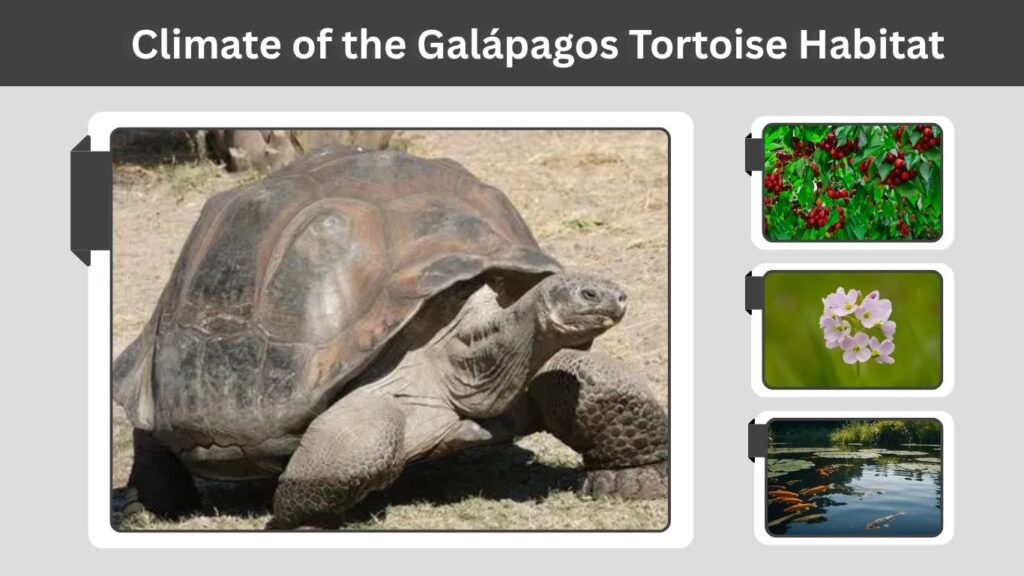
The Galápagos climate is influenced by ocean currents, elevation, and seasonal weather patterns. Conditions are commonly divided into a warm, wetter season and a cooler, drier season.
Warm and Wet Season
The warmer season generally brings higher temperatures and increased rainfall. Vegetation grows rapidly, and temporary pools may form in low-lying areas.
During this period, tortoises often have easier access to:
- Fresh grasses
- Flowers
- Fruits
- Water
- Soft vegetation
They may become more active and spread across broader feeding areas.
Cool and Dry Season
During the cooler season, rainfall decreases in many lowland areas. However, higher elevations may continue receiving moisture from fog and mist.
Food becomes scarce in dry habitats, causing some tortoises to rely on drought-resistant plants. Others migrate toward highland feeding areas where vegetation remains greener.
Galápagos Tortoise Migration
Some giant Galápagos tortoises migrate seasonally between lowland and highland habitats. These journeys may cover several kilometers and often follow traditional routes used by generations of tortoises.
Adult tortoises may move into highlands during dry periods to find grass, water, and cooler temperatures. They may later return to lower elevations for nesting.
Migration allows tortoises to use several habitats during the year rather than depending on one location. However, roads, farms, fences, and human development can disrupt these natural movements.
Food and Water in Their Natural Habitat
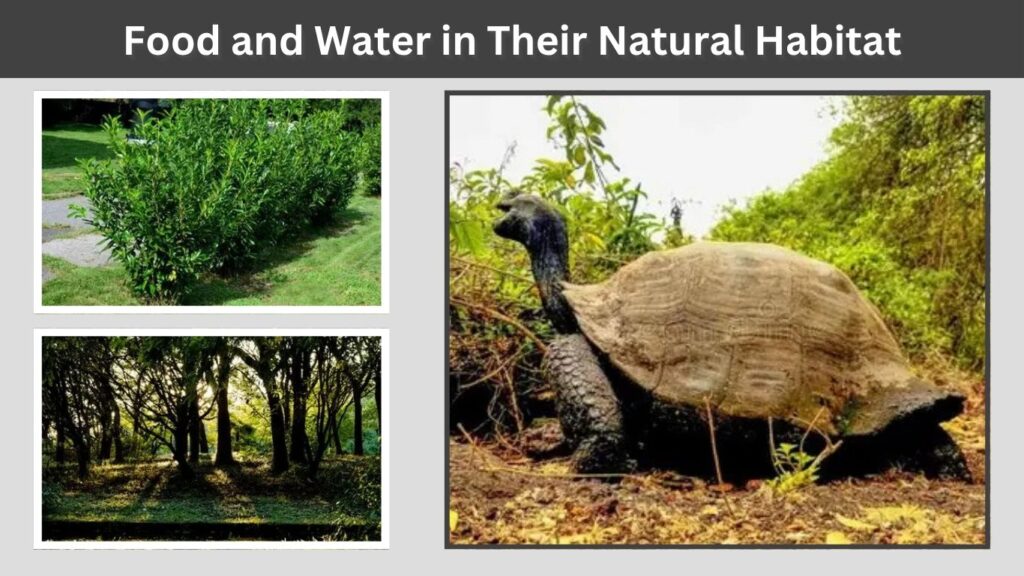
Galápagos tortoises are primarily herbivorous. Their diet depends on the plants available within their particular habitat.
Common foods include:
- Grasses
- Leaves
- Cactus pads
- Cactus fruit
- Flowers
- Vines
- Shrubs
- Fallen fruit
Tortoises in humid habitats usually have access to a greater variety of soft vegetation. Those in dry areas consume tougher, more fibrous plants.
Galápagos tortoises can survive for long periods with limited drinking water. They obtain moisture from plants and can store water in their bodies. When they find pools or springs, they may drink large amounts at once.
Shelter and Temperature Regulation
As reptiles, Galápagos tortoises depend on their surroundings to regulate body temperature. They warm themselves in sunlight and seek shelter when temperatures become too high.
Natural shelter may include:
- Dense shrubs
- Forest shade
- Rocky overhangs
- Mud wallows
- Vegetation-covered depressions
Mud wallowing helps tortoises remain cool and may reduce irritation from ticks, flies, and other insects. At night, they often rest beneath bushes or in sheltered locations protected from wind.
Nesting Habitat
Female Galápagos tortoises often travel from feeding grounds to warmer, drier nesting areas. They typically choose soil that is loose enough for digging but stable enough to protect the eggs.
Using their hind legs, females dig deep nest chambers and deposit several eggs. They then cover the nest with soil.
Suitable nesting sites usually have:
- Warm temperatures
- Good drainage
- Soft soil
- Open sunlight
- Limited flooding risk
Egg development is affected by nest temperature. After hatching, young tortoises must dig their way to the surface and survive predators, drought, and competition for food.
Threats to Galápagos Tortoise Habitats
Although much of the tortoises’ range is protected, their habitat continues to face several pressures.
Invasive Animals
Introduced goats, pigs, rats, dogs, and other animals have caused serious problems. Goats compete with tortoises for vegetation, while pigs and rats may eat eggs or hatchlings.
Invasive plants can also replace native species that tortoises depend on for food.
Habitat Loss and Fragmentation
Farming, roads, fences, settlements, and tourism infrastructure can divide tortoise habitats. These barriers may block migration routes or prevent females from reaching nesting areas.
Tortoises crossing roads also face the risk of injury from vehicles.
Climate Change
Changes in rainfall, temperature, and severe weather may affect plant growth and water availability. Dry habitats are especially vulnerable because tortoises already live with limited food and moisture.
Changing weather patterns may also influence nesting conditions and hatchling survival.
Habitat Conservation
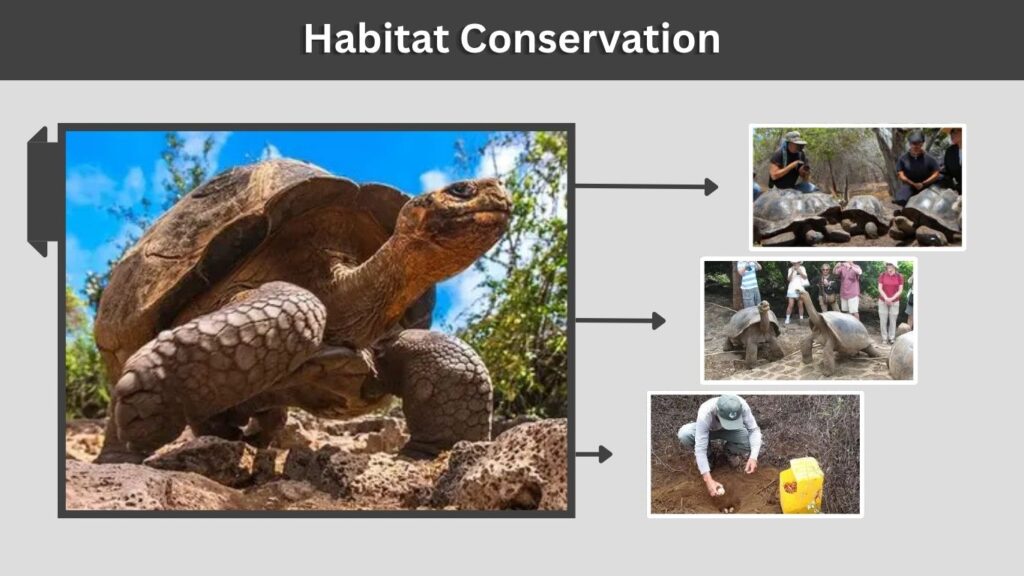
Conservation organizations and park authorities work to protect Galápagos tortoise habitats through land restoration, invasive-species control, captive breeding, and habitat monitoring.
Important conservation actions include:
- Removing invasive goats and pigs
- Protecting migration corridors
- Restoring native vegetation
- Monitoring wild populations
- Protecting nesting grounds
- Raising young tortoises before release
- Reducing vehicle-related deaths
Some islands have experienced major habitat recovery after invasive herbivores were removed. As native vegetation returns, tortoise populations gain access to better food and shelter.
Special Habitat Adaptations
Galápagos tortoises possess several adaptations that help them survive in challenging island environments.
They can conserve water efficiently, tolerate long periods without food, and travel slowly over rough volcanic terrain. Their powerful legs support their heavy bodies, while their long necks help them reach vegetation.
Shell shape is another major adaptation. Rounded shells suit grass-rich habitats, while saddleback shells allow tortoises to reach plants growing above the ground.
These traits demonstrate how isolated populations adapted to the conditions of individual islands.
Galápagos Tortoise Habitat Facts
- Galápagos tortoises live in both dry lowlands and humid highlands.
- Some populations migrate seasonally between elevations.
- Their habitat may include lava fields, forests, grasslands, cactus zones, and volcanic slopes.
- Saddleback tortoises are better adapted to dry habitats with taller vegetation.
- Dome-shaped tortoises commonly occupy wetter areas with abundant grass.
- Mud pools provide cooling and protection from insects.
- Females may travel long distances to reach traditional nesting sites.
- Separate islands and volcanoes support genetically distinct populations.
FAQs
What habitat do Galápagos tortoises live in?
Galápagos tortoises live in several habitats, including dry coastal lowlands, cactus shrublands, humid mountain grasslands, forests, and volcanic slopes. Their exact habitat depends on the island, elevation, rainfall, vegetation, and the particular tortoise population.
Do Galápagos tortoises live in the desert?
Some Galápagos tortoises live in dry, desert-like environments with sparse vegetation, rocky soil, and limited water. These tortoises often eat cactus pads, fruits, shrubs, and drought-resistant plants. Other populations live in cool, humid highlands.
Why do Galápagos tortoises migrate?
Galápagos tortoises migrate to find food, water, suitable temperatures, and nesting areas. They may move toward humid highlands during dry periods and return to lower elevations when nesting conditions become favorable.
How does habitat affect a Galápagos tortoise’s shell?
Tortoises from wet, grassy habitats generally have rounded, dome-shaped shells. Tortoises from dry habitats often have saddleback shells with raised front openings, allowing them to extend their necks upward to reach cacti and taller vegetation.
Is the Galápagos tortoise habitat protected?
Much of the natural Galápagos tortoise habitat lies within protected national park areas. However, invasive species, roads, farms, settlements, and climate-related changes still threaten some populations and their traditional migration routes.