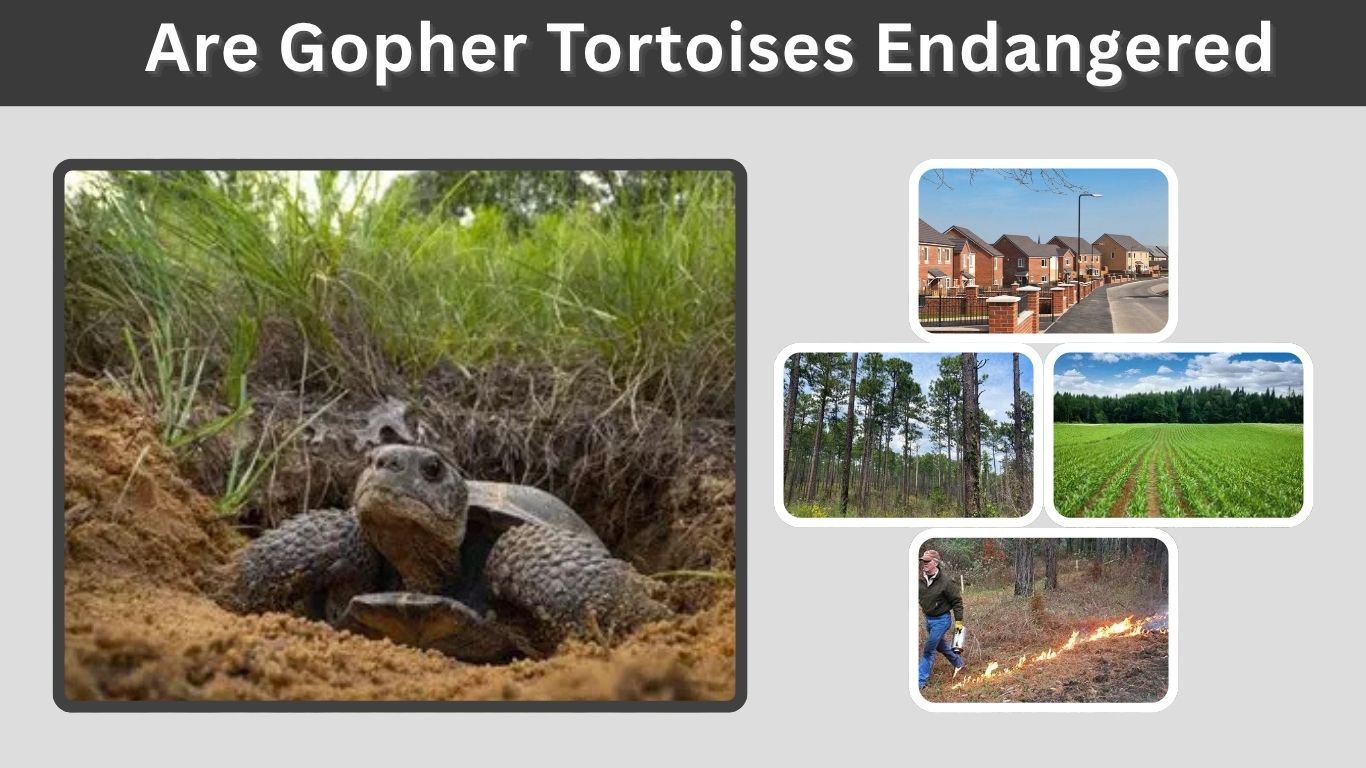
Gopher tortoises are not classified the same way throughout their range. The western population, found in Louisiana, Mississippi, and western Alabama, is federally listed as threatened. The eastern population—including Florida, Georgia, South Carolina, and eastern Alabama—is not currently listed under the federal Endangered Species Act. However, gopher tortoises remain protected by state laws, and populations continue to face habitat loss, road deaths, disease, and other serious threats.
Are Gopher Tortoises Endangered or Threatened?
The most accurate answer depends on where the tortoise lives.
| Region | Current general status |
| Louisiana | Federally threatened |
| Mississippi | Federally threatened |
| Western Alabama | Federally threatened |
| Eastern Alabama | Not federally listed |
| Florida | State-designated threatened |
| Georgia | Not federally listed but protected by state law |
| South Carolina | Not federally listed but state-protected |
The U.S. Fish and Wildlife Service divides the species into western and eastern distinct population segments.
The western population remains federally threatened under the Endangered Species Act. The eastern population was reviewed for federal protection, but the Service concluded in 2022 that federal listing was not warranted at that time.
This does not mean eastern gopher tortoises are free from danger. State agencies continue to protect them because habitat destruction and other pressures can cause local populations to decline.
Are Gopher Tortoises Endangered in Florida?
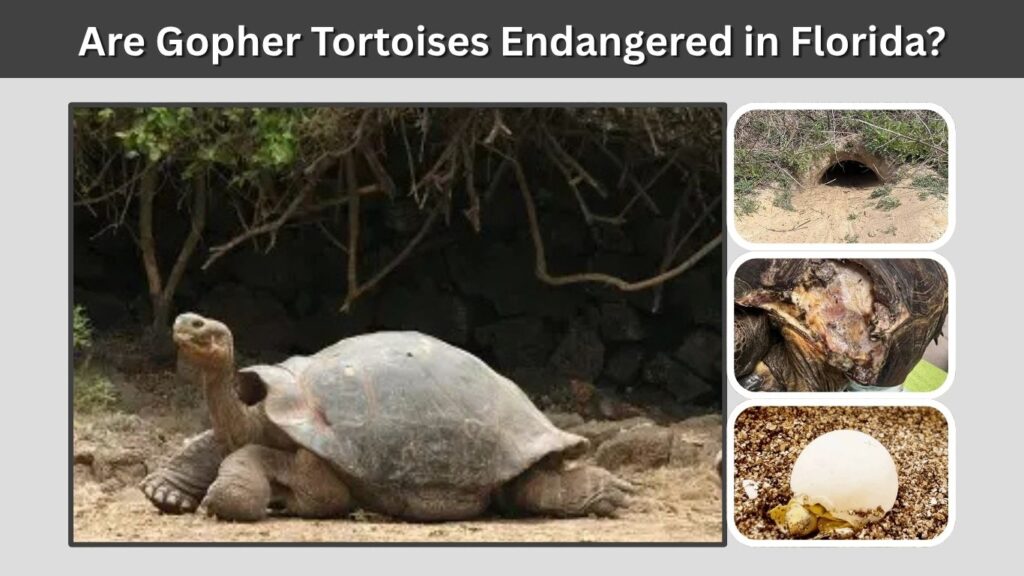
Gopher tortoises are not officially classified as endangered in Florida. They are listed as a state-designated threatened species.
Florida first classified the tortoise as a Species of Special Concern in 1979. It was reclassified as threatened in 2007 because of continuing concerns about habitat loss and population decline.
Both the tortoise and its burrow are protected under Florida law. It is illegal to:
- Kill or injure a gopher tortoise
- Capture or possess one without authorization
- Destroy or cover an occupied burrow
- Relocate a tortoise without a permit
- Harm its eggs
- Disturb burrows during development without approval
Construction projects must follow Florida Fish and Wildlife Conservation Commission requirements when potentially occupied burrows are present. Tortoises generally must be relocated by authorized professionals before land clearing or construction begins.
Are Florida Gopher Tortoises Federally Protected?
Most gopher tortoises in Florida are part of the eastern population and are not federally listed under the Endangered Species Act.
However, Florida’s state protections remain in effect. The absence of federal listing does not allow people to move, capture, harm, or destroy tortoises and their burrows.
Are Gopher Tortoises Endangered in Georgia?
Gopher tortoises in Georgia are not currently listed as federally endangered or threatened. Georgia is part of the eastern population segment that the U.S. Fish and Wildlife Service decided not to list in 2022.
However, gopher tortoises and their eggs are protected from direct harm under Georgia state law. Conservation programs continue to protect land, restore habitat, and establish secure populations across the southern part of the state.
Georgia has made significant investments in permanently protected tortoise habitat. A statewide partnership reached a major conservation goal by protecting enough populations and habitat to reduce the immediate need for federal listing.
The species is also Georgia’s state reptile and an important symbol of the longleaf pine and sandhill ecosystems.
Why Are Gopher Tortoises Threatened?
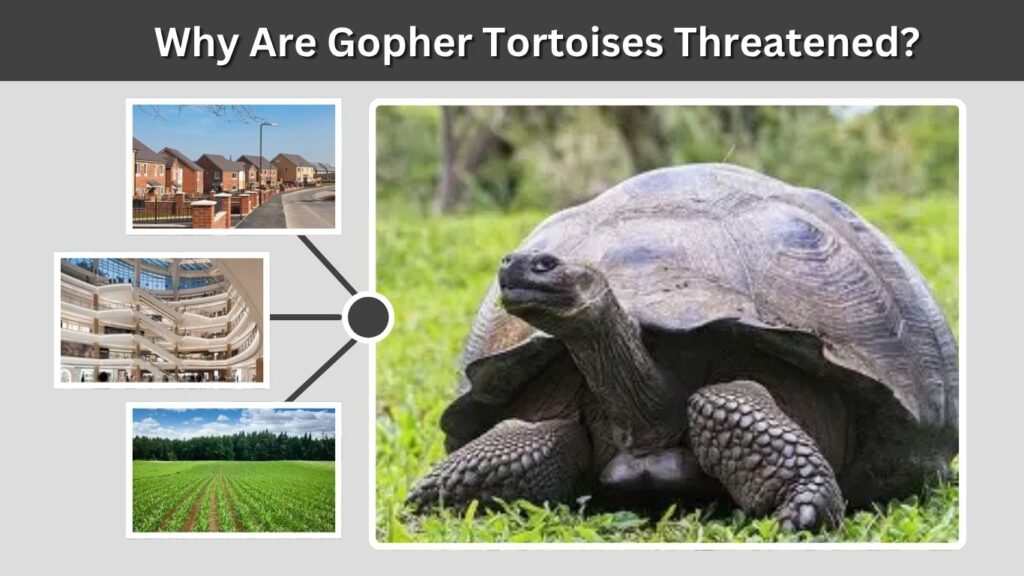
Gopher tortoises face several connected threats. Most are related to changes in the open, dry habitats they require for feeding, nesting, and digging burrows.
1. Habitat Loss
Habitat destruction is the greatest long-term threat to gopher tortoises. Their upland habitats are often converted into:
- Housing developments
- Shopping centers
- Roads
- Industrial sites
- Agricultural land
- Heavily managed forests
Once suitable land is cleared, tortoises lose their food plants, nesting areas, and underground shelter.
Habitat loss can be especially damaging because gopher tortoises reproduce slowly. A population may not recover quickly after many adults are removed or killed.
2. Habitat Fragmentation
Some habitat remains after development, but roads, buildings, fences, and other structures may divide it into isolated sections.
Fragmentation prevents tortoises from moving freely between feeding areas, nesting sites, and neighboring populations. Small, isolated groups may have fewer opportunities to reproduce and may become more vulnerable to disease, storms, drought, and local extinction.
3. Fire Suppression
Gopher tortoises thrive in open habitats where sunlight reaches the ground and supports grasses, flowers, legumes, and other low-growing plants.
Historically, natural fires regularly reduced dense shrubs and trees. When fire is suppressed, woody vegetation may take over, shade the ground, and reduce the tortoise’s food supply. Florida wildlife officials identify fire suppression and unsuitable land management as important causes of habitat degradation.
Prescribed burning is therefore an important conservation tool in many gopher tortoise habitats.
4. Road Mortality
Gopher tortoises sometimes cross roads while searching for food, mates, nesting areas, or new habitat. Their slow movement makes them highly vulnerable to vehicles.
Roads can also divide populations and encourage development in previously undisturbed areas.
A tortoise found crossing a road may be moved directly to the other side in the direction it was traveling, provided doing so is safe. It should not be taken to a different location or transported to another property.
5. Burrow Destruction
A gopher tortoise may spend much of its life using underground burrows. These shelters protect it from high temperatures, cold weather, drought, predators, storms, and natural fire.
Burrows may be damaged by:
- Bulldozers
- Heavy vehicles
- Construction
- Land grading
- Intentional filling
- Livestock
- Unauthorized excavation
Collapsing or covering an occupied burrow can trap or kill the tortoise inside.
Burrow destruction also harms many other animals. More than 350 species may use gopher tortoise burrows for shelter, which is why the tortoise is considered a keystone species.
6. Illegal Collection
Some gopher tortoises are illegally collected as pets or moved from their natural habitats.
Wild tortoises should never be taken home. Removing an individual can reduce the breeding population and expose the animal to improper food, stress, disease, and unsuitable living conditions.
Releasing a captive tortoise is also dangerous because it may introduce disease into a healthy wild population.
7. Disease
Gopher tortoises can develop respiratory disease and other health problems. Symptoms may include:
- Nasal discharge
- Swollen eyes
- Labored breathing
- Weakness
- Unusual inactivity
Disease can spread when tortoises are illegally moved, held together, or released into unfamiliar populations.
Habitat stress may also make animals less capable of resisting infection.
8. Predation on Eggs and Young
Adult gopher tortoises have strong shells, but eggs and hatchlings are highly vulnerable.
Common predators include:
- Raccoons
- Armadillos
- Foxes
- Coyotes
- Snakes
- Birds
- Fire ants
- Domestic dogs
Females lay relatively few eggs, and many nests fail before hatching. Young tortoises also require years to reach reproductive maturity, making population recovery slow.
9. Climate Change
Changes in rainfall and temperature may affect vegetation, nesting conditions, water availability, and fire patterns.
More severe drought could reduce food growth, while intense rainfall may flood low-lying burrows. Temperature changes may also influence egg development because nest temperature affects developing young.
The exact effects vary by region, but climate pressure may intensify existing habitat problems.
Why Are Gopher Tortoises Important?
Gopher tortoises are known as ecosystem engineers because their digging changes the surrounding environment.
Their burrows provide refuge for animals such as:
- Eastern indigo snakes
- Gopher frogs
- Florida mice
- Rattlesnakes
- Burrowing owls
- Lizards
- Beetles
- Spiders
- Crickets
These animals use the burrows to escape heat, cold, predators, drought, and fire.
Protecting gopher tortoises therefore benefits entire plant and animal communities—not only the tortoise itself.
Are Gopher Tortoises Still Endangered?
The term “endangered” is often used generally to describe animals facing serious risks, but it also has a specific legal meaning.
As of 2026, the gopher tortoise’s western population is federally classified as threatened rather than endangered. The eastern population is not federally listed, although individual states maintain protections and conservation programs.
Their legal status could change in the future if populations decline, protections weaken, or new scientific evidence shows that existing conservation measures are insufficient.
How Are Gopher Tortoises Being Protected?
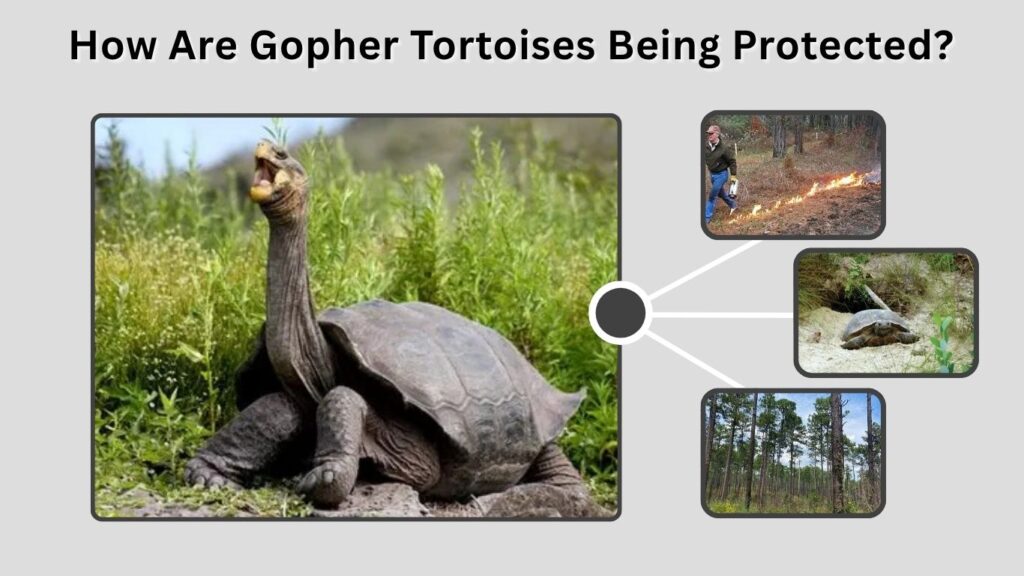
Conservation efforts focus on protecting both tortoises and the habitats they require.
Important actions include:
- Purchasing and permanently protecting land
- Using prescribed fire
- Restoring longleaf pine ecosystems
- Maintaining open feeding areas
- Protecting burrows during construction
- Relocating tortoises from approved development sites
- Creating wildlife corridors
- Monitoring populations
- Controlling invasive plants
- Reducing road mortality
- Educating landowners
In Georgia, partnerships between government agencies, conservation groups, private landowners, and businesses have protected numerous tortoise populations and large areas of habitat.
How Can You Help Gopher Tortoises?
People living within the species’ range can help by leaving tortoises and their burrows undisturbed.
Never take a wild tortoise home, feed it regularly, place it in water, or relocate it to another property. Gopher tortoises are land animals and may become stressed or injured through improper handling.
Drivers should watch carefully for tortoises near roads, especially during warm weather. Property owners should contact their state wildlife agency before clearing land, installing structures, or disturbing soil near a burrow.
In Florida, harming a gopher tortoise, its eggs, or its burrow is illegal. Suspected violations can be reported to the Florida Fish and Wildlife Conservation Commission.
FAQs
Are gopher tortoises endangered everywhere?
No. Their status varies geographically. The western population in Louisiana, Mississippi, and western Alabama is federally threatened. The eastern population is not federally listed, although states such as Florida and Georgia continue to protect the species.
Why are gopher tortoises endangered or threatened?
Their greatest threats include habitat destruction, fragmentation, road mortality, burrow damage, fire suppression, illegal collection, disease, and predation on eggs and hatchlings. Slow growth and reproduction make it difficult for depleted populations to recover quickly.
Are gopher tortoises protected in Florida?
Yes. Gopher tortoises are classified as state-designated threatened in Florida. Their bodies, eggs, and burrows are legally protected. A permit is generally required before a tortoise can be moved or its burrow disturbed.
Can you move a gopher tortoise from your yard?
You should not relocate a gopher tortoise yourself. Moving it to another property may be illegal and can expose it to disease, traffic, unsuitable habitat, and resident tortoises. Contact the appropriate state wildlife agency for guidance.
Will gopher tortoises become extinct?
Extinction is not considered inevitable, but continued conservation is necessary. Protecting large areas of suitable habitat, maintaining natural fire cycles, reducing road deaths, and enforcing wildlife laws can help preserve stable populations for the future.