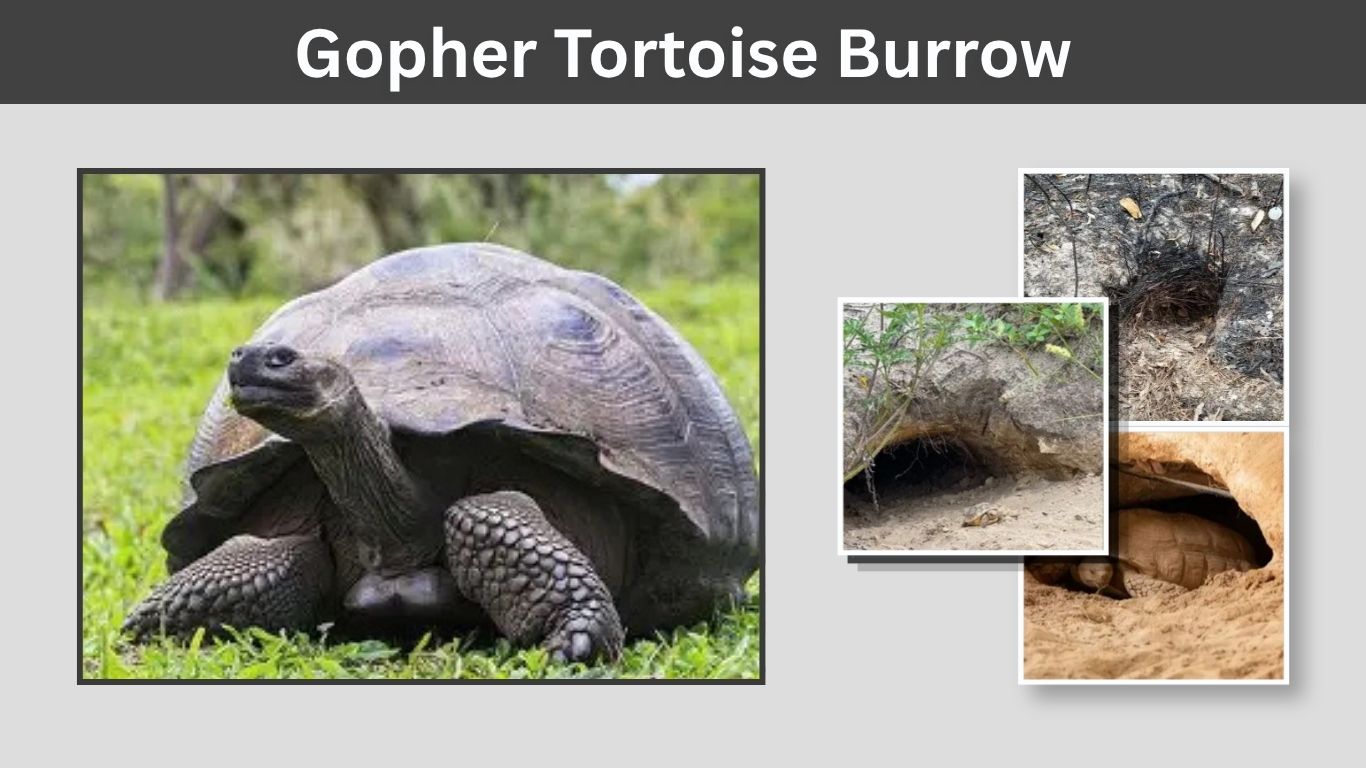
A gopher tortoise burrow is much more than a simple hole in the ground. It is an underground refuge that protects the tortoise from extreme heat, cold weather, predators, drought, and natural fires. These burrows also provide shelter for hundreds of other animals, making the gopher tortoise an important keystone species in southeastern ecosystems. Recognizing a burrow and understanding how it functions can help homeowners avoid accidentally disturbing protected wildlife.
What Does a Gopher Tortoise Burrow Look Like?
A gopher tortoise burrow usually has a distinctive half-moon or flattened oval entrance. The bottom is relatively flat, while the upper portion curves like the shell of the tortoise that excavated it.
A fan-shaped mound of loose sand, known as the burrow apron, normally spreads outward from the entrance. Fresh tracks, claw marks, recently moved soil, or tortoise droppings may appear on or around the apron when a burrow is actively used.
Identification Features
- Half-moon-shaped entrance
- Flat floor and rounded roof
- Sandy apron outside the opening
- Entrance gently sloping underground
- Possible footprints or shell drag marks
- Usually found in dry, well-drained soil
The entrance may measure approximately 2.5 to 15 inches wide, depending on the size and age of the tortoise that constructed it. Juvenile tortoises create much smaller openings than mature adults.
Gopher Tortoise Burrow Size and Structure
Gopher tortoises use their strong, shovel-like front legs to loosen soil and their rear legs to push it toward the entrance. The resulting tunnel slopes downward before ending in a wider chamber.
How Long Is a Gopher Tortoise Burrow?
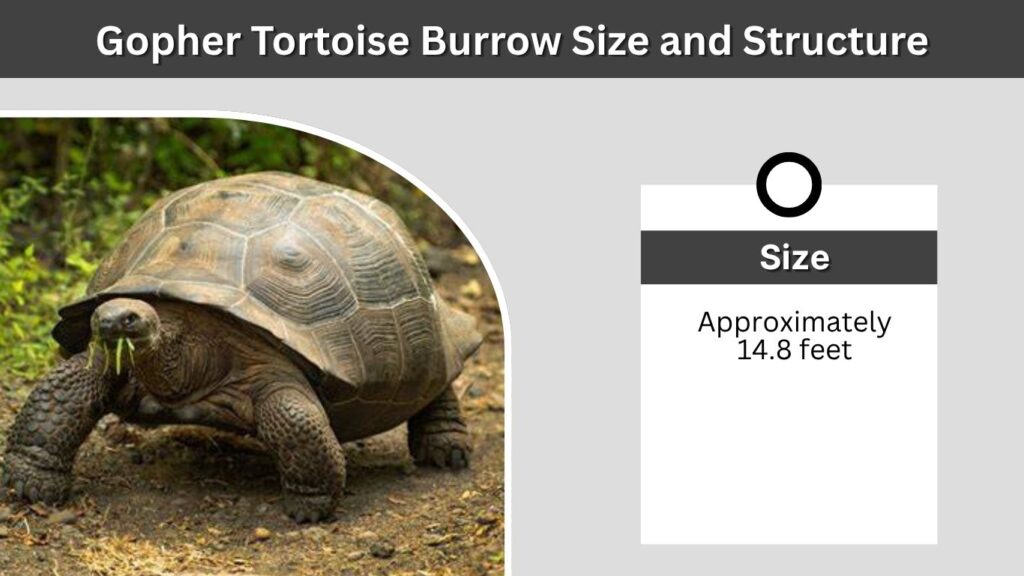
Burrow length varies according to the tortoise, soil type, groundwater level, and surrounding landscape. An official Florida biological review reported an average length of approximately 14.8 feet, although individual burrows can be considerably shorter or longer.
The underground tunnel is generally wide enough for the resident tortoise to turn around in certain sections. Its shape closely matches the tortoise’s body, which helps distinguish it from many mammal holes.
How Deep Is a Gopher Tortoise Burrow?
The same Florida review reported an average depth of approximately 6.6 feet. Depth can vary because tortoises must avoid groundwater while digging far enough underground to find stable temperatures and humidity.
| Burrow feature | Typical description |
| Entrance shape | Half-moon or flattened oval |
| Entrance width | About 2.5–15 inches |
| Average length | About 14.8 feet |
| Average depth | About 6.6 feet |
| End section | Enlarged underground chamber |
| Exterior feature | Fan-shaped sandy apron |
These figures are averages rather than fixed measurements. A burrow’s actual dimensions depend heavily on local conditions and the size of its builder.
Inside a Gopher Tortoise Burrow
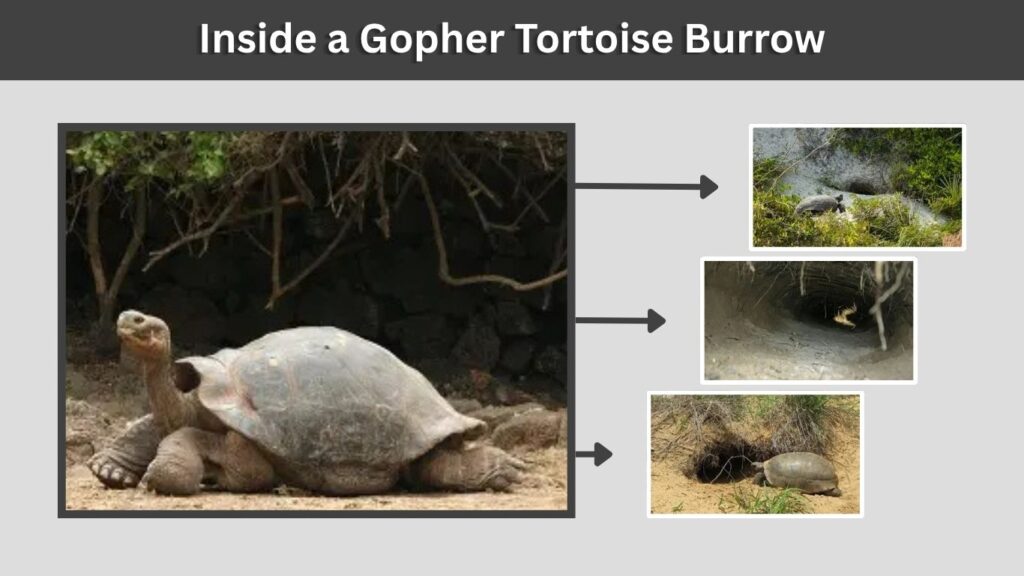
Inside the entrance is a sloping tunnel that usually continues downward into the soil. The passage may curve slightly before reaching a larger chamber where the tortoise rests.
Although the surface may be extremely hot or affected by fire, underground conditions remain comparatively stable. The burrow gives its resident protection from:
- Summer heat
- Cold winter temperatures
- Low humidity
- Predators
- Severe storms
- Natural fires
Gopher tortoises spend much of their time below ground, emerging mainly to bask, feed, travel, and reproduce.
The darkness inside also makes it difficult to determine occupancy simply by looking into the entrance. Wildlife professionals may use specialized burrow cameras or scopes to inspect tunnels safely without excavation.
How Long Do Gopher Tortoises Stay in Their Burrows?
There is no single amount of time that every tortoise remains underground. Their behavior changes with the temperature, season, weather, food availability, and time of day.
During suitable weather, a tortoise may leave the burrow to forage or bask and later return. During cold, very hot, or dry conditions, it may remain underground for longer periods. The tortoise may also spend more time inside when recovering from stress or avoiding predators.
An empty-looking entrance does not prove that the burrow is abandoned. The tortoise may be deep inside, temporarily away, or using another burrow nearby.
Do Gopher Tortoises Have More Than One Burrow?
A gopher tortoise may use several burrows within its home range. It may alternate among them as seasonal conditions, feeding opportunities, and social interactions change.
Some burrows may be used frequently, while others receive only occasional visits. Having several shelters allows the animal to remain close to feeding areas and quickly escape harsh weather or danger.
Different individual tortoises can also maintain burrows near one another when the habitat contains enough suitable soil and food. However, each tortoise generally uses its own primary shelter rather than living permanently as a pair.
Do Gopher Tortoises Share Burrows?
Gopher tortoises are normally solitary, so two adults do not typically occupy the same tunnel as permanent roommates. However, a burrow can be used by different tortoises at different times.
Other wildlife commonly enters active or inactive burrows. Some animals remain near the entrance, while others travel far inside. This shared use is one reason the burrows are so valuable to the surrounding ecosystem.
Animals That Live in Gopher Tortoise Burrows
Hundreds of animal species have been documented using gopher tortoise burrows for temporary or long-term shelter. Depending on the location, visitors may include reptiles, amphibians, mammals, insects, and spiders.
Examples include:
- Eastern indigo snakes
- Gopher frogs
- Florida mice and gopher mice
- Rattlesnakes
- Six-lined racerunners
- Cave crickets
- Tiger beetles
- Skunks
- Opossums
- Spiders and other arthropods
The U.S. Fish and Wildlife Service identifies species such as the eastern indigo snake, gopher frog, gopher mouse, cave cricket, racerunner, rattlesnake, and tiger beetle among known users.
Some estimates place the number of species using active or abandoned burrows at more than 300.
Do Snakes Use Gopher Tortoise Burrows?
Yes. Both venomous and nonvenomous snakes may enter these shelters. Eastern indigo snakes, rattlesnakes, and other species use them for protection, temperature regulation, or access to prey.
For that reason, people should never insert their hands, tools, hoses, cameras, or other objects into a burrow without professional authorization.
Do Bees Use Burrows?
Certain insects may establish nests near abandoned or inactive entrances, although not every burrow contains bees or wasps. Buzzing activity around a hole should be treated cautiously because it may indicate an insect nest rather than recent tortoise activity.
Active, Inactive, and Abandoned Burrows
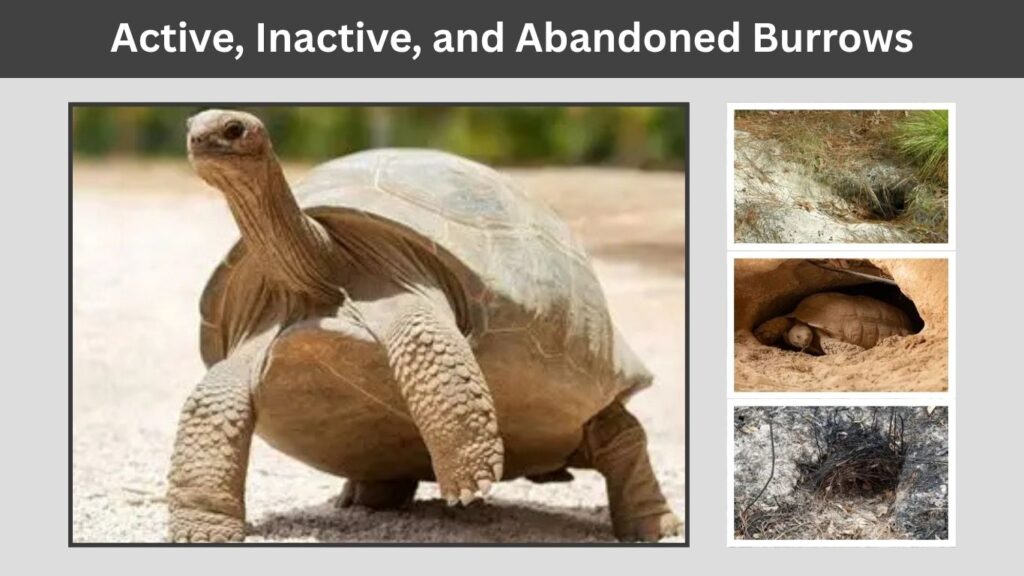
Burrow status cannot always be determined from one quick observation.
Active Burrow
An active burrow often has loose sand, clear tracks, fresh digging, or an unobstructed entrance. The apron may look recently maintained.
Inactive Burrow
An inactive burrow may have leaves, pine needles, spiderwebs, or limited plant growth around the opening. However, it may still be used occasionally or contain another animal.
Abandoned Burrow
A truly abandoned burrow has not been used by a tortoise for an extended period and may gradually deteriorate. The entrance can become blocked by vegetation, erosion, fallen soil, or debris.
Wildlife officials generally treat potentially occupied burrows cautiously because exterior signs alone may not confirm whether a tortoise is present.
Why Do Gopher Tortoises Abandon Burrows?
A tortoise may stop using a burrow because of:
- Flooding or a high water table
- Tunnel collapse
- Heavy vegetation around the entrance
- Lack of nearby food
- Human disturbance
- Construction activity
- Changes in temperature or shade
- Better shelter elsewhere
Abandonment does not necessarily mean the tunnel has lost its ecological value. Snakes, frogs, rodents, insects, and other animals may continue using it.
What Happens if a Gopher Tortoise Burrow Collapses?
A partial collapse may block the entrance or damage part of the tunnel. Tortoises are capable diggers and may sometimes reopen loose soil from inside. However, severe compaction caused by vehicles, heavy machinery, construction, or deliberate filling can trap or injure the animal.
Do not dig into the tunnel or attempt to rescue the tortoise without professional guidance. Contact the appropriate state wildlife agency or a qualified wildlife professional when a burrow has been damaged.
Gopher Tortoise Burrow in a Yard
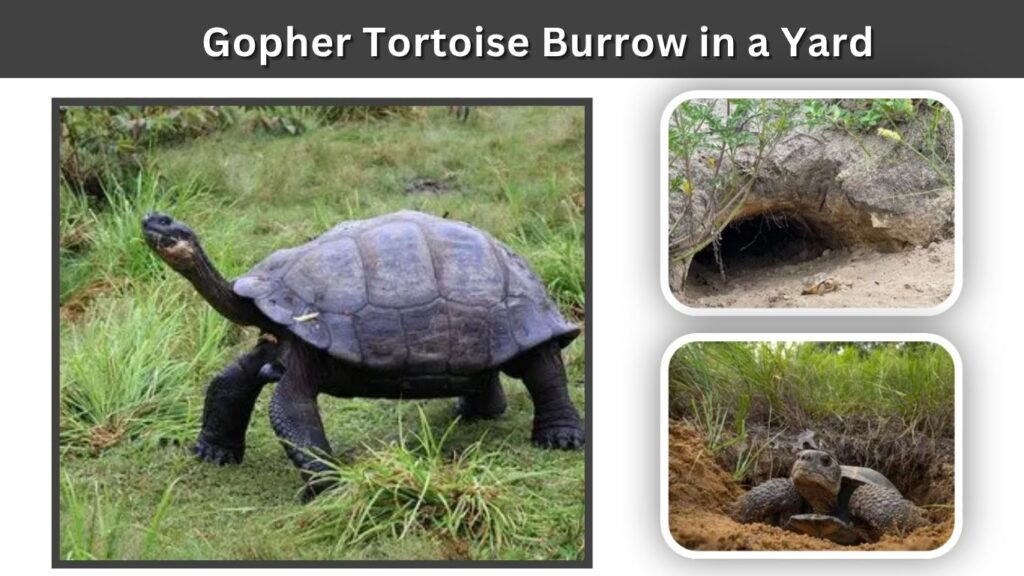
Finding a burrow in a yard does not normally require removing the tortoise. An undisturbed tortoise can often continue living safely on the property.
Homeowners should:
- Keep pets away from the entrance
- Avoid mowing directly over the opening
- Prevent vehicles from crossing the burrow
- Leave the sandy apron unobstructed
- Avoid placing food or water inside
- Never fill, burn, smoke, or gas the tunnel
- Seek advice before landscaping or building nearby
Do not relocate the tortoise to another property or wooded area. Moving it can separate it from familiar feeding areas and expose it to traffic, disease, territorial conflicts, and unsuitable habitat.
Gopher Tortoise Burrow Under a House
A burrow near a home does not necessarily continue beneath the foundation. Its direction cannot be determined from the entrance alone.
Property owners planning construction, foundation work, utility installation, grading, or other soil disturbance should contact their state wildlife agency. Professional inspection may be required to determine the burrow’s direction and occupancy.
In Florida, gopher tortoises and their burrows are protected. FWC states that disturbing, moving, harming, collapsing, or covering a burrow without the necessary authorization can violate state law. Development-related activity within 25 feet of a potentially occupied burrow may require a permit.
Gopher Tortoise Burrows and Fire
Natural fire is an important part of many southeastern habitats. Although flames may burn the vegetation above ground, the depth and stable environment of a burrow can protect tortoises and other wildlife.
Fire also helps maintain open, sunny habitat by limiting dense woody vegetation and encouraging the growth of low plants eaten by tortoises. However, deliberately putting fire, smoke, fuel, or gas into a burrow is dangerous and can kill protected animals.
FAQs
How can you tell whether a gopher tortoise burrow is occupied?
Fresh sand, footprints, shell drag marks, droppings, and a clear entrance may indicate recent use. However, the absence of these signs does not prove that the burrow is empty. Wildlife professionals may use approved cameras or other survey methods to determine occupancy.
Do gopher tortoises abandon their burrows?
Yes. A tortoise may leave because of flooding, collapse, poor food availability, disturbance, or changing habitat. It may also return after a long absence, so an unused-looking entrance should not automatically be considered permanently abandoned.
Can two gopher tortoises live in the same burrow?
Adults generally maintain separate burrows, although one tortoise may enter another’s shelter temporarily. Different tortoises may also use the same tunnel at different times. Many other animal species regularly share or reuse these underground refuges.
Can a gopher tortoise escape from a collapsed burrow?
A tortoise may dig through a minor blockage, but a severe collapse or compacted soil can trap it. Do not excavate the burrow yourself. Keep people and machinery away and contact the appropriate wildlife authority for instructions.
Should you look inside a gopher tortoise burrow?
No. Reaching inside is unsafe because the tunnel may contain snakes, insects, spiders, or other animals. Inserting objects can also damage the tunnel or disturb protected wildlife. Burrow inspections should be performed only by trained and properly authorized professionals.