
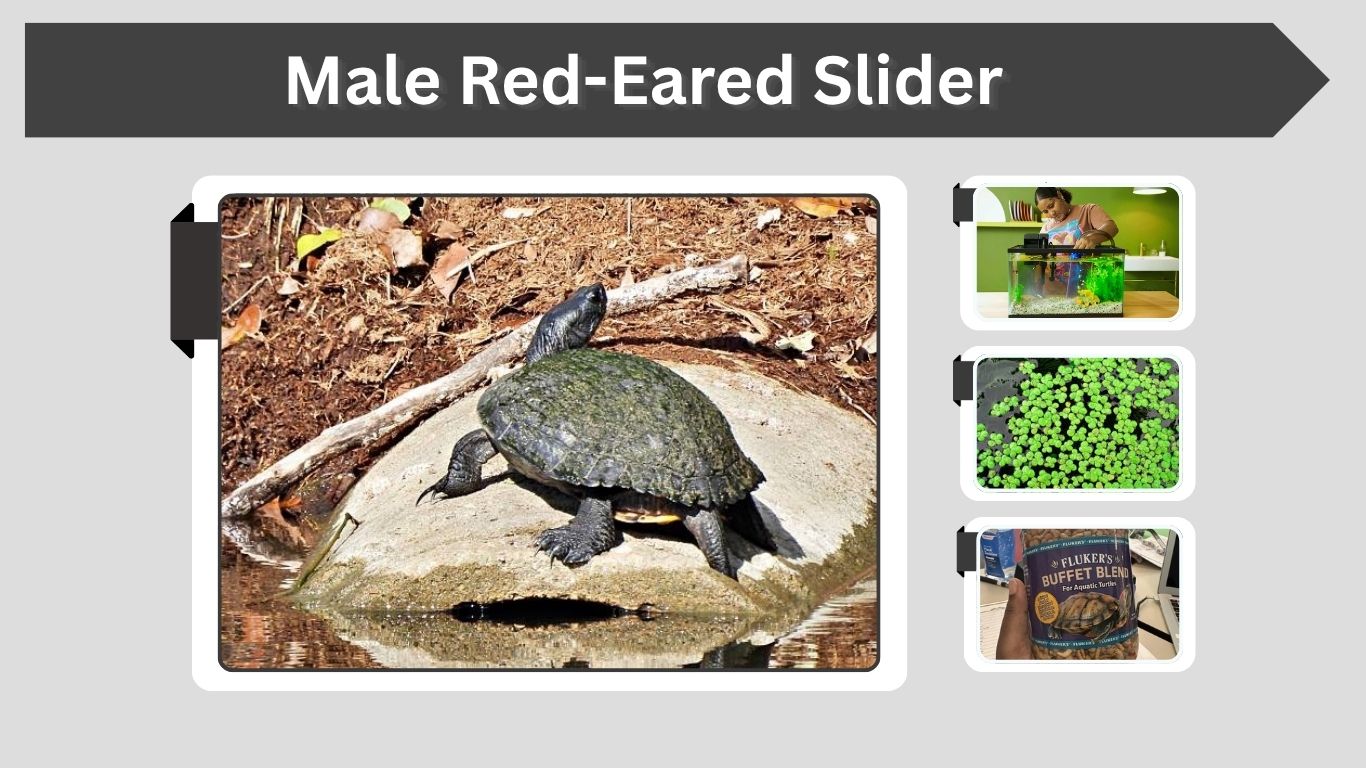
Red-eared sliders are among the most popular pet turtles in the world, and males have several unique traits that make them interesting to keep and observe. A male red-eared slider is usually smaller, more active, and often easier to identify once it reaches maturity. However, caring for one properly requires more than a tank and some food. These turtles need clean water, strong lighting, balanced nutrition, and enough space to swim, bask, and behave naturally. Understanding male-specific behavior also helps owners provide better long-term care.
What Is a Male Red-Eared Slider?
A male red-eared slider is the male form of the freshwater turtle species Trachemys scripta elegans. This turtle gets its name from the red stripe found behind each eye and its habit of quickly sliding into water when startled.
Male red-eared sliders are semi-aquatic turtles, meaning they spend much of their time swimming but also need dry areas for basking. In captivity, they can live for decades with proper care, so owning one is a long-term responsibility.
Natural Background
Red-eared sliders are native to parts of the southern United States and northern Mexico. Because they are hardy and adaptable, they have also become established in many other regions. In the wild, they live in ponds, lakes, marshes, slow rivers, and wetlands.
They prefer calm freshwater habitats with:
- Soft muddy bottoms
- Aquatic plants
- Logs or rocks for basking
- Warm sunlight
- Easy access to both water and land
These natural needs should guide how their captive environment is designed.
How to Identify a Male Red-Eared Slider
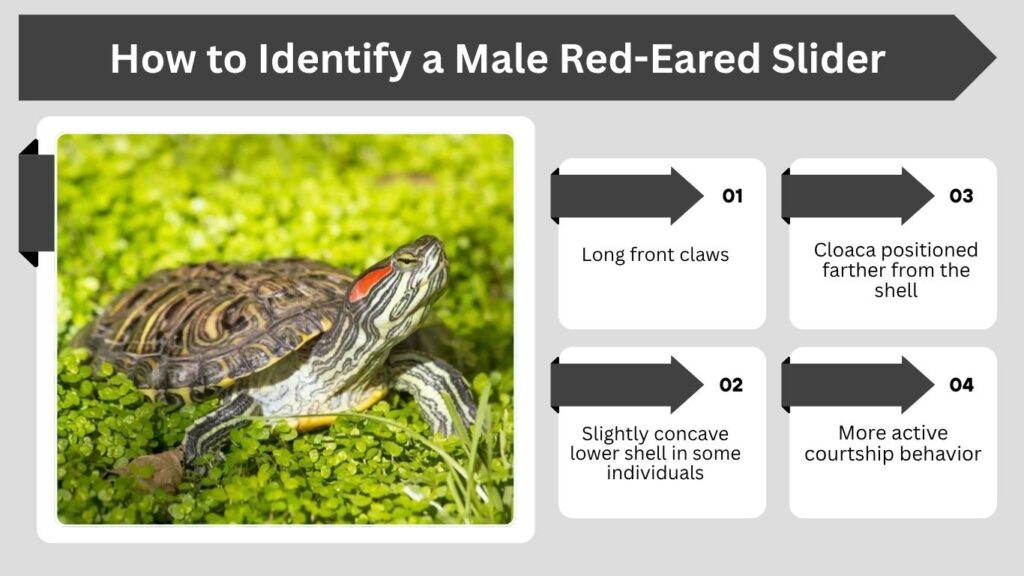
It can be difficult to identify the sex of a young red-eared slider. Most turtles do not show clear male or female traits until they are several years old. Once mature, however, males have several noticeable features.
Male Red-Eared Slider Traits
Adult male red-eared sliders are usually smaller than females. While females often grow 10 to 12 inches long, males commonly reach around 7 to 9 inches. Size alone is not always enough to confirm sex, so owners should look at other signs as well.
Common male traits include:
- Long front claws
- Longer, thicker tail
- Cloaca positioned farther from the shell
- Smaller overall body size
- Slightly concave lower shell in some individuals
- More active courtship behavior
The long front claws are one of the easiest signs to notice. Male red-eared sliders use these claws during courtship, often fluttering them in front of a female’s face.
Male vs Female Red-Eared Slider
| Feature | Male Red-Eared Slider | Female Red-Eared Slider |
| Adult size | Usually smaller, around 7–9 inches | Usually larger, around 10–12 inches |
| Front claws | Long and thin | Shorter and stronger |
| Tail | Longer and thicker | Shorter and thinner |
| Cloaca position | Farther from the shell edge | Closer to the shell edge |
| Behavior | More courtship displays | May dig nesting areas |
Ideal Tank Setup for a Male Red-Eared Slider
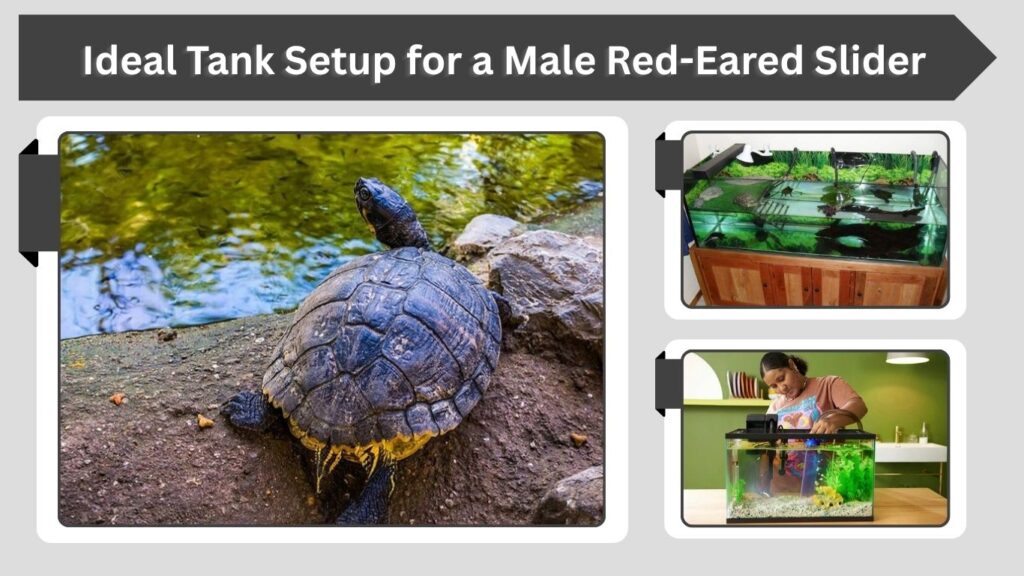
A male red-eared slider needs a spacious and well-maintained habitat. Even though males are smaller than females, they are active swimmers and should not be kept in small tanks.
Tank Size
A good rule is to provide at least 10 gallons of water per inch of shell length. For an adult male, this often means a tank of 75 gallons or more. Bigger is usually better because it gives the turtle more swimming space and helps keep water quality stable.
A proper tank should include:
- Deep swimming water
- A completely dry basking platform
- Strong filtration
- UVB lighting
- Heat lamp
- Safe water heater
- Easy-to-clean decorations
Avoid using sharp rocks or small gravel. Turtles may swallow loose gravel, which can cause health problems.
Water and Basking Temperatures
Temperature control is essential for digestion, immunity, and activity. If the water is too cold, the turtle may become sluggish and stop eating. If the basking area is not warm enough, it may not dry properly or absorb heat efficiently.
For most male red-eared sliders, the water should stay around 75–80°F. The basking area should usually be warmer, around 85–95°F. A thermometer should be used for both areas rather than guessing.
Lighting Needs
Lighting is one of the most important parts of turtle care. A male red-eared slider needs both heat and UVB light.
Why UVB Matters
UVB light helps turtles produce vitamin D3, which allows them to use calcium properly. Without enough UVB, a turtle may develop shell problems, weak bones, or metabolic bone disease.
UVB bulbs should be replaced according to the manufacturer’s instructions, even if they still produce visible light. Many UVB bulbs lose strength before they burn out.
Basking Routine
Healthy red-eared sliders usually bask daily. Basking helps them regulate body temperature, dry their shell, and support shell health. The basking platform must be fully dry and easy to climb onto.
Good basking setup tips include:
- Place the heat lamp over the basking dock
- Keep the dock stable and non-slippery
- Make sure the turtle can fully leave the water
- Provide 10–12 hours of light per day
- Turn lights off at night for a normal day-night cycle
Diet for a Male Red-Eared Slider
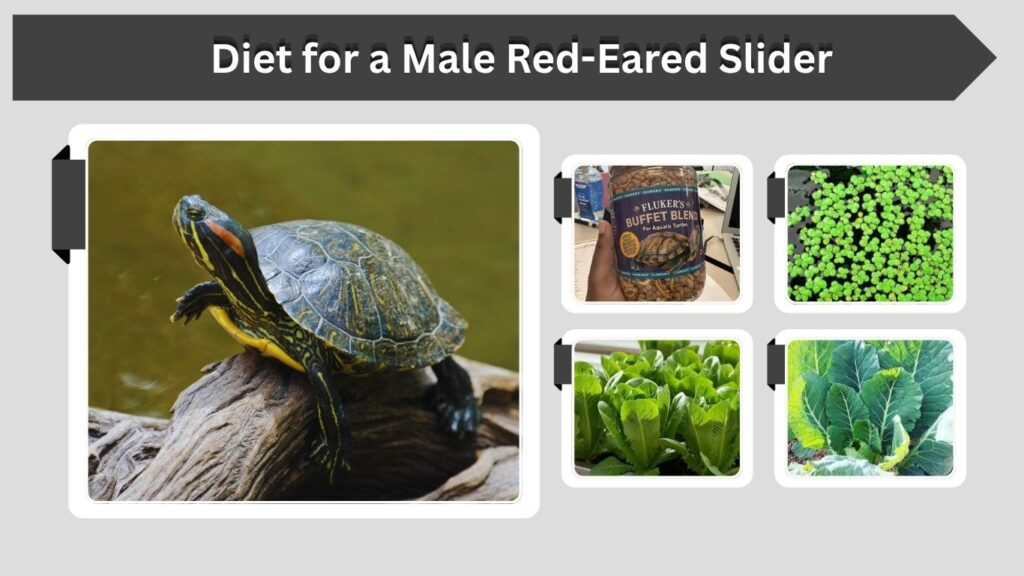
Male red-eared sliders are omnivores, meaning they eat both animal and plant foods. Younger turtles usually prefer more protein, while adults should eat more vegetables and aquatic plants.
Best Foods
A balanced diet should include high-quality turtle pellets, leafy greens, aquatic plants, and occasional protein treats. Pellets are useful because they are formulated with vitamins and minerals, but they should not be the only food.
Good food choices include:
- Commercial aquatic turtle pellets
- Romaine lettuce
- Dandelion greens
- Collard greens
- Mustard greens
- Duckweed
- Anacharis
- Earthworms as occasional treats
- Small feeder insects as occasional treats
Avoid feeding too much shrimp, dried insects, or fatty protein. These can make the diet unbalanced if used too often.
Foods to Avoid
Some foods are unhealthy or unsafe for red-eared sliders. Owners should avoid feeding processed human foods, salty foods, dairy products, bread, and sugary snacks.
Also avoid relying heavily on iceberg lettuce because it has little nutritional value. Spinach should be offered rarely, if at all, because it contains compounds that can interfere with calcium absorption.
Male Red-Eared Slider Behavior
Male red-eared sliders can be curious, active, and sometimes territorial. Their behavior may change as they mature, especially during breeding season.
Courtship Behavior
One of the most famous male behaviors is claw fluttering. A male may swim toward another turtle and rapidly vibrate his long front claws near the other turtle’s face. This is usually a courtship display, though it may sometimes happen during dominance interactions.
Common male behaviors include:
- Claw fluttering
- Following other turtles
- Nudging or chasing
- Basking for long periods
- Begging for food
- Exploring the tank
If a male becomes too aggressive toward another turtle, they may need to be separated. Constant chasing or biting can stress or injure tank mates.
Can Male Red-Eared Sliders Live Together?
Two male red-eared sliders may fight, especially in limited space. Some males tolerate each other, but many become territorial as adults. Keeping multiple turtles together requires a very large enclosure, multiple basking spots, and close supervision.
In many cases, it is safer to keep one adult male alone. A single turtle can live a healthy life without another turtle companion.
Health Problems to Watch For

Male red-eared sliders are hardy, but poor care can lead to serious health issues. Clean water, proper diet, UVB, and good temperatures prevent many common problems.
Common Health Signs
Owners should watch their turtle closely and act early if something seems wrong. A healthy male red-eared slider should have clear eyes, a firm shell, steady swimming, and a good appetite.
Warning signs include:
- Swollen or closed eyes
- Soft or damaged shell
- Wheezing or open-mouth breathing
- Floating unevenly
- Refusing food for many days
- White patches on shell or skin
- Lethargy
- Discharge from nose or mouth
A reptile veterinarian should examine any turtle showing these symptoms. Home care is not enough for serious infections, shell rot, or breathing problems.
Shell Care and Water Quality
A turtle’s shell reflects its overall health. Poor water quality, lack of basking, and weak lighting can all cause shell problems.
Keeping the Water Clean
Red-eared sliders produce a lot of waste, so a strong filter is necessary. Many owners use canister filters rated for tanks larger than the actual enclosure because turtles are messier than fish.
To maintain water quality:
- Remove uneaten food quickly
- Use a powerful filter
- Do partial water changes regularly
- Clean filter media as needed
- Test water quality when possible
- Avoid overcrowding the tank
Some owners feed their turtles in a separate container to reduce mess, but this depends on the turtle’s comfort and routine.
Handling a Male Red-Eared Slider
Red-eared sliders are not cuddly pets. They can learn to recognize their owner and may swim toward the glass for food, but they usually do not enjoy frequent handling.
Safe Handling Tips
When handling is necessary, support the turtle’s body with both hands. Be careful because turtles may kick, scratch, or bite if frightened. Always wash hands before and after handling because reptiles can carry bacteria such as Salmonella.
Children should only handle turtles with adult supervision. The turtle should never be dropped, squeezed, or placed on unsafe surfaces.
Lifespan and Long-Term Commitment
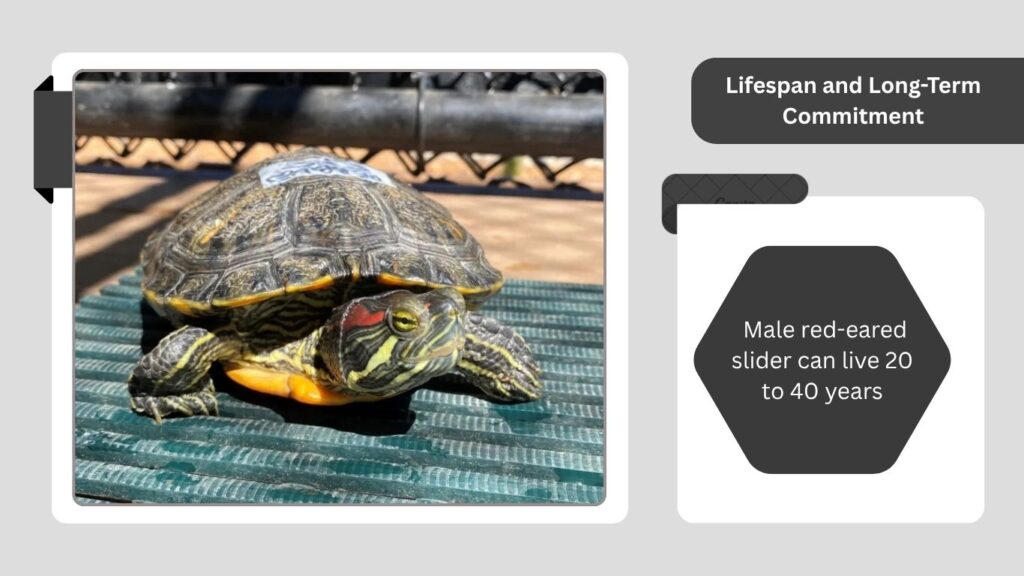
A male red-eared slider can live 20 to 40 years, and some may live even longer with excellent care. This makes them a long-term pet, not a short-term hobby animal.
Before keeping one, owners should consider the cost of:
- Large tanks or ponds
- Filters
- UVB bulbs
- Heat lamps
- Food
- Water conditioners
- Veterinary care
- Replacement equipment
A small baby turtle may seem easy to care for at first, but it will grow into a strong adult that needs space and regular maintenance.
Is a Male Red-Eared Slider a Good Pet?
A male red-eared slider can be a rewarding pet for someone who enjoys reptiles and is prepared for proper care. Males are often smaller than females, which can make housing slightly easier, but they still need a large aquatic setup.
They are best for owners who can provide stable temperatures, strong lighting, clean water, and a balanced diet. They are not ideal for people who want a low-maintenance pet or an animal that enjoys being held often.
Frequently Asked Questions
How big does a male red-eared slider get?
A male red-eared slider usually grows to about 7 to 9 inches in shell length. Some may be slightly smaller or larger depending on genetics, diet, and care. Males are generally smaller than females, which often reach 10 to 12 inches as adults.
How can I tell if my red-eared slider is male?
You can identify a mature male red-eared slider by looking for long front claws, a longer thicker tail, and a cloaca positioned farther from the shell. Males are also usually smaller than females. Young turtles are difficult to sex accurately until they mature.
What should a male red-eared slider eat?
A male red-eared slider should eat a balanced diet of turtle pellets, leafy greens, aquatic plants, and occasional protein treats. Adult turtles should receive more vegetables than protein. Avoid bread, dairy, salty foods, sweets, and too many dried shrimp or fatty treats.
Do male red-eared sliders need UVB light?
Yes, male red-eared sliders need UVB light to process calcium and maintain healthy bones and shells. Without UVB, they may develop serious health problems. A heat lamp is also needed for basking, but heat alone does not replace UVB lighting.
Can a male red-eared slider live alone?
Yes, a male red-eared slider can live alone and often does well that way. Turtles do not need social companionship like many mammals. Adult males may become territorial or aggressive with other turtles, so keeping one alone is often safer and less stressful.