
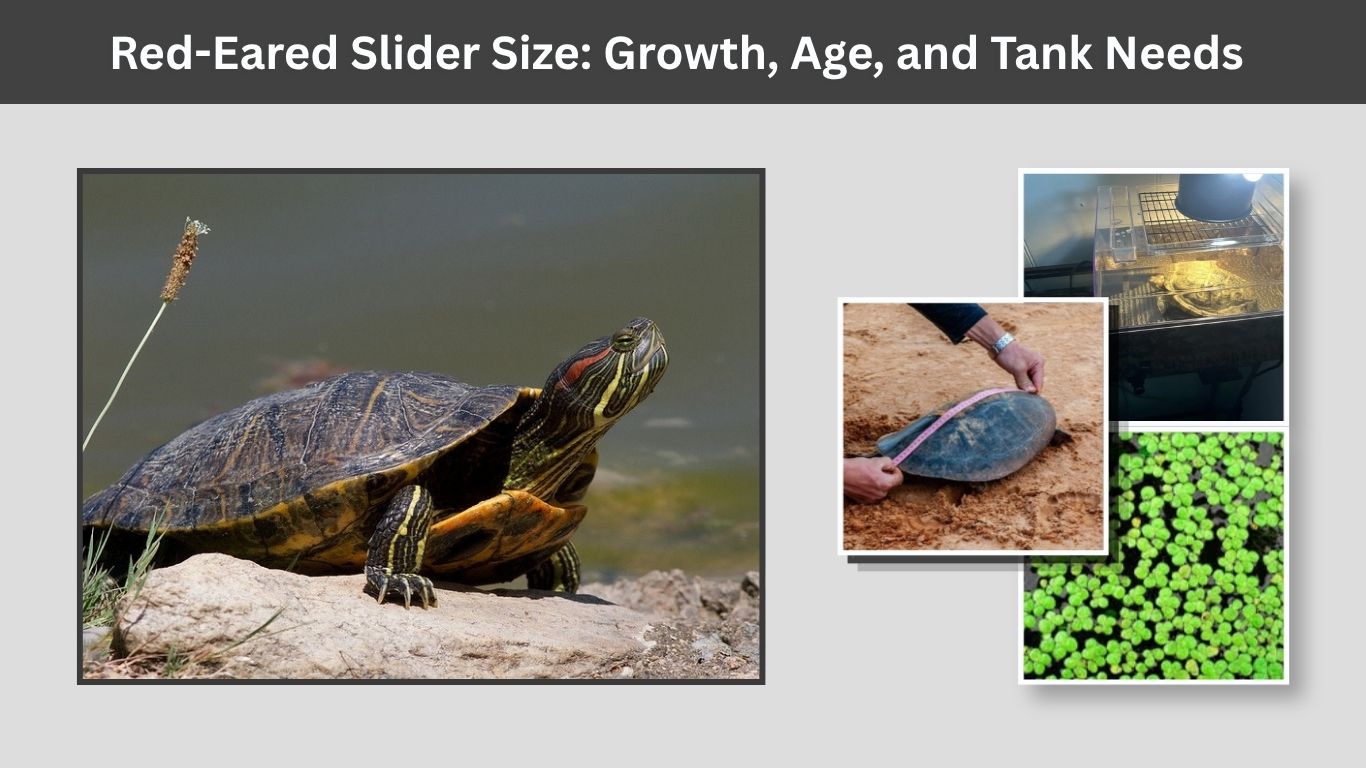
Red-eared sliders are popular pet turtles, but many new owners underestimate how large they can become. A tiny baby turtle may look easy to house at first, yet it can grow into a strong adult that needs a large aquatic setup. Understanding red-eared slider size helps owners choose the right tank, diet, lighting, and long-term care plan. Size also helps determine age, sex, and whether the turtle is developing normally. While every turtle grows at a slightly different rate, healthy red-eared sliders follow a general growth pattern.
Average Red-Eared Slider Size
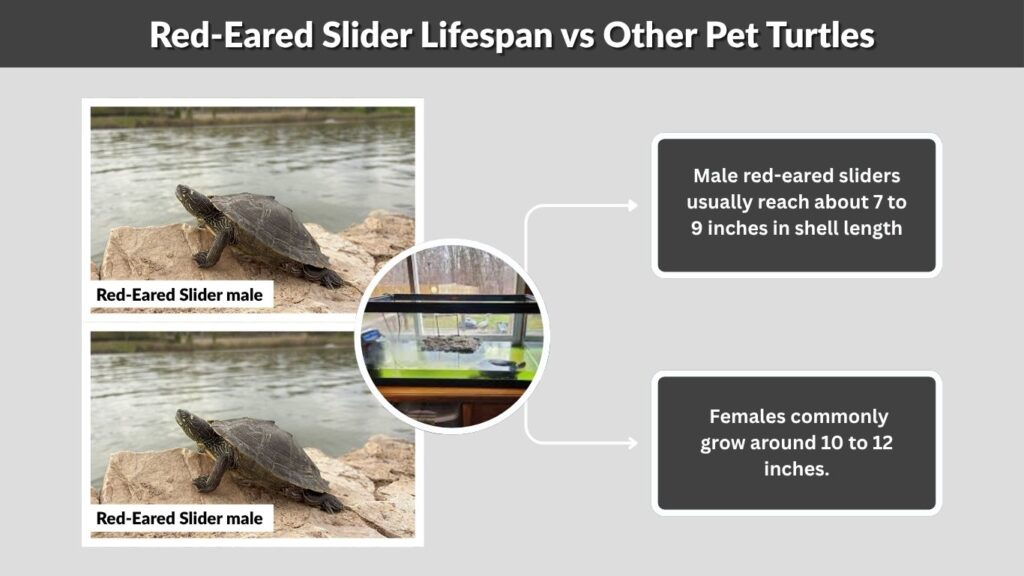
Red-eared sliders are medium-sized freshwater turtles. Their size is usually measured by shell length, not including the head, legs, or tail. This measurement is called straight carapace length.
Adult red-eared sliders usually grow between 7 and 12 inches long. Males are generally smaller, while females become larger and heavier.
Male Red-Eared Slider Size
Male red-eared sliders usually reach about 7 to 9 inches in shell length. They often have long front claws and a longer, thicker tail. Males may stop growing earlier than females, but they still need a spacious tank because they are active swimmers.
Female Red-Eared Slider Size
Female red-eared sliders are larger than males. Adult females commonly grow around 10 to 12 inches. Some may grow slightly larger with excellent care, genetics, and enough space. Their larger size means they need more swimming room and a stronger filtration system.
Red-Eared Slider Size Chart by Age
Growth rate depends on diet, temperature, UVB lighting, genetics, and general care. Young turtles grow quickly during their first few years, then growth slows as they mature.
| Age | Average Shell Size | Growth Notes |
| Hatchling | 1–1.5 inches | Very small and fragile |
| 6 months | 2–3 inches | Rapid early growth |
| 1 year | 3–4 inches | Needs more space quickly |
| 2 years | 4–6 inches | Sex traits may begin showing |
| 3–4 years | 5–8 inches | Growth slows gradually |
| Adult male | 7–9 inches | Usually smaller than female |
| Adult female | 10–12 inches | Requires larger enclosure |
This chart gives a general idea, but it should not be used as an exact rule. Some turtles grow faster or slower while still being healthy.
What Affects Red-Eared Slider Growth?

A red-eared slider’s final size is partly controlled by genetics, but care plays a major role in how well it grows. Poor conditions can cause slow growth, shell problems, or weak bones.
Diet Quality
A balanced diet supports healthy growth. Baby red-eared sliders need more protein than adults, but adults should eat more vegetables and aquatic plants.
Good foods include:
- Commercial aquatic turtle pellets
- Romaine lettuce
- Collard greens
- Dandelion greens
- Duckweed
- Anacharis
- Occasional insects or worms
Too much protein can cause fast, unhealthy growth and shell deformities. Too little nutrition can lead to weakness and poor development.
Tank Size
A small tank can limit movement and make water dirty quickly. While tank size does not directly “stop” a turtle’s natural growth, poor housing can damage overall health. A turtle should have enough room to swim, turn, dive, and bask comfortably.
A common rule is 10 gallons of water per inch of shell length. For example, a 6-inch turtle should have at least 60 gallons of water. Adult turtles often need 75 to 125 gallons depending on their size and sex.
Temperature and Lighting
Red-eared sliders need proper heat and UVB lighting. Warm water helps digestion and activity, while UVB helps the turtle process calcium.
Without UVB, turtles can develop metabolic bone disease, soft shells, and poor growth. A basking area is also important because turtles need to dry out and regulate body temperature.
How Fast Do Red-Eared Sliders Grow?
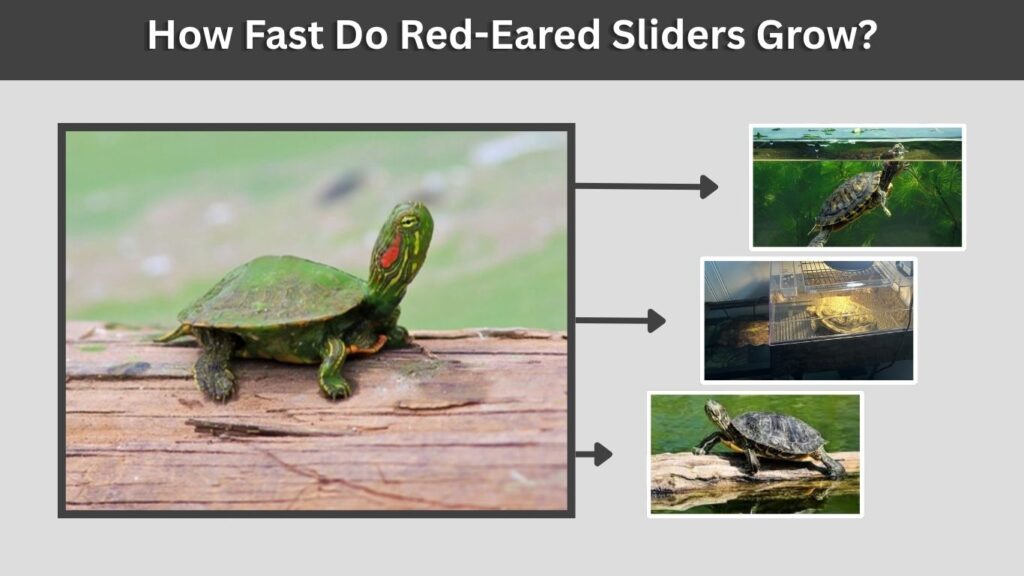
Red-eared sliders grow fastest during the first two to three years. A hatchling may grow from about 1 inch to 3 or 4 inches in its first year if kept in good conditions. After that, growth continues but slows down.
Baby Growth Stage
Baby sliders need careful feeding, clean water, and stable temperatures. During this stage, growth can seem very fast. Owners should prepare for tank upgrades early because a small starter tank will not last long.
Important baby turtle needs include:
- Clean, warm water
- Daily access to basking
- UVB lighting
- High-quality pellets
- Safe hiding areas
- Shallow resting spots
Even though babies are small, they should not be kept in tiny bowls. They are aquatic turtles and need real swimming space.
Adult Growth Stage
Once red-eared sliders reach maturity, growth becomes much slower. Adult turtles may still grow slightly over time, but the major growth period is usually over. At this point, maintaining healthy weight and shell condition becomes more important than rapid size increase.
Does Tank Size Control Red-Eared Slider Size?
A common myth says red-eared sliders only grow to fit their tank. This is not true. A turtle kept in a small tank may appear smaller because of poor health, stress, or bad nutrition, not because the tank safely controls its size.
A small enclosure can cause:
- Poor water quality
- Weak swimming muscles
- Stress
- Shell problems
- Higher risk of illness
- Difficulty basking properly
A red-eared slider should always be housed based on its expected adult size, not its current baby size.
How to Measure a Red-Eared Slider
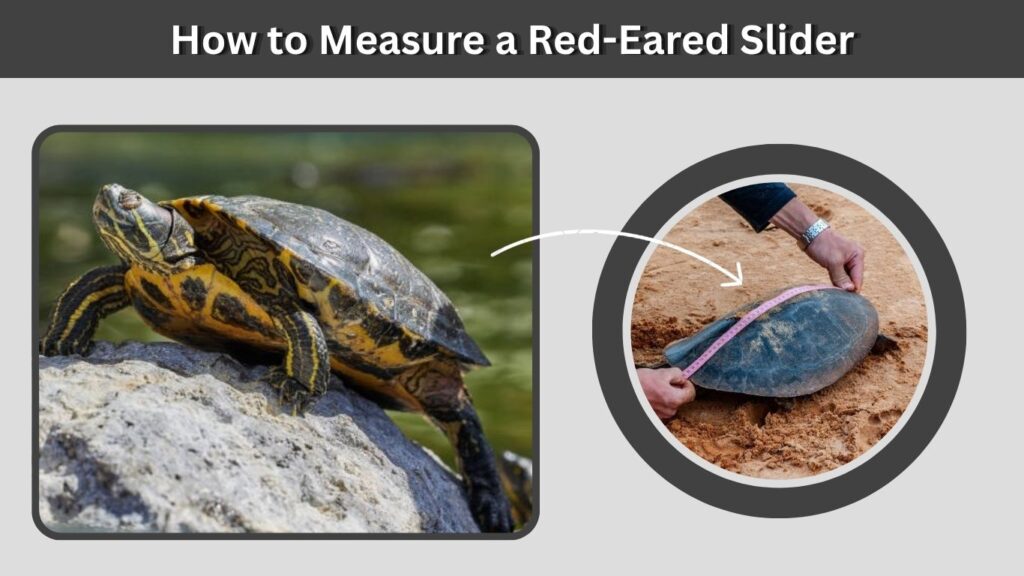
Measuring your turtle helps track growth and health. The best method is to measure the shell from front to back in a straight line.
Simple Measuring Steps
Use a ruler or measuring tape and measure only the top shell. Do not include the head or tail. Record the measurement every month for young turtles and every few months for adults.
To measure safely:
- Place the turtle on a flat, secure surface
- Keep one hand nearby to prevent falling
- Measure the shell from front edge to back edge
- Write down the date and size
- Avoid turning the turtle upside down unnecessarily
Regular measurements help you notice sudden weight loss, slow growth, or unusual changes.
Size and Tank Requirements
The bigger the turtle, the bigger the tank should be. Red-eared sliders are messy animals, so they need strong filtration and regular water changes.
Recommended Tank Sizes
A young turtle may begin in a smaller tank, but adults need much more space. A male red-eared slider may need around 75 gallons or more, while a large female may need 100 to 125 gallons or more.
A good adult setup should include:
- Large swimming area
- Dry basking platform
- UVB bulb
- Heat lamp
- Strong canister filter
- Water heater
- Thermometers
- Easy access to climb out of water
Outdoor ponds can also work in suitable climates, but they must be secure, clean, and protected from predators.
When Is a Red-Eared Slider Fully Grown?
Most red-eared sliders reach near-adult size between 5 and 8 years old. However, growth can continue slowly after that. Females often take longer to reach full size because they grow larger than males.
A turtle’s size should be judged along with its health. A slightly smaller turtle may still be healthy if it has a firm shell, clear eyes, good appetite, and active behavior.
Frequently Asked Questions
How big do red-eared sliders get?
Red-eared sliders usually grow between 7 and 12 inches in shell length. Males are commonly 7 to 9 inches, while females often reach 10 to 12 inches. Some turtles may be slightly larger depending on genetics and care.
How fast does a red-eared slider grow?
Red-eared sliders grow fastest during their first few years. A hatchling may reach 3 to 4 inches within the first year. After two to three years, growth usually slows but continues gradually until adulthood.
Do male and female red-eared sliders grow the same size?
No. Females usually grow larger than males. Adult males are often around 7 to 9 inches, while adult females are usually around 10 to 12 inches. This size difference becomes clearer as the turtle matures.
Can a small tank keep a red-eared slider small?
No. A small tank does not safely control turtle size. Instead, it can cause stress, dirty water, poor shell health, and illness. Red-eared sliders should be housed according to their expected adult size.
What size tank does an adult red-eared slider need?
An adult red-eared slider usually needs at least 75 gallons, and large females may need 100 gallons or more. A useful rule is 10 gallons of water for every inch of shell length.