
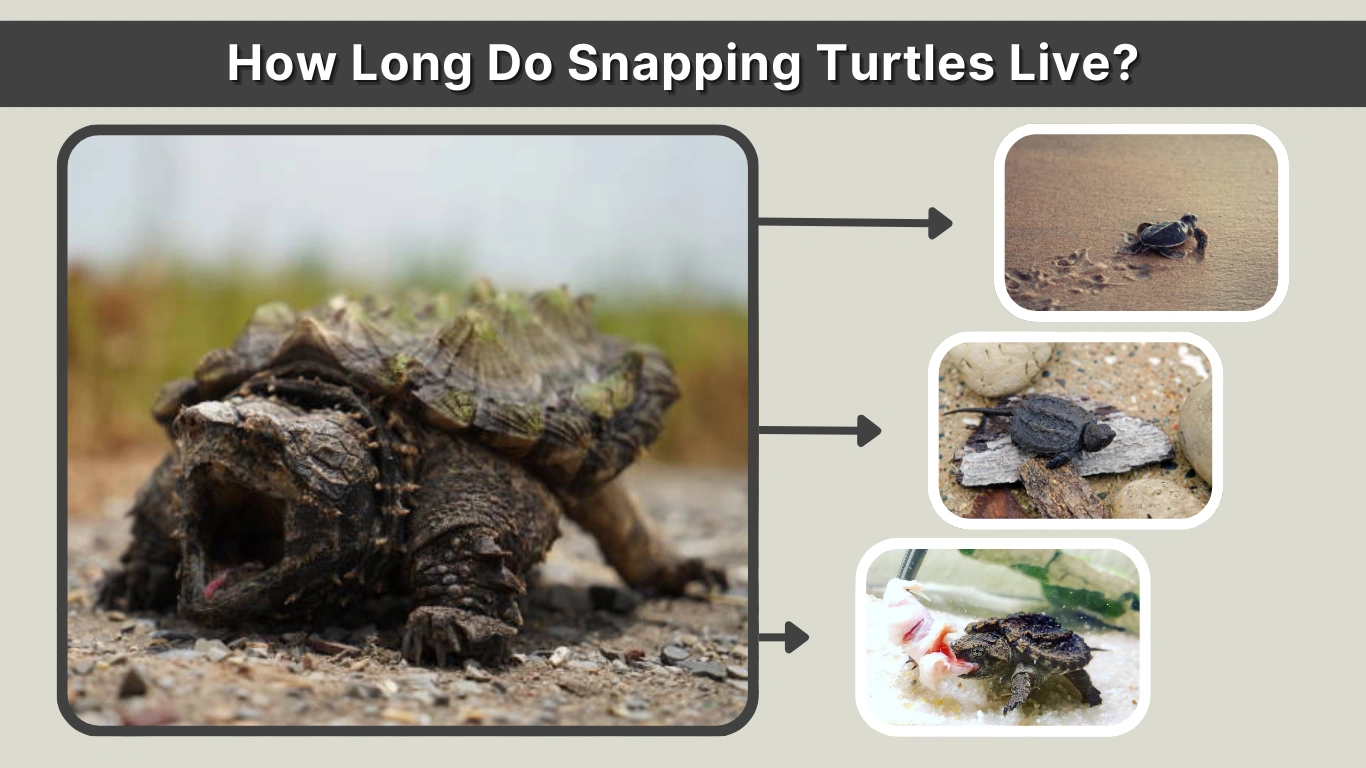
Snapping turtles are often seen as slow-moving, ancient creatures, but one of their most fascinating traits is how long they can live. Many people are surprised to learn that snapping turtles can survive for several decades, sometimes even longer than humans. Their long lifespan is closely linked to their slow growth, low metabolism, and ability to adapt to a wide range of freshwater environments. Understanding how long snapping turtles live, both in the wild and in captivity, provides insight into their biology, survival strategies, and why conservation efforts are so important.
Average Lifespan of Snapping Turtles
On average, snapping turtles live between 30 and 50 years in the wild. However, this range can vary widely depending on species, habitat conditions, and exposure to threats. Some individuals may live much shorter lives due to predation or human-related dangers, while others can survive for many decades.
Determining the exact age of a snapping turtle is difficult because turtles do not have easily visible aging markers. Unlike mammals, they do not show clear signs of aging such as gray hair or tooth wear. As a result, lifespan estimates are often based on long-term studies and observations rather than precise measurements.
How Long Do Snapping Turtles Live in the Wild?
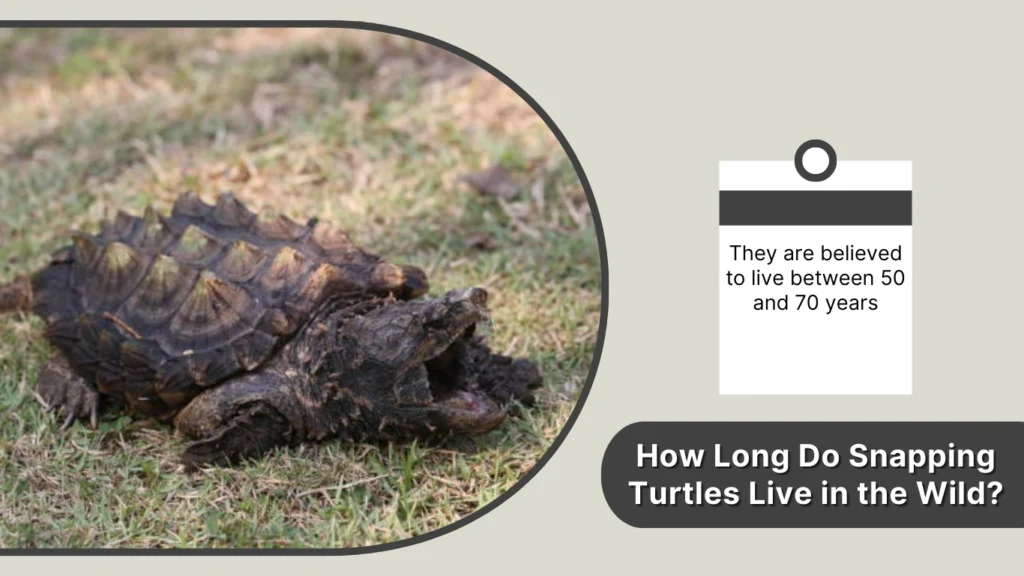
Snapping turtles face numerous challenges in natural environments, especially during early life stages. While adults are well-protected by their size and powerful jaws, hatchlings are highly vulnerable to predators and environmental conditions.
Common Snapping Turtle Lifespan
Common snapping turtles (Chelydra serpentina) typically live between 30 and 40 years in the wild. Some individuals may live longer under favorable conditions, with estimates reaching 50 years or more. Survival rates are lowest during the first few years of life, when young turtles fall prey to birds, fish, raccoons, and other predators.
Once common snapping turtles reach adulthood, their chances of survival increase significantly. Adult turtles have few natural predators and can live for decades if they avoid human-related threats such as road crossings and fishing gear.
Alligator Snapping Turtle Lifespan
Alligator snapping turtles (Macrochelys temminckii) are known for their even greater longevity. In the wild, they are believed to live between 50 and 70 years, with some individuals potentially living longer. Their larger size, heavier armor, and more sedentary lifestyle contribute to their extended lifespan.
Because alligator snapping turtles grow slowly and take many years to reach maturity, population recovery is slow when numbers decline. This makes their long lifespan both a strength and a vulnerability from a conservation perspective.
How Long Do Snapping Turtles Live in Captivity?
Snapping turtles often live longer in captivity than in the wild due to controlled conditions and reduced threats. In managed environments such as wildlife centers or research facilities, snapping turtles may live 50 to 70 years or more.
Some captive alligator snapping turtles are believed to have lived close to or beyond 100 years, although exact ages are difficult to confirm. Regular access to food, clean water, and protection from predators and accidents greatly increases survival rates. However, captivity also requires proper care, as poor conditions can shorten a turtle’s lifespan rather than extend it.
Factors That Affect Snapping Turtle Lifespan
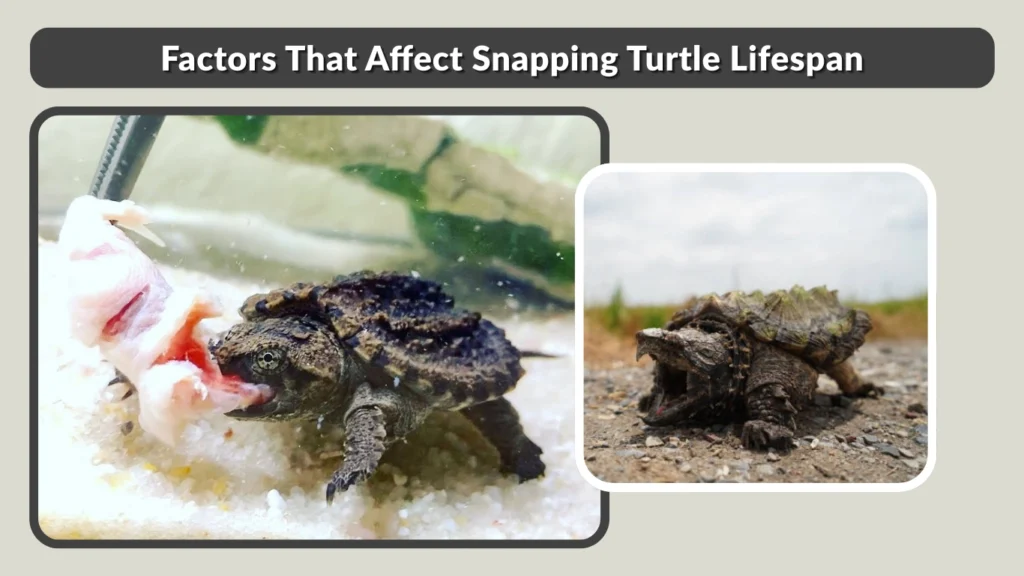
A snapping turtle’s lifespan is influenced by a combination of environmental, biological, and human-related factors. While genetics play a role, external conditions often have the greatest impact on how long an individual turtle survives.
Predators and Natural Threats
Predation is the biggest threat to snapping turtles during their earliest life stages. Eggs and hatchlings are commonly eaten by birds, raccoons, foxes, and fish. Only a small percentage survive to adulthood. Once fully grown, snapping turtles have few natural predators, allowing them to live much longer lives.
Habitat Quality and Food Availability
The quality of a snapping turtle’s habitat plays a major role in determining how long it lives. Clean freshwater with stable water levels provides better access to food and reduces exposure to disease. Snapping turtles that live in polluted or heavily disturbed waterways are more likely to suffer from health problems that shorten their lifespan.
Food availability also matters. Snapping turtles with access to a diverse and consistent diet tend to grow at a steady pace and maintain better overall health. Periods of food scarcity can weaken turtles and make them more vulnerable to illness and environmental stress.
Human Impact
Human activity is one of the leading causes of premature death in snapping turtles. Many adults are killed while crossing roads during nesting season. Others become trapped in fishing lines, nets, or crab traps, where they may drown if unable to surface for air.
Habitat destruction, water pollution, and illegal harvesting have also contributed to declining populations in some regions. Even long-lived species like snapping turtles struggle to survive when faced with frequent human-related threats.
How Fast Do Snapping Turtles Age and Grow?
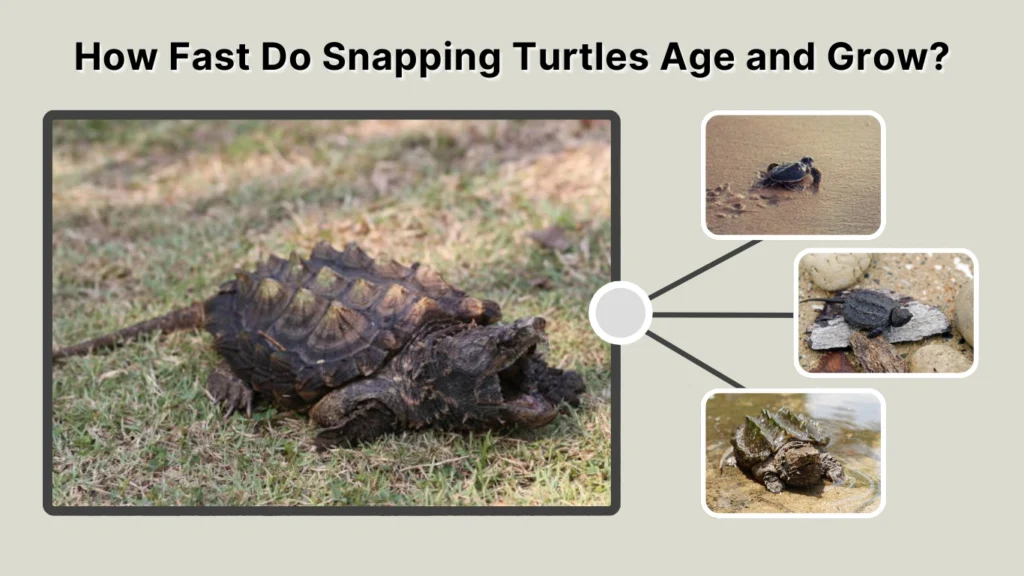
Snapping turtles grow slowly compared to many other reptiles. It can take 10 to 20 years for a snapping turtle to reach sexual maturity, depending on species and environmental conditions. This slow growth rate is closely linked to their long lifespan.
Because snapping turtles invest energy in survival rather than rapid reproduction, they can live for decades once they reach adulthood. However, slow growth also means that population recovery takes a long time if adults are removed from the wild.
How Do Scientists Estimate the Age of Snapping Turtles?
Estimating the age of snapping turtles is challenging. One common method involves counting growth rings on the scutes of the shell, similar to counting tree rings. While this method can provide rough estimates for younger turtles, it becomes less reliable as turtles age and growth slows.
Researchers also use long-term mark-and-recapture studies, where turtles are tagged and monitored over many years. These studies provide valuable lifespan data but require decades of observation. Because of these limitations, many lifespan estimates are conservative and may underestimate how long snapping turtles truly live.
Are Snapping Turtles Among the Longest-Living Reptiles?
Snapping turtles are considered among the longest-living freshwater reptiles, though they are not the longest-living turtles overall. Some tortoise species are known to live well over 100 years. However, compared to most reptiles, snapping turtles exhibit exceptional longevity.
Their slow metabolism, strong immune systems, and protective shells all contribute to their long lives. These traits have allowed snapping turtles to survive relatively unchanged for millions of years.
FAQs
Can snapping turtles live over 100 years?
While rare, some captive snapping turtles, particularly alligator snapping turtles, are believed to have lived close to or over 100 years. However, exact ages are difficult to verify.
Which snapping turtle species lives longer?
Alligator snapping turtles generally live longer than common snapping turtles due to their larger size, heavier armor, and slower lifestyle.
Do snapping turtles age slower than other reptiles?
Yes, snapping turtles age very slowly. Their low metabolism and slow growth rate contribute to their long lifespan compared to many reptiles.
What is the oldest snapping turtle ever recorded?
There is no officially confirmed record of the oldest snapping turtle, but some captive individuals are estimated to be several decades old, possibly exceeding 100 years.
Conclusion
Snapping turtles are remarkably long-lived reptiles, with lifespans that can stretch for several decades or more. While many do not survive their early years, those that reach adulthood often live long, stable lives. Their slow growth, low metabolism, and strong defenses contribute to their longevity, but human impact remains a major threat. Protecting snapping turtle habitats and reducing human-related risks is essential to ensure these ancient reptiles continue to thrive well into the future.