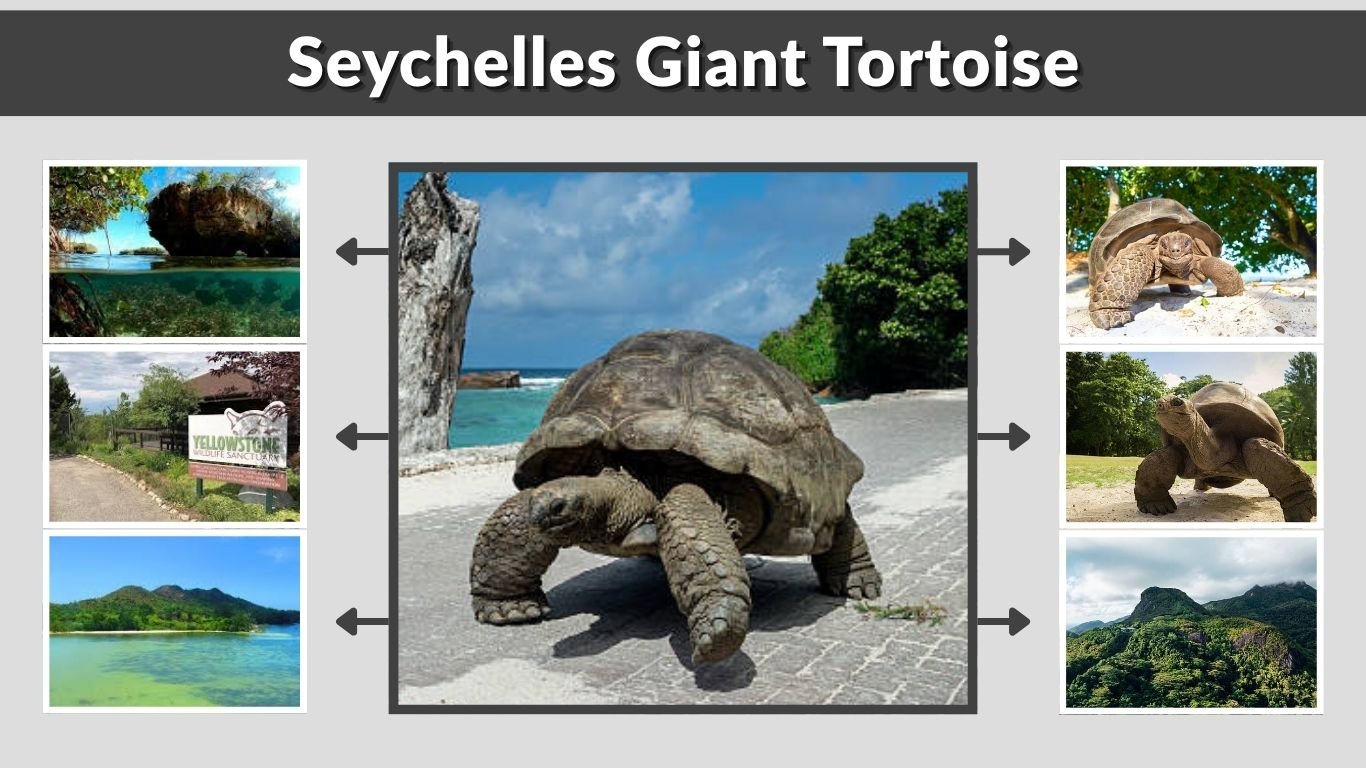
The Seychelles giant tortoise is one of the most fascinating reptiles on Earth. Known for its enormous size and exceptional lifespan, this species has become a symbol of wildlife conservation in the Indian Ocean. Native to the Seychelles islands, especially Aldabra Atoll, these tortoises have survived for centuries despite hunting and habitat loss. Their calm behavior, slow movement, and ancient appearance attract travelers and researchers from around the world. Famous tortoises like Jonathan and Esmeralda have also helped increase global interest in these remarkable creatures and their long history.
What Is the Seychelles Giant Tortoise?
The Seychelles giant tortoise belongs to a group of giant tortoises that evolved on isolated islands in the Indian Ocean. These reptiles are among the largest tortoise species in the world and are famous for their extraordinary longevity. Today, the Aldabra giant tortoise is the best-known surviving species from Seychelles.
Scientific Name and Classification
The scientific name of the Seychelles giant tortoise is Aldabrachelys gigantea. It belongs to the family Testudinidae, which includes land tortoises from different parts of the world. The species is commonly called the Aldabra giant tortoise because most wild populations live on Aldabra Atoll in Seychelles.
Why the Species Is Unique
Several features make this tortoise different from other reptiles.
- It can live for more than 100 years.
- It is one of the largest tortoises on Earth.
- It survives in harsh island environments.
- It plays an important role in seed dispersal and ecosystem balance.
The Origin of Giant Tortoises in Seychelles
Scientists believe giant tortoises arrived on the islands millions of years ago through natural ocean drifting. Over time, isolation helped them evolve into massive land reptiles. Many species later became extinct because of human hunting, but the Aldabra giant tortoise survived due to the remoteness of its habitat.
Physical Characteristics of the Seychelles Giant Tortoise
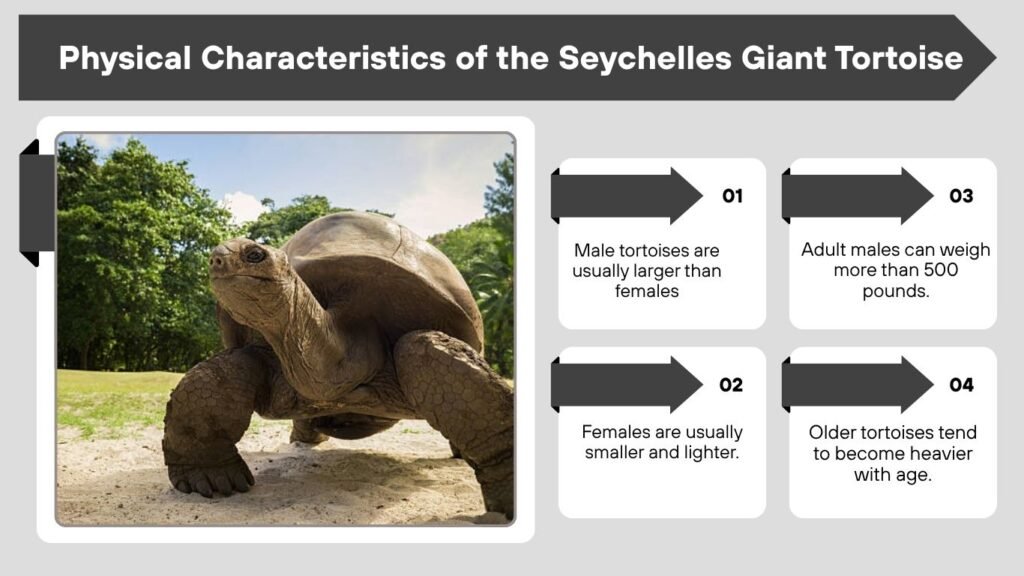
The Seychelles giant tortoise is instantly recognizable because of its large shell, thick legs, and long neck. Adult tortoises can become extremely heavy and continue growing for decades. Their strong body structure allows them to move slowly across rocky islands and grasslands.
Seychelles Giant Tortoise Size
Male tortoises are usually larger than females. A fully grown male can reach over four feet in length and stand high above the ground when extending its neck. Their dome-shaped shell protects them from predators and harsh weather conditions.
Seychelles Giant Tortoise Weight
These giant reptiles are incredibly heavy compared to ordinary tortoises.
- Adult males can weigh more than 500 pounds.
- Females are usually smaller and lighter.
- Older tortoises tend to become heavier with age.
- Healthy captive tortoises often weigh more due to stable food supplies.
Appearance and Body Structure
The shell is usually dark gray or black with a rough texture. Their long neck helps them reach leaves and branches above the ground. Thick legs support their massive weight and allow them to walk across difficult terrain with surprising stability.
Seychelles Giant Tortoise Lifespan
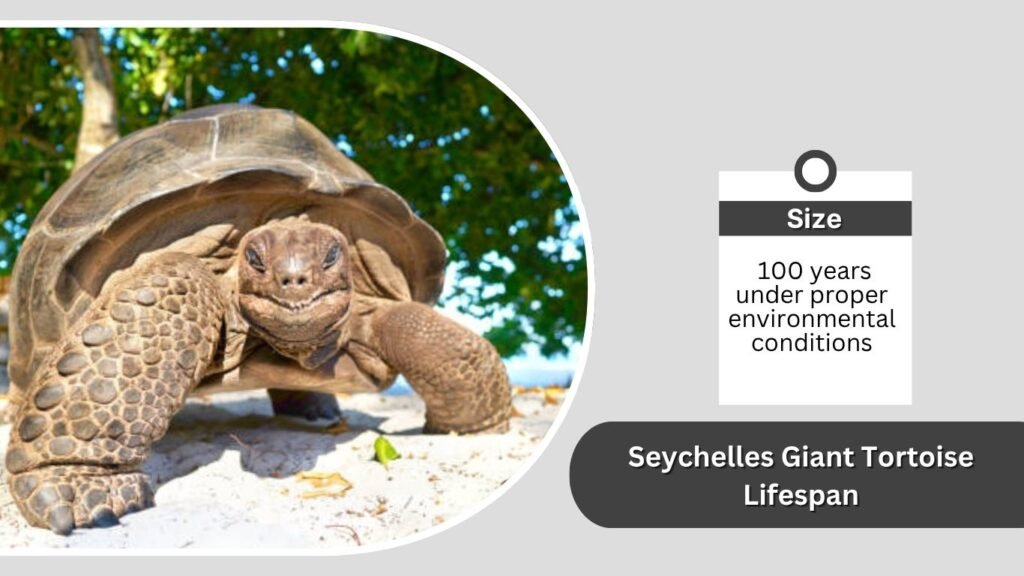
The lifespan of the Seychelles giant tortoise is one of the main reasons for its worldwide fame. These reptiles are considered among the longest-living animals on the planet. Many individuals live well beyond 100 years under proper environmental conditions.
How Long Do Seychelles Giant Tortoises Live?
Most Seychelles giant tortoises live between 80 and 150 years. In protected environments with veterinary care and consistent food supplies, some individuals can survive even longer. Their slow metabolism contributes greatly to their exceptional longevity.
Why They Live So Long
Researchers believe several biological and environmental factors support their long lifespan.
- Slow metabolic rate reduces physical stress.
- Natural island habitats have few predators.
- Large body size provides survival advantages.
- Their calm lifestyle conserves energy over time.
Jonathan the Seychelles Giant Tortoise
Jonathan is the most famous Seychelles giant tortoise in the world. He lives on Saint Helena Island and is believed to have been born in the early nineteenth century. Jonathan has become an international symbol of longevity and wildlife preservation because he has survived through multiple centuries of human history.
Seychelles Giant Tortoise Habitat
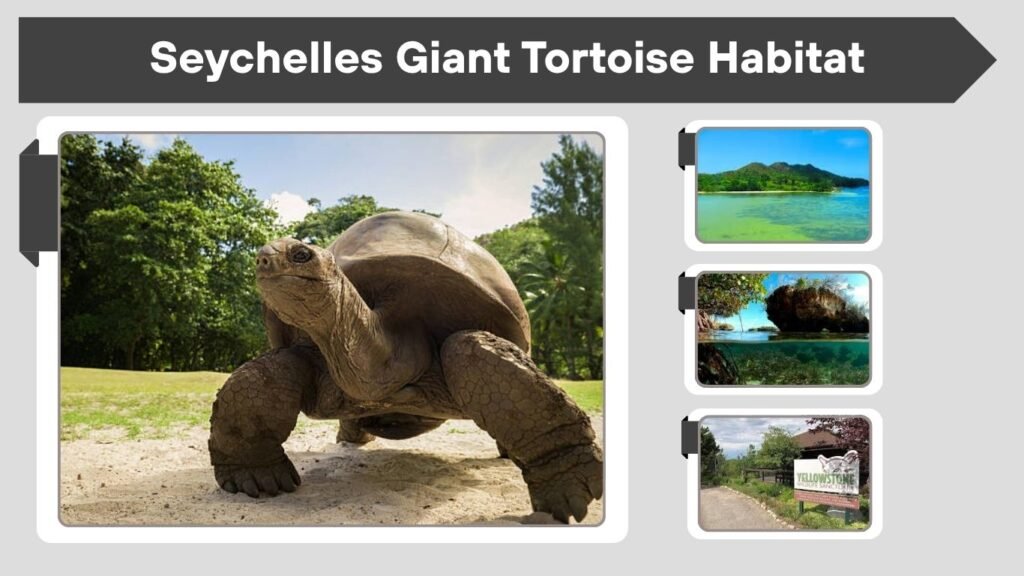
The natural habitat of the Seychelles giant tortoise mainly includes tropical islands with warm temperatures and open vegetation. These reptiles prefer areas where food is abundant and water is available during dry seasons. Their habitat supports both feeding and breeding activities throughout the year.
Aldabra Atoll Habitat
Aldabra Atoll is one of the largest raised coral atolls in the world and serves as the primary home of the species. The isolated environment protected the tortoise population from large-scale hunting that destroyed many other giant tortoise species in nearby regions.
Climate and Environmental Conditions
The Seychelles islands provide the warm tropical climate needed for giant tortoises to thrive. High humidity, sunlight, and seasonal rainfall support vegetation growth, creating ideal grazing conditions for these herbivores.
Islands Where Giant Tortoises Can Be Seen
Visitors can still observe giant tortoises in several protected locations.
- Aldabra Atoll
- Curieuse Island
- Mahe Island reserves
- Wildlife sanctuaries and conservation centers
Seychelles Giant Tortoise Diet
The Seychelles giant tortoise is a herbivore that spends much of its day feeding on vegetation. Its diet changes depending on seasonal food availability and habitat conditions. These tortoises are slow eaters, but they consume large amounts of plant material to maintain their enormous body size and energy needs.
What Do Seychelles Giant Tortoises Eat?
In the wild, their diet mainly consists of grasses, leaves, fruits, and shrubs. They often graze for hours during cooler parts of the day. Occasionally, they may eat fallen flowers or small natural debris found in their environment.
Feeding Behavior in the Wild
These tortoises are important ecosystem engineers because they spread seeds across islands through their feeding habits. Their grazing activity also helps maintain open grassland areas, which supports biodiversity on tropical islands like Aldabra.
Diet in Captivity
Conservation centers and sanctuaries carefully manage tortoise nutrition to keep the animals healthy.
- Fresh grasses form the main portion of the diet.
- Fruits are provided in limited amounts.
- Leafy vegetables supply extra nutrients.
- Clean water is always available for hydration.
Seychelles Giant Tortoise Population and Conservation
The survival of the Seychelles giant tortoise is considered one of the greatest conservation successes in the Indian Ocean region. Although many giant tortoise species disappeared centuries ago, strict protection programs helped the Aldabra giant tortoise recover and maintain a stable population.
How Many Seychelles Giant Tortoises Are Left?
Today, scientists estimate that more than 100,000 Aldabra giant tortoises live in Seychelles, with most of them found on Aldabra Atoll. This makes it one of the largest remaining giant tortoise populations anywhere in the world.
Threats Faced by the Species
Historically, giant tortoises faced severe population declines because sailors and settlers hunted them for food. Habitat destruction and invasive species also affected breeding areas and natural vegetation across many islands.
Conservation Efforts in Seychelles
Several organizations continue working to protect these ancient reptiles and their habitats.
- Protected reserves limit human disturbance.
- Breeding programs support population growth.
- Ecotourism helps fund conservation projects.
- Wildlife laws prevent illegal hunting and trade.
Seychelles Giant Tortoise vs Galapagos Tortoise
The Seychelles giant tortoise and the Galapagos tortoise are often compared because both species are enormous island reptiles with long lifespans. Although they share similarities, they evolved in completely different regions and adapted to unique environmental conditions.
Size and Weight Comparison
Galapagos tortoises are generally heavier and larger than Seychelles giant tortoises. However, both species can grow to impressive sizes and dominate their island ecosystems as major herbivores.
Habitat Differences
Seychelles giant tortoises live in tropical Indian Ocean environments with coral islands and coastal vegetation. Galapagos tortoises inhabit volcanic islands in the Pacific Ocean, where landscapes are often rocky and dry.
Lifespan and Behavior
Both species are famous for longevity and slow movement. Seychelles giant tortoises are usually calmer in behavior, while Galapagos tortoises are known for traveling long distances in search of food and water.
Where to See Giant Tortoises in Seychelles
Seychelles is one of the best destinations in the world for observing giant tortoises in natural and protected environments. Tourists can encounter these reptiles on several islands where conservation and ecotourism operate together successfully.
Curieuse Island
Curieuse Island is famous for its free-roaming giant tortoise population. Visitors can walk through protected areas and observe tortoises feeding, resting, and interacting within their natural surroundings.
Aldabra Atoll
Aldabra Atoll offers the most untouched tortoise habitat in Seychelles. Because of its remote location and strict environmental protection, it remains one of the world’s most important wildlife sanctuaries.
Wildlife Sanctuaries and Farms
Several conservation parks and tortoise centers allow visitors to learn more about these reptiles.
- Giant tortoise sanctuaries provide educational tours.
- Conservation farms support breeding programs.
- Nature reserves protect native ecosystems.
- Visitor centers explain tortoise history and biology.
Fascinating Seychelles Giant Tortoise Facts
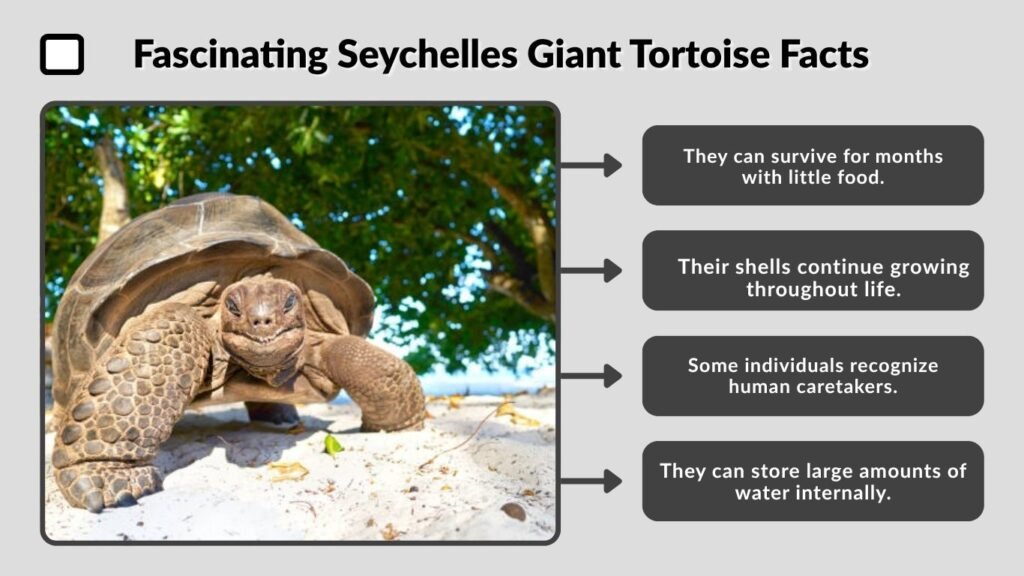
The Seychelles giant tortoise continues to amaze scientists and wildlife enthusiasts because of its ancient appearance and unusual biological traits. These reptiles represent a living connection to prehistoric ecosystems that once existed across many tropical islands.
Interesting Facts About the Species
Some facts about these giant tortoises are especially surprising.
- They can survive for months with little food.
- Their shells continue growing throughout life.
- Some individuals recognize human caretakers.
- They can store large amounts of water internally.
The Importance of Giant Tortoises
Giant tortoises play a critical ecological role by spreading seeds and shaping vegetation patterns. Their survival also supports tourism and environmental education efforts across Seychelles, helping local communities benefit from wildlife conservation.
FAQs
How old is the oldest Seychelles giant tortoise?
The oldest known Seychelles giant tortoise is Jonathan, who lives on Saint Helena Island. Scientists estimate that he was born in the early 1830s, making him over 190 years old. Jonathan is recognized as the oldest living tortoise in the world and remains an important symbol of wildlife longevity and conservation.
Are Seychelles giant tortoises endangered?
The Aldabra giant tortoise is not currently considered critically endangered because its population has recovered through conservation efforts. However, habitat protection remains important since climate change, invasive species, and illegal wildlife trade could still threaten long-term population stability across the Seychelles islands.
Can Seychelles giant tortoises swim?
Seychelles giant tortoises are not true swimmers like sea turtles. Although they can float in water for short periods, they mainly live on land and avoid deep water. Their heavy shells and body structure are designed for walking slowly across grasslands, forests, and rocky island environments.
What is the difference between Aldabra and Seychelles giant tortoises?
The term Seychelles giant tortoise generally refers to giant tortoise species native to Seychelles, while the Aldabra giant tortoise is the surviving species scientifically known as Aldabrachelys gigantea. Many other Seychelles tortoise species became extinct centuries ago because of hunting and habitat destruction.
Why are Seychelles giant tortoises important to the ecosystem?
Seychelles giant tortoises help maintain healthy island ecosystems by spreading seeds and controlling vegetation growth through grazing. Their feeding behavior supports plant diversity and creates open habitats for other wildlife species. Because of their ecological role, they are considered key animals in Seychelles conservation programs.