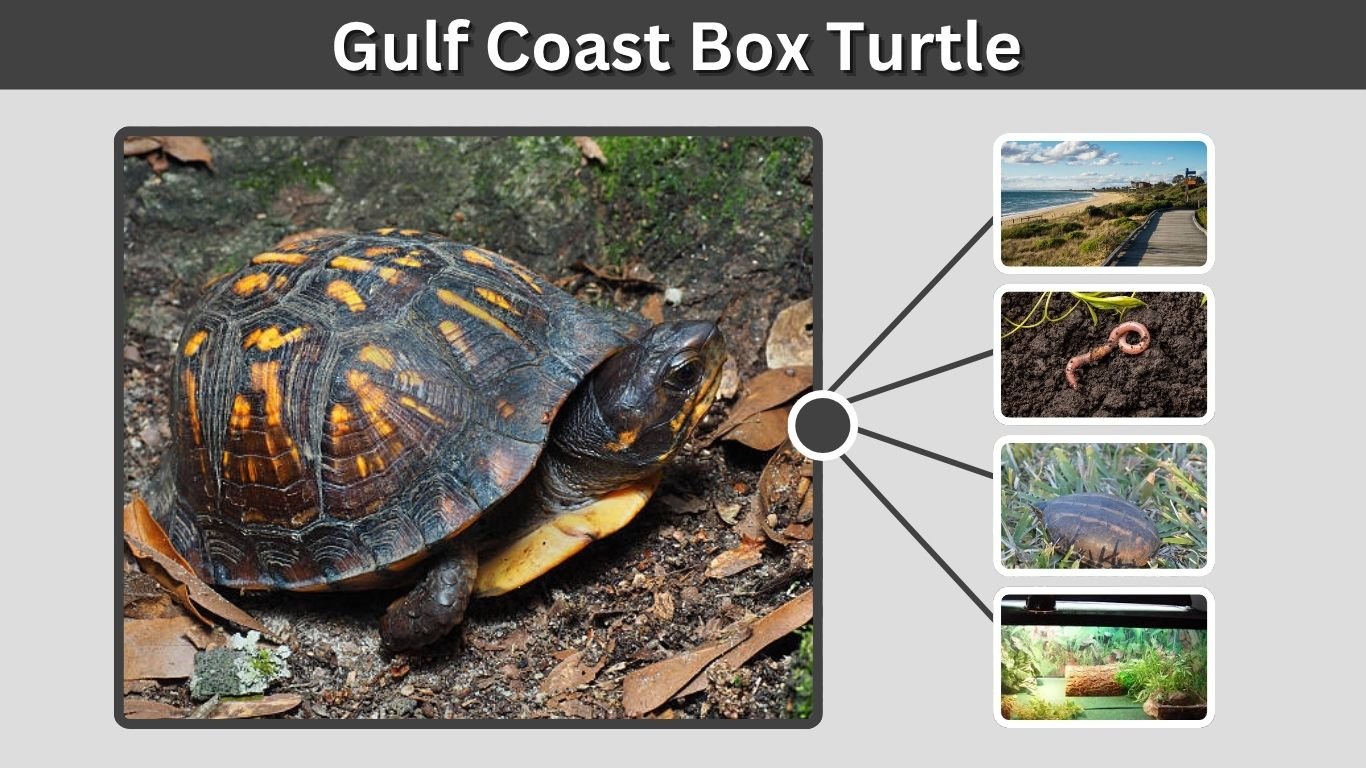
The Gulf Coast box turtle is one of the largest and most recognizable box turtle subspecies in North America. Native to the southeastern United States, this turtle is admired for its unique shell markings, calm personality, and long lifespan. It commonly lives in humid forests, wetlands, and coastal plains near the Gulf of Mexico. Many reptile enthusiasts keep Gulf Coast box turtles as pets because of their interesting behavior and manageable care requirements. Understanding their habitat, diet, and environmental needs is essential for maintaining healthy turtles in captivity or protecting wild populations.
What Is the Gulf Coast Box Turtle?
The Gulf Coast box turtle is a subspecies of the eastern box turtle known for its large body size and preference for humid environments. These turtles are semi-terrestrial reptiles that spend time both on land and near shallow water sources. Their strong shells and adaptable nature allow them to survive in a variety of coastal habitats.
Scientific Classification
The scientific name of the Gulf Coast box turtle is Terrapene carolina major. It belongs to the Emydidae family, which includes several freshwater and terrestrial turtle species found throughout North America. Among all eastern box turtle subspecies, the Gulf Coast variety is considered the largest.
Why the Species Is Unique
Several characteristics make the Gulf Coast box turtle stand out from other box turtles.
- It has a larger shell than most box turtle subspecies.
- It thrives in humid coastal environments.
- It can completely close its shell for protection.
- It often spends more time near water than eastern box turtles.
Natural Range and Distribution
The Gulf Coast box turtle is commonly found in states along the Gulf of Mexico, including Mississippi, Louisiana, Alabama, and parts of Florida. It prefers regions with high humidity, thick vegetation, and easy access to shallow water or marshy environments.
Gulf Coast Box Turtle Habitat
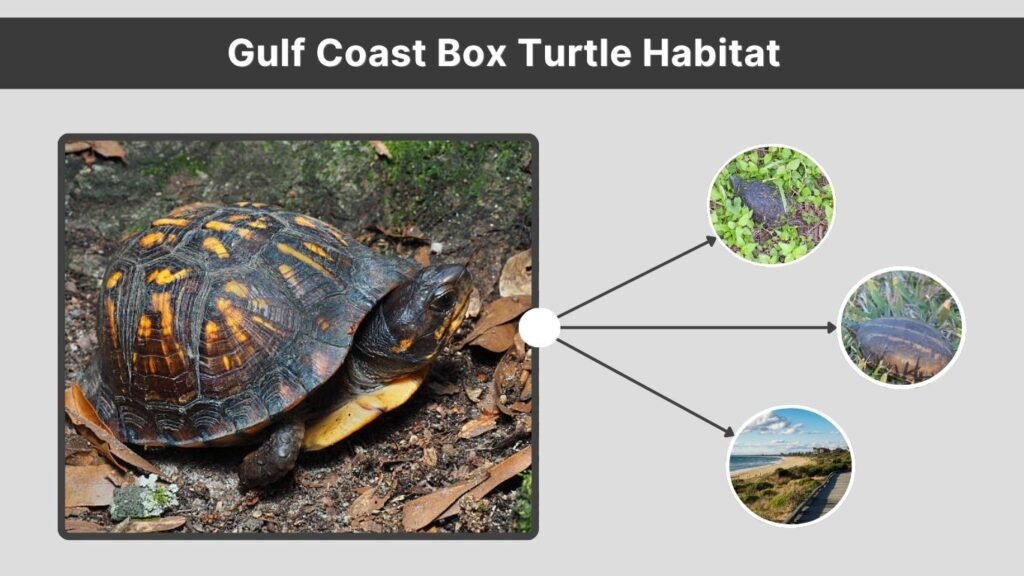
The natural habitat of the Gulf Coast box turtle includes moist environments with plenty of shelter and vegetation. These turtles are highly dependent on humidity and spend much of their time hiding under leaves, logs, or grasses to avoid dehydration and extreme temperatures.
Preferred Environmental Conditions
Warm temperatures and damp surroundings are essential for the species. Wetlands, forest edges, floodplains, and coastal grasslands provide ideal living conditions because they offer food, moisture, and safe nesting areas throughout the year.
Gulf Coast Box Turtle Range
The species mainly inhabits southeastern coastal regions of the United States. Their range extends from eastern Texas through Louisiana and Mississippi into Alabama and the Florida Panhandle. Local populations are often concentrated near swamps, marshes, and slow-moving freshwater habitats.
Habitat Adaptations
These turtles possess several adaptations that help them survive in humid coastal ecosystems.
- Strong limbs allow efficient digging and burrowing.
- Dark shells help absorb warmth during cooler periods.
- Moisture-retaining skin reduces dehydration risks.
- Their hinged plastron provides protection from predators.
Gulf Coast Box Turtle Size and Identification
The Gulf Coast box turtle is easy to identify because of its large shell, rounded body shape, and distinctive coloration. Adults can grow significantly larger than many other box turtle varieties, making them popular among turtle enthusiasts and reptile keepers.
Gulf Coast Box Turtle Size
Adult Gulf Coast box turtles usually measure between seven and eight inches in shell length, although some individuals may become even larger. Males are often slightly bigger than females and may develop broader heads and thicker tails with maturity.
Shell Appearance and Color
The shell is typically dark brown or olive with yellow, orange, or tan markings scattered across the surface. Many individuals also display radiating patterns or light streaks that become more visible with age. Their shell shape is highly domed and provides strong protection against predators.
Male vs Female Gulf Coast Box Turtle
Male and female turtles show noticeable physical differences.
- Males often have red or orange eyes.
- Females usually have brown or yellow eyes.
- Male tails are thicker and longer.
- Females generally have flatter plastrons.
Gulf Coast Box Turtle Diet
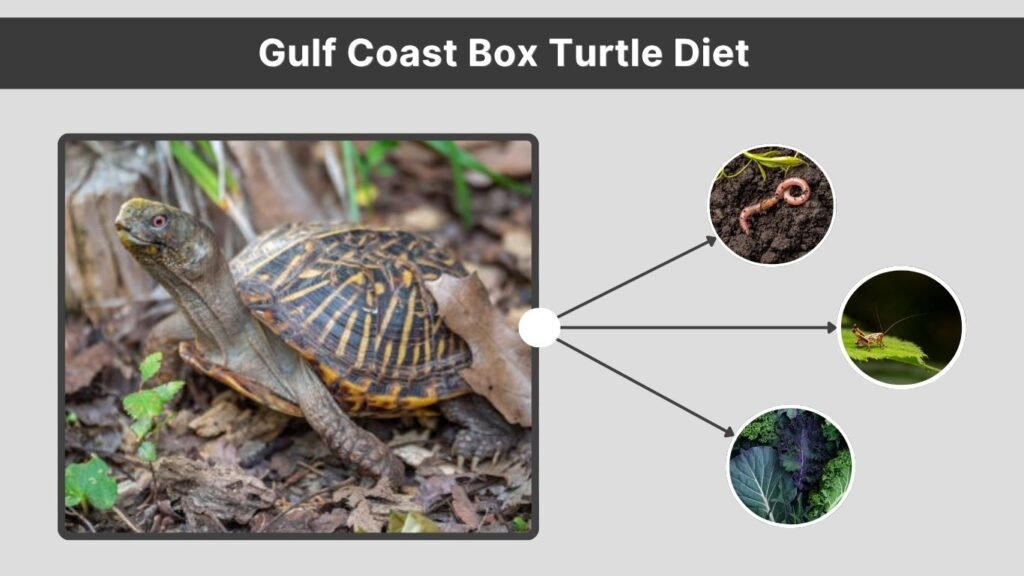
The Gulf Coast box turtle is an omnivore that consumes both plant and animal matter. In the wild, these turtles eat a wide variety of foods depending on seasonal availability. A balanced diet is extremely important for healthy shell growth and long-term health.
What Do Gulf Coast Box Turtles Eat?
Adult turtles commonly eat insects, worms, fruits, mushrooms, berries, and leafy vegetation. They are opportunistic feeders and may also consume snails or small amphibians when available in their habitat.
What Do Baby Gulf Coast Box Turtles Eat?
Young turtles require more protein than adults because they are still growing rapidly. Hatchlings usually eat tiny insects, mealworms, soft fruits, and calcium-rich foods that support shell development during early life stages.
Feeding Recommendations for Captive Turtles
Pet owners should provide a varied and nutritious diet to maintain healthy turtles.
- Earthworms and insects supply protein.
- Leafy greens provide vitamins and minerals.
- Fruits should only be offered occasionally.
- Calcium supplements support shell strength.
Gulf Coast Box Turtle Care
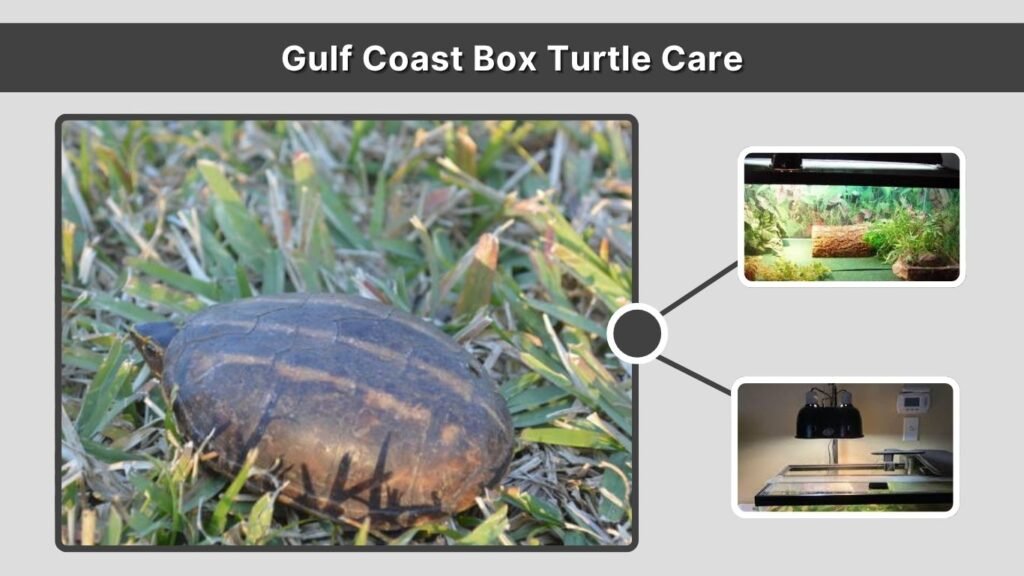
Proper care is essential for maintaining healthy Gulf Coast box turtles in captivity. These reptiles need clean environments, high humidity, and access to both land and shallow water areas. A carefully designed enclosure helps reduce stress and encourages natural behavior.
Indoor Enclosure Setup
Indoor habitats should include soft substrate, hiding spots, and proper humidity control. Coconut fiber, cypress mulch, and leaf litter are commonly used because they help retain moisture while allowing natural burrowing behavior.
Temperature and Humidity Requirements
Gulf Coast box turtles require warm daytime temperatures and moderate nighttime cooling. Humidity should remain relatively high to prevent dehydration and respiratory problems. UVB lighting is also important for proper calcium absorption and shell development.
Gulf Coast Box Turtle Lifespan
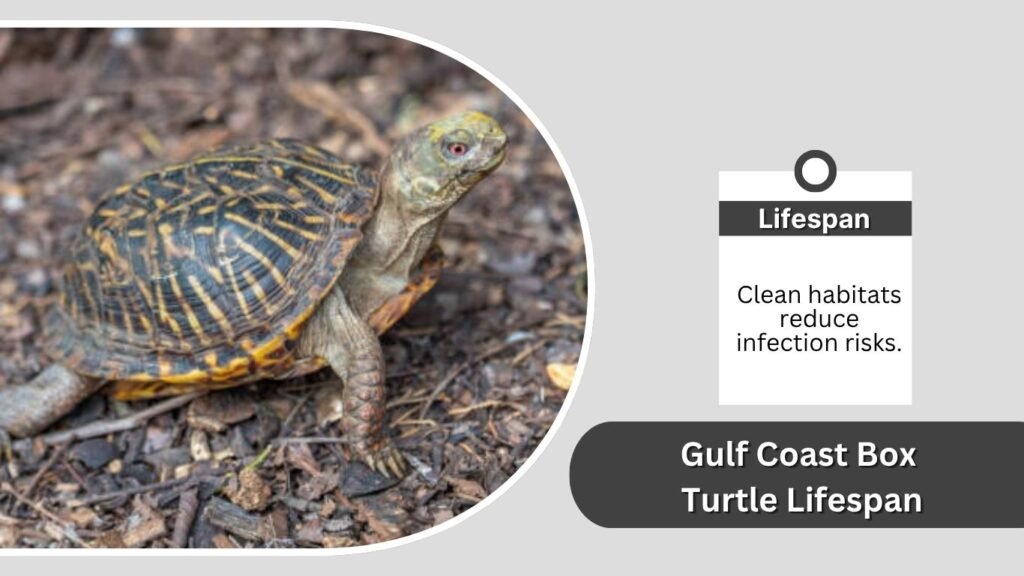
The Gulf Coast box turtle is known for its impressive lifespan compared to many other reptiles. With proper nutrition, suitable habitat conditions, and regular care, these turtles can survive for several decades. Their slow growth and calm lifestyle contribute greatly to their longevity in both the wild and captivity.
How Long Do Gulf Coast Box Turtles Live?
In the wild, Gulf Coast box turtles commonly live between 30 and 50 years. Captive turtles often live even longer because they receive consistent food, veterinary care, and protection from predators or environmental dangers.
Factors That Affect Lifespan
Several environmental and biological factors influence the lifespan of Gulf Coast box turtles.
- Balanced nutrition supports healthy shell growth.
- Proper humidity prevents respiratory illnesses.
- Clean habitats reduce infection risks.
- UVB lighting improves calcium absorption.
Common Health Problems
Although these turtles are hardy reptiles, they can still develop health problems if improperly cared for. Respiratory infections, shell rot, vitamin deficiencies, and dehydration are among the most common issues seen in captive Gulf Coast box turtles.
Gulf Coast Box Turtle Behavior and Adaptations
The Gulf Coast box turtle has several physical and behavioral adaptations that help it survive in humid coastal habitats. These turtles are generally shy and spend much of their time hiding beneath vegetation or digging shallow burrows during hot weather.
Behavioral Adaptations
Gulf Coast box turtles change their behavior depending on environmental conditions. During extremely hot or dry periods, they reduce activity and remain hidden to conserve moisture and energy. They are also most active during cooler mornings and evenings.
Structural Adaptations
Their body structure provides excellent protection and survival advantages in the wild.
- Hinged shells protect against predators.
- Strong claws help with digging and burrowing.
- Dome-shaped shells improve defense.
- Thick skin helps reduce water loss.
Do Gulf Coast Box Turtles Hibernate?
Gulf Coast box turtles do not truly hibernate in the same way mammals do. Instead, they enter a state called brumation during colder months. In warmer southern regions, brumation may be mild or very short, while turtles living in cooler climates become less active for longer periods.
Gulf Coast Box Turtle Reproduction
Breeding and nesting behavior are important parts of the Gulf Coast box turtle life cycle. Females usually lay eggs in soft soil where temperatures and humidity levels support healthy embryo development. Hatchlings emerge fully independent and begin searching for food immediately.
Mating Behavior
Breeding season typically occurs during spring and early summer when temperatures rise and food becomes more available. Males often compete for females and display territorial behavior during courtship periods.
Gulf Coast Box Turtle Eggs
Female turtles dig shallow nests before laying eggs. After covering the nest with soil, the female leaves the eggs to incubate naturally. Incubation periods vary depending on temperature and humidity conditions in the surrounding environment.
Baby Gulf Coast Box Turtles
Baby Gulf Coast box turtles are small, fragile, and highly vulnerable to predators. Their shells are softer than adult shells during the first stages of life, making safe habitat conditions extremely important for survival and healthy growth.
Gulf Coast Box Turtle vs Eastern Box Turtle
Although the Gulf Coast box turtle and the eastern box turtle belong to the same species group, they have several noticeable differences in appearance, habitat preference, and behavior. The Gulf Coast box turtle is generally larger and prefers humid coastal environments, while the eastern box turtle is more commonly found in woodland habitats. Understanding these differences helps turtle owners, wildlife enthusiasts, and researchers correctly identify each subspecies and provide appropriate care when kept in captivity.
| Feature | Gulf Coast Box Turtle | Eastern Box Turtle |
| Scientific Name | Terrapene carolina major | Terrapene carolina carolina |
| Average Size | 7–8 inches | 4.5–6 inches |
| Shell Shape | Flatter and wider shell | Higher domed shell |
| Shell Color | Dark brown or olive with lighter markings | Brown or black with bright orange or yellow patterns |
| Habitat | Wetlands, marshes, coastal plains | Forests, woodlands, meadows |
| Water Preference | Spends more time near water | Mostly terrestrial |
| Geographic Range | Gulf Coast states | Eastern United States |
| Humidity Needs | Very high humidity | Moderate humidity |
| Behavior | Calm and semi-aquatic tendencies | More terrestrial and active on land |
| Lifespan | 30–50+ years | 30–40+ years |
Gulf Coast Box Turtle Conservation
Conservation efforts are becoming increasingly important because habitat destruction continues to threaten wild turtle populations across the southeastern United States. Roads, urban development, and illegal collection for the pet trade have all reduced local populations in some regions.
Is the Gulf Coast Box Turtle Endangered?
The Gulf Coast box turtle is not currently classified as critically endangered, but many populations are declining. Habitat fragmentation and human activity remain serious long-term threats to the species throughout its natural range.
Threats to Wild Populations
Wild turtles face several environmental pressures that affect survival rates.
- Wetland destruction removes nesting areas.
- Vehicle collisions kill many turtles yearly.
- Illegal collection reduces breeding populations.
- Pollution damages freshwater ecosystems.
Conservation and Protection Efforts
Wildlife organizations and conservation agencies work to protect natural habitats and educate the public about responsible turtle ownership. Habitat restoration and stricter wildlife regulations are helping support healthier turtle populations across the Gulf Coast region.
FAQs
What do Gulf Coast box turtles eat?
Gulf Coast box turtles eat a mixture of animal and plant foods. Their diet commonly includes insects, worms, snails, fruits, mushrooms, berries, and leafy greens. Hatchlings usually require more protein-rich foods than adults to support healthy growth and shell development during early life stages.
Do Gulf Coast box turtles hibernate?
Gulf Coast box turtles enter a period called brumation rather than true hibernation. During colder months, they become less active and may burrow into soil or leaf litter for warmth and protection. In warmer southern climates, brumation is often shorter and less intense.
How big do Gulf Coast box turtles get?
Adult Gulf Coast box turtles generally grow between seven and eight inches in shell length, making them one of the largest box turtle subspecies in North America. Some exceptionally large individuals may exceed this average size under ideal environmental and nutritional conditions.
Can Gulf Coast box turtles be kept as pets?
Yes, Gulf Coast box turtles can be kept as pets, but they require proper care and long-term commitment. Owners must provide high humidity, balanced nutrition, UVB lighting, and spacious enclosures. Before purchasing one, it is important to check local wildlife and pet ownership regulations.
How long do Gulf Coast box turtles live?
Gulf Coast box turtles can live for several decades when properly cared for. Wild turtles often survive between 30 and 50 years, while captive turtles may live even longer with consistent nutrition, clean habitats, veterinary care, and protection from predators or environmental hazards.