
Red-eared slider turtles are long-lived reptiles that can stay with their owners for decades. Many people buy them as small, easy-looking pets, but their lifespan is much longer than most expect. With proper care, clean water, UVB lighting, enough space, and a balanced diet, a red-eared slider can live a very long and healthy life.
Average Lifespan of Red-Eared Slider Turtles
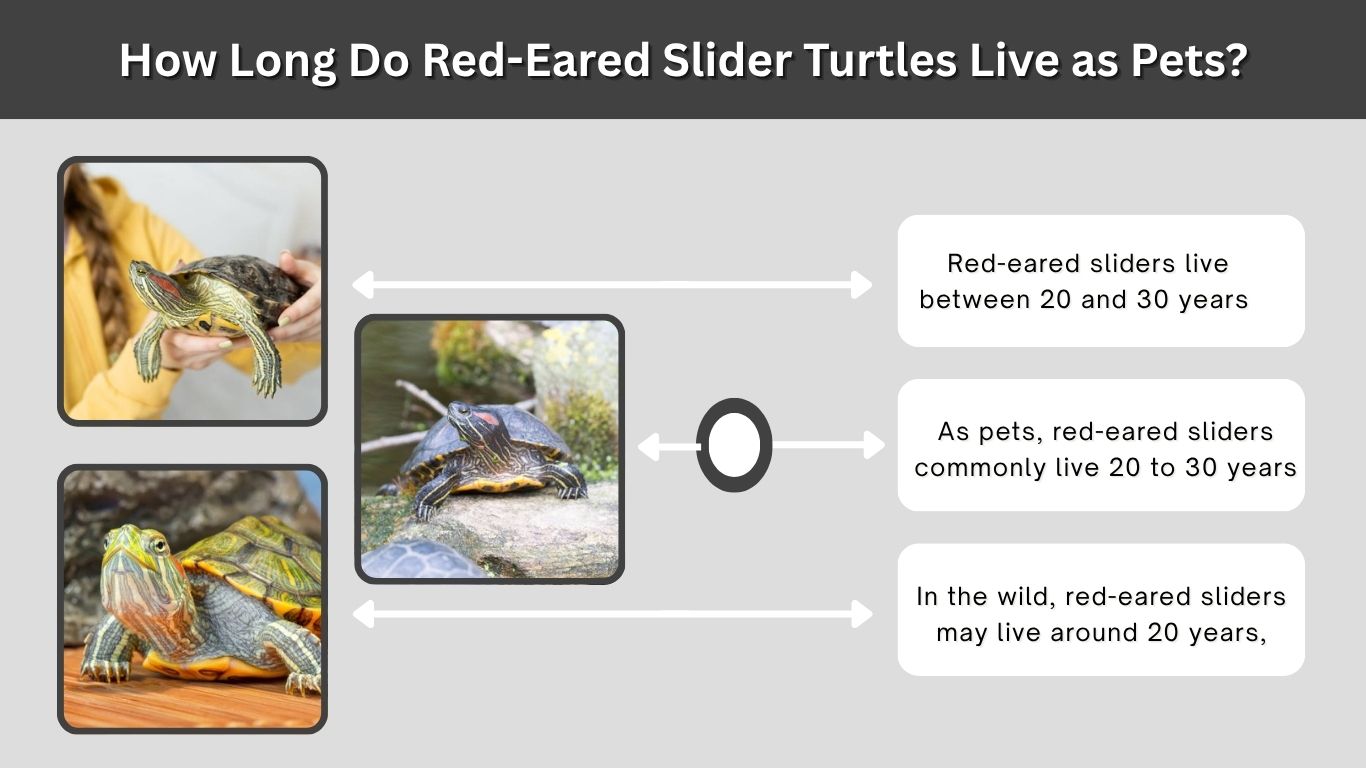
Red-eared sliders usually live between 20 and 30 years in captivity. Some may live even longer when they receive excellent care. In the wild, their lifespan can vary because they face predators, disease, food shortages, harsh weather, and habitat changes.
How Long Do Red-Eared Sliders Live in Captivity?
As pets, red-eared sliders commonly live 20 to 30 years. Some well-cared-for turtles may reach 40 years or more. Their long lifespan depends heavily on the quality of their environment.
A turtle kept in a clean, spacious tank with the right temperature, UVB light, basking area, and diet has a much better chance of living longer. Poor care can shorten a turtle’s life, even if it appears healthy when young.
How Long Do Red-Eared Sliders Live in the Wild?
In the wild, red-eared sliders may live around 20 years, although some can live longer. Their natural environment gives them access to sunlight, swimming space, and varied foods, but it also exposes them to many risks.
Wild turtles may be eaten by predators, hit by vehicles, injured by fishing gear, or affected by pollution. Eggs and hatchlings are especially vulnerable, so many do not survive to adulthood.
Lifespan Comparison Table
| Living Condition | Average Lifespan | Main Factors |
|---|---|---|
| Poor captivity | 5 to 10 years | Dirty water, no UVB, small tank, poor diet |
| Average pet care | 15 to 25 years | Basic tank, pellets, some basking and lighting |
| Excellent pet care | 25 to 40+ years | Large enclosure, strong filtration, UVB, balanced diet |
| Wild habitat | Around 20 years or more | Predators, weather, food supply, habitat quality |
What Affects a Red-Eared Slider’s Lifespan?
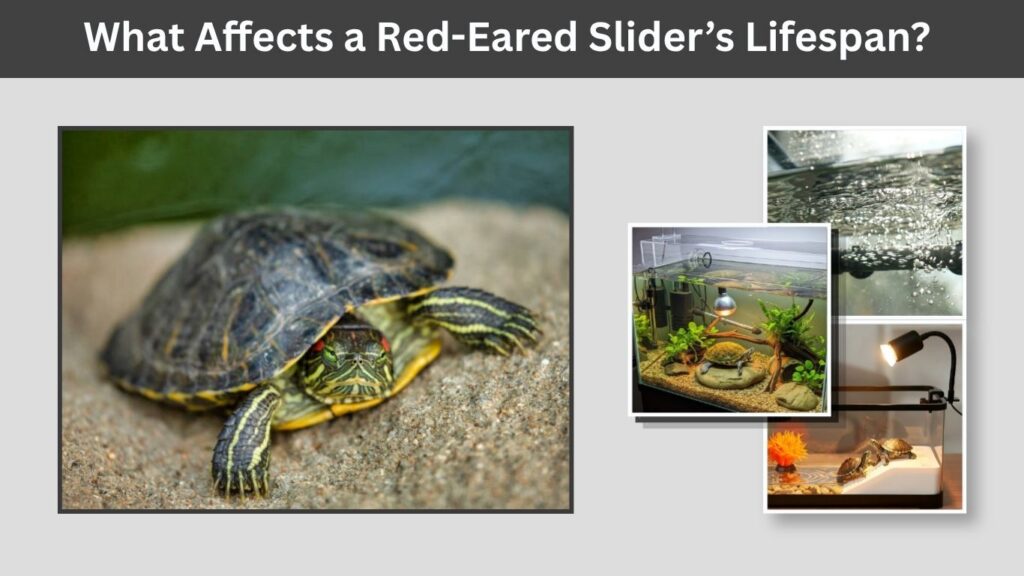
A red-eared slider’s lifespan is not only about genetics. Daily care plays a major role. Many pet turtles die early because their owners do not realize how much space, lighting, and cleaning they need.
Tank Size and Swimming Space
Red-eared sliders are active aquatic turtles. They need enough water to swim, dive, and turn around comfortably. A small tank can cause stress, poor muscle development, and dirty water.
A useful rule is to provide about 10 gallons of water for every inch of shell length. For example, a 10-inch turtle may need about 100 gallons of water. Larger tanks are easier to keep clean and give the turtle more exercise.
A healthy setup should include:
- Deep swimming water
- A dry basking platform
- Strong filtration
- Safe decorations with no sharp edges
- Enough space for the turtle to move freely
Water Quality
Clean water is one of the most important parts of long-term turtle health. Red-eared sliders eat, swim, and produce waste in the same water. Without strong filtration and regular cleaning, harmful bacteria can build up quickly.
Dirty water may lead to skin infections, shell rot, eye irritation, and respiratory illness. A powerful filter, partial water changes, and regular tank maintenance help prevent these problems.
UVB Lighting and Basking
Red-eared sliders need UVB light to process calcium and maintain a strong shell and bones. Without UVB, they may develop metabolic bone disease, soft shell, weakness, and deformities.
They also need a warm basking area where they can fully dry off. Basking helps regulate body temperature, supports digestion, and keeps the shell healthier. A turtle that cannot bask properly may become sick over time.
How Long Can Red-Eared Sliders Live as Pets?
Red-eared sliders can live for decades as pets, but only if their care is consistent. Many owners are surprised when a turtle bought for a child continues living well into that child’s adulthood.
Why Pet Sliders Can Live So Long
Pet red-eared sliders are protected from many dangers that wild turtles face. They do not usually deal with predators, droughts, freezing weather, or food shortages. If their owner provides the right setup, this safer life can help them live longer.
However, captivity can also be dangerous when the setup is poor. A turtle in a small, dirty tank with no UVB lighting may live a much shorter life than a wild turtle.
Common Reasons Pet Turtles Die Early
Many red-eared sliders do not reach their full lifespan because of preventable care mistakes. These mistakes often begin when owners buy a tiny turtle without understanding its adult needs.
Common problems include:
- Keeping the turtle in a tank that is too small
- Not using UVB lighting
- Feeding only dried shrimp or low-quality food
- Allowing water to stay dirty
- Not providing a dry basking area
- Keeping water or basking temperatures too cold
- Ignoring signs of illness
Good care does not have to be complicated, but it must be consistent. A turtle’s health can decline slowly, so small problems may become serious if they are ignored.
How Long Can Red-Eared Sliders Live Without Food?
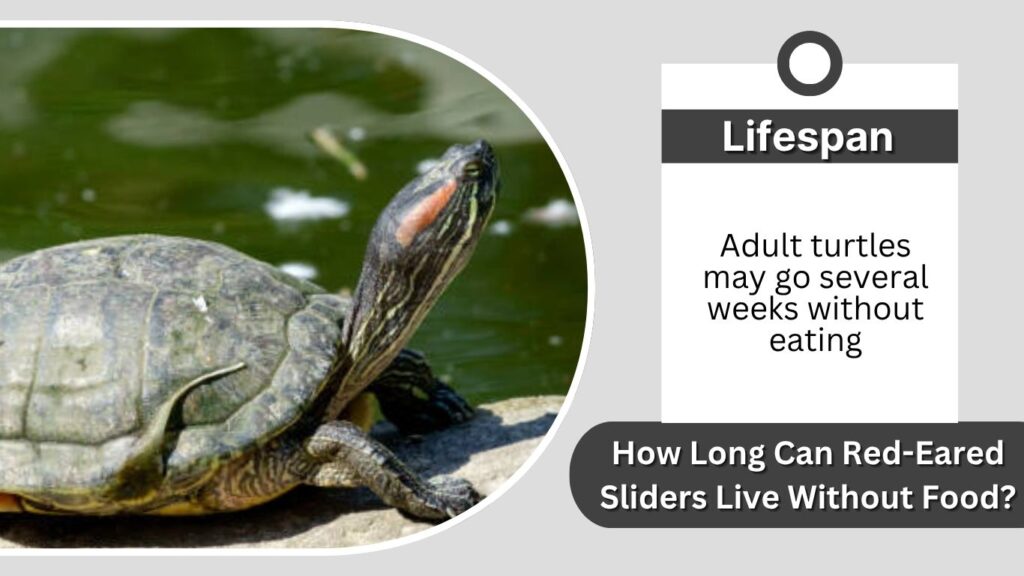
A healthy adult red-eared slider can survive for a while without food, but that does not mean it should. In some conditions, adult turtles may go several weeks without eating, especially if they are cool or inactive. Young turtles are much more vulnerable and need food more often.
Adults vs Baby Turtles
Adult red-eared sliders have more body reserves than hatchlings. A healthy adult may tolerate short periods without food better than a young turtle. Hatchlings and juveniles are growing quickly, so they need regular nutrition.
Baby turtles should not be left without food for long. Missing a meal occasionally is not usually a crisis, but repeated fasting can weaken them.
When Not Eating Is a Warning Sign
A red-eared slider may stop eating because of stress, cold temperatures, illness, poor water quality, or a new environment. If a turtle refuses food for several days and also seems weak, inactive, swollen, or has breathing issues, it may need veterinary care.
Loss of appetite can be linked to:
- Water that is too cold
- Lack of basking heat
- Respiratory infection
- Eye swelling
- Stress from handling or relocation
- Poor diet
- Dirty water
How Long Can Red-Eared Sliders Live Without Water?
Red-eared sliders are semi-aquatic turtles, which means they spend much of their lives in water but also need land or a basking area. They should not be kept out of water for long periods.
Can Red-Eared Sliders Live Out of Water?
A red-eared slider can survive out of water for some time, especially in a humid and safe environment. However, staying dry for too long can cause dehydration, stress, overheating, and shell problems.
They need water for swimming, hydration, feeding, and normal behavior. Many red-eared sliders also prefer to eat in water because it helps them swallow food properly.
How Long Is Too Long Out of Water?
There is no single safe number for every turtle because temperature, humidity, age, and health matter. In general, a red-eared slider should not be left out of water for many hours unless there is a specific reason, such as supervised cleaning, a short health check, or transport.
A turtle out of water should always be protected from:
- Direct hot sunlight
- Cold drafts
- Dry air for long periods
- Dogs, cats, or other animals
- Falls from tables or counters
- Rough handling
How to Help a Red-Eared Slider Live Longer
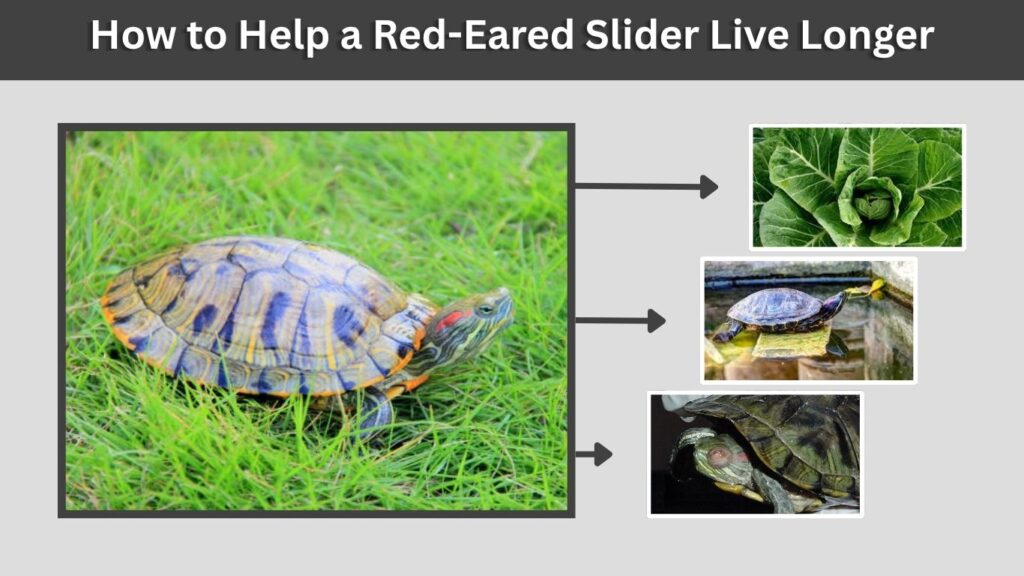
Helping a red-eared slider live a long life comes down to proper husbandry. These turtles are hardy, but they still need the right care to avoid preventable diseases.
Provide the Right Habitat
A good habitat gives the turtle room to swim, bask, and behave naturally. The tank should be large enough for the turtle’s adult size, not just its baby size.
The basking platform should allow the turtle to climb out completely and dry its shell. The basking light should keep the area warm, while the UVB bulb supports calcium health.
Feed a Balanced Diet
Young red-eared sliders eat more protein, while adults need more vegetables and plant matter. A balanced diet helps prevent obesity, vitamin deficiency, and shell problems.
Good food choices include:
- Aquatic turtle pellets
- Collard greens
- Dandelion greens
- Romaine lettuce
- Aquatic plants
- Occasional insects or worms
- Calcium supplements or cuttlebone
Treats such as dried shrimp should not be the main diet. Too many treats can lead to poor nutrition and picky eating.
Watch for Health Problems Early
Early treatment can make a big difference. Red-eared sliders often hide illness until it becomes serious, so owners should notice changes in behavior.
Warning signs include swollen eyes, wheezing, floating unevenly, soft shell, white shell patches, refusal to eat, or extreme tiredness. A reptile veterinarian is the best option when symptoms continue or worsen.
FAQs
How old can red-eared slider turtles live?
Red-eared slider turtles can live 20 to 30 years in captivity, and some may live 40 years or more with excellent care. Their lifespan depends on diet, water quality, tank size, lighting, temperature, and overall health.
How long do red-eared slider turtles live as pets?
As pets, red-eared sliders usually live around 20 to 30 years. They can live longer when kept in a large tank or pond with clean water, UVB lighting, a proper basking area, and a balanced diet.
How long do red-eared sliders live in the wild?
In the wild, red-eared sliders may live around 20 years or more. However, their survival depends on predators, climate, food availability, pollution, and habitat safety. Many hatchlings do not survive to adulthood.
How long can red-eared sliders live without food?
A healthy adult red-eared slider may survive several weeks without food, but this is not ideal. Young turtles need food more often because they are still growing. If a turtle suddenly stops eating, check temperature, water quality, stress, and illness.
How long can red-eared sliders live out of water?
Red-eared sliders can stay out of water for short periods, but they should not be kept dry for long. They need water for hydration, swimming, feeding, and normal behavior. Long periods out of water can cause stress and dehydration.