
Red-eared slider turtles are one of the most popular pet turtles in the world, but many new owners are surprised by how large they can become. These turtles may start out tiny, often only a few inches long, but they can grow into sizable aquatic reptiles that need serious space, care, and long-term commitment.
Average Size of Red-Eared Slider Turtles
Red-eared sliders are medium-sized freshwater turtles. Their adult size depends on sex, genetics, diet, health, and living conditions. While hatchlings are very small, adults can grow much larger than many people expect.
How Big Do Male Red-Eared Sliders Get?
Male red-eared sliders are usually smaller than females. Most adult males grow to about 7 to 9 inches in shell length. Some may stay closer to 6 inches, while larger males can reach around 10 inches.
Males also tend to have longer front claws and longer, thicker tails than females. These features become easier to notice as the turtle matures. Even though males are smaller, they still need plenty of swimming space and proper basking areas.
How Big Do Female Red-Eared Sliders Get?
Female red-eared sliders are usually larger than males. Most adult females grow between 10 and 12 inches in shell length. Some females may reach slightly over 12 inches when kept in excellent conditions.
This larger size is one reason female sliders need especially spacious tanks or outdoor ponds. A turtle that reaches one foot long cannot live comfortably in a small aquarium. Without enough room, it may become stressed, unhealthy, or inactive.
Red-Eared Slider Size Chart
| Age or Stage | Average Shell Length | Notes |
|---|---|---|
| Hatchling | 1 to 1.5 inches | Very small but grows quickly |
| Juvenile | 2 to 5 inches | Needs frequent feeding and clean water |
| Young adult | 5 to 8 inches | Sex differences become clearer |
| Adult male | 7 to 9 inches | Usually smaller and lighter |
| Adult female | 10 to 12 inches | Often needs the most space |
How Fast Do Red-Eared Sliders Grow?
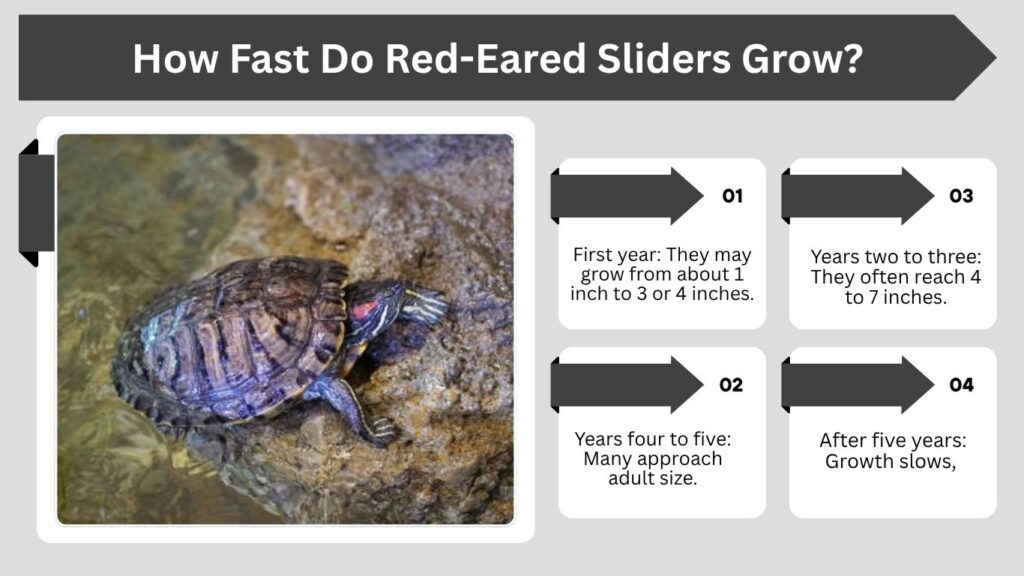
Red-eared sliders grow fastest during their early years. A hatchling may double or triple in size within the first year if it receives proper food, heat, UVB lighting, and clean water. Growth then slows as the turtle gets older.
Typical Growth Timeline
Most red-eared sliders follow a general pattern:
- First year: They may grow from about 1 inch to 3 or 4 inches.
- Years two to three: They often reach 4 to 7 inches.
- Years four to five: Many approach adult size.
- After five years: Growth slows, though some continue growing gradually.
Not every turtle grows at the same rate. A healthy turtle may grow steadily, while one kept in poor conditions may grow slowly or develop shell problems.
Do Red-Eared Sliders Keep Growing Forever?
Red-eared sliders do not grow quickly forever, but they may continue slight growth throughout much of their lives. Most reach near-adult size within 5 to 8 years. After that, growth becomes much slower.
A turtle’s shell does not work like a snake’s skin. It grows with the turtle over time. Healthy shell growth should look smooth and firm, not soft, bumpy, cracked, or curled.
What Affects a Red-Eared Slider’s Size?
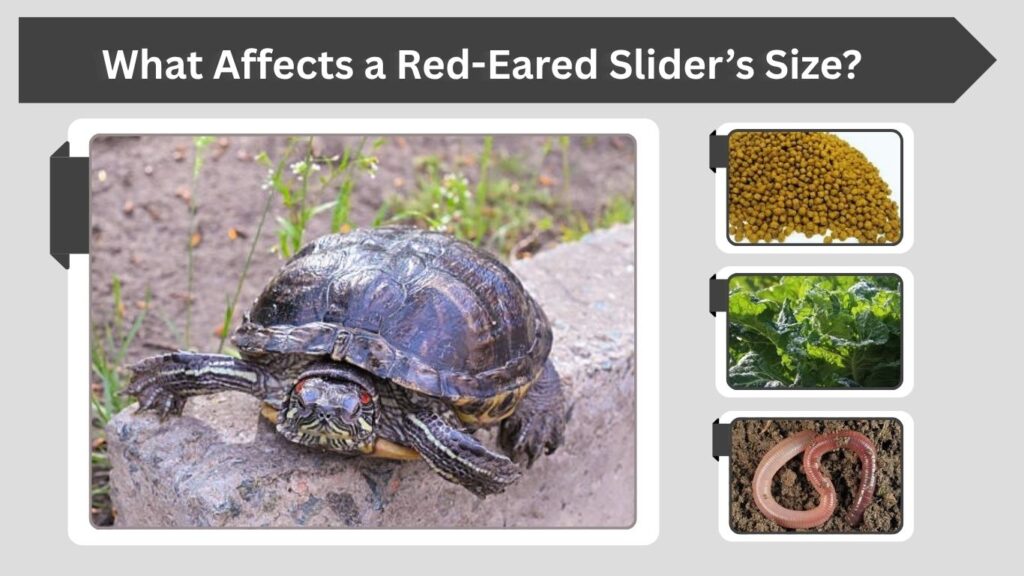
Several factors influence how large a red-eared slider will become. Some are natural, while others depend on the care it receives.
Genetics and Sex
Genetics play a major role in adult size. Some turtles are naturally larger or smaller than others. Sex also matters because females usually grow bigger than males.
Even with perfect care, a male turtle will usually not become as large as a female. Similarly, a turtle with smaller genetic traits may never reach the upper size range.
Diet and Nutrition
A balanced diet helps red-eared sliders grow properly. Young turtles need more protein, while adults need more plant matter. Feeding only shrimp, pellets, or treats can lead to nutritional problems.
A good diet may include:
- Quality aquatic turtle pellets
- Leafy greens such as romaine lettuce, dandelion greens, or collard greens
- Occasional protein foods like insects, earthworms, or feeder fish
- Calcium sources such as cuttlebone
- Limited treats such as dried shrimp or fruit
Overfeeding does not make a turtle healthier. It can cause obesity, poor water quality, and shell issues. Proper growth should be steady, not rushed.
Tank Size and Living Conditions
A common myth says turtles grow only as large as their tank allows. This is not true in a healthy way. A turtle kept in a small tank may suffer from stress, poor muscle development, dirty water, and stunted growth.
A cramped tank does not safely limit size. It simply creates poor living conditions. Red-eared sliders need room to swim, dive, turn around, bask, and explore.
How Much Space Does a Full-Grown Red-Eared Slider Need?
Because red-eared sliders can grow up to 12 inches, they need a large enclosure. The usual guideline is about 10 gallons of water per inch of shell length. That means a 10-inch turtle may need around 100 gallons of water.
Tank Size Guidelines
For long-term care, consider these general space needs:
- Hatchling: 20 to 30 gallons as a starter setup
- Juvenile: 40 to 75 gallons as it grows
- Adult male: 75 to 100 gallons
- Adult female: 100 to 125 gallons or more
- Multiple turtles: Much larger space, often best in a pond
The tank should also include a dry basking area where the turtle can fully climb out of the water. Basking is essential for digestion, shell health, and temperature regulation.
Why Bigger Tanks Are Better
Larger tanks are not only better for the turtle but also easier to maintain. More water helps dilute waste, keeps temperatures more stable, and gives the turtle space to exercise.
A large turtle in a small tank can quickly make the water dirty. Poor water quality may lead to skin infections, eye problems, shell rot, and unpleasant odors.
How to Tell If Your Turtle Is Growing Properly
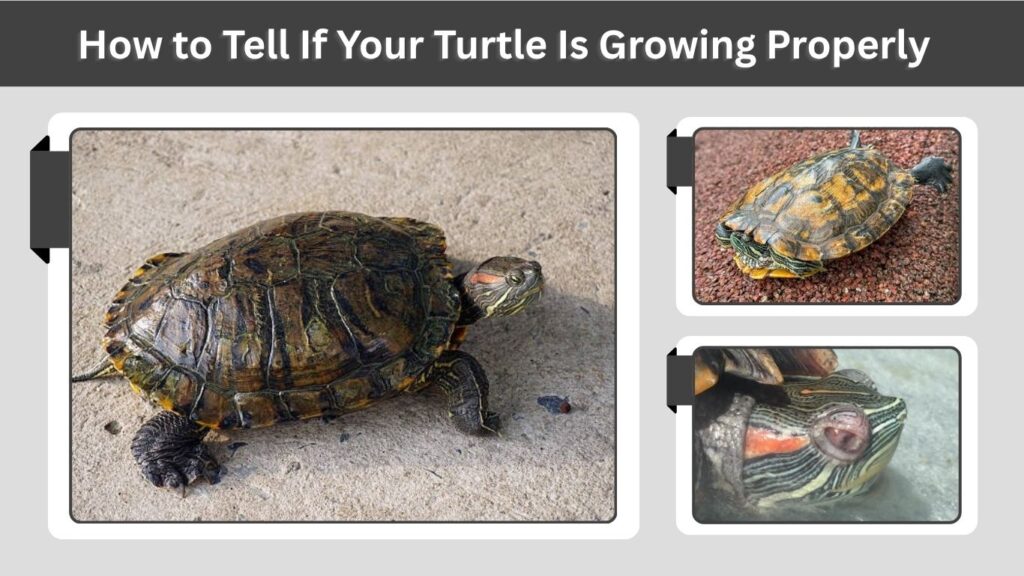
A healthy red-eared slider should show steady growth, clear eyes, active swimming, and a firm shell. The shell should be smooth and symmetrical, though older turtles may have natural marks or wear.
Healthy Growth Signs
Look for these signs of normal development:
- Firm shell with no soft spots
- Bright, open eyes
- Strong swimming ability
- Regular basking behavior
- Healthy appetite
- Smooth shell growth over time
Young turtles often grow quickly, so measuring the shell once a month can help track progress. Measure the straight length of the top shell from front to back, not along the curve.
Warning Signs of Poor Growth
Some growth problems may point to poor care, illness, or nutritional imbalance. Watch for:
- Soft or rubbery shell
- Swollen eyes
- Refusal to eat
- Uneven or curled shell edges
- Excessive shell pyramiding
- Lethargy or weak swimming
- Foul-smelling shell patches
If you notice these problems, review the turtle’s lighting, diet, water temperature, basking temperature, and filtration. A reptile veterinarian should examine serious or lasting symptoms.
Do Red-Eared Sliders Get Too Big for Home Tanks?
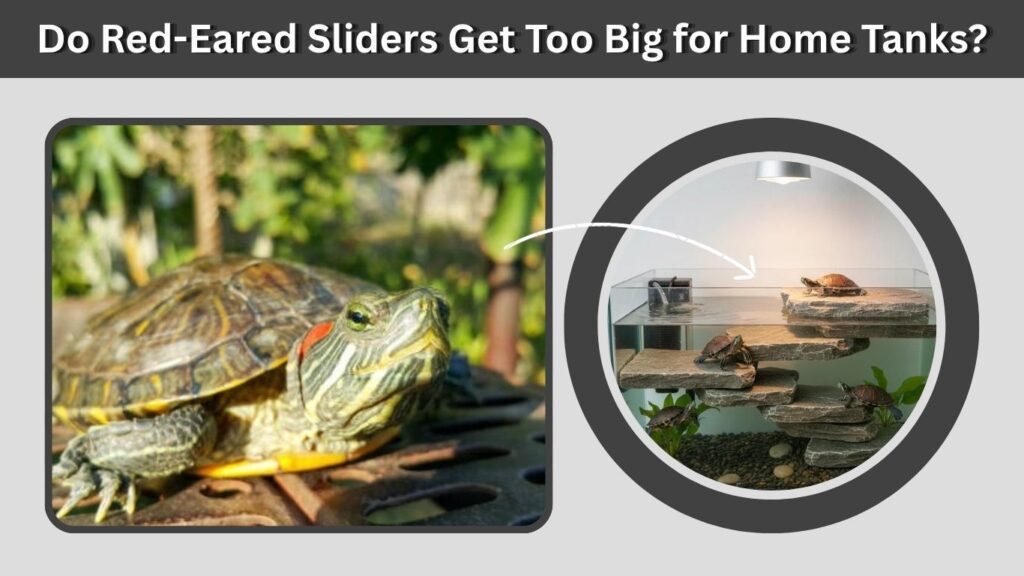
Yes, many red-eared sliders eventually outgrow the small tanks they were sold with. This is one of the biggest challenges of owning them. A tiny turtle may look easy to care for, but a full-grown adult needs a large aquatic setup.
Why Many Owners Underestimate Their Size
Baby red-eared sliders are often sold when they are very small. Their size makes them seem like simple pets, especially for children. However, they can live for decades and grow to the size of a dinner plate.
Before getting one, owners should be ready for:
- A large aquarium or pond
- Strong water filtration
- UVB and heat lighting
- Regular cleaning
- Long-term feeding costs
- Veterinary care when needed
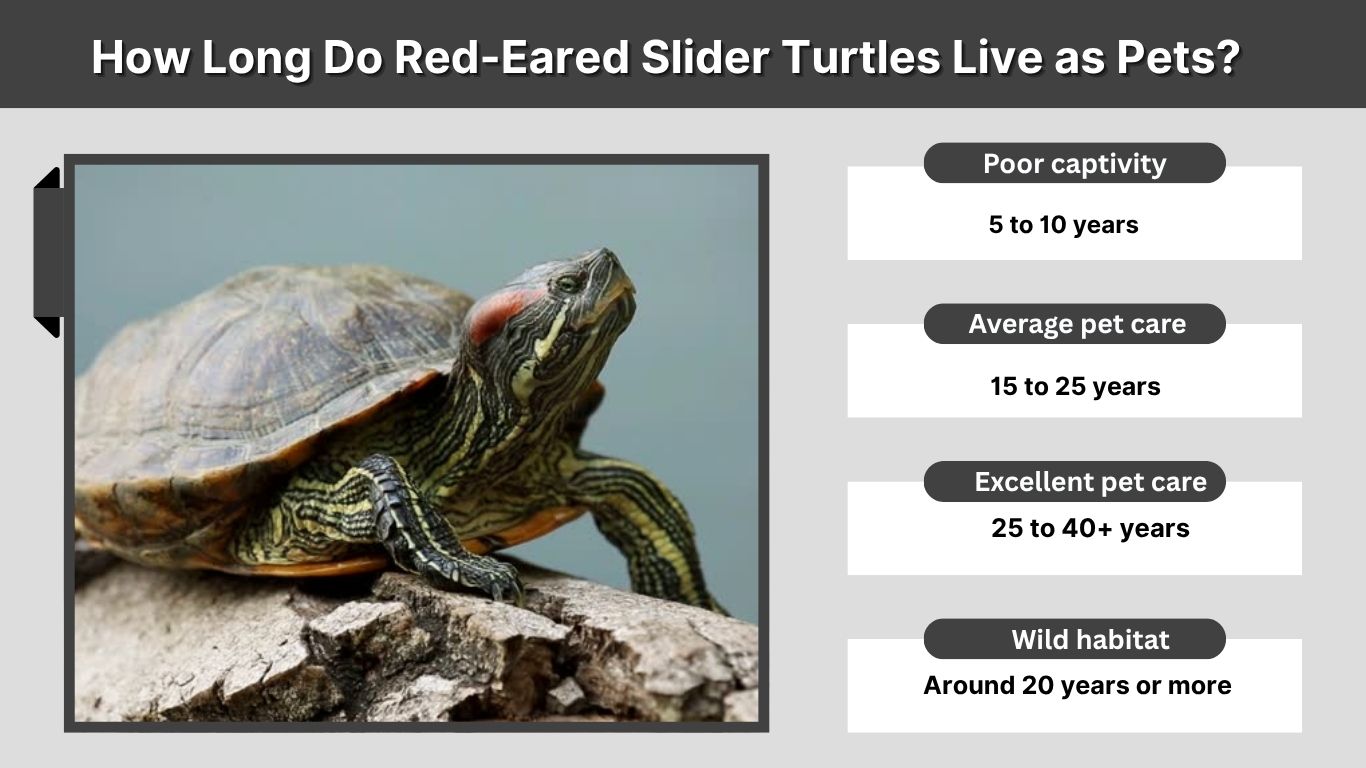
A red-eared slider is not a short-term pet. It is a long-term reptile that may live 20 to 40 years with proper care.
Can You Release a Turtle That Gets Too Big?
You should never release a pet red-eared slider into the wild. In many places, they are invasive and can harm native turtles, fish, plants, and local ecosystems. Released pet turtles may also spread disease or struggle to survive.
If you can no longer care for a turtle, contact a reptile rescue, wildlife center, exotic pet veterinarian, or responsible turtle keeper. Rehoming should always be done carefully.
Male vs Female Red-Eared Slider Size
Sex is one of the biggest reasons two red-eared sliders may grow to different sizes. Females are usually larger because they need more body space for egg production. Males stay smaller but develop other traits.
Differences Between Adult Males and Females
Adult males often have longer front claws, a longer tail, and a vent located farther from the shell. Females usually have shorter claws, a shorter tail, and a broader body shape.
Size alone is not always enough to determine sex, especially in young turtles. Most red-eared sliders cannot be sexed reliably until they are around 4 inches long or larger.
FAQs
How big is a full-grown red-eared slider?
A full-grown red-eared slider usually measures 7 to 12 inches in shell length. Males are commonly 7 to 9 inches, while females are often 10 to 12 inches. Some turtles may be slightly smaller or larger depending on genetics, care, diet, and environment.
How long does it take a red-eared slider to reach full size?
Most red-eared sliders reach near-adult size in about 5 to 8 years. They grow fastest during the first few years of life. After maturity, growth slows significantly, though some turtles may continue slight growth for many years.
Can a red-eared slider stay small in a small tank?
A red-eared slider should not be kept in a small tank to keep it small. Poor space can cause stress, poor health, dirty water, and abnormal growth. A turtle needs proper room to swim and bask, even if it is still young.
Are female red-eared sliders bigger than males?
Yes, female red-eared sliders are usually larger than males. Adult females often reach 10 to 12 inches, while males usually stay around 7 to 9 inches. Females also tend to have a broader body shape, especially when mature.
What size tank does an adult red-eared slider need?
An adult red-eared slider usually needs at least 75 to 125 gallons, depending on its size and sex. A common rule is about 10 gallons of water per inch of shell length. Larger tanks are better because they provide more swimming space and cleaner water.