
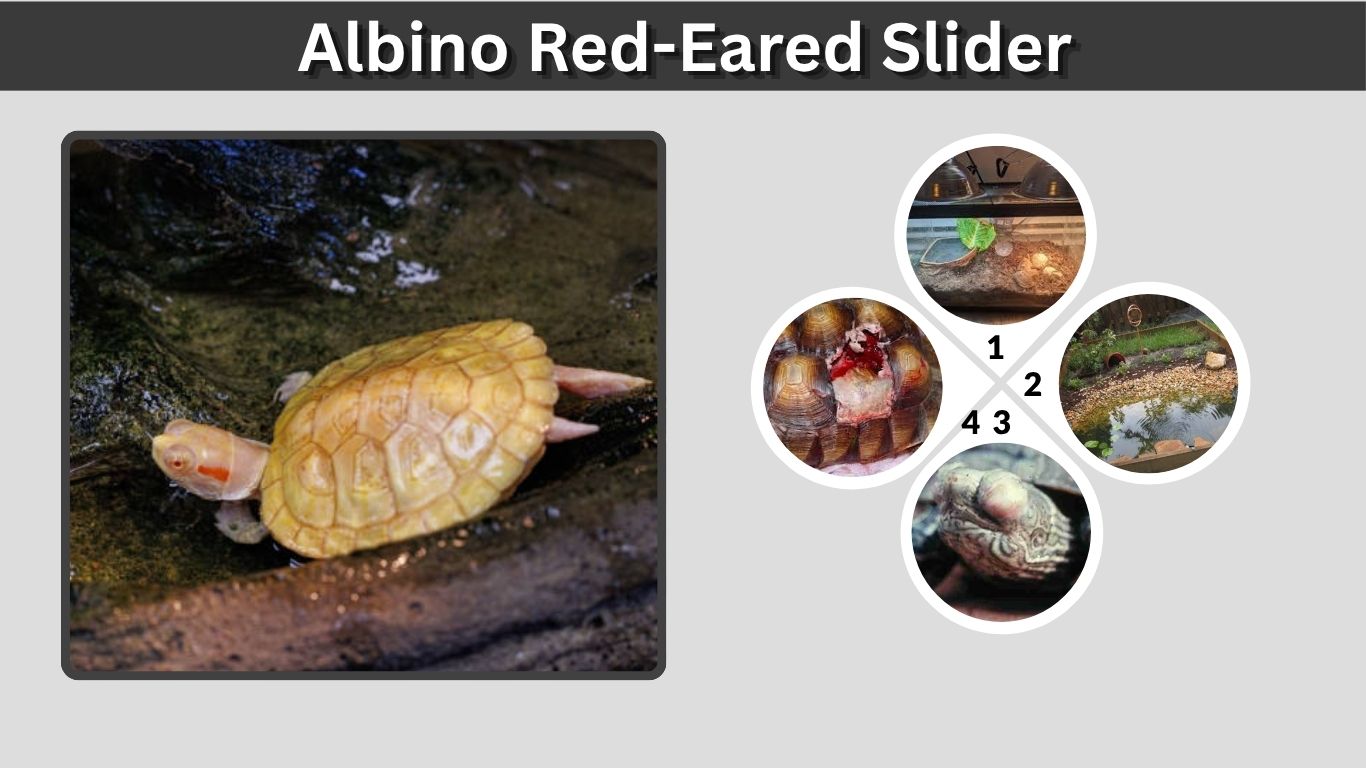
Albino red-eared sliders are rare and visually striking turtles, prized for their pale cream, yellow, or pinkish shells and distinctive red ear patches. Unlike normal red-eared sliders, albinos require careful attention to lighting, habitat, and stress management due to their sensitivity. This guide provides comprehensive information on albino slider care, including tank setup, diet, lighting, adult and hatchling care, color morphs, lifespan, size expectations, price considerations, and tips for buying or keeping these unique turtles safely.
Understanding Albino Red-Eared Sliders
Albino red-eared sliders are a color morph of the common red-eared slider turtle, characterized by their lack of dark pigment. This mutation results in pale yellow, cream, caramel, or pink hues, making them visually distinct. Despite their unique appearance, albino sliders have the same basic care needs as standard sliders. Understanding their appearance, behavior, and unique considerations helps ensure proper care for both hatchlings and adults.
Albino Red-Eared Slider Appearance
Albino sliders exhibit pale cream, yellow, or pink shells and skin, with the classic red patch behind the eyes remaining visible but lighter than in normal sliders. Their coloration can range depending on the specific morph, such as caramel, snow, or lemon variants.
Albino vs. Normal Red-Eared Slider
The main difference is purely visual; care, diet, habitat, and behavior remain the same. However, albinos may be more sensitive to bright light and stress, which requires careful enclosure design and monitoring.
Rarity and Popularity
Albino red-eared sliders are rarer than standard sliders, making them highly sought after by collectors. Their rarity often contributes to higher prices, especially for certain morphs such as caramel pink or snow albinos.
Albino Red-Eared Slider Care
Proper care ensures albino sliders live healthy lives. Their needs include clean water, adequate swimming space, basking areas, UVB lighting, and a balanced diet. Albinos are slightly more sensitive to lighting and stress, so shaded areas and careful handling are important. This section outlines the main elements of care that all albino sliders require.
Tank Setup for Albino Sliders
- Large aquatic tank (minimum 40–100 gallons for adults)
- Strong turtle-safe filter
- Fully dry basking dock with ramp
- Heat lamp maintaining 85–95°F on basking platform
- UVB light for shell and bone health
- Water heater if temperatures drop
- Water and basking thermometers
- Secure lid to prevent escapes
Water and Basking Needs
Albino sliders spend most of their time in water but must fully dry on a basking platform to thermoregulate and maintain shell health. Clean water reduces shell and skin issues, and adequate basking prevents infections and supports metabolism.
Lighting Considerations
Albino sliders require UVB lighting for calcium metabolism and strong shell growth. They may also be sensitive to bright light, so shaded areas should be provided within the enclosure to reduce stress.
Size and Lifespan of Albino Red-Eared Sliders
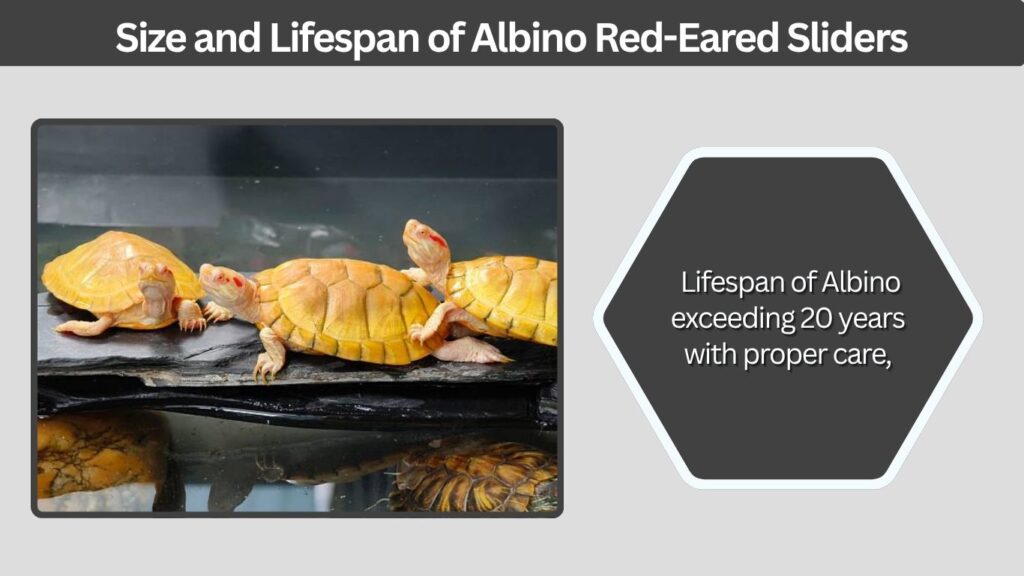
Albino sliders grow similarly to normal sliders but require adequate tank space throughout their lives. Hatchlings are tiny, but adults can reach 8–12 inches in shell length. Their lifespan is long, often exceeding 20 years with proper care, making them a long-term commitment for owners.
Hatchling Size
Baby albino sliders are small, typically 1–1.5 inches in shell length. They require smaller tanks, protein-rich diets, and careful observation to ensure healthy growth.
Adult Size
Adult albino red-eared sliders can reach 8–12 inches, with females usually larger than males. Full-grown sliders need spacious tanks or secure outdoor ponds. Without adequate space, turtles can become stressed or develop shell deformities.
Lifespan Expectations
With proper diet, lighting, and care, albino sliders can live 20–30 years. Regular veterinary check-ups, clean water, and UVB lighting support longevity and prevent health issues such as shell rot or metabolic bone disease.
Diet for Albino Red-Eared Sliders
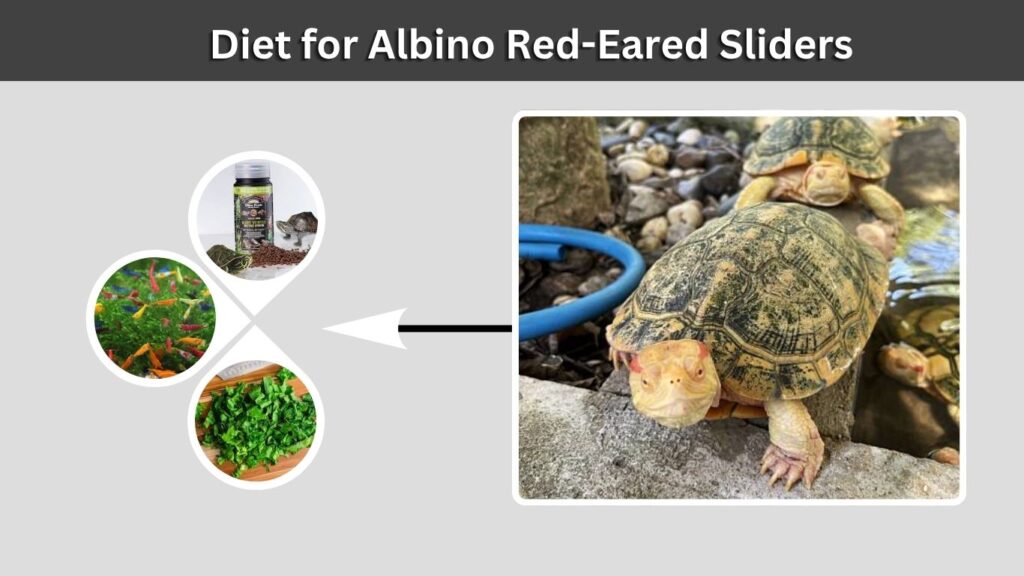
Diet is critical for growth, shell development, and overall health. Albino sliders require a balanced omnivorous diet, with protein emphasized for hatchlings and leafy greens becoming more important as turtles mature. Proper feeding schedules prevent obesity, shell problems, and digestive issues.
Baby Albino Slider Diet
- Hatchling turtle pellets
- Tiny insects (mealworms, bloodworms, crickets)
- Small fish or shrimp
- Finely chopped leafy greens
- Calcium supplementation (cuttlebone or powder)
Juvenile Slider Diet
- Pellets every 1–2 days
- Leafy greens and aquatic plants daily
- Occasional protein (shrimp, worms)
- Remove uneaten food to maintain water quality
Adult Slider Diet
- Leafy greens: romaine, kale, collard, dandelion
- Aquatic plants: duckweed, water lettuce
- Pellets 2–3 times per week
- Protein sparingly (shrimp, feeder insects)
- Calcium always available
Feeding Tips
- Feed hatchlings daily; juveniles every 1–2 days; adults 2–3 times weekly
- Avoid overfeeding protein or human foods
- Introduce vegetables early to prevent picky eating
Common Morphs and Color Variations
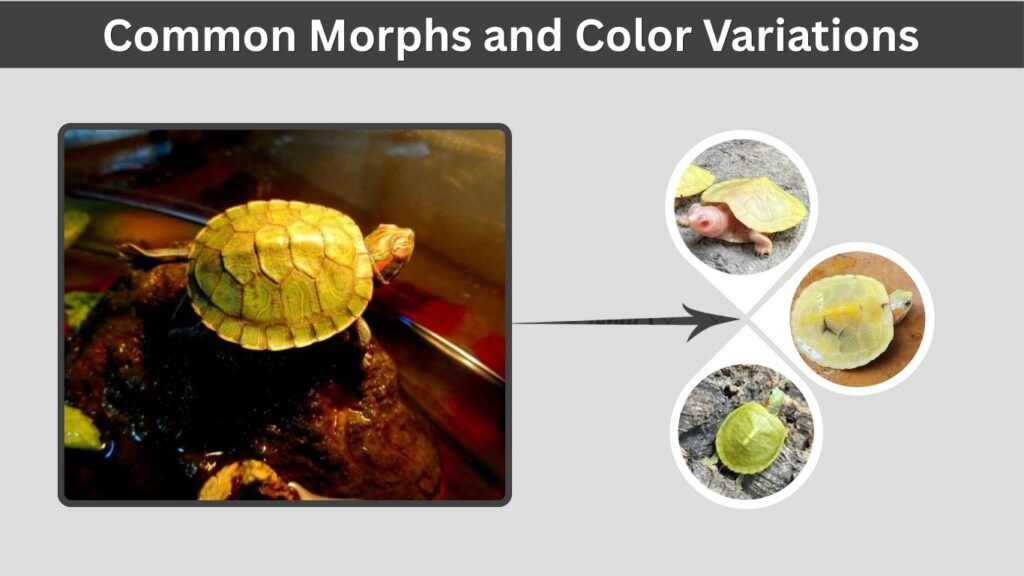
Albino red-eared sliders appear in several morphs, which differ mainly in shell and skin tones. These include caramel pink, snow, lemon, lime, paradox, and leucistic albinos. Morph differences do not change basic care requirements but may influence lighting needs due to sensitivity and aesthetics.
Caramel Pink Albino Slider
Known for pale caramel, pink, or peach tones, popular among collectors.
Snow Albino Slider
Typically very pale, almost white or cream, with light red ear patches.
Lemon and Lime Albino Sliders
Bright yellow to lime green tones, requiring careful observation as they may be sensitive to bright light.
Paradox and Leucistic Morphs
Unusual color patterns or partial pigmentation; care remains consistent with standard albino sliders.
Albino Red-Eared Slider Price and Cost
Albino red-eared sliders usually cost more than normal red-eared sliders because they are selectively bred and less common. The final price depends on the turtle’s age, morph, color quality, location, and breeder reputation. Buyers should also remember that the turtle itself is only part of the total cost, because proper housing and equipment are often more expensive than the pet.
How Much Does an Albino Red-Eared Slider Cost?
An albino red-eared slider can vary widely in price. Common albino babies may cost less than rare morphs, while caramel pink, snow, lemon, lime, or paradox albino sliders are often more expensive. Adult albino red-eared sliders may also cost more if they are healthy, proven breeders, or have rare coloration.
Setup Costs to Consider
- Large aquatic tank or outdoor pond
- Strong turtle-safe filter
- UVB light and heat lamp
- Basking platform
- Water heater and thermometers
- Turtle pellets and fresh food
- Calcium supplement
- Water conditioner and testing supplies
- Reptile veterinarian visits
Why Rare Morphs Cost More
Rare morphs cost more because they are harder to produce and often have higher demand. Breeders may spend years working with specific bloodlines to create caramel pink, snow, lemon, lime, or paradox albino red-eared sliders. However, color should never be more important than health, proper care, and legal ownership.
Buying an Albino Red-Eared Slider
Many people search for albino red-eared sliders for sale, but buying one should be done carefully. Laws and availability vary by country, state, or region, so buyers should check local rules before purchasing. A responsible buyer should choose a healthy turtle from a trustworthy source and prepare the habitat before bringing the turtle home.
Where to Buy an Albino Red-Eared Slider
Albino red-eared sliders may be available from reptile breeders, specialty reptile shops, reptile expos, or legal online sellers. Buyers should avoid impulse purchases from unknown sellers. A reputable seller should answer questions about the turtle’s age, diet, health, origin, and care requirements.
What to Check Before Buying
- Clear, open eyes
- Active swimming and alert behavior
- Firm shell with no soft spots
- No cracks, wounds, or unusual patches
- No bubbles from the nose
- No wheezing or open-mouth breathing
- Healthy weight and clean skin
- Good appetite
- Legal paperwork if required
Buying by Country or Region
Searches for albino red-eared sliders in Singapore, India, Canada, Hong Kong, and the Philippines show that many buyers want location-specific availability. Since reptile laws can change by area, owners should check local wildlife, import, and pet trade regulations before buying or shipping any turtle.
Albino Red-Eared Slider Habitat
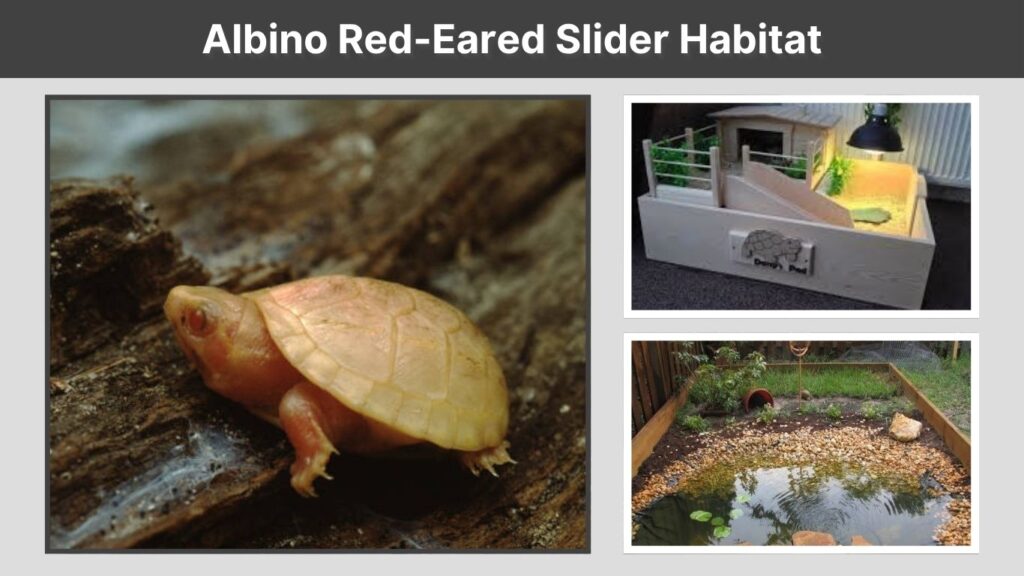
A proper habitat is one of the most important parts of albino red-eared slider care. These turtles live in water most of the time, but they still need a completely dry basking area. Their enclosure should allow swimming, resting, basking, hiding, and easy temperature control. A poor habitat can lead to stress, shell issues, and illness.
Indoor Habitat
An indoor habitat should include a large tank with clean water, strong filtration, a dry basking dock, UVB lighting, and a heat lamp. The setup should be large enough for the turtle to swim naturally. Decoration should be simple and safe, with no sharp objects or small pieces the turtle could swallow.
Outdoor Pond Habitat
Outdoor ponds can work for albino red-eared sliders in suitable climates, but they need extra planning. The pond should be escape-proof and protected from predators. It should also include basking areas, shaded zones, clean water, and safe water depth. Albino turtles may need extra shade because bright sunlight can be stressful.
Do Albino Red-Eared Sliders Live in Water?
Albino red-eared sliders are semi-aquatic turtles, so they live mainly in water but cannot stay underwater all the time. They must come up to breathe and need a dry basking area to warm up and dry their shell. A healthy enclosure provides both swimming space and land access.
Albino Red-Eared Slider Breeding
Breeding albino red-eared sliders should only be done by experienced keepers. It requires healthy adult turtles, proper nesting space, careful egg handling, incubation knowledge, and a plan for hatchlings. Breeding should never be done casually because poor conditions can harm the female, eggs, and babies. Responsible breeding also means understanding genetics and avoiding unhealthy pairings.
Albino Genetics and Heterozygous Turtles
Some red-eared sliders carry the albino gene without looking albino. These turtles may be called heterozygous, or “het albino,” by breeders. When breeding albino turtles, genetics determine whether hatchlings will be albino, normal-looking carriers, or other possible combinations.
Breeding Safety
Female sliders need a proper nesting area with suitable substrate so they can lay eggs safely. Without a nesting site, a female may become stressed or egg-bound. Egg binding is serious and may require a reptile veterinarian. Breeders should only pair healthy adult turtles and avoid breeding animals with obvious health problems.
Hatchling Care After Breeding
Baby albino sliders need warm, clean water, gentle filtration, a safe basking area, UVB lighting, and small foods. They should be monitored closely for eating, swimming, and shell development. Because albino babies may be more visually sensitive, the enclosure should include shaded areas and low-stress hiding spots.
Common Health Issues in Albino Red-Eared Sliders
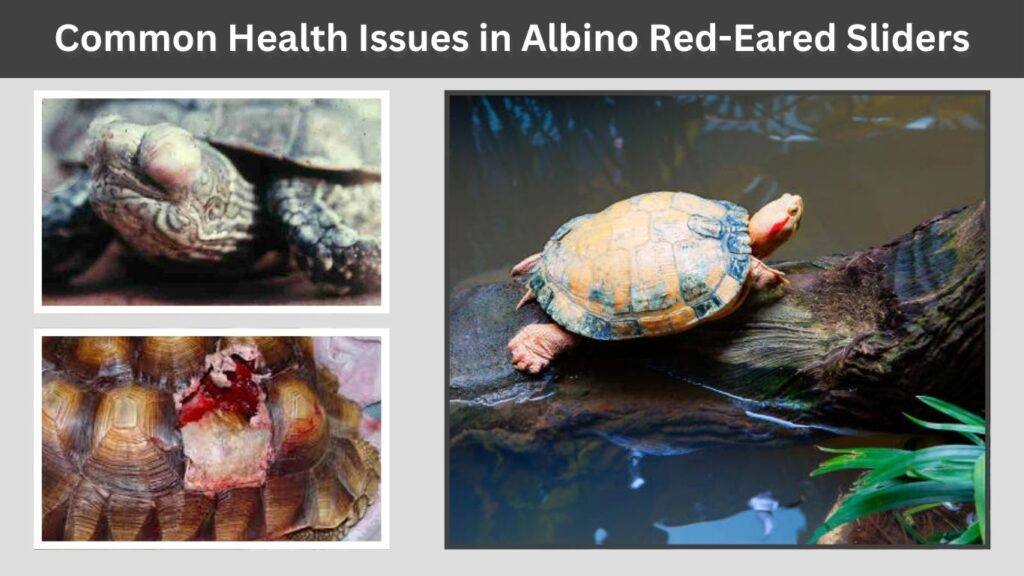
Albino red-eared sliders can develop many of the same health problems as normal red-eared sliders. Poor water quality, weak lighting, low temperatures, and an unbalanced diet are common causes. Because albino turtles have lighter skin and shells, some changes may be easier to see, but owners still need to check their turtle regularly.
Eye Sensitivity and Vision Problems
Albino turtles may be more sensitive to bright light than normal sliders. Some may also have weaker vision, which can affect feeding behavior. Owners should make sure the turtle can find food easily and has shaded areas where it can rest away from direct light.
Shell and Skin Problems
Shell and skin problems often come from dirty water, poor basking, lack of UVB, or weak nutrition. Warning signs include soft shell areas, bad odor, discoloration, wounds, peeling skin that looks abnormal, or patches that do not improve. A dry basking area and clean water are essential for prevention.
When to See a Reptile Vet
A reptile vet should be contacted if the turtle refuses food, floats unevenly, has swollen eyes, breathes with difficulty, develops a soft shell, has wounds, or becomes extremely inactive. Early treatment is important because turtles often hide illness until the problem becomes serious.
FAQs
Are albino red-eared sliders rare?
Yes, albino red-eared sliders are rarer than normal red-eared sliders because they are selectively bred for their pale coloring. Some morphs, such as caramel pink, snow, lemon, lime, and paradox albino sliders, may be even harder to find.
How big does an albino red-eared slider get?
Albino red-eared sliders can grow about the same size as normal red-eared sliders. Females are usually larger than males, and a full-grown turtle needs a spacious aquatic tank or a secure outdoor pond.
How long do albino red-eared sliders live?
With proper care, albino red-eared sliders can live for many years and may become long-term pets. Clean water, UVB lighting, a balanced diet, enough space, and regular health checks all help support lifespan.
Do albino red-eared sliders need special care?
They need the same basic care as normal red-eared sliders, but they may need extra attention with lighting, vision, and stress. Shaded areas, gentle handling, and careful feeding observation can help keep them comfortable.
Is an albino red-eared slider good for beginners?
An albino red-eared slider can be kept by a prepared beginner, but it is not a low-maintenance pet. Owners must provide a large aquatic setup, strong filtration, proper lighting, a balanced diet, and long-term care.