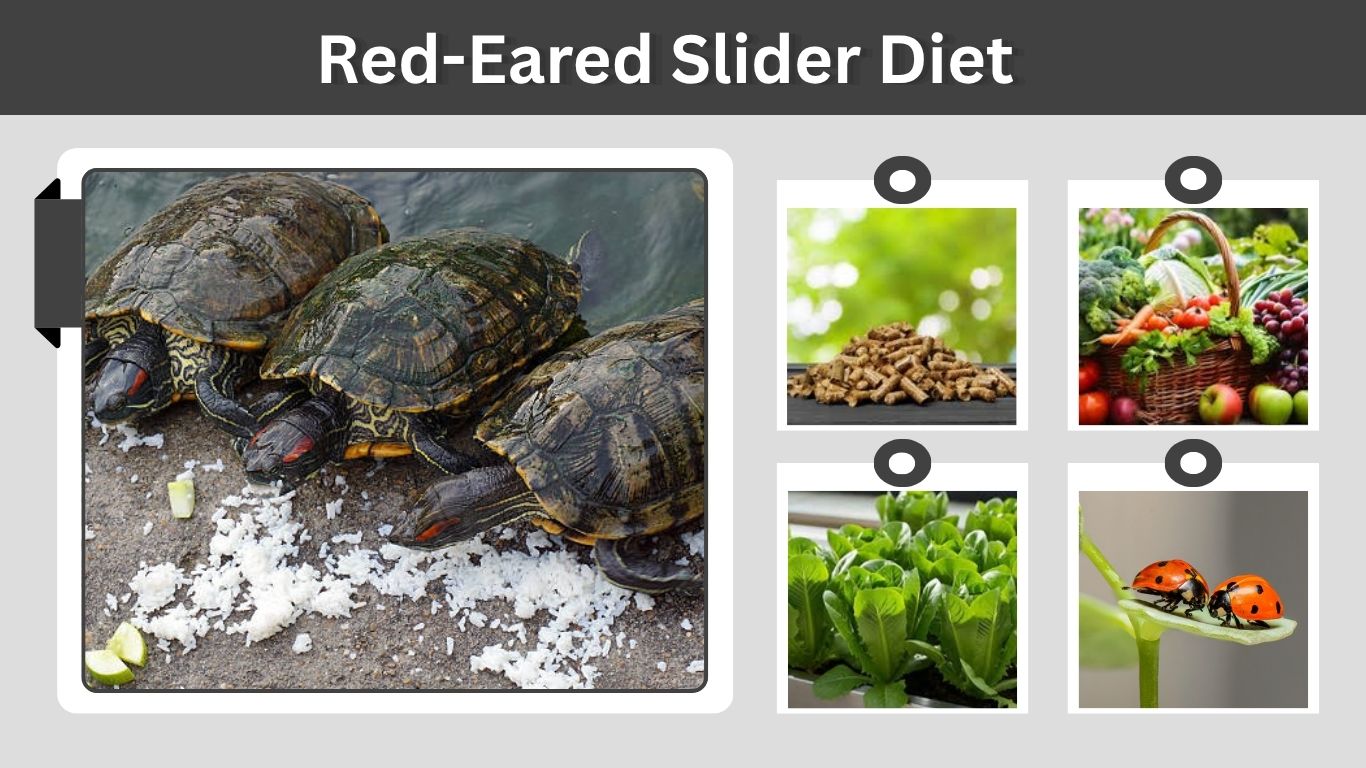
Red-eared sliders need a balanced diet to stay active, grow properly, and maintain a strong shell. Their food needs change as they age, so a baby red-eared slider diet is different from an adult red-eared slider diet. In the wild, they eat aquatic plants, insects, small fish, and other natural foods. In captivity, owners must provide the right mix of turtle pellets, vegetables, protein, fiber, and calcium. This guide explains what red-eared sliders eat and how to feed them safely.
Understanding the Red-Eared Slider Diet
Red-eared sliders are omnivores, which means they eat both animal-based and plant-based foods. Young turtles usually need more protein because they are growing quickly, while adult turtles need more vegetables and aquatic plants. A healthy diet should copy their natural eating pattern as much as possible while avoiding foods that cause obesity, poor shell growth, or digestive problems.
What Do Red-Eared Sliders Eat?
Red-eared sliders eat a variety of foods, including turtle pellets, leafy greens, aquatic plants, insects, worms, and occasional small fish. In captivity, commercial turtle pellets can be used as a staple food, but they should not be the only food offered. A varied diet helps provide vitamins, minerals, fiber, and calcium.
Wild Red-Eared Slider Diet
In the wild, red-eared sliders eat what they can find in ponds, lakes, marshes, and slow-moving water. Their natural diet often includes aquatic insects, tadpoles, small fish, snails, algae, and water plants. Younger turtles usually hunt more animal-based foods, while adults spend more time eating vegetation.
Captive Red-Eared Slider Diet
A captive red-eared slider diet should include both prepared foods and fresh foods. Turtle pellets are useful because they contain many basic nutrients, but fresh vegetables and safe protein sources are also important. Captive turtles are less active than wild turtles, so overfeeding can quickly lead to weight gain and poor water quality.
Baby and Hatchling Red-Eared Slider Diet
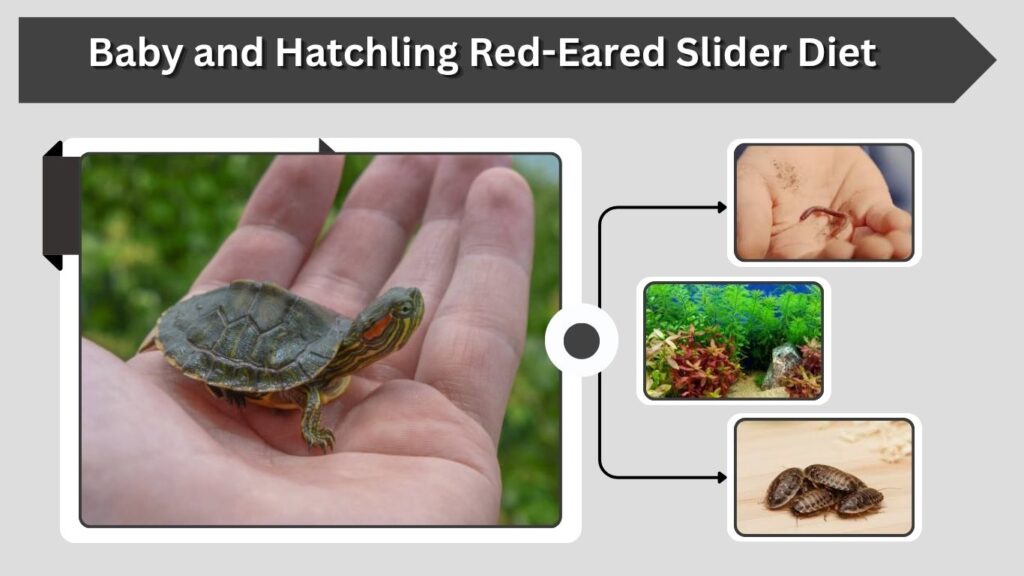
Baby red-eared sliders need careful feeding because their bodies are still developing. They usually prefer protein-rich foods, but they should still be introduced to vegetables early. The goal is to support healthy growth without creating poor eating habits. A hatchling diet should be small in portion size, easy to swallow, and balanced with calcium and proper lighting.
Best Foods for Baby Red-Eared Sliders
Baby sliders need food that is small enough for them to eat safely. Their meals should contain more protein than an adult turtle’s diet, but plant foods should still be offered regularly.
- Hatchling turtle pellets
- Small bloodworms or mealworms
- Tiny pieces of earthworm
- Small feeder insects
- Chopped romaine lettuce
- Finely chopped dandelion greens
- Small pieces of aquatic plants
- Calcium source such as cuttlebone
Baby Feeding Schedule
Baby red-eared sliders can usually be fed once daily. The amount should be small enough that the turtle can finish it within a short time. Uneaten food should be removed because it can quickly dirty the water. As the turtle grows, feeding frequency and food balance should gradually change.
Common Baby Diet Mistakes
Many owners feed baby sliders only shrimp, only pellets, or too much protein. This can cause picky eating and poor nutrition later. Another mistake is ignoring calcium and UVB lighting. Diet and lighting work together, so even a good diet may not support proper shell growth without UVB exposure.
Juvenile Red-Eared Slider Diet
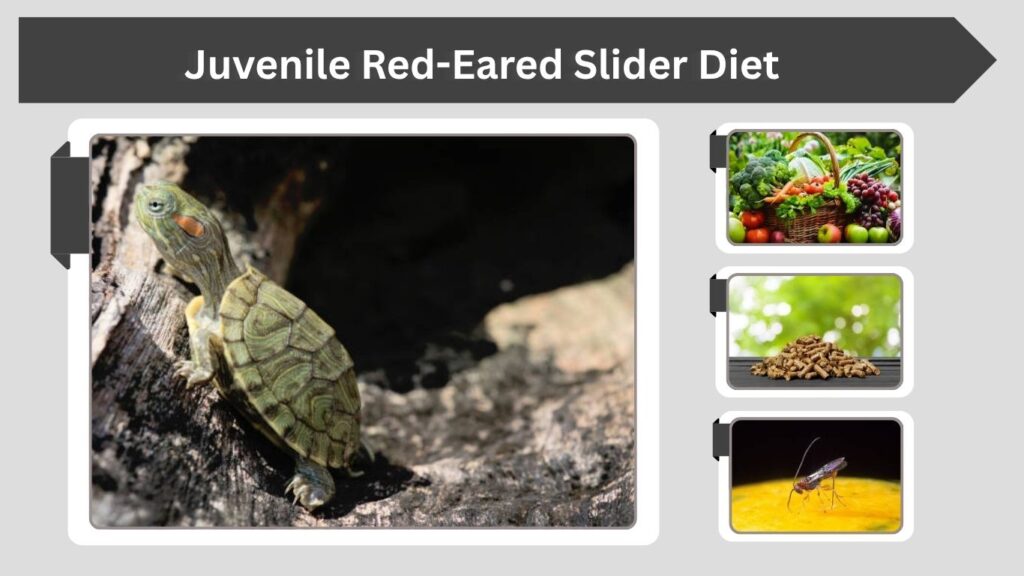
Juvenile red-eared sliders are between the baby and adult stage, so their diet should slowly shift from protein-heavy meals to more plant-based foods. This stage is important because the turtle is still growing, but overfeeding protein can cause problems. A good juvenile diet includes pellets, leafy greens, aquatic plants, and occasional animal protein.
Diet for a One-Year-Old Red-Eared Slider
A one-year-old red-eared slider still needs protein, but vegetables should become a regular part of the diet. Owners should offer greens consistently, even if the turtle refuses them at first. Many young sliders prefer moving foods, but patience helps them accept plant matter.
Diet for a Two-Year-Old Red-Eared Slider
A two-year-old red-eared slider should eat more like an adult than a hatchling. At this age, vegetables and aquatic plants should become a major part of the diet. Pellets can still be used several times per week, while protein foods should be offered less often.
Juvenile Feeding Tips
Feeding juveniles properly helps prevent obesity and shell problems. Their diet should be varied but controlled.
- Offer vegetables several times per week
- Use pellets as a main prepared food
- Give protein foods in moderation
- Remove uneaten food after feeding
- Avoid feeding fatty meats or processed foods
- Watch body condition and activity level
Adult Red-Eared Slider Diet
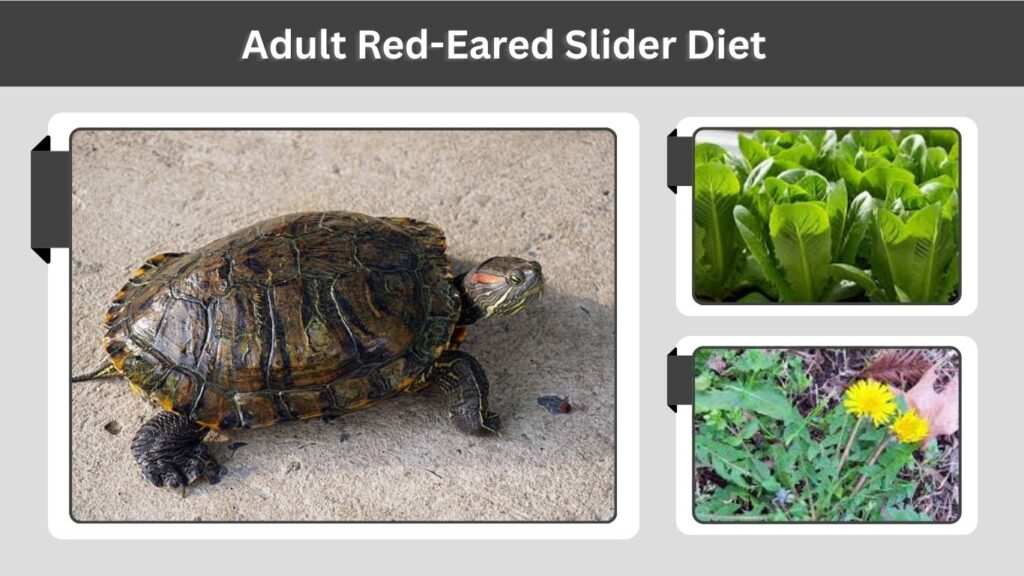
Adult red-eared sliders need a diet that is higher in plant matter and lower in protein than young turtles. This helps prevent excess weight gain and supports long-term organ and shell health. Adults can still eat pellets and occasional animal protein, but vegetables, aquatic plants, and calcium should be regular parts of their food plan.
Best Diet for Adult Red-Eared Sliders
The best adult red-eared slider diet is balanced, varied, and not too heavy in protein. Adults should receive leafy greens, aquatic plants, turtle pellets, and occasional insects or fish. A plant-heavy diet is closer to what many adult sliders naturally eat.
Adult Feeding Frequency
Adult red-eared sliders usually do not need daily heavy meals. Many healthy adults can be fed every two to three days, depending on size, activity level, and overall health. Vegetables may be offered more often than protein foods. Owners should avoid giving large portions every day because adult sliders can become overweight.
Adult Diet Food List
Adult red-eared sliders can eat many safe foods when offered in proper amounts.
- Commercial aquatic turtle pellets
- Romaine lettuce
- Collard greens
- Mustard greens
- Dandelion greens
- Duckweed
- Water lettuce
- Earthworms
- Crickets
- Occasional feeder fish
- Cuttlebone for calcium
Red-Eared Slider Diet Chart
A diet chart helps owners understand what to feed at each life stage. Since red-eared sliders change their eating habits as they grow, one feeding plan does not fit every turtle. Babies need more protein, juveniles need a transition diet, and adults need more vegetables. A chart also helps prevent overfeeding and keeps meals more consistent.
Simple Feeding Chart by Age
| Turtle Age | Main Foods | Feeding Frequency |
| Hatchling | Baby pellets, small worms, insects, chopped greens | Once daily |
| Juvenile | Pellets, greens, aquatic plants, occasional protein | Every 1–2 days |
| Adult | Greens, aquatic plants, pellets, limited protein | Every 2–3 days |
| Outdoor Pond Turtle | Aquatic plants, insects, pellets, greens | Based on activity and season |
How Much Food to Offer
A common method is to offer an amount of food close to the size of the turtle’s head, not including the neck. This helps prevent overfeeding. Vegetables can usually be offered more generously than protein foods, but uneaten food should still be removed to keep the water clean.
Fruits and Vegetables for Red-Eared Sliders
Fruits and vegetables provide essential vitamins, minerals, and fiber for red-eared sliders. While protein is critical for growth in hatchlings and juveniles, adults rely heavily on plant matter. A variety of safe vegetables and occasional fruits ensures proper digestion, shell health, and overall wellness. Treats should be offered sparingly and should not replace staple foods.
Safe Vegetables
- Romaine lettuce
- Kale
- Collard greens
- Dandelion greens
- Carrots (shredded or chopped)
- Squash
- Zucchini
- Aquatic plants like duckweed and water lettuce
Safe Fruits (Occasional)
- Apples (seedless slices)
- Berries (strawberries, blueberries, raspberries)
- Melon slices
- Avoid citrus fruits and sugary foods
Tips for Feeding Vegetables and Fruits
- Offer vegetables several times per week.
- Introduce small fruit portions once or twice weekly as treats.
- Chop or shred vegetables for easier consumption.
- Monitor water quality, as uneaten fruits and vegetables can quickly pollute the tank.
Calcium and Supplementation
Calcium is vital for red-eared sliders to maintain strong bones and a healthy shell. UVB lighting helps turtles metabolize calcium, but dietary supplementation is often needed. Without sufficient calcium, turtles can develop metabolic bone disease, soft shells, or growth problems.
Calcium Sources
- Cuttlebone (placed in the tank)
- Powdered calcium sprinkled on food
- Calcium-fortified turtle pellets
Vitamin D3
- Necessary for calcium absorption, especially if turtles have limited UVB exposure
- Avoid excessive supplementation to prevent toxicity
Diet for Outdoor Pond Red-Eared Sliders
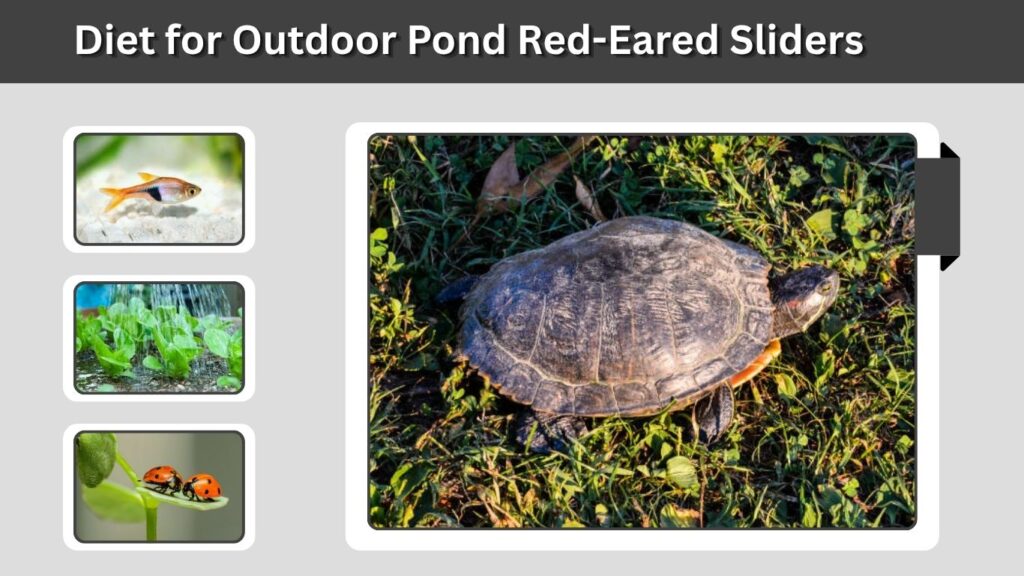
Outdoor pond turtles have slightly different dietary needs because they may access natural food sources. Aquatic plants, insects, and small fish in a pond supplement their diet. Captive feeding should complement what they find naturally to prevent malnutrition or obesity.
Pond Feeding Tips
- Provide commercial pellets for balanced nutrition.
- Offer leafy greens and aquatic plants regularly.
- Allow natural foraging, but monitor growth and shell condition.
- Avoid overfeeding protein, which can lead to water pollution and health issues.
Wild Diet Observations
- Wild red-eared sliders eat insects, small fish, tadpoles, snails, algae, and aquatic plants.
- Younger turtles consume more protein, while adults shift to vegetation.
- Outdoor turtles benefit from this variety, but supplementation may still be needed in captivity.
Common Diet Mistakes
Many red-eared slider owners make mistakes that affect health and growth. Proper portion sizes, food variety, and supplementation are essential. Avoid overfeeding, feeding unsafe foods, or neglecting calcium and UVB exposure.
Mistakes to Avoid
- Feeding only pellets or only protein foods
- Overfeeding adults, leading to obesity
- Offering human foods, bread, or sugary treats
- Neglecting vegetables or aquatic plants
- Skipping calcium supplements or UVB lighting
Correcting these mistakes early ensures turtles grow at a healthy rate and prevents long-term shell or bone problems.
Creating a Diet Plan for Your Red-Eared Slider
A diet plan helps balance protein, vegetables, fruits, and calcium. Feeding frequency changes with age:
Sample Diet Plan by Life Stage
- Hatchlings (0–6 months): Daily turtle pellets, small insects, chopped greens, calcium source.
- Juveniles (6–24 months): Pellets every 1–2 days, greens most days, occasional protein, calcium supplementation.
- Adults (2+ years): Vegetables daily, aquatic plants frequently, pellets 2–3 times/week, protein sparingly, calcium always available.
- Outdoor Pond Turtles: Natural insects, aquatic plants, supplemented with pellets and greens, adjusted based on season and activity level.
Portion Control
- Use the size of the turtle’s head as a guideline for each meal.
- Adjust portions based on activity and growth.
- Remove uneaten food to maintain water quality.
Monitoring Diet and Health
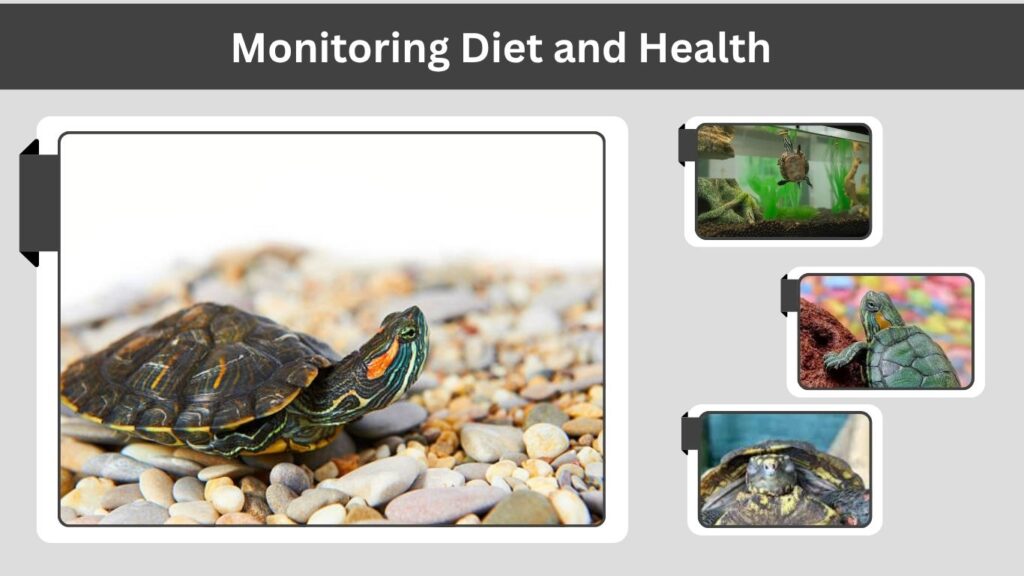
A proper diet works in combination with UVB lighting, a basking area, and clean water. Regular observation ensures turtles are eating, maintaining weight, and growing properly. Shell, eyes, and activity are indicators of overall health.
Signs of a Healthy Turtle
- Smooth, firm shell without soft spots
- Active swimming and basking
- Bright, clear eyes
- Normal appetite
- Proper growth rate for age
Signs of Dietary Problems
- Soft or deformed shell
- Lethargy or poor swimming
- Swollen eyes or nose
- Refusal to eat
- Excessive weight gain or loss
Adjusting the Diet
- Increase vegetables if the turtle is overweight.
- Increase protein if growth is slow or the turtle appears underweight.
- Add calcium if shell growth is soft or slow.
- Monitor behavior and activity; diet and environment work together for optimal health.
FAQs
What is the best diet for a red-eared slider?
A balanced diet includes turtle pellets, leafy greens, aquatic plants, occasional protein, and a calcium supplement. Hatchlings need more protein; adults need more vegetables.
How often should I feed a hatchling?
Hatchlings should be fed once daily, removing uneaten food to maintain water quality.
Can I feed my red-eared slider fruit?
Yes, but only occasionally. Offer small pieces of apple, berries, or melon as treats. Avoid citrus and sugary fruits.
How do I add calcium to their diet?
Provide cuttlebone in the tank or sprinkle powdered calcium on food. Ensure proper UVB lighting to help turtles metabolize calcium.
How does a wild diet differ from captivity?
Wild sliders eat insects, small fish, snails, algae, and aquatic plants. Captive turtles rely more on pellets and supplemented greens, with controlled protein and fruits.