
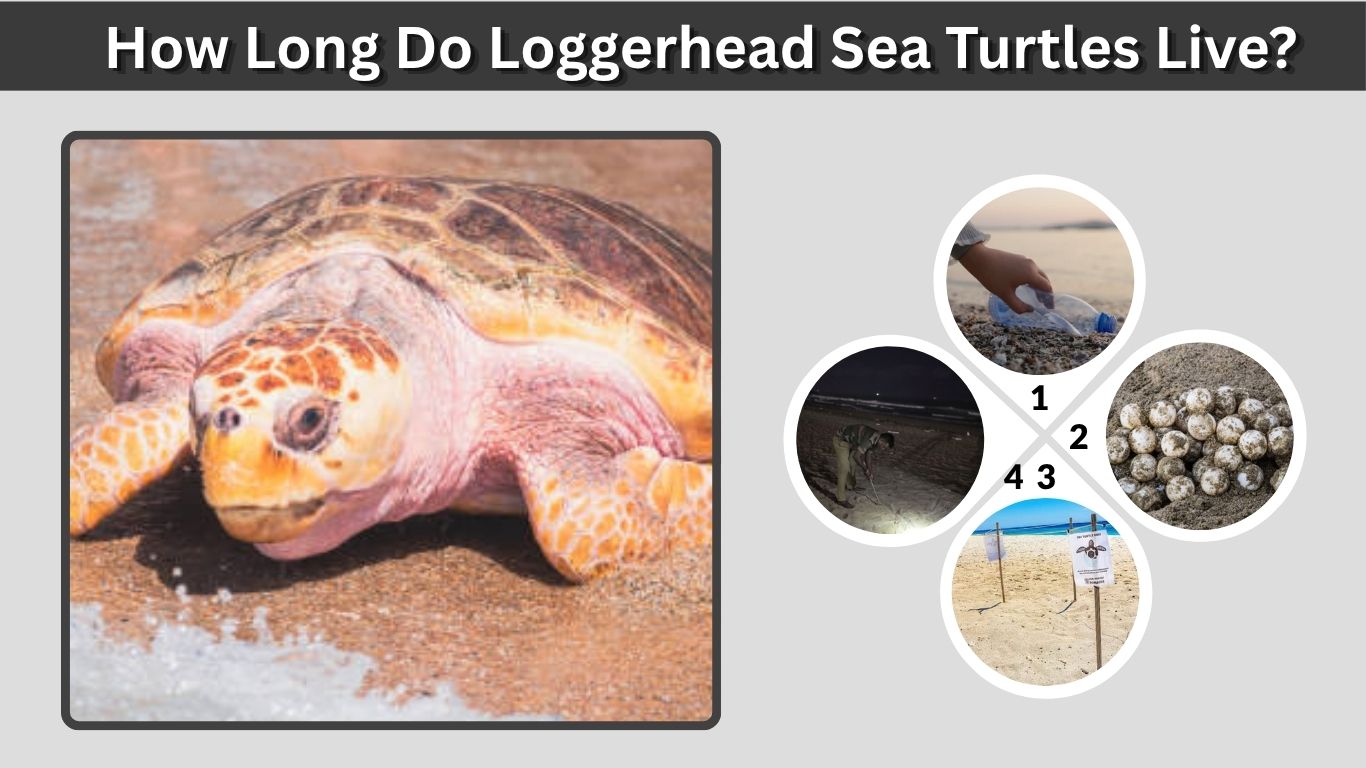
Loggerhead sea turtles are long-lived marine reptiles that can survive for many decades. Many can live up to 80 years or more, although exact ages are hard to confirm because they spend most of their lives in the ocean. Their long lifespan is one reason conservation is so important. These turtles grow slowly, mature late, and need safe beaches and healthy seas throughout their lives.
Loggerhead Sea Turtle Lifespan
Loggerhead sea turtles can live for several decades, and some may reach 80 years or more. However, not every turtle survives that long. Many die as eggs, hatchlings, or young turtles before they ever reach adulthood.
Scientists estimate lifespan by studying nesting records, tagging data, growth rates, and long-term sea turtle research. It is difficult to know the exact age of a wild loggerhead because a turtle may travel thousands of miles and spend years away from nesting beaches.
A loggerhead’s life expectancy depends on both natural and human-related factors. Predators, storms, disease, food supply, fishing gear, boat strikes, pollution, and climate conditions can all affect how long a loggerhead sea turtle lives.
Why Exact Age Is Hard to Measure
Unlike trees, loggerhead sea turtles do not have simple rings that clearly show their age. Researchers can estimate age, but it is not always exact. A turtle may be tagged as a nesting adult, but scientists may not know when it hatched.
Loggerheads also have long migrations. They move between feeding areas, breeding areas, and nesting beaches. Because they spend so much time underwater and far from shore, tracking one turtle for its full life is very difficult.
This is why most sources give an estimated lifespan rather than a guaranteed number. The safest answer is that loggerhead sea turtles are long-lived animals that can live up to 80 years or more under the right conditions.
Life Cycle From Egg to Adult
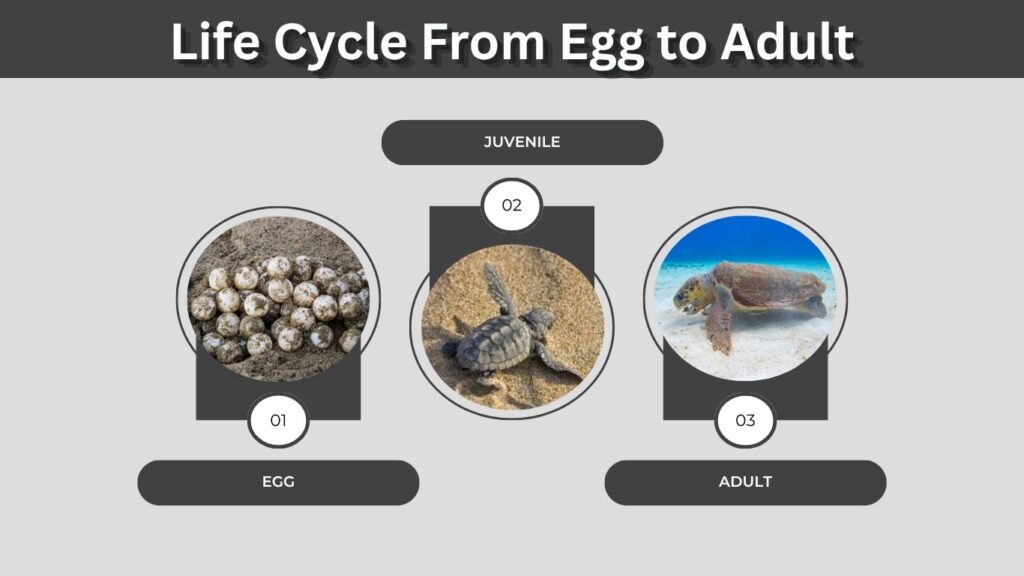
A loggerhead sea turtle’s life begins in a sandy beach nest. A female comes ashore, digs a nest cavity, lays eggs, covers them with sand, and returns to the ocean. After several weeks, hatchlings break out of their eggs and climb to the surface.
The first journey is dangerous. Hatchlings must crawl across the beach, avoid predators, and reach the water. Once in the ocean, they face fish, birds, currents, pollution, and limited food sources.
As they grow, young loggerheads move through different ocean habitats. They may spend years in open water before shifting to coastal feeding areas. Adults later travel between feeding grounds and nesting beaches.
Main Stages of Growth
Loggerhead sea turtles pass through several important life stages:
- Egg inside a beach nest
- Hatchling moving toward the ocean
- Small juvenile in open water
- Larger juvenile in coastal habitats
- Mature adult in feeding grounds
- Nesting female returning to beaches
Because this life cycle is slow, population recovery can take a long time. Protecting adult turtles is especially important because they are the turtles that can reproduce.
Age of Reproduction
Loggerhead sea turtles do not reproduce quickly. Many take several decades to become mature enough to nest. This late maturity makes them vulnerable because a turtle must survive many years before producing the next generation.
Once mature, a female may return to nesting beaches every few years. During a nesting season, she can lay several clutches of eggs. Each nest may contain around 100 or more eggs, but only a small number of hatchlings survive to adulthood.
This slow reproductive pattern means every adult female is valuable to the population. If a mature turtle dies from a boat strike, fishing gear, or pollution, it can reduce future nesting potential.
Size and Body Length
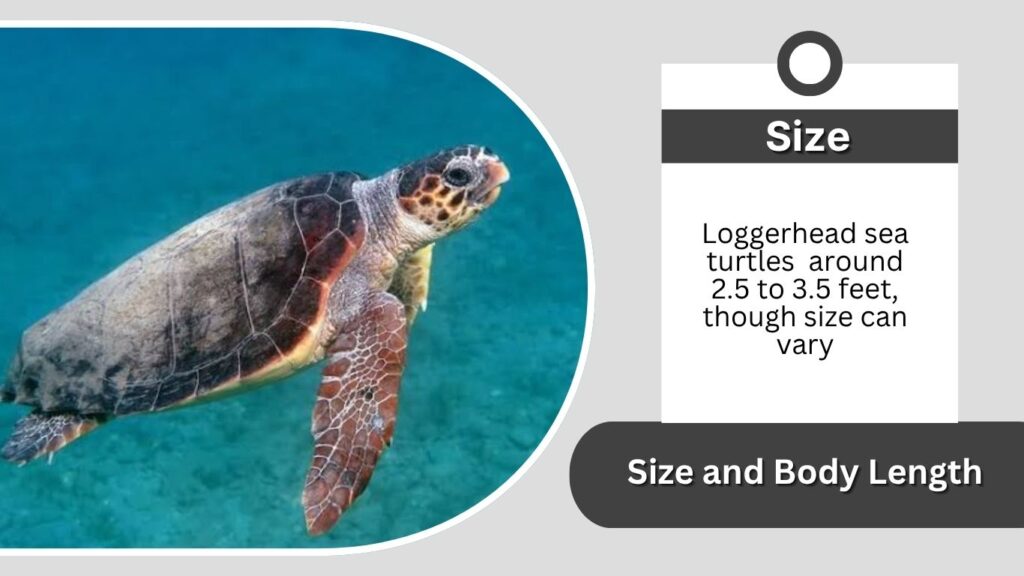
Adult loggerhead sea turtles are large, powerful animals. Their shell length is often around 2.5 to 3.5 feet, though size can vary. They are known for their broad heads and strong jaws, which help them crush hard-shelled prey.
Loggerheads are not the largest sea turtles, but they are still impressive in size. Their reddish-brown shells and large heads make them easier to identify than some other species.
| Feature | Loggerhead Sea Turtle |
|---|---|
| Estimated lifespan | Up to 80 years or more |
| Adult shell length | About 2.5 to 3.5 feet |
| Scientific name | Caretta caretta |
| Main habitat | Ocean and coastal waters |
| Nesting habitat | Sandy beaches |
| Diet | Crabs, conchs, clams, and other marine prey |
| Breathing | Air-breathing reptile |
| Conservation status | Threatened in the U.S. |
Their size helps protect adults from many natural predators, but it does not protect them from human threats such as boats, nets, hooks, and plastic debris.
Time Underwater
Loggerhead sea turtles breathe air, but they can stay underwater for long periods. The exact time depends on what the turtle is doing. A resting turtle can hold its breath much longer than a turtle that is swimming quickly or struggling.
When active, loggerheads need to surface more often. When resting, their body slows down and uses less oxygen. This allows them to remain underwater longer.
Even though loggerheads are excellent divers, they cannot breathe underwater like fish. If one becomes trapped in fishing gear and cannot reach the surface, it can drown.
Ancient History of Loggerheads
Sea turtles have existed for millions of years. Loggerhead sea turtles belong to an ancient group of marine reptiles that survived major changes in Earth’s history. Their ancestors lived long before modern humans.
Over time, sea turtles developed strong flippers, streamlined bodies, salt glands, and shells suited for life in the ocean. Loggerheads also evolved powerful jaws for feeding on hard-shelled marine animals.
Their ancient history makes their modern decline especially concerning. A species with such deep evolutionary roots now faces many threats caused by human activity.
Protection and Threatened Status
Loggerhead sea turtles have been protected under the U.S. Endangered Species Act for decades. They were listed as threatened throughout their worldwide range in 1978. This means they are at risk of becoming endangered if threats continue.
The word “threatened” does not mean loggerheads are safe. It means they still need strong protection. Their nesting beaches, feeding areas, migration routes, and offshore habitats all matter.
Major threats include fishing gear, boat collisions, coastal development, artificial lighting, plastic pollution, nest disturbance, climate change, and loss of beach habitat.
What Helps Loggerheads Live Longer?
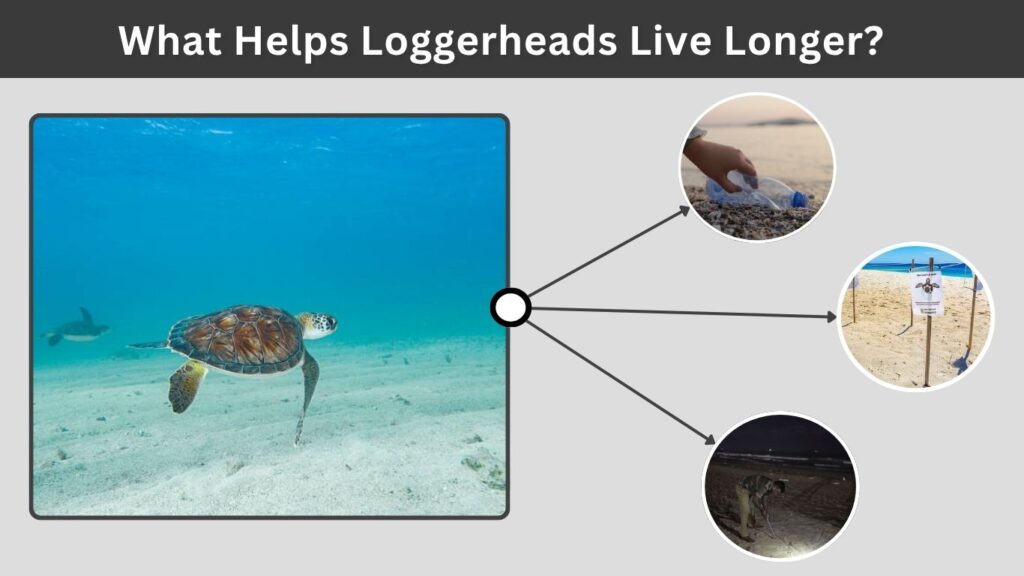
Loggerhead sea turtles have a better chance of living longer when both beaches and oceans are protected. Nesting females need dark, quiet beaches. Hatchlings need clear paths to the water. Juveniles and adults need clean oceans and safe feeding areas.
Helpful conservation actions include:
- Reducing plastic waste
- Using turtle-safe fishing practices
- Protecting nesting beaches
- Keeping beach lights off at night
- Removing beach furniture during nesting season
- Slowing boats in turtle habitat
- Reporting injured or stranded turtles
- Supporting sea turtle rescue programs
Because loggerheads live so long, protection must continue for decades. A turtle saved today may not nest for many years, but it can still become part of the future population.
Main Reasons Loggerheads Die Early
Although loggerheads can live for many decades, many do not reach old age. The earliest stages are the most dangerous. Eggs may be eaten by predators or flooded by storms. Hatchlings may be caught by birds, crabs, fish, or confused by artificial lights.
Older turtles face different risks. Fishing nets, longlines, plastic bags, boat propellers, disease, and habitat loss can injure or kill them.
Climate change adds another challenge. Sand temperature can affect hatchling development, and stronger storms can damage nesting beaches. Rising seas may also reduce the space available for nesting.
FAQs
How long do loggerhead sea turtles live?
Loggerhead sea turtles can live up to 80 years or more. Their exact lifespan is difficult to measure because they spend most of their lives in the ocean. Scientists estimate age through tagging, nesting records, growth studies, and long-term research.
How long can a loggerhead sea turtle live in the wild?
A loggerhead sea turtle can live for several decades in the wild, and some may reach 80 years or more. Many do not survive the early hatchling stage, but those that reach adulthood have a much better chance of living a long life.
How long can loggerhead sea turtles hold their breath?
Loggerhead sea turtles can hold their breath for long periods, especially while resting. Active turtles need to surface more often because swimming uses more oxygen. They are air-breathing reptiles, so they must come to the surface to breathe.
How long is a loggerhead sea turtle?
An adult loggerhead sea turtle is often about 2.5 to 3.5 feet long in shell length. Size varies by age, sex, and individual condition. Loggerheads are known for their large heads, strong jaws, and reddish-brown shells.
How long have loggerhead sea turtles existed?
Sea turtles have existed for millions of years, and loggerheads belong to this ancient marine reptile lineage. Their ancestors survived major environmental changes, but modern loggerheads now face serious threats from fishing gear, pollution, coastal development, and climate change.