
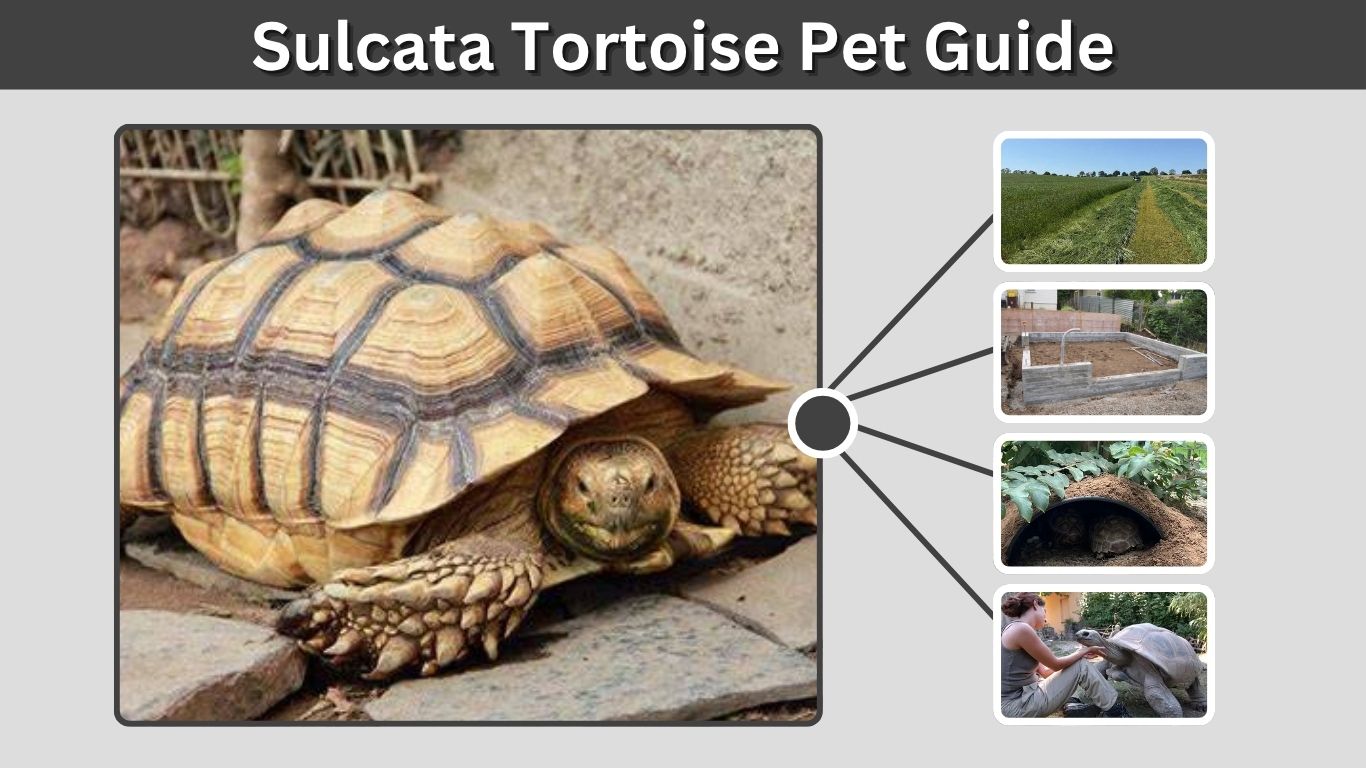
Sulcata tortoises are popular because they look cute as babies and grow into impressive, strong, long-lived reptiles. But keeping a sulcata tortoise as a pet is very different from keeping a small indoor turtle. These tortoises need warm temperatures, UVB light, a grass-based diet, secure outdoor space, and decades of care. Before buying or adopting one, it is important to understand their adult size, behavior, cost, and long-term needs.
Are Sulcata Tortoises Good Pets?
Sulcata tortoises can be good pets for the right owner, but they are not easy pets. They are best for people who have space, money, warm outdoor conditions, and a long-term care plan.
Why They Can Make Good Pets
- They are generally calm and interesting to watch.
- They are active grazers and often develop bold personalities.
- They do not bark, shed fur, or need daily walks.
- They can recognize feeding routines and familiar spaces.
- They can live for decades with proper care.
Why They Are Not for Everyone
Sulcata tortoises become very large. Adult sulcatas can weigh more than 100 pounds, and they may live 50–80+ years, so they are a lifetime commitment rather than a short-term pet.
They also dig, push fences, eat constantly, and need a heated shelter in cold or wet weather. They should not be bought only because the baby tortoise looks small and cute.
Sulcata Tortoise Pet Facts
Here is a quick overview for new owners.
| Feature | Details |
| Common name | Sulcata tortoise / African spurred tortoise |
| Scientific name | Centrochelys sulcata |
| Adult size | Often over 100 pounds |
| Lifespan | Around 50–80+ years |
| Diet type | Herbivore, mostly grass and hay |
| Best housing | Large outdoor enclosure in suitable weather |
| Beginner friendly? | Only for prepared, long-term owners |
| Hibernates? | No, sulcata tortoises do not hibernate |
Sulcata tortoises come from dry grassland regions of sub-Saharan Africa, and veterinary care sheets warn owners not to underestimate the space and resources needed as they grow.
Sulcata Tortoise Pet Care
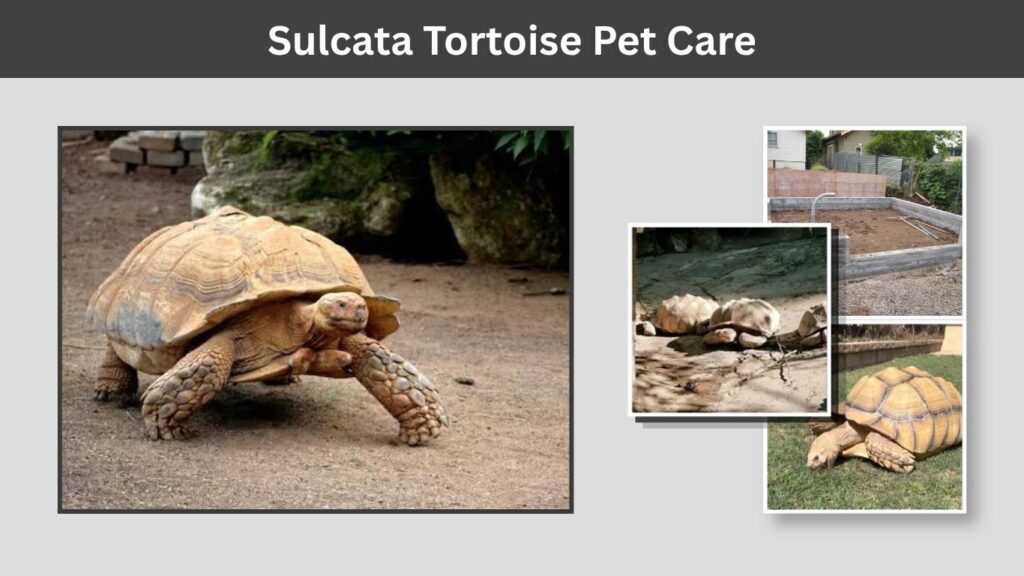
Good sulcata tortoise care is based on space, heat, UVB light, safe fencing, and a high-fiber diet. Many health problems come from poor housing or incorrect feeding.
Enclosure and Space
A baby sulcata may start in an indoor tortoise table, but adults need much more room. Outdoor housing is usually best when the climate allows it. The enclosure should be strong because sulcatas dig, push, and may try to escape.
A good enclosure should include:
- Solid fencing that the tortoise cannot see through easily
- Fence edges buried underground to prevent digging out
- Dry shelter for night and bad weather
- Sunny basking areas
- Shaded areas to cool down
- Safe soil or grass for walking and grazing
- No sharp objects, toxic plants, or small colorful objects they may eat
Indoor housing should usually be temporary for adults because sulcatas need a large area to roam and graze. MedVet notes that indoor housing for sulcatas should mainly be used during cold or damp weather.
Heat, UVB, and Humidity
Sulcatas need warmth to digest food and stay healthy. They also need UVB exposure for calcium use and strong shell growth.
For indoor care, a basking area around 95–105°F is commonly recommended, with warm ambient temperatures and no cold, damp conditions. The Royal Veterinary College recommends a basking temperature of about 35–40°C and a cooler end around 25°C, with overnight temperatures not dropping below 20°C.
UVB lighting is also essential indoors. Natural sunlight is helpful, but sunlight through glass does not provide proper UVB. UVB bulbs should be replaced according to manufacturer instructions.
Sulcata Tortoise Pet Diet
A sulcata tortoise pet diet should be high in fiber and low in protein. These tortoises are grazing animals, so grass and hay should make up most of the diet.
Good foods include:
- Bermuda grass
- Timothy hay
- Orchard grass hay
- Dandelion greens
- Plantain weeds
- Clover in moderation
- Hibiscus flowers
- Cactus pads
- Safe pesticide-free weeds
- Small amounts of leafy greens
Foods to avoid or limit:
- Fruit as a regular food
- Dog food or cat food
- Meat or insects
- High-protein pellets
- Bread, rice, pasta, or human snacks
- Iceberg lettuce as a main food
- Toxic garden plants
- Grass treated with pesticide or fertilizer
The Royal Veterinary College recommends that the diet consist largely of grasses and hay, with weeds and safe plants making up the rest. It also advises that water should always be available and changed daily.
Cost, Lifespan, and Daily Responsibility
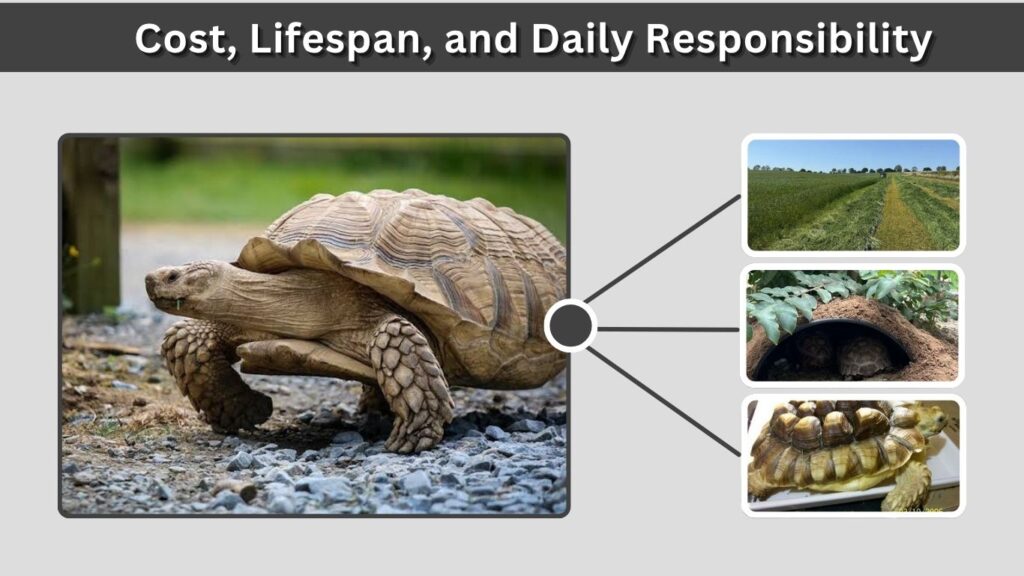
A sulcata tortoise may be cheap as a baby, but the long-term cost can be high. The biggest expenses are housing, heating, lighting, fencing, food, and reptile veterinary care.
| Need | Why It Matters |
| Outdoor enclosure | Adults need large, secure space |
| Heated shelter | Prevents cold and damp stress |
| UVB lighting | Helps prevent shell and bone problems |
| Grass and hay | Main part of the diet |
| Calcium supplement | Supports shell and bone health |
| Reptile vet | Needed for checkups and illness |
| Long-term plan | The tortoise may outlive the owner |
Sulcatas do not hibernate, so owners must keep them warm through cool seasons. The Royal Veterinary College clearly notes that sulcata tortoises do not hibernate.
Do Sulcata Tortoises Like to Be Pet?
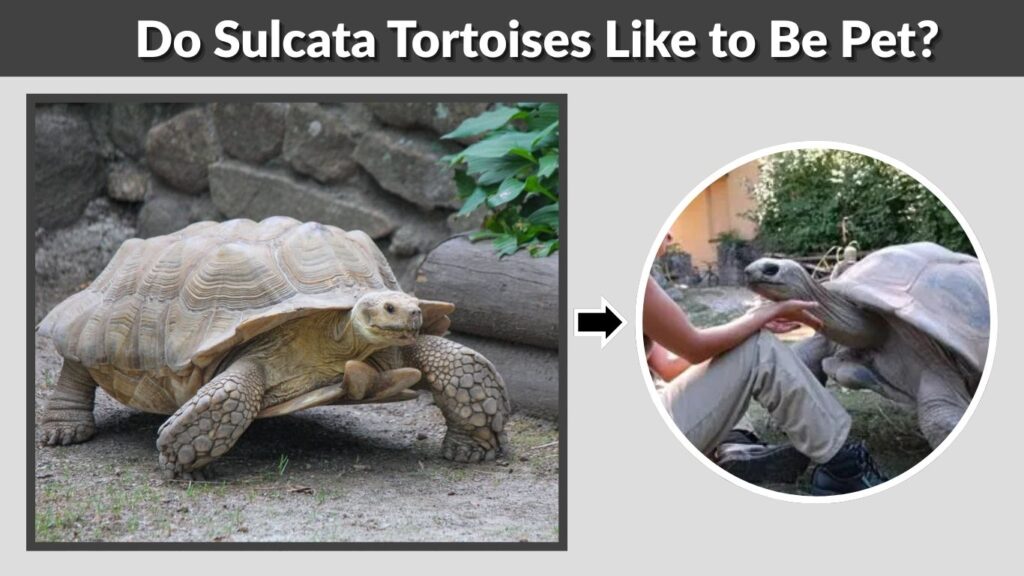
Some sulcata tortoises tolerate gentle touching, especially on the shell or neck area, but they are not cuddly pets. Many do not enjoy being picked up. Handling should be limited because lifting a large tortoise can stress it or injure the person.
It is better to interact by feeding safe greens, watching natural behavior, and keeping a routine. Children should be supervised because large sulcatas are strong, and all reptiles can potentially carry Salmonella, so handwashing after handling is important.
Where to Get a Sulcata Tortoise Pet
Anyone searching for a sulcata tortoise pet for sale should be careful. Many sulcatas are rehomed because owners cannot manage their adult size. Adoption from a reptile rescue can be a better choice than buying a hatchling.
Before bringing one home, check:
- Is the tortoise active and alert?
- Are the eyes clear?
- Is the shell firm, not soft?
- Is breathing quiet, with no bubbles from the nose?
- Is the seller honest about age, diet, and care?
- Do you already have an enclosure ready?
- Do you have access to a reptile veterinarian?
A sulcata tortoise is not a good impulse purchase. It is a pet for someone who has prepared for decades of care.
FAQs
Are sulcata tortoises good pets?
Sulcata tortoises are good pets only for owners with enough space, money, and time. They are calm and interesting, but they grow very large, live for decades, dig, eat heavily, and need warm housing. They are not ideal for most casual beginners.
How long does a pet sulcata tortoise live?
A pet sulcata tortoise can live around 50–80+ years with proper care. This means owners need a long-term plan for housing, feeding, veterinary care, and future care if the tortoise outlives them.
What do you feed a pet sulcata tortoise?
Feed a pet sulcata tortoise mostly grass and hay, such as Bermuda grass, timothy hay, and orchard grass. Safe weeds, dandelion greens, hibiscus, and cactus pads can also be offered. Avoid regular fruit, animal protein, dog food, and sugary human foods.
Can a sulcata tortoise live indoors?
A young sulcata can live indoors temporarily with heat, UVB, humidity control, and enough space. However, adults are usually too large for normal indoor housing. They do best in a secure outdoor enclosure with heated shelter when the weather is cold or damp.
Do sulcata tortoises hibernate?
No, sulcata tortoises do not hibernate. They need warm temperatures all year. In cold or wet weather, they must have a heated, dry shelter because being chilled and damp can lead to serious health problems.