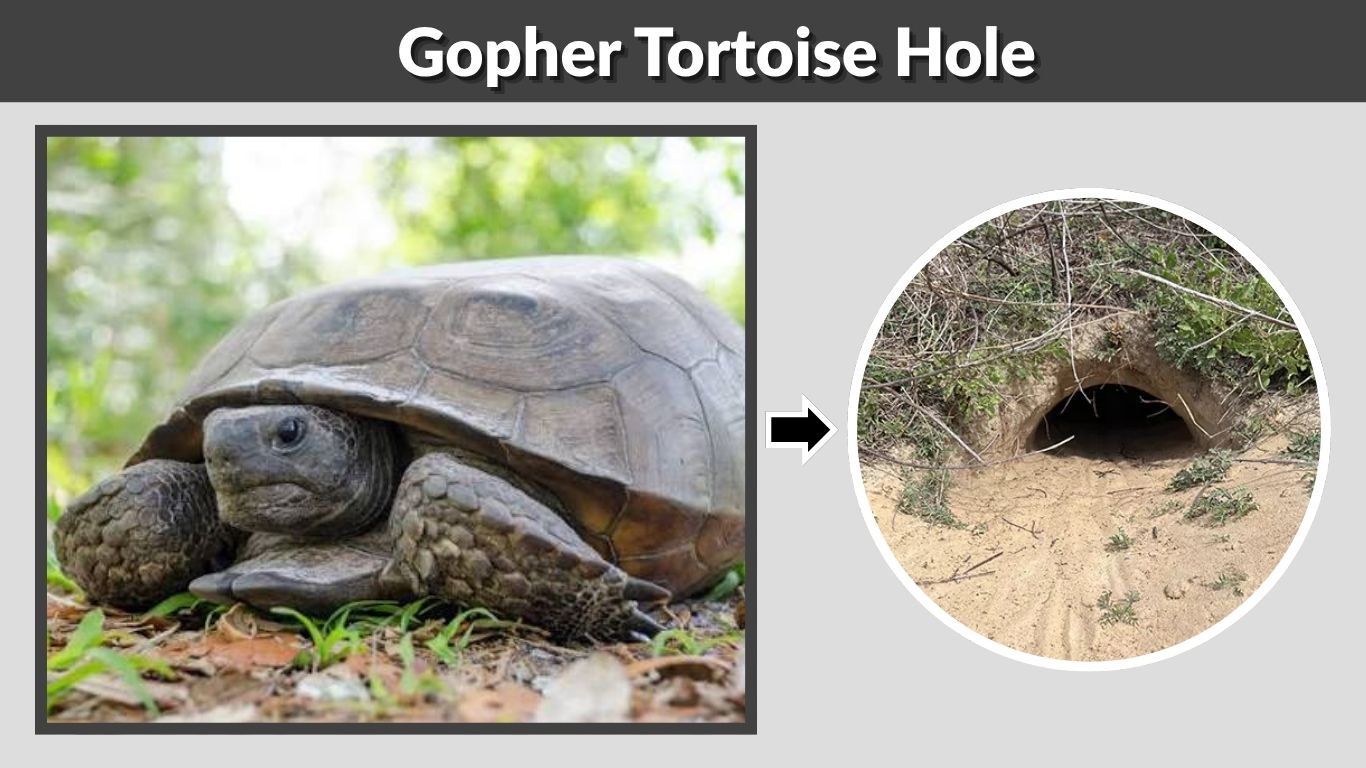
A gopher tortoise hole is the entrance to a long underground burrow dug by a gopher tortoise. It usually has a half-moon shape, a gentle downward slope and a fan of excavated soil in front. These burrows protect tortoises from heat, cold, drought, wildfire and predators. They may also shelter snakes, frogs, insects and small mammals. Learning how to identify an active, inactive or abandoned burrow can help property owners avoid disturbing protected wildlife.
What Does a Gopher Tortoise Hole Look Like?
A gopher tortoise hole is normally wider than it is tall. Its flattened, half-moon shape roughly matches the outline of the tortoise’s shell.
Soil removed during digging spreads outward in front of the entrance. This sandy mound is called the burrow apron. The apron can be broad and obvious or relatively small, depending on the soil, vegetation, weather and size of the tortoise.
Main Identification Features
Look for the following signs:
- A half-moon or flattened arch-shaped entrance
- A gently sloping tunnel rather than a steep drop
- A fan-shaped mound of soil in front
- An entrance approximately 2.5–15 inches wide
- Loose sand, shell marks or tortoise tracks
- A dry location with sandy, well-drained soil
Smaller juvenile and baby gopher tortoises create the same basic burrow shape, but their entrances and aprons are considerably smaller.
| Burrow feature | Typical appearance |
| Entrance shape | Half-moon or flattened arch |
| Entrance width | About 2.5–15 inches |
| Tunnel angle | Gently slopes downward |
| Soil mound | Fan-shaped burrow apron |
| Common location | Dry, sandy upland ground |
How Big a Hole Does a Gopher Tortoise Dig?
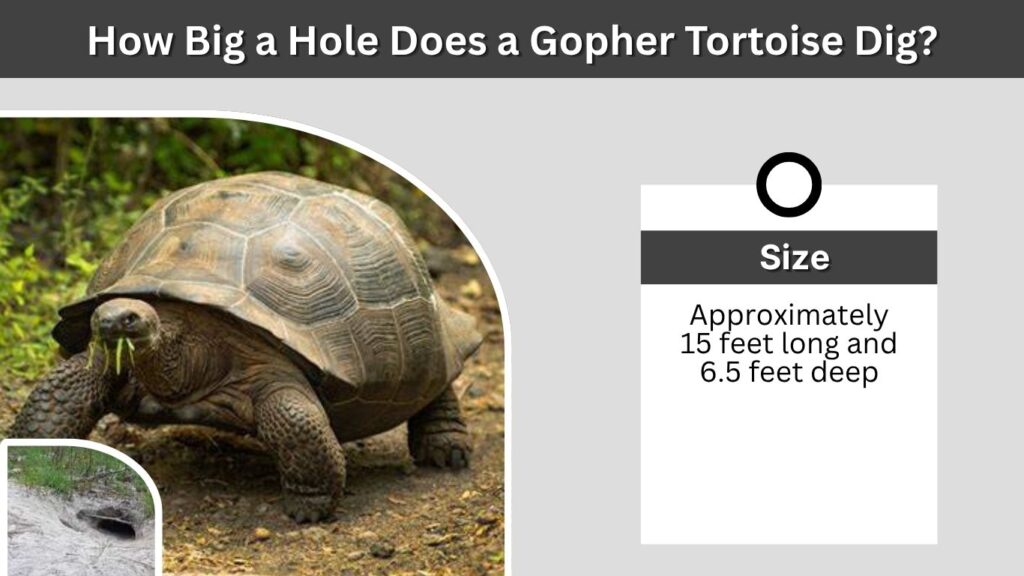
The visible opening is only a small part of the entire structure. A typical gopher tortoise burrow averages approximately 15 feet long and 6.5 feet deep. Exceptionally large burrows have been documented at up to about 40 feet long and 10 feet deep.
The tunnel usually slopes downward before ending in a wider chamber. Its width is generally large enough for the tortoise to turn around and move comfortably.
Burrow dimensions vary according to:
- The tortoise’s age and body size
- Soil depth and texture
- The local water table
- Tree roots, rocks and other obstacles
- How long the burrow has been maintained
A baby gopher tortoise hole may be only a few inches wide, while the entrance created by a large adult can approach 15 inches.
How to Tell if a Gopher Tortoise Hole Is Active
The most reliable clues are found around the entrance and apron. However, not seeing a tortoise does not mean the hole is empty. Gopher tortoises can spend up to 80 percent of their time underground.
Active Gopher Tortoise Hole
An active burrow commonly has:
- A clear half-moon-shaped entrance
- Loose or freshly disturbed soil
- A visible sandy apron
- Tortoise footprints or shell drag marks
- A relatively clear, gently sloping entrance
- Recently grazed plants or trails nearby
The opening may look clean because the tortoise regularly enters, exits and moves soil.
Inactive but Potentially Occupied Hole
An inactive-looking burrow still has a recognizable half-moon entrance, but the soil may be hard and covered with grass, leaves or pine needles. Tracks and fresh digging signs are usually absent.
An apparently inactive hole may still contain a tortoise, especially during cooler winter conditions when the animal remains underground longer. Florida wildlife officials therefore classify inactive burrows as protected and potentially occupied.
Abandoned Gopher Tortoise Hole
A long-abandoned burrow may have:
- A partly or completely collapsed entrance
- Packed soil filling the tunnel
- Heavy leaf litter or vegetation
- Little remaining apron
- Loss of the original half-moon shape
Visual appearance alone may not always prove that a burrow is permanently abandoned. Avoid digging into or testing the hole yourself.
Why Do Gopher Tortoises Dig Holes?
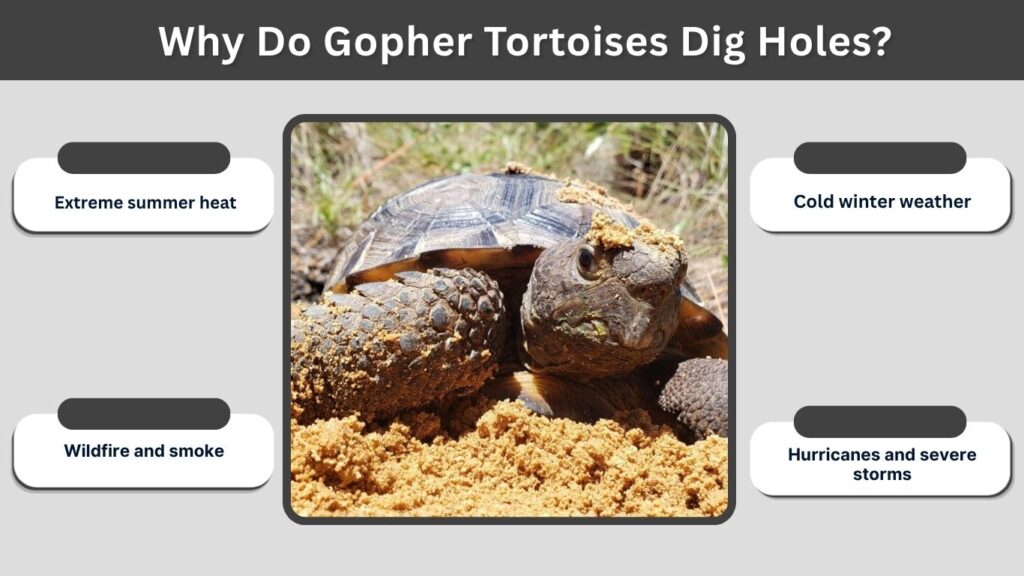
The burrow is the center of a gopher tortoise’s life. Because tortoises depend on environmental heat, they use the underground space to escape unsafe surface temperatures.
Burrows provide protection from:
- Extreme summer heat
- Cold winter weather
- Dry conditions and drought
- Wildfire and smoke
- Hurricanes and severe storms
- Predators
Underground temperature and humidity remain more stable than conditions above the surface. A tortoise can emerge to feed or bask when the weather is suitable and retreat when the surface becomes too hot, cold or dry.
Do Gopher Tortoises Fill in Their Holes?
Gopher tortoises do not normally seal a burrow completely every time they leave it. An entrance can gradually appear filled because of rainfall, windblown sand, falling leaves, plant growth or natural collapse.
A tortoise may maintain several burrows and move between them. A hole that appears unused today could potentially be used again later. There is no fixed length of time that every tortoise remains in one burrow.
Collapsed burrows should not automatically be treated as empty. Tortoises can sometimes remain inside naturally collapsed burrows and may dig their way back out.
Gopher Tortoise Hole vs. Armadillo or Fox Hole
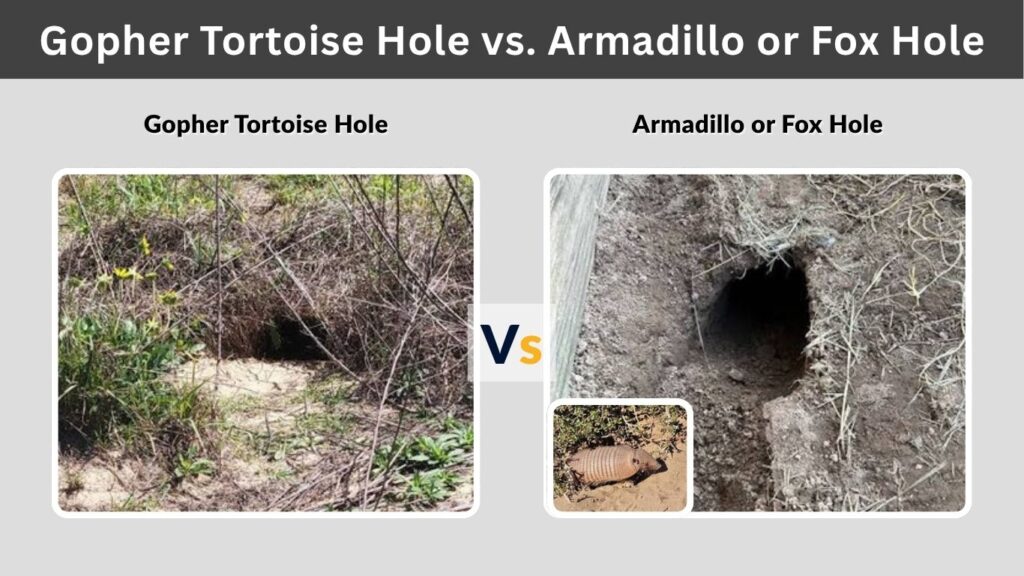
Several animals create holes that can be confused with gopher tortoise burrows. Entrance shape and tunnel angle provide useful identification clues.
Armadillo Hole
An armadillo burrow usually has a round or oval entrance. Its tunnel commonly descends at a steeper angle than a gopher tortoise burrow. Excavated soil may be present, but the mound does not always form the tortoise’s broad, fan-shaped apron.
Fox Hole
A fox den normally has a larger round or oval entrance. Foxes may leave a considerable pile of excavated soil outside. Tracks, fur, prey remains or a noticeable animal odor may also occur nearby.
Gopher Tortoise Hole
The entrance is normally half-moon shaped, gently sloping and accompanied by an apron of spread-out soil. In general, Florida mammals and birds create more circular entrances, while gopher tortoise entrances are flatter and wider.
Can Rattlesnakes Live in a Gopher Tortoise Hole?
Rattlesnakes and other snakes occasionally use gopher tortoise burrows for temporary shelter. The tortoise’s burrow community can also include eastern indigo snakes, gopher frogs, mice, cave crickets, beetles and many other animals.
More than 350 species benefit from these underground shelters, which is why the gopher tortoise is called a keystone species.
A rattlesnake and tortoise may use the same burrow system, although they are not necessarily present at the same moment. Never place your hands, tools, cameras or other objects inside a burrow. Observe the entrance from a safe distance.
What to Do About a Gopher Tortoise Hole in Your Yard
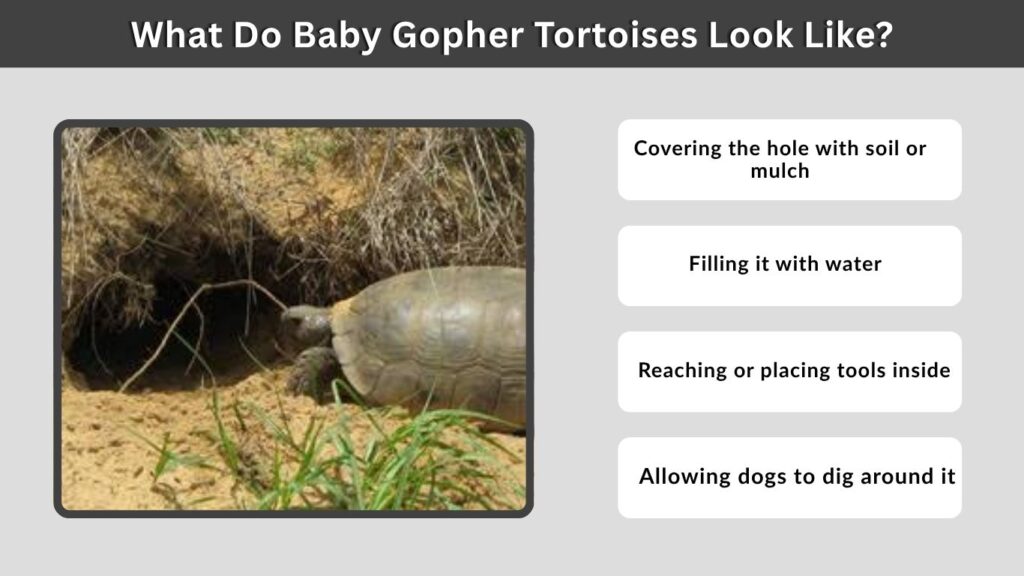
A burrow in a yard does not usually need to be removed. Leave the entrance open and give the tortoise enough space to enter and exit.
Avoid:
- Covering the hole with soil or mulch
- Filling it with water
- Reaching or placing tools inside
- Allowing dogs to dig around it
- Driving heavy equipment over the tunnel
- Capturing or relocating the tortoise yourself
- Building directly beside the entrance
You may continue ordinary yard activities when they do not harm the tortoise or damage its burrow. Leaving native grasses and low-growing plants nearby can provide natural food.
Are Gopher Tortoise Holes Protected in Florida?
Yes. Florida lists the gopher tortoise as Threatened, and state law protects both the animal and its burrow. Land clearing, construction or other ground disturbance within 25 feet of a potentially occupied burrow generally requires an FWC relocation permit.
Property owners should not collapse, cover or relocate a burrow without authorization. A permitted gopher tortoise agent may need to survey the property and determine whether relocation is required before development begins.
Should You Report a Gopher Tortoise Hole by the Road?
You may report gopher tortoise sightings through the Florida Fish and Wildlife Conservation Commission’s online sightings system. Reporting helps wildlife managers collect information about tortoise locations and habitat.
A normal roadside burrow does not necessarily require an emergency response. Contact FWC when:
- The burrow is being intentionally damaged
- Construction is threatening the entrance
- A tortoise is trapped, injured or sick
- Heavy equipment may collapse the tunnel
- Illegal capture or relocation is occurring
Florida residents can also report suspected violations through FWC’s Wildlife Alert service.
FAQs
Can you tell whether a tortoise is inside by looking at the hole?
Not with certainty. Fresh sand and tracks suggest recent use, but a quiet or debris-covered burrow may still contain a tortoise. Do not insert a camera, stick or hand into the tunnel to check.
Can I mow around a gopher tortoise hole?
Careful routine mowing may be possible when it does not strike the tortoise, damage the entrance or collapse the underground tunnel. Keep equipment away from the burrow apron and check for animals before mowing.
How many holes does one gopher tortoise have?
A single tortoise may use several burrows during its life. The number varies with habitat, season, food availability and individual behavior. Therefore, several nearby holes do not always represent the same number of tortoises.
Why is there a large pile of sand outside the hole?
The pile is the burrow apron. It consists of soil pushed out as the tortoise excavates and maintains its tunnel. Females may also use sunny soil near the apron as a nesting area.
Should I fill an empty gopher tortoise hole?
No. A hole that appears empty may still be occupied or reused later. In Florida, active and inactive potentially occupied burrows are protected. Contact FWC or a qualified agent before altering the site.