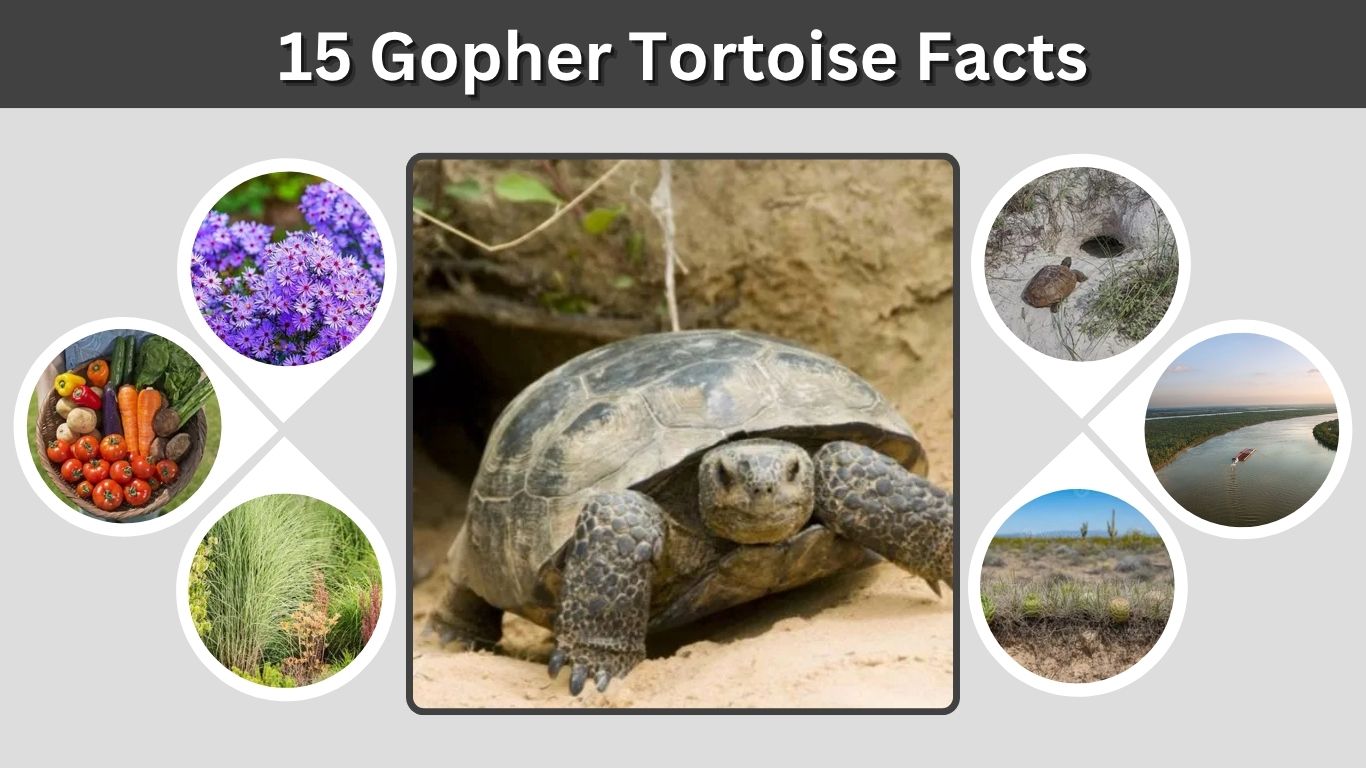
Gopher tortoises are remarkable land-dwelling reptiles native to the southeastern United States. Best known for digging deep underground burrows, they help hundreds of other animals survive fires, droughts, predators and extreme temperatures. These slow-growing tortoises can live for several decades but face serious threats from habitat destruction and road traffic. The following 15 gopher tortoise facts explain their size, appearance, habitat, diet, behavior, reproduction and importance to the surrounding ecosystem.
Quick Gopher Tortoise Information
The gopher tortoise’s scientific name is Gopherus polyphemus. It is a fully terrestrial turtle adapted to life in sandy upland environments.
| Feature | Description |
| Scientific name | Gopherus polyphemus |
| Adult size | Usually 9–11 inches long |
| Wild lifespan | Approximately 40–60 years |
| Diet | Mainly grasses, leaves, flowers and fruit |
| Natural range | Southeastern United States |
| Main shelter | Deep underground burrow |
Gopher Tortoise Appearance and Identification Facts
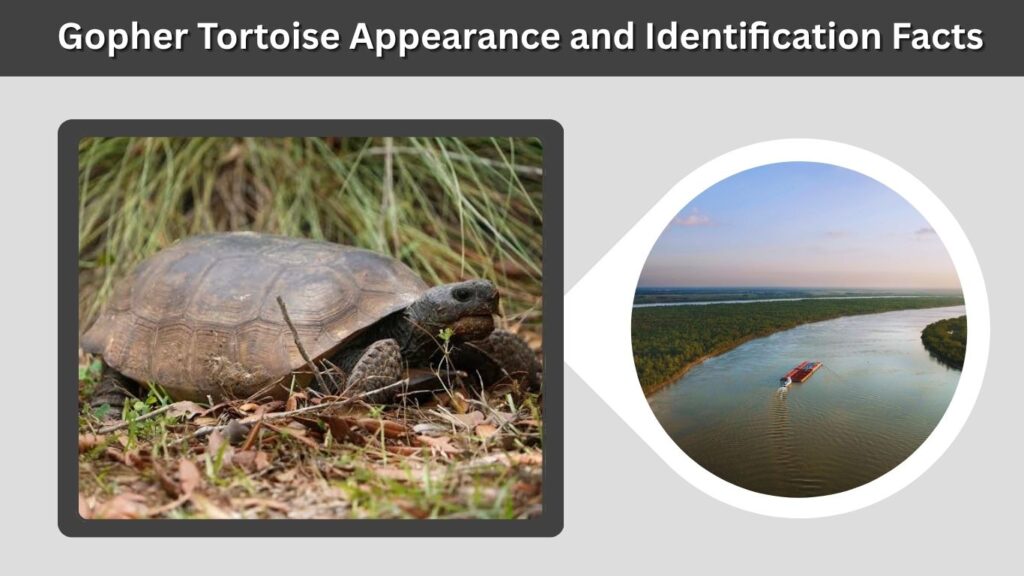
Adult gopher tortoises have strong shells, sturdy hind legs and powerful forelimbs designed for moving soil. Young tortoises look noticeably brighter than mature individuals.
1. They Are the Only Native Tortoise East of the Mississippi River
Five tortoise species are native to North America, but the gopher tortoise is the only one naturally occurring east of the Mississippi River. Its range extends across parts of Louisiana, Mississippi, Alabama, Florida, Georgia and South Carolina.
2. Most Adults Are 9 to 11 Inches Long
A fully grown gopher tortoise commonly measures between 9 and 11 inches in shell length, although unusually large individuals can approach 15 inches. Adults generally have tan, gray or brown shells that blend with sandy soil and dry vegetation.
3. Their Front Legs Work Like Shovels
Gopher tortoises have flattened, heavily scaled front legs equipped with strong claws. These shovel-like limbs allow them to loosen and push away large amounts of soil. Their rear legs are rounded and sturdy, often described as looking similar to an elephant’s feet.
4. Baby Gopher Tortoises Are Brightly Colored
Hatchlings are approximately two inches long and usually have softer, yellow-orange and brown shells. Their bright coloration gradually fades as the shell hardens, leaving adults with more uniform gray, brown or tan coloring.
Gopher Tortoise Burrow and Habitat Facts
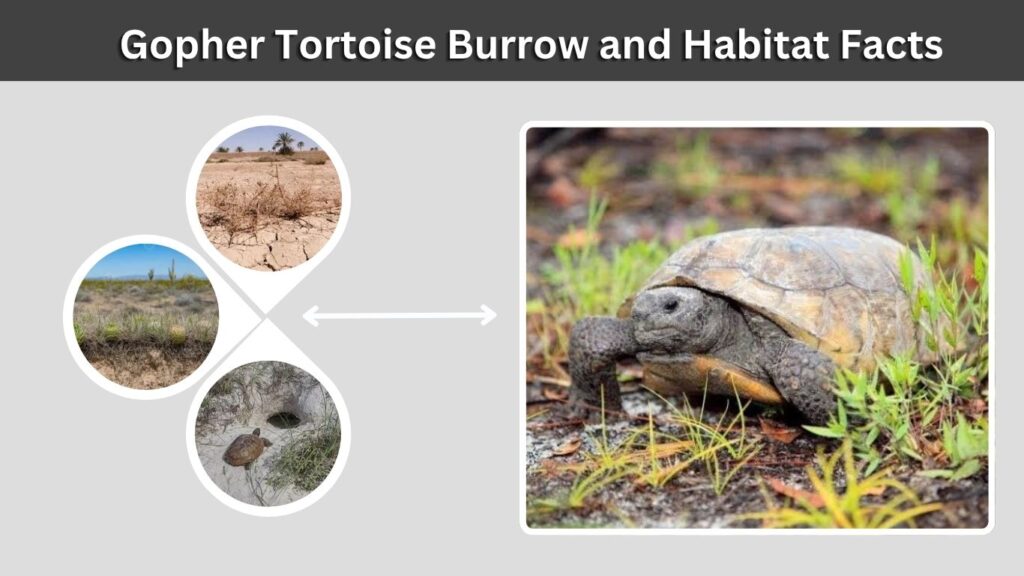
The gopher tortoise spends much of its life underground. Its habitat must provide loose soil for excavation, sunlight for warmth and plentiful low-growing vegetation for food.
5. Their Burrows Can Reach 40 Feet Long
An average burrow is approximately 15 feet long and 6.5 feet deep. However, exceptionally large burrows have been documented at around 40 feet long and 10 feet deep. The entrance normally has a half-moon shape that matches the tortoise’s shell.
6. They Spend Up to 80 Percent of Their Time Underground
A gopher tortoise may remain inside its burrow for most of the day, particularly during very hot, cold or dry conditions. The underground chamber maintains relatively stable temperature and humidity, protecting the tortoise from drought, winter cold, summer heat and fire.
7. One Tortoise May Use Several Burrows
A gopher tortoise is not necessarily tied to one permanent shelter. Individuals may dig and maintain multiple burrows within their home range, moving between them as feeding opportunities, temperatures and seasonal conditions change.
8. They Need Dry, Sandy Habitat
Ideal gopher tortoise habitat contains well-drained sandy soil, widely spaced trees, an open canopy and diverse groundcover. Tortoises occupy longleaf pine forests, sandhills, scrub, dry prairie, coastal dunes, pine flatwoods, pastures and occasionally residential yards.
9. More Than 350 Species Benefit From Their Burrows
Gopher tortoises are considered a keystone species because their burrows provide food, shelter or refuge for more than 350 other species. Visitors may include gopher frogs, eastern indigo snakes, mice, insects, spiders and numerous other small animals.
Gopher Tortoise Diet and Behavior Facts
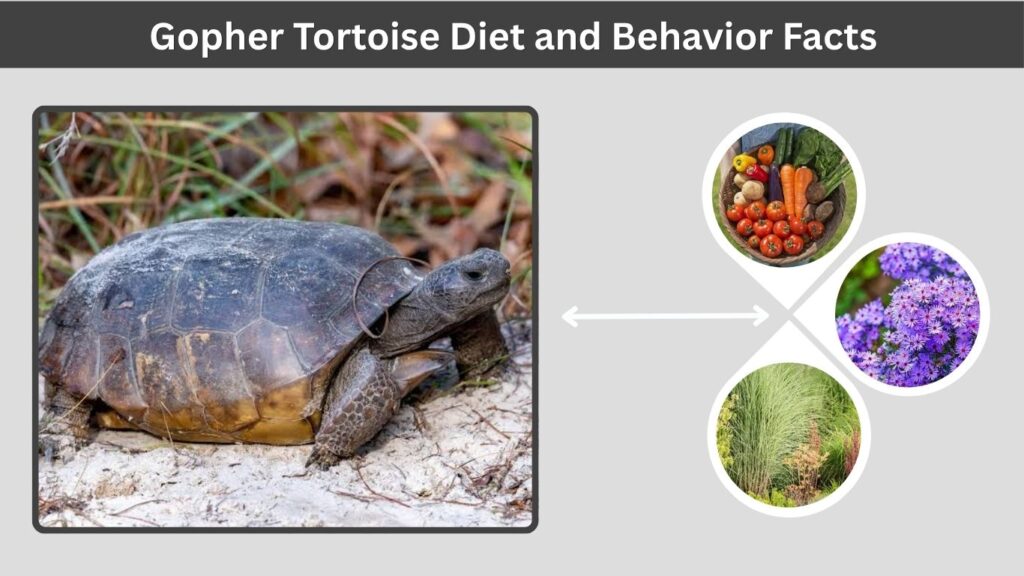
Although they move slowly, gopher tortoises actively shape their environment by grazing, digging and creating shelter for other wildlife.
10. They Eat More Than 300 Plant Species
Gopher tortoises are primarily herbivorous. Their diet includes grasses, asters, legumes, flowers, leaves, seeds and fruit. They have been recorded eating more than 300 plant species, although they may occasionally consume insects, carrion or calcium-rich shells.
11. They Usually Feed Close to Their Burrows
Most feeding takes place within approximately 150–160 feet of a burrow. Common foods include wiregrass, broadleaf grasses, prickly pear cactus, wild grape, blackberry, blueberry and beautyberry. Tortoises may travel farther when nearby food becomes scarce.
12. They Depend on Outside Heat
Like other reptiles, gopher tortoises are ectothermic and cannot generate enough internal heat to regulate their body temperature independently. They bask in sunny areas to warm themselves and return to their burrows when surface conditions become unsuitable.
13. They Can Remain Active During Winter in Florida
Gopher tortoises may be active throughout the year in warmer parts of Florida. In northern areas, they spend more time underground during cold weather but may emerge to bask or feed when winter temperatures become mild. Their greatest aboveground activity generally occurs from May through August.
Lifespan, Reproduction and Conservation Facts
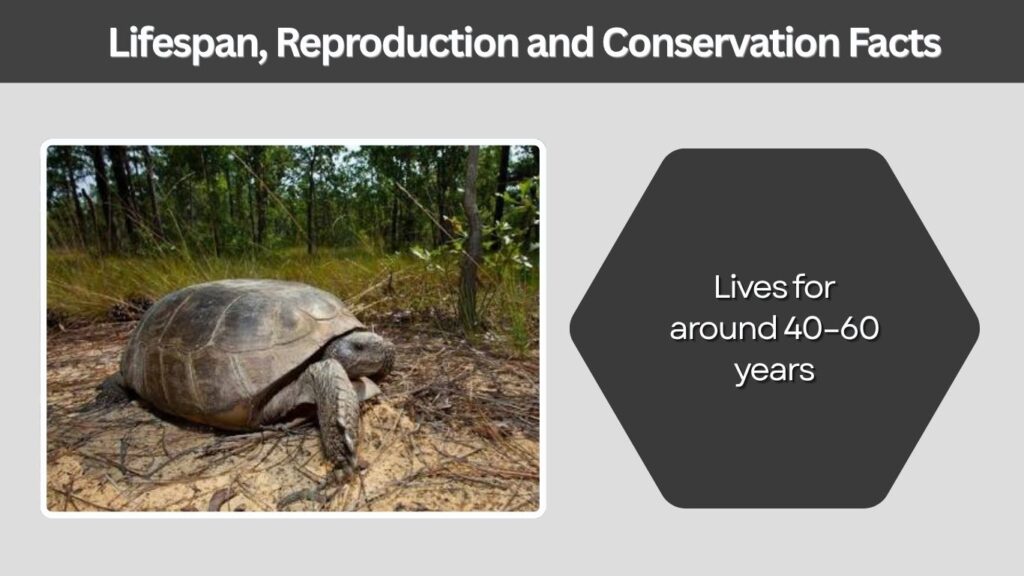
Gopher tortoises mature slowly and produce relatively few offspring. Because replacing lost adults takes many years, established populations are especially vulnerable to disturbance.
14. They Can Live for Several Decades
A gopher tortoise commonly lives for around 40–60 years in the wild, while captive individuals may survive beyond 90 years. Males generally reach maturity at about 9–12 years, while females may require approximately 10–21 years.
15. Females Usually Lay One Clutch Each Year
Breeding generally takes place between March and October. A female typically lays one clutch containing five to nine round eggs between May and July. Incubation lasts approximately 80–110 days, and the mother provides no care after laying them.
Are Gopher Tortoises Endangered?
Protection differs across their range. The western population in western Alabama, Mississippi and Louisiana is federally listed as threatened. The eastern population is not federally listed, but gopher tortoises receive state protection everywhere they naturally occur. Florida classifies the species as threatened and protects both the animal and its burrow.
Habitat destruction and fragmentation remain their most serious threats. Other dangers include vehicle strikes, disease, invasive species, climate-related habitat changes and predators that eat eggs or young tortoises.
FAQs
Do gopher tortoises bite?
Gopher tortoises are generally peaceful and prefer retreating into their burrows when frightened. However, any wild animal may defend itself when handled or cornered. People should observe tortoises from a respectful distance rather than touching, feeding or attempting to relocate them.
Can a gopher tortoise swim?
Gopher tortoises are land animals and are not built for extended swimming like aquatic turtles. They may float or paddle briefly, but placing one in deep water can be dangerous. A tortoise crossing a road should only be moved toward the side it was already approaching.
What should I do when I find a gopher tortoise?
Leave it undisturbed unless it is in immediate danger. Never block its burrow, take it home or move it to another habitat. In Florida, relocation requires authorization from the Florida Fish and Wildlife Conservation Commission.
What animals eat gopher tortoises?
Adult tortoises have strong protective shells, but eggs and hatchlings are vulnerable to raccoons, foxes, snakes, birds and other predators. Habitat fragmentation can increase predation by concentrating nests and young tortoises in small areas.
Why are gopher tortoises important?
Their digging creates stable underground shelters used by hundreds of other animals. These burrows provide refuge during fire, drought, extreme temperatures and predator attacks. Protecting gopher tortoises therefore supports an entire community of southeastern wildlife.