
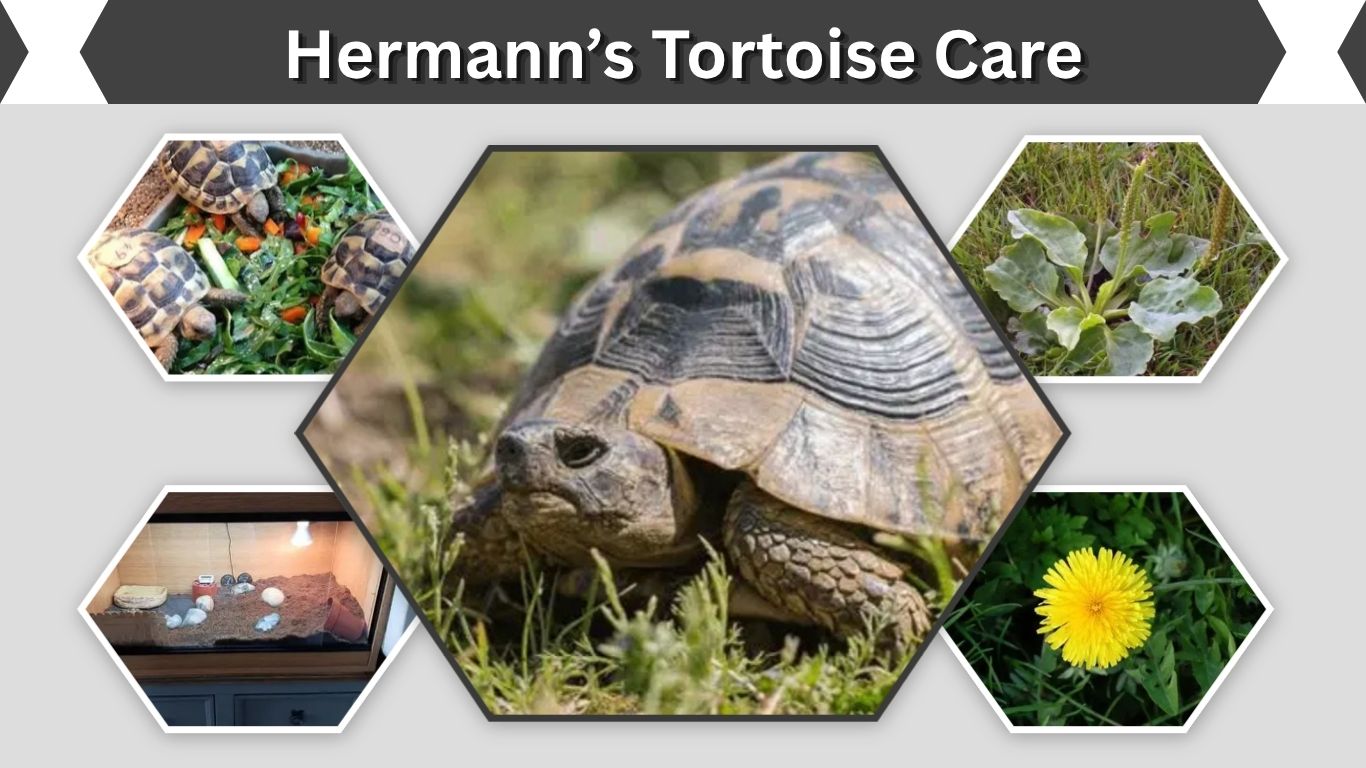
Hermann’s tortoises are small, hardy Mediterranean tortoises, but they still need the right enclosure, heat, UVB lighting, diet, hydration, and seasonal care to stay healthy. Many beginners ask whether Hermann’s tortoises are easy to take care of. The answer is yes, compared with larger tortoises, but only if their basic care needs are met every day. This Hermann’s tortoise care guide explains housing, food, temperature, baby care, and common mistakes.
Hermann’s Tortoise Care Overview
A Hermann’s tortoise is not a low-effort pet. It can live for decades, so care should be planned as a long-term commitment. These tortoises do best with space to walk, dig, graze, and bask. Indoor setups can work, but outdoor housing is often better in safe, warm climates.
| Care Need | Recommended Setup |
| Enclosure | Large tortoise table or secure outdoor pen |
| Basking spot | Around 90–100°F |
| Day temperature | Around 75–85°F |
| Night temperature | Can safely drop cooler, often around 65°F |
| Lighting | Strong UVB lighting indoors |
| Diet | Weeds, leafy greens, flowers, grasses |
| Water | Shallow dish and regular soaking |
| Best for beginners? | Yes, with proper setup |
Trusted reptile and veterinary care sources commonly recommend daytime temperatures around 75–85°F with a warmer basking area near 90–100°F for Hermann’s tortoises.
Hermann’s Tortoise Enclosure Setup
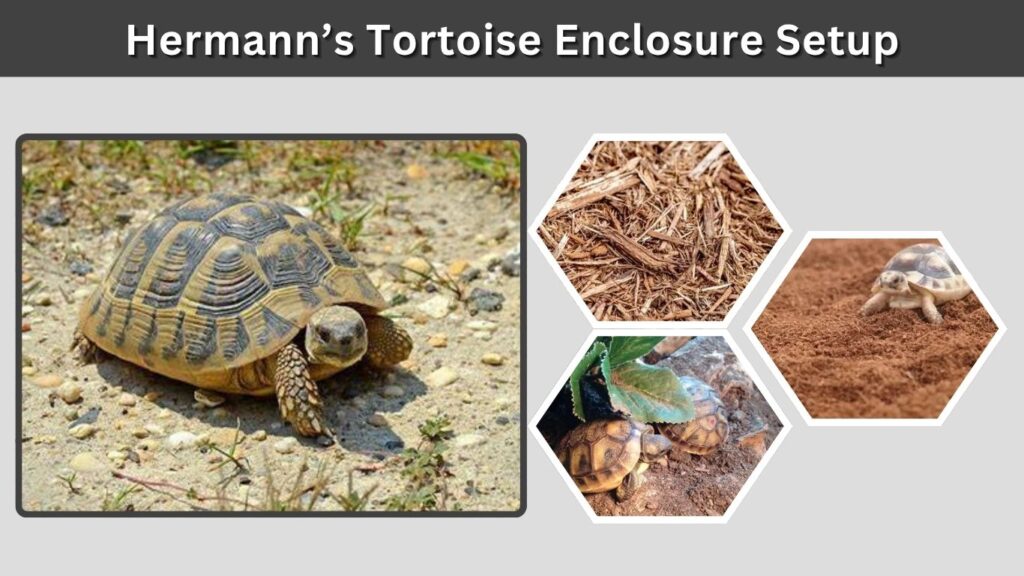
A proper enclosure is one of the most important parts of Hermann’s tortoise care. These tortoises are active walkers, so a small glass tank is not ideal for long-term care. A tortoise table, large indoor pen, or outdoor enclosure gives better airflow and more space.
Indoor Enclosure
For indoor care, use a large open-top tortoise table or wooden enclosure. The setup should include a warm basking area, a cooler side, hiding spots, a shallow water dish, and deep substrate for digging. Avoid smooth flooring because it can cause stress and leg problems.
Good indoor substrate options include:
- Topsoil without fertilizer
- Coconut coir mixed with soil
- Cypress mulch in some areas
- Soil and sand mix in small amounts
- Avoid cedar, pine shavings, and dusty bedding
Outdoor Enclosure
Outdoor housing is excellent when the weather is safe. A secure pen should have strong walls, shaded areas, edible plants, hiding places, and protection from predators. Hermann’s tortoises can dig and climb, so the enclosure should be escape-proof.
Outdoor pens should include:
- Buried barriers along the edges
- A dry shelter
- Sunny basking areas
- Shaded retreats
- Safe weeds and grasses
- Protection from dogs, raccoons, birds, and rodents
Heat, Lighting, and UVB Needs
Hermann’s tortoises need heat to digest food and stay active. They also need UVB light to make vitamin D3, which helps the body use calcium. Without proper UVB and calcium, a tortoise can develop soft shell growth, weak bones, and metabolic bone disease.
Temperature Guide
The enclosure should have a temperature gradient. This means one side is warm and the other side is cooler. The tortoise can then move between areas to control its body temperature.
| Area | Temperature |
| Basking spot | 90–100°F |
| Warm side | 80–85°F |
| Cool side | 70–75°F |
| Night | Around 65°F or room temperature if safe |
Use a digital thermometer or temperature gun to check the basking area. Do not guess temperatures by hand.
UVB Lighting
Indoor Hermann’s tortoises need a quality UVB bulb. A T5 HO linear UVB fixture is often better than small compact bulbs because it spreads UVB across more of the enclosure. Veterinary care guidance also notes that UVB bulbs should be replaced regularly because output drops even when the bulb still produces visible light.
Keep lights on for about 10–12 hours per day. At night, turn lights off so the tortoise has a natural day-night cycle.
Hermann’s Tortoise Diet
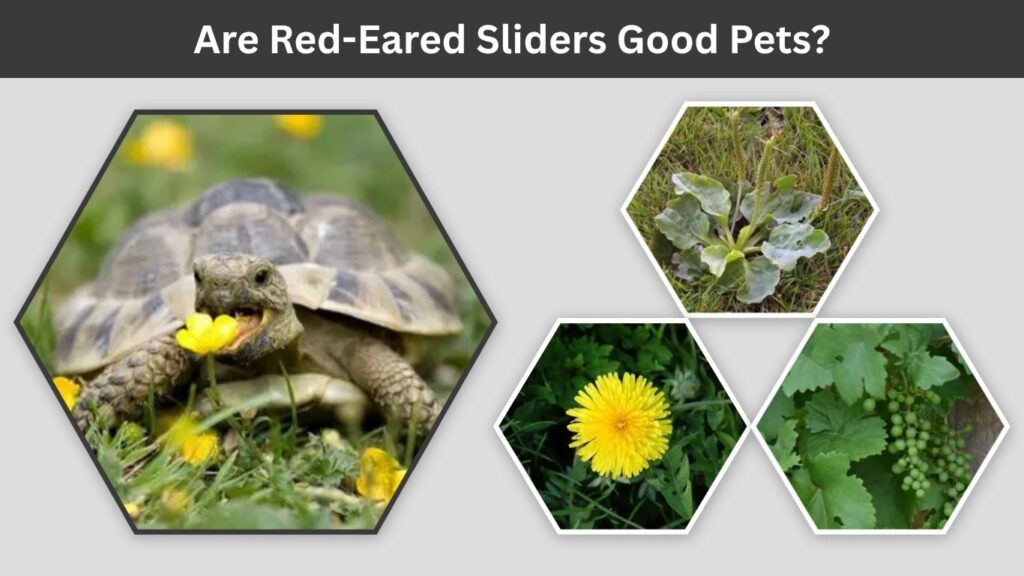
A Hermann’s tortoise diet should be high in fiber and low in protein. In the wild, they graze on weeds, flowers, leaves, and grasses. In captivity, the goal is to copy that natural diet as much as possible.
Best Foods
Good food options include:
- Dandelion leaves and flowers
- Plantain weed
- Clover in moderation
- Hibiscus leaves and flowers
- Mulberry leaves
- Grape leaves
- Endive
- Escarole
- Romaine in small amounts
- Collard greens in moderation
- Turnip greens in moderation
Foods to Avoid
Avoid feeding too much fruit, dog food, cat food, bread, dairy, or high-protein foods. These can upset digestion and cause poor growth. Tortoise Trust warns that old or poor diet advice often includes unsuitable foods such as bread, milk, dog food, and too many kitchen vegetables for some tortoises.
Avoid or limit:
- Fruit
- Spinach
- Iceberg lettuce
- Cabbage
- Broccoli
- Beans
- Processed foods
- Meat
- Pellets as the main diet
Calcium powder can be offered several times per week, especially for growing tortoises and egg-laying females. A cuttlebone can also be left in the enclosure.
Water, Soaking, and Humidity
Hermann’s tortoises need clean water at all times. Use a shallow dish that is easy to enter and exit. Change the water daily because tortoises often walk through it or soil it.
Baby and hatchling Hermann’s tortoises need more attention to hydration. Young tortoises can dry out faster than adults, so regular soaking is helpful. A shallow warm-water soak for 10–15 minutes several times a week can support hydration and healthy growth.
Humidity should not be extremely wet, but hatchlings often benefit from slightly higher humidity than adults. Many veterinary care sheets suggest moderate humidity and regular misting or soaking for young tortoises to prevent dehydration and support shell growth.
Baby Hermann’s Tortoise Care
Baby Hermann’s tortoise care is more delicate than adult care. Hatchlings need stable heat, good UVB, correct humidity, and a safe diet. They should not be kept too dry, and they should not be overfed.
Hatchling Care Tips
For baby Hermann’s tortoises:
- Keep temperatures stable
- Provide UVB every day
- Soak regularly
- Offer finely chopped weeds and greens
- Use shallow water dishes
- Avoid deep water
- Keep substrate slightly moist, not wet
- Watch shell growth closely
A baby tortoise should feel active, alert, and steady when walking. Swollen eyes, soft shell, refusal to eat, wheezing, or constant hiding may signal a health problem.
Eastern vs Western Hermann’s Tortoise Care
Eastern Hermann’s tortoises and Western Hermann’s tortoises have similar care needs. Both need a dry, warm setup with UVB, a varied weed-based diet, and space to explore. The main difference is size and natural range.
Eastern Hermann’s tortoises are usually more common in the pet trade and may grow slightly larger. Western Hermann’s tortoises are often smaller and may be more sensitive to poor conditions. However, the basic care sheet is almost the same for both.
Are Hermann’s Tortoises Easy to Take Care Of?
Hermann’s tortoises are often considered one of the better beginner tortoise species because they stay smaller than sulcata tortoises and do not need massive space. However, “easy” does not mean simple. They still need expensive lighting, proper temperatures, fresh food, outdoor time when possible, and long-term veterinary care.
They are easy only when the owner is ready to provide:
- A large enclosure
- Daily fresh food
- UVB lighting
- Correct heat
- Clean water
- Safe substrate
- Long-term care planning
Common Hermann’s Tortoise Care Mistakes
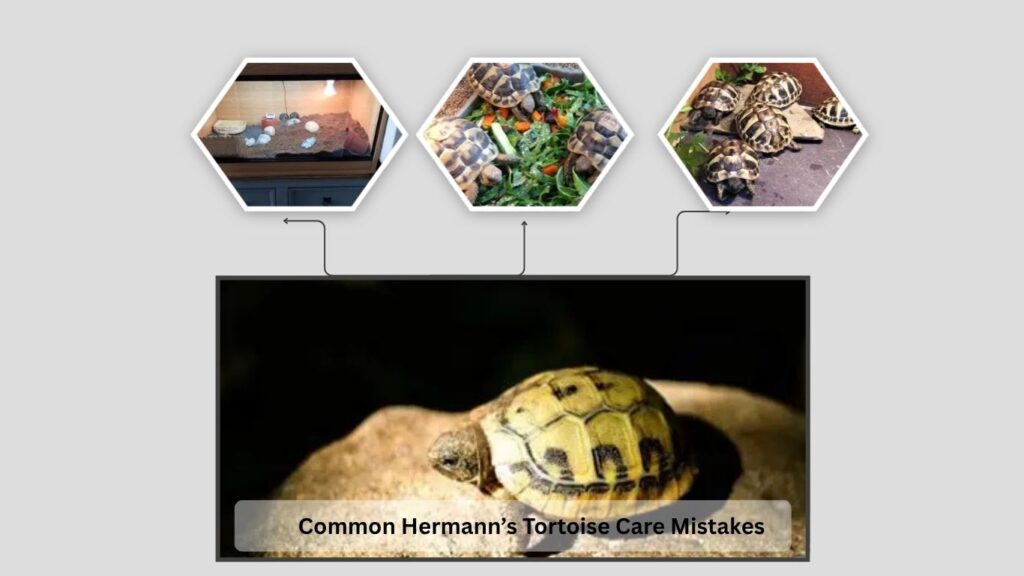
Many health problems come from simple setup mistakes. A tortoise may survive poor care for a while, but long-term problems can appear slowly.
Common mistakes include:
- Keeping the tortoise in a small glass tank
- No UVB lighting indoors
- Feeding too much fruit
- Using only lettuce
- Keeping the enclosure too cold
- Not offering calcium
- Using unsafe bedding
- Letting the tortoise roam on floors
- Keeping babies too dry
- Mixing aggressive tortoises together
If a tortoise stops eating, has bubbles from the nose, swollen eyes, shell softness, weight loss, or trouble walking, contact an exotic reptile vet.
FAQs
How do you care for a Hermann’s tortoise?
Care for a Hermann’s tortoise by giving it a large enclosure, basking heat, UVB lighting, fresh weeds and leafy greens, calcium, clean water, and safe substrate. It also needs hiding areas, daily temperature checks, and outdoor time when the weather is safe.
Are Hermann’s tortoises easy to take care of?
Hermann’s tortoises are easier than many large tortoise species, but they are not maintenance-free. They need correct heat, UVB, diet, hydration, and space. They are best for owners who can commit to daily care and long-term housing.
What should a Hermann’s tortoise eat?
A Hermann’s tortoise should eat mostly weeds, grasses, flowers, and leafy greens. Dandelion, plantain, hibiscus, grape leaves, endive, and escarole are good choices. Avoid fruit, bread, meat, dairy, dog food, and too many watery vegetables.
Do Hermann’s tortoises need UVB light?
Yes, Hermann’s tortoises need UVB light when kept indoors. UVB helps them produce vitamin D3 and use calcium properly. Without UVB, they can develop weak bones, poor shell growth, and metabolic bone disease.
How often should you soak a baby Hermann’s tortoise?
A baby Hermann’s tortoise can be soaked several times per week in shallow warm water for about 10–15 minutes. Hatchlings dry out faster than adults, so regular soaking helps hydration and supports healthy shell development.