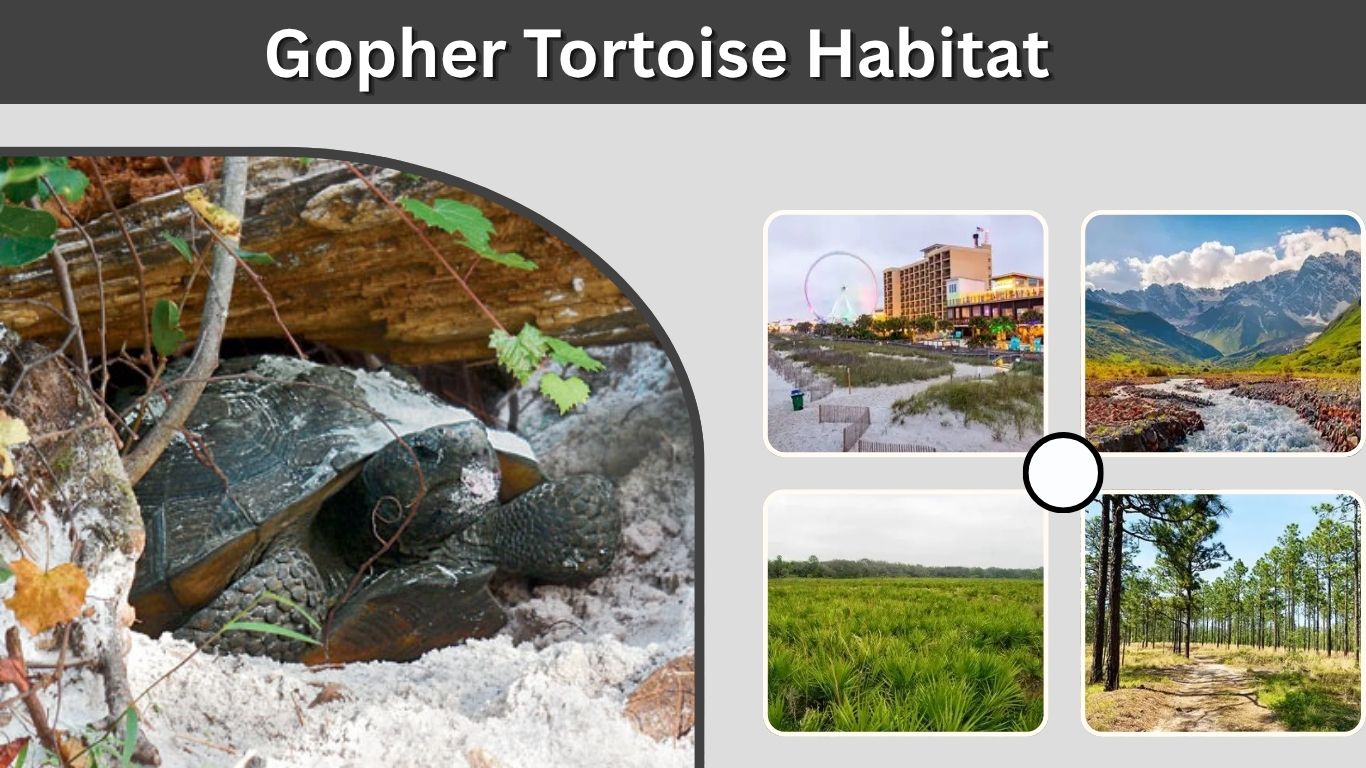
Gopher tortoises live in warm, dry environments across the southeastern United States. Their ideal habitat combines sandy soil, abundant low-growing plants, open sunlight, and enough undisturbed land for digging burrows. Although longleaf pine forests are strongly associated with these tortoises, they also occupy scrub, coastal dunes, pastures, and other upland areas. Understanding gopher tortoise habitat is important because habitat loss, development, fire suppression, and fragmentation continue to threaten many populations throughout their natural range.
What Is a Gopher Tortoise Habitat?
A suitable gopher tortoise habitat is generally a dry upland area where the soil is deep enough for burrowing and sunlight reaches the ground. These conditions allow tortoises to create shelters, regulate their body temperature, lay eggs, and find enough plants to eat.
Essential Habitat Requirements
Gopher tortoises need several basic habitat features:
- Deep, well-drained sandy soil for burrows and nests
- Open or lightly wooded surroundings that receive abundant sunlight
- Low-growing grasses, flowers and other plants for food
- Dry upland ground that does not flood regularly
- Connected natural areas where tortoises can move safely
- Regular vegetation management to prevent dense shrubs and trees
Suitable habitat may occur in longleaf pine sandhills, xeric oak hammocks, scrub, pine flatwoods, dry prairies and coastal dunes. Tortoises can also survive in altered areas such as pastures, old fields, roadsides, utility corridors and lightly developed neighborhoods when essential habitat features remain.
Where Do Gopher Tortoises Live?
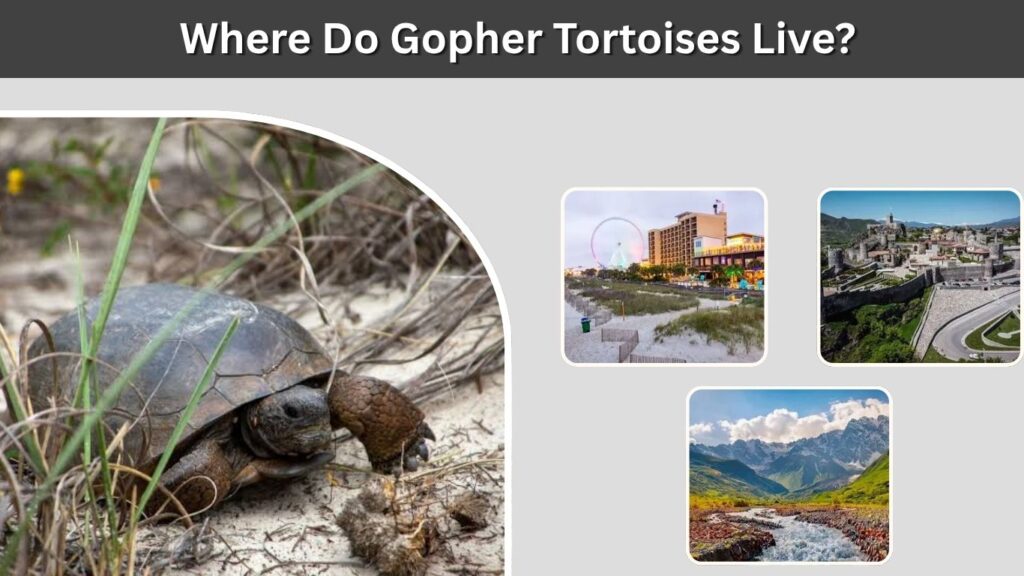
The natural gopher tortoise range follows the Coastal Plain of the southeastern United States. It extends from southern South Carolina through southern Georgia and Florida, then west through southern Alabama and Mississippi into eastern Louisiana. The strongest remaining populations are concentrated in Florida and southern Georgia.
| Location | Typical gopher tortoise habitat |
| Florida | Sandhills, scrub, flatwoods, dry prairie, dunes and pastures |
| Georgia | Longleaf pine forests, sandhills and dry sandy uplands |
| South Carolina | Coastal Plain sandhills and remaining pine habitat |
| Alabama | Pine savannas, sandy ridges and open woodlands |
| Mississippi | Longleaf pine areas and dry coastal uplands |
| Louisiana | Isolated longleaf pine and sandy upland habitat |
Gopher Tortoise Habitat in Florida
Gopher tortoises occur throughout much of Florida. They may be found in natural forests, state parks, ranchlands, pastures, vacant lots and residential areas. Florida habitat must provide sandy soil for digging, open sunny locations for basking and nesting, and enough herbaceous groundcover for feeding.
Florida’s sandhill communities are particularly valuable. These habitats commonly have widely spaced pine trees, dry sandy ground and a diverse layer of wiregrass, broadleaf plants and seasonal flowers.
Gopher Tortoise Habitat in Georgia
In Georgia, gopher tortoises are primarily associated with the southern part of the state. Longleaf pine ecosystems and deep, sandy soils provide some of the best habitat. Open longleaf pine crowns allow sunlight to reach the ground, supporting the grasses and wildflowers tortoises need.
Georgia conservation programs have focused on protecting viable tortoise populations, conserving large areas of habitat and restoring longleaf pine ecosystems. In 2025, the state announced that a long-term initiative had reached its goal of protecting 65 viable populations while working toward conserving and restoring 100,000 acres.
Common Types of Natural Habitat
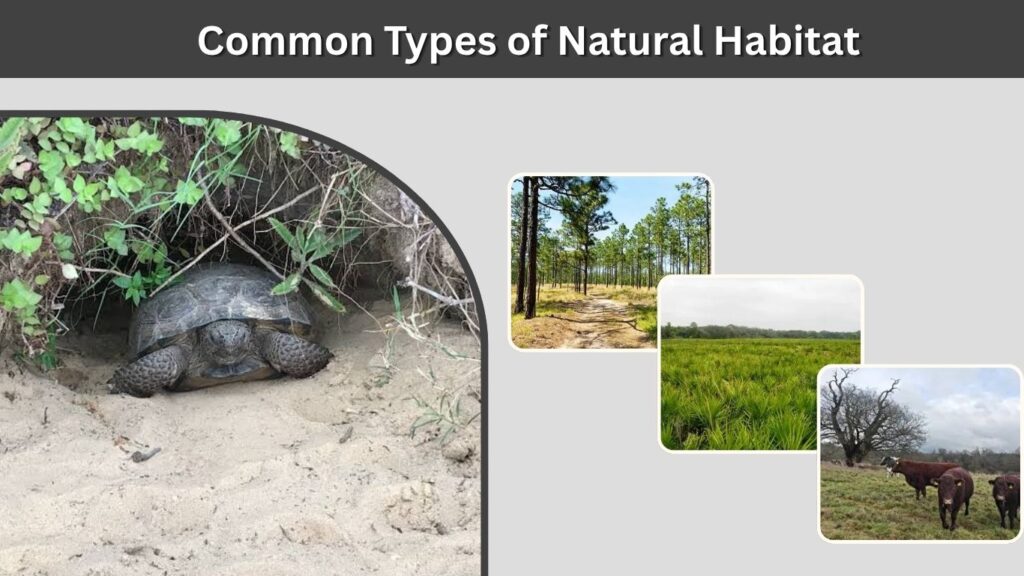
Gopher tortoises are adaptable, but they cannot live successfully in every dry-looking environment. The following habitats usually provide the most suitable combination of soil, food and sunlight.
Longleaf Pine Sandhills
Longleaf pine sandhills are considered classic gopher tortoise habitat. They have loose sandy soil, an open tree canopy and a rich ground layer of grasses and flowering plants.
Historically, natural fires moved through these forests regularly. Fire prevented hardwood trees and shrubs from becoming too dense while encouraging fresh plant growth near ground level.
Scrub, Flatwoods and Dry Prairie
Florida scrub contains sandy ridges, scattered shrubs and open patches suitable for digging and basking. Pine flatwoods may also support tortoises when the soil drains properly and the tree canopy remains sufficiently open.
Dry prairies provide sunlight and a wide variety of low-growing plants. However, wet prairies and frequently flooded ground are generally unsuitable because tortoise burrows must remain relatively dry.
Coastal Dunes and Modified Areas
Some gopher tortoises inhabit coastal dunes with stable sandy ground and native vegetation. Others live in pastures, old agricultural fields, roadsides, powerline corridors and suburban properties.
Modified land can provide temporary or long-term habitat, but tortoises living there face greater risks from vehicles, construction, pets, mowing equipment and habitat isolation.
Why Gopher Tortoise Burrows Matter
A gopher tortoise’s habitat extends below the surface. Burrows average approximately 15 feet long and 6.5 feet deep, although unusually large burrows may reach about 40 feet in length and 10 feet in depth. A tortoise may use several burrows during its life.
These underground shelters maintain more stable conditions than the surface and provide protection from heat, cold, drought, storms and fire. Gopher tortoises may spend up to 80 percent of their time inside their burrows.
More than 350 other animal species use gopher tortoise burrows or the surrounding burrow community. These include insects, small mammals, frogs and snakes. Because their engineering activities create shelter for so many organisms, gopher tortoises are considered a keystone species.
Why Are Gopher Tortoises Losing Habitat?
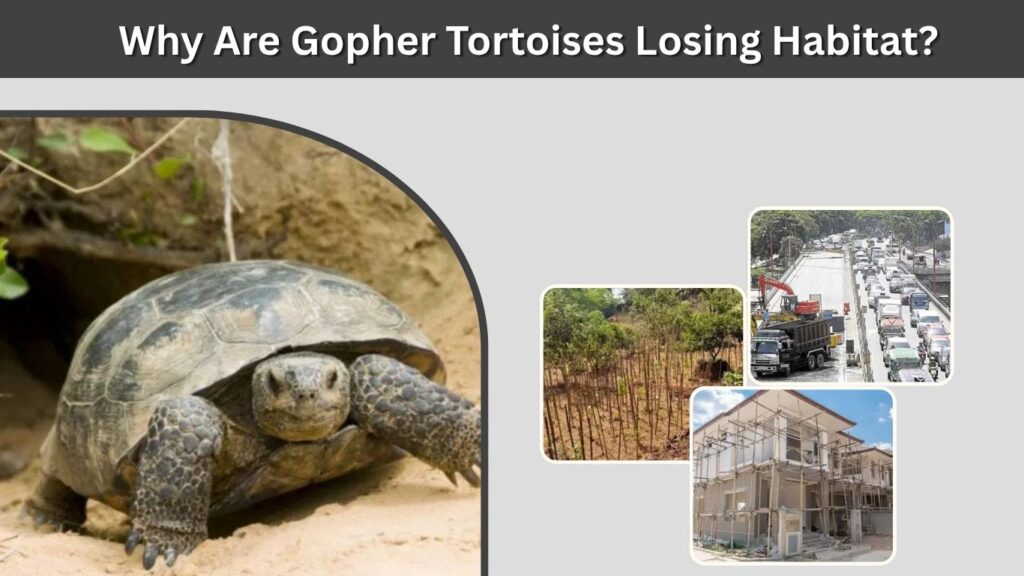
Habitat loss is one of the greatest threats facing gopher tortoises. Dry upland areas are also desirable locations for housing, roads, agriculture, commercial development and timber production.
Major causes of habitat decline include:
- Residential and commercial construction
- Road building and increased vehicle traffic
- Conversion of natural forests into dense plantations
- Fire suppression and excessive shrub growth
- Habitat fragmentation and population isolation
- Coastal development and sea-level rise
- Invasive plants that replace native food sources
- Improper land clearing, grading and heavy machinery
Fire suppression can make otherwise suitable land unusable. Without periodic fire or another management method, shrubs and hardwood trees grow densely, shade the ground and reduce the grasses and flowers tortoises eat. Climate-related changes may also reduce opportunities for prescribed burning and increase flooding or coastal habitat loss.
Gopher Tortoise Habitat Management
Effective habitat management keeps the land sunny, dry, connected and rich in native groundcover. The exact plan depends on soil, vegetation, land size and the number of tortoise burrows present.
Prescribed Burning
Prescribed fire is one of the most important tools for maintaining gopher tortoise habitat. Controlled burns reduce dense shrubs, recycle nutrients and encourage new grasses and wildflowers. They also help restore the open structure of longleaf pine forests.
Burning must be conducted by trained professionals under appropriate weather and safety conditions.
Tree Thinning and Herbicide Use
Selective tree thinning can open a shaded canopy and allow more sunlight to reach food plants. Carefully planned herbicide treatments may also be used to control invasive vegetation or excessive hardwood growth when prescribed fire alone is insufficient.
Herbicide effects depend on the chemical, application method, timing and plants being targeted. Habitat managers should avoid treatments that unnecessarily remove native forage or disturb active burrows. Professional best-management guidance recommends combining selective thinning, herbicide treatment and prescribed fire when appropriate.
Restoring Native Plants
Native broadleaf grasses, wiregrass, prickly pear, blackberry, blueberry, wild grape and beautyberry can provide natural food. Tortoises normally forage relatively close to their burrows, making healthy ground vegetation especially important around occupied areas.
Land managers should also protect travel corridors between feeding areas, nesting sites and neighboring populations.
How to Recognize Gopher Tortoise Habitat
The clearest sign is a half-moon-shaped burrow entrance with a mound or “apron” of excavated sand in front. A recently used burrow may have fresh tracks, feeding trails or loose soil around its entrance. Burrow width varies according to the size of the tortoise.
Never enter, block, collapse or modify a suspected burrow. Gopher tortoises and their burrows are legally protected in Florida, and the species receives varying levels of protection in every state within its range. Property owners should contact the appropriate state wildlife agency before construction or major land disturbance near a burrow.
FAQs
What is the natural habitat of a gopher tortoise?
The natural habitat of a gopher tortoise is usually a warm, dry upland environment with deep sandy soil, an open tree canopy and abundant low-growing vegetation. Longleaf pine sandhills are especially important, but tortoises also occupy scrub, flatwoods, dry prairie and coastal dunes.
Where are gopher tortoises found in Florida?
Gopher tortoises are distributed across much of Florida wherever suitable upland habitat remains. They occur in natural forests, scrublands, parks, ranches, pastures, roadsides and some residential areas. They are less suited to wetlands, frequently flooded land and places with heavily compacted soil.
Why do gopher tortoises need sandy soil?
Sandy, well-drained soil is easier for tortoises to excavate and is less likely to hold standing water. It allows them to construct deep burrows that provide stable temperatures and protection from weather, fire and predators. Sandy areas are also commonly used for nesting.
Do prescribed burns help gopher tortoise habitat?
Yes. Properly managed prescribed burns reduce dense shrubs and hardwood growth, maintain an open canopy and stimulate new groundcover. This creates sunny basking and nesting areas while increasing the availability of grasses and broadleaf plants. Burns should always be planned and performed by qualified professionals.
Can gopher tortoises live in residential areas?
Gopher tortoises sometimes live in yards, vacant lots and other developed surroundings when sandy soil, food and burrowing space remain available. However, these habitats can expose them to vehicles, dogs, construction and lawn equipment. Their burrows should not be blocked, moved or disturbed.