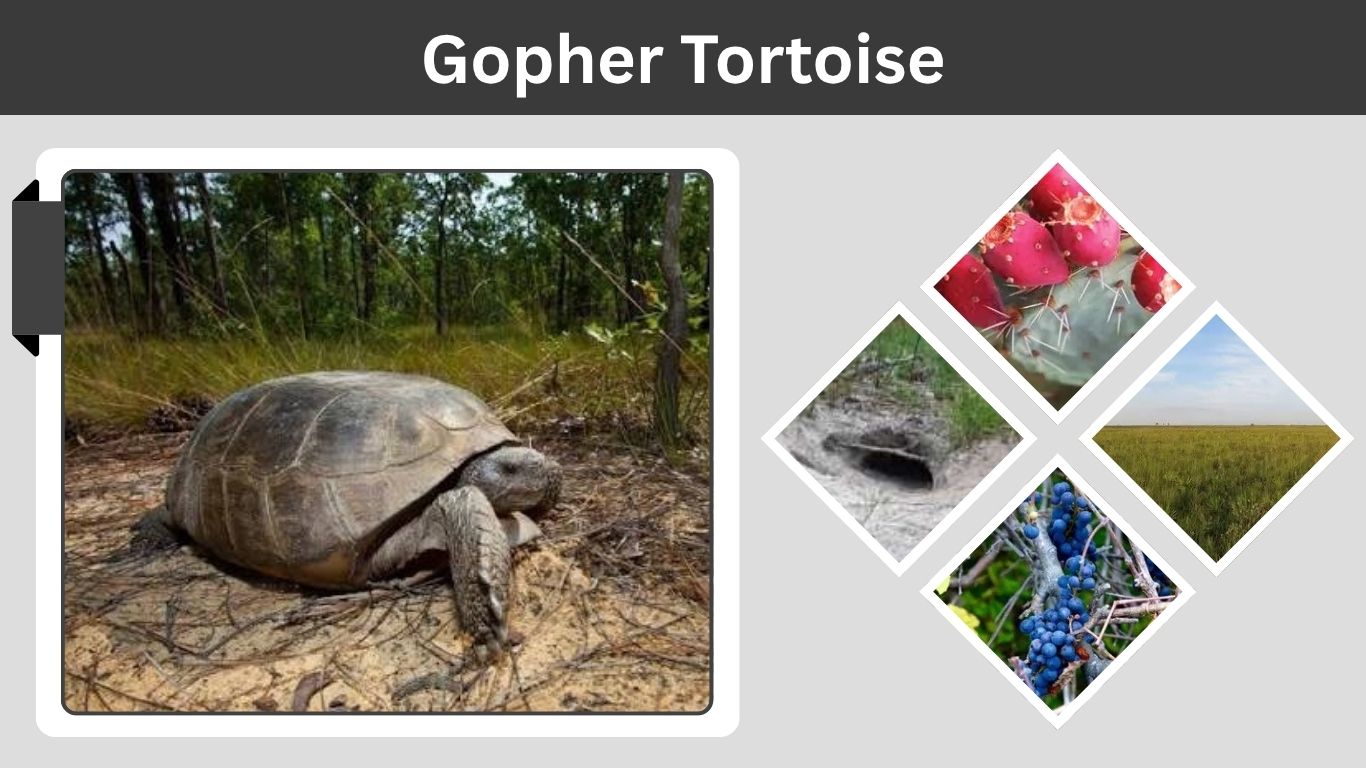
The gopher tortoise is a land-dwelling reptile known for its powerful digging ability and deep underground burrows. Native to the southeastern United States, this long-lived tortoise plays an unusually important role in its ecosystem. Its burrows provide shelter for hundreds of other animals, earning it recognition as a keystone species. Learn how to identify a gopher tortoise, where it lives, what it eats, how long it survives and why protecting its habitat matters.
What Is a Gopher Tortoise?
The gopher tortoise, scientifically known as Gopherus polyphemus, is one of five tortoise species native to North America. It is the only native tortoise naturally found east of the Mississippi River.
Unlike aquatic turtles, gopher tortoises are adapted almost entirely to life on land. Their strong legs, thick claws and sturdy shells help them survive in warm, dry environments with sandy soil. Their natural range includes Florida, Georgia, South Carolina, Alabama, Mississippi and Louisiana.
| Feature | Description |
| Scientific name | Gopherus polyphemus |
| Animal group | Reptile |
| Typical shell length | Around 10–15 inches |
| Adult weight | Approximately 9–13 pounds |
| Diet | Mainly plants |
| Range | Southeastern United States |
| Main shelter | Underground burrow |
What Does a Gopher Tortoise Look Like?
Adult gopher tortoises have high, rounded shells that are usually brown, gray or grayish-black. Their lower shells are yellowish and do not contain the flexible hinges seen in some other turtles.
Identification Characteristics
A gopher tortoise can be recognized by several features:
- Domed brown, tan or gray shell
- Large, flattened front legs
- Thick claws adapted for digging
- Short, rounded hind legs
- Dry, scaly skin
- Yellowish lower shell
- Small head with a slightly hooked upper jaw
The front feet resemble small shovels, while the hind feet are round and sturdy. Hatchlings are approximately two inches long and often have softer shells with noticeable yellow-orange coloring. Their colors become duller as they mature.
Male vs. Female Gopher Tortoise
Adult males usually have a more deeply concave lower shell, a longer projection beneath the front of the shell and more noticeable glands under the chin. Females generally have flatter lower shells and may grow larger than males.
However, accurately identifying the sex of a young or immature tortoise can be difficult without professional experience.
Gopher Tortoise Size
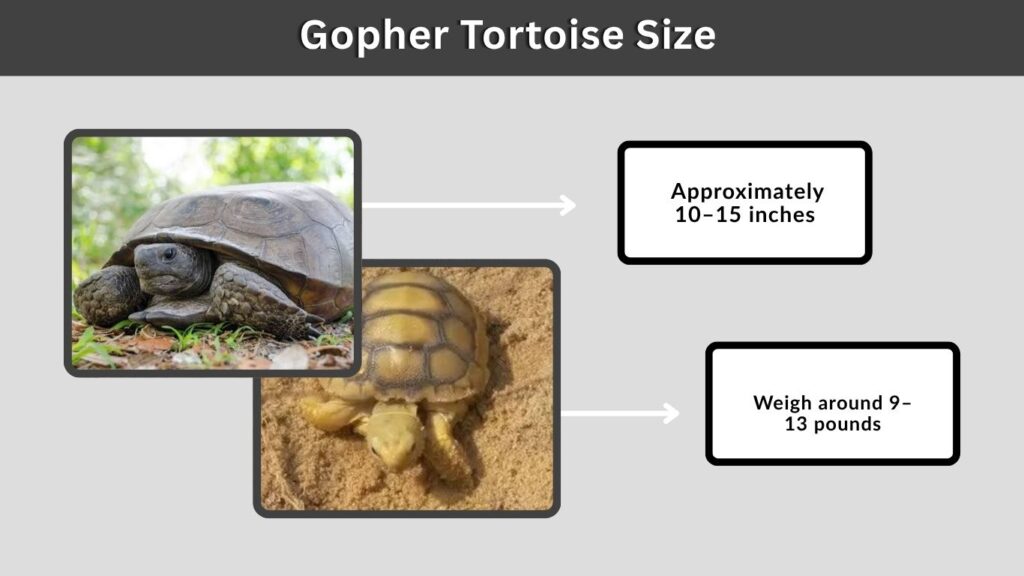
Adult gopher tortoises commonly have shells measuring approximately 10–15 inches long and may weigh around 9–13 pounds. Size varies according to age, sex, habitat quality and access to food.
A juvenile gopher tortoise is much smaller and may have brighter shell markings. Because these tortoises grow slowly, it can take more than a decade for an individual to reach reproductive maturity.
Where Do Gopher Tortoises Live?
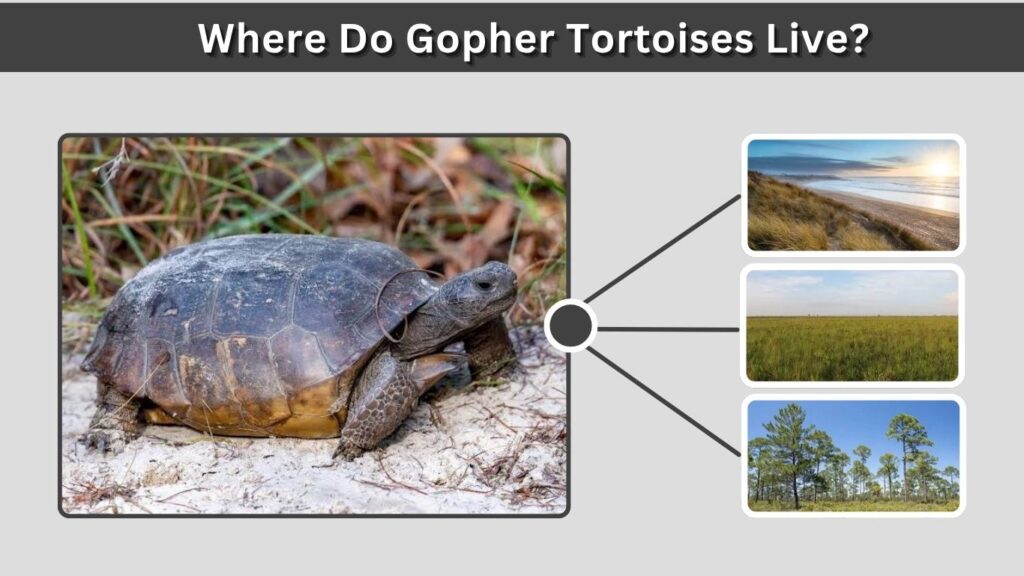
Gopher tortoises inhabit dry upland environments across the southeastern Coastal Plain. They are strongly associated with longleaf pine forests but can survive in several habitats that offer suitable soil, food and sunlight.
Common Habitats
Gopher tortoise habitats include:
- Longleaf pine forests
- Sandhills
- Scrublands
- Pine flatwoods
- Dry prairies
- Coastal dunes
- Pastures and old fields
- Roadsides and utility corridors
A suitable habitat must have deep, well-drained soil that is easy to excavate. The area should also receive enough sunlight to support grasses, flowers and other low-growing plants.
Gopher Tortoises in Florida
Florida supports extensive gopher tortoise populations because many parts of the state contain warm weather, sandy soil and upland plant communities. Tortoises may occur in natural forests, parks, ranches, vacant lots and residential areas.
Florida recognizes the gopher tortoise as a threatened species. Both the tortoise and its burrow are protected under state law. A permit is required before tortoises can be moved during construction or land-clearing projects.
Gopher Tortoises in Georgia
The gopher tortoise is Georgia’s official state reptile and primarily occurs in the southern Coastal Plain. Open longleaf pine forests with deep sandy soil provide particularly valuable habitat.
In 2025, Georgia announced that its conservation initiative had achieved its goal of permanently protecting 65 viable gopher tortoise populations.
Gopher Tortoise Burrows
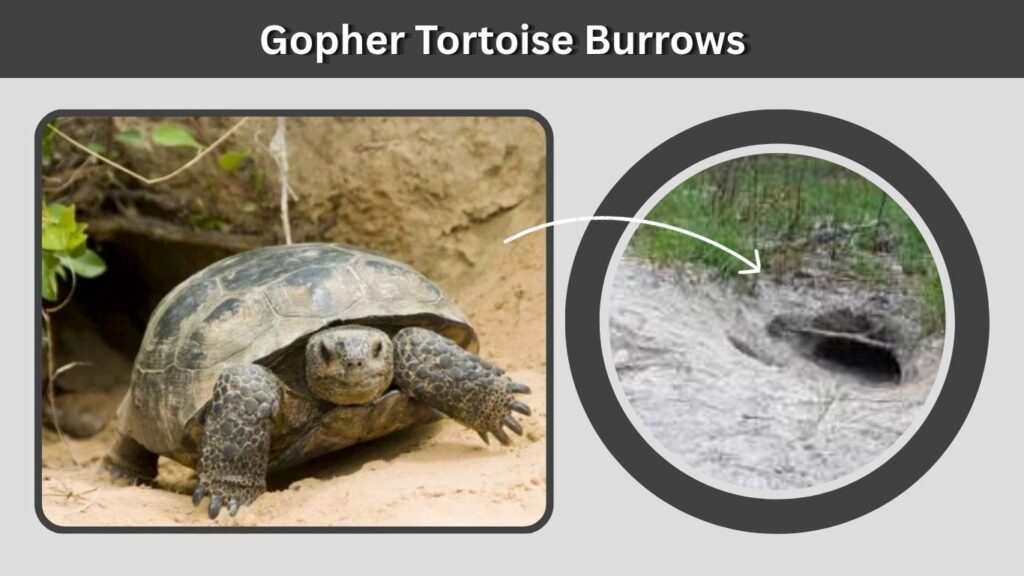
Burrowing is the gopher tortoise’s most recognizable behavior. A tortoise uses its powerful front legs to loosen the soil before pushing it backward with its hind legs.
A typical burrow slopes gradually downward and ends in a chamber where the tortoise rests. Some burrows can extend dozens of feet underground.
What Does a Gopher Tortoise Hole Look Like?
The entrance to a gopher tortoise burrow is usually shaped like a half-moon or flattened arch. A mound of loose sand, known as the burrow apron, spreads outward from the opening.
Burrow entrances may range from approximately 2.5 to 15 inches wide, depending on the tortoise’s size. Fresh tracks, recently disturbed sand and a clear entrance may indicate that a burrow is active.
Why Are Burrows Important?
Gopher tortoises spend much of their time below ground. Burrows offer protection from:
- Summer heat
- Winter cold
- Drought
- Wildfires
- Severe weather
- Many predators
More than 360 other animal species have been documented using gopher tortoise burrows. These include insects, spiders, frogs, snakes and small mammals. Because so many animals benefit from their digging, gopher tortoises are considered a keystone species and ecosystem engineer.
What Do Gopher Tortoises Eat?
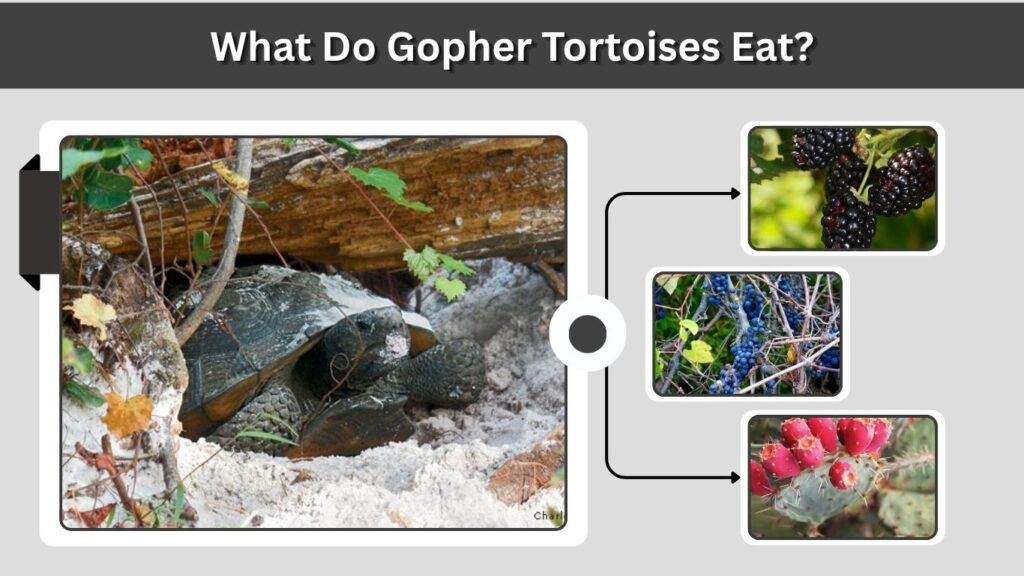
Gopher tortoises are primarily herbivores. They graze on plants growing close to the ground and usually feed within approximately 160 feet of their burrows, although they may travel farther when food is limited.
Their diet commonly includes:
- Wiregrass
- Broadleaf grasses
- Legumes
- Gopher apple
- Prickly pear cactus
- Wild grapes
- Blackberries
- Blueberries
- Flowers and leaves
- Seasonal fruits
The exact diet changes with the season and the plants available within the habitat. Feeding tortoises processed human food is not recommended because it may provide poor nutrition and encourage them to approach people or roads.
Gopher Tortoise Lifespan
Gopher tortoises are slow-growing and long-lived reptiles. Wild individuals can survive for several decades when they have secure habitat and avoid vehicles, disease and other threats.
Their exact age is difficult to determine from the shell alone. Growth rings may become worn and do not always correspond reliably to one year of life. Because adults reproduce slowly, losing mature tortoises can have lasting effects on a local population.
Gopher Tortoise Eggs and Young
The gopher tortoise breeding season generally occurs during warmer months. Females usually dig nests in sunny, sandy locations, often near the burrow entrance where loose soil makes excavation easier.
The eggs are round, white and covered by a hard shell. Incubation time depends partly on soil temperature and environmental conditions. Hatchlings receive no parental care and must find food and shelter on their own.
Young tortoises face considerable danger from raccoons, foxes, snakes, birds and other predators. Their shells remain relatively soft during early life, making them more vulnerable than fully grown adults.
Can Gopher Tortoises Swim?
Gopher tortoises may paddle briefly when placed in shallow water, but they are terrestrial animals rather than aquatic turtles. Their heavy bodies and sturdy, non-webbed feet are designed for walking and digging, not efficient swimming.
A gopher tortoise should never be placed in a pond, lake or other deep water. Doing so could cause exhaustion or drowning.
Do Gopher Tortoises Bite?
Gopher tortoises are normally calm and nonaggressive. When threatened, they are more likely to pull their head and limbs into their shell or retreat into a burrow.
However, a frightened or improperly handled tortoise may attempt to bite defensively. Wild tortoises should be observed from a distance and handled only when necessary to prevent immediate injury.
Are Gopher Tortoises Endangered?
The gopher tortoise’s conservation status varies across its range. The western population in Louisiana, Mississippi and western Alabama is federally listed as threatened. The eastern population is not federally listed, but the species receives some form of state protection throughout its range.
Major threats include habitat destruction, fire suppression, road traffic, fragmented populations, disease and illegal collection. Development is especially damaging when tortoise burrows are crushed, blocked or isolated from feeding areas.
What to Do When You Find a Gopher Tortoise
Leave a healthy tortoise alone when it is resting, feeding or moving through natural habitat. Never take one home as a pet or place it in water.
When a tortoise is crossing a road and it is safe to help, move it only to the roadside in the direction it was already traveling. Do not relocate it to a distant property or release site. Tortoises are familiar with their home ranges and may attempt to return, exposing them to further danger.
FAQs
Do gopher tortoises hibernate?
Gopher tortoises do not undergo the same deep hibernation seen in some mammals. During cold weather, they reduce their activity and spend longer periods inside their burrows. They may emerge on warm winter days to bask or feed.
Can you keep a gopher tortoise as a pet?
No. Gopher tortoises are protected wild animals throughout their natural range. Capturing, possessing, selling or relocating one without proper authorization may violate state or federal regulations.
What animals prey on gopher tortoises?
Raccoons, foxes, snakes, birds and some mammals eat gopher tortoise eggs or hatchlings. Adult tortoises are better protected by their hard shells, although they remain vulnerable to dogs, vehicles and human activities.
What does gopher tortoise poop look like?
Gopher tortoise scat is usually dark brown or greenish-brown and cylindrical. It often contains visible pieces of grass, plant fibers or seeds because the tortoise primarily eats vegetation.
Why is the gopher tortoise called a keystone species?
The gopher tortoise is called a keystone species because its burrows provide shelter for hundreds of other animals. Losing the tortoise could therefore affect many reptiles, amphibians, mammals and invertebrates that depend on these underground refuges.