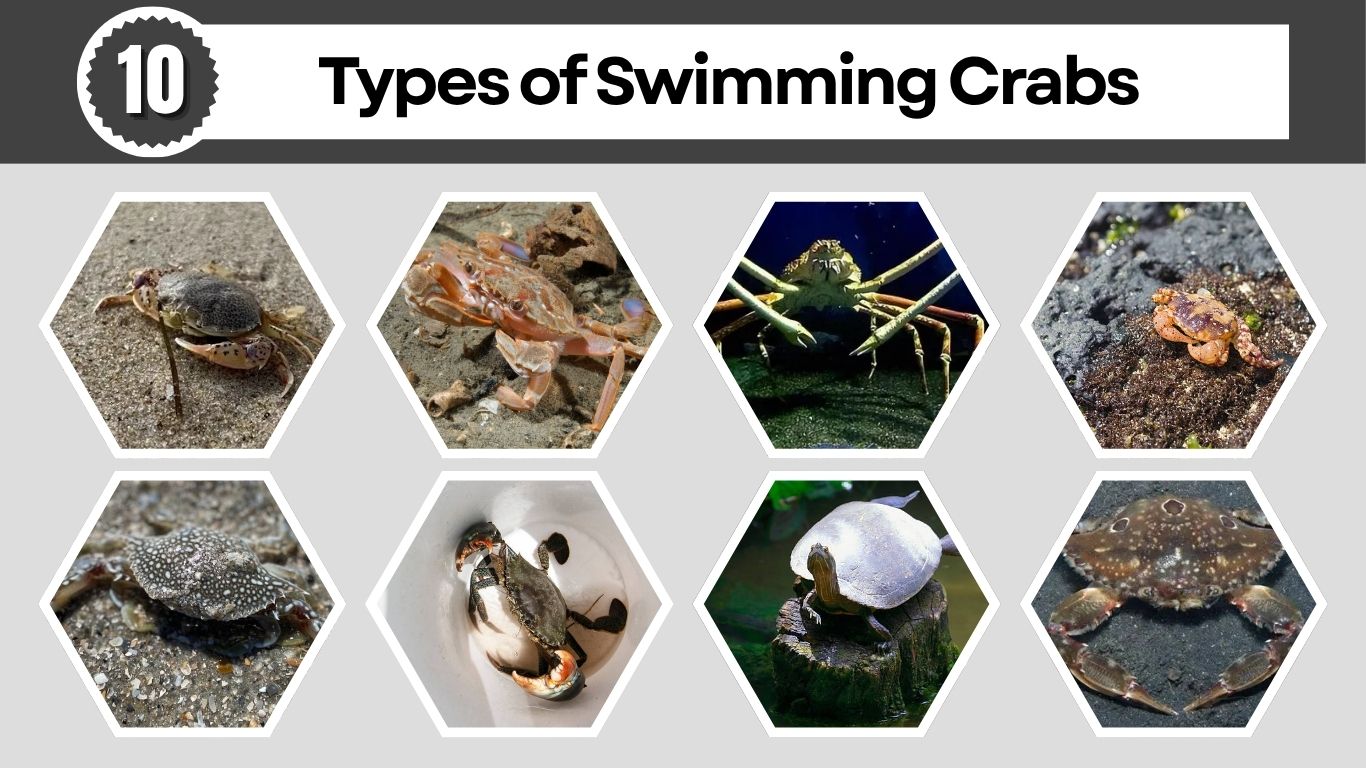
Swimming crabs are active marine crustaceans recognized by their broad shells and paddle-shaped rear legs. These specialized legs allow them to swim efficiently through coastal waters, estuaries, mangroves, coral reefs, and sandy seabeds. Some species display bright blue, red, purple, or spotted patterns, while others use dull colors to blend into mud or sand. This guide explores 10 types of swimming crabs, including their scientific names, habitats, sizes, colors, identification features, diets, and behavior.
1. Blue Swimming Crab (Portunus pelagicus)
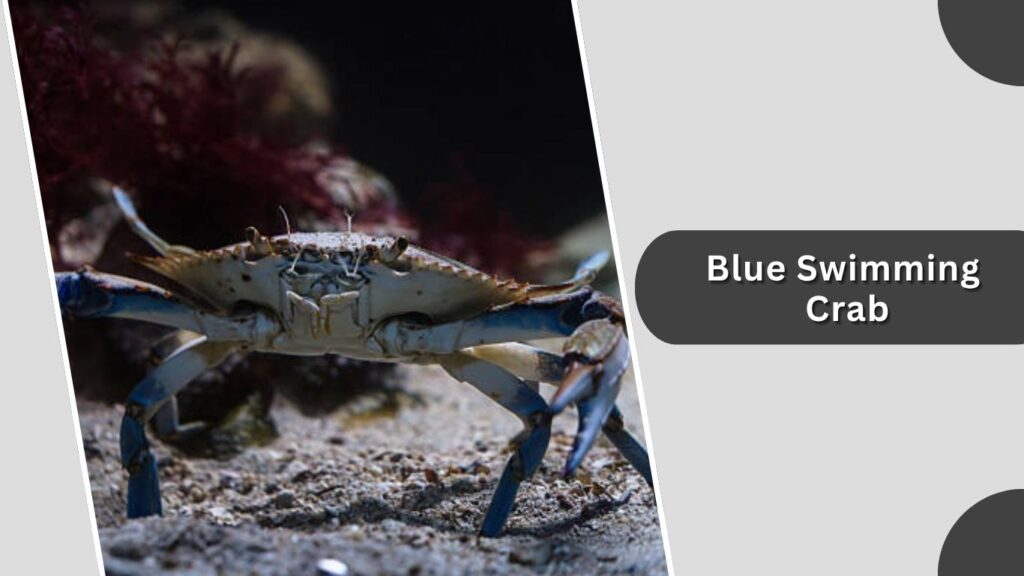
The blue swimming crab, also called the flower crab or blue swimmer, is a colorful marine crab found throughout the tropical Indo-West Pacific. It is named for its ability to swim using its flattened rear legs. This active crab commonly inhabits shallow coastal waters, estuaries, seagrass beds, and areas near coral reefs.
Identification
- Broad, flattened carapace with a rough surface
- Nine teeth along each side of the shell
- Long, sharp spine extending from each side
- Final pair of legs shaped like swimming paddles
- Males are usually bright blue with white spots
- Females are commonly greenish brown or olive
- Long, slender claws with small spines
Size and Color
Adult blue swimming crabs commonly measure about 14 centimetres across the carapace, although large males may reach approximately 20 centimetres. Males usually have vivid blue legs and claws marked with white spots, while females tend to display duller green, brown, or olive coloration.
Habitat and Distribution
This species occurs in warm coastal waters across the Indo-West Pacific. It lives on sandy and muddy seabeds, usually in shallow water near mangroves, seagrass meadows, algae beds, estuaries, and coral reefs. Juveniles frequently remain in protected, shallow nursery habitats before moving into deeper water as they mature.
Diet and Behavior
The blue swimming crab is an active omnivore and predator. It feeds on mollusks, worms, small crustaceans, fish remains, algae, and other organic material. During the day, it may bury itself partly beneath sand or mud, emerging to search for food. Its paddle-shaped rear legs allow it to swim quickly when escaping predators or pursuing prey.
2. Atlantic Blue Crab (Callinectes sapidus)
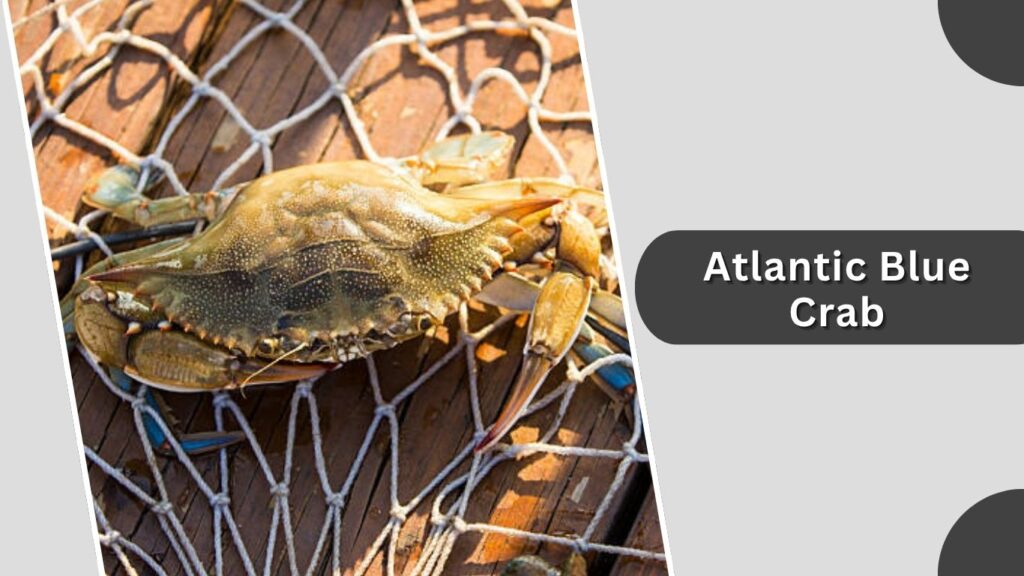
The Atlantic blue crab is a well-known swimming crab native to the western Atlantic Ocean. It has a broad shell, powerful claws, and paddle-shaped rear legs that allow it to move efficiently through the water. This adaptable species commonly lives in bays, estuaries, marshes, and coastal lagoons.
Identification
- Broad, flattened blue-green or olive carapace
- Nine teeth along each side of the shell
- Final side tooth forms a long, sharp spine
- Bright-blue claws, especially in adult males
- Mature females usually have red-tipped claws
- Three pairs of ordinary walking legs
- Final pair of legs flattened into swimming paddles
These features make the Atlantic blue crab easy to distinguish from many other coastal crabs.
Size and Color
The carapace can grow to approximately 23 centimetres across. Its shell is usually blue-green, olive green, or brownish green. The legs and claws may be vivid blue, while mature females are recognizable by the red or orange tips on their claws.
Habitat and Distribution
Atlantic blue crabs inhabit estuaries and coastal waters along the western Atlantic. They are strongly associated with submerged aquatic vegetation, which provides food, nursery habitat, protection during molting, and shelter during mating. They also occupy marshes, muddy bottoms, sandy areas, and shallow bays.
Diet and Behavior
The Atlantic blue crab is an active omnivore and scavenger. It consumes clams, mussels, worms, fish, smaller crustaceans, aquatic plants, and decaying organic matter. It can swim rapidly, but it also spends considerable time walking or partially burying itself on the bottom.
3. Three-Spotted Swimming Crab (Portunus sanguinolentus)
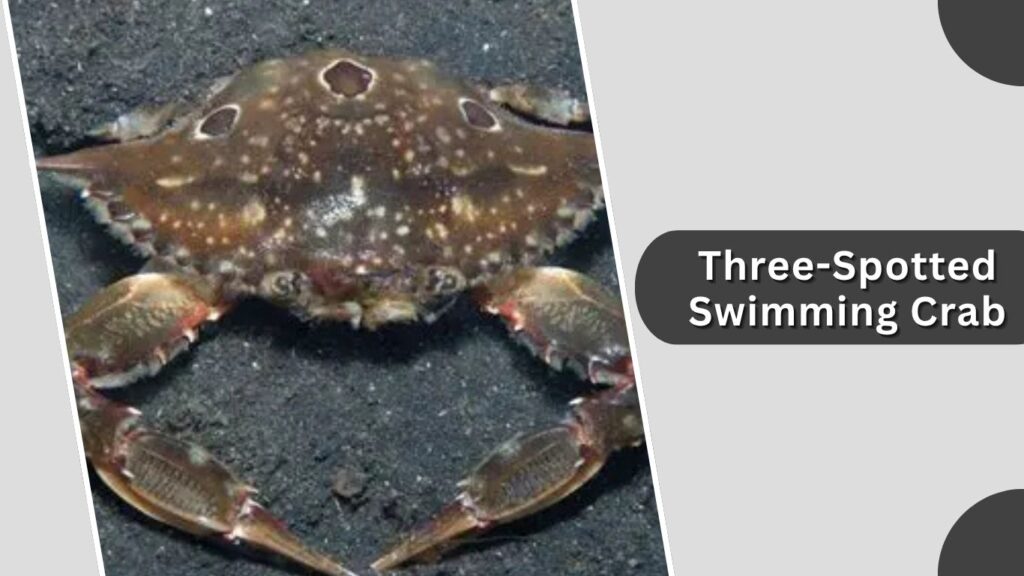
The three-spotted swimming crab is named for the three large red or maroon markings on the rear portion of its shell. It is a widespread Indo-Pacific species that inhabits sandy coastal environments. Its flattened rear legs make it a capable swimmer and help it escape predators.
Identification
- Broad, finely textured carapace
- Nine teeth along each side of the shell
- Final side tooth much longer than the others
- Three large red or maroon spots near the rear
- Pale or white border surrounding each spot
- Long claws, particularly in adult males
- Final pair of legs shaped like paddles
The three distinctive shell spots are the easiest way to recognize this species.
Size and Color
The three-spotted swimming crab commonly measures around 13 centimetres across, although larger specimens may approach 15–20 centimetres. The shell is generally olive, dark green, grayish green, or brown, with three highly visible reddish spots on the posterior third.
Habitat and Distribution
This species occurs across tropical and subtropical parts of the Indo-Pacific, from eastern Africa and the Indian Ocean to Southeast Asia, China, Japan, and Pacific islands. It prefers sandy or sandy-muddy bottoms from intertidal areas to depths of approximately 30 metres.
Diet and Behavior
The three-spotted swimming crab is an opportunistic predator and scavenger. It feeds on mollusks, marine worms, small fish, crustaceans, and organic remains. Juveniles often remain in shallow coastal areas, while adults may occupy deeper sandy seabeds.
4. Flower Swimming Crab (Charybdis feriata)
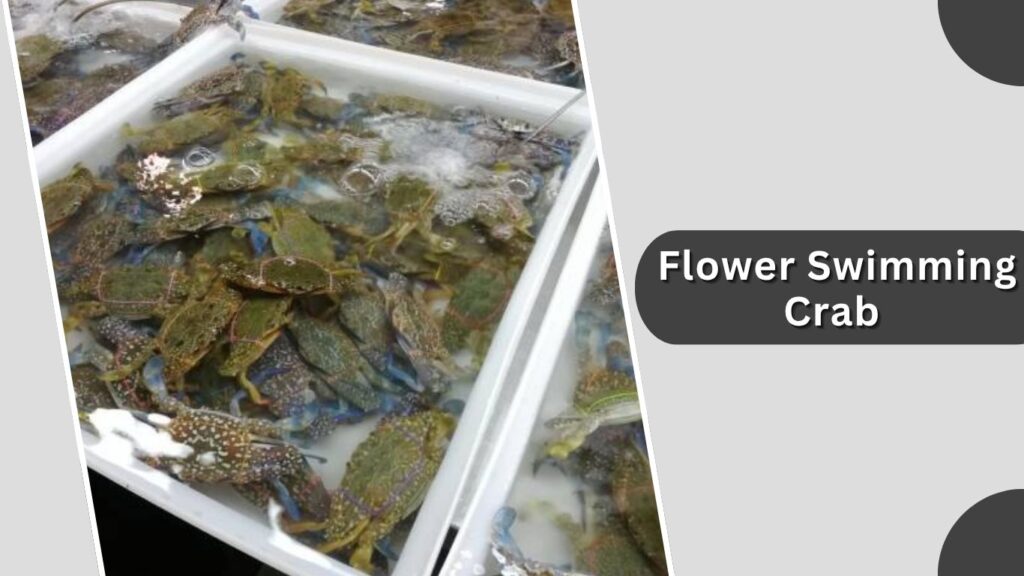
The flower swimming crab is also known as the crucifix crab because of the cross-shaped marking commonly visible on the middle of its shell. Its attractive maroon-and-white pattern makes it one of the most recognizable swimming crabs in tropical Indo-Pacific waters.
Identification
- Broad, oval-shaped carapace
- Five distinct teeth along each side
- Maroon, reddish-brown, or purple shell
- White or yellow longitudinal markings
- Cross-shaped pale marking on the central shell
- Legs and claws covered with white spots
- Flattened paddle-like rear legs
The central cross and striped shell pattern distinguish it from most other swimming crabs.
Size and Color
The flower swimming crab can reach approximately 20 centimetres across the carapace, although many adults are smaller. Its body is usually maroon, reddish brown, or purplish red, with contrasting white or yellow lines, spots, and a pale cross-shaped marking.
Habitat and Distribution
This crab is widely distributed throughout the Indo-Pacific, including eastern Africa, the Indian Ocean, Southeast Asia, China, Japan, and Australia. It commonly inhabits sandy or sandy-muddy seabeds at depths of around 30–60 metres, but it may also occur near reef flats and rocky coasts.
Diet and Behavior
The flower swimming crab is an omnivorous predator and scavenger. It feeds on shellfish, worms, small crustaceans, fish remains, and other bottom-dwelling organisms. It may bury itself in sediment while resting and uses its paddle-shaped rear legs to swim when disturbed.
5. Japanese Swimming Crab (Charybdis japonica)
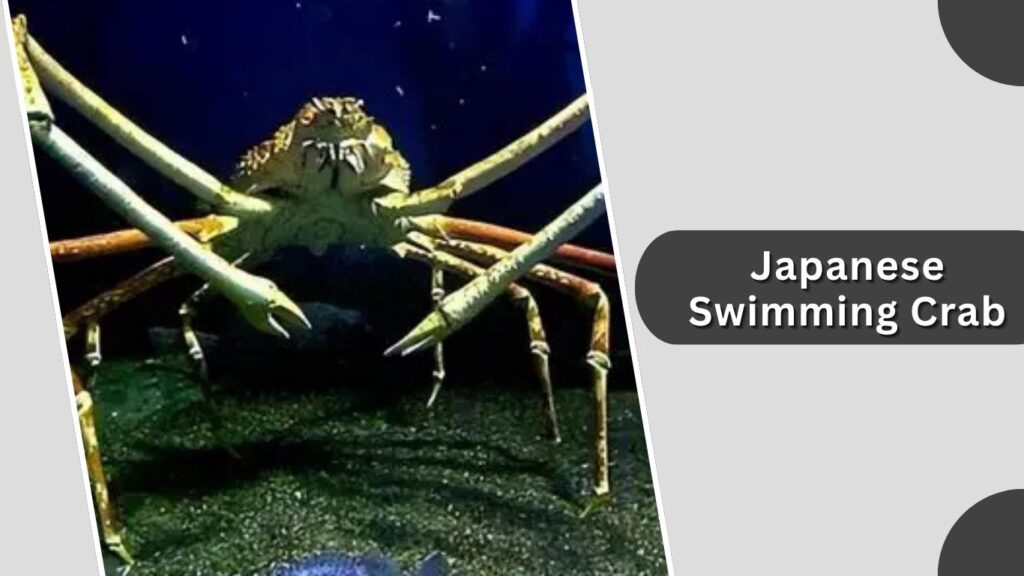
The Japanese swimming crab, also called the Asian paddle crab, is a medium-sized species native to the northwestern Pacific. It has sharp shell teeth, patterned claws, and flattened swimming legs. It generally lives on muddy, sandy, or stony seabeds just offshore.
Identification
- Broad carapace with sharply triangular front teeth
- Six pointed teeth along each side
- No transverse ridge behind the final side tooth
- Five sharp spines on the palm of each claw
- Serrated edge on part of the walking legs
- White or pale shell with large gray patches
- Red-and-white claw fingers
- Paddle-shaped final pair of legs
The triangular shell teeth and contrasting red-and-white claws are useful identification features.
Size and Color
The carapace typically reaches around 7 centimetres across, although some populations may include individuals approaching 10 centimetres. Its shell may be whitish, gray-green, brownish, or reddish, depending on the individual, with darker patches and reddish-brown tooth tips.
Habitat and Distribution
The Japanese swimming crab is native to waters around Japan, China, Korea, Taiwan, Thailand, and Malaysia. It generally lives just offshore on sandy, muddy, or stony bottoms. The species has also been introduced to areas outside its native range.
Diet and Behavior
This swimming crab feeds on mollusks, worms, small crustaceans, fish, algae, and carrion. It is often active at night and may hide beneath sediment or among stones during the day. When threatened, it can swim sideways or backward using its flattened rear legs.
6. Velvet Swimming Crab (Necora puber)
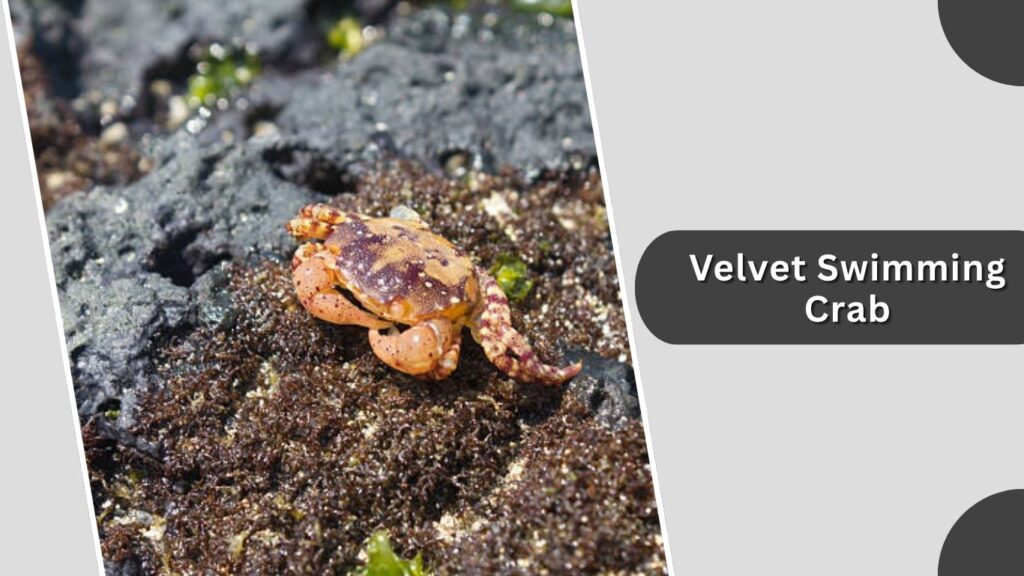
The velvet swimming crab is a fast-moving coastal species named for the short hairs covering its shell. It is also called the devil crab because of its bright-red eyes and defensive behavior. This crab occurs in the northeastern Atlantic and Mediterranean region, where it shelters among rocks, seaweed, and coastal crevices.
Identification
- Broad, flattened carapace
- Dense, velvet-like hairs covering the shell
- Bright-red eyes
- Dark-blue, brown, or nearly black body
- Red or orange markings around the legs
- Strong claws with dark tips
- Flattened rear legs used as swimming paddles
Size and Color
The shell commonly measures around 6–8 centimetres across, although large individuals may approach 10 centimetres. Its underlying body is often blue, but dense brownish hairs create a dark, velvety appearance. Red eyes and reddish-orange markings provide strong color contrasts.
Habitat and Distribution
Velvet swimming crabs inhabit rocky shorelines, rock pools, seaweed beds, and shallow subtidal areas. They are widespread around Britain and Ireland and occur elsewhere in the northeastern Atlantic and Mediterranean. Some individuals may be found at depths approaching 80 metres.
Diet and Behavior
This species is an aggressive omnivore and predator. It eats mollusks, hermit crabs, prawns, small fish, algae, and carrion. It usually hides beneath rocks but can swim rapidly when disturbed. Its strong claws can deliver a painful pinch.
7. Giant Mud Crab (Scylla serrata)
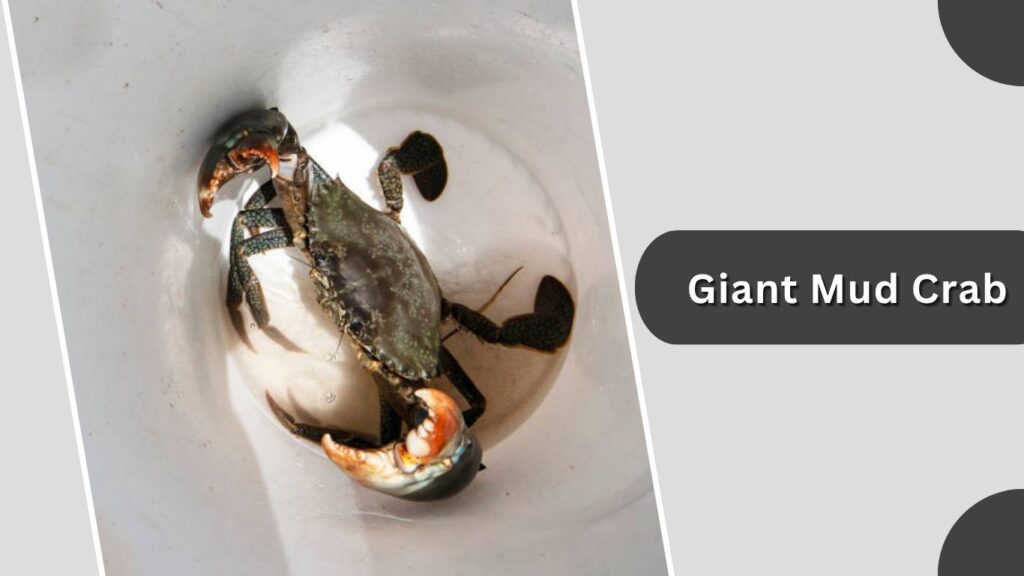
The giant mud crab, also called the mangrove mud crab, is one of the largest swimming crabs. It has a heavy shell, powerful claws, and paddle-shaped rear legs. The species is economically important throughout the Indo-Pacific and commonly inhabits mangrove forests, estuaries, and sheltered coastal waters.
Identification
- Broad, oval-shaped carapace
- Nine pointed teeth along each side
- Four rounded projections between the eyes
- Massive, powerful front claws
- Sharp spines on the claw joints
- Flattened final pair of swimming legs
- Dark-green, olive, brown, or nearly black shell
Size and Color
Large giant mud crabs may develop a carapace width of approximately 20–28 centimetres and weigh as much as 3 kilograms. Their shells are generally olive green, dark green, brown, or blackish, while the claws and swimming legs may show purple or green tones.
Habitat and Distribution
The giant mud crab occurs across warm Indo-Pacific waters. It is strongly associated with mangrove forests, estuaries, tidal creeks, coastal lagoons, and muddy shorelines. Adults occupy burrows and protected channels, while young crabs use shallow mangrove habitats as nursery areas.
Diet and Behavior
This crab is a powerful nocturnal predator and scavenger. It feeds on mollusks, worms, fish, smaller crustaceans, and organic remains. Its heavy claws can crush hard shells, while its rear paddles allow it to swim through tidal channels and escape threats.
8. Speckled Swimming Crab (Arenaeus cribrarius)
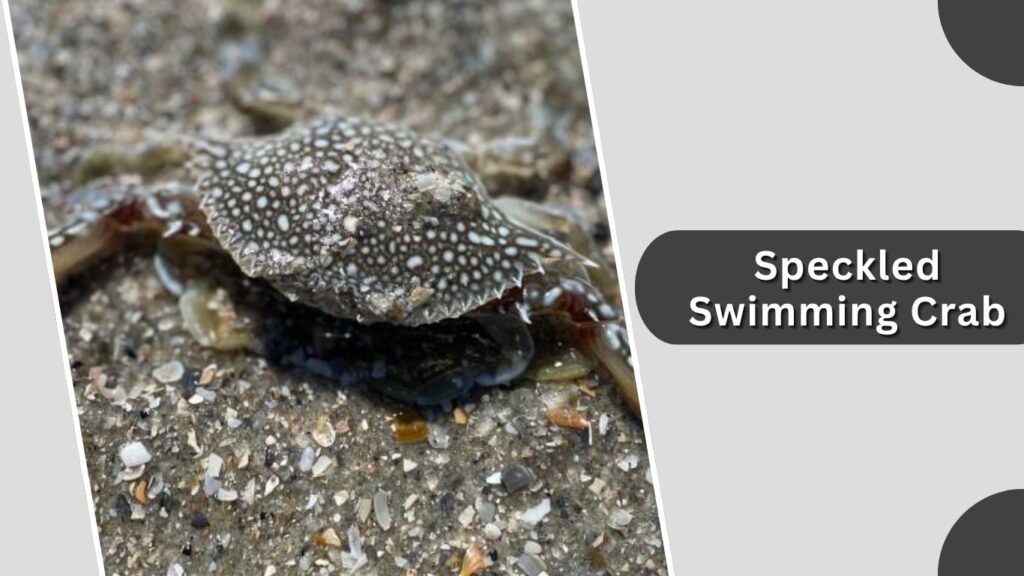
The speckled swimming crab is an attractive western Atlantic species covered with numerous pale spots. It is specially adapted to exposed sandy beaches and surf zones, where it spends much of its time buried beneath the sediment.
Identification
- Broad, rounded carapace
- Numerous cream or white spots
- Reddish-brown or orange background color
- Nine teeth along each side of the shell
- Final side tooth longer than the others
- Long, slender claws
- Flattened rear legs used for swimming and digging
Size and Color
The speckled swimming crab may grow to approximately 14 centimetres across. Its shell is generally tan, yellowish brown, reddish brown, or orange. Numerous white, cream, or yellow spots create a speckled pattern across the carapace, legs, and claws.
Habitat and Distribution
This species occurs along the western Atlantic coast of the Americas. It inhabits sandy beaches, shallow surf zones, and offshore sandy bottoms. Although most individuals live in relatively shallow water, the species has been recorded at depths approaching 68 metres.
Diet and Behavior
The speckled swimming crab feeds on mollusks, marine worms, small crustaceans, fish remains, and other organic material. It is most active at night and commonly buries its body completely beneath the sand, leaving a small opening that allows water to reach its gills.
9. Lady Crab (Ovalipes ocellatus)
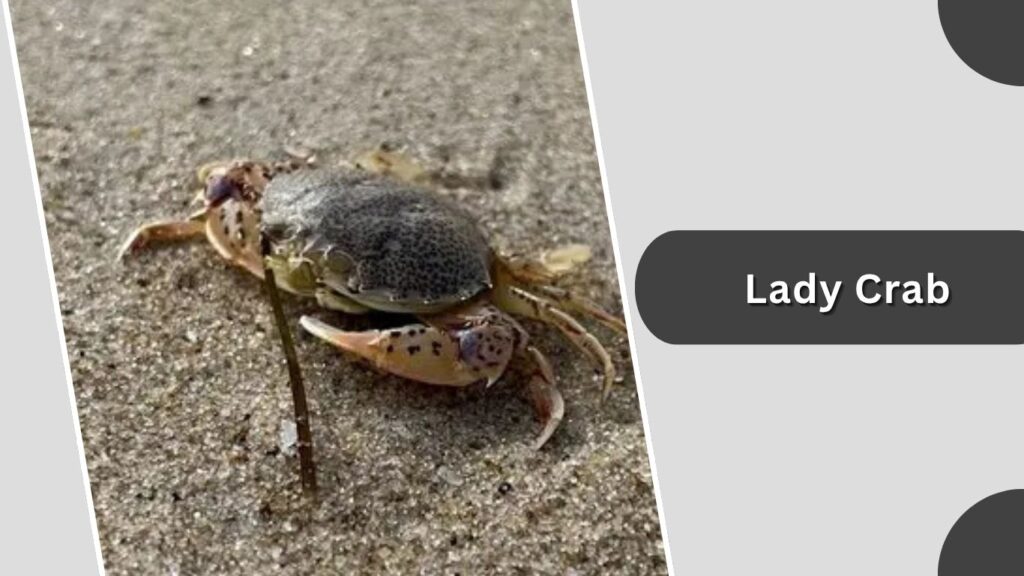
The lady crab, also called the ocellated lady crab, is a fast-swimming species recognized by the purple-ringed spots covering its pale shell. It inhabits sandy Atlantic beaches and is well adapted to swimming, digging, and surviving in areas exposed to strong waves.
Identification
- Broad, oval-shaped carapace
- Pale gray, cream, or yellowish shell
- Clusters of purple or reddish spots
- Five prominent teeth along each side
- Sharp projections along the front edge
- Long claws with toothed fingers
- Paddle-shaped final pair of legs
Size and Color
The lady crab can grow to approximately 15 centimetres across its shell. Its body is usually pale gray, cream, yellowish white, or light brown. Purple, red, or maroon spots surrounded by lighter rings give the shell its distinctive eye-like pattern.
Habitat and Distribution
Lady crabs occur along the Atlantic coast of North America, ranging from waters around Cape Cod southward toward the Gulf of Mexico. They prefer shallow subtidal areas, sandy ocean beaches, and active surf zones where they can bury themselves easily.
Diet and Behavior
This species is an active predator that eats mollusks, worms, small fish, and other crustaceans. It can swim quickly using its paddle legs but frequently escapes predators by digging deeply into loose sand. This ability is especially important in high-energy beach habitats.
10. Harbour Swimming Crab (Polybius depurator)
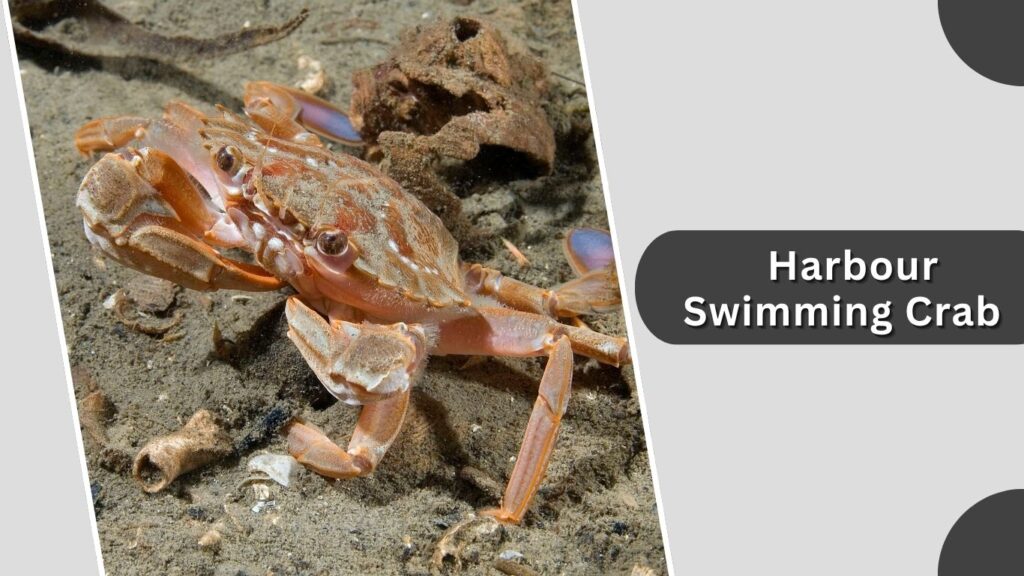
The harbour swimming crab is a small European species traditionally known as Liocarcinus depurator. Its currently accepted scientific combination is Polybius depurator. It has a broad shell and noticeably flattened rear legs, allowing it to swim above muddy and sandy seabeds.
Identification
- Carapace broader than it is long
- Smooth or finely textured upper shell
- Five pointed teeth along each side
- Front edge with three rounded lobes
- Long, slender claws
- Bright-blue or violet rear legs
- Final leg pair flattened into broad paddles
Size and Color
The harbour swimming crab is relatively small, commonly reaching around 4 centimetres across its carapace. Its shell may be reddish brown, orange, yellowish brown, or gray. The rear swimming legs are often bright blue, purple, or violet, creating a distinctive contrast.
Habitat and Distribution
This crab occurs from Norway southward to western Africa and throughout the Mediterranean Sea. It lives on fine sand, muddy sand, gravel, and other soft seabeds. It may be found from the lower shore to depths exceeding 300 metres.
Diet and Behavior
The harbour swimming crab is an opportunistic predator and scavenger. It consumes worms, mollusks, small crustaceans, fish remains, and other bottom-dwelling animals. It searches across soft sediment and can use its paddle-shaped rear legs to swim rapidly above the seabed.
FAQs
1. Why are they called swimming crabs?
Swimming crabs have a flattened final pair of legs that work like paddles. These specialized legs help them swim sideways or backward through the water more efficiently than most other crab species.
2. Where do swimming crabs live?
Swimming crabs inhabit oceans, estuaries, mangroves, bays, coral reefs, sandy seabeds, and muddy coastal areas. Different species occur in tropical, temperate, and subtropical waters around the world.
3. What do swimming crabs eat?
Most swimming crabs are omnivores, predators, and scavengers. They eat mollusks, worms, small fish, crustaceans, algae, carrion, and organic material found on or beneath the seabed.
4. Are swimming crabs dangerous?
Swimming crabs are not venomous, but larger species can deliver a painful pinch with their strong claws. They usually avoid humans and become defensive mainly when captured, threatened, or handled.
5. What is the largest swimming crab?
The giant mud crab is among the largest swimming crabs. Large adults may reach approximately 20–28 centimetres across the carapace and can weigh up to around 3 kilograms.