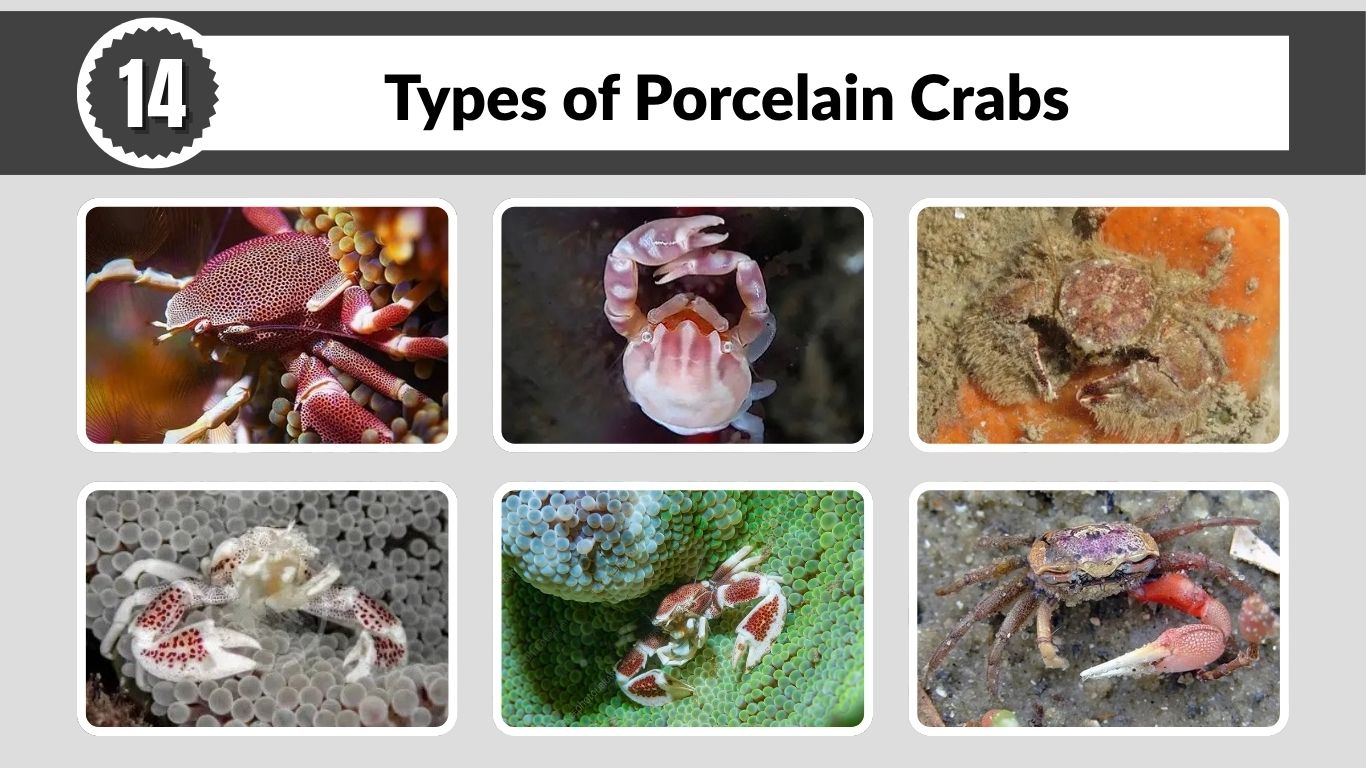
Porcelain crabs are small, colorful marine crustaceans known for their broad claws, flattened bodies, and delicate shell-like appearance. Although they look like true crabs, they are more closely related to squat lobsters and hermit crabs. These fascinating animals live in coral reefs, rocky shores, sea anemones, mussel beds, and sea pens. This guide introduces 14 types of porcelain crabs with details about their species, habitat, size, color, identification features, and pictures.
1. Spotted Porcelain Anemone Crab (Neopetrolisthes maculatus)
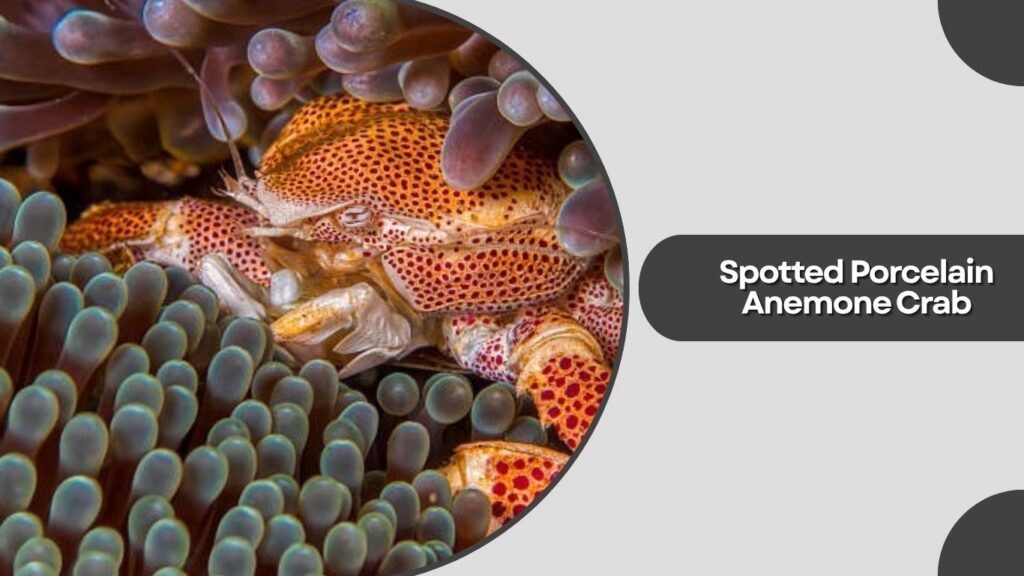
The spotted porcelain anemone crab is a small, beautifully patterned marine crustacean found in the Indo-Pacific region. Although it resembles a true crab, it is more closely related to squat lobsters and hermit crabs. It usually lives among the protective tentacles of large sea anemones, where it can safely collect food from the surrounding water.
Identification
- Smooth, rounded, porcelain-like shell
- White, cream, or pale beige body
- Numerous red, reddish-purple, or brown spots
- Broad, flattened front claws
- Long antennae extending beyond the body
- Feather-like feeding appendages near the mouth
- Usually seen resting inside a large sea anemone
Size and Color
The body of the spotted porcelain anemone crab commonly measures approximately 2–3 cm across, although its extended legs and claws make it appear larger. Some individuals have many small, evenly distributed red spots, while others display larger and more irregular red blotches.
Habitat and Distribution
This species occurs throughout tropical parts of the Indo-Pacific. It inhabits shallow coral reefs and normally lives in association with carpet anemones and other large sea anemones. The stinging tentacles provide protection from many predators.
Diet and Behavior
The spotted porcelain anemone crab is primarily a suspension feeder. It waves its feather-like mouthparts through the water to capture plankton and other tiny food particles. Its large claws are mainly used for defense and territorial displays rather than catching prey.
2. Spiny Porcelain Anemone Crab (Neopetrolisthes spinatus)
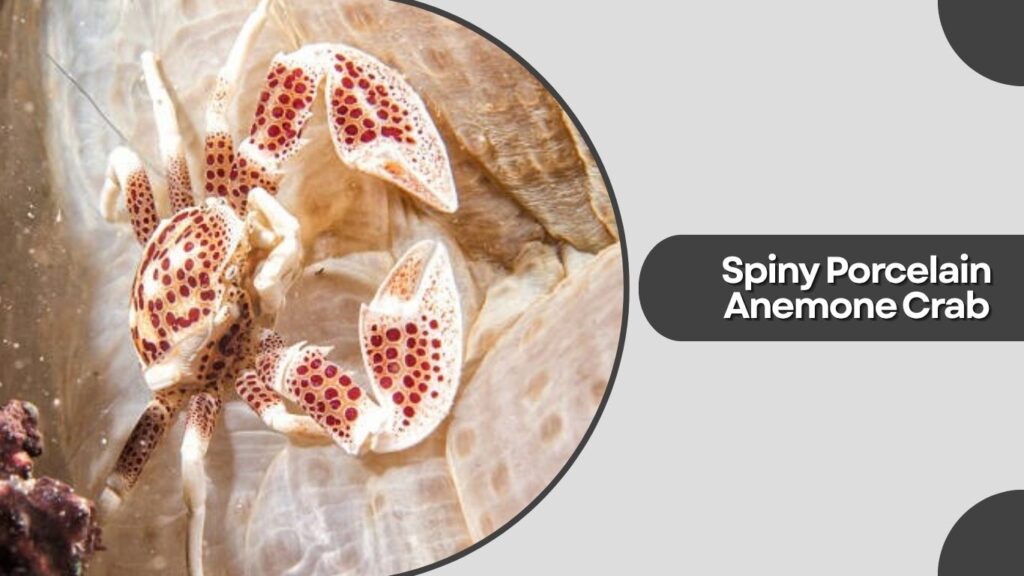
The spiny porcelain anemone crab is a colorful Indo-Pacific species that lives closely with large sea anemones. It resembles the spotted porcelain anemone crab but can be distinguished by its rougher shell and prominent spines above the eyes. Its flattened body allows it to move safely between the anemone’s tentacles.
Identification
- Whitish or cream-colored body
- Fine red spots forming irregular blotches
- Uneven and noticeably lumpy carapace
- Large triangular spine above each eye socket
- Broad, flattened claws
- Long antennae
- Feather-like feeding appendages near the mouth
Size and Color
The carapace can grow to approximately 3 cm across. Its pale background is covered with small red spots that often merge into reddish patches. The rough shell and eye spines are the most reliable features for separating it from the smoother-shelled Neopetrolisthes maculatus.
Habitat and Distribution
This species occurs throughout the Indo-Pacific, including the Andaman Islands, Indonesia, southern Taiwan and Australia. It inhabits coral reefs at depths of up to about 20 metres and is commonly associated with Heteractis crispa and Heteractis malu anemones.
Diet and Behavior
The spiny porcelain anemone crab is primarily a filter feeder. It extends its feathery mouthparts into the current to collect plankton and suspended organic particles. The host anemone provides shelter from predators while giving the crab access to food carried by moving water.
3. Green Porcelain Crab (Petrolisthes armatus)
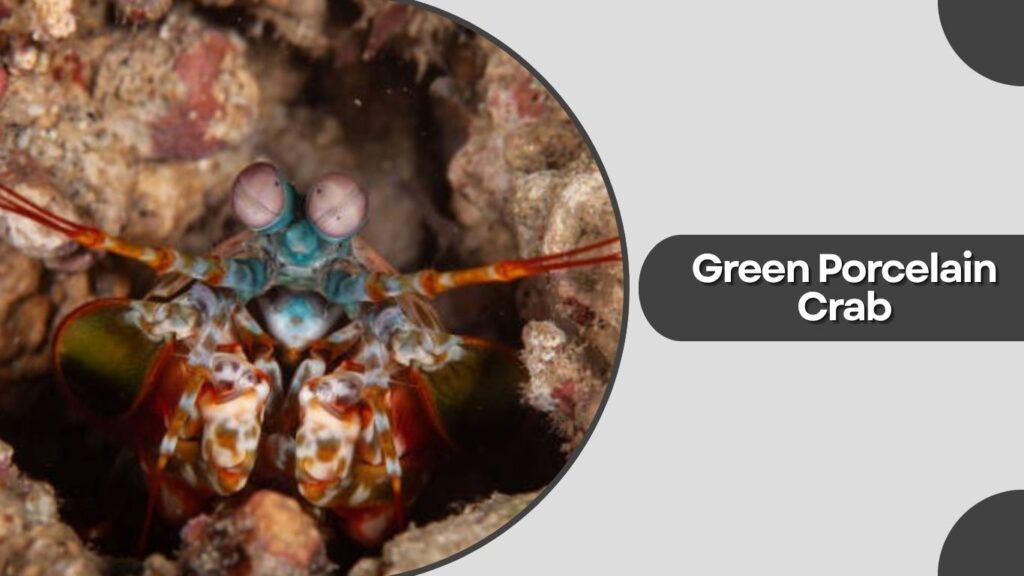
The green porcelain crab is a small, flattened crustacean commonly found beneath rocks, inside oyster reefs and around mangrove habitats. Despite its name, it is not always green. Adults are often brown or orange-brown, while some individuals display olive-green or dark-green coloration.
Identification
- Nearly circular, flattened carapace
- Long, narrow claws
- Three noticeable spines along the inner claw-arm segment
- Low ridges and small granules on the shell
- Olive-green, brown or orange-brown body
- Distinctive bright-blue mouthparts
- Reduced final pair of walking legs
Size and Color
The green porcelain crab generally has a carapace width of approximately 1 cm. Its color varies considerably between individuals. Adults may be orange-brown, dark brown or green, while juveniles can appear speckled. The blue mouthparts are among its most useful identifying characteristics.
Habitat and Distribution
This adaptable species occupies tropical and warm coastal waters. It lives in rocky intertidal areas, oyster reefs, mangrove communities and other shallow habitats with numerous hiding spaces. Individuals frequently gather beneath shells, stones and reef structures.
Diet and Behavior
The green porcelain crab feeds by filtering phytoplankton, detritus and suspended organic material from the water. It usually remains inside protected crevices and extends its feeding fans into passing currents. Its oversized claws are used mainly for defense and competition rather than capturing food.
4. Blue Porcelain Crab (Petrolisthes galathinus)
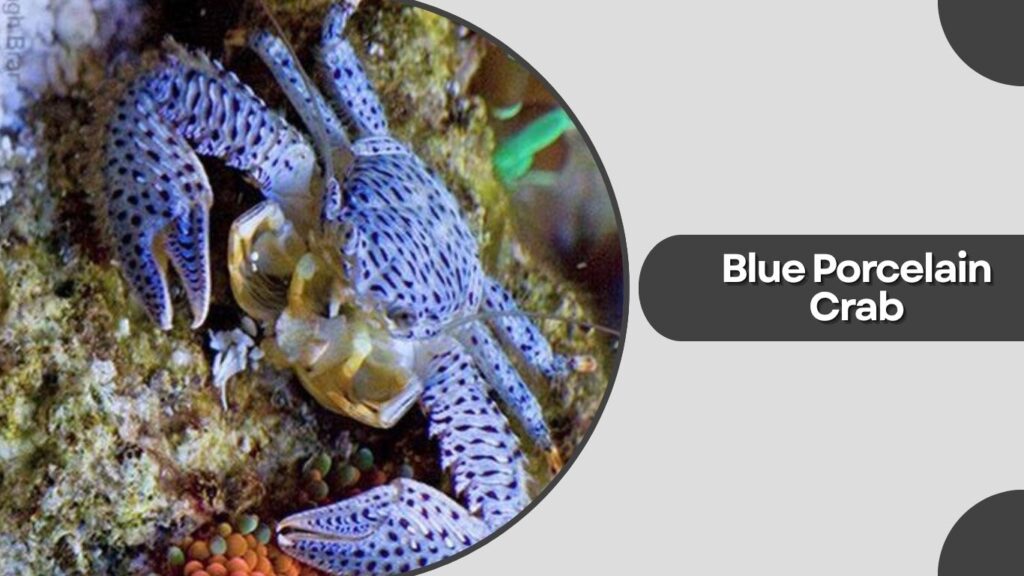
The blue porcelain crab, also called the purple porcelain crab in the aquarium trade, is a patterned species found in the western Atlantic and Caribbean region. Its coloration may include grayish green, yellow, red, purple and blue tones. It usually hides beneath rocks or among reef organisms.
Identification
- Strong transverse ridges across the carapace
- Broad, triangular front section
- Large claws covered with visible ridges
- Four to six spines along the inner claw-arm margin
- Gray-green shell with yellow and reddish bands
- Reddish-purple coloration beneath the claws
- Flattened body adapted for narrow crevices
Size and Color
The carapace may reach approximately 1.7 cm long and 1.4 cm wide. The upper surface usually has a grayish-green base with yellow bands tinged with brownish red. The underside of the claws may display bright reddish-purple coloring with yellow markings.
Habitat and Distribution
This species ranges from North Carolina and the Gulf of Mexico through the West Indies to Brazil. It occurs beneath stones, among sponges, corals and anemones, and on sandy or shell-covered reef bottoms. It has been recorded from shallow water to depths of around 54 metres.
Diet and Behavior
Like other porcelain crabs, it uses feathery mouthparts to capture plankton and organic particles. It normally stays concealed while placing its feeding fans in moving water. Its large claws help defend shelter and discourage other small reef animals.
5. Flat Porcelain Crab (Petrolisthes quadratus)
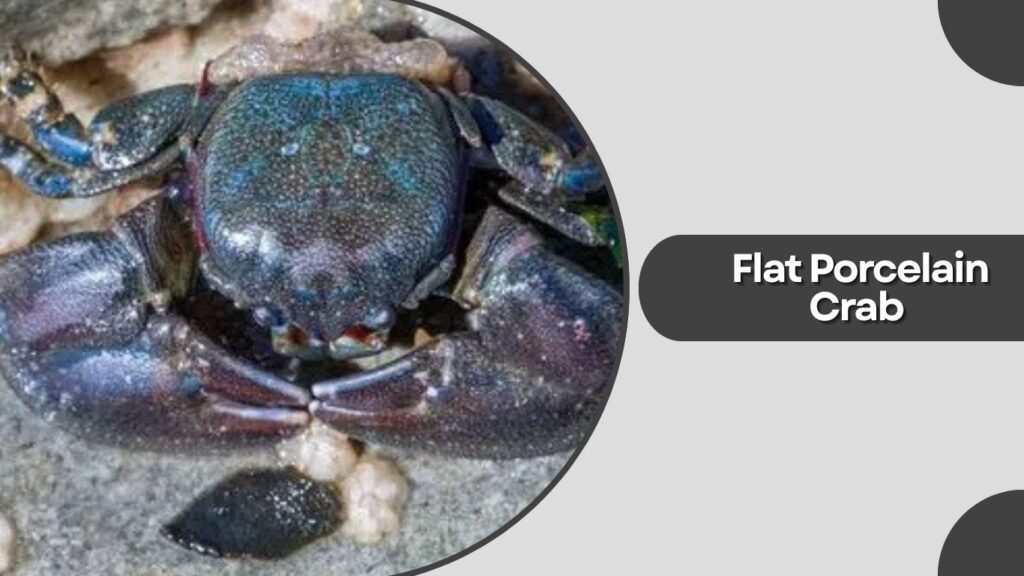
The flat porcelain crab is a small Caribbean species with a strongly compressed body. Its shape allows it to occupy narrow spaces beneath stones and pieces of coral. It can occur in considerable numbers in suitable rocky intertidal habitats.
Identification
- Broad, noticeably flattened body
- Nearly square or rounded-square carapace
- Large, flat claws
- Tan or greenish-brown upper surface
- Short walking legs held close to the body
- Long antennae
- Feathered feeding fans near the mouth
Size and Color
This is a very small porcelain crab, with documented specimens having a carapace length of approximately 5 mm. Its shell is generally tan, with greenish-brown coloring toward the front. Subtle markings help it blend into algae-covered stones, rubble and coral fragments.
Habitat and Distribution
The flat porcelain crab is associated with hard-bottom habitats in the Caribbean and western Atlantic. It commonly shelters beneath rocks in intertidal and shallow reef environments. Its flattened form enables it to remain inside spaces that are difficult for larger predators to enter.
Diet and Behavior
It is mainly a suspension feeder that collects plankton and fine organic matter from the water. The crab usually stays beneath shelter and moves rapidly when disturbed. It may also shed a leg or claw while escaping, which can later regenerate through molting.
6. Lamarck’s Porcelain Crab (Petrolisthes lamarckii)
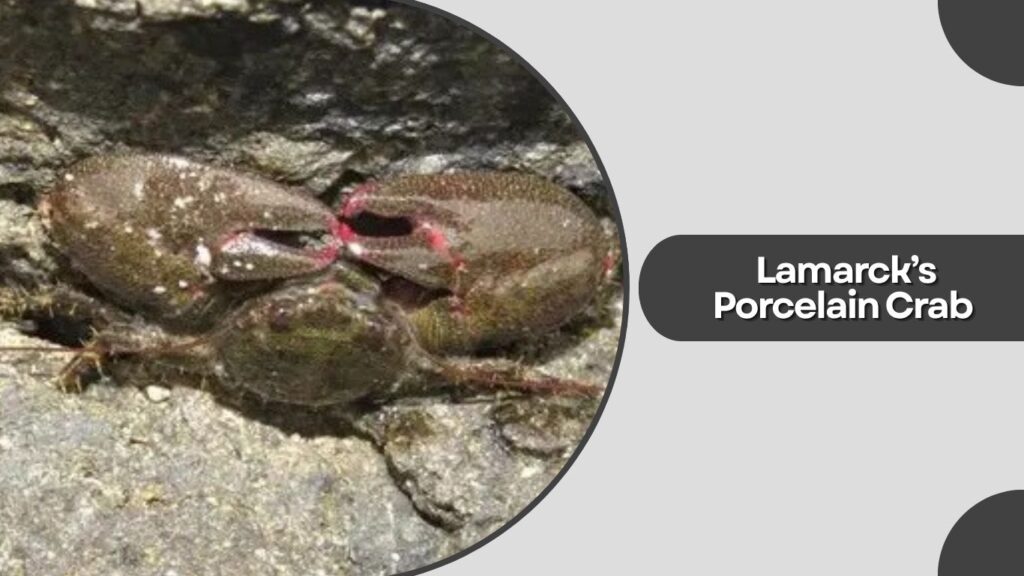
Lamarck’s porcelain crab is an Indo-West Pacific species commonly associated with rocky and coral-rich shorelines. It has a light-brown body decorated with red patches, orange spots and white leg bands. Its broad claws and compact body give it the typical porcelain crab appearance.
Identification
- Carapace approximately as long as it is broad
- Slightly depressed triangular front
- Small, sharp spine near each side of the carapace
- Four or five teeth along the inner claw-arm margin
- Light-brown body with reddish patches
- Two orange spots on the rear carapace
- Distinct white bands on the walking legs
Size and Color
Examined adults have measured approximately 13–15 mm across the carapace, with larger individuals reaching around 18 mm in carapace length. The body is generally light brown with red patches, orange markings and clearly visible white bands on the legs.
Habitat and Distribution
This species occurs across the Indo-West Pacific, extending westward to the eastern African coast. It usually occupies upper intertidal environments with sandy or muddy substrates, small pebbles and large stable boulders. It may also shelter in coral-reef crevices.
Diet and Behavior
Lamarck’s porcelain crab collects suspended food using its feathery mouth appendages. It spends much of its time under stones, where water movement delivers plankton and detritus. Its broad claws are used for territorial displays, defense and pushing away competing crabs.
7. New Zealand Porcelain Crab (Petrolisthes elongatus)
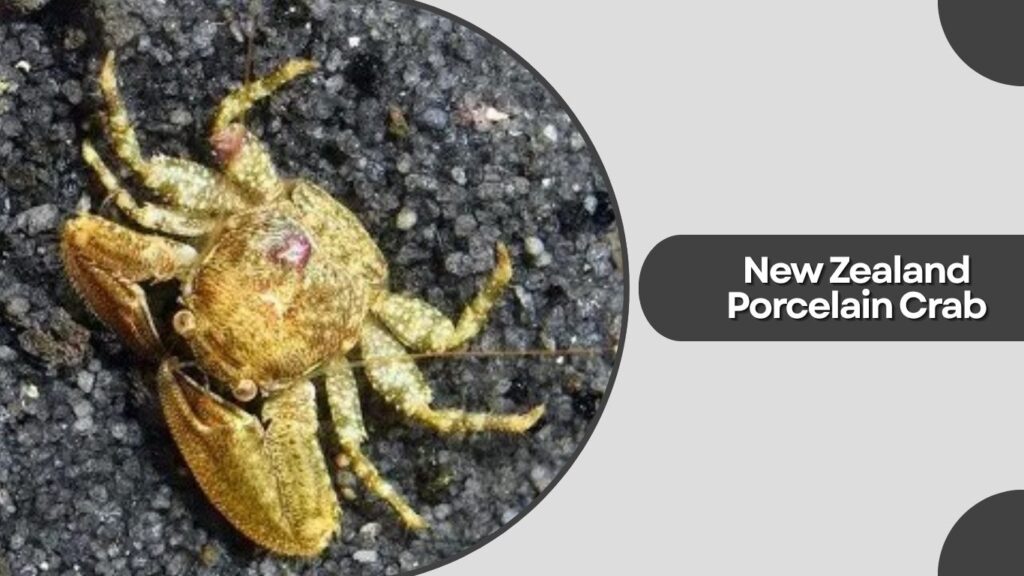
The New Zealand porcelain crab is also known as the New Zealand half crab, blue half crab or elongated porcelain crab. It is native to New Zealand but has been introduced to parts of Australia. Large populations may occur beneath stones on sheltered rocky shores.
Identification
- Broad, strongly flattened carapace
- Smooth side and rear shell margins
- Long, whip-like antennae
- Large and often unequal claws
- Reduced final pair of walking legs
- Blue, greenish, gray or dark upper surface
- Lighter coloration underneath the body
Size and Color
Its carapace can reach approximately 18 mm wide, although many individuals are smaller. The body may appear blue-gray, greenish brown, gray or almost black. The smooth shell and elongated antennae are useful features for recognizing this species.
Habitat and Distribution
The species is native throughout New Zealand and has become established in Tasmania and Victoria. It inhabits mussel beds, wharf pilings, estuaries and rocky intertidal shores. It is particularly abundant beneath stones and boulders near the low-tide level.
Diet and Behavior
The New Zealand porcelain crab primarily filter-feeds using long bristles on its mouthparts. It can also scavenge small pieces of animal material. When threatened, it moves quickly beneath rocks and may swim backward by rapidly moving its abdomen and tail structures.
8. Flat Porcelain Crab (Petrolisthes cinctipes)
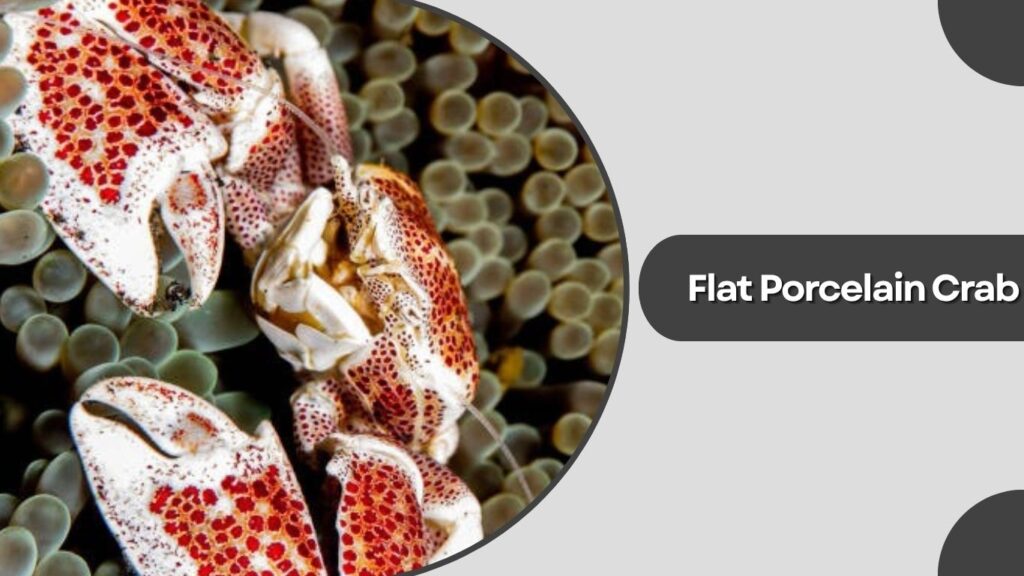
The flat porcelain crab is a small intertidal species found along the eastern Pacific coast of North America. Its extremely flattened body allows it to hide beneath rocks and inside tightly packed mussel beds. It is particularly common in the middle and upper portions of rocky shorelines.
Identification
- Broad and strongly flattened carapace
- Large, nearly equal-sized claws
- Distinctive red antennae
- Reddish mouthparts
- Red spots or markings on the claws
- Walking legs decorated with pale bands
- Noticeable lobe on the inner margin of each claw arm
These markings help separate it from similar porcelain crabs living along the same coastline.
Size and Color
The carapace can grow to approximately 2.4 cm long and 1.4 cm wide. Most individuals are reddish brown, dark blue-brown or occasionally bright blue, particularly around the time of molting. The walking legs commonly have alternating blue and whitish bands.
Habitat and Distribution
This species occurs from British Columbia southward along the Pacific coast to Mexico. It normally lives beneath stones, among mussels and inside rocky crevices in the middle and upper intertidal zones. Groups may gather beneath a single suitable rock.
Diet and Behavior
The flat porcelain crab is mainly a suspension feeder. It uses fan-shaped mouthparts to collect phytoplankton, detritus and other fine particles from moving water. When disturbed, it quickly retreats farther beneath rocks instead of attempting to fight.
9. Flattop Porcelain Crab (Petrolisthes eriomerus)
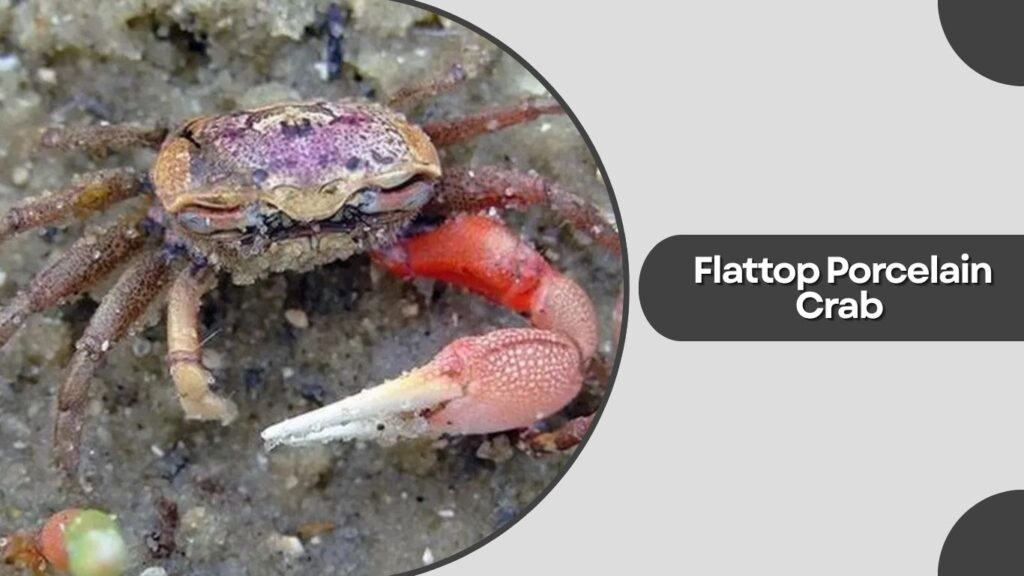
The flattop porcelain crab is another flattened species native to the Pacific coast of North America. It resembles the flat porcelain crab but generally has broader claw-arm segments, less prominent red coloring and noticeable blue markings around its mouthparts and claw joints.
Identification
- Rounded and dorsally flattened carapace
- Very large, flattened front claws
- Broad claw-arm segments with nearly parallel sides
- Long antennae beside the eyes
- Blue mouthparts
- Blue coloring around the claw joints
- Tufts of fine hair on the legs and claws
Its broad claw arms and blue mouthparts are especially useful for identification.
Size and Color
The carapace may reach approximately 2 cm across. Its color varies from reddish brown and dark brown to gray-blue. The antennal flagella are usually grayish green, while blue patches may appear on the mouthparts and joints of the claws.
Habitat and Distribution
This crab occurs along the western coast of North America, from California northward to Alaska. It shelters beneath rocks on both exposed and protected coasts. It also inhabits kelp holdfasts, mussel beds and locations with strong water currents.
Diet and Behavior
The flattop porcelain crab filters diatoms, plankton and suspended organic matter from the water. It may also sweep edible deposits from rock surfaces using hairy areas on its claws. When attacked, it can release a leg or claw and regenerate the missing limb during later molts.
10. Cabrillo Porcelain Crab (Petrolisthes cabrilloi)
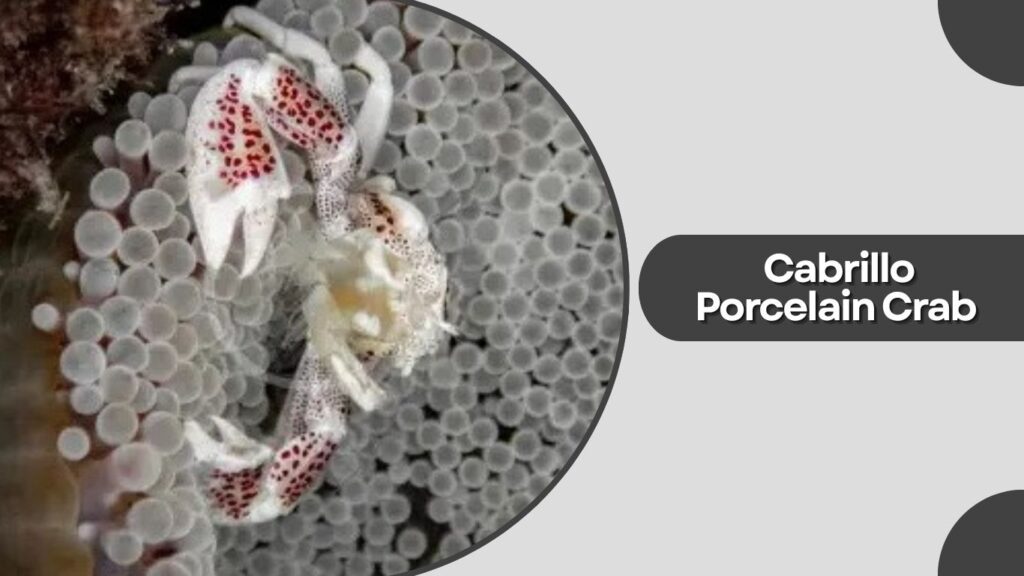
The Cabrillo porcelain crab is a northeastern Pacific species most frequently encountered along the coast of Southern California and Baja California. It is closely related to the flat porcelain crab but prefers somewhat sandier and more turbid coastal environments.
Identification
- Smooth, flattened carapace
- Dull orange or orange-brown body
- Small spots across the upper shell
- Large claws extending far beyond the carapace
- Hairy walking legs
- Long feeding hairs on the claws
- Juveniles with noticeably hairier shells
The hairy walking legs and exceptionally long claw hairs help distinguish this species from Petrolisthes cinctipes.
Size and Color
The carapace is relatively small, commonly measuring around 1–2 cm across, but the extended claws can make the crab’s total width appear much larger. Most individuals are dull orange, brownish orange or reddish brown, sometimes with blue coloring during molting.
Habitat and Distribution
The Cabrillo porcelain crab is found from approximately Morro Bay in California southward into Baja California and the Gulf of California region. It inhabits rocky intertidal and shallow subtidal environments, including rubble, gravel, shell beds and pier pilings.
Diet and Behavior
This crab gathers plankton and suspended particles with its fan-shaped mouthparts. It can also use long hairs on its claws to scrape or collect food from nearby surfaces. It usually stays beneath rocks but may tolerate more sediment and cloudy water than related porcelain crabs.
11. Broad-Clawed Porcelain Crab (Porcellana platycheles)
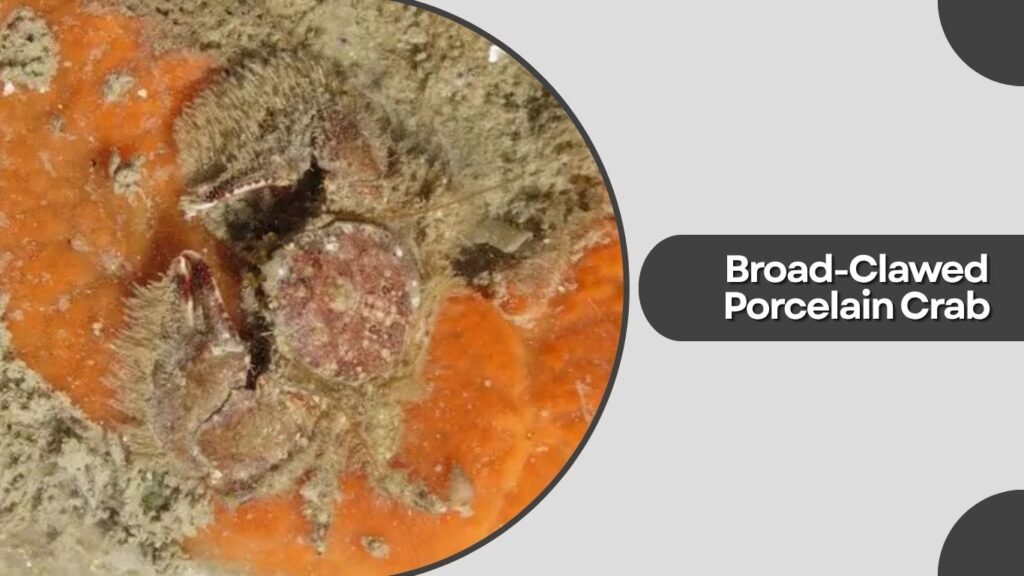
The broad-clawed porcelain crab is a small, hairy species found along eastern Atlantic and Mediterranean coastlines. Its wide, flattened claws and bristly upper body give it a stockier appearance than many other porcelain crabs.
Identification
- Rounded and flattened carapace
- Very broad front claws
- Dense hairs covering the claws and upper body
- Two long antennae
- Only three obvious pairs of walking legs
- Grayish-brown upper surface
- Yellowish-white underside
Its reduced final pair of legs is normally hidden beneath the body.
Size and Color
The broad-clawed porcelain crab can reach approximately 15 mm in body length. Its upper surface is normally grayish brown, reddish brown or greenish brown. The underside is lighter and may appear dirty white or pale yellow.
Habitat and Distribution
This species occurs from Norway and the North Sea southward to the Canary Islands and throughout the Mediterranean. It lives beneath boulders and large stones on middle and lower rocky shores, especially where mud, gravel and organic material collect.
Diet and Behavior
The broad-clawed porcelain crab uses specialized hairy mouthparts to filter plankton and organic particles from the water. It may also consume carrion and debris. Its flattened body and sharp leg tips help it cling tightly to the undersides of rocks during waves and changing tides.
12. Spotted Porcelain Crab (Porcellana sayana)
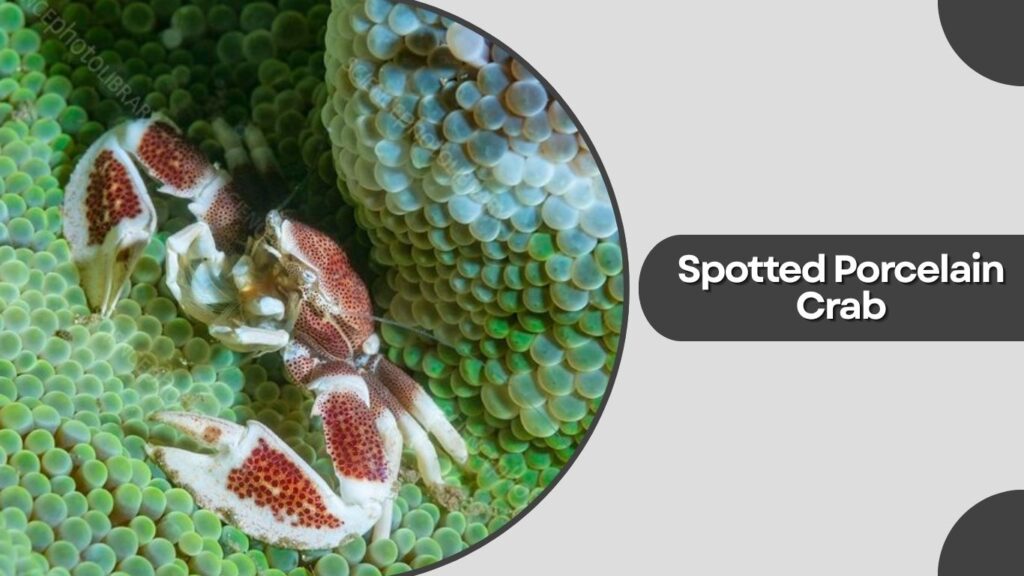
The spotted porcelain crab is a colorful western Atlantic species commonly associated with reefs, rubble and other marine animals. It is particularly known for living around shells occupied by hermit crabs, although it can also be found beneath rocks.
Identification
- Red or reddish-orange body
- Numerous white or cream-colored spots
- Flattened, rounded carapace
- Large front claws
- Characteristic raised bulge behind each claw
- Long antennae
- Three visible pairs of walking legs
The combination of white spots and a bulge behind the claws is a useful identifying feature.
Size and Color
The spotted porcelain crab commonly measures approximately 0.6–1.5 cm across, with a reported maximum body length of around 1.2 cm. Its shell is usually red, orange-red or reddish brown with contrasting pale spots.
Habitat and Distribution
This species occurs in the western Atlantic, including the Caribbean, Gulf of Mexico and coastal regions of the Americas. It inhabits coral reefs, rocky shores, seagrass beds, mangrove areas, sandy bottoms and piles of shell or rubble.
Diet and Behavior
The spotted porcelain crab captures plankton and fine organic particles using its feeding fans. It is frequently found living as a commensal with hermit crabs and other marine animals. The host provides shelter, while the porcelain crab usually causes little or no harm.
13. Painted Porcelain Crab (Porcellanella picta)
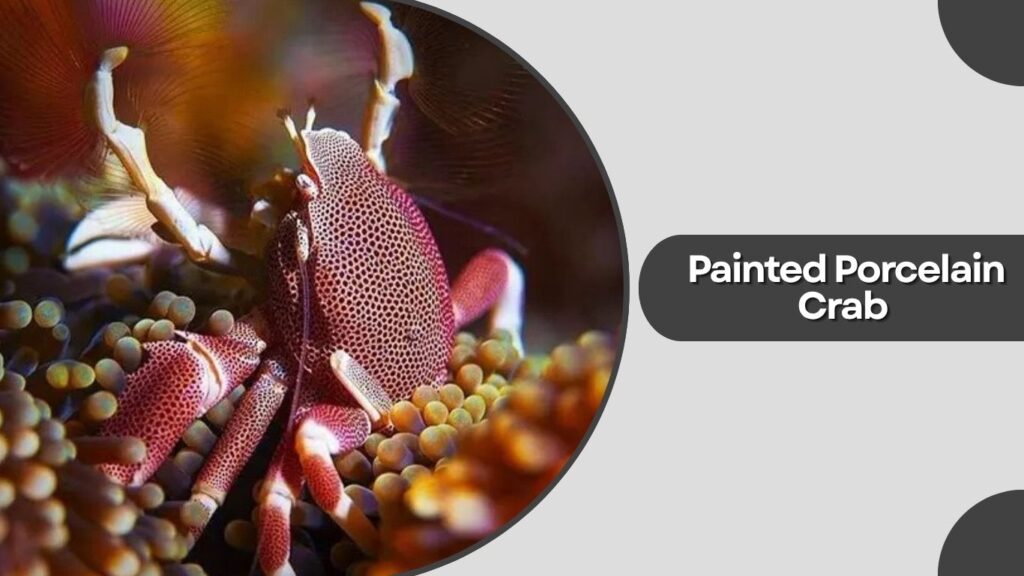
The painted porcelain crab is a delicate tropical species closely associated with sea pens. Its pale body and carefully arranged spots provide camouflage against the soft branches of its host. Recent taxonomic research recognizes it as a distinct species within the genus Porcellanella.
Identification
- Pale white or light-yellow body
- Large, irregular reddish or brown spots
- Spots sometimes surrounded by darker margins
- Flattened, oval carapace
- Three-lobed projection at the front of the shell
- Broad and flattened claws
- Slender walking legs adapted for gripping sea pens
Color patterns and the shape of the three-lobed front section are important for identification.
Size and Color
This is a small porcelain crab, generally measuring around 1–2 cm across. The body is pale white, cream or light yellow and decorated with several large, colored spots or eye-like markings. The pattern helps break up the crab’s outline while it rests on a sea pen.
Habitat and Distribution
The painted porcelain crab occurs in tropical Indo-Pacific coastal waters. It lives almost exclusively on sea pens growing from sandy or muddy seabeds. Records include Hong Kong and parts of the Indian Ocean region.
Diet and Behavior
This species remains attached to its sea-pen host and filters plankton from passing currents. Its flattened claws and legs help it cling securely to the host without damaging the soft tissue. The sea pen provides elevation, protection and access to food-rich water.
14. Haig’s Porcelain Crab (Porcellanella haigae)
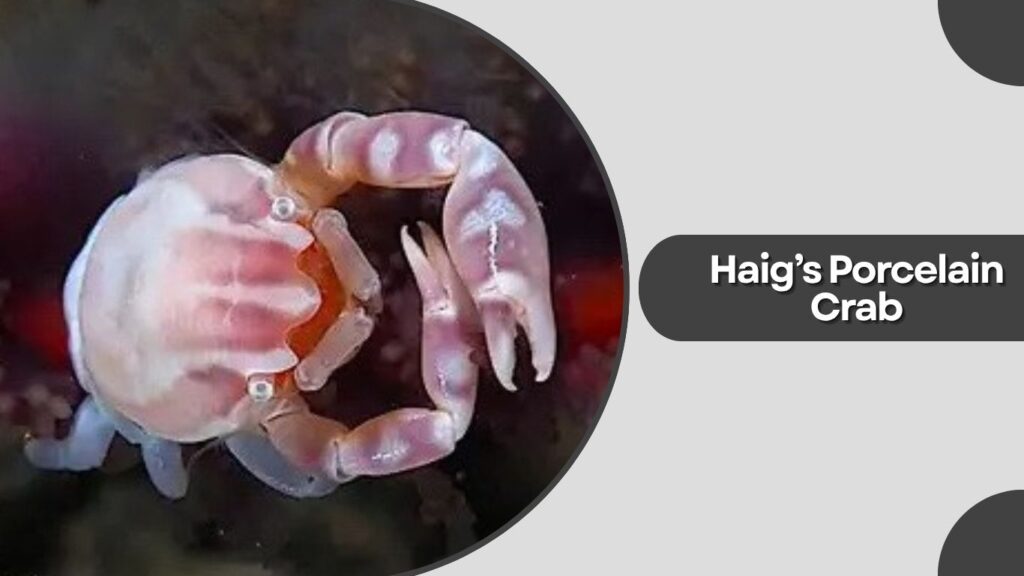
Haig’s porcelain crab, also called the sea-pen crab, is an Indo-Pacific species that spends most of its life on sea pens. Its bright coloration and delicate body make it one of the most visually striking members of the porcelain crab family.
Identification
- Flattened and oval-shaped body
- Bright orange, red or scarlet coloration
- Pale spots or patches on the shell
- Broad, flattened claws
- Three-lobed front edge of the carapace
- Slender walking legs
- Usually observed clinging to a sea pen
The arrangement of shell markings and the shape of the claws help separate it from other Porcellanella species.
Size and Color
Haig’s porcelain crab can grow to approximately 2 cm across. Individuals are commonly orange-red, scarlet or reddish brown, sometimes with pale markings that match the colors and patterns of their sea-pen hosts.
Habitat and Distribution
This species occurs in tropical Indo-Pacific waters, including Indonesia, Bali, the Red Sea, the Gulf of Aqaba and New Caledonia. It is commonly recorded at depths of approximately 10–30 metres, where it lives on sea pens above sandy or silty bottoms.
Diet and Behavior
Haig’s porcelain crab is primarily a plankton feeder. It raises its feathery feeding appendages into the current to collect suspended food. Individuals may live alone or in pairs on a sea pen, using the host as shelter and as an elevated feeding platform.
FAQs
1. Are porcelain crabs true crabs?
No. Porcelain crabs are more closely related to squat lobsters and hermit crabs. Their broad bodies, large claws, and sideways movement make them look like true crabs, but they belong to a different group of crustaceans.
2. Where do porcelain crabs live?
Porcelain crabs live in coastal marine habitats, including coral reefs, rocky shores, mussel beds, mangroves, sea anemones, and sea pens. Many species hide beneath rocks or inside narrow reef crevices.
3. What do porcelain crabs eat?
Most porcelain crabs are filter feeders. They use feather-like mouthparts to capture plankton, algae, detritus, and tiny organic particles from the water. Some species may also scavenge small pieces of food.
4. How big do porcelain crabs grow?
Most porcelain crabs are small, with carapaces measuring around 1–3 cm across. Their long antennae, legs, and oversized claws can make them appear much larger than their actual body size.
5. Are porcelain crabs dangerous?
Porcelain crabs are not considered dangerous to humans. Their claws may produce a mild pinch when handled, but they are generally shy and prefer to hide or escape rather than attack.