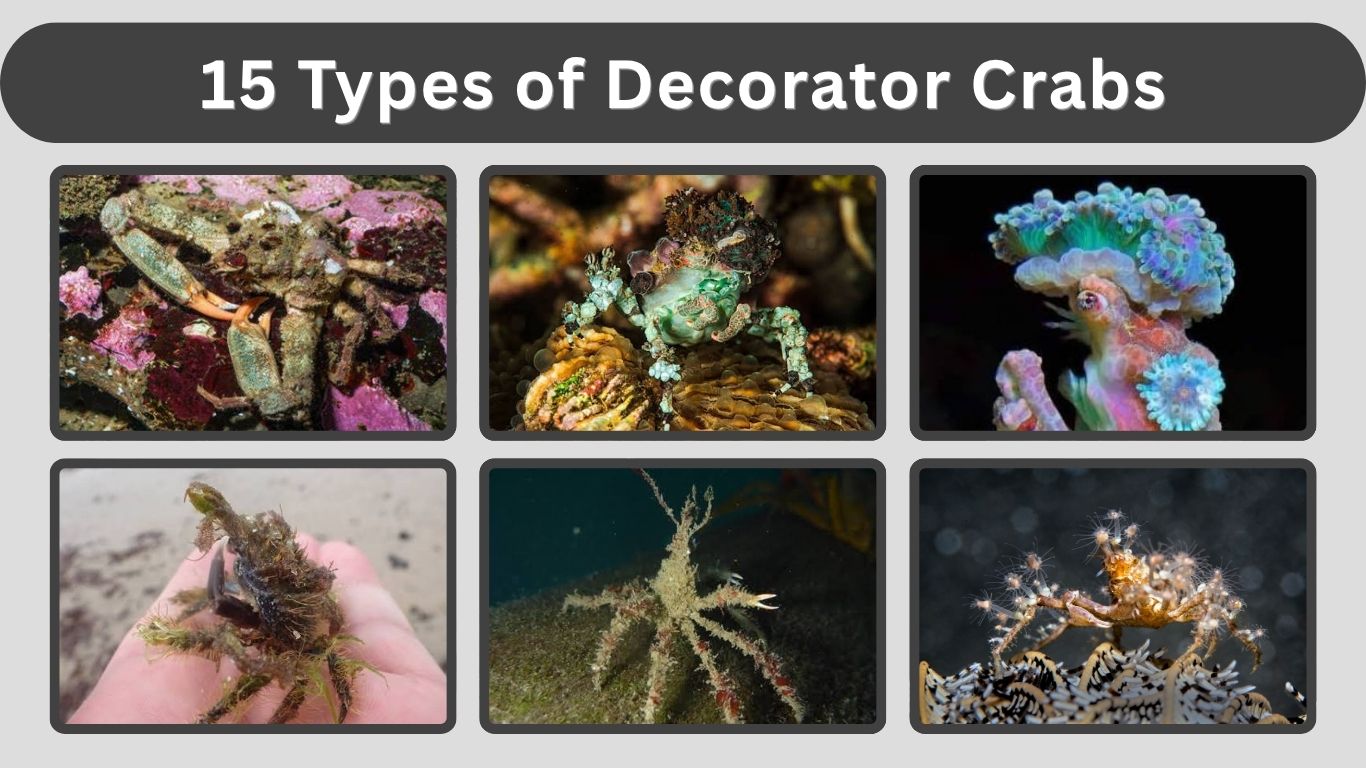
Decorator crabs are fascinating marine crustaceans known for covering their shells and legs with algae, sponges, anemones, corals, and other materials. They attach these decorations to specialized hooked hairs, creating camouflage that helps them blend into reefs, rocks, kelp forests, and sandy seabeds. Some species also gain chemical protection from the living organisms they carry. Decorator crabs occur in tropical, temperate, shallow, and deep-water habitats around the world. This guide explores 15 types of decorator crabs, including their identification features, habitats, diets, behaviors, and remarkable methods of hiding from predators in different marine environments.
1. Common Decorator Crab
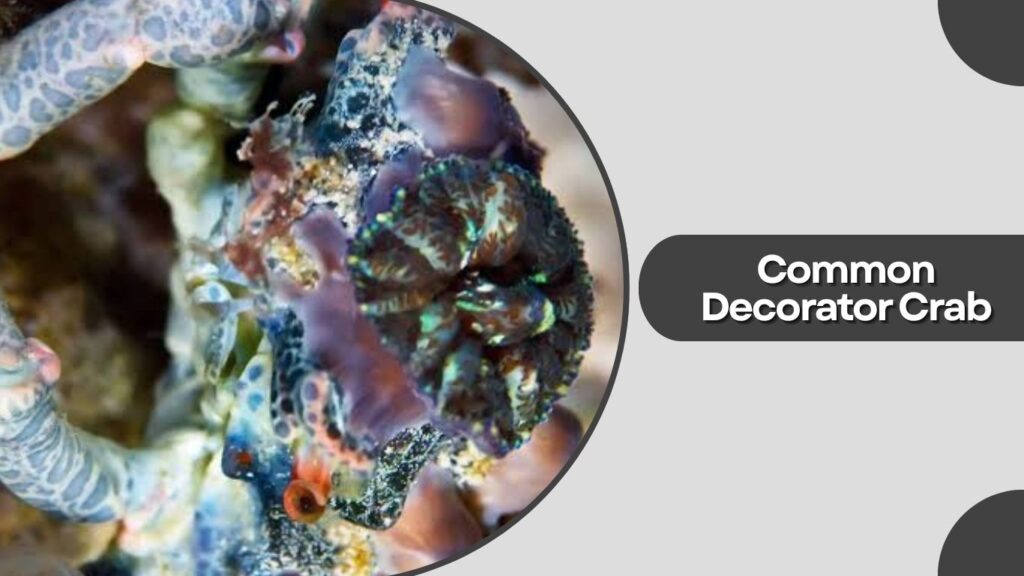
The common decorator crab (Schizophrys aspera) is a medium-sized marine crab known for attaching living materials to its shell. Sponges, algae, and other organisms cover its naturally rough body, helping it disappear against coral rubble and rocky reef surfaces. The species has a broad distribution across tropical Indo-Pacific waters.
Identification
- Rough, pear-shaped or triangular carapace
- Long, slender walking legs
- Two pointed projections at the front of the shell
- Brown, reddish, gray, or cream natural coloration
- Hooked hairs covering the shell and legs
- Often concealed beneath sponges and algae
- Long claws with pale or reddish tips
- Appearance changes according to its decorations
The attached material can make the crab difficult to distinguish from the surrounding reef.
Habitat and Distribution
Common decorator crabs live across the Indo-Pacific region, including tropical reef systems and nearby coastal habitats. They are commonly associated with rocky areas, coral rubble, reef edges, and spaces beneath corals. Records place them from intertidal areas to depths of around 40 metres.
Decoration and Camouflage
The crab collects pieces of sponge, algae, and other material with its claws before attaching them to hooked hairs on its body. These decorations break up the crab’s outline and help it resemble the reef. Research suggests that sponges are especially important and may provide both visual camouflage and chemical protection from predators.
Diet and Feeding Behavior
The common decorator crab is an opportunistic feeder that consumes algae, sponges, organic material, and small reef animals. It usually searches for food among rocks and coral rubble. Studies have also documented it preying successfully on juvenile crown-of-thorns starfish, showing that it can be an effective predator despite its heavily camouflaged appearance.
2. Spider Decorator Crab
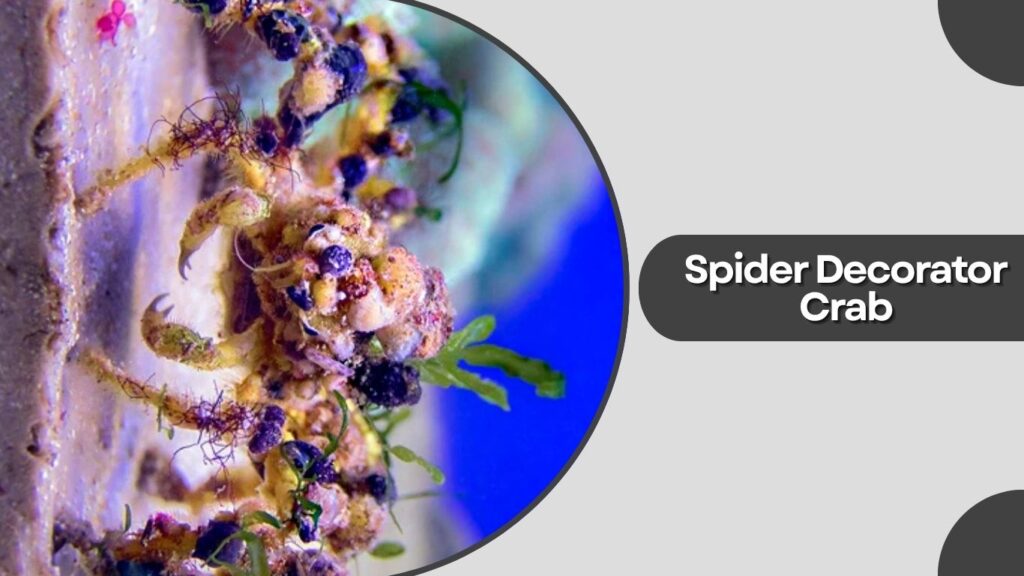
The spider decorator crab (Camposcia retusa) is a long-legged marine crab famous for covering almost its entire body with algae, sponges, corals, shells, and other reef materials. Its decorations conceal its natural shape so effectively that divers may mistake the crab for a moving clump of reef growth. It occurs widely across tropical Indo-West Pacific waters.
Identification
- Small, roughly triangular carapace
- Long, thick, spiderlike walking legs
- Brownish or reddish natural body color
- Rough shell covered with dense hooked hairs
- Slender claws positioned near the front
- Long, narrow eyestalks
- Frequently covered with algae and sponges
- May reach about 10 centimeters across the legs
Habitat and Distribution
Spider decorator crabs inhabit coral reefs, rocky seabeds, reef rubble, lagoons, and other areas containing abundant living growth. Their distribution extends from the Red Sea and East Africa across the Indian Ocean to Southeast Asia, Australia, and islands of the western Pacific. They usually remain near rocks and corals where suitable decorating materials and hiding places are readily available.
Decoration and Camouflage
The crab cuts or collects small pieces of material and attaches them to specialized hooked hairs on its shell and legs. These objects disguise its outline and may also provide chemical protection when unpleasant-tasting sponges or corals are selected. Research shows that access to physical shelter can influence how heavily this species decorates itself.
Diet and Feeding Behavior
The spider decorator crab is an opportunistic omnivore and scavenger. It searches reef surfaces for algae, detritus, food scraps, carrion, and small invertebrates. It is generally more active after dark, moving slowly among rocks while relying on its decorations rather than speed for protection.
3. Florida Decorator Crab
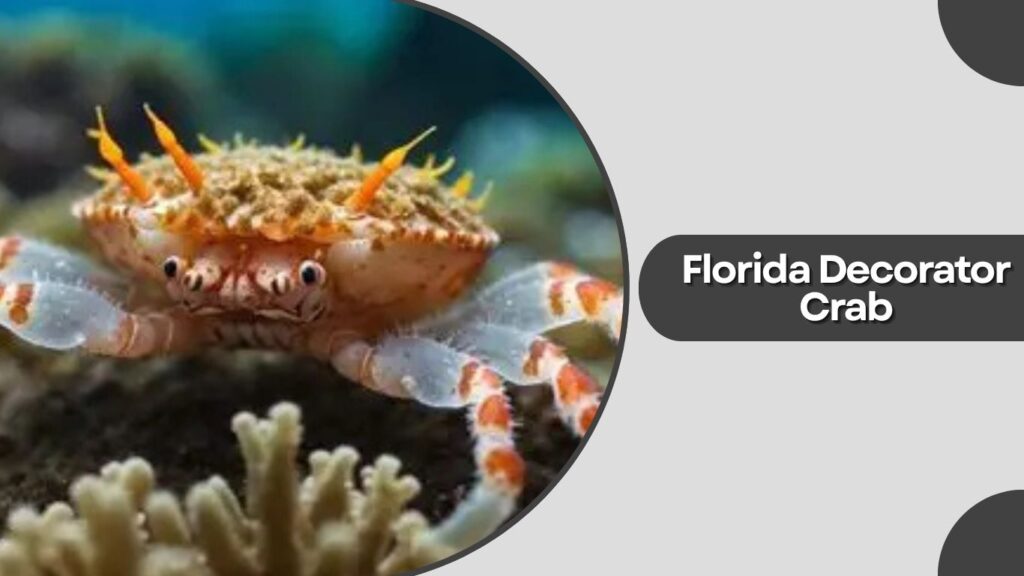
The Florida decorator crab (Macrocoeloma camptocerum) is a small western Atlantic species associated with warm coastal waters. Its rough shell and long legs support algae, sponges, and other attached organisms, making the crab difficult to detect against reefs and mixed seabeds. Despite its name, its distribution is not necessarily limited to Florida.
Identification
- Small, pear-shaped or triangular carapace
- Narrow front with short rostral projections
- Rough shell containing bumps and small spines
- Long, relatively slender walking legs
- Brown, tan, gray, or reddish base color
- Hooked hairs for holding decorations
- Small claws used for gathering materials
- Natural features often concealed by attached growth
Habitat and Distribution
Florida decorator crabs occur in the western Atlantic, including waters around Florida and parts of the southeastern United States. They may be encountered on shallow continental-shelf habitats containing coral rubble, shells, rocks, sand, and marine vegetation. Records from Gulf surveys confirm their presence on offshore seabeds alongside other decorator and spider crabs.
Camouflage Strategy
The crab gathers locally available organisms and debris and fastens them to the hooked hairs covering its body. As the attached algae and sponges continue growing, the disguise can become more convincing. Camouflage helps the crab avoid fish and other predators while allowing it to move across exposed surfaces in search of food.
Diet and Daily Activity
The Florida decorator crab likely feeds on algae, organic debris, carrion, and small bottom-dwelling animals. Its small claws allow it to pick food from rocks, shells, and sediment. It may remain relatively still during brighter periods and become more active in dim light, when its living camouflage makes it especially difficult to notice.
4. Spongy Decorator Crab
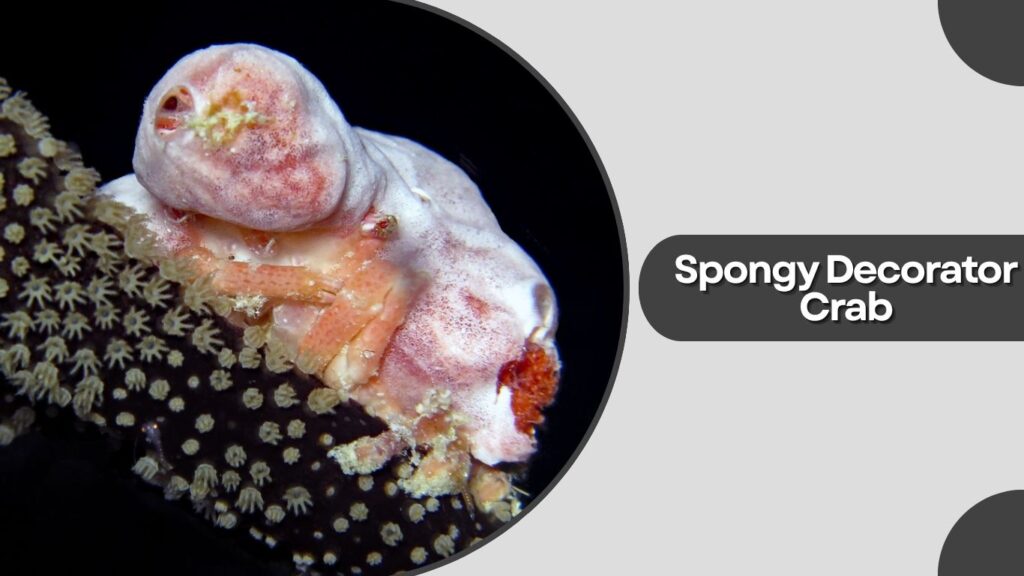
The spongy decorator crab (Macrocoeloma trispinosum) is named for its habit of carrying pieces of living sponge over its shell and legs. The sponge growth can become so extensive that the crab’s body is almost completely hidden. This tropical western Atlantic species belongs to the same genus as the Florida decorator crab.
Identification
- Rough, triangular or pear-shaped carapace
- Three noticeable spines or projections on the body
- Long walking legs covered with specialized hairs
- Brownish, gray, cream, or reddish natural color
- Small claws used to collect decorations
- Commonly carries yellow, orange, pink, or brown sponges
- Body may resemble an irregular piece of reef
- Difficult to identify without removing its covering
Habitat and Distribution
Spongy decorator crabs occur in warm western Atlantic waters, including Florida, the Bahamas, the Caribbean, the Gulf region, and coastal Brazil. They live on reefs, rocky bottoms, shell beds, and mixed seabeds from shallow water to depths of around 80 meters. They are also recorded resting on mollusk shells and other hard surfaces.
Sponge Decoration
This crab possesses a complex covering of specialized setae that secures sponge fragments and other materials. Microscopic research suggests that its masking system may involve more than simple mechanical hooks; secretions associated with the setae may also help decorations adhere to its body.
Diet and Feeding Behavior
The spongy decorator crab searches for algae, detritus, carrion, and small marine animals among reef structures. Its living sponge covering provides camouflage and may make the crab less appealing to predators. When it molts, it must gradually restore or replace the decorations lost with its old shell.
5. Graceful Decorator Crab
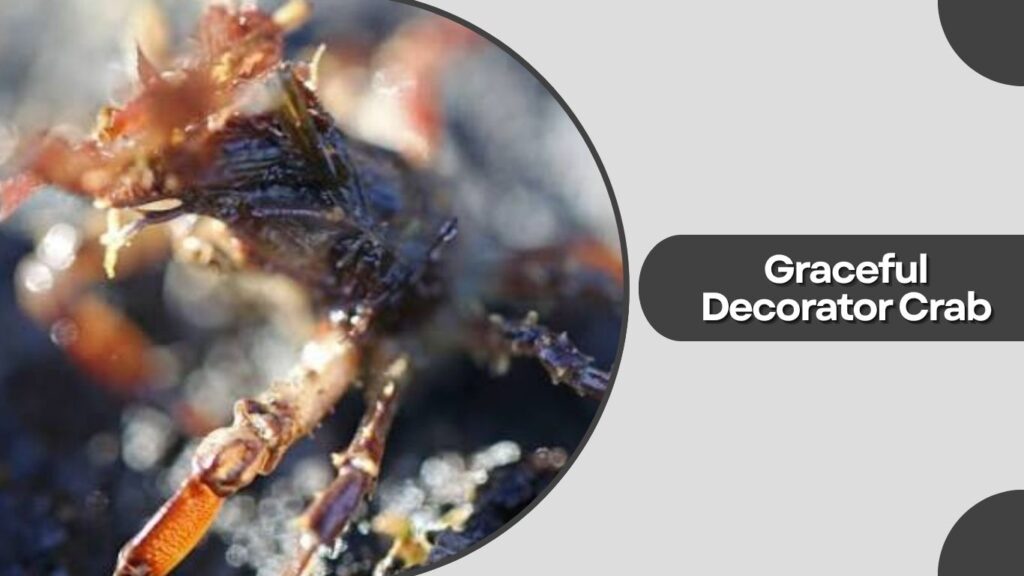
The graceful decorator crab (Oregonia gracilis) is a cold-water species with a triangular shell, long legs, and an especially enthusiastic decorating habit. It attaches algae, sponges, hydroids, and bryozoans to its body, often becoming almost invisible among kelp, rocks, and mixed seafloor growth.
Identification
- Heart-shaped or triangular carapace
- Two long spines forming the pointed rostrum
- Large curved spine behind each eye
- Long, thin walking legs
- Brown, tan, or occasionally gray body
- White claw fingers with pink or orange tips
- Carapace reaching about 5 centimeters long
- Usually heavily covered with marine growth
Habitat and Distribution
Graceful decorator crabs range across the northern Pacific, from Japan and the Bering Sea southward along North America to Monterey, California. They occur from intertidal waters to depths exceeding 400 meters. Mixed bottoms containing rocks, shells, sand, kelp, and other marine vegetation are especially suitable habitats.
Decoration and Protection
Pieces of algae, sponge, bryozoans, and hydroids are attached to fine hooked hairs covering the carapace and legs. The covering allows the crab to match its immediate environment and reduces detection by predators such as Pacific halibut, octopuses, and sea otters. Juveniles and adult females usually decorate more heavily than mature males.
Diet and Behavior
Graceful decorator crabs eat algae, drifting kelp, carrion, and other available organic material. Instead of moving quickly when threatened, they depend heavily on concealment. Unlike many true crabs that walk sideways, members of this genus move forward in a slow crawl, making effective camouflage particularly valuable.
6. Longhorn Decorator Crab
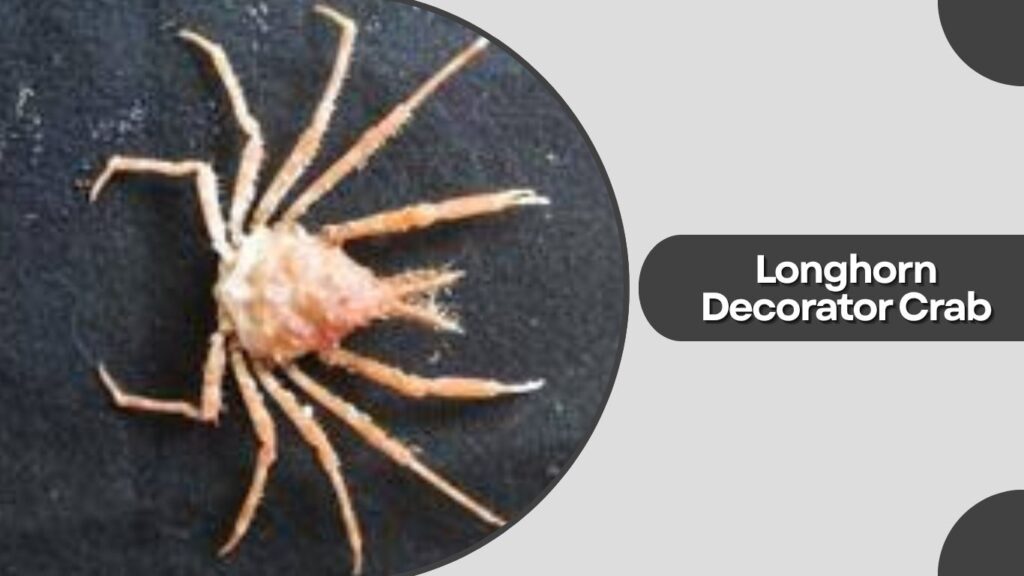
The longhorn decorator crab (Chorilia longipes) is a cold-water spider crab recognized by its exceptionally long, divided rostrum. Its narrow legs and pointed body give it a delicate appearance, while attached sponges and other marine organisms help it blend into rocky or muddy seafloors. It occurs across the northern Pacific at a wide range of depths.
Identification
- Pear-shaped carapace that is longer than wide
- Two long, widely separated horns at the front
- Rostral horns measuring over half the carapace length
- White or pale carapace with orange spines
- Long red or orange legs with white bands
- Small bumps and spines across the upper shell
- Carapace reaching approximately 4.5 centimeters wide
- Leg span occasionally reaching around 14 centimeters
Habitat and Distribution
Longhorn decorator crabs range from Kodiak, Alaska, south to waters near Mexico and also occur around Japan. They inhabit subtidal environments at depths from approximately 9 to 1,190 meters. Suitable bottoms include rocks, boulders, gravel, broken shells, mud, and mixed sediments.
Decoration and Camouflage
The crab attaches sponges and other locally available organisms to the uneven surface of its shell. These decorations hide its body outline and help it resemble the surrounding seafloor. Its pale shell and banded legs also provide natural camouflage among shells, sponges, gravel, and rocky structures.
Diet and Feeding Behavior
Detailed dietary studies of this species are limited. Like many related decorator crabs, it probably consumes algae, carrion, detritus, and small bottom-dwelling animals. Its narrow claws are better suited to picking and gathering food than crushing heavily armored prey. The crab moves slowly and depends more on concealment than speed.
7. Speck-Claw Decorator Crab
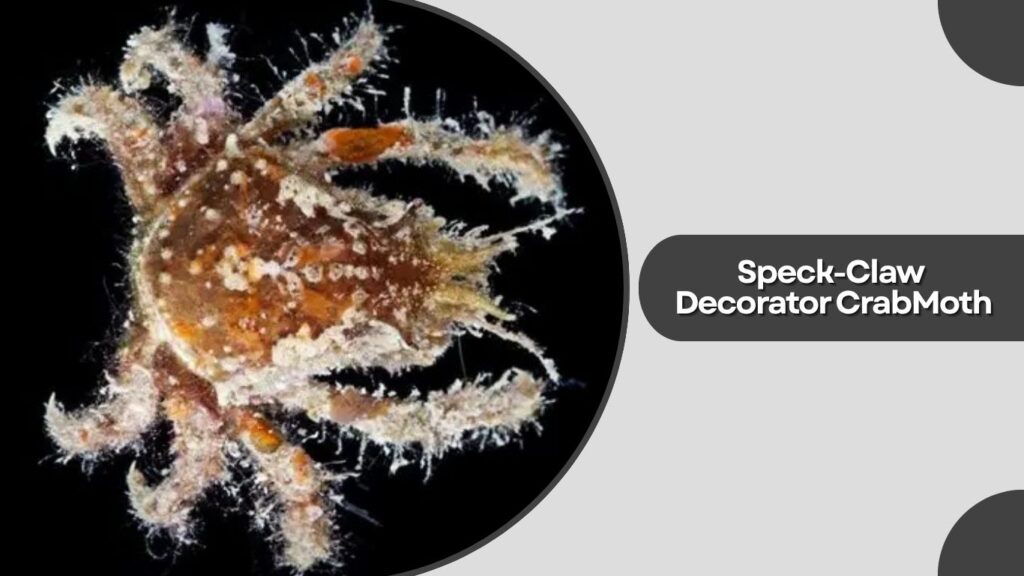
The speck-claw decorator crab is currently accepted as Omalacantha bicornuta, although many sources use the older scientific name Microphrys bicornutus. It is named for the small contrasting spots on its claws. Its rough body holds algae and other materials, making it extremely difficult to distinguish from a coral reef or rocky shoreline.
Identification
- Small, pear-shaped carapace
- Body longer than it is wide
- Two strong horns curving slightly downward
- Rough shell with granules and raised tubercles
- Hooked hairs covering the shell and rostral horns
- Distinctively spotted or speckled claws
- Strong spine positioned above each eye
- Walking legs becoming shorter toward the rear
Habitat and Distribution
Speck-claw decorator crabs occur throughout the western Atlantic, from North Carolina and Bermuda through the Gulf of Mexico and Caribbean to northern South America and Brazil. They inhabit rocky shores, coral reefs, mangrove roots, tide pools, and offshore bottoms, generally from shallow water to approximately 70 meters deep.
Decoration and Camouflage
This crab gathers algae with its claws and fastens it to specialized hooked hairs. The covering closely matches surrounding reef growth and reduces the likelihood of detection by predators. The attached algae may remain alive and continue growing while being carried by the crab.
Diet and Feeding Behavior
Algae form an important part of the speck-claw decorator crab’s diet as well as its camouflage. Research indicates that some of the algae carried on its body can serve as a reserve food supply when other food is unavailable. It may also consume organic debris and small reef organisms while searching among rocks and corals.
8. Shorthorn Decorator Crab
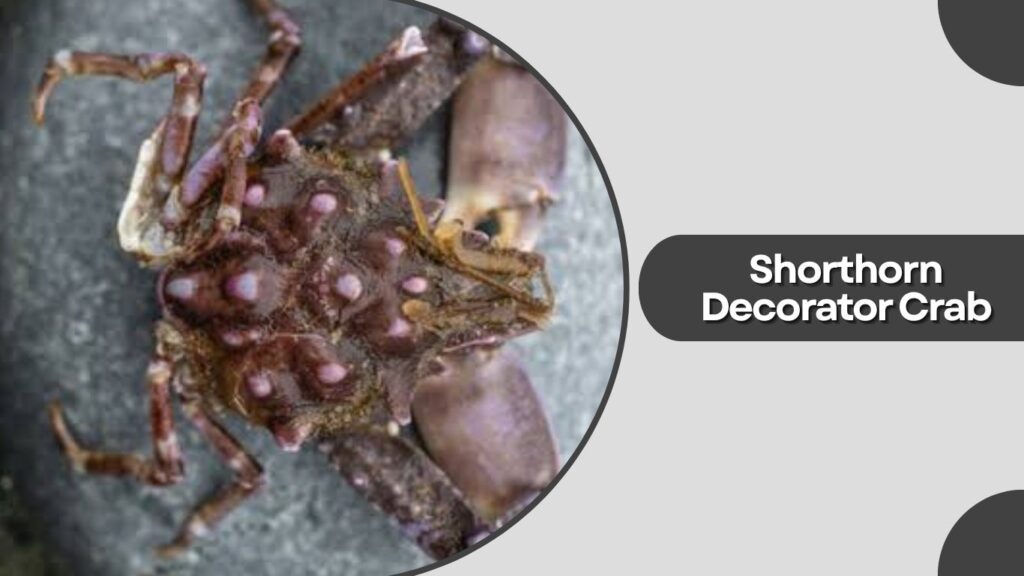
The shorthorn decorator crab (Chorinus heros) is a tropical western Atlantic spider crab with a long, narrow body and a pair of divided horns at the front. Despite its common name, the horns can still be noticeable, although they appear shorter and sturdier than those of some longhorn decorator species.
Identification
- Pear-shaped carapace almost twice as long as wide
- Two spreading rostral horns at the front
- Raised bumps covering the forward carapace
- Strong spine immediately in front of each eye
- Convex sides around the gill region
- Long, narrow walking legs
- Brown, reddish, tan, or gray natural coloration
- Body frequently covered with attached marine growth
Habitat and Distribution
Shorthorn decorator crabs inhabit tropical parts of the western Atlantic Ocean. They occur in the intertidal zone and across the continental shelf, generally at depths of approximately 1 to 50 meters. Rocky bottoms, reefs, coral rubble, shell deposits, and marine vegetation provide places to feed and collect decorative material.
Decoration and Protection
Hooked hairs on the carapace and legs allow the crab to carry algae, sponges, hydroids, and other organisms. The covering breaks up its body shape and may provide additional protection when the attached organisms have unpleasant tastes, stinging cells, or strong chemical defenses.
Diet and Daily Behavior
The shorthorn decorator crab is likely an opportunistic omnivore. It searches slowly among reef structures for algae, detritus, carrion, and small invertebrates. Its slender claws allow it to pick food from narrow crevices. Remaining still among reef growth provides protection when fish and other visual predators are nearby.
9. Lobed Decorator Crab
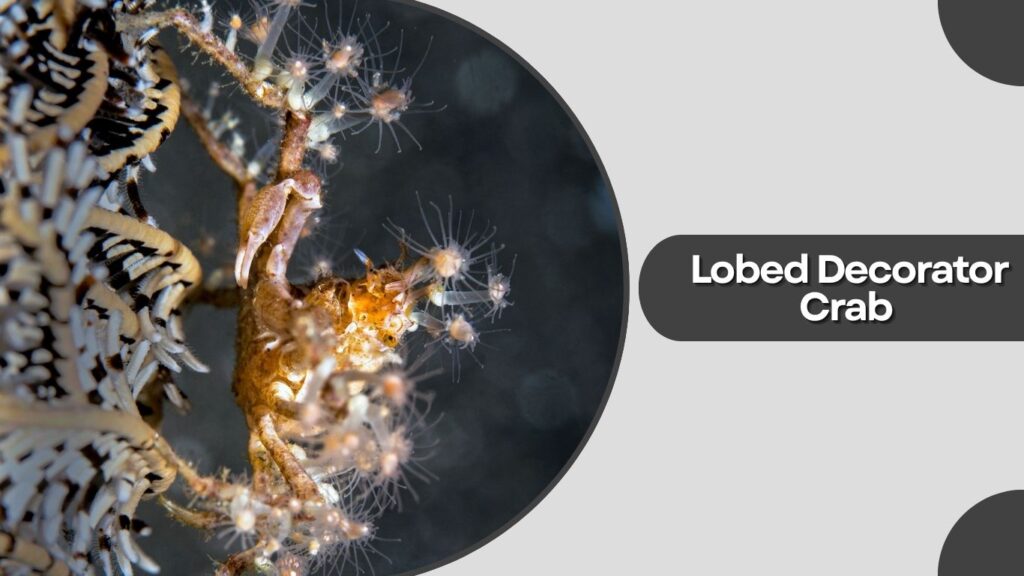
The lobed decorator crab (Omalacantha antillensis) is a small western Atlantic species formerly classified as Microphrys antillensis. It has a compact, pear-shaped shell covered with rough areas and specialized hairs. Its small size and attached camouflage make it easy to overlook among rocks, coral rubble, and marine growth.
Identification
- Small carapace reaching approximately 14 millimeters long
- Pear-shaped body that is longer than wide
- Rough surface with granules and small tubercles
- Two short projections forming the rostrum
- Hooked hairs capable of holding decorations
- Slender walking legs
- Small claws used to gather food and camouflage
- Tan, brown, reddish, or gray natural coloration
Habitat and Distribution
Lobed decorator crabs occur in the western Atlantic, including the Straits of Florida, Caribbean Sea, West Indies, and northern parts of South America. They are associated with hard-bottom habitats containing rocks and coral rubble and have been recorded in shallow marine waters down to approximately 100 meters.
Camouflage Method
The crab fastens small pieces of algae, sponge, and other reef material to the hooked hairs on its body. Because it selects material from its immediate surroundings, its appearance can change between habitats. Decorations help hide the legs and shell edges that could otherwise reveal the crab’s outline.
Feeding and Lifestyle
The lobed decorator crab probably eats algae, detritus, organic fragments, and tiny marine animals found on hard surfaces. It moves slowly while using its claws to pick food from crevices and reef growth. Its small body allows it to shelter beneath stones, within coral rubble, and among densely growing organisms.
10. Split-Nose Decorator Crab
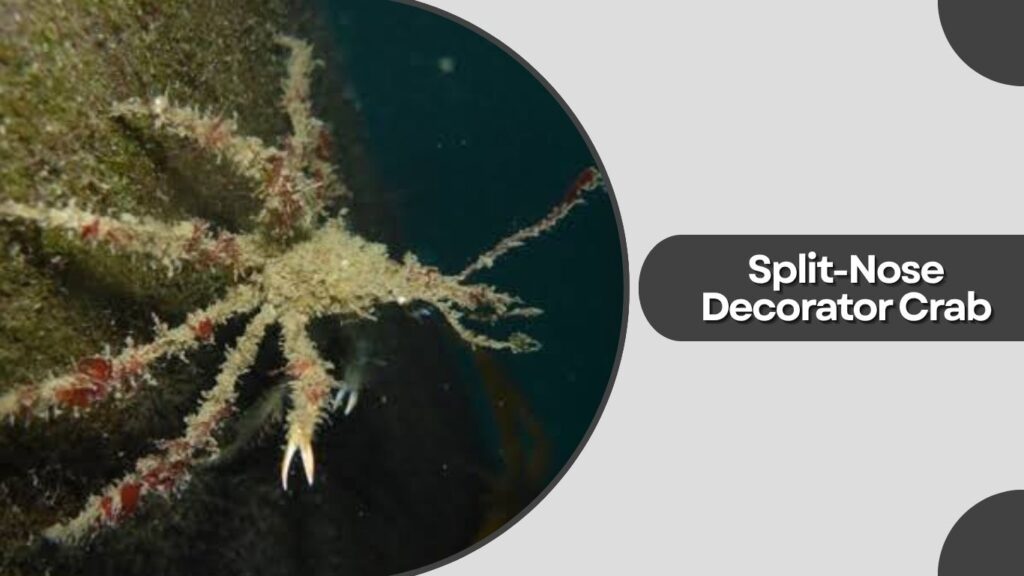
The split-nose decorator crab (Oregonia bifurca) is a rare deep-water species from the northern Pacific. Its common name refers to the two short, flattened horns forming a divided projection between its eyes. It is closely related to the graceful decorator crab but occupies substantially deeper offshore environments.
Identification
- Small, slightly oblong carapace
- Body narrower near the front
- Two short, flattened, outward-curving rostral horns
- Dense covering of long, curved yellowish hairs
- Small raised tubercles across the shell
- Long, slender walking legs
- Males generally larger than females
- Male carapace reaching approximately 3.4 centimeters long
Habitat and Distribution
Split-nose decorator crabs inhabit deep waters around the Aleutian Islands, Bering Sea, British Columbia, and parts of the Hawaiian–Emperor seamount chain. They are associated with the tops of seamounts and guyots, where the bottom may consist of sand, broken shells, and fine mud. Many records come from depths near or beyond 500 meters.
Camouflage and Protection
The crab’s body and legs are densely covered with curved hairs that can trap sediment or provide attachment points for small organisms. However, its decorating behavior is less frequently observed than that of shallow-water decorator crabs because it occupies remote deep-sea habitats.
Diet and Behavior
Little is known about its feeding habits in the wild. It probably collects detritus, carrion, microorganisms, and small invertebrates from the seafloor. Long legs help it move across soft sediment, while its hairy body and muted coloration reduce its visibility against shell fragments and deep-sea mud.
11. Sponge Decorator Crab
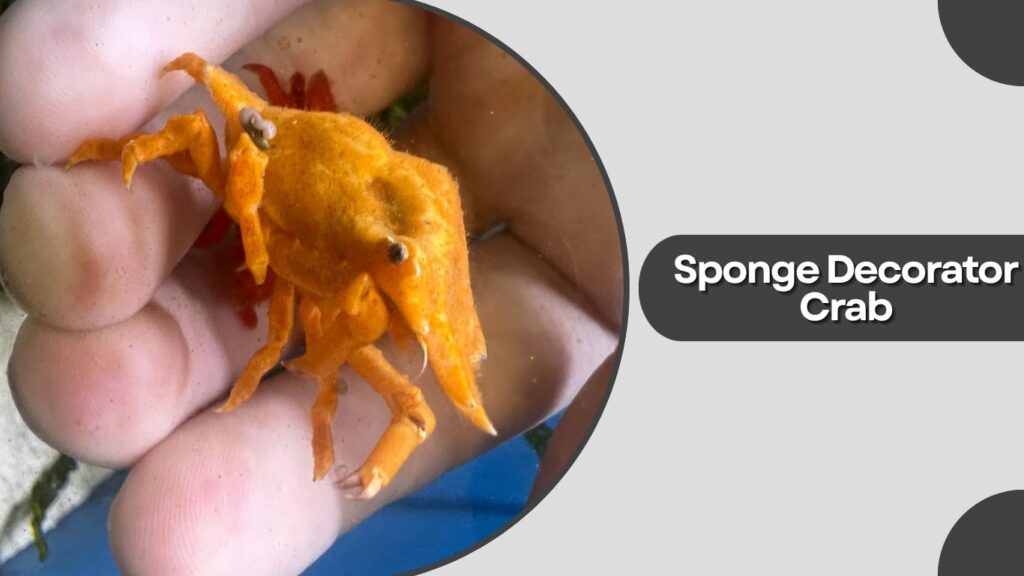
The sponge decorator crab (Hyastenus elatus) is a remarkable spider crab that covers its shell and legs with living pieces of sponge. Its decoration can become so dense that the crab resembles a brightly colored sponge rather than a moving animal. This species occurs in tropical Australian and western Pacific waters, where it is often overlooked in sponge-rich habitats.
Identification
- Pear-shaped carapace tapering toward the front
- Two long rostral horns that may approach the body’s length
- Two shorter projections on the sides of the shell
- Rough surface covered with hooked attachment hairs
- Long, relatively slender walking legs
- Brown, orange, yellowish, or reddish natural coloring
- Frequently covered with orange or yellow sponges
- Carapace growing to approximately 8 centimeters
Habitat and Distribution
Sponge decorator crabs occur around tropical Australia, from Western Australia through northern waters to parts of the eastern coast. They are also recorded around Indonesia, Papua New Guinea, and other western Pacific locations. They inhabit sponge gardens, coastal bays, estuaries, rocky reefs, and mixed seabeds from shallow water to depths exceeding 50 meters.
Sponge Decoration and Camouflage
The crab cuts sponge fragments and fastens them to specialized hooked hairs on its carapace and legs. The living sponge may continue growing after attachment, eventually surrounding much of the crab. Besides hiding its outline, some sponges may discourage predators through unpleasant tastes or defensive chemicals.
Diet and Daily Behavior
The sponge decorator crab is an opportunistic feeder that likely consumes algae, detritus, carrion, and small marine organisms. It commonly remains hidden near the bases of sponges during daylight and becomes more visible after dark. Its slow movement and extensive living camouflage allow it to search for food without attracting immediate attention.
12. Corallimorph Decorator Crab
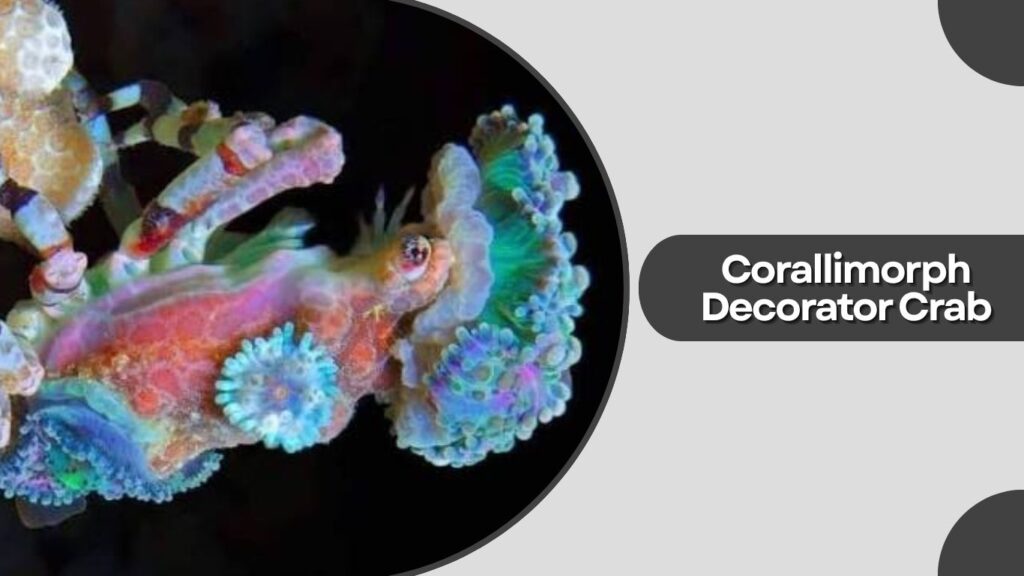
The corallimorph decorator crab (Cyclocoeloma tuberculatum) is a colorful Indo-Pacific crab famous for attaching living mushroom corals, anemone-like corallimorphs, soft corals, and sea squirts to its body. The attached animals can almost completely hide the crab while potentially providing additional protection against predators.
Identification
- Small to medium-sized rounded carapace
- Upper shell densely covered with bumps and tubercles
- Shorter legs than many long-legged decorator crabs
- Distinct bands or markings on the walking legs
- Brown, cream, reddish, or mottled natural coloration
- Body commonly covered with mushroom-like corallimorphs
- May also carry soft corals, ascidians, and anemones
- Natural shell often difficult to see beneath decorations
Habitat and Distribution
Corallimorph decorator crabs occur in tropical western Pacific waters, including Indonesia, the Philippines, Sulawesi, Raja Ampat, New Caledonia, and nearby island regions. They inhabit coral-rich subtidal environments and are frequently observed by divers on reefs at moderate depths.
Living Decorations
This crab deliberately attaches living corallimorphs and other soft-bodied reef organisms to the tubercles covering its shell. The decorations break up the crab’s outline and match the colorful reef background. Corallimorphs may also possess stinging cells or chemical defenses that make the decorated crab less attractive to predators.
Diet and Feeding Behavior
Its natural diet has not been studied extensively. It appears to be an opportunistic omnivore that gathers algae, detritus, food fragments, and small organisms from reef surfaces. The crab usually moves slowly among corals, relying on its living disguise rather than speed or powerful claws for protection.
13. Seaweed Decorator Crab
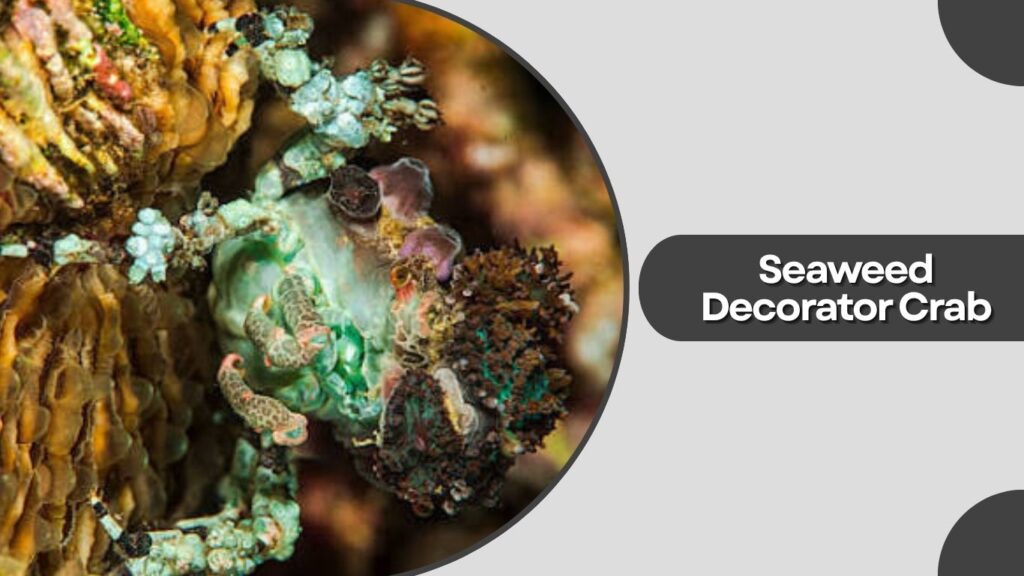
The seaweed decorator crab, commonly called the little seaweed crab, is scientifically known as Naxia tumida. This small Australian spider crab cuts pieces of algae and seaweed from nearby rocks and carefully attaches them to its shell, creating a disguise that closely matches its immediate surroundings.
Identification
- Small body reaching approximately 4 centimeters
- Rounded or slightly pear-shaped carapace
- Two short, downward-pointing projections at the front
- Numerous curled hooks covering the upper shell
- Brownish-green, gray, or rusty natural coloration
- Walking legs ending in strong gripping tips
- Usually covered with strands of living seaweed
- May resemble a loose clump of algae when motionless
Habitat and Distribution
Seaweed decorator crabs live on intertidal rocky shores in temperate Australian waters. They are recorded in New South Wales, Victoria, Tasmania, and Western Australia. They commonly shelter beneath rocks or among thick algae between the middle and lower tidal zones.
Decorating Technique
After locating suitable algae, the crab snips off a small piece with its claws. It prepares the fragment and places it onto hooks covering the carapace. The attached algae can remain alive and continue growing, producing a natural disguise that changes with the crab’s surroundings.
Diet and Behavior
The seaweed decorator crab eats algae, organic debris, and small marine organisms found on rocky surfaces. It is a slow-moving animal that relies heavily on remaining unnoticed. When threatened, it may stay completely still rather than escape, allowing its covering of local seaweed to conceal its body.
14. Moss Decorator Crab
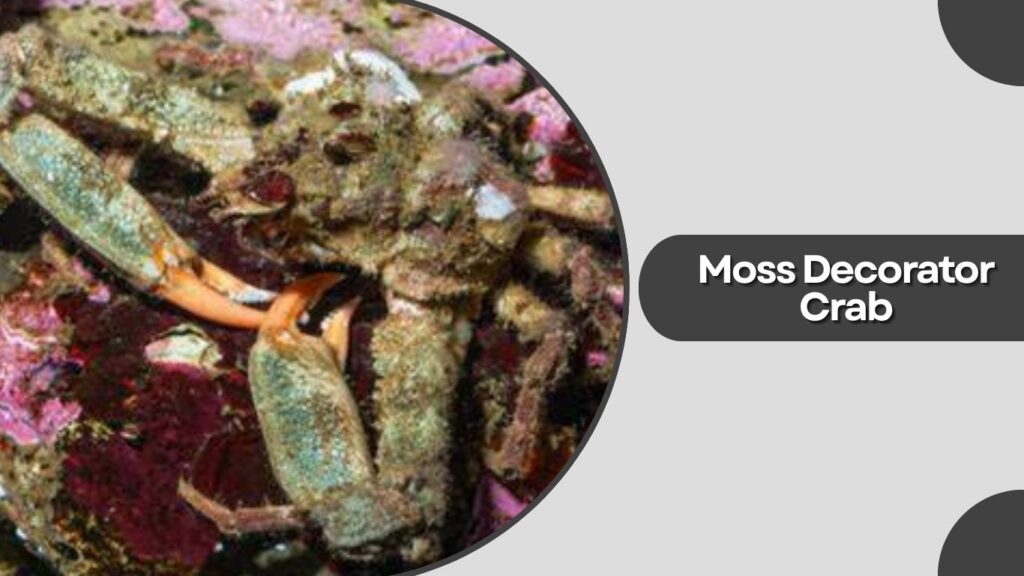
The moss decorator crab (Loxorhynchus crispatus), also called the masking crab, is a relatively large eastern Pacific spider crab. It attaches algae, sponges, bryozoans, anemones, and other marine growth to hooked hairs covering its shell, creating an irregular moss-like appearance.
Identification
- Large, pear-shaped carapace
- Shell pointed toward the front
- Maximum carapace length of about 10 centimeters
- Short hooked hairs covering the shell and legs
- Sharp spine above and beside each eye
- Dark green, brown, gray, or gray-brown base color
- Males generally larger with heavier claws
- Body often almost completely hidden by attached organisms
Habitat and Distribution
Moss decorator crabs occur along the Pacific coast of North America, from northern California to Baja California. They inhabit kelp forests, rocky reefs, underwater structures, and other covered habitats from shallow coastal water to depths of approximately 183 meters.
Decoration and Defense
The crab secures decorative material directly within rows of hooked setae rather than using a permanent glue. Young crabs generally decorate more heavily than large adults. They may also transfer useful decorations from an old shell to a new one after molting. Bryozoans and sponges can provide both visual concealment and possible chemical protection.
Diet and Feeding Behavior
Moss decorator crabs are generalist omnivores and scavengers. They consume algae, kelp, worms, mollusks, small crustaceans, carrion, detritus, and other available food. They may occasionally eat part of their own decorations when normal food is limited. Their slow, mainly nocturnal behavior makes effective camouflage particularly important.
15. Hairy Seaweed Crab
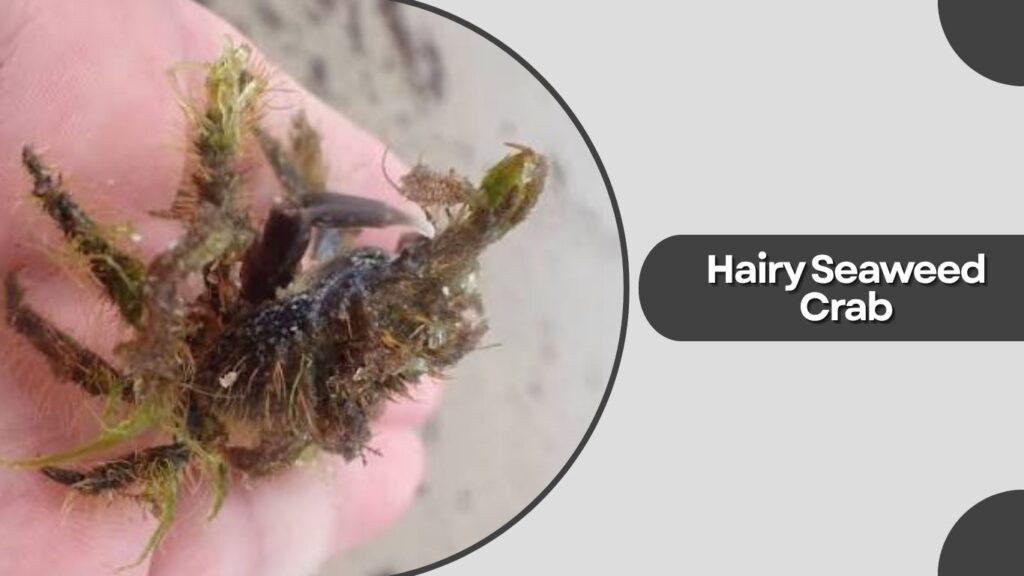
The hairy seaweed crab (Notomithrax ursus) is a small decorator crab commonly encountered in New Zealand rock pools. Its body is covered with long bristles and shorter hooked hairs that hold pieces of seaweed, sponge, hydroids, and other marine material. This covering makes the crab resemble the algae among which it lives.
Identification
- Rounded, slightly triangular carapace
- Shell reaching approximately 5 centimeters long
- Dense golden-brown or dark brown hairs
- Two pointed spines forming a V at the front
- Numerous smaller spines around the shell edges
- Long walking legs covered with bristles
- Orange or reddish claws with pale tips
- Usually covered with algae, sponges, or hydroids
Habitat and Distribution
Hairy seaweed crabs are native to New Zealand and southeastern Australia. In New Zealand, they occur around the North, South, Stewart, and Chatham Islands. They are especially common beneath boulders, among brown seaweed, and in shallow intertidal rock pools, although they may occur at greater depths.
Camouflage and Molting
Hooked setae function like tiny pieces of Velcro, holding seaweed and other organisms against the crab’s body. The crab can replace part of its covering as it moves into a different habitat. After molting, it may remove useful decorations from the discarded shell and attach them to its new body.
Diet and Daily Behavior
This species is an omnivorous scavenger that feeds on decaying seaweed, mussels, dead shellfish, small crustaceans, and other organic material. It may also eat some of the algae carried as camouflage, making its decorations an emergency food reserve. Hairy seaweed crabs are most active at night and may live for approximately two years.
FAQs
Why are they called decorator crabs?
Decorator crabs receive their name from their habit of attaching algae, sponges, anemones, hydroids, shells, and other marine materials to their bodies. These decorations hide the crab’s natural outline and help it blend into reefs, rocks, seaweed, and the surrounding seafloor.
How do decorator crabs attach materials to their shells?
Most decorator crabs have specialized hooked hairs, called setae, covering their shells and legs. They use their claws to cut or collect suitable materials and press them onto these hooks. The attached algae, sponges, and other organisms may remain alive and continue growing.
What do decorator crabs eat?
Decorator crabs are generally omnivores and scavengers. Their diet may include algae, seaweed, detritus, carrion, worms, mollusks, small crustaceans, and other marine organisms. Some species may also eat parts of the algae or sponges they carry when other food is limited.
Are decorator crabs dangerous to humans?
Decorator crabs are not venomous and are not considered dangerous to humans. However, they may pinch when handled or threatened. It is best to avoid touching wild decorator crabs because handling can damage their delicate decorations and cause unnecessary stress.
Where do decorator crabs live?
Decorator crabs occur in oceans around the world. Depending on the species, they may live on coral reefs, rocky shores, kelp forests, seagrass beds, sponge gardens, muddy seabeds, or deep-water habitats. Most remain near areas containing abundant materials for camouflage.