
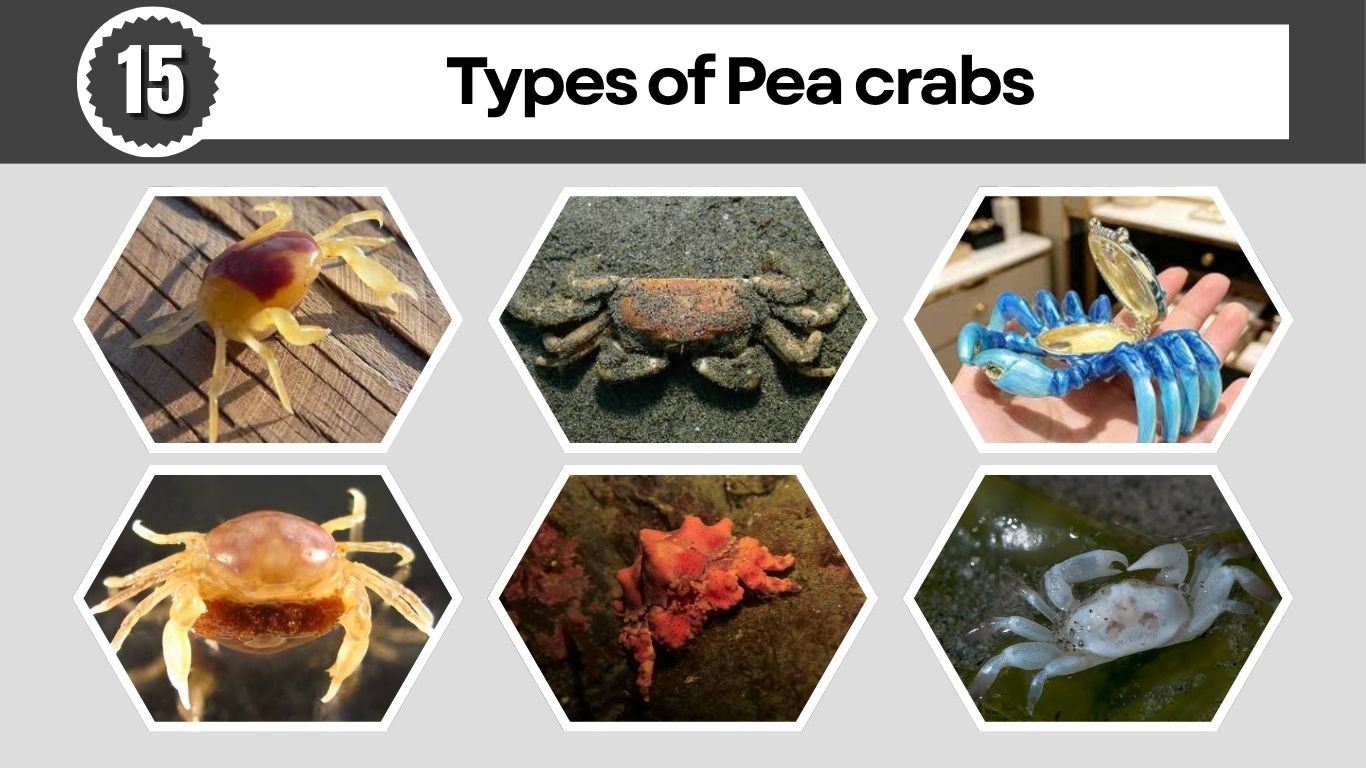
Pea crabs are tiny marine crabs known for living inside oysters, mussels, clams, sea squirts, worm tubes, and the burrows of other sea animals. Although most are only a few millimeters wide, they have fascinating relationships with their hosts. Some species are harmless commensals, while others may steal food or mildly damage delicate tissues. This guide explores 15 types of pea crabs, including oyster pea crabs, tube pea crabs, seabiscuit pea crabs, and mantle pea crabs. You will learn how each species looks, where it lives, what it eats, and how it interacts with its host in coastal marine environments.
1. Oyster Pea Crab
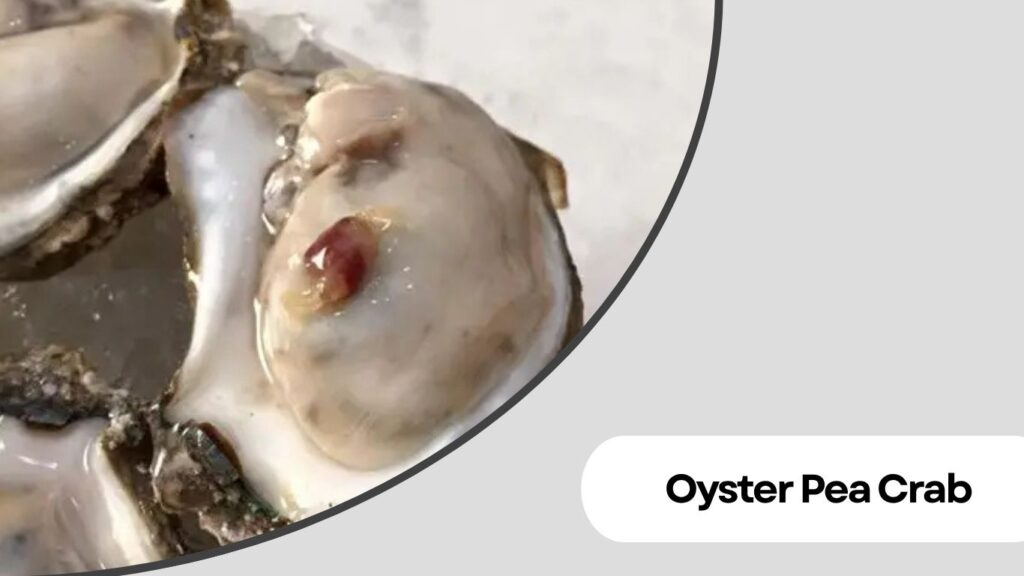
The oyster pea crab is a tiny marine crab that spends most of its adult life inside an oyster’s shell. Its accepted scientific name is Zaops ostreum, although it was formerly called Pinnotheres ostreum. This unusual crab uses the oyster as shelter and feeds on food particles collected by its host.
Identification
- Rounded, pea-sized body
- Soft, smooth carapace in adult females
- Pale yellow, cream, pinkish, or translucent color
- Small eyes and short walking legs
- Females are noticeably larger than males
- Usually discovered inside an oyster’s mantle cavity
- Belongs to the pea crab family, Pinnotheridae
Habitat and Distribution
Oyster pea crabs primarily live inside eastern oysters and other marine bivalves. They are found along the Atlantic coast of the United States, where their hosts inhabit shallow coastal waters, bays, estuaries, oyster reefs, and tidal creeks. The oyster’s shell provides protection from fish and other predators while allowing the crab to remain close to a steady food supply.
Diet and Feeding Behavior
The oyster pea crab feeds on plankton, organic particles, and other tiny food materials brought into the shell by the oyster’s filtering activity. Instead of leaving the oyster to search for food, the crab collects particles from mucus strings and water currents created by its host. This makes feeding easier for the crab but may reduce the amount of food available to the oyster.
Relationship With Oysters
The relationship between the oyster pea crab and its host is usually considered parasitic because the crab benefits while the oyster may lose food and body condition. However, the crab rarely kills its host directly. One or occasionally several pea crabs may be found inside an oyster, although the available space within the mantle cavity limits how many can live there.
2. Squatter Pea Crab
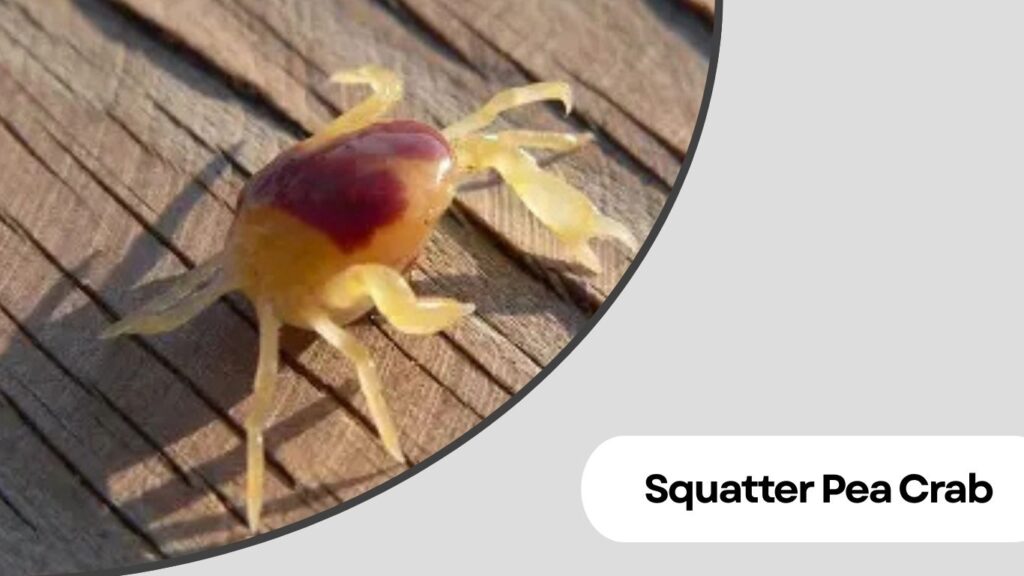
The squatter pea crab (Tumidotheres maculatus) is a tiny marine crab that lives inside the shells of scallops, mussels, pen shells, and other mollusks. It occupies the host’s mantle cavity, where it receives protection and convenient access to food. The species occurs across a broad area of the western Atlantic Ocean.
Identification
- Small, rounded body resembling a pea
- Smooth and relatively soft carapace
- Pale cream, yellowish, or light brown coloration
- Adult females can reach about 16 millimeters wide
- Males are smaller and usually measure under 6 millimeters
- Females have a broader and more rounded body
- Small claws and slender walking legs
- Usually discovered inside a living mollusk
Habitat and Distribution
Squatter pea crabs live in coastal and estuarine environments where suitable mollusk hosts are available. Their range extends through much of the western Atlantic, from the northeastern United States to southern South America. They may inhabit bay scallops, blue mussels, pen shells, horse mussels, and several other bivalves. Adult females normally remain inside a host, while the smaller males are more capable of moving between hosts.
Diet and Feeding
This pea crab feeds on plankton and organic particles collected by its host. When a scallop or mussel filters water through its gills, the crab intercepts some of the trapped food. Its legs help it remain attached near the gills while feeding on mucus-bound particles. This easy access to food allows the crab to survive without regularly leaving the protection of the shell.
Relationship With Its Host
The relationship may range from commensal to parasitic. The crab always benefits, but the host may lose food and experience reduced growth when a large female is present. Because a bigger bivalve provides more space, larger hosts can generally accommodate larger pea crabs. Heavy infestations may have a greater effect on commercially important scallops and mussels than the presence of a single small crab.
3. Pinna Pea Crab
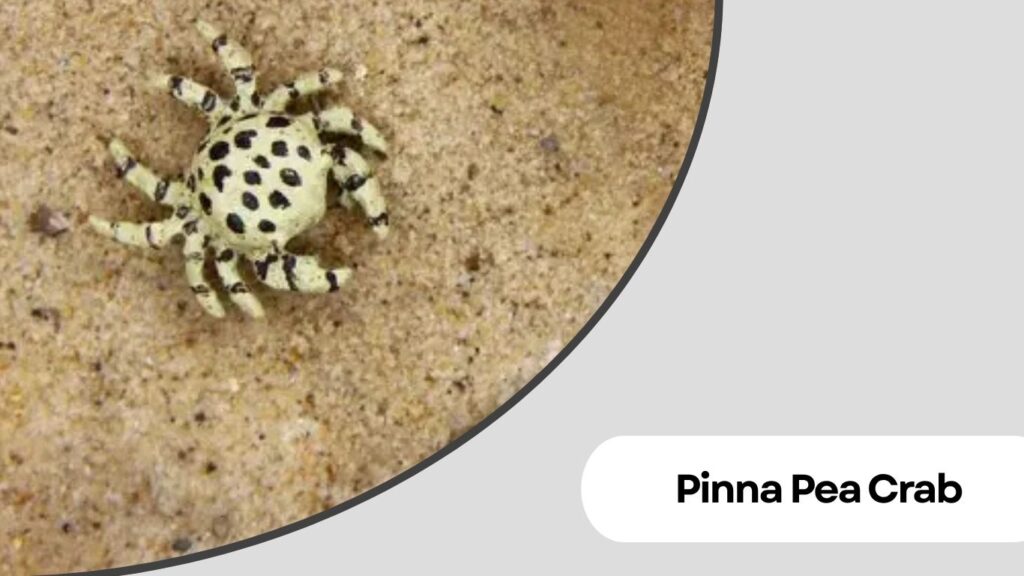
The pinna pea crab (Pinnotheres pisum) is a small European pea crab commonly associated with mussels, clams, cockles, oysters, and other bivalves. The crab spends much of its life hidden inside its host’s mantle cavity. Its pea-shaped body and secretive lifestyle make it difficult to notice unless the shellfish is opened.
Identification
- Small, rounded, pea-shaped carapace
- Soft-bodied adult female
- Harder and more mobile male
- Pale cream, yellowish, pink, or reddish-brown color
- Tiny eyes positioned near the front
- Females are much larger and rounder than males
- Slender legs adapted for moving inside bivalves
- Commonly found within mussels and other shellfish
Habitat and Distribution
Pinna pea crabs occur in marine waters around Europe, including the northeastern Atlantic and Mediterranean region. They live inside numerous bivalve species found on rocky shores, sandy seabeds, mudflats, estuaries, and shallow coastal waters. Researchers have recorded this adaptable species from more than 30 types of bivalve hosts, showing that it does not depend on only one shellfish species.
Diet and Feeding Behavior
The crab relies heavily on the feeding activity of its host. As the mussel or clam draws water across its gills, plankton and suspended organic material become trapped in mucus. The pea crab collects part of this material and eats it. Females are especially dependent on this feeding method because their soft, rounded bodies are better suited to living inside a shell than roaming freely.
Life Inside Bivalves
A female pinna pea crab may remain inside the same bivalve for an extended period, protected from predators and strong currents. Males are smaller and more mobile, allowing them to leave hosts while searching for females. Although the bivalve provides shelter and food, the crab may reduce the host’s available nutrition, particularly when the host is small or food is limited.
4. Seabiscuit Pea Crab
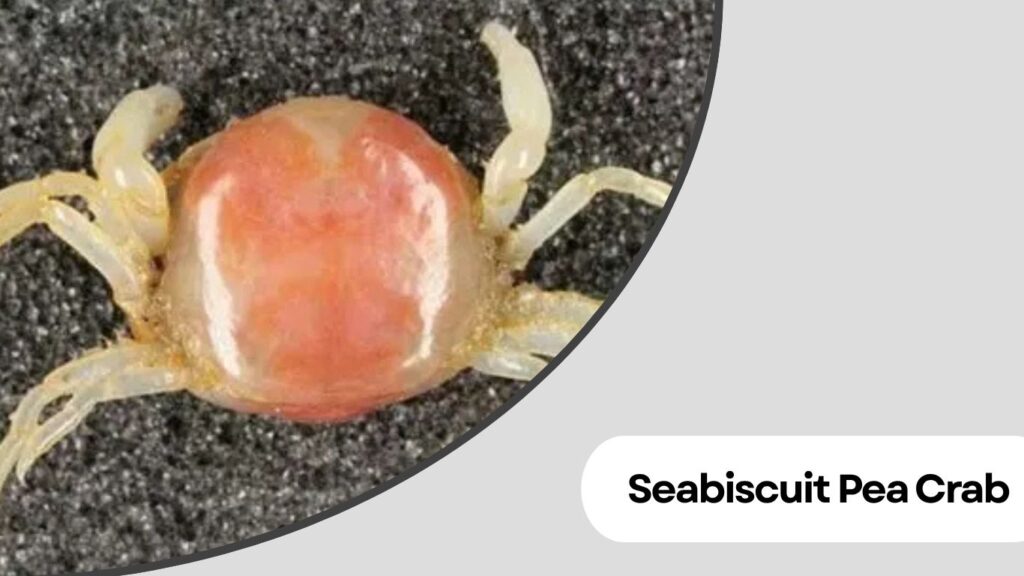
The seabiscuit pea crab (Dissodactylus crinitichelis) is an unusual pea crab that lives on the exterior of sea biscuits, sand dollars, and related echinoderms. Instead of hiding inside a mollusk, it shelters among the short spines covering its host. Its flattened body helps it remain close to the host’s surface.
Identification
- Very small and flattened body
- Rounded or slightly angular carapace
- Pale cream, tan, or light brown coloration
- Color blends with the host’s surface
- Short walking legs suited to gripping spines
- Hairy or bristled claws
- Small eyes near the front of the carapace
- Usually found beneath or among sea-biscuit spines
Habitat and Distribution
Seabiscuit pea crabs live in warm, shallow marine environments where their echinoderm hosts occur. They can be found on sandy seabeds, seagrass areas, and coastal zones inhabited by sea biscuits and sand dollars. The crab remains close to the host’s body, where the surrounding spines provide camouflage and protection from predators.
Diet and Feeding
The seabiscuit pea crab feeds on organic material associated with its host. It may consume mucus, trapped particles, small pieces of tissue, or food collected from the host’s surface. Because it lives externally, the crab can move across the sea biscuit to locate suitable feeding areas. Its small size allows it to remain among the spines without greatly interfering with the host’s movement.
Relationship With Sea Biscuits
This crab is generally described as an ectosymbiont because it lives on the outside of another animal. The relationship can become parasitic when the crab removes tissue or consumes resources from its host. However, the effect can depend on the number of crabs present and the condition of the sea biscuit. Chemical cues in the water may help the crab recognize and locate appropriate hosts.
5. Burrow Pea Crab
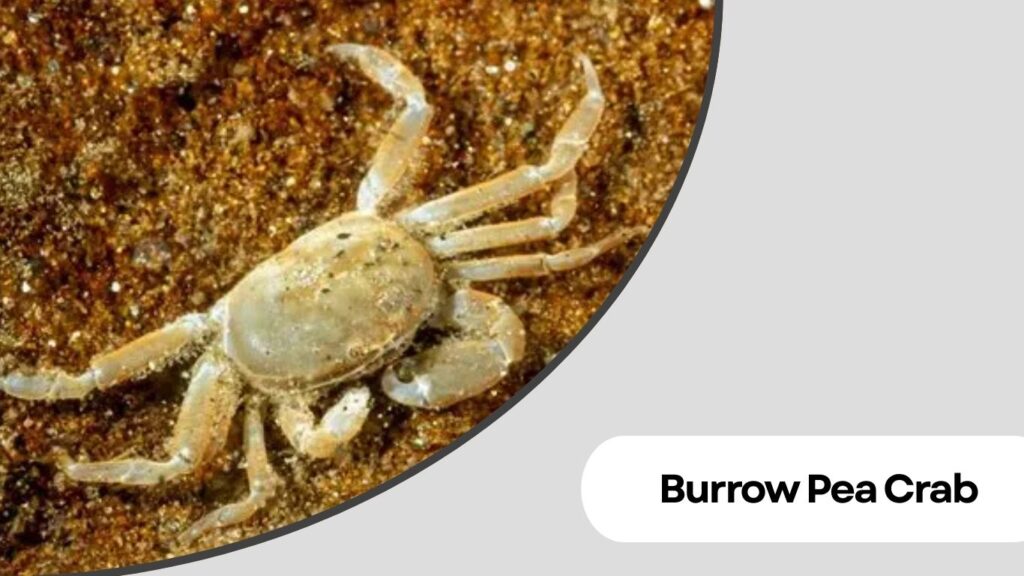
The burrow pea crab (Scleroplax granulata) is a small western North American species that lives in burrows constructed by mud shrimp and innkeeper worms. Rather than creating its own tunnel, it shares the protected underground space of another marine animal. Its hard carapace distinguishes it from many soft-bodied pea crabs that inhabit bivalves.
Identification
- Hard, strongly curved carapace
- Body less than one-and-a-half times wider than long
- Smooth or finely granulated upper surface
- Red corneas in the eyes
- Third pair of walking legs is the longest
- Adult females can reach about 12.9 millimeters wide
- Males have unusually large, thick claws
- Females have smaller and more slender claws
Habitat and Distribution
Burrow pea crabs occur along the Pacific coast of North America, from Vancouver Island in Canada to Baja California Sur in Mexico. They live in intertidal mudflats and shallow coastal seabeds. Their hosts include California ghost shrimp, bay ghost shrimp, mud shrimp, and the fat innkeeper worm. Some individuals have been recorded at depths of approximately 55 meters.
Diet and Feeding Behavior
The crab probably feeds on organic particles, detritus, and small food materials carried into the burrow by water movement. Living inside an established tunnel gives it access to a steady flow of oxygenated water and suspended food. Its walking legs and claws allow it to move through the narrow burrow and collect material from the walls, sediment, or passing water.
Relationship With Burrow Hosts
The burrow pea crab is generally considered a commensal associate. It gains shelter and access to food, while the mud shrimp or innkeeper worm appears to experience little direct harm. Several species may occasionally share the same burrow system. This protected lifestyle reduces the crab’s exposure to fish, birds, waves, and sudden environmental changes on the mudflat surface.
6. Tube Pea Crab
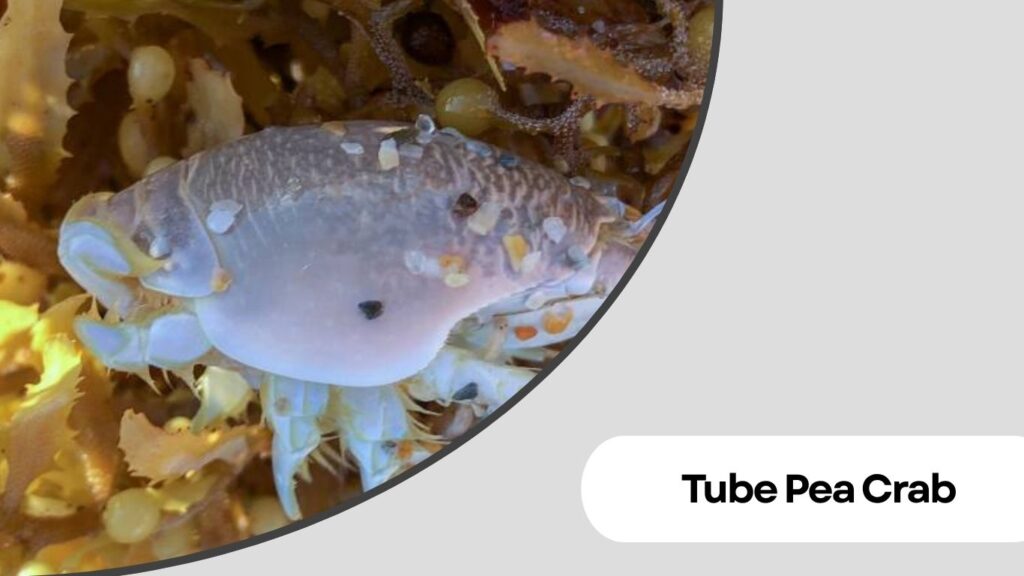
The tube pea crab (Pinnixa chaetopterana) is a tiny marine crab that lives inside the protective tubes constructed by parchment worms and other polychaete worms. Its unusually wide body allows it to move through narrow spaces within the tube. The crab receives shelter from predators while sharing the water flow and food resources created by its host.
Identification
- Small, soft-bodied marine crab
- Carapace much wider than it is long
- Flattened body adapted to narrow worm tubes
- Pale brown, gray, cream, or translucent coloration
- Small claws and slender walking legs
- Third pair of walking legs usually the longest
- Tiny eyes positioned near the front
- Adults are generally no larger than a fingernail
Habitat and Distribution
Tube pea crabs occur along the western Atlantic coast, including waters near Massachusetts, North Carolina, Florida, the Gulf of Mexico, the Caribbean region, and Brazil. They may live from shallow coastal areas to depths of approximately 60 meters. Their preferred homes are the U-shaped tubes created by parchment worms such as Chaetopterus variopedatus.
Diet and Feeding Behavior
Water constantly moves through the worm’s tube, carrying plankton, detritus, and other suspended organic particles. The tube pea crab takes advantage of this current by collecting edible material that passes through the shelter. It may consume loose particles, leftover food, or small amounts of material trapped by the worm’s mucus-feeding system.
Relationship With Tube Worms
The crab’s relationship with the tube worm is generally considered commensal because the crab gains protection and food while causing little obvious harm to its host. A male and female may occupy the same tube, normally remaining behind the worm as it changes position. The crab may occasionally enlarge an opening in the tube so it can enter or leave more easily.
7. Tube-Dwelling Pea Crab
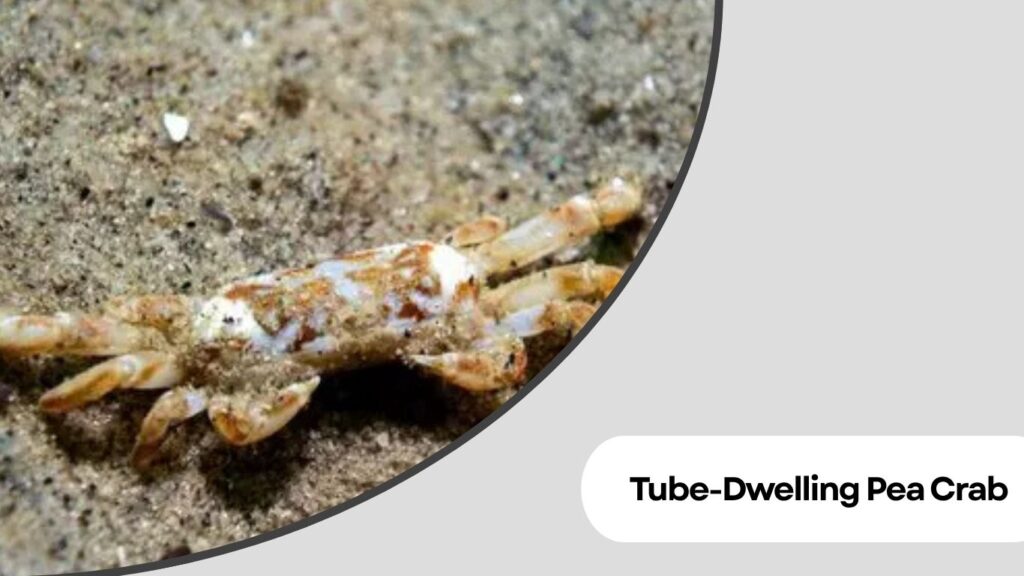
The tube-dwelling pea crab is commonly known scientifically as Scleroplax tubicola, although older references may list it as Pinnixa tubicola. This small Pacific Coast crab lives inside tubes and burrows made by marine worms and burrowing crustaceans. It is widespread but frequently overlooked because it spends most of its life hidden beneath the seafloor.
Identification
- Extremely wide, flattened carapace
- Body approximately two to two-and-a-half times wider than long
- Mottled brown, gray, white, and cream coloration
- White claws with brown, orange, or reddish patches
- Walking legs marked with dark streaks or blotches
- Red eyes that may contain golden flecks
- Third pair of walking legs is the longest
- Females can grow larger than males
Habitat and Distribution
Tube-dwelling pea crabs occur along the eastern Pacific Coast from southern Alaska and British Columbia to Mexico. They have been recorded from intertidal habitats to depths of around 57 meters. They occupy the tubes of parchment worms, terebellid worms, and sometimes burrows associated with ghost shrimp and similar marine animals.
Diet and Feeding Behavior
The crab probably feeds on plankton, detritus, and microscopic organic material transported through its host’s tube. Water circulation provides a dependable supply of suspended particles. Its flattened shape and relatively long walking legs help it maintain its position while collecting food without having to expose itself on the open seafloor.
Life Inside the Host’s Tube
Tube-dwelling pea crabs are frequently found in pairs, suggesting that a male and female may share the same shelter. Females appear particularly dependent on the tube, while males may occasionally travel outside to locate mates. The host’s structure protects the crabs from fish, waves, drying conditions, and sudden changes in the surrounding environment.
8. Western Pea Crab
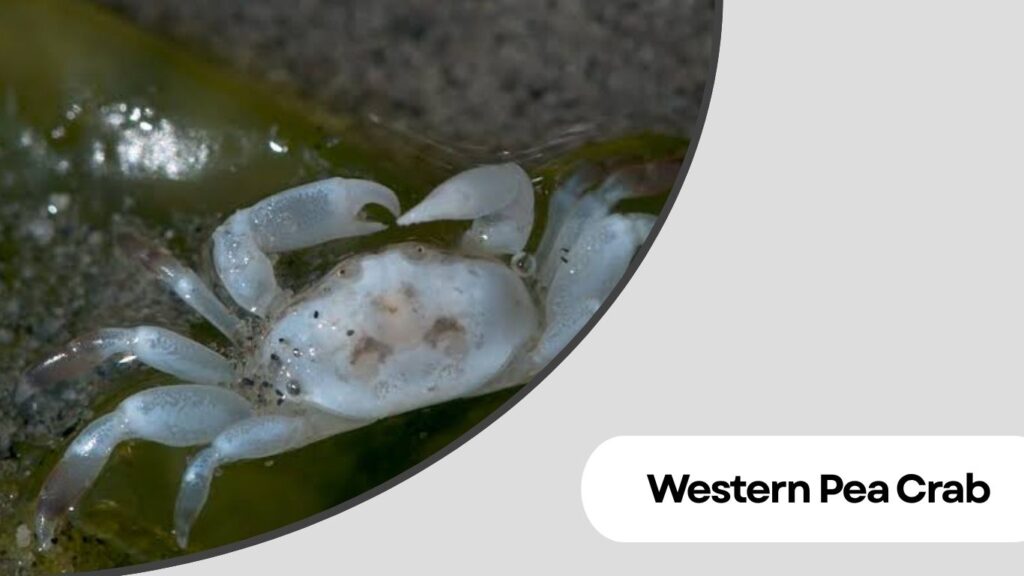
The western pea crab is currently accepted as Rathbunixa occidentalis, although it was traditionally known as Pinnixa occidentalis. It is a small symbiotic crab associated with the northeastern Pacific Ocean. Like many related pea crabs, it shelters within burrows created by larger marine invertebrates instead of constructing a permanent home of its own.
Identification
- Small, strongly flattened body
- Carapace more than twice as wide as long
- Pointed or angular sides of the carapace
- Pale tan, brown, gray, or cream coloration
- Slender walking legs extending from the wide body
- Small claws positioned close to the front
- Tiny, closely placed eyes
- Body shape adapted to moving through narrow burrows
Habitat and Distribution
Western pea crabs are native to marine environments along the Pacific coast of North America. They have been associated with sheltered bays, coastal mudflats, intertidal zones, and shallow subtidal areas. Records also indicate that the species has been introduced into South Africa’s Saldanha Bay, likely through human-associated marine transportation.
Diet and Feeding Behavior
The western pea crab is thought to feed on organic particles, detritus, plankton, and food fragments carried into its host’s burrow. Water moving through the tunnel creates feeding opportunities while allowing the crab to remain protected. Its claws can collect particles from the burrow walls, sediment surface, or passing water.
Relationship With Burrowing Animals
This pea crab has been reported from the burrows of spoon worms and other soft-bottom marine invertebrates. The crab benefits from a stable shelter that offers protection from predators and environmental disturbances. Its exact effect on every host is not fully understood, but the relationship is generally considered symbiotic and may be largely commensal when the crab does not damage or steal excessive food from its host.
9. Cristate Pea Crab
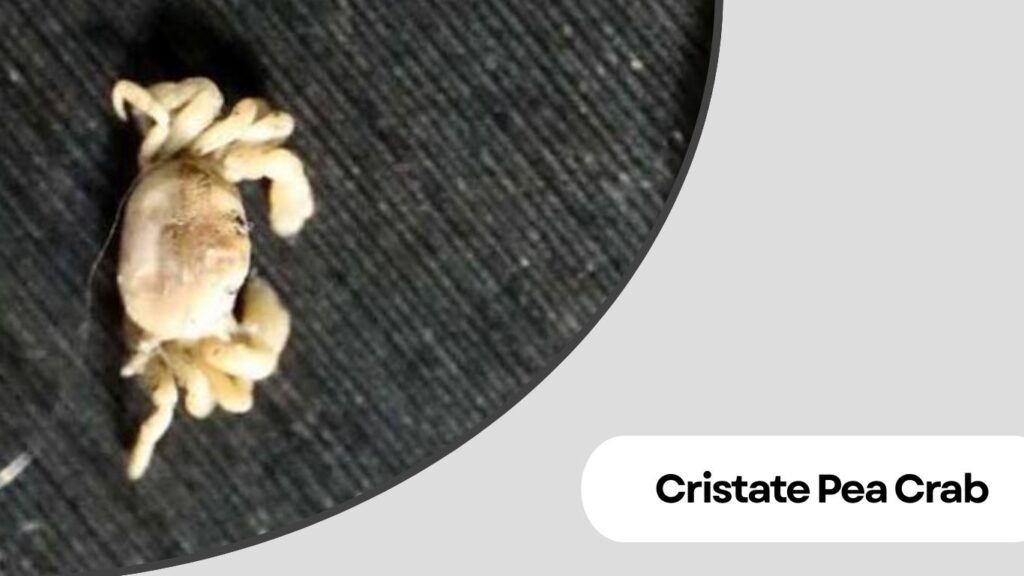
The cristate pea crab (Austinixa cristata) is a tiny burrow-dwelling species found along the western Atlantic and Gulf Coast regions. It is closely associated with ghost shrimp, mud shrimp, and other animals that construct tunnels beneath sandy or muddy seafloors. Its narrow, widened body helps it move within the upper sections of these underground burrows.
Identification
- Very small, flattened carapace
- Body noticeably wider than it is long
- Narrow front and expanded side margins
- Pale white, tan, gray, or translucent coloration
- Long, slender walking legs
- Small claws used to gather food
- Raised ridge or crest on the carapace
- Often difficult to see against sand or mud
Habitat and Distribution
Cristate pea crabs occur in shallow marine habitats along the southeastern United States, including coastal areas from North Carolina to the Gulf of Mexico. They favor intertidal and shallow subtidal flats containing sand, mud, or mixed sediment. Suitable habitats must also support the burrowing shrimp or other invertebrates on which the crabs depend.
Diet and Feeding Behavior
Food probably consists of detritus, microorganisms, plankton, and tiny organic particles entering the host’s tunnel. The crab may collect material from the burrow wall or capture suspended particles carried by water currents. Its small size allows it to feed without competing heavily with the much larger burrow owner.
Relationship With Burrowing Shrimp
The cristate pea crab commonly occupies the narrow upper portion of a host’s burrow. The tunnel provides protection from predatory fish, crabs, and shorebirds while maintaining moisture during low tide. The relationship is generally regarded as commensal because the pea crab benefits from the ready-made shelter, while the host appears to experience little direct harm.
10. Grooved Mussel Pea Crab
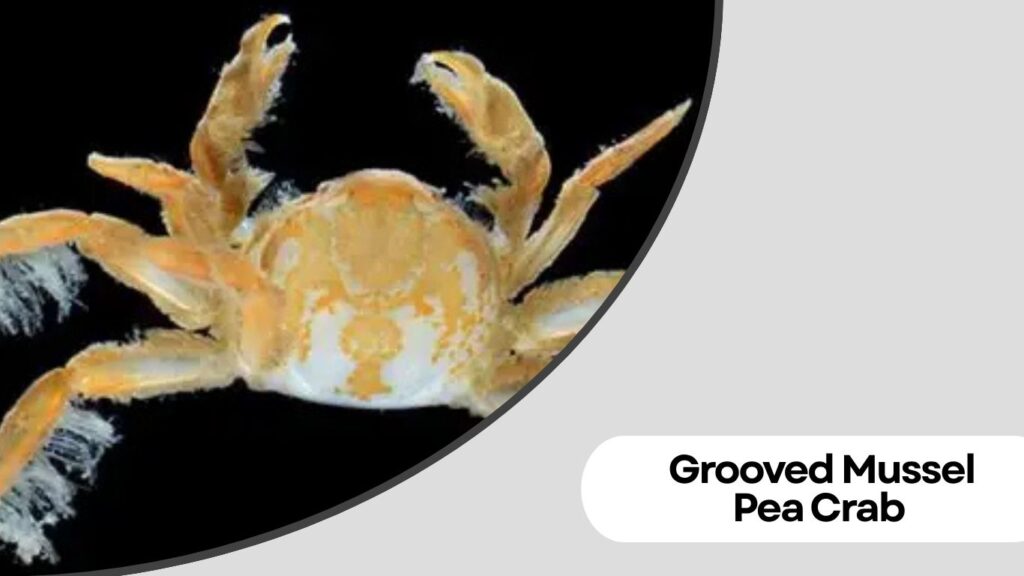
The grooved mussel pea crab (Fabia subquadrata) is a small parasitic or commensal crab that lives inside mussels, clams, and other bivalves. Its common name comes from the distinctive grooves found on the upper surface of mature females. The crab uses its host for shelter, food, and protection throughout important stages of its life cycle.
Identification
- Rounded or slightly square-shaped carapace
- Body less than one-and-a-half times wider than long
- Long grooves extending backward from each eye
- Additional transverse groove across the carapace
- Strongly curved tips on the walking legs
- Long, feathery hairs on the third and fourth legs
- Soft females may appear translucent white
- Males and hardened females may have red markings
Habitat and Distribution
Grooved mussel pea crabs range along the Pacific coast from Alaska to Baja California, Mexico. They occur from intertidal habitats to depths of approximately 220 meters. Common hosts include horse mussels, California mussels, soft-shell clams, gaper clams, bay mussels, and several other bivalves.
Diet and Feeding Behavior
The crab takes advantage of the bivalve’s filter-feeding system. As the host draws seawater across its gills, plankton and suspended particles become trapped in mucus. The pea crab collects some of this material before the host can eat it. Adult females are especially suited to this lifestyle because their soft bodies can expand within the protected mantle cavity.
Effect on the Host
Large females may damage the bivalve’s delicate gills and reduce the amount of food available to it. For this reason, the relationship is often classified as parasitic rather than harmless commensalism. The host may experience reduced growth, poorer physical condition, or reproductive stress, although a single crab does not usually kill a healthy adult mussel or clam directly.
11. Jewel-Box Pea Crab
The jewel-box pea crab (Gemmotheres chamae) is a tiny marine crab that lives inside jewel-box clams. It was originally classified as Pinnotheres chamae but was later placed in the genus Gemmotheres. The crab gains a protected home inside the clam and remains hidden from most predators.
Identification
- Extremely small, rounded body
- Smooth, pea-shaped carapace
- Pale cream, white, or translucent appearance
- Adult female has a softer body than the male
- Short claws positioned near the front
- Small eyes that may be difficult to notice
- Females are generally larger and rounder than males
- Usually discovered inside a jewel-box clam
Habitat and Host
The jewel-box pea crab is associated with the corrugate jewelbox clam, Chama congregata. It occupies the protected mantle cavity inside the clam’s shell. These clams live attached to hard surfaces in warm, shallow coastal waters of the western Atlantic. The crab’s distribution is therefore closely connected to the presence of suitable jewel-box clam hosts.
Diet and Feeding Behavior
This pea crab benefits from the feeding currents created by its host. As the clam draws water into its shell, plankton and other organic particles are trapped by its filtering structures. The crab collects some of these particles instead of leaving the shell to search for food. Its small size allows it to move around the mantle cavity without needing much space.
Relationship With Jewel-Box Clams
The relationship is commonly described as commensal because the crab receives shelter and food while the clam may experience little obvious damage. However, the crab may take a small portion of the host’s collected food. The hard clam shell protects the soft-bodied female from fish, larger crabs, waves, and other environmental dangers.
12. Ascidian Pea Crab
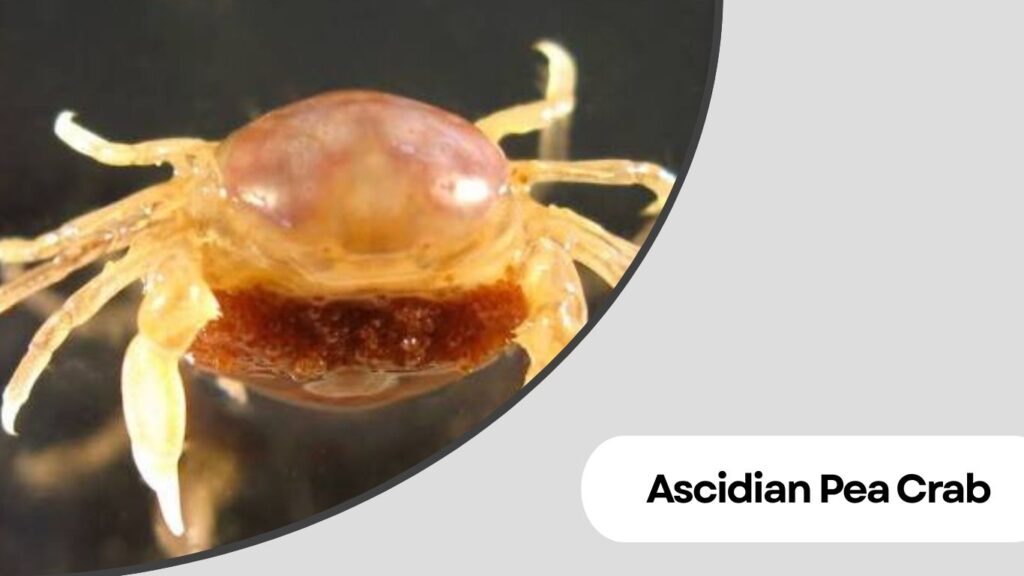
The ascidian pea crab (Tunicotheres moseri) is an unusual pea crab that lives inside sea squirts, also known as ascidians or tunicates. Rather than occupying a clam or oyster, it enters the host’s atrial chamber. Females can reach approximately 13 millimeters across, while males are generally much smaller.
Identification
- Small, rounded or oval carapace
- Female may reach about 13 millimeters wide
- Male usually reaches only about 6 millimeters
- Pale cream, yellowish, or translucent body
- Soft-bodied adult female
- Small claws and slender walking legs
- Tiny eyes positioned near the front
- Usually found inside the chamber of a sea squirt
Habitat and Distribution
Ascidian pea crabs occur in warm parts of the western Atlantic, including the Caribbean Sea and the Gulf of Mexico. Known hosts include pleated sea squirts, black sea squirts and other solitary ascidians. The crab normally lives inside the atrial chamber through which filtered seawater passes.
Feeding Behavior
The crab takes advantage of water and organic material passing through its filter-feeding host. It may collect plankton, detritus, mucus-bound particles and other microscopic food. Living inside a sea squirt allows the crab to feed without regularly exposing itself to open water, where its small and relatively soft body would be vulnerable.
Life Inside a Sea Squirt
Most inhabited sea squirts contain only one ascidian pea crab. Research suggests that resident crabs can discourage other crabs from entering an occupied host. Males may search for sea squirts containing receptive females, while avoiding hosts that already contain another male or an egg-carrying female.
13. Puget Pea Crab
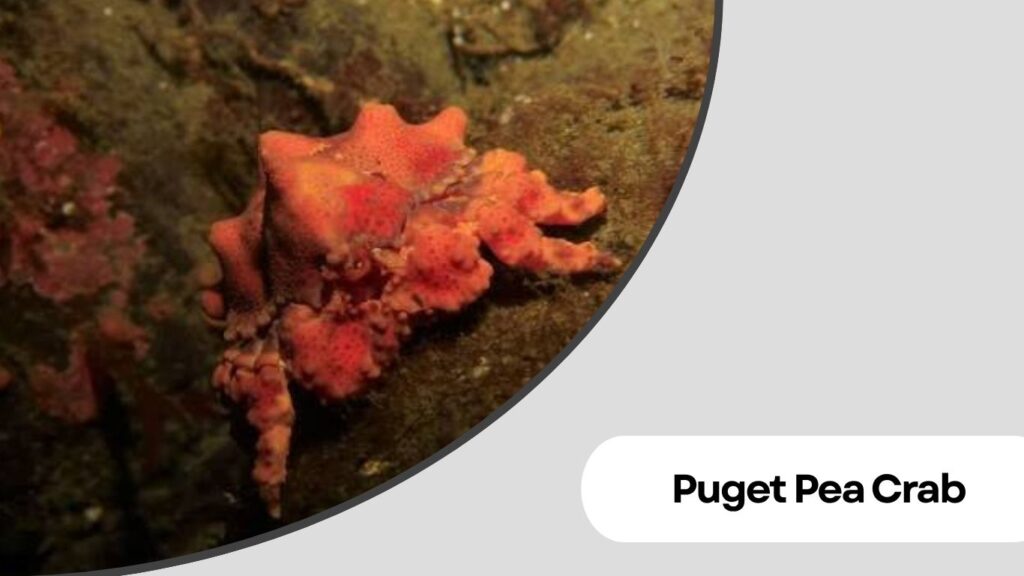
The Puget pea crab (Pinnotheres pugettensis) is a small eastern Pacific species associated with ascidians. It spends much of its life inside the protected body chamber of a sea squirt. Its secretive lifestyle makes it difficult to observe unless researchers examine the host directly.
Identification
- Tiny, rounded marine crab
- Smooth carapace with no prominent spines
- Pale cream, tan, or translucent coloration
- Female larger and more rounded than the male
- Soft body suited to living inside a host
- Short claws and delicate walking legs
- Small eyes near the front of the carapace
- Often found within a large solitary ascidian
Habitat and Distribution
The Puget pea crab is an eastern Pacific species. One documented host is the stalked sea squirt Styela montereyensis, which occurs from Vancouver Island south to Baja California. These sea squirts live in low intertidal and subtidal habitats, attached to reefs, rocks, pilings and other firm surfaces.
Diet and Feeding
Like other host-dwelling pea crabs, the Puget pea crab benefits from the feeding current produced by its ascidian host. It can collect microscopic organic material carried through the host’s internal chamber. This feeding strategy gives the crab regular access to food while allowing it to remain protected from larger marine predators.
Relationship With Ascidians
The crab is generally described as a commensal associate of its ascidian host. It gains shelter and feeding opportunities, while the sea squirt may experience limited direct harm. A study in southern Monterey found the crab in a substantial portion of the examined subtidal host population, demonstrating how closely the two animals can be associated.
14. Mantle Pea Crab
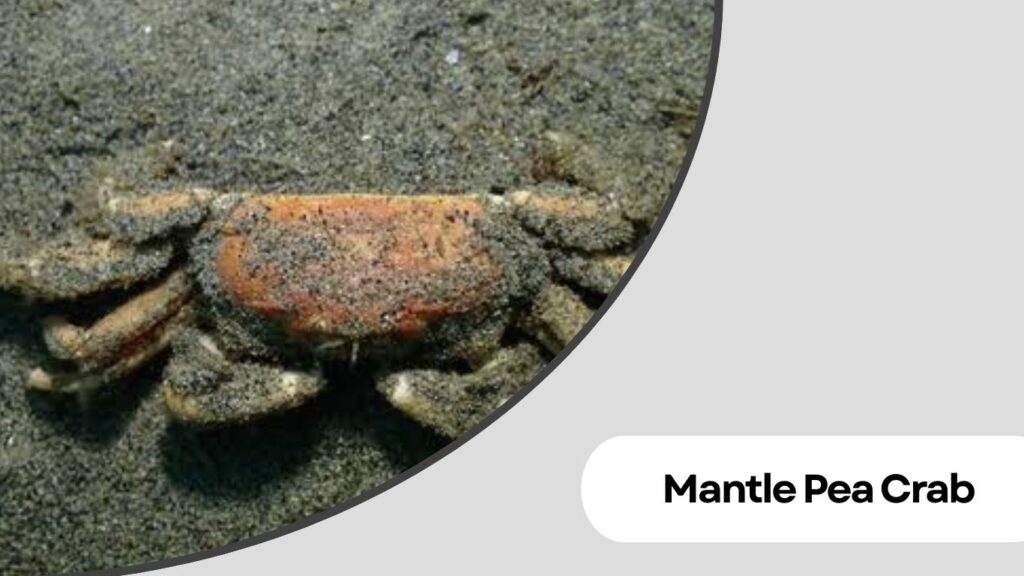
The mantle pea crab (Pinnixa faba), also called the large pea crab, lives inside the mantle cavities of large clams. Its body is wider and flatter than that of many round-bodied pea crabs. Mature individuals are especially associated with Pacific gaper clams.
Identification
- Carapace up to approximately 15 millimeters wide
- Body roughly twice as wide as it is long
- Rounded outer eye sockets
- Strongly curved tips on the walking legs
- Carapace and legs may be covered with fine hairs
- Small claws that close near the front of the body
- Pale gray, cream, tan, or brown coloration
- Similar species may require magnification to separate
Habitat and Distribution
Mantle pea crabs occur along the Pacific coast of North America, from southeastern Alaska to southern California. They are particularly common around Puget Sound. Mature crabs are found in Pacific gaper clams and fat gaper clams, while juveniles may also occupy butter clams and other bivalves.
Diet and Feeding Behavior
The mantle pea crab feeds on organic particles collected by its host. The clam draws seawater across its gills and traps suspended food. Fine hairs on the crab’s legs and body can help gather some of this material. The female generally remains near the clam’s visceral fold, while males and juveniles can move more freely through the mantle cavity.
Effect on the Host
The relationship is often considered commensal, although some researchers regard it as mildly parasitic because the crab takes food gathered by the clam. It normally causes little serious damage. The host provides a stable shelter, protection from predators and a constant supply of water carrying oxygen and food.
15. Lunz Pea Crab
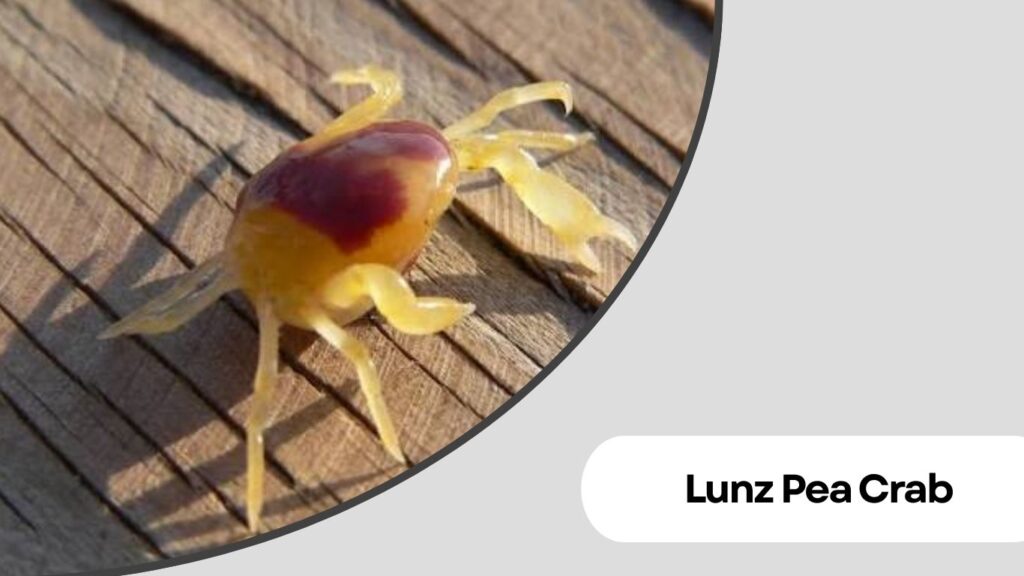
The Lunz pea crab (Pinnixa lunzi) is a small commensal crab first described from South Carolina in 1937. It is a bottom-dwelling species associated with burrows in soft marine sediments. The crab uses tunnels created by worms and other invertebrates rather than building a large burrow itself.
Identification
- Very small marine crab
- Broad carapace that is wider than it is long
- Flattened body suited to narrow burrows
- Small eyes positioned close together
- Slender walking legs extending from the body
- Third walking legs may appear particularly long
- Pale tan, gray, brown, or cream coloration
- Small claws used for collecting food
Habitat and Distribution
Lunz pea crabs are recorded along the southeastern Atlantic coast of the United States and in parts of the Gulf of Mexico. Their range includes waters off Virginia, the Carolinas, Georgia, eastern Florida, Mississippi and Texas. They inhabit soft-bottom environments from shallow water to depths of approximately 26 meters.
Diet and Feeding Behavior
The crab probably feeds on detritus, microorganisms and suspended organic particles entering its host’s burrow. Its flattened body allows it to remain inside narrow tunnels while water movement brings oxygen and food. It may also gather material from the sediment and burrow walls using its small claws and mouthparts.
Relationship With Burrow Hosts
The Lunz pea crab has been recorded in burrows of the spoon worm Thalassema hartmani. It may also use burrows created by polychaete and sipunculan worms. The crab benefits from shelter and access to food, while the burrow owner generally appears to suffer little direct harm. This lifestyle is therefore usually described as commensal.
FAQs
What are pea crabs?
Pea crabs are tiny marine crabs belonging mainly to the family Pinnotheridae. Many species live inside oysters, mussels, clams, sea squirts, worm tubes, or animal burrows. Their small, rounded bodies help them survive in narrow spaces while gaining shelter and access to food.
Are pea crabs harmful to their hosts?
Some pea crabs are harmless commensals, while others act as mild parasites. They may steal food collected by oysters, mussels, or clams and occasionally damage delicate gill tissue. However, a single pea crab usually does not kill a healthy host directly.
Can humans eat pea crabs found inside oysters?
Pea crabs are generally harmless if accidentally eaten with cooked oysters or other shellfish. Some people even consider them a delicacy. However, shellfish should always be fresh, properly stored, and thoroughly prepared to reduce the risk of foodborne illness.
How small are pea crabs?
Most pea crabs are extremely small and may measure only a few millimeters to around 2 centimeters across. Females are often larger, softer, and more rounded than males. Their compact size allows them to live inside shells, tubes, burrows, and other protected marine spaces.
Where are pea crabs commonly found?
Pea crabs occur in coastal waters around the world. They are commonly found inside oysters, mussels, scallops, clams, sea squirts, and worm tubes. Other species live in mud-shrimp burrows or on the bodies of sand dollars and sea biscuits.