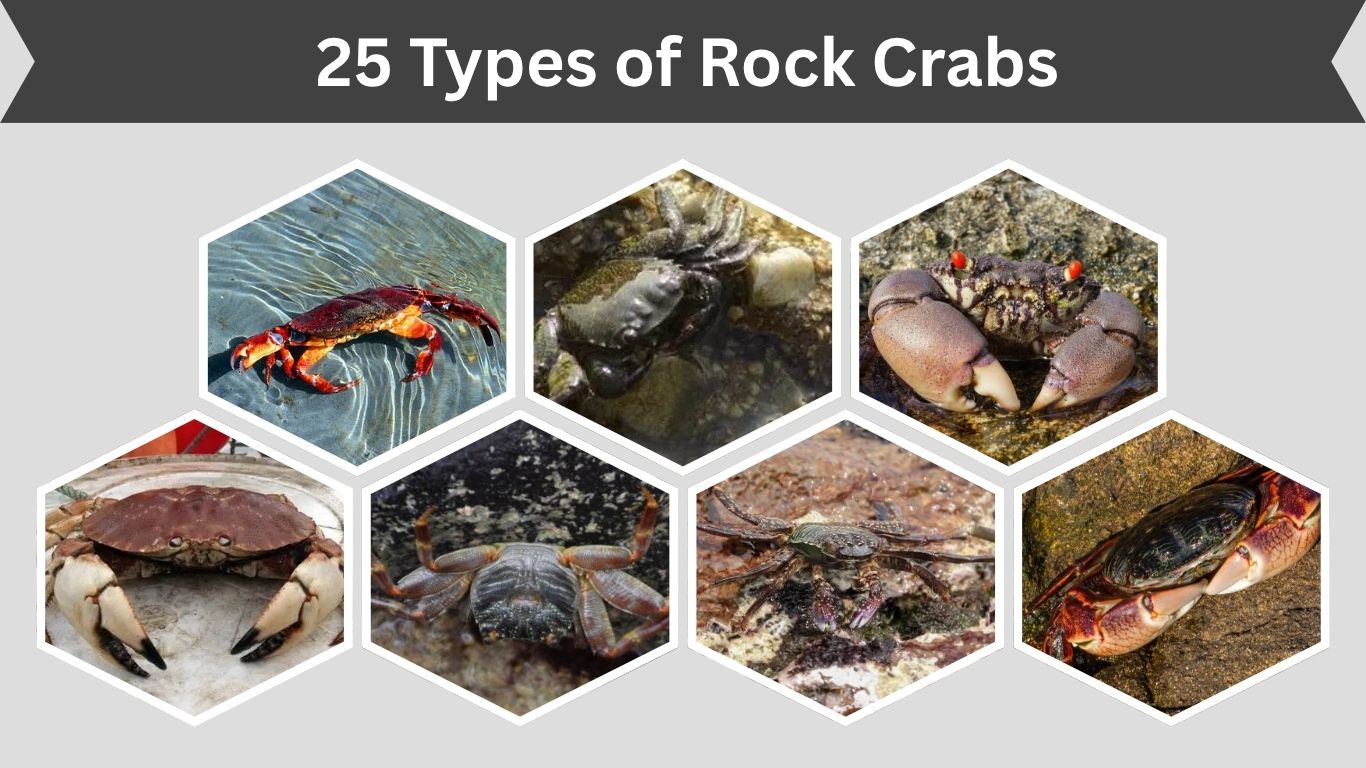
Rock crabs are hardy crustaceans commonly found along rocky coastlines, reefs, tide pools, and deep-sea habitats worldwide. Their strong claws, protective shells, and remarkable camouflage help them survive in challenging marine environments. While many species primarily graze on algae, others hunt mollusks, worms, fish, and smaller crustaceans. This guide introduces 25 types of rock crabs and explores their identification, habitats, diets, and unique behaviors.
1. Atlantic Rock Crab
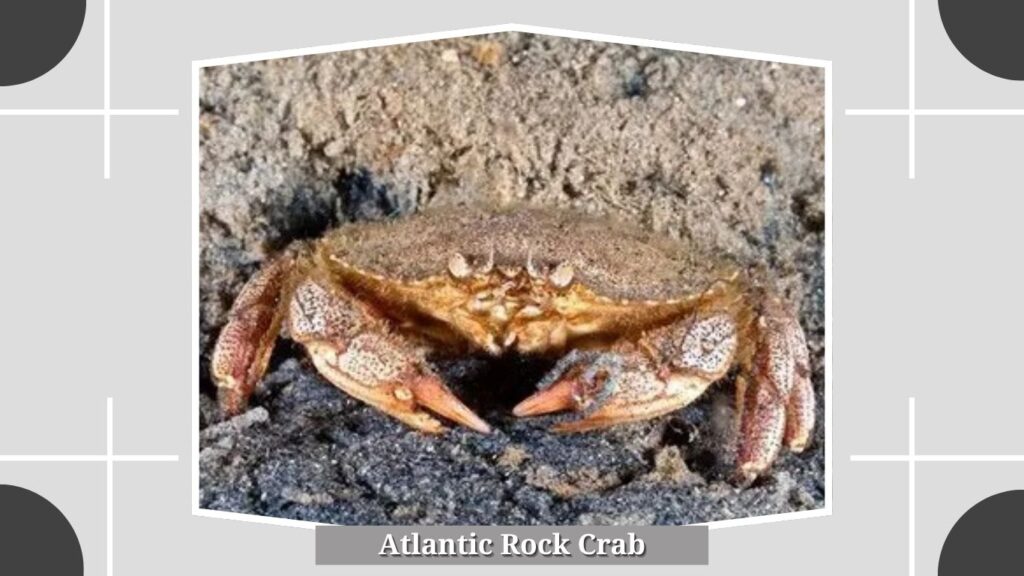
The Atlantic rock crab (Cancer irroratus) is a sturdy marine crab found along the Atlantic coast of North America. It is commonly seen on rocky or sandy seafloors and is also known as the peekytoe crab.
Identification
- Broad, oval-shaped shell
- Yellowish-brown or reddish body
- Dark spots and irregular markings
- Nine rounded teeth along each shell edge
- Large claws with dark-colored tips
Habitat
Atlantic rock crabs live from shallow coastal waters to depths exceeding 700 meters. They prefer rocky bottoms, gravel beds, sand, and areas covered with shells. Their range extends from Labrador and Newfoundland southward to South Carolina.
Diet
These crabs are opportunistic bottom feeders. They eat mollusks, worms, small fish, sea urchins, algae, and organic remains. Their powerful claws help them crush the shells of mussels, snails, and other hard-bodied prey.
Behavior
Atlantic rock crabs usually remain hidden beneath rocks or buried in sediment during the day. They become more active while searching for food at night. Although they may raise their claws defensively when threatened, they generally try to escape rather than attack.
2. Red Rock Crab
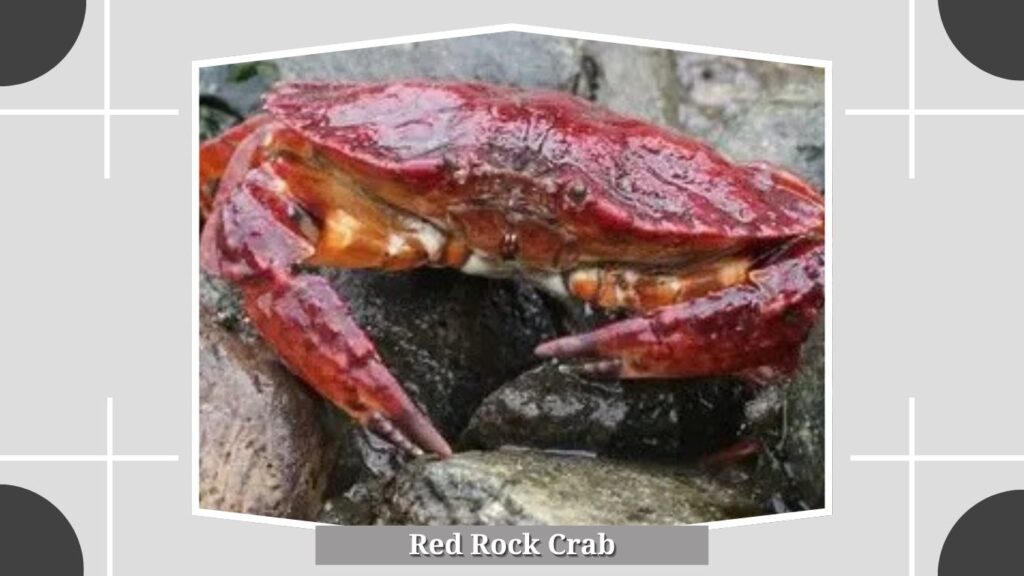
The red rock crab (Cancer productus) is a large and colorful crab native to the Pacific coast of North America. Its strong claws and thick shell protect it from predators and allow it to break open hard-shelled prey.
Identification
- Deep brick-red or reddish-brown shell
- Broad, fan-shaped body
- Black-tipped claws
- Wide teeth along the shell edges
- Shell width reaching approximately 20 centimeters
Habitat
Red rock crabs inhabit rocky shores, tide pools, reefs, pilings, and gravel-covered seabeds. They occur from Alaska to Baja California and are commonly found in both intertidal and shallow subtidal waters.
Diet
Their diet includes clams, barnacles, mussels, snails, worms, small crabs, and dead marine animals. Their heavy claws can crush shells and pull prey from narrow crevices. They may also consume algae when animal food is limited.
Behavior
Red rock crabs are territorial and may become aggressive when handled or approached by another crab. They hide beneath rocks during low tide and emerge to feed when covered by water. Juveniles frequently shelter in tide pools where they are protected from larger predators.
3. Brown Rock Crab
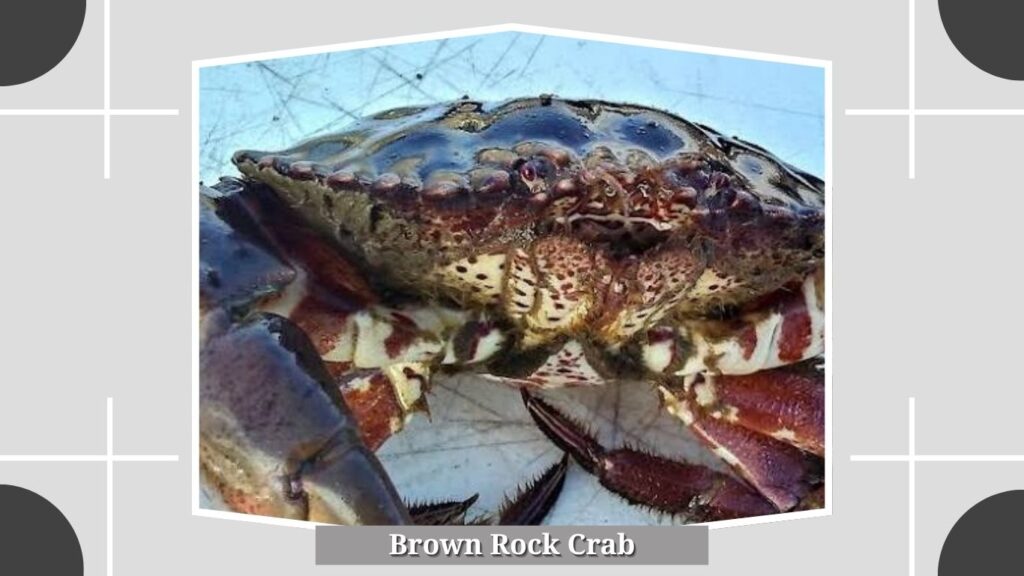
The brown rock crab (Romaleon antennarium) is also called the Pacific rock crab. It is found along the eastern Pacific coast and is recognized by its rough shell, spotted underside, and hairy walking legs.
Identification
- Reddish-brown or purplish shell
- Dark spots on the underside
- Hairy walking legs
- Black-tipped claws
- Broad shell with pointed side teeth
Habitat
Brown rock crabs live in rocky intertidal zones, kelp forests, reefs, and areas with underwater crevices. Their range extends from Washington to Baja California. They are generally found in shallow water but may occur at depths of around 130 meters.
Diet
These crabs feed on barnacles, mussels, clams, snails, worms, smaller crustaceans, and animal remains. They search among rocks and kelp for prey, using their claws to crush shells and tear apart food.
Behavior
Brown rock crabs are mostly active at night. During daylight hours, they often remain beneath rocks or inside reef crevices. They can move quickly when threatened and may use their powerful claws for defense. Their mottled coloration provides useful camouflage against rocky surfaces.
4. Yellow Rock Crab
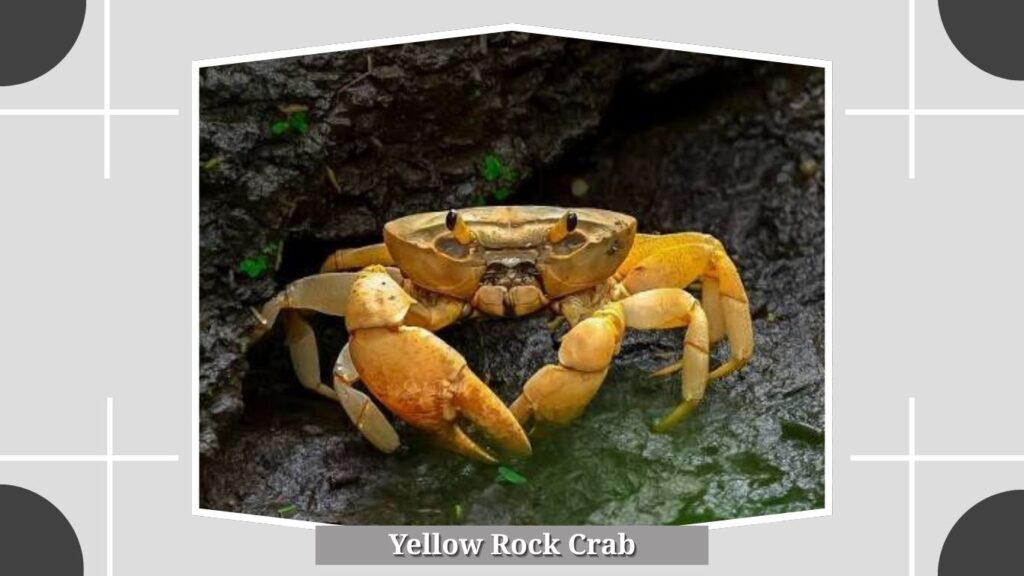
The yellow rock crab (Metacarcinus anthonyi) is a relatively large crab found along the Pacific coast of North America. It is valued in some regional fisheries and is distinguished by its yellowish shell and powerful claws.
Identification
- Yellowish or golden-brown shell
- Broad, oval-shaped body
- Smooth upper shell surface
- Black claw tips
- Shell width reaching around 18 centimeters
Habitat
Yellow rock crabs occur from central California to Baja California. They live on sandy, muddy, and rocky seabeds, usually below the intertidal zone. They can be found in shallow coastal waters and at depths of more than 100 meters.
Diet
These crabs prey on clams, snails, worms, small crustaceans, and other bottom-dwelling animals. They also scavenge dead fish and marine remains. Their strong claws make them effective predators of animals protected by hard shells.
Behavior
Yellow rock crabs spend much of their time walking across the seafloor in search of food. They may partially bury themselves in sand or mud to avoid predators. When threatened, they raise their claws and defend themselves with a strong pinch.
5. Pygmy Rock Crab
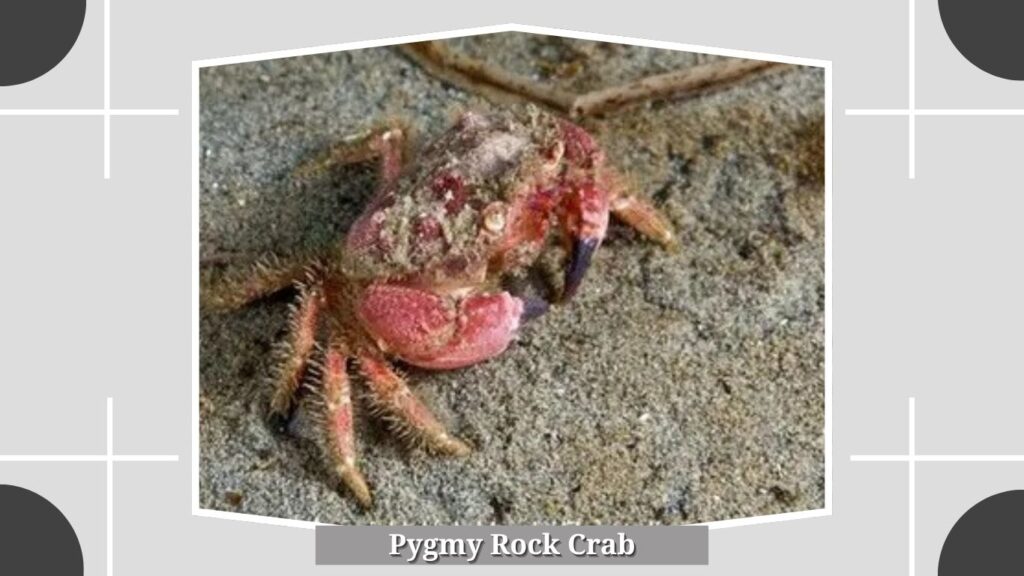
The pygmy rock crab (Glebocarcinus oregonensis) is a small crab native to the Pacific coast of North America. Its compact body and spotted shell allow it to remain concealed among rocks, shells, and marine vegetation.
Identification
- Small, rounded shell
- Red, orange, purple, or brown coloration
- Numerous dark or light spots
- Hairy legs and shell margins
- Black-tipped claws
Habitat
Pygmy rock crabs live in rocky intertidal and subtidal habitats from Alaska to California. They shelter beneath stones, inside empty shells, among mussel beds, and within rocky crevices. They may occur from the shoreline to depths of approximately 400 meters.
Diet
Their diet consists of tiny mollusks, worms, barnacles, algae, organic debris, and small crustaceans. Pygmy rock crabs are both predators and scavengers, consuming almost any suitable food they can handle.
Behavior
These crabs depend heavily on camouflage and hiding places for protection. They are usually slow-moving and remain concealed during daylight hours. At night, they emerge to search for food. When discovered, they may tuck their legs close to the body or retreat deeper into a crevice.
6. Graceful Rock Crab
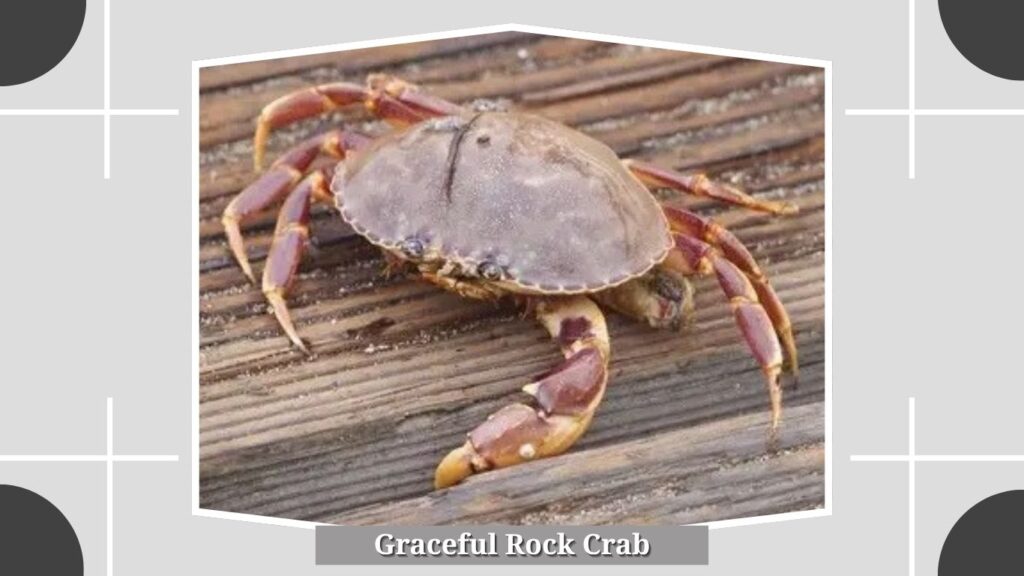
The graceful rock crab (Metacarcinus gracilis) is a medium-sized crab found along the Pacific coast of North America. Its relatively narrow body and long, slender legs distinguish it from heavier-bodied rock crabs.
Identification
- Light brown or reddish-brown shell
- Long and slender walking legs
- Oval-shaped carapace
- White-tipped or pale-colored claws
- Small teeth along the shell edges
Habitat
Graceful rock crabs inhabit sandy, muddy, and gravel-covered seafloors. They occur from Alaska to Baja California and are usually found below the low-tide line. These crabs may also live near eelgrass beds, rocky reefs, docks, and protected coastal bays.
Diet
Their diet includes worms, clams, small snails, tiny crustaceans, dead fish, and organic material. Graceful rock crabs search across the seafloor and use their claws to uncover prey hidden beneath sand or mud.
Behavior
Graceful rock crabs are active scavengers and predators. They may partially bury themselves in sediment to hide from fish, octopuses, and larger crabs. Their long legs allow them to move quickly across soft seabeds when searching for food or escaping danger.
7. Toothed Rock Crab
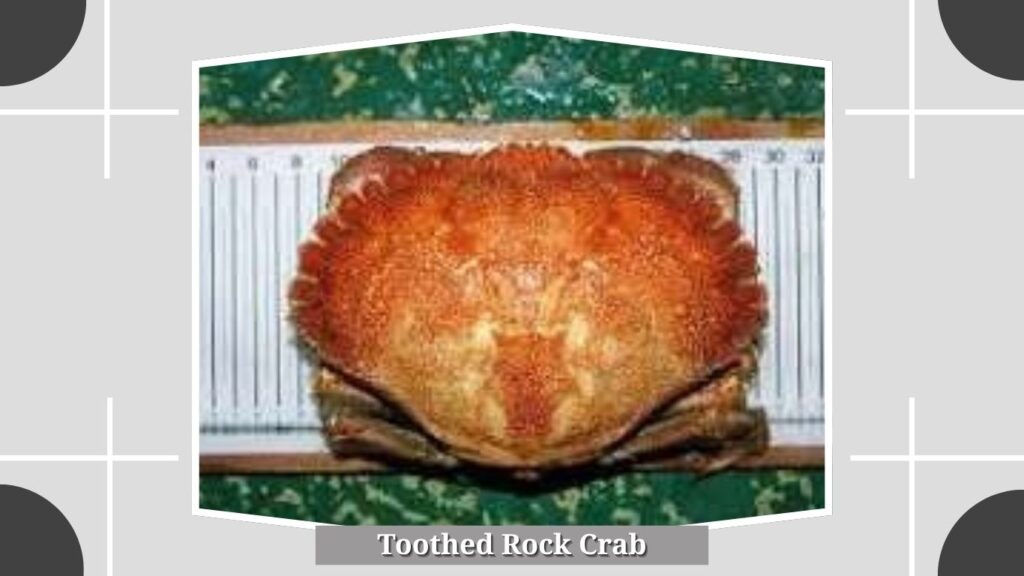
The toothed rock crab (Cancer bellianus) is a large, deep-water crab found in parts of the northeastern Atlantic Ocean. Its common name refers to the prominent teeth located along the edges of its broad shell.
Identification
- Broad, reddish-orange shell
- Prominent teeth along the shell margins
- Large and powerful claws
- Thick, heavily armored body
- Pale-colored underside
Habitat
Toothed rock crabs live on rocky, sandy, and mixed seabeds. They are recorded around the northeastern Atlantic, including areas near Portugal, the Azores, Madeira, the Canary Islands, and parts of the western Mediterranean. They usually inhabit deeper coastal waters.
Diet
These crabs feed on mollusks, worms, echinoderms, smaller crustaceans, fish remains, and other organic material. Their heavy claws are capable of cracking open snails, mussels, and other hard-shelled prey.
Behavior
Toothed rock crabs spend much of their time walking across the seafloor or sheltering among rocks. They are opportunistic feeders and may consume both live prey and carrion. When threatened, they raise their claws and use their thick shell for protection.
8. Japanese Rock Crab
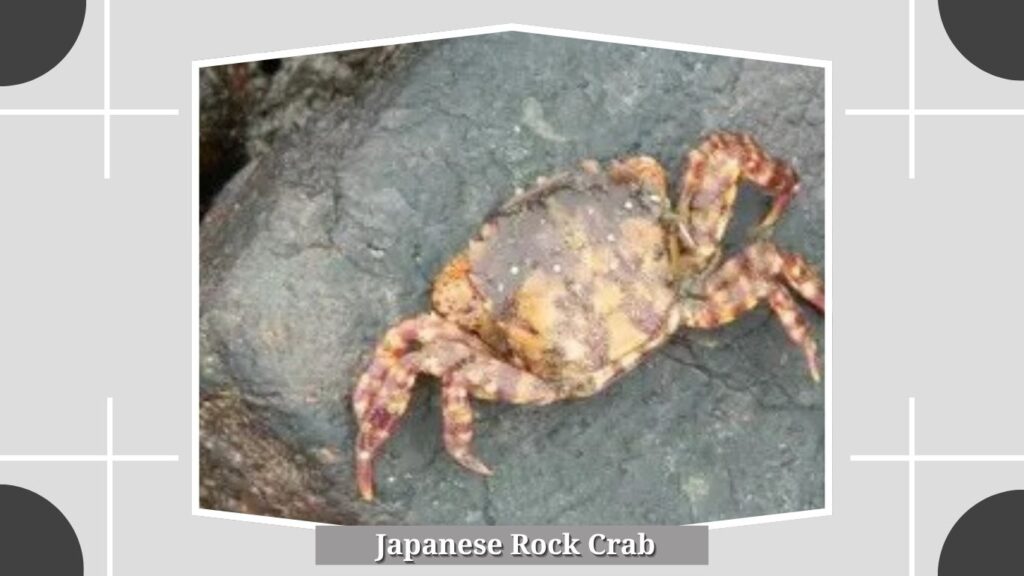
The Japanese rock crab, commonly associated with Charybdis japonica, is a strong and adaptable crab native to coastal waters of East Asia. It is also widely known as the Japanese swimming crab because of its paddle-shaped rear legs.
Identification
- Greenish-brown or reddish-brown shell
- Sharp teeth along the shell edges
- Flattened, paddle-shaped rear legs
- Strong claws with dark markings
- Broad body covered with uneven patterns
Habitat
Japanese rock crabs inhabit rocky shores, reefs, estuaries, muddy bottoms, and sheltered bays. Their native range includes Japan, Korea, China, and surrounding regions. They can tolerate different water conditions and may survive in both marine and brackish habitats.
Diet
They eat mollusks, worms, shrimp, small crabs, fish, algae, and dead marine animals. Their strong claws allow them to capture active prey and break apart hard shells.
Behavior
Japanese rock crabs are active and sometimes aggressive. Unlike most true rock crabs, they can swim using their flattened rear legs. They often hide beneath rocks or bury themselves in sediment before emerging to hunt, particularly during low-light conditions.
9. Common Rock Crab
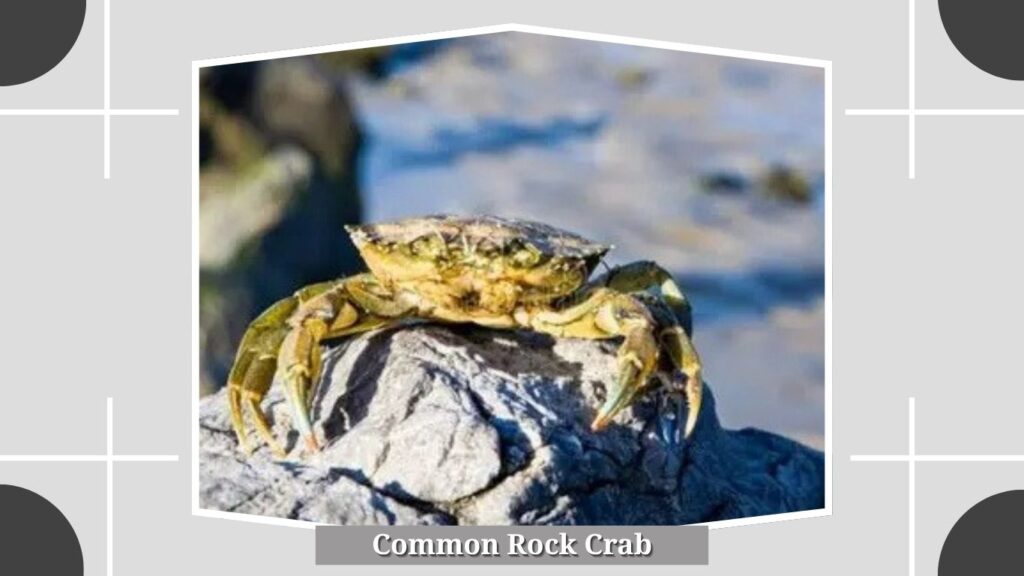
The common rock crab (Hemigrapsus sexdentatus) is a small shore crab native to New Zealand. It is commonly found beneath stones along rocky coastlines and can tolerate exposure to air during low tide.
Identification
- Square-shaped shell
- Green, brown, purple, or reddish coloration
- Three teeth on each side of the shell
- Short, sturdy walking legs
- Larger claws in adult males
Habitat
Common rock crabs occupy rocky intertidal shores throughout New Zealand. They hide beneath stones, inside crevices, around seaweed, and among shell-covered surfaces. Moist hiding places protect them from drying out when the tide recedes.
Diet
These crabs are omnivorous scavengers. They consume algae, seaweed, worms, small mollusks, tiny crustaceans, dead animals, and organic debris. Their varied diet helps them survive in changing intertidal environments.
Behavior
Common rock crabs are fast-moving and immediately retreat beneath rocks when disturbed. They become active as the tide rises and may forage across submerged surfaces. Males sometimes use their claws when competing for shelter, territory, or access to females.
10. Chilean Rock Crab
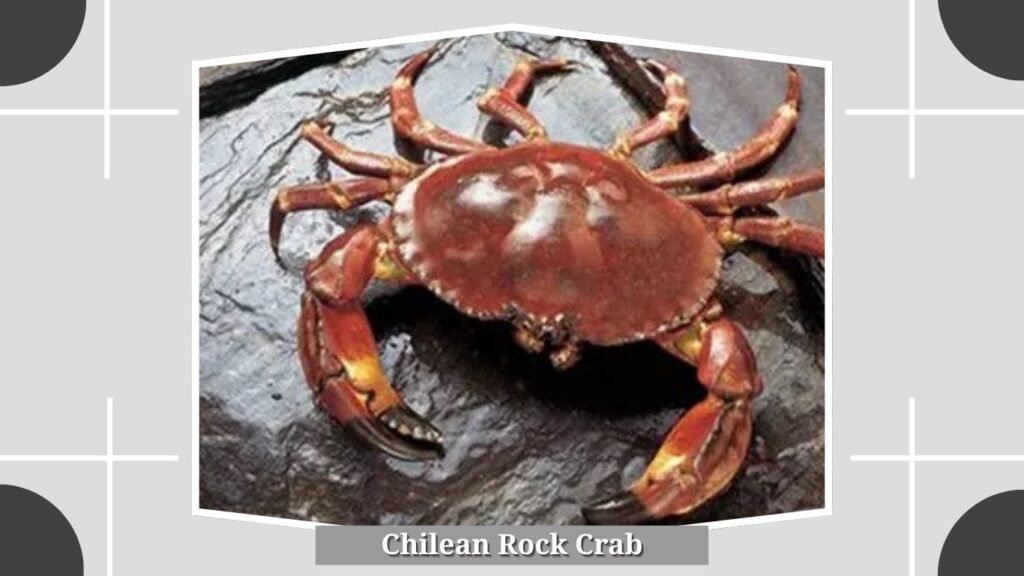
The Chilean rock crab (Metacarcinus edwardsii) is a large edible crab found along the Pacific coast of South America. It is also called the southern rock crab and is commercially harvested in several coastal regions.
Identification
- Wide, reddish-brown shell
- Yellowish or orange markings
- Large claws with dark tips
- Rounded teeth along the shell margins
- Thick and heavily armored body
Habitat
Chilean rock crabs live along rocky and sandy seabeds, reefs, coastal channels, and areas containing shell fragments. They occur along the Pacific coast of South America, particularly around Peru and Chile, including southern coastal waters.
Diet
Their diet includes clams, mussels, snails, worms, sea urchins, fish remains, and smaller crustaceans. Their strong claws are well suited for crushing shells and tearing apart animal material.
Behavior
Chilean rock crabs usually walk across the bottom while searching for prey. They shelter between rocks and may partially bury themselves in sediment. Although generally solitary, several crabs may gather in areas where food and shelter are abundant.
11. Flat Rock Crab
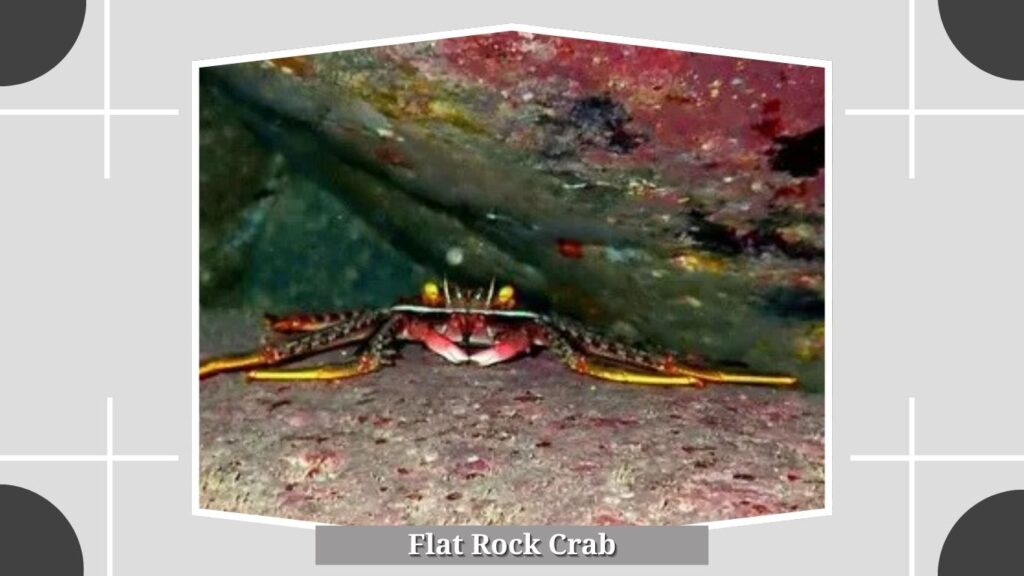
The flat rock crab (Percnon planissimum) is a fast-moving coastal crab with a remarkably flattened body. Its shape allows it to squeeze beneath rocks and enter narrow crevices where larger predators cannot reach it.
Identification
- Extremely flat, rounded body
- Long, slender walking legs
- Greenish-brown shell
- Yellow or green markings on the legs
- Small claws compared with its body size
Habitat
Flat rock crabs live along tropical and subtropical rocky shores throughout the Indo-Pacific region. They are commonly found in shallow water, tide pools, coral reefs, and wave-exposed coastal areas. They remain close to cracks and stones that provide quick shelter.
Diet
These crabs mainly graze on algae growing across submerged rocks. They also consume seaweed, organic debris, tiny invertebrates, and dead marine material. Their small claws are suitable for scraping food from hard surfaces.
Behavior
Flat rock crabs are extremely quick and alert. When approached, they run sideways and disappear beneath rocks or into narrow cracks. They are excellent climbers and can hold tightly to wave-washed surfaces. Their flattened bodies reduce water resistance and help prevent waves from dislodging them.
12. Sally Lightfoot Crab
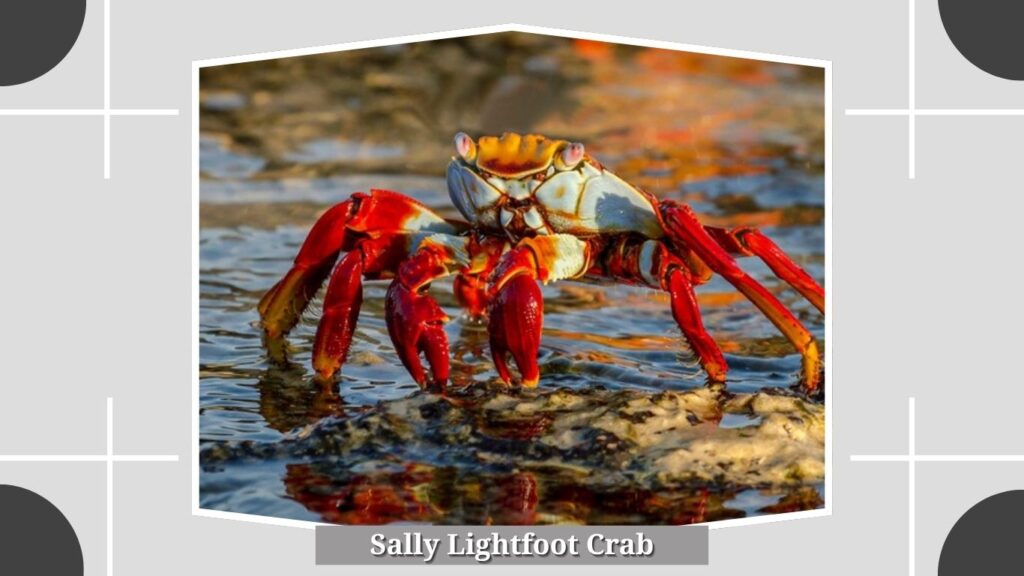
The Sally Lightfoot crab (Grapsus grapsus) is a brightly colored rock crab found along the Pacific coast of the Americas. It is especially famous for its large populations on the rocky shores of the Galápagos Islands.
Identification
- Bright red, orange, or yellow body
- Flattened, circular shell
- Long and agile walking legs
- Darker coloration in younger crabs
- Pointed claws and leg tips
Habitat
Sally Lightfoot crabs inhabit rocky shorelines from Mexico and Central America to parts of South America and the Galápagos Islands. They usually remain close to the waterline, where waves keep the rocks moist and provide a steady supply of food.
Diet
These crabs feed on algae, seaweed, dead fish, animal remains, and organic material deposited by waves. They may also remove parasites and dead skin from marine iguanas, creating a mutually beneficial feeding relationship.
Behavior
Sally Lightfoot crabs are exceptionally agile. They can run rapidly across uneven rocks, jump over cracks, and cling to surfaces washed by strong waves. Their speed helps them escape birds, octopuses, fish, and other predators.
13. Purple Rock Crab
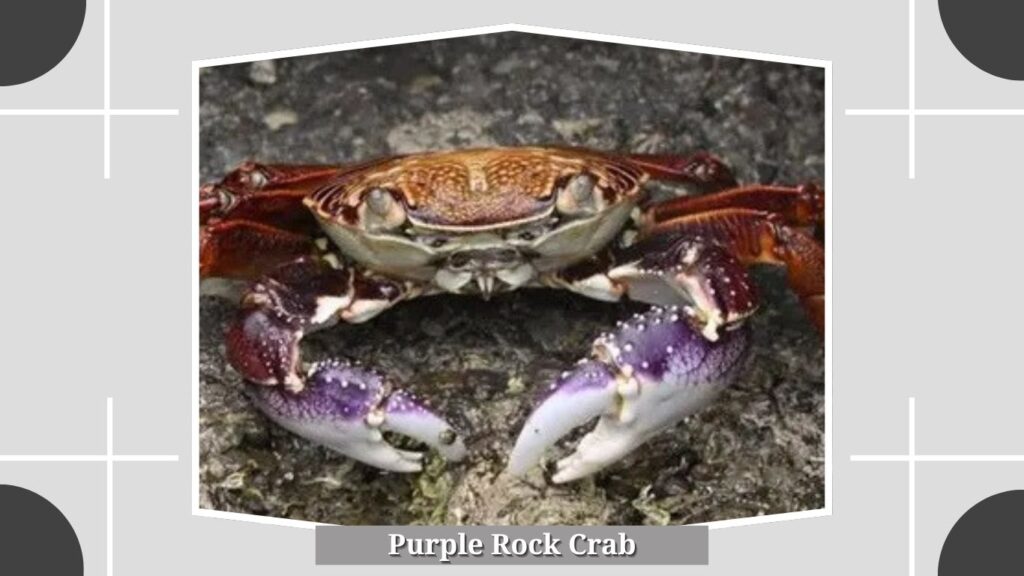
The purple rock crab (Leptograpsus variegatus) is a large shore crab recognized for its purple or bluish shell. It is common on exposed rocky coastlines in parts of the Southern Hemisphere.
Identification
- Purple, blue, olive, or reddish shell
- Long, powerful walking legs
- Orange or reddish leg joints
- Broad and slightly flattened body
- Strong, pointed claws
Habitat
Purple rock crabs live on rocky shores in Australia, New Zealand, Chile, and nearby regions. They occupy cracks, ledges, tide pools, and wave-washed rock platforms. They usually remain near the splash zone but may move higher on the shore when conditions are moist.
Diet
These crabs graze on algae and seaweed growing on rocks. They also eat mollusks, small crustaceans, dead fish, and organic debris. Their varied diet allows them to use food delivered by changing tides and waves.
Behavior
Purple rock crabs move quickly and can climb steep coastal surfaces. They retreat into deep crevices when disturbed and use their claws defensively if captured. Their flattened bodies and strong legs help them remain stable on exposed shores.
14. Thin-Shelled Rock Crab
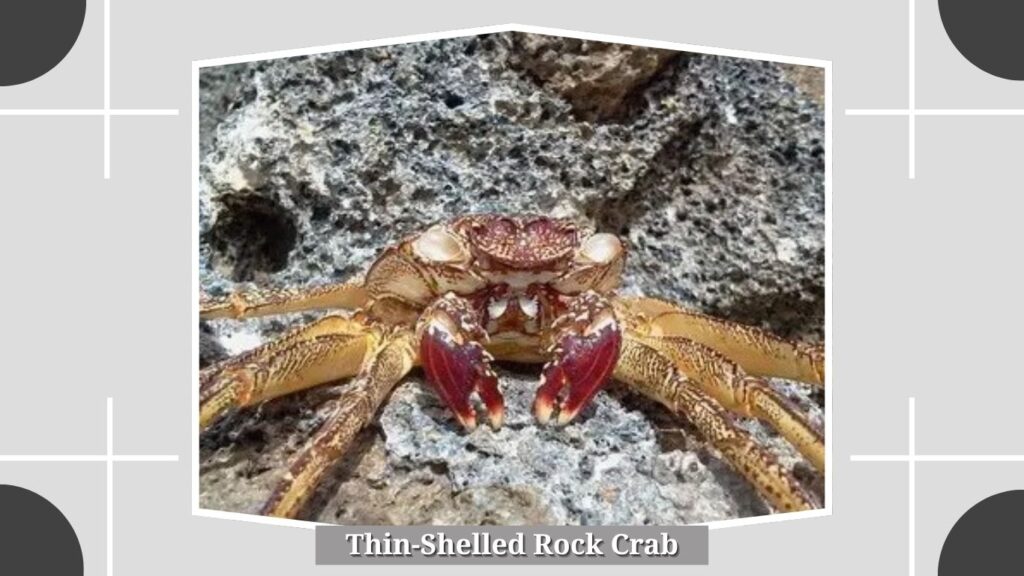
The thin-shelled rock crab (Grapsus tenuicrustatus) is a colorful crab found on tropical rocky shores. It resembles the Sally Lightfoot crab but occurs mainly throughout the Indo-Pacific region.
Identification
- Flattened, nearly circular shell
- Red, orange, green, or dark brown coloration
- Thin and relatively smooth carapace
- Long legs with pointed tips
- Small but strong claws
Habitat
Thin-shelled rock crabs inhabit rocky coastlines, reef flats, tide pools, and wave-exposed shores across the Indo-Pacific. They are found around Hawaii, East Africa, Southeast Asia, Australia, and numerous Pacific islands.
Diet
Their diet primarily consists of algae and microscopic plant material scraped from rocks. They also consume seaweed, dead animals, small invertebrates, and organic debris washed ashore by waves.
Behavior
These crabs are highly active during daylight hours and move rapidly across exposed rocks. They remain close to cracks or water-filled pools where they can escape predators. Their sharp leg tips provide a secure grip, while their flattened shape helps them withstand strong waves.
15. Pleated Rock Crab
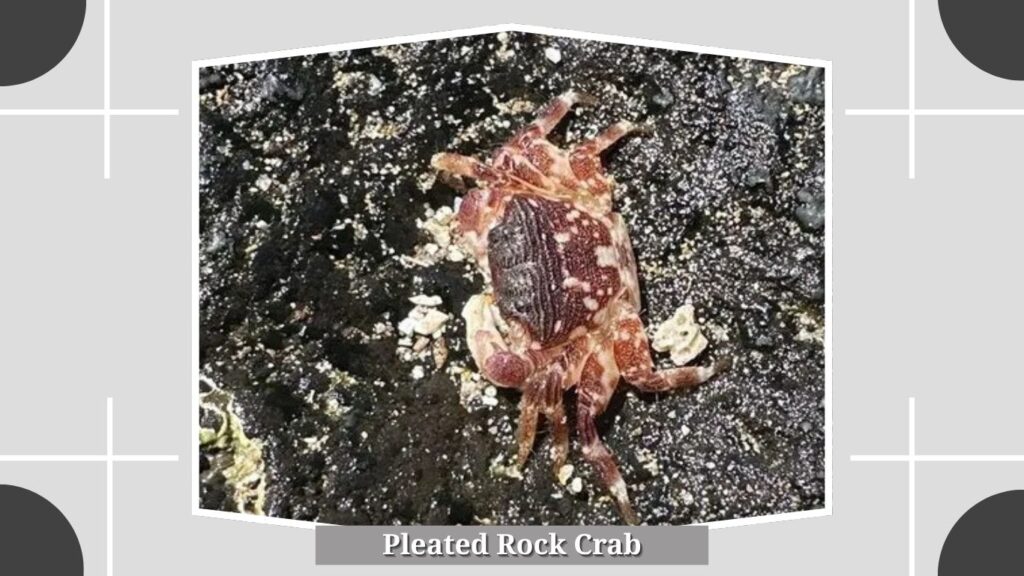
The pleated rock crab (Pachygrapsus plicatus) is a small intertidal crab named for the ridge-like lines across its shell. It is widely found along rocky coastlines in East Asia.
Identification
- Square or rectangular shell
- Numerous ridges across the carapace
- Brown, greenish, or purplish coloration
- Three teeth behind each eye
- Short, sturdy walking legs
Habitat
Pleated rock crabs occupy rocky intertidal zones around China, Korea, Japan, Taiwan, and nearby coastal regions. They hide beneath stones, inside cracks, around seawalls, and among oyster-covered surfaces. These sheltered locations protect them during low tide.
Diet
These crabs consume algae, seaweed, organic debris, small worms, mollusks, and animal remains. They scrape food from rock surfaces and also scavenge material left behind by the receding tide.
Behavior
Pleated rock crabs are quick and cautious. They retreat into crevices whenever they detect movement or danger. They can tolerate temporary exposure to air but depend on damp shelters to prevent dehydration. Their dark coloration helps them blend into wet rocks and algae-covered surfaces.
16. Marbled Rock Crab
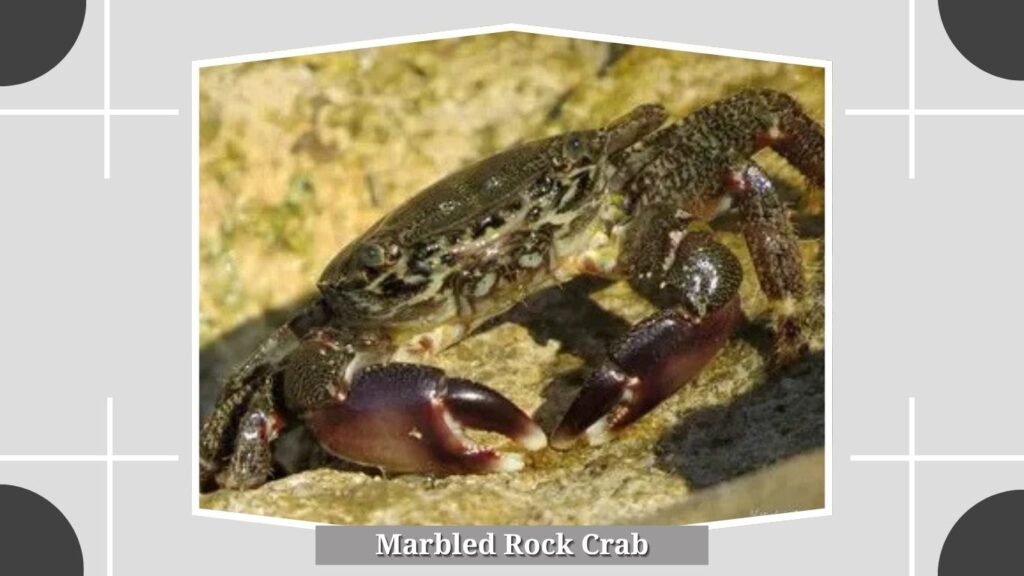
The marbled rock crab (Pachygrapsus marmoratus) is a small, agile shore crab recognized by the marbled patterns covering its shell. It is commonly seen running across rocks near the waterline.
Identification
- Square-shaped carapace
- Greenish, brown, or purplish coloration
- Wavy, marble-like shell patterns
- Yellow or orange markings on the legs
- Three teeth behind each eye
Habitat
Marbled rock crabs inhabit rocky coastlines, harbors, seawalls, breakwaters, and coastal structures. They are widespread throughout the Mediterranean Sea and occur along parts of the eastern Atlantic coast. They usually remain within the intertidal and splash zones.
Diet
These crabs primarily graze on algae and seaweed. They also eat mollusks, worms, smaller crustaceans, dead marine animals, and organic debris. Their flexible diet allows them to survive in natural and human-made coastal habitats.
Behavior
Marbled rock crabs are fast runners and skilled climbers. They hide in cracks or beneath stones when threatened. Although they can remain outside the water for extended periods, they require moisture to prevent dehydration. They become especially active when waves or rising tides cover feeding areas.
17. Spottedbelly Rock Crab
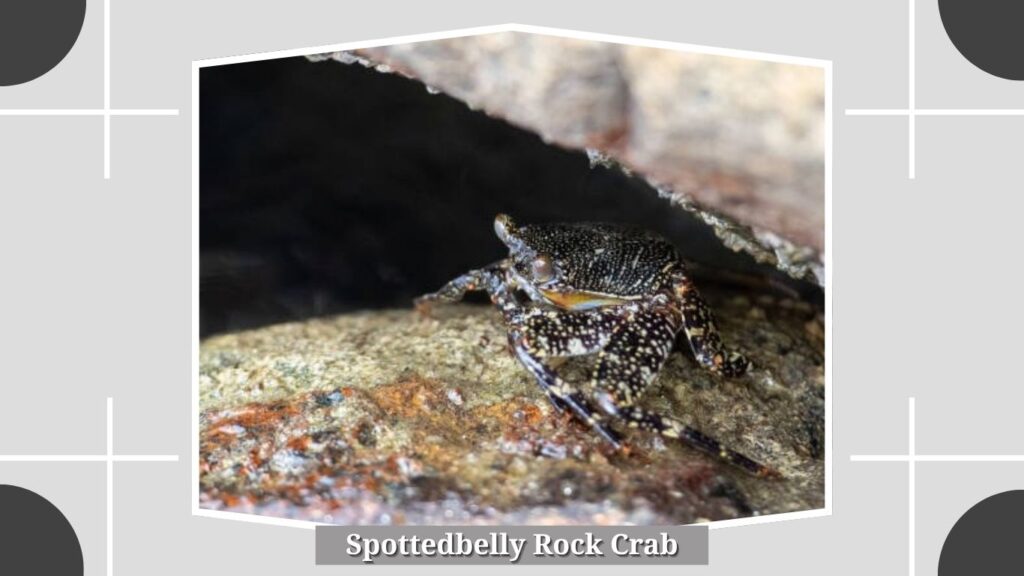
The spottedbelly rock crab (Ozius guttatus) is a strong coastal crab found along rocky shores of the Indian Ocean region. Its name comes from the distinctive spots visible on the lower part of its body.
Identification
- Broad, oval-shaped shell
- Dark brown, reddish, or purple coloration
- Noticeable spots on the underside
- Large, unequal claws
- Dark-colored claw tips
Habitat
Spottedbelly rock crabs live along rocky intertidal shores, reefs, tide pools, and areas containing loose stones. They occur around parts of eastern and southern Africa and neighboring Indian Ocean coastlines. During low tide, they remain inside damp crevices.
Diet
These crabs feed on snails, limpets, mussels, barnacles, worms, small crustaceans, and animal remains. Their powerful claws allow them to break the shells of mollusks attached firmly to rocks.
Behavior
Spottedbelly rock crabs usually remain hidden during daylight and become more active at night or during high tide. They are strong but cautious animals. When cornered, they raise their claws and can deliver a forceful defensive pinch.
18. Beaded Rock Crab
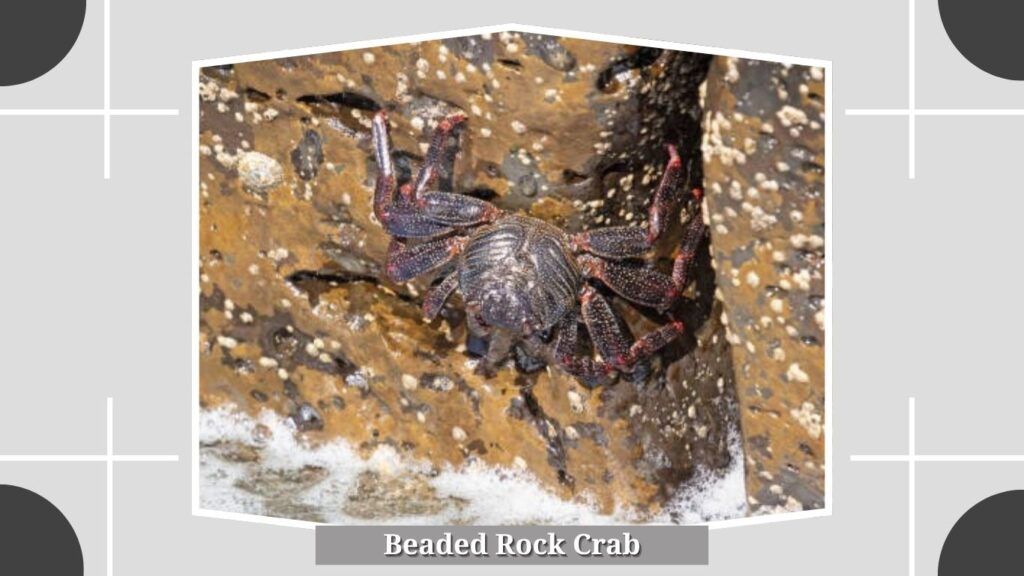
The beaded rock crab (Ozius tuberculosus) is named for the small rounded bumps covering parts of its shell. This heavily built crab is adapted to living among rocks along tropical and subtropical coastlines.
Identification
- Thick, rounded carapace
- Bead-like bumps on the shell
- Brown, reddish, or purplish coloration
- Heavy claws with dark tips
- Short and sturdy walking legs
Habitat
Beaded rock crabs inhabit rocky intertidal zones, coral rubble, reef edges, and tide pools throughout parts of the Indo-Pacific region. They shelter beneath stones and inside deep cracks, especially when the tide exposes the shoreline.
Diet
Their diet consists of snails, clams, limpets, barnacles, worms, smaller crabs, and carrion. The crab’s large claws are designed for crushing hard shells and removing prey attached to rocky surfaces.
Behavior
Beaded rock crabs are generally secretive and spend daylight hours concealed beneath rocks. They emerge when the tide rises or after darkness to search for food. Their rough coloration provides camouflage, while their thick shell protects them from waves and predators.
19. Australian Rock Crab
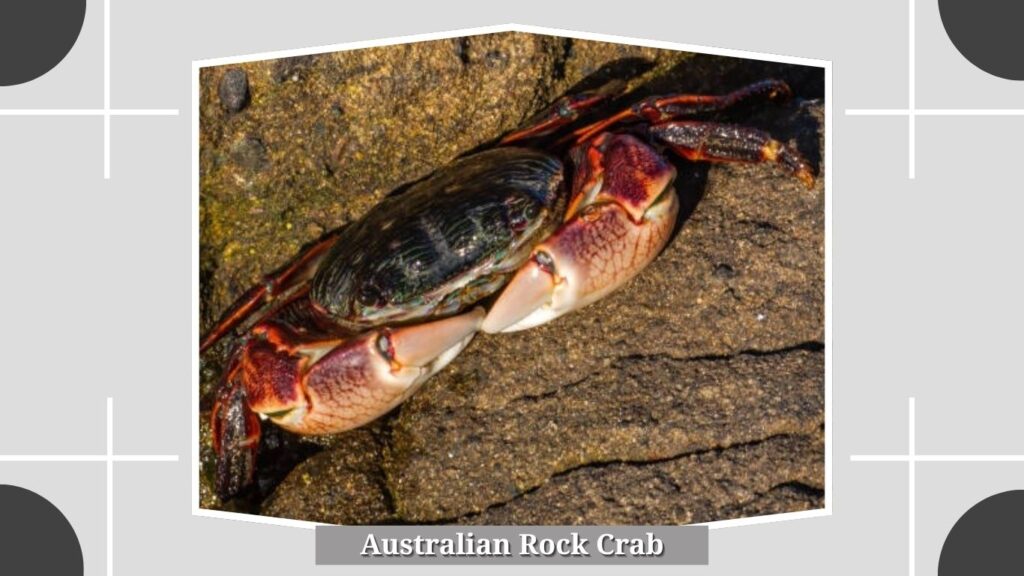
The Australian rock crab (Ozius truncatus) is a heavily armored crab found along rocky shores of southern Australia. It is also commonly known as the reef crab or black-fingered crab.
Identification
- Dark reddish-brown or purple shell
- Broad and strongly rounded body
- Large claws with black tips
- Unequal-sized claws in some adults
- Thick walking legs
Habitat
Australian rock crabs live on rocky intertidal shores, reefs, ledges, and areas containing loose boulders. They are found around southern and southeastern Australia. Deep cracks and spaces beneath rocks provide protection from waves, sunlight, and predators.
Diet
These crabs prey on mussels, snails, limpets, barnacles, worms, and smaller crustaceans. They also scavenge dead fish and other animal remains. Their powerful claws can crush or pry open hard shells.
Behavior
Australian rock crabs are mainly nocturnal. During the day, they remain hidden in moist crevices and emerge after dark or when the tide rises. They move slowly compared with flatter shore crabs but rely on strong claws and heavy armor for defense.
20. Red-Eyed Rock Crab
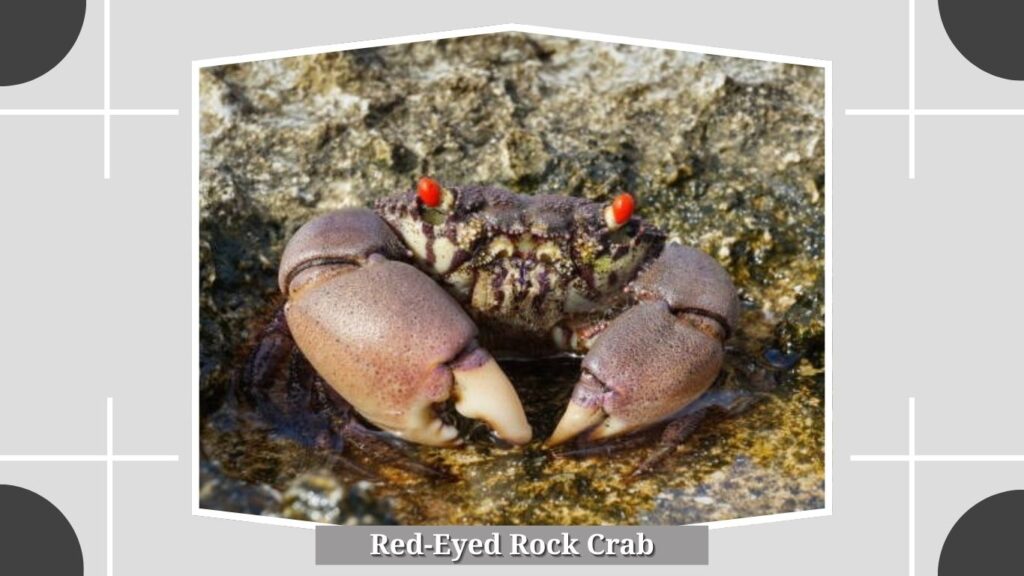
The red-eyed rock crab (Eriphia sebana) is a powerful tropical crab recognized by its conspicuous red eyes and massive claws. It lives on rocky shores and coral reefs throughout much of the Indo-Pacific region.
Identification
- Bright red or reddish-orange eyes
- Dark brown, purple, or reddish shell
- Large and unequal claws
- Rough, heavily textured carapace
- Dark or black claw tips
Habitat
Red-eyed rock crabs inhabit rocky coastlines, reef flats, coral rubble, tide pools, and shallow coastal waters. They occur around East Africa, Southeast Asia, Australia, and numerous Indian and Pacific Ocean islands.
Diet
These crabs eat snails, clams, worms, sea urchins, smaller crustaceans, dead fish, and other marine remains. Their strong claws allow them to crack open hard-shelled animals and pull prey from rocky crevices.
Behavior
Red-eyed rock crabs are mostly nocturnal and spend the day hiding beneath rocks. They are territorial and may react defensively when approached. Their claws can produce a painful pinch, so they should be observed without handling.
21. Scaly Rock Crab
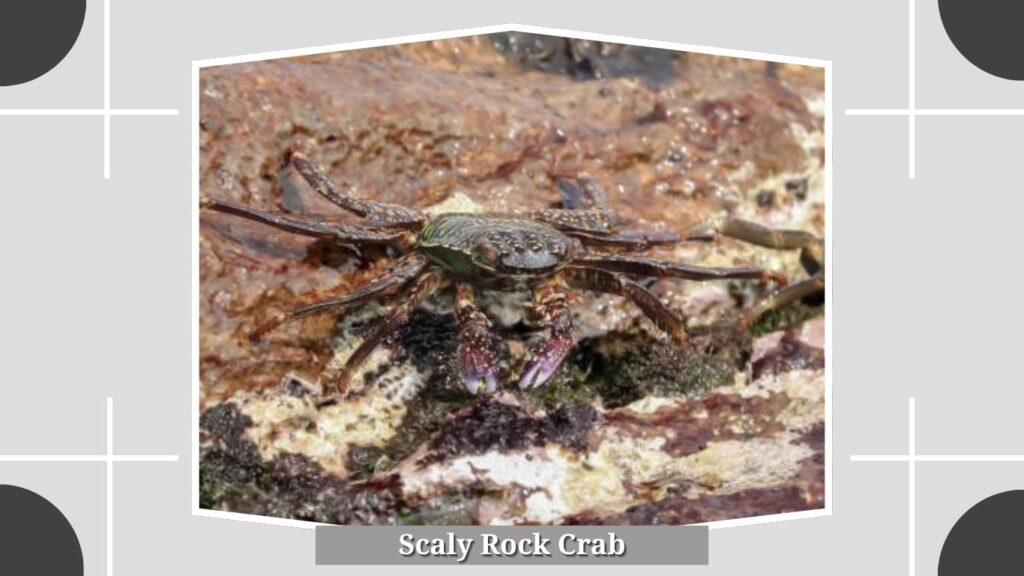
The scaly rock crab (Plagusia squamosa) is a flattened coastal crab adapted to living on wave-exposed rocks. Its rough shell and scale-like surface help it blend into rugged shoreline habitats.
Identification
- Broad, flattened carapace
- Rough, scale-like shell texture
- Brown, greenish, or reddish coloration
- Long legs covered with short hairs
- Relatively small claws
Habitat
Scaly rock crabs inhabit rocky shores, coral reefs, breakwaters, and wave-washed coastal platforms throughout the Indo-Pacific region. They usually remain close to crevices and submerged ledges that provide shelter from predators and powerful waves.
Diet
These crabs primarily graze on algae and seaweed growing across rocks. They may also eat small invertebrates, dead marine animals, and organic matter carried into their habitat by waves.
Behavior
Scaly rock crabs are quick runners and capable climbers. Their flattened bodies allow them to enter narrow cracks, while their strong legs help them cling to wet surfaces. They immediately retreat into shelter when they detect danger.
22. Banded-Leg Rock Crab
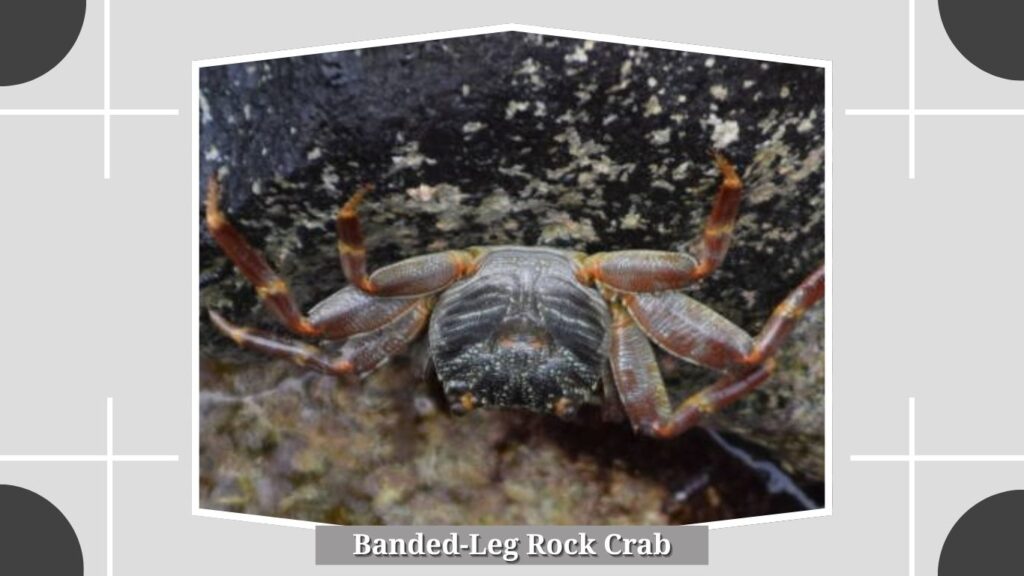
The banded-leg rock crab (Charybdis annulata) is a colorful crab recognized by the contrasting bands on its legs. It is also called the banded-leg swimming crab because its rear legs are modified into paddles.
Identification
- Brown or reddish patterned shell
- Distinct light and dark leg bands
- Broad carapace with pointed side teeth
- Paddle-shaped rear legs
- Strong claws with patterned markings
Habitat
Banded-leg rock crabs occur throughout the Indo-West Pacific region. They inhabit rocky reefs, coral rubble, sandy seabeds, muddy coastal areas, estuaries, and shallow lagoons. They may hide beneath stones or partially bury themselves in sediment.
Diet
Their diet includes mollusks, worms, shrimp, small fish, other crabs, and animal remains. They are opportunistic predators that capture any suitably sized prey encountered while searching along the bottom.
Behavior
These crabs can walk across the seafloor and swim using their paddle-like rear legs. They are especially active at night and may become aggressive when threatened. Their patterned body provides camouflage against reefs and shell-covered seabeds.
23. Jonah Crab
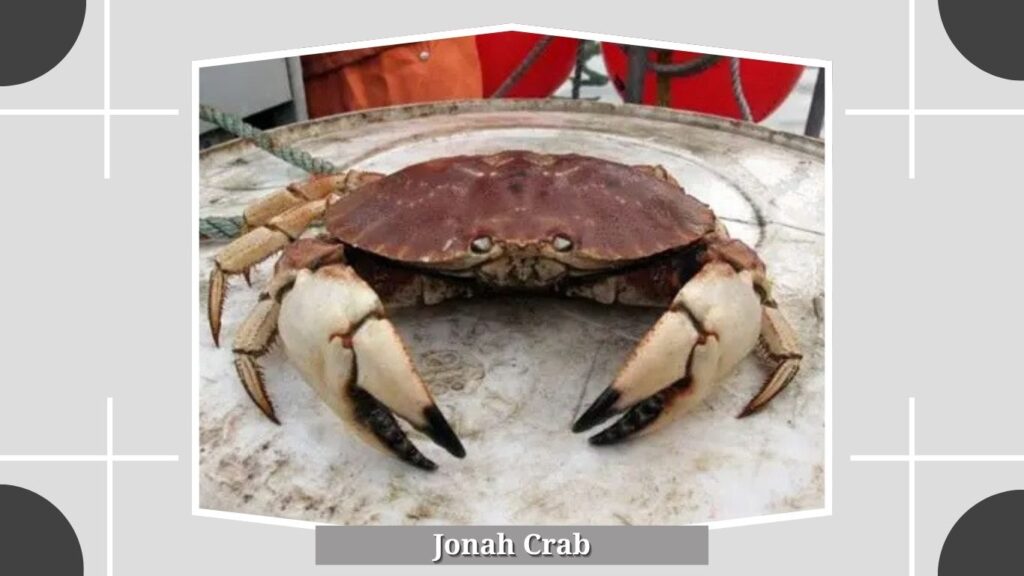
The Jonah crab (Cancer borealis) is a large rock-dwelling crab found in the northwestern Atlantic Ocean. It is commercially harvested for its flavorful meat, particularly from its muscular claws and legs.
Identification
- Broad, oval-shaped carapace
- Yellowish, reddish, or dark brown shell
- Rough shell surface
- Large claws with dark tips
- Nine rounded teeth on each shell edge
Habitat
Jonah crabs occur from Newfoundland and Labrador southward along the Atlantic coast of the United States. They live on rocky, sandy, muddy, and gravel-covered seabeds, ranging from shallow coastal waters to deeper offshore environments.
Diet
These crabs eat mussels, clams, snails, worms, sea urchins, small crustaceans, and fish remains. Their heavy claws allow them to crush shells and tear apart tough food.
Behavior
Jonah crabs are active bottom-dwelling predators and scavengers. They frequently shelter between rocks or bury themselves partly in sediment. When threatened, they raise their claws defensively and can deliver a strong pinch.
24. Warty Rock Crab
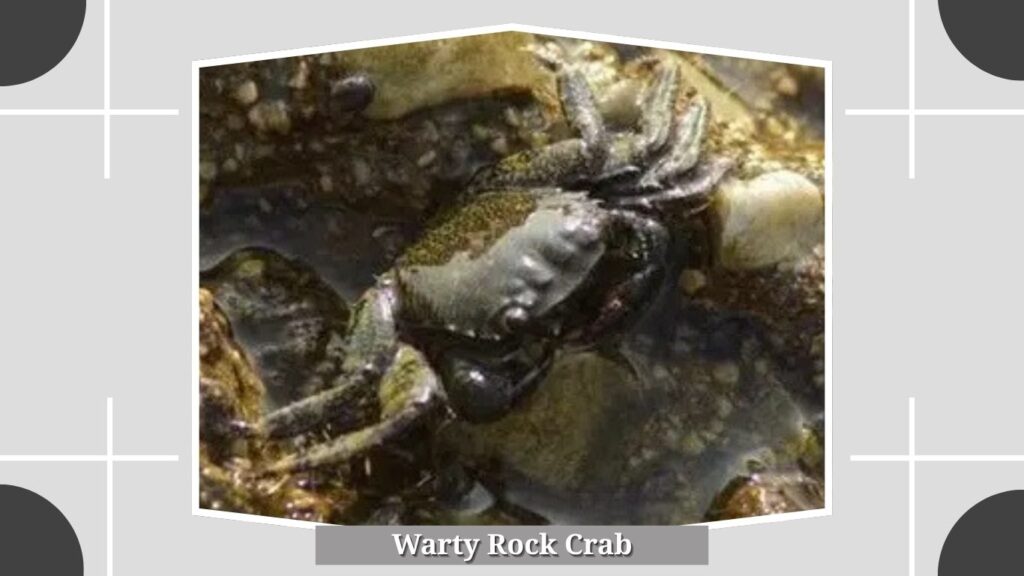
The warty rock crab (Eriphia verrucosa) is a heavily built coastal crab named for the raised bumps covering its shell. It is also commonly called the yellow crab or warty crab.
Identification
- Rough shell covered with wart-like bumps
- Brown, reddish, or olive-colored carapace
- Yellowish underside
- Large, unequal claws
- Dark brown or black claw tips
Habitat
Warty rock crabs inhabit rocky shorelines, reefs, tide pools, and shallow coastal waters in the Mediterranean Sea, Black Sea, and eastern Atlantic. They shelter beneath stones and inside crevices during low tide.
Diet
These crabs feed on mussels, snails, limpets, barnacles, worms, sea urchins, smaller crabs, and carrion. Their exceptionally strong claws can break thick mollusk shells.
Behavior
Warty rock crabs are mainly active at night. During daylight, they remain hidden in damp rocky shelters. They are highly defensive when cornered and may use their powerful claws to protect themselves from predators or competing crabs.
25. Deep-Sea Rock Crab
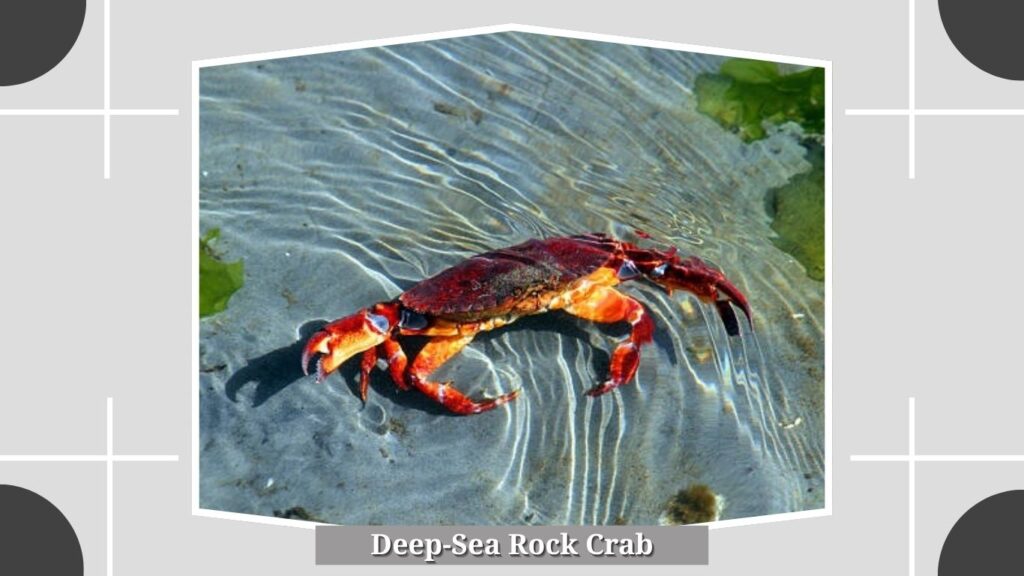
The deep-sea rock crab (Neolithodes bronwynae) is a spiny crab adapted to cold, dark waters far below the ocean’s surface. Although commonly described as a rock crab, it belongs to the king crab group.
Identification
- Reddish or orange body
- Numerous long, sharp spines
- Triangular or roughly rounded shell
- Long, heavily armored legs
- Unequal claws
Habitat
Deep-sea rock crabs live on rocky slopes, continental margins, and other deep-sea habitats. They have been recorded in deep waters of the southwestern Pacific, including areas associated with New Zealand. Their environment is cold, dark, and under intense pressure.
Diet
These crabs likely consume worms, mollusks, brittle stars, small crustaceans, carrion, and organic remains falling from upper ocean layers. Their feeding opportunities depend on what is available across the deep seafloor.
Behavior
Deep-sea rock crabs move slowly across the bottom while searching for food. Their long spines discourage predators and provide protection in exposed habitats. They rely on touch and chemical signals more than vision when navigating dark water.