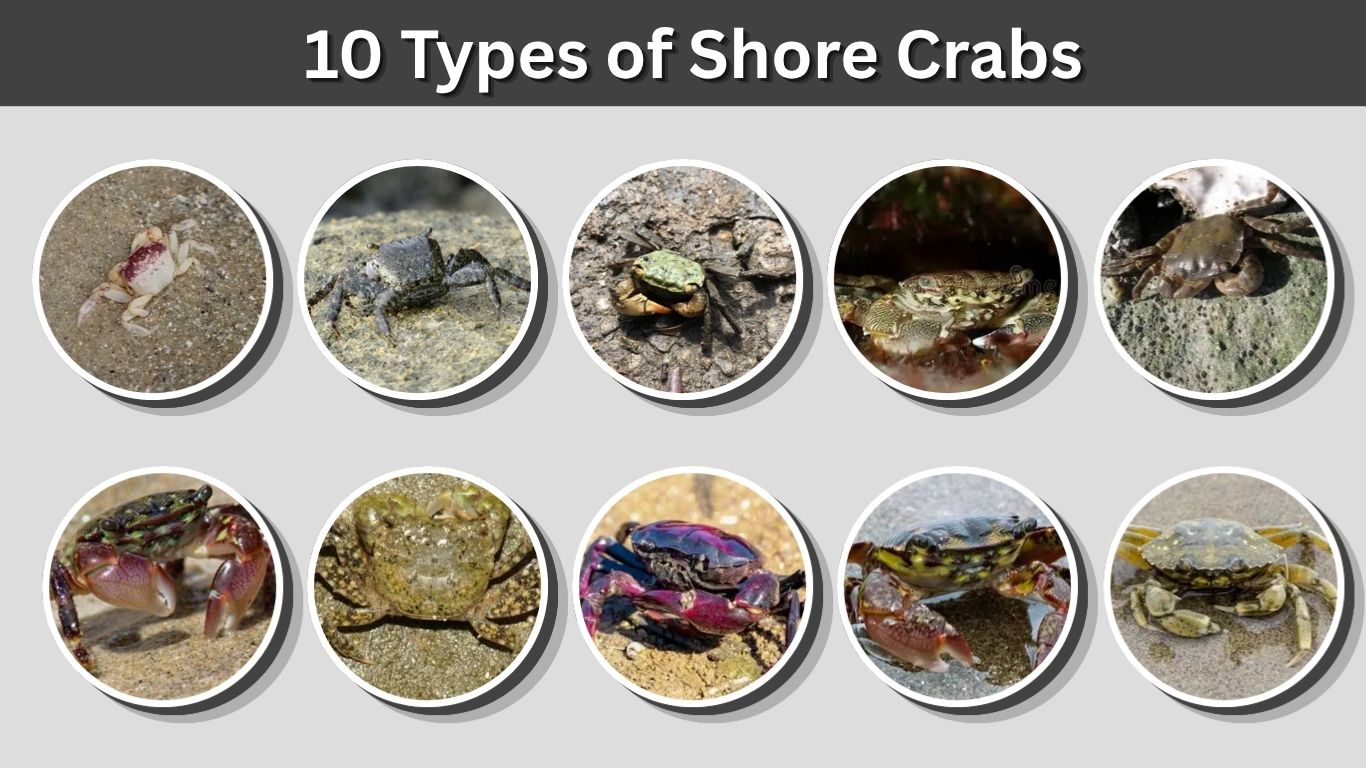
Shore crabs are adaptable crustaceans that inhabit rocky coastlines, tide pools, estuaries, mudflats, salt marshes, and mangrove forests. They display many different colors, including green, yellow, purple, red, and mottled brown. Some species primarily graze on algae, while others hunt small animals or scavenge organic remains. Their feeding and burrowing activities help recycle nutrients throughout coastal ecosystems. This guide explores 10 types of shore crabs, including their identification, habitat, distribution, diet, and behavior.
1. Common Shore Crab
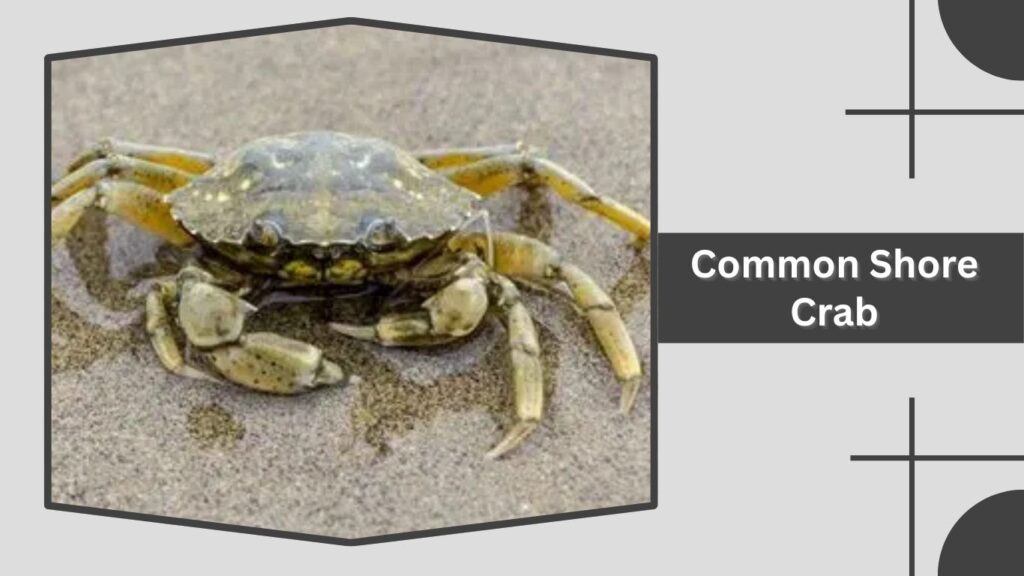
The common shore crab (Carcinus maenas) is also known as the European green crab. It is a highly adaptable species that has spread far beyond its native European range and become invasive in many coastal regions.
Identification
- Scientific name: Carcinus maenas
- Carapace width: Usually around 6.5 cm; maximum 9 cm
- Color: Green, brown, black, orange, or red
- Carapace: Five pointed spines on each side of the eyes
- Legs: Last pair is pointed rather than paddle-shaped
Habitat and Distribution
This crab is native to northeastern Atlantic coasts, including Europe and northern Africa. Introduced populations occur in North America, South America, Australia, and South Africa. It inhabits rocky shores, estuaries, salt marshes, tidal pools, mudflats, and shallow water.
Diet and Feeding
Common shore crabs eat mussels, clams, snails, worms, smaller crustaceans, fish remains, algae, and carrion. Their strong claws can break open many hard-shelled animals, making them effective predators in intertidal ecosystems.
Behavior
The species tolerates broad changes in temperature and salinity. It frequently hides beneath rocks, seaweed, or sediment when the tide recedes. Its aggressive behavior, varied diet, and high reproductive capacity allow it to compete successfully with native crabs.
2. Asian Shore Crab
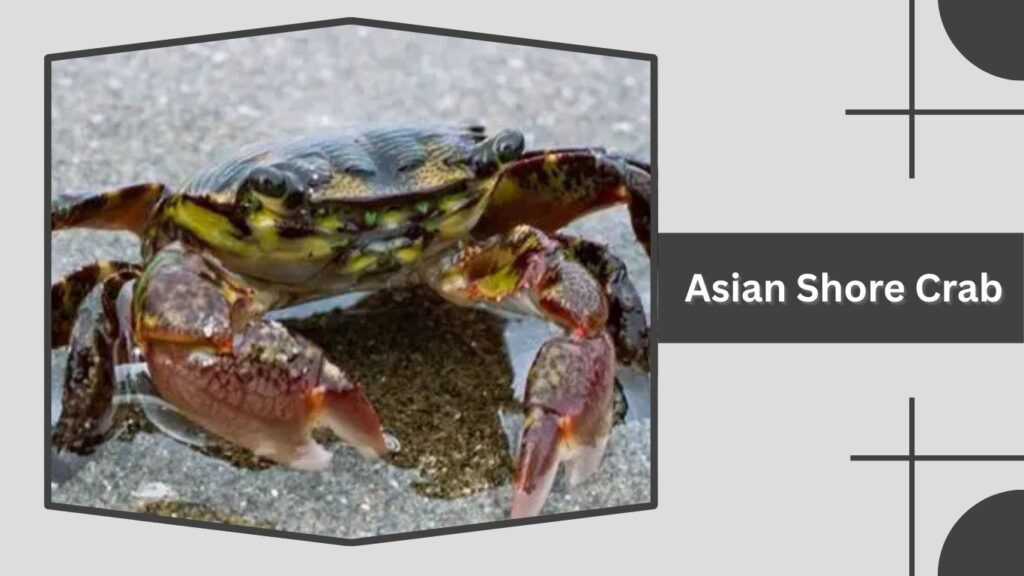
The Asian shore crab (Hemigrapsus sanguineus) is a small, square-bodied species native to the western Pacific. It has become invasive along parts of Europe and North America, where dense populations occupy rocky shorelines.
Identification
- Scientific name: Hemigrapsus sanguineus
- Carapace width: Up to approximately 4 cm
- Color: Green, brown, orange, red, or purple
- Carapace: Three spines on each side
- Legs: Display noticeable light and dark bands
Habitat and Distribution
Its native range extends along eastern Asia from Russia and Japan to Korea, China, and Taiwan. Introduced populations occur along the Atlantic coast of North America and parts of Europe. It prefers rocky intertidal areas and shelters beneath stones, shells, and artificial structures.
Diet and Feeding
Asian shore crabs consume algae, sea grasses, barnacles, snails, mussels, amphipods, worms, and smaller crabs. Their flexible diet changes with season and local food availability, helping them survive in many coastal environments.
Behavior
Adults commonly feed at night and hide under rocks during daylight. They can reach extremely high population densities and compete with native crabs for food and shelter. They may also reduce local populations of mussels and other small intertidal animals.
3. Purple Shore Crab
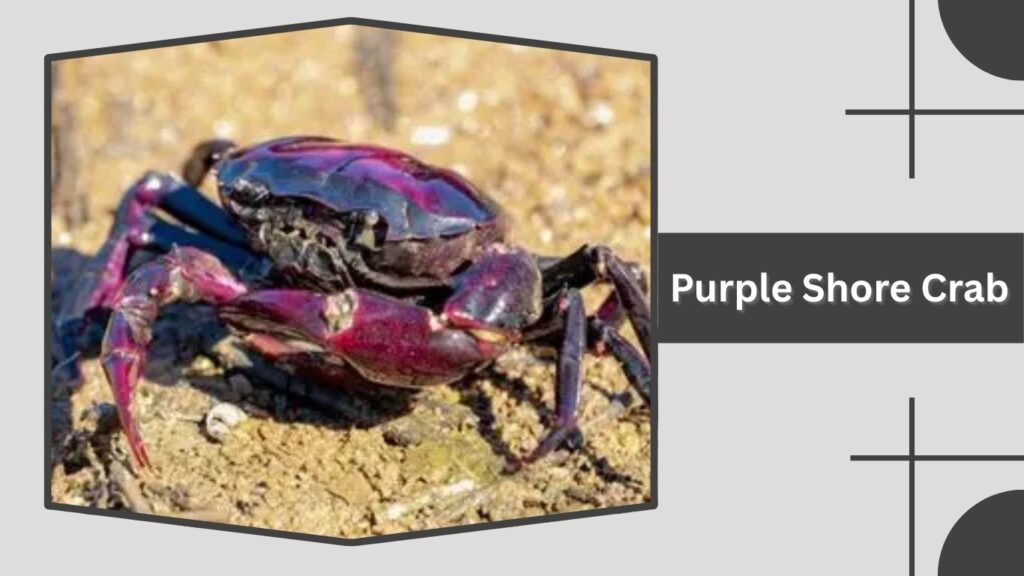
The purple shore crab (Hemigrapsus nudus) is a common crab along the Pacific coast of North America. Its smooth walking legs and purple-spotted claws help distinguish it from the similar yellow shore crab.
Identification
- Scientific name: Hemigrapsus nudus
- Male carapace width: Up to approximately 5.6 cm
- Color: Purple, olive green, or reddish brown
- Claws: White-tipped with purple or red spots
- Walking legs: Smooth without dense hair
Habitat and Distribution
This species occurs along the western coast of North America from Alaska and British Columbia to California and Mexico. It favors rocky open coasts, tide pools, cobble beaches, salt marshes, and other intertidal environments.
Diet and Feeding
Purple shore crabs primarily graze on green and red algae growing on rocks. They also scavenge dead animals and may consume small worms, mollusks, crustaceans, and other organic material when available.
Behavior
These crabs spend low tide concealed beneath rocks or inside moist crevices. They emerge to forage when conditions are safe. Their flattened bodies allow them to squeeze under stones, while their strong legs help them cling to rocky surfaces exposed to waves.
4. Yellow Shore Crab
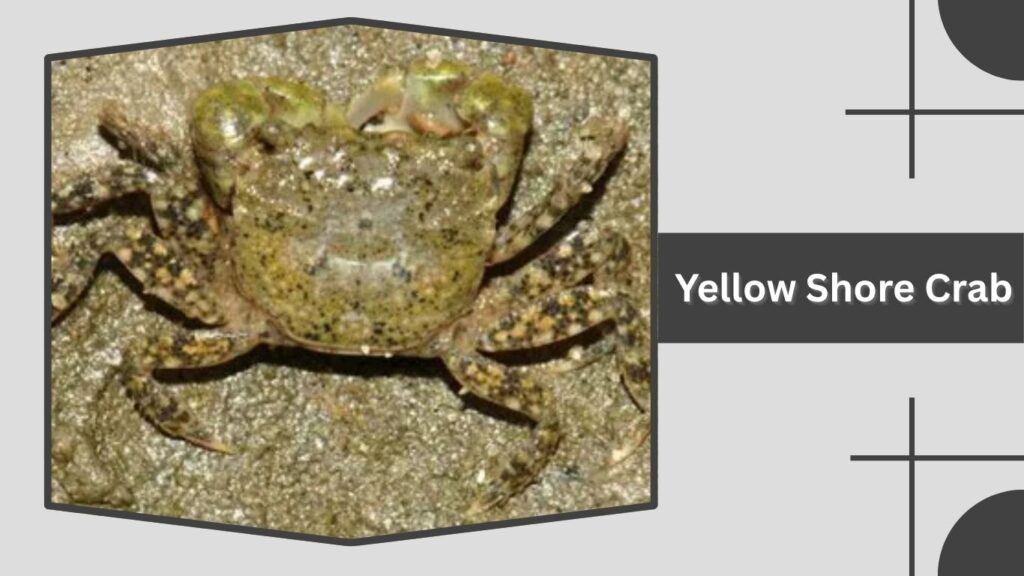
The yellow shore crab (Hemigrapsus oregonensis) is also called the hairy or Oregon shore crab. Despite its common name, its body can appear green, brown, red, gray, white, or yellow, depending on the individual and habitat.
Identification
- Scientific name: Hemigrapsus oregonensis
- Carapace width: Usually around 3–3.5 cm
- Carapace: Three sharp teeth on each side
- Legs: Covered with noticeable hair-like setae
- Claws: White or yellow tips without purple spots
Habitat and Distribution
This species ranges from Alaska and British Columbia to Baja California. It lives beneath rocks in intertidal zones and also occupies estuaries, mudflats, eelgrass beds, salt marshes, algal mats, and protected bays with slow currents.
Diet and Feeding
Yellow shore crabs mainly consume diatoms and green algae. They may also scavenge carrion, filter organic particles from water, or prey on tiny invertebrates. Plant-rich estuaries provide both abundant food and protective shelter.
Behavior
The crab is a strong digger and often burrows into mud when uncovered. It commonly hides during the day and forages after dark. It tolerates brackish water, low oxygen, turbid conditions, and substantial environmental changes better than many other shore crabs.
5. Striped Shore Crab
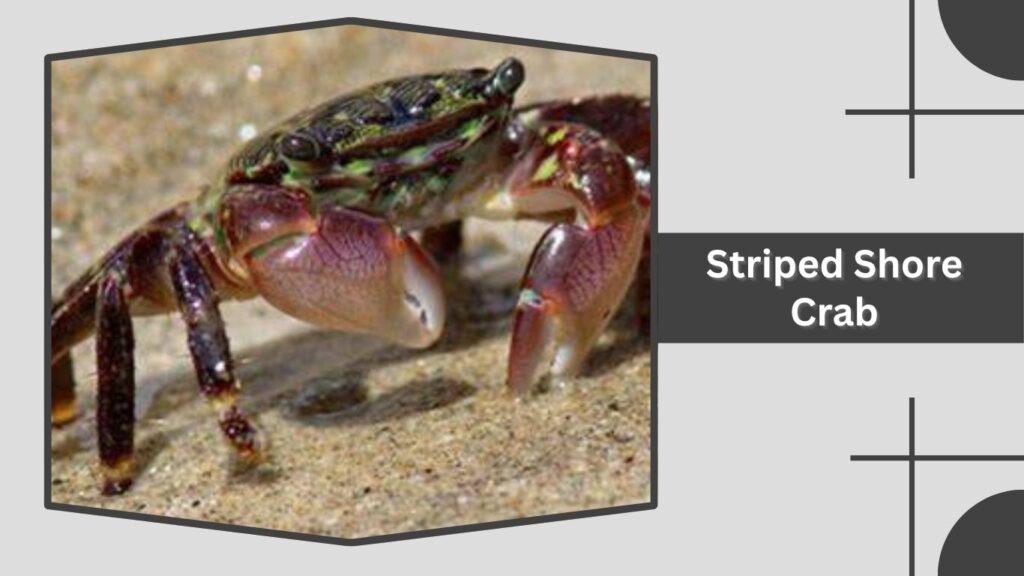
The striped shore crab (Pachygrapsus crassipes) is a colorful and fast-moving species found on rocky Pacific shores. Its dark shell is crossed by bright greenish stripes that provide camouflage among algae-covered rocks.
Identification
- Scientific name: Pachygrapsus crassipes
- Carapace width: Approximately 3–5 cm
- Color: Dark purple, red, brown, or green
- Markings: Bright yellow-green horizontal stripes
- Claws: Usually dark red or purple
Habitat and Distribution
This species occurs from Vancouver Island to Baja California and is also found around Japan and Korea. It inhabits rocky shores, tide pools, mussel beds, estuaries, salt marshes, and crevices exposed during low tide.
Diet and Feeding
Striped shore crabs graze on green algae, red algae, seaweed, and diatoms. They also eat worms, mussels, snails, flies, isopods, hermit crabs, carrion, and occasionally newly molted members of their own species.
Behavior
These crabs forage both in and out of water and can remain on land for extended periods if their gills stay moist. They are quick enough to catch flies at low tide and rapidly escape into rocky crevices when threatened.
6. Brush-Clawed Shore Crab
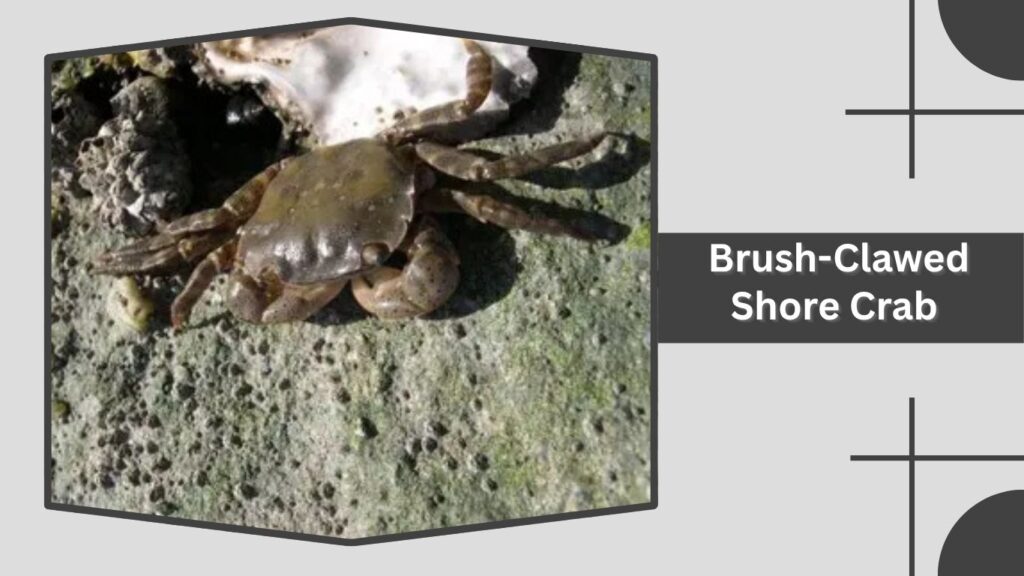
The brush-clawed shore crab (Hemigrapsus takanoi) is a small western Pacific species named after the dense patches of hair found on the male’s claws. It has established invasive populations throughout several European coastal regions.
Identification
- Scientific name: Hemigrapsus takanoi
- Carapace width: Up to approximately 4 cm
- Carapace: Square with three teeth on each side
- Color: Brown, green, gray, or orange
- Male claws: Have dense brush-like hair patches
Habitat and Distribution
This species is native to the northwestern Pacific, including Japan, China, and Korea. Introduced populations occur in northern and western Europe. It prefers muddy intertidal habitats around estuaries, harbors, lagoons, sheltered bays, mudflats, oyster reefs, and mussel beds.
Diet and Feeding
Brush-clawed shore crabs consume algae, seaweed, mussels, oysters, barnacles, snails, worms, smaller crustaceans, and carrion. Their varied diet allows them to exploit numerous food sources and compete with native crab species.
Behavior
These crabs shelter beneath stones, shells, and artificial debris when exposed by low tide. They can form dense populations on mixed mussel and oyster reefs. Cold temperatures make them less active, so they remain hidden for longer periods during winter.
7. Marbled Shore Crab
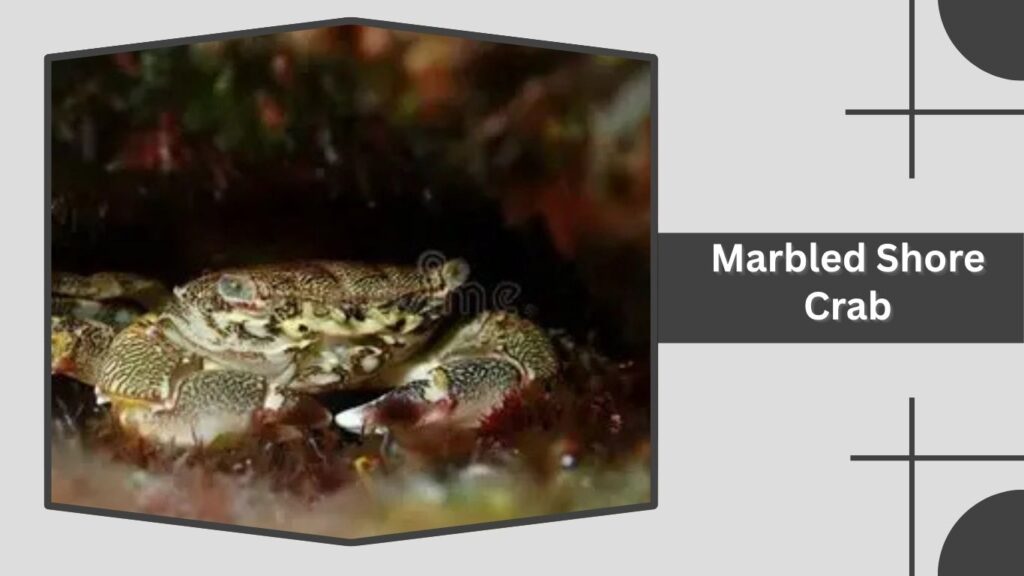
The marbled shore crab (Pachygrapsus marmoratus) is a fast, semiterrestrial crab recognized by the yellow marbling across its dark shell. It is a familiar inhabitant of rocky Mediterranean and eastern Atlantic coastlines.
Identification
- Scientific name: Pachygrapsus marmoratus
- Carapace length: Approximately 2.2–3.6 cm
- Color: Dark violet-brown or black
- Markings: Yellow or cream marbling
- Carapace: Square with three teeth on each side
Habitat and Distribution
This species occurs throughout the Mediterranean and Black seas. It is also found along Atlantic coasts from Morocco through Portugal, Spain, and France to parts of the English Channel. It occupies upper and middle rocky shores, breakwaters, pier supports, and seawall crevices.
Diet and Feeding
Marbled shore crabs mainly graze on algae but also consume mussels, limpets, barnacles, worms, carrion, and other small animals. The proportion of plant and animal food changes according to season and local availability.
Behavior
These crabs move extremely quickly and immediately enter narrow crevices when approached. They spend considerable time outside the water but must keep their gills moist. Their flattened bodies and strong legs help them cling to wave-exposed rocks.
8. Red-Handed Shore Crab
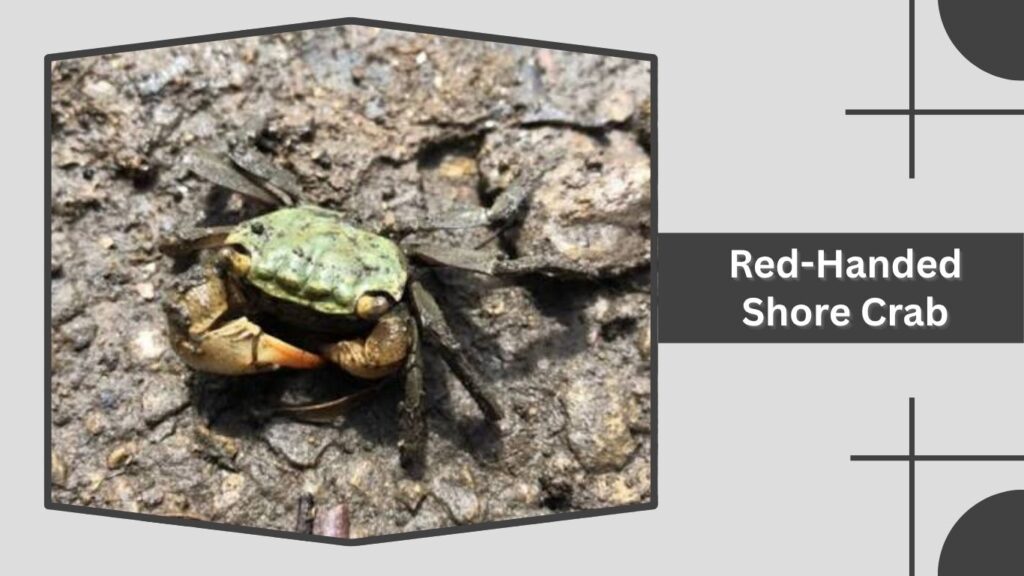
The red-handed shore crab (Parasesarma erythrodactyla) is a small mangrove crab recognized by its bright orange-red claws. It is also called the red-fingered marsh crab because it frequently occurs around salt marshes and muddy coastal wetlands.
Identification
- Scientific name: Parasesarma erythrodactyla
- Carapace width: Up to approximately 3 cm
- Carapace: Rectangular and green-brown or green-black
- Claws: Bright orange or red
- Legs: Brown or dark green
Habitat and Distribution
This species occurs along eastern Australia and in parts of the Indo-West Pacific. It inhabits mangrove forests, salt marshes, mudflats, and muddy creek banks. Burrows are commonly constructed among mangrove roots, where damp sediment provides protection.
Diet and Feeding
Mangrove leaves and other plant material form most of its diet. Leaf detritus may provide approximately 65–80% of its nutrition, while benthic microalgae such as diatoms contribute much of the remainder. It may occasionally consume small animals or carrion.
Behavior
Red-handed shore crabs emerge from their burrows during low tide to collect fallen mangrove leaves. When threatened, they rapidly return underground. Their feeding helps break large leaves into smaller particles, accelerating nutrient recycling within mangrove ecosystems.
9. Purple-Mottled Shore Crab
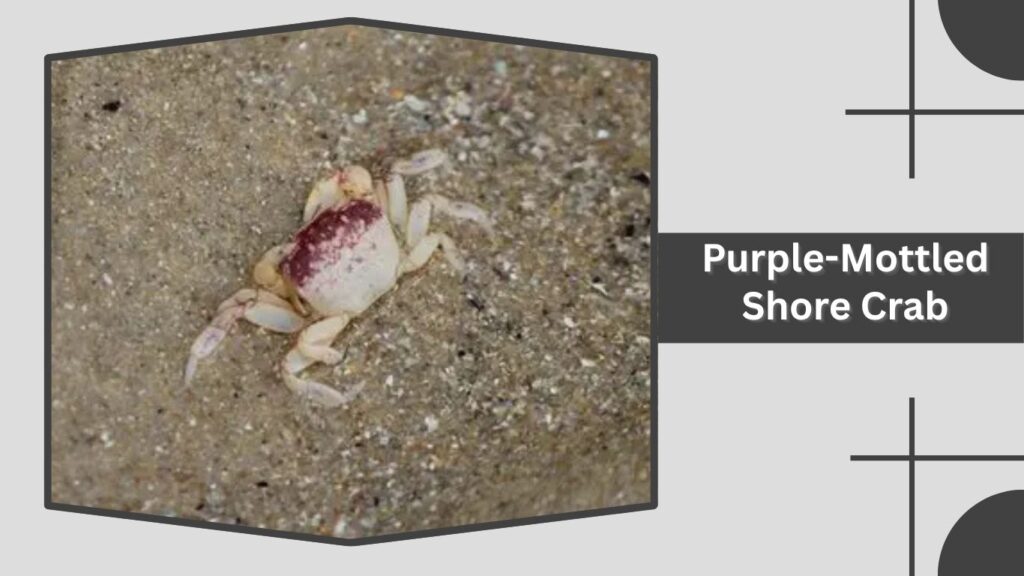
The purple-mottled shore crab (Cyclograpsus granulosus), also called the smooth shore crab, is an Australian species found beneath rocks and boulders. Its yellow background is covered with irregular purple or reddish-brown markings.
Identification
- Scientific name: Cyclograpsus granulosus
- Carapace width: Approximately 3.8–4 cm
- Color: Yellow with purple or red-brown mottling
- Carapace margins: Rounded and convex
- Frontal region: Covered with small granules
Habitat and Distribution
This species is native to southeastern Australia. It occupies stony beaches, boulder fields, and rocky shores, particularly within upper-middle intertidal and supralittoral areas. Individuals usually shelter beneath large rocks that retain moisture during low tide.
Diet and Feeding
Purple-mottled shore crabs scavenge dead fish, rotting seaweed, and other decomposing material. They may also eat algae and small invertebrates, including tiny mollusks, worms, and barnacles found beneath rocks.
Behavior
These active crabs race for shelter when disturbed. They can survive outside water for several hours if their gills remain moist. Some individuals create shallow depressions beneath stones, providing more secure shelter against heat, dryness, and predators.
10. Thukuhar Shore Crab
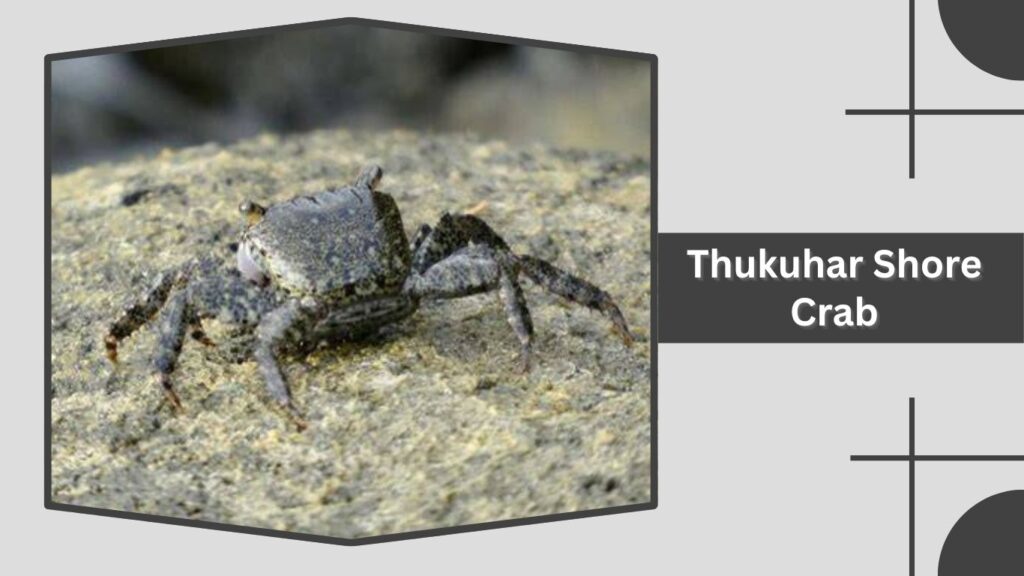
The Thukuhar shore crab (Metopograpsus thukuhar), also called the alamihi crab, is a widespread Indo-Pacific mangrove species. Its strong climbing legs allow it to move among exposed roots and the lower trunks of mangrove trees.
Identification
- Scientific name: Metopograpsus thukuhar
- Maximum body size: Approximately 5 cm
- Color: Brownish yellow or reddish brown
- Carapace: Square and mottled
- Claws: Violet in adults and pinkish in juveniles
Habitat and Distribution
This species ranges from eastern Africa and Madagascar across India and Southeast Asia to northern Australia, Hawaii, the Solomon Islands, Vanuatu, and Fiji. It lives around sheltered rocky shores and mangrove roots, trunks, and lower branches.
Diet and Feeding
Thukuhar shore crabs are opportunistic omnivores. They consume algae, aquatic plants, mangrove material, insects, small invertebrates, and animal carcasses. Food is usually collected from mangrove surfaces or the muddy ground below.
Behavior
Unlike many mangrove crabs, this species does not normally construct deep burrows. It hides between roots, beneath bark, or around lower trunks. It is an agile climber that quickly retreats into the mangrove structure when disturbed.