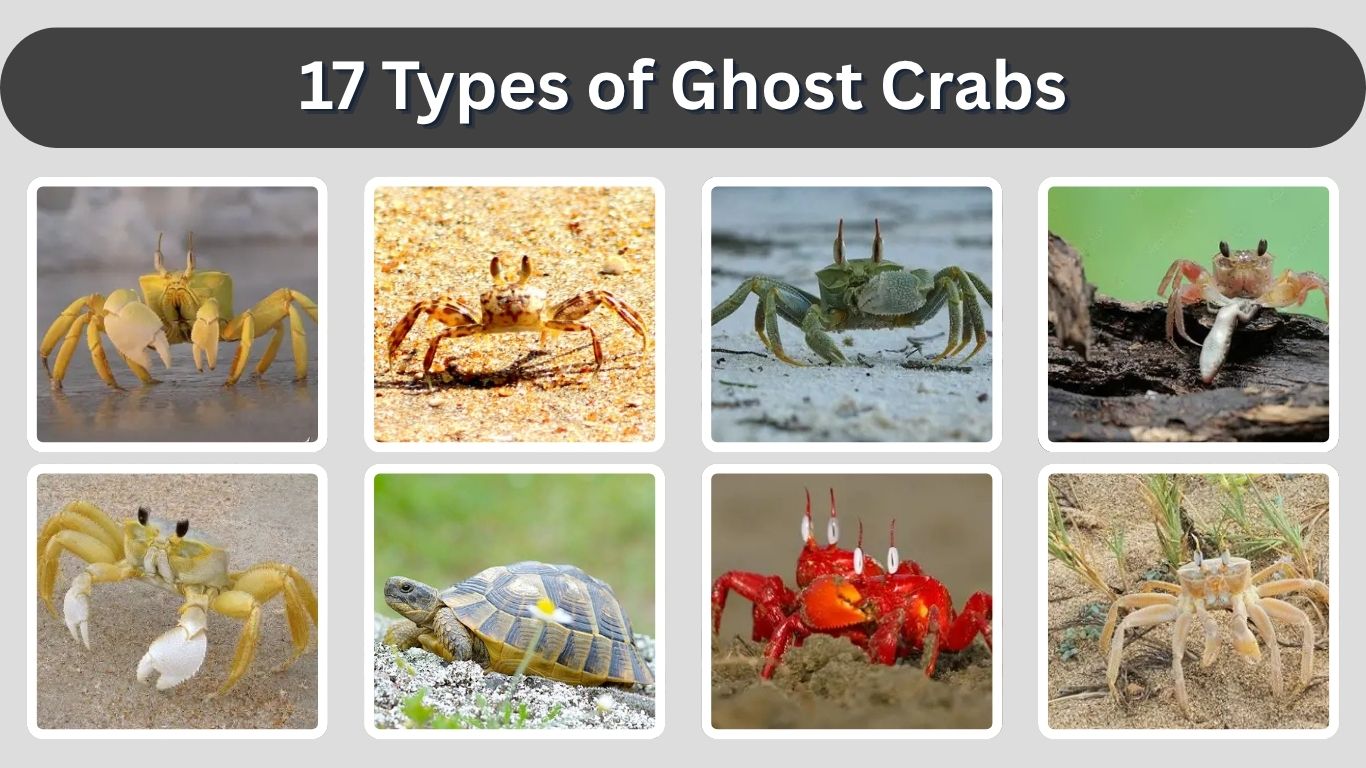
Ghost crabs are fast-moving, semiterrestrial crabs commonly found on tropical and subtropical sandy beaches. Their pale coloration, nocturnal behavior, and ability to disappear quickly into deep burrows inspired their unusual name. However, some species display brilliant shades of pink, red, orange, or gold. Ghost crabs are opportunistic predators and scavengers that play an important role in coastal food webs. This guide explores 17 types of ghost crabs, including their identification, habitat, diet, distribution, and behavior.
1. African Ghost Crab
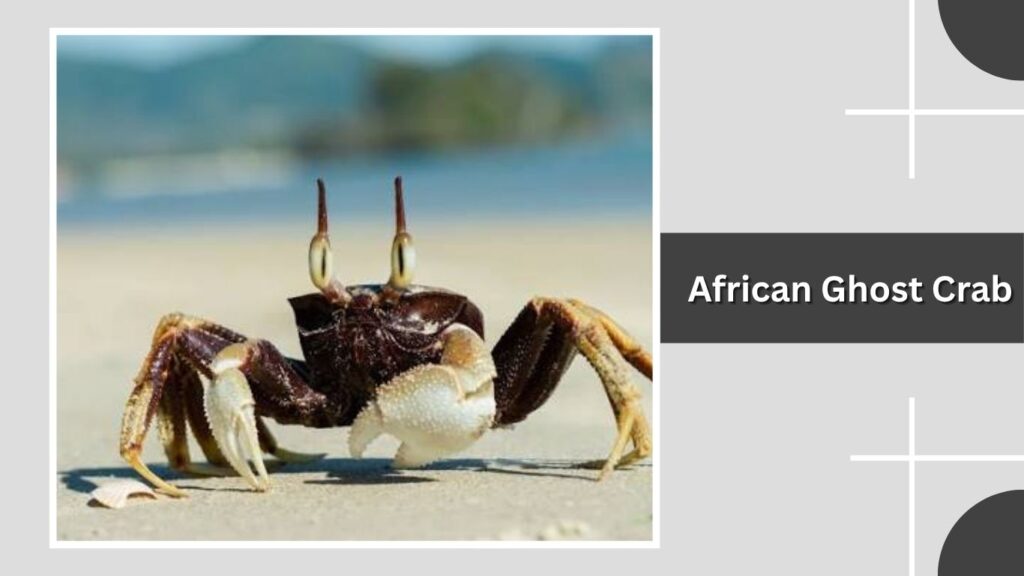
The African ghost crab (Ocypode africana) is a fast-moving shore crab native to western Africa. Its pale coloration provides camouflage against beach sand, while its powerful legs allow it to disappear rapidly when approached.
Identification
- Scientific name: Ocypode africana
- Carapace width: Up to approximately 3.4 cm
- Color: Pinkish, sandy gray, or dark gray
- Body shape: Deep and box-like
- Eyestalks: Long without terminal hair tufts
Habitat and Distribution
This species occurs along the eastern Atlantic coast from Mauritania to Namibia. It lives on sandy beaches, particularly around the upper intertidal and supratidal zones. Its burrows are often positioned farther inland than those of the tufted ghost crab.
Diet and Feeding
African ghost crabs are opportunistic omnivores. They consume dead marine animals, decomposing vegetation, insects, mollusks, smaller crustaceans, and other organic material washed onto the beach. They may actively hunt small animals after dark.
Behavior
These crabs are mainly nocturnal and remain inside their burrows during the hottest daytime hours. When disturbed, they run rapidly across the sand or enter the nearest suitable shelter. Individuals usually defend their burrows and may evict unfamiliar crabs attempting to enter.
2. Short-Horned Ghost Crab
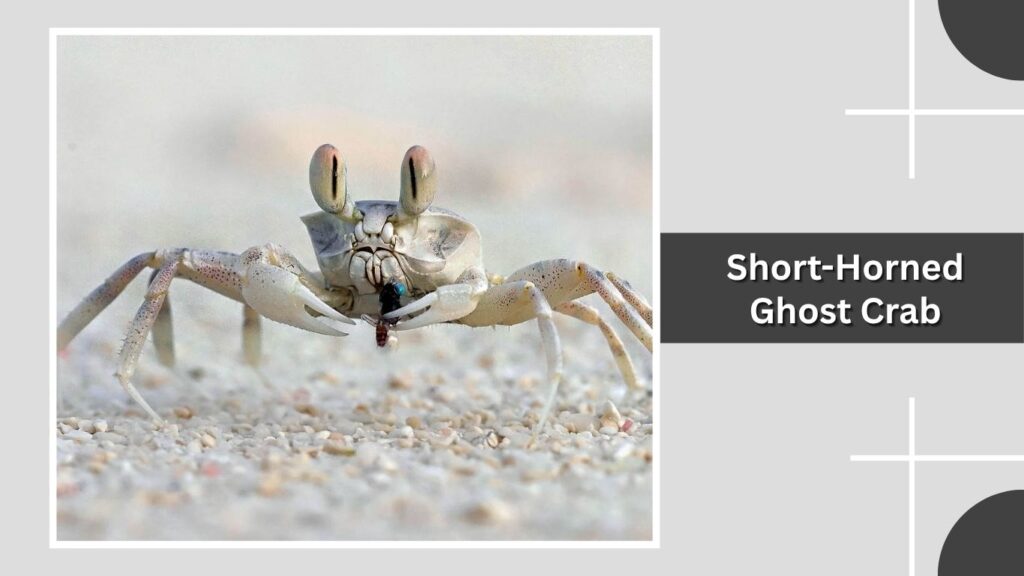
The short-horned ghost crab (Ocypode brevicornis) is a large Indian Ocean species. It possesses pointed extensions above the eyes, although these projections may be shorter than those of some other horned ghost crabs.
Identification
- Scientific name: Ocypode brevicornis
- Body size: Large
- Color: Mottled brown, gray, or yellow
- Eyestalks: Possess short horn-like extensions
- Claw ridge: Contains approximately 23–28 tubercles
Habitat and Distribution
This species occurs from the Gulf of Oman across India and Sri Lanka to the Nicobar Islands. It inhabits tropical sandy beaches, intertidal flats, and upper beach zones where the substrate is sufficiently loose and stable for burrowing.
Diet and Feeding
Short-horned ghost crabs are generalist scavengers and predators. Their diet includes carrion, insects, worms, mollusks, smaller crabs, organic beach debris, and occasionally plant material. They use their claws to tear food into manageable pieces.
Behavior
The crabs spend daylight hours inside deep burrows that protect them from heat, dehydration, and predators. They become more active during cooler evening and nighttime periods. Their textured claw ridge can be rubbed against another body part to produce sounds during defensive or social encounters.
3. Horn-Eyed Ghost Crab
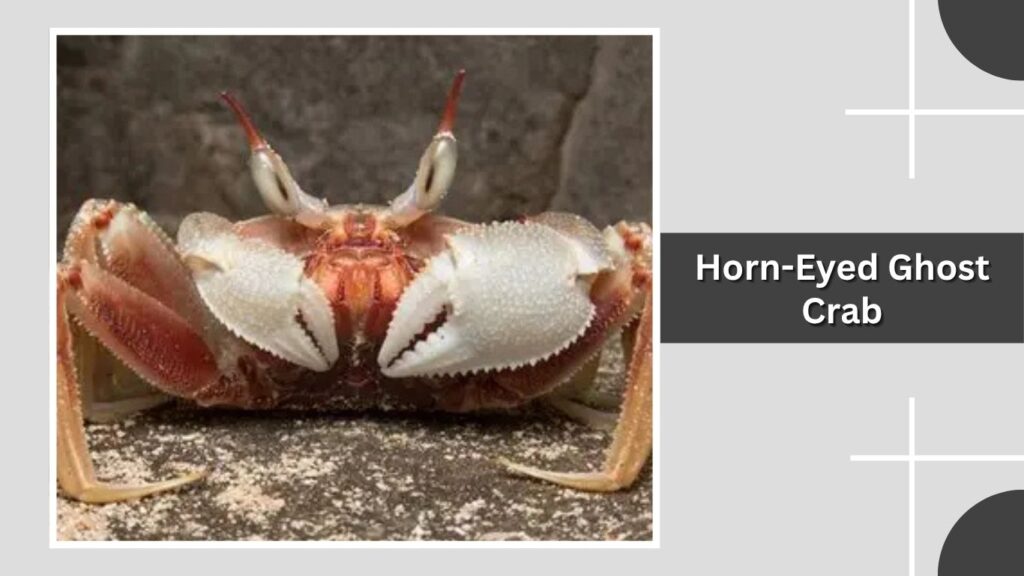
The horn-eyed ghost crab (Ocypode ceratophthalma) is a widespread Indo-Pacific species recognized by the pointed extensions above its eyes. These “horns” become more prominent as the crab matures and may be absent in juveniles.
Identification
- Scientific name: Ocypode ceratophthalma
- Carapace width: Commonly around 6–8 cm
- Color: Sandy, gray, cream, or bluish
- Eyestalks: End in noticeable horn-like points
- Carapace: Often bears a dark H-shaped marking
Habitat and Distribution
This species occurs from eastern Africa across the Indian Ocean to Southeast Asia, Australia, Polynesia, and Clipperton Island. It is generally absent from the Red Sea. It occupies exposed sandy beaches and constructs deep, tube-shaped burrows.
Diet and Feeding
Horn-eyed ghost crabs hunt insects, mollusks, worms, smaller crabs, and other beach animals. They also eat carrion, fish remains, algae, and organic debris. In some locations, they may prey on sea turtle eggs or newly emerged hatchlings.
Behavior
This is an exceptionally fast crab capable of running across open sand at high speed. It is mainly active at night but may emerge during cooler daylight conditions. Its coloration can change gradually, helping it blend with different sand backgrounds and avoid predators.
4. Golden Ghost Crab
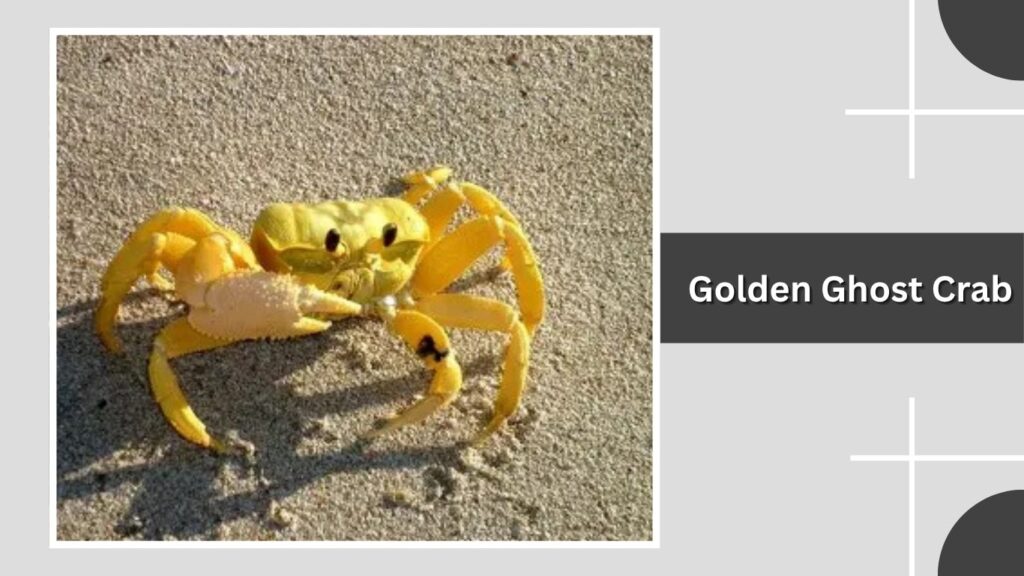
The golden ghost crab (Ocypode convexa) is a large Western Australian species recognized by its rich yellow or cream coloration. It is also called the western or yellow ghost crab and is restricted to a relatively small geographic range.
Identification
- Scientific name: Ocypode convexa
- Carapace width: Up to approximately 52 mm
- Color: Creamy white to golden yellow
- Eyestalks: Lack horn-like extensions
- Claws: Unequal, strong, and roughly textured
Habitat and Distribution
Golden ghost crabs are endemic to Western Australia, occurring from Broome to Perth. They inhabit open sandy beaches and dig burrows in upper intertidal and supratidal zones. Populations are generally more abundant on beaches with little vehicle or pedestrian activity.
Diet and Feeding
These crabs consume carrion, seaweed, discarded organic material, insects, mollusks, and smaller crustaceans. They are also known to prey on sea turtle eggs and hatchlings, including those of loggerhead turtles nesting along Western Australia.
Behavior
Golden ghost crabs are predominantly nocturnal. They leave their burrows after sunset to search for food along the shoreline. Bright coloration provides effective camouflage on pale sand. Beach vehicles can crush crabs and collapse their burrows, significantly reducing local populations.
5. Smooth-Handed Ghost Crab
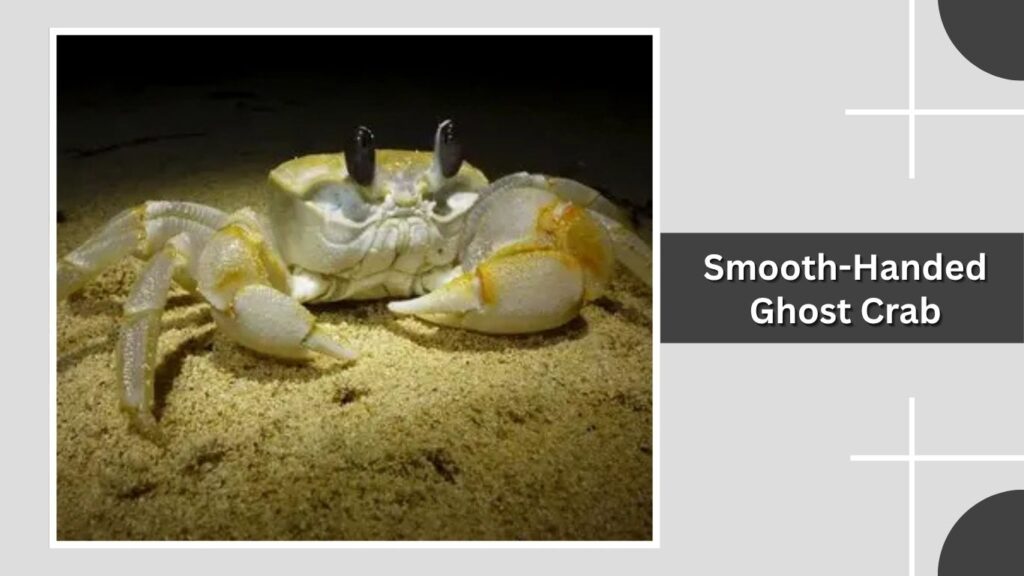
The smooth-handed ghost crab (Ocypode cordimanus) is named for the absence of the specialized sound-producing ridge found on the claws of most ghost crab species. It is widely distributed across the Indian and Pacific oceans.
Identification
- Scientific name: Ocypode cordimanus
- Carapace width: Usually 10–20 mm, occasionally 35 mm
- Color: White, cream, gray, or sandy brown
- Claw palm: Smooth without a stridulating ridge
- Eyestalks: Long and without prominent horns
Habitat and Distribution
This widespread species occurs from the western Indian Ocean and Red Sea to Southeast Asia, Australia, and French Polynesia. It inhabits sandy beaches, coastal dunes, intertidal zones, and areas extending inland from the shoreline.
Diet and Feeding
Smooth-handed ghost crabs eat decomposing plant material, organic matter, mollusks, mole crabs, insects, dead fish, and other stranded animals. They may also consume sea turtle eggs and hatchlings when available.
Behavior
The species is most active after dark, when it searches beaches for food. During the day, individuals shelter inside burrows to conserve moisture and avoid extreme temperatures. Although they lack the typical claw ridge, they may still produce sounds using alternative movements of their legs and claws.
6. Tufted Ghost Crab
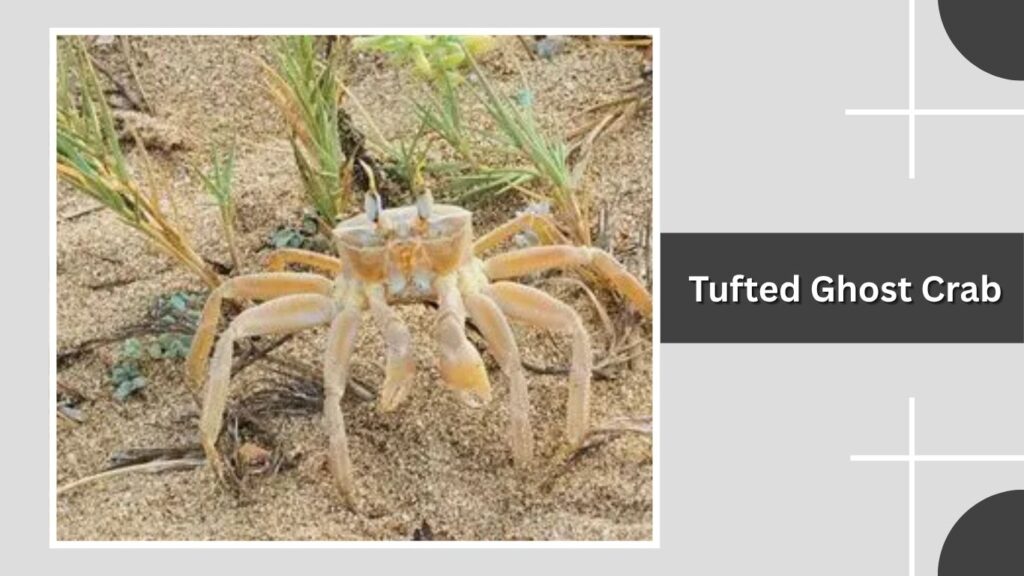
The tufted ghost crab (Ocypode cursor) is a large coastal crab distinguished by the noticeable bunches of bristles at the ends of its eyestalks. It inhabits sandy beaches along western Africa and parts of the Mediterranean.
Identification
- Scientific name: Ocypode cursor
- Maximum carapace width: Approximately 5.5 cm
- Color: Cream, gray, yellowish, or sandy brown
- Eyestalks: Tipped with distinctive bristle tufts
- Body shape: Large, deep, and box-like
Habitat and Distribution
This species occurs along western Africa from Mauritania to Namibia. It is also found around the eastern Mediterranean, including Egypt, Israel, Turkey, Cyprus, and southern Greece. It digs deep burrows between the intertidal zone and coastal dunes.
Diet and Feeding
Tufted ghost crabs consume ants, insects, smaller crustaceans, mollusks, carrion, and organic debris. Drifting seaweed may supplement their diet. Their opportunistic feeding allows them to use both marine and terrestrial food sources.
Behavior
These crabs are fast runners that become most active during cooler evening and nighttime hours. Their burrows may be L- or J-shaped and reach considerable depths. Larger individuals often construct deeper burrows farther from the water than smaller crabs.
7. Fabricius’ Ghost Crab
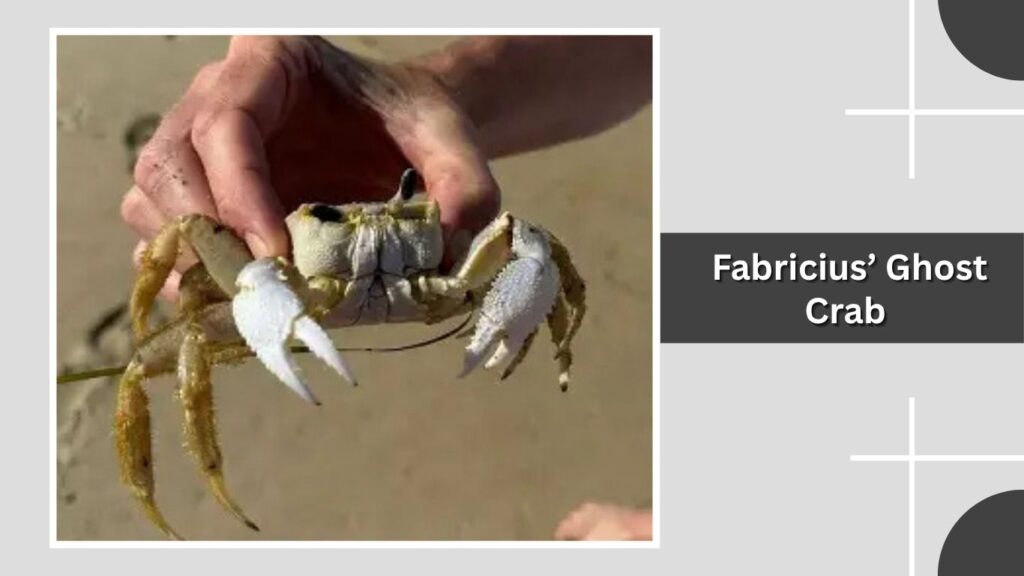
Fabricius’ ghost crab (Ocypode fabricii) is a medium-sized Australian species. It resembles Jousseaume’s ghost crab closely, but their geographic ranges do not overlap, making location an important part of identification.
Identification
- Scientific name: Ocypode fabricii
- Body size: Medium
- Color: Pale gray, cream, or sandy brown
- Claws: Unequal in size
- Sound-producing ridge: Approximately 126–133 fine lines
Habitat and Distribution
This species occurs along northern and western Australia, extending from the Darwin region to Shark Bay. It occupies open sandy beaches, tidal flats, coastal dunes, and the upper parts of intertidal shorelines where it can excavate stable burrows.
Diet and Feeding
Fabricius’ ghost crabs feed opportunistically on insects, worms, small mollusks, crustaceans, carrion, algae, and decomposing organic matter. They may search around the high-tide line for dead animals and edible material deposited by waves.
Behavior
The crabs spend much of the day inside burrows and emerge when conditions become cooler. They use their strong walking legs to move rapidly across loose sand. Rubbing the finely ridged surface of the major claw can produce sounds during courtship or defensive encounters.
8. Painted Ghost Crab
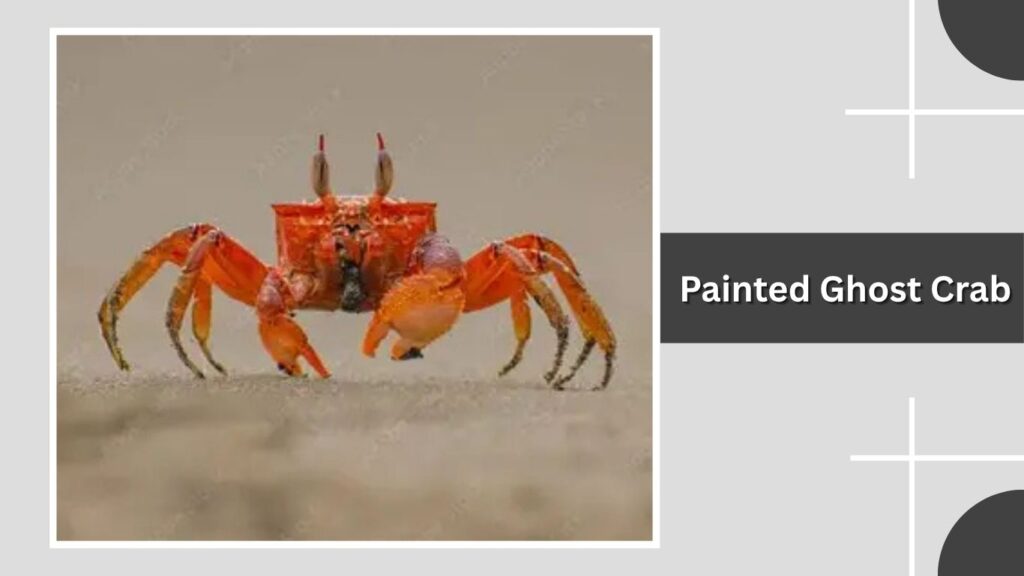
The painted ghost crab (Ocypode gaudichaudii) is a brightly colored eastern Pacific species. Unlike many pale, nocturnal ghost crabs, it is frequently active during daylight and has a distinctive reddish-orange body covered with sandy spots.
Identification
- Scientific name: Ocypode gaudichaudii
- Color: Red-orange with cream or sandy spots
- Eyestalks: Possess pointed extensions
- Body size: Medium to large
- Alternative name: Cart-driver crab
Habitat and Distribution
This species occurs on Pacific beaches from El Salvador to Chile and is also found on the Galápagos Islands. It constructs burrows above the drift line on sandy beaches, where it avoids waves, predators, temperature extremes, and territorial competitors.
Diet and Feeding
Juveniles primarily hunt small crustaceans, insects, and worms. Adults increasingly collect diatoms and other organic material from the sand. They also scavenge dead marine and terrestrial animals, adjusting their feeding method according to available food.
Behavior
Painted ghost crabs may be active during the day and use visual and chemical signals to locate food. They kick, dump, or tamp excavated sand while constructing burrows. These different techniques produce recognizable arrangements of sediment around their entrances.
9. Jousseaume’s Ghost Crab
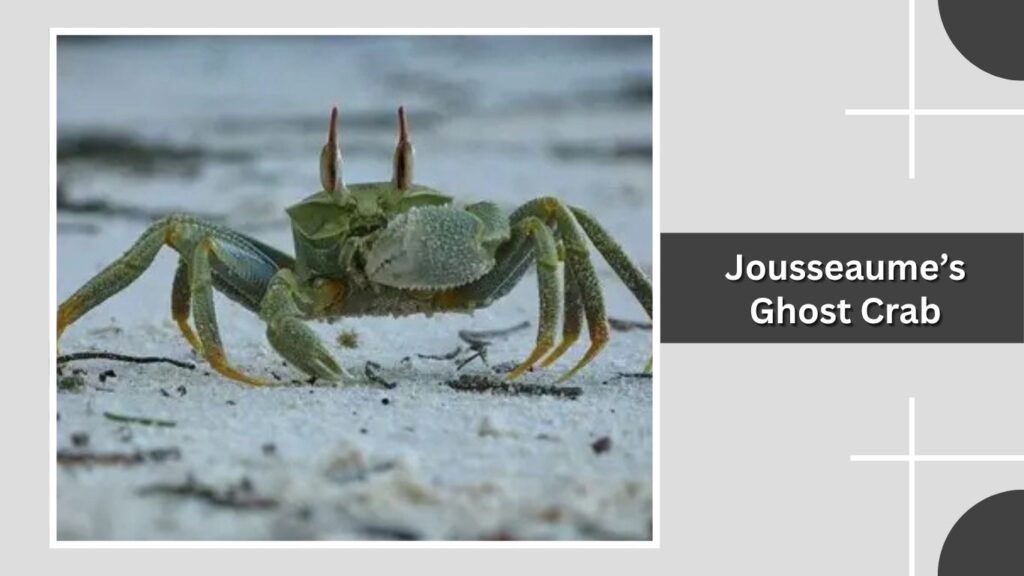
Jousseaume’s ghost crab (Ocypode jousseaumei) is a small-to-medium species with a restricted range around the Arabian Peninsula. It closely resembles Fabricius’ ghost crab, although the two occur in completely different geographic regions.
Identification
- Scientific name: Ocypode jousseaumei
- Body size: Small to medium
- Color: Cream, gray, or sandy brown
- Eyestalks: Do not extend beyond the corneas
- Claw ridge: Extends over half the palm’s height
Habitat and Distribution
This ghost crab is restricted mainly to the Gulf of Aden and Gulf of Oman. It lives along ocean-facing sandy beaches and the inner reaches of coastal inlets known as khawrs. Burrows are commonly positioned near the high-tide line.
Diet and Feeding
Jousseaume’s ghost crab feeds on insects, worms, small crustaceans, mollusks, carrion, and organic beach debris. It may also consume algae and decomposing vegetation deposited along the shoreline by waves.
Behavior
The species generally hides underground during hot daylight hours and emerges at night to forage. It can produce rasping sounds using structures on its claws. These sounds may help discourage rivals, defend burrows, or communicate during reproductive activity.
10. Kuhl’s Ghost Crab
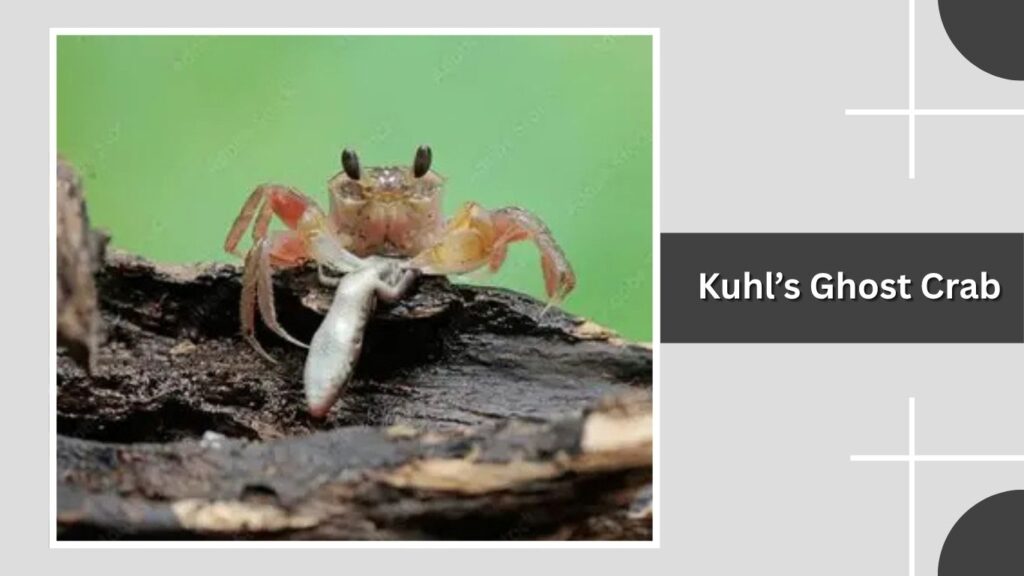
Kuhl’s ghost crab (Ocypode kuhlii) is a medium-to-large Indo-Pacific species adapted to tropical sandy shorelines. Although similar to the smooth-handed ghost crab, it possesses a distinctive sound-producing ridge on its enlarged claw.
Identification
- Scientific name: Ocypode kuhlii
- Body size: Medium to large
- Color: Gray, cream, or sandy brown
- Claw ridge: Around 10 separated tubercles
- Walking legs: Lack prominent upper and lower bristles
Habitat and Distribution
This species occurs in the Nicobar Islands, southern Thailand, Indonesia, Papua New Guinea, and some nearby islands. It inhabits exposed sandy beaches, upper intertidal zones, and coastal areas where loose sand allows the construction of deep burrows.
Diet and Feeding
Kuhl’s ghost crabs consume organic particles, insects, worms, mollusks, smaller crustaceans, and dead animals washed ashore. Their flexible diet helps them survive changing food availability and environmental conditions along tropical beaches.
Behavior
These crabs are predominantly nocturnal and quickly retreat underground when threatened. They tolerate fluctuating beach temperatures, moisture levels, and tidal conditions. The major claw is used for feeding, defense, competition, and producing sounds during social interactions.
11. Red Ghost Crab
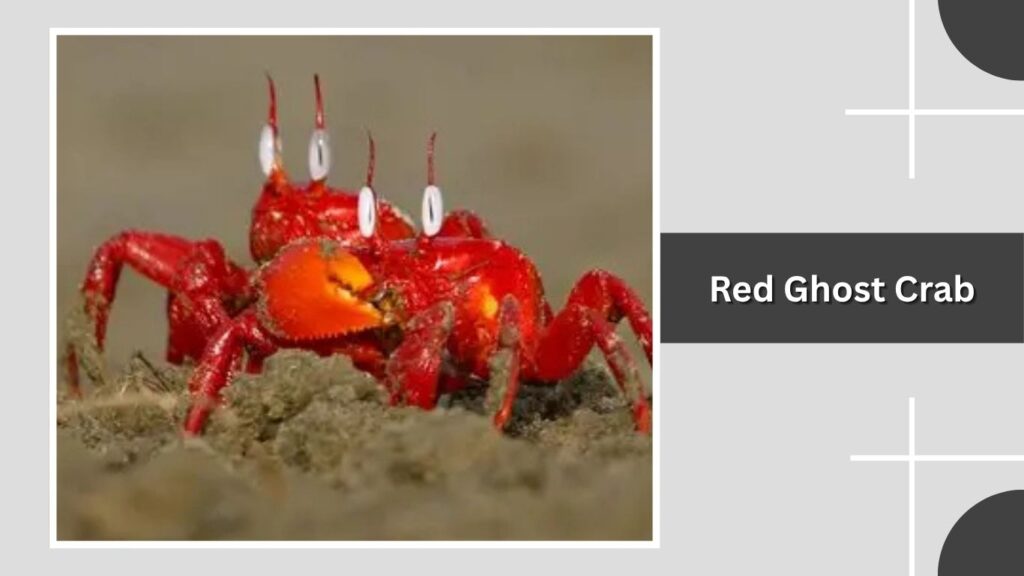
The red ghost crab (Ocypode macrocera) is a medium-sized Indian Ocean species known for its reddish coloration and long, horn-like eye extensions. Its heavily textured claws provide several useful features for accurate identification.
Identification
- Scientific name: Ocypode macrocera
- Color: Red, reddish brown, orange, or sandy gray
- Eyestalks: End in horn-like projections
- Small claw: Has a characteristically blunt tip
- Large claw: Rough, tuberculated, and serrated
Habitat and Distribution
This species occurs in Pakistan, India, the Nicobar Islands, Sri Lanka, and Myanmar. It inhabits sandy ocean beaches, coastal dunes, and upper intertidal or supratidal areas where it constructs burrows above the regular waterline.
Diet and Feeding
Red ghost crabs are opportunistic omnivores that consume insects, worms, mollusks, smaller crustaceans, carrion, and organic beach debris. They may actively search for live prey or scavenge dead animals deposited by waves.
Behavior
These agile crabs detect movement quickly and immediately retreat into their burrows when approached. They are most active at night or during cooler periods. Their sound-producing claw ridge contains approximately 35–56 tubercles and grooves used during communication or defensive encounters.
12. Madagascar Ghost Crab
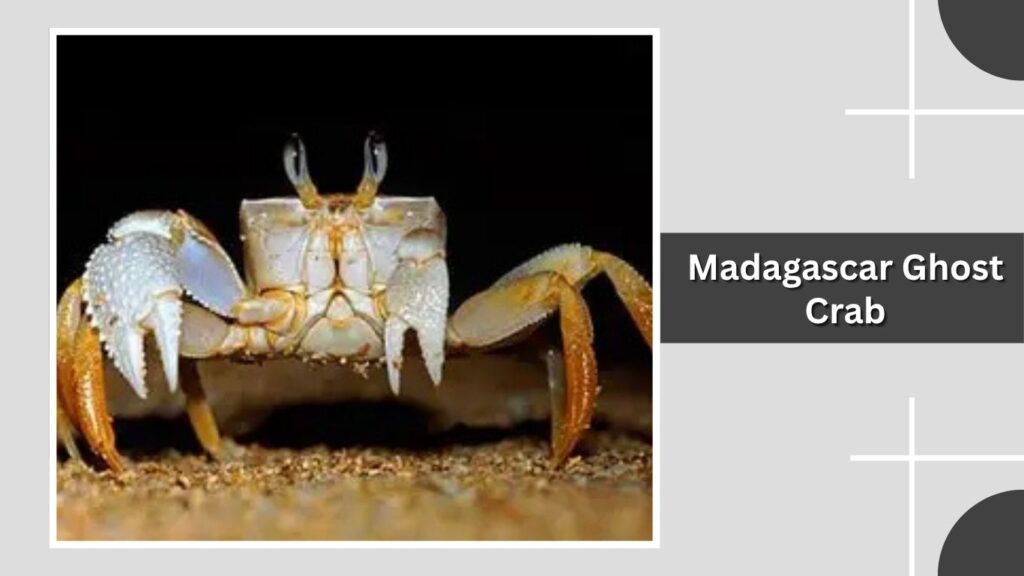
The Madagascar ghost crab (Ocypode madagascariensis) is a medium-sized species found around Madagascar and southeastern Africa. Its broad, rough carapace and forward-pointing eye-orbit edges help separate it from other regional ghost crabs.
Identification
- Scientific name: Ocypode madagascariensis
- Body size: Medium
- Carapace: Wider than long
- Upper surface: Densely covered with rough tubercles
- Eye-orbit edges: Broad, triangular, and forward-pointing
Habitat and Distribution
This species occurs in Madagascar and along southeastern Africa from Mozambique to KwaZulu-Natal in South Africa. It lives on tropical and subtropical sandy beaches, especially within upper intertidal and supratidal zones suitable for burrowing.
Diet and Feeding
Madagascar ghost crabs feed on insects, worms, small mollusks, crustaceans, carrion, algae, and decomposing organic material. They search the shoreline for stranded food and may capture small animals moving across the sand.
Behavior
These crabs usually remain underground during the hottest part of the day and emerge after sunset. Their major claw contains a ridge of approximately 20–30 tubercles that can produce rasping sounds. Burrows provide protection from dehydration, predators, and extreme beach temperatures.
13. Morton’s Ghost Crab
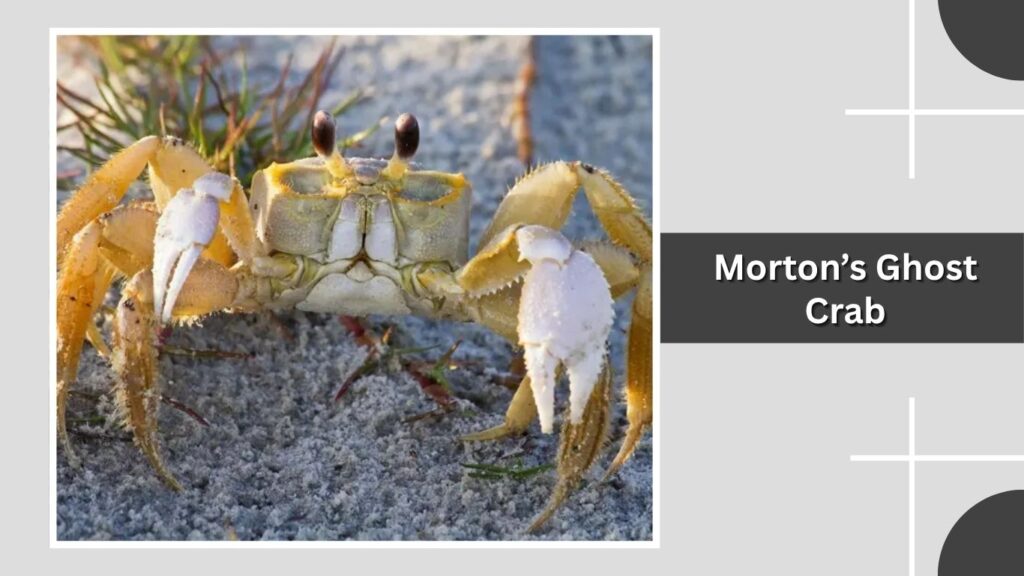
Morton’s ghost crab (Ocypode mortoni) is a small East Asian species. It resembles Stimpson’s ghost crab and the horn-eyed ghost crab, but its pointed eyestalks and distinctive smaller claw help distinguish it.
Identification
- Scientific name: Ocypode mortoni
- Body size: Small
- Color: Pale gray, cream, or sandy brown
- Eyestalks: Possess pointed extensions
- Small claw: Broadly rounded or flattened at the tip
Habitat and Distribution
This species occurs along the coast of southern China and southern Japan. It inhabits sandy beaches and upper intertidal areas where loose but stable sediment allows it to construct deep protective burrows.
Diet and Feeding
Morton’s ghost crabs consume insects, worms, tiny crustaceans, mollusks, carrion, and organic particles mixed with sand. Their small size allows them to exploit food fragments and small prey that may be overlooked by larger crabs.
Behavior
The species is mainly nocturnal and remains close to its burrow while foraging. It quickly disappears underground when it detects movement. Its enlarged claw has a sound-producing ridge containing approximately 35–71 fine grooves, helping separate it from similar species.
14. Pallid Ghost Crab
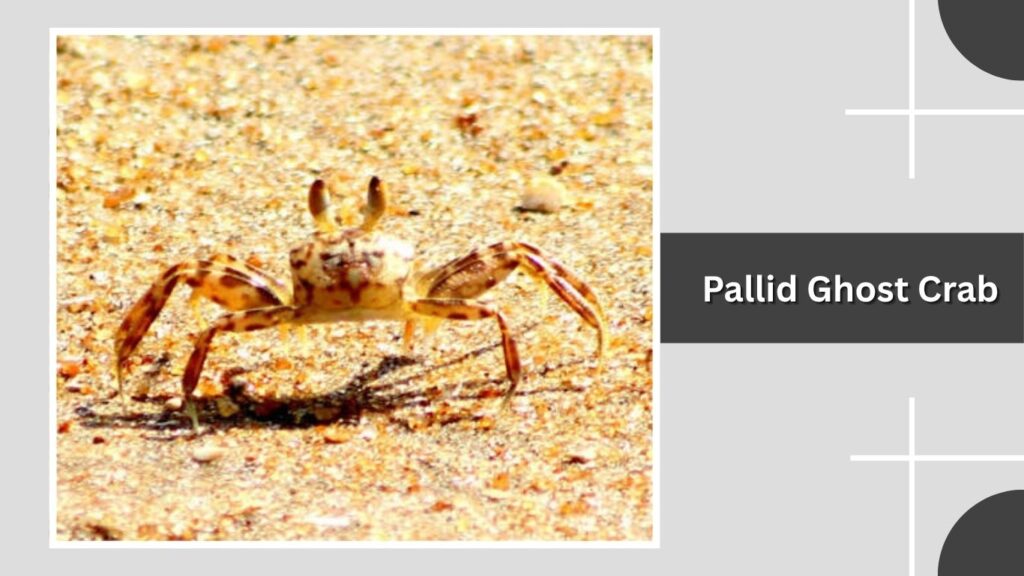
The pallid ghost crab (Ocypode pallidula) is a small-to-medium species named for its pale coloration. Its sandy appearance provides excellent camouflage, making the crab difficult to notice until it begins running across the beach.
Identification
- Scientific name: Ocypode pallidula
- Body size: Small to medium
- Color: White, cream, pale yellow, or sandy gray
- Small claw: Ends in a pointed tip
- Eyestalks: Lack prominent horn-like extensions
Habitat and Distribution
This widespread Indo-Pacific species occurs from Madagascar and Mauritius to the Great Barrier Reef, Pacific islands, and Hawaii. It occupies tropical sandy beaches, coastal flats, and upper intertidal zones, frequently constructing burrows above the normal high-tide line.
Diet and Feeding
Pallid ghost crabs eat insects, worms, mollusks, small crustaceans, carrion, algae, and decomposing organic material. They often forage around stranded seaweed or the drift line, where waves deposit edible debris.
Behavior
These pale crabs are most active after dark and rely on speed and camouflage to avoid predators. Males possess approximately 30–42 thick grooves on the major claw’s sound-producing ridge, while females generally have fewer. Burrows protect them during daylight and high tide.
15. Atlantic Ghost Crab
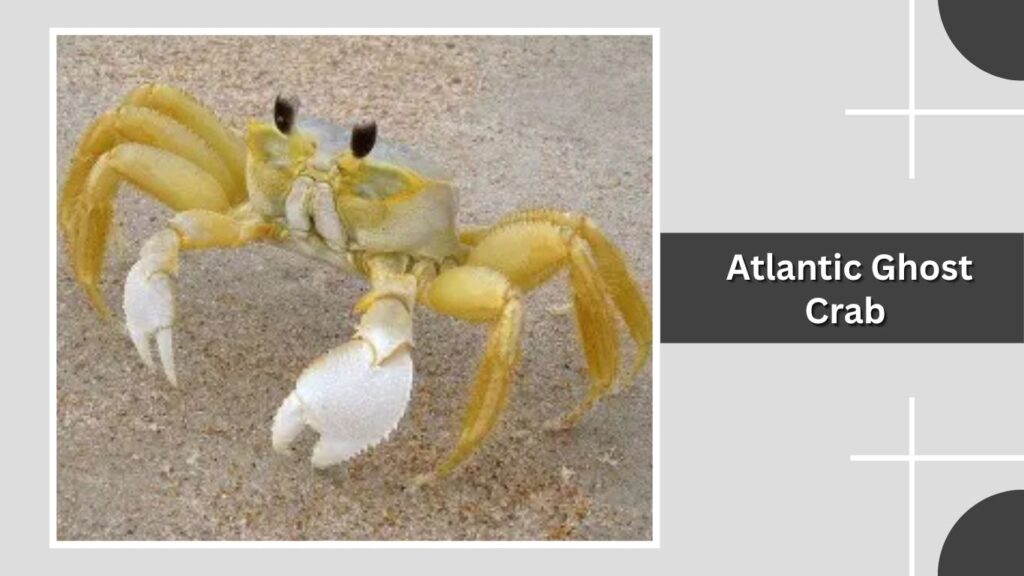
The Atlantic ghost crab (Ocypode quadrata) is the only Ocypode species naturally found along the western Atlantic coast. Its pale body, prominent black eyes, and impressive running speed make it a familiar inhabitant of American sandy beaches.
Identification
- Scientific name: Ocypode quadrata
- Adult carapace width: Around 5 cm
- Color: Straw, grayish white, or sandy cream
- Eyes: Large, dark, and supported by long stalks
- Claws: Unequal in both males and females
Habitat and Distribution
This species occurs from Massachusetts through the southeastern United States, Gulf of Mexico, Caribbean, and Bermuda to southern Brazil. It digs burrows above the strandline, sometimes extending more than one meter deep. Older crabs generally live farther inland.
Diet and Feeding
Atlantic ghost crabs eat insects, coquina clams, mole crabs, smaller crabs, carrion, vegetation, and detritus. They may also prey on sea turtle eggs and hatchlings when their ranges overlap with nesting beaches.
Behavior
These mostly nocturnal crabs can run faster than one meter per second. They produce sounds by rubbing body structures, striking the ground, or moving internal gastric teeth. Beach traffic, artificial lighting, vehicles, and mechanical cleaning can significantly reduce their populations.
16. Pink Ghost Crab
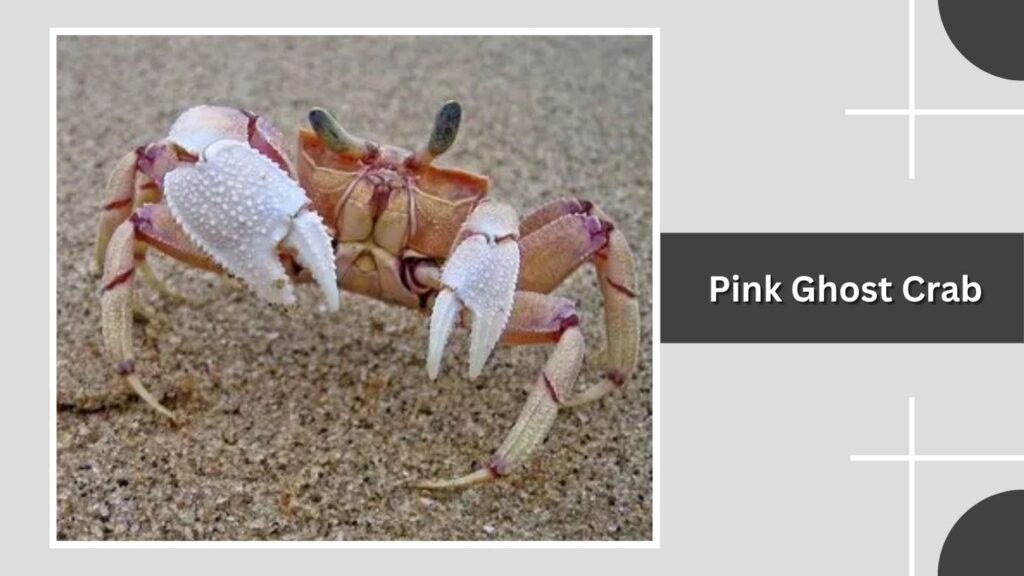
The pink ghost crab (Ocypode ryderi) is a colorful East African species. Its rosy body and distinctive red markings along the inner edges of its walking legs separate it from the paler ghost crabs sharing the same coastal habitats.
Identification
- Scientific name: Ocypode ryderi
- Body size: Medium
- Color: Pink, reddish pink, or pale orange
- Legs: Have characteristic red bands along their inner edges
- Eyestalks: Long without prominent pointed horns
Habitat and Distribution
This species occurs along eastern Africa, from southern Somalia and Kenya to the Eastern Cape of South Africa. It is also found in the Seychelles. Pink ghost crabs inhabit open sandy beaches and dig burrows within upper intertidal and supratidal zones.
Diet and Feeding
Pink ghost crabs are opportunistic omnivores that consume insects, worms, mollusks, small crustaceans, carrion, algae, and decomposing organic matter. They search around drift lines and stranded vegetation for food deposited by the tides.
Behavior
These crabs are mainly active at night, although they may emerge during cooler daylight hours. Their pink coloration can provide camouflage against warm-colored coastal sand. They rely on speed and deep burrows to escape shorebirds, mammals, extreme heat, and human disturbance.
17. Red Sea Ghost Crab
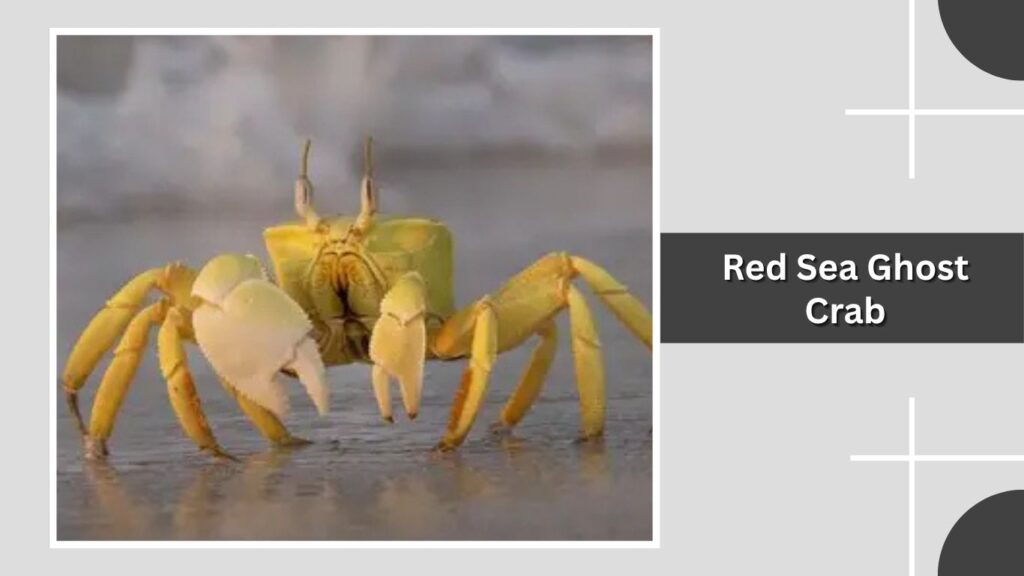
The Red Sea ghost crab (Ocypode saratan) is a medium-to-large species endemic to the Red Sea region. It is particularly fascinating because males construct sand pyramids beside their burrows as visual signals during courtship.
Identification
- Scientific name: Ocypode saratan
- Body size: Medium to large
- Color: Pale yellow, cream, gray, or sandy brown
- Eyestalks: Have short, backward-curving horns
- Body shape: Deep, square, and robust
Habitat and Distribution
This species is associated with sandy beaches around the Red Sea, including the Gulf of Aqaba. It occupies lower supratidal and upper intertidal areas where the sand remains moist enough for deep, stable burrows.
Diet and Feeding
Red Sea ghost crabs eat insects, worms, mollusks, small crustaceans, carrion, algae, and organic debris. They may hunt live animals or scavenge food washed onto the shoreline, depending on what is locally available.
Behavior
Males build prominent sand pyramids near their burrow entrances to attract females. Courtship is largely based on these visual structures rather than direct pursuit. The crabs are mostly nocturnal, and their burrow entrances may be closed with sand during the hottest daytime hours.