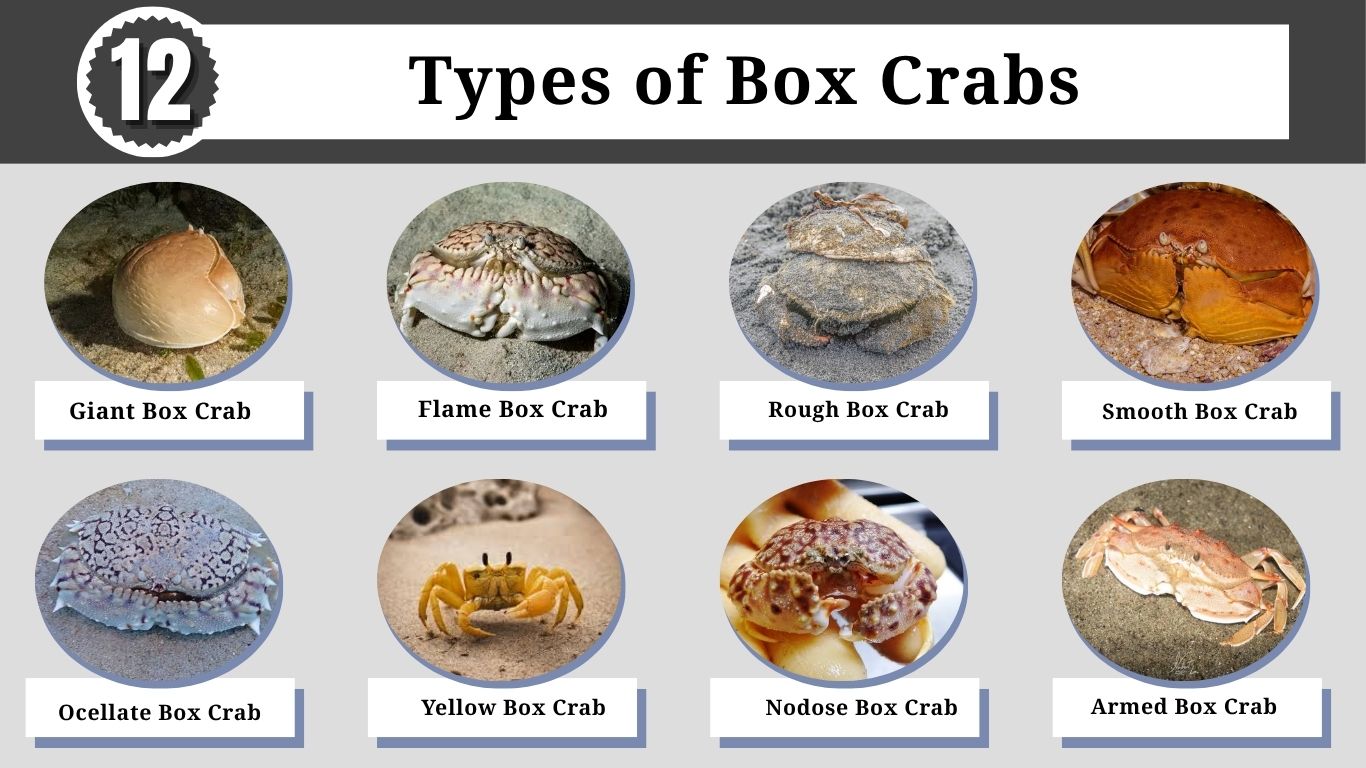
Box crabs are distinctive marine crustaceans known for their broad shells, powerful claws, and unusual defensive posture. When threatened, many species fold their claws across their faces, which is why they are often called shame-faced crabs. These bottom-dwelling animals live on sandy, muddy, gravelly, and reef-associated seabeds throughout tropical and temperate oceans. Most box crabs are skilled predators that use specialized claws to break open snails, clams, oysters, and other hard-shelled prey. This guide introduces 12 types of box crabs and explains their identification features, habitats, feeding habits, behavior, and unique adaptations for survival in marine environments worldwide.
1. Giant Box Crab
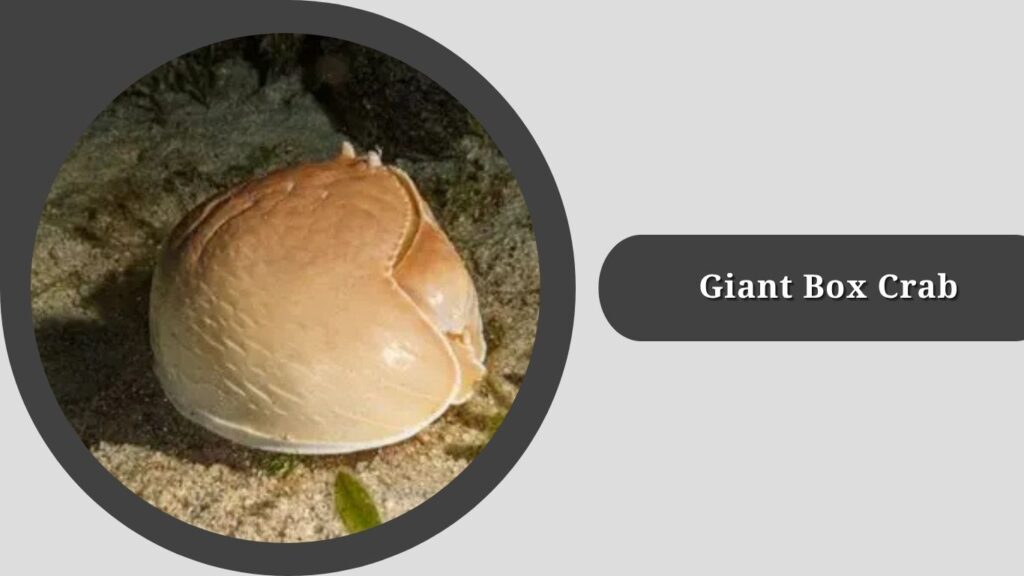
The giant box crab (Calappa calappa), also called the smooth box crab, is a large tropical marine crab from the family Calappidae. It is known for its broad, rounded shell and oversized claws, which fold across the front of its body like a protective shield. The species occurs widely throughout the Indo-Pacific region.
Identification
- Broad, rounded, box-shaped carapace
- Large, flattened claws that cover the face
- Smooth upper shell with expanded side edges
- Tan, cream, yellowish, or light brown coloration
- Some individuals have numerous red or maroon spots
- Short walking legs that can be hidden beneath the shell
- Small eyes positioned close together
- Heavy, compact body compared with many other crabs
Habitat and Distribution
Giant box crabs live in tropical marine waters throughout the Indo-Pacific. They may be found around coral reefs, rocky areas, sandy flats, and mixed sand-and-rubble seabeds. Recorded individuals generally occur at depths of approximately 10 to 50 meters. During the day, the crab may remain partly buried beneath sand, where its rounded shell and natural coloration provide effective camouflage.
Diet and Feeding Behavior
The giant box crab mainly feeds on hard-shelled marine animals such as snails, clams, and other mollusks. Like related box crabs, it has powerful, specialized claws that can break or peel open shells. One claw provides strong crushing force, while the other helps remove soft tissue after the prey’s shell has been opened. This feeding adaptation allows the crab to eat prey that many smaller predators cannot access.
Defense and Behavior
When threatened, the giant box crab pulls its legs beneath its body and raises its enormous claws across its face. This posture protects its softer mouthparts and gives rise to the alternative name “shame-faced crab.” It can also quickly dig backward into loose sand, leaving only part of its shell exposed. The crab is mainly active at night, when it emerges to search for food along the seafloor.
2. Flame Box Crab
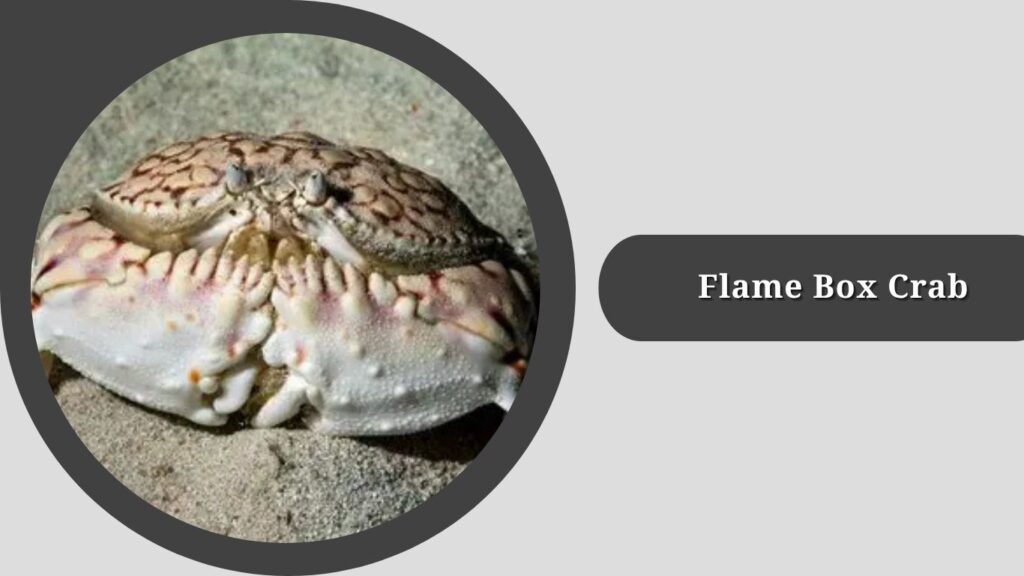
The flame box crab (Calappa flammea), also called the flame-streaked box crab, is named for the reddish, flame-shaped markings covering its pale shell. This bottom-dwelling species belongs to the box crab family Calappidae and occurs in tropical parts of the western Atlantic Ocean.
Identification
- Broad, rounded, strongly curved carapace
- Cream, yellowish, or light brown base color
- Distinctive red or reddish-brown flame-shaped markings
- Large, flattened claws held across the face
- Expanded rear edges that partially cover the walking legs
- One claw is usually more powerful than the other
- Small eyes positioned close together
- Heavy, compact body adapted for digging
Habitat and Distribution
Flame box crabs inhabit tropical waters of the western Atlantic. They occur on or close to the seafloor from shallow coastal environments to depths exceeding 200 meters. Sandy and muddy bottoms provide suitable places for them to bury themselves, while nearby reefs, shell beds, and mixed sediments offer access to prey and shelter.
Diet and Feeding Behavior
The flame box crab is a predatory feeder that consumes hard-shelled marine animals. Recorded prey includes hermit crabs, and it may also eat snails, clams, and other small bottom-dwelling invertebrates. Its powerful claws help crush, cut, or peel away shells, while the narrower claw removes edible tissue.
Defense and Burrowing
When threatened, the flame box crab folds its broad claws across the front of its body. This shield-like posture protects its eyes, mouthparts, and softer underside. It can also push backward into loose sediment until most of its body disappears, leaving only its eyes or the upper part of its shell visible.
3. Rough Box Crab
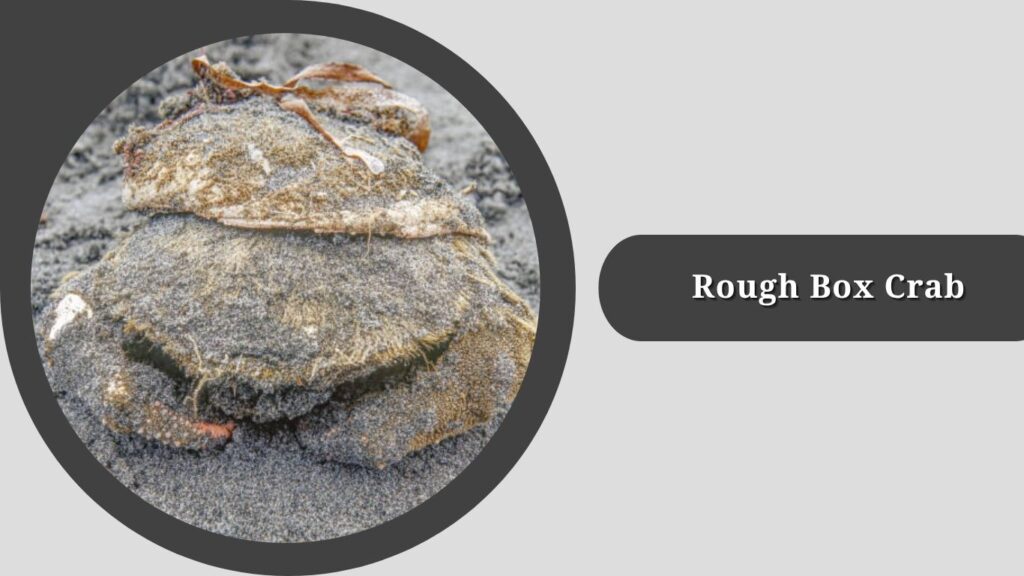
The rough box crab (Calappa gallus), sometimes called the lumpy box crab, has a heavily textured shell that distinguishes it from smoother members of the genus. It occurs across tropical Atlantic and Indo-Pacific waters and is commonly associated with sandy bottoms, reefs, shells, and rocky marine habitats.
Identification
- Wide, rounded carapace with a rough surface
- Numerous bumps, ridges, and raised areas
- Yellowish, tan, cream, or brown coloration
- Red, orange, or dark spots may appear on the shell
- Broad rear extensions covering parts of the legs
- Large claws that fold tightly against the face
- One claw adapted for crushing hard shells
- Carapace may reach approximately 8 centimeters wide
Habitat and Distribution
Rough box crabs have an exceptionally broad range. They occur from western Africa to the western Atlantic and throughout parts of the Red Sea, Indian Ocean, western Pacific, Japan, and Polynesia. They live in coastal waters down to depths of about 218 meters. Typical habitats include sand, muddy sand, reef flats, coral areas, shell beds, and rocky bottoms.
Diet and Feeding Behavior
This crab specializes in eating mollusks and other armored prey. Laboratory observations have shown rough box crabs opening and feeding on conchs. The crab stabilizes its prey with its walking legs and smaller claw before using the larger claw to chip, crush, or peel the shell apart.
Camouflage and Protection
The rough shell helps the crab blend into coral rubble, rocks, and uneven seabeds. When resting on softer sediment, it can bury most of its body beneath the surface. If a predator approaches, the crab hides its legs and places its claws in front of its face, creating a compact and heavily armored defensive shape.
4. Smooth Box Crab
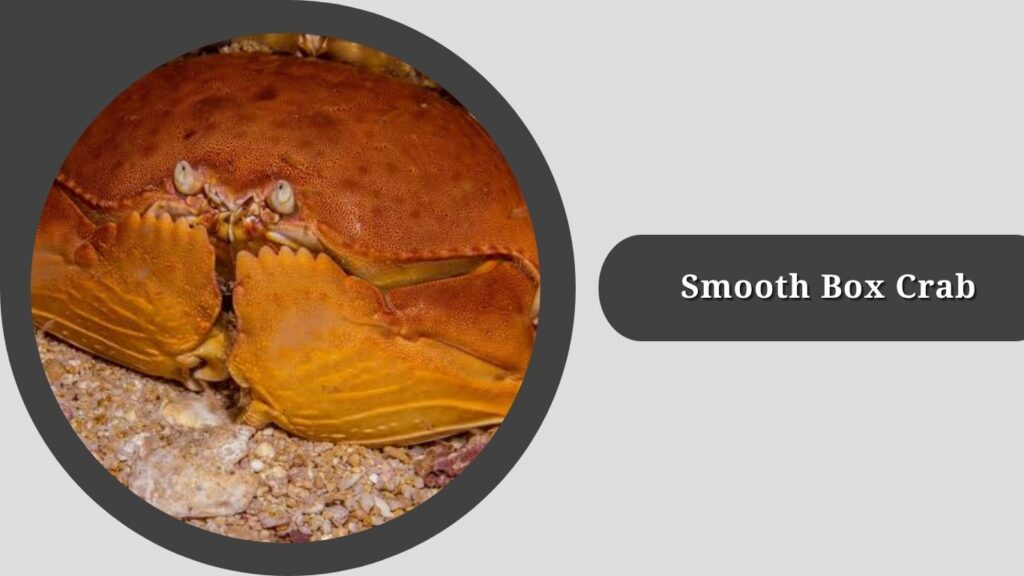
The smooth box crab listed here is Calappa hepatica, a tropical Indo-Pacific species also widely called the reef box crab. Although its common name suggests a completely smooth shell, the carapace may contain fine granules and small bumps. Its broad body, powerful claws, and sand-burying behavior are typical of box crabs.
Identification
- Broad, oval, and strongly convex carapace
- Shell approximately 5 to 8 centimeters wide in many adults
- Grayish-brown, cream, tan, or mottled coloration
- Fine granules or small raised bumps on the carapace
- Large claws held vertically in front of the face
- Broad rear shell extensions with blunt teeth
- Pale white or yellowish underside
- Walking legs partly concealed beneath the shell
Habitat and Distribution
Smooth box crabs occur throughout tropical and subtropical Indo-Pacific waters. Their range extends from the Red Sea across the Indian Ocean to Hawaii, French Polynesia, northern Australia, and other Pacific islands. They live on sandy, shelly, muddy, or gravelly bottoms, often near coral reefs and seagrass beds, from shallow water to around 150 meters deep.
Diet and Feeding Behavior
This species mainly preys on snails, clams, hermit crabs, and other animals protected by shells. Its stronger right claw works like a crushing or peeling tool, while its slimmer left claw holds the prey and extracts the soft flesh. This specialized feeding system allows the crab to open shells that many predators cannot break.
Daily Activity
The smooth box crab usually remains partly buried during daylight hours, with only its eyes exposed above the sediment. It becomes more active after dark and searches the seafloor for prey. When disturbed, it can quickly rebury itself or raise its claws to protect its vulnerable face and mouthparts.
5. Ocellate Box Crab
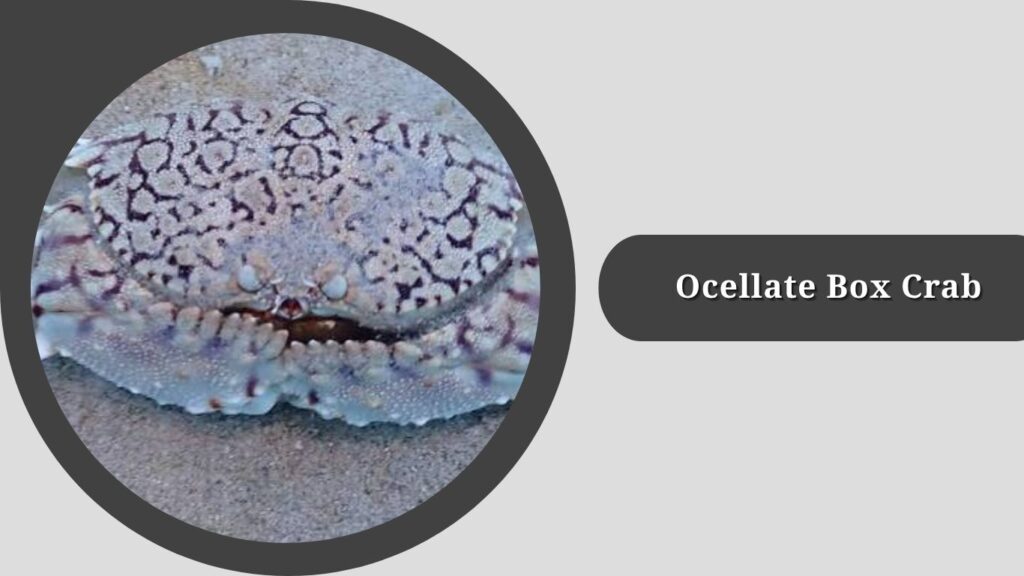
The ocellate box crab (Calappa ocellata), also called the ocellated box crab, is a tropical western Atlantic species. Its name refers to the rounded, eye-like spots that may decorate its shell and claws. Like other box crabs, it has an arched body and specialized claws for opening mollusk shells.
Identification
- Wide, highly curved carapace
- Pale cream, yellow, tan, or pinkish background
- Rounded red or brown eye-like spots
- Large flattened claws with colorful markings
- Expanded rear edges that conceal the legs
- Small eyes located near the center of the face
- One claw stronger and broader than the other
- Compact body that can disappear beneath sand
Habitat and Distribution
Ocellate box crabs occur in the tropical western Atlantic Ocean. They are bottom-dwelling animals recorded from shallow environments to depths of approximately 80 meters. They are normally associated with soft marine sediments where they can dig, although they may also occur near reefs, shell beds, seagrass, and rocky structures.
Diet and Feeding Behavior
The ocellate box crab is a specialized mollusk predator. It feeds on small mussels and likely consumes other bivalves and marine snails. Research on this species has shown that its claws perform different jobs: the stronger claw breaks or peels the shell, while the more pointed claw holds the prey and removes the flesh.
Mating and Defense
A male may hold and carry a female before she molts and becomes ready to mate. Outside the breeding period, the crab often remains hidden beneath loose sediment. Its spotted coloring provides camouflage, while its large claws create a protective shield when it is discovered by a predator.
6. Yellow Box Crab
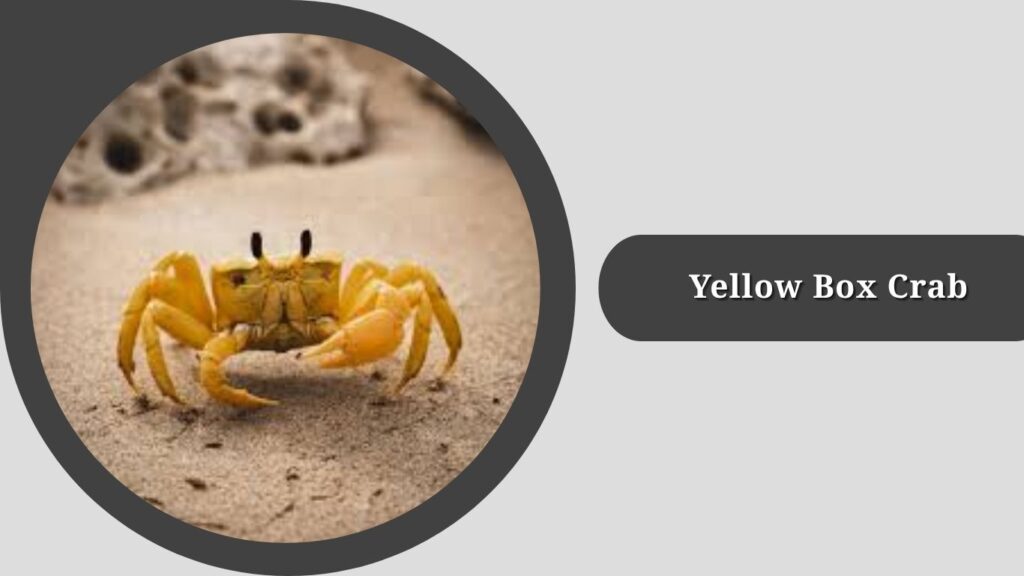
The yellow box crab (Calappa sulcata) is a western Atlantic member of the box crab family. Its pale yellow or golden-brown coloration helps it blend into sandy seafloors. The name can sometimes cause confusion because the rough box crab is also occasionally called a yellow box crab, but C. sulcata is recognized as a separate species.
Identification
- Broad, rounded, and strongly arched carapace
- Yellow, golden-tan, or pale brown coloration
- Grooves or furrows across parts of the shell
- Darker spots or reddish markings may be present
- Large claws that cover the face when folded
- Expanded shell margins hiding the walking legs
- One heavy crushing claw and one slimmer claw
- Compact body suited to burying in sediment
Habitat and Distribution
The yellow box crab occurs in western Atlantic marine environments, including waters associated with Florida and surrounding regions. It is a bottom-living species that favors sandy, muddy, or mixed sediments where it can remain concealed. It may also be encountered near reefs, shell deposits, and other productive areas containing mollusk prey.
Diet and Feeding Behavior
Detailed dietary information for this species is limited, but its claw structure indicates the shell-opening feeding method characteristic of Calappa box crabs. It likely eats snails, clams, small hermit crabs, and other benthic invertebrates. The stronger claw damages the prey’s shell, while the narrower claw handles and removes the edible portions.
Defensive Behavior
The yellow box crab can rapidly bury itself by pushing backward into loose sand or mud. When escape is impossible, it pulls in its walking legs and presses its claws across its face. This posture protects the softer front of the body and gives the animal the “shame-faced crab” appearance associated with box crabs.
7. Nodose Box Crab
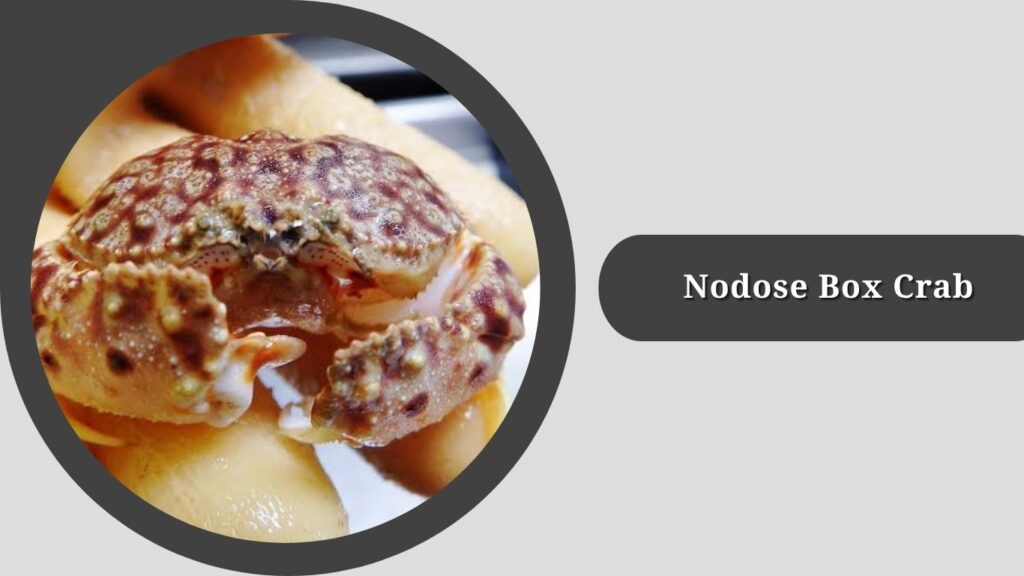
The nodose box crab (Cyclozodion angustum) is a small, deep-water member of the box crab family. Its common name refers to the raised, knot-like features and toothed ridges on its shell. Unlike the large, brightly colored Calappa species, this crab has a compact body and is rarely encountered outside scientific surveys.
Identification
- Small, rounded, slightly oval carapace
- Shell measuring only a few centimeters long
- Raised nodes, granules, and ridges on the upper surface
- Toothed ridge along the rear side of the carapace
- Narrow forehead containing three small teeth
- Pale tan, brown, cream, or reddish coloration
- Strong claws held near the front of the body
- Relatively short walking legs
Habitat and Distribution
Nodose box crabs occur in the western Atlantic Ocean. They inhabit the continental shelf and upper continental slope rather than shallow beaches or coral lagoons. Members of the genus Cyclozodion have been recorded at depths ranging from approximately 31 to 640 meters. They generally live on sandy, muddy, or mixed soft-bottom seabeds.
Diet and Feeding Behavior
Detailed observations of this secretive crab’s diet are limited. However, its claws and bottom-dwelling lifestyle indicate that it probably feeds on small mollusks, worms, crustaceans, carrion, and other invertebrates found in or on the sediment. It may also collect organic material exposed while moving across the seabed.
Defense and Lifestyle
The nodose box crab’s compact, armored shell protects it from deep-water predators. Its brownish coloring and textured surface allow it to blend with shells, gravel, and sediment. Like related box crabs, it may partially bury itself when resting or threatened. Its small size also allows it to hide in depressions and among seafloor debris.
8. Armed Box Crab
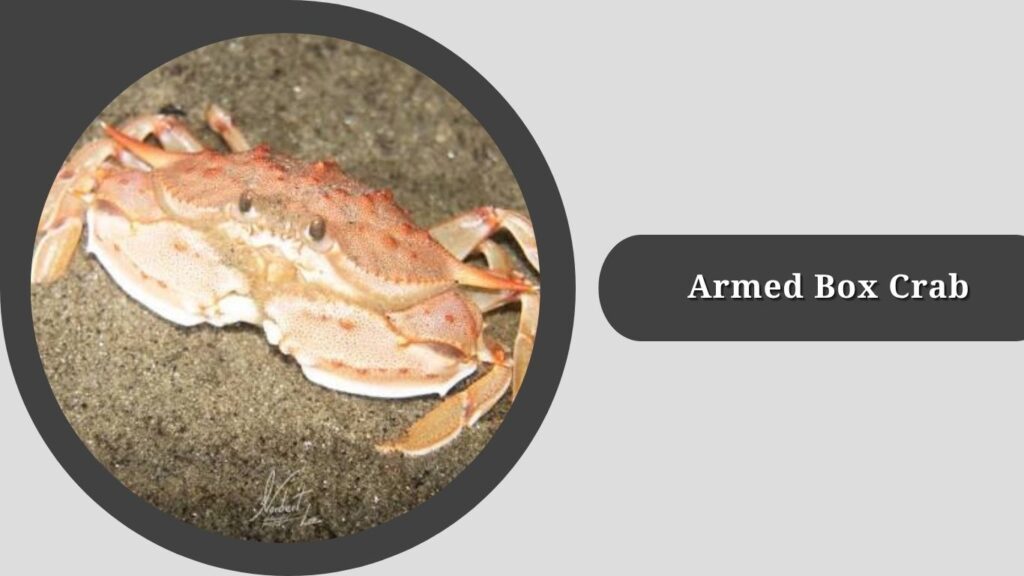
The armed box crab (Platymera gaudichaudii) is an eastern Pacific species recognized by the prominent spines extending from the sides of its shell. It has a rounded, strongly armored body designed for life on soft marine bottoms. The species represents the distinctive box crab genus Platymera.
Identification
- Broad, transversely oval carapace
- Carapace may grow to around 6.4 centimeters long
- Large pointed spine on each rear side of the shell
- Narrow forehead with three small teeth
- Heavy claws covered with granules or bumps
- Pale orange, yellowish, reddish, or cream coloration
- Darker patches may appear on the shell
- Compact body with sturdy walking legs
Habitat and Distribution
Armed box crabs occur in the eastern Pacific, from parts of California and Mexico southward along the Pacific coast of South America. They have also been documented around the Juan Fernández Archipelago off Chile. Records vary by region, but the species can occur on the continental shelf and slope, particularly over sandy, muddy, or other soft sediments.
Diet and Feeding Behavior
This crab is a bottom-dwelling predator and scavenger. It likely feeds on mollusks, worms, smaller crustaceans, and other animals found in soft sediments. Its strong claws can grip and break armored prey, while the smaller claw performs more precise movements when handling food.
Defense and Burrowing
The side spines help make the armed box crab difficult for predators to swallow. When threatened, it can draw its legs close to its body and position its claws across the vulnerable front area. Its rounded shell also allows it to push into loose sediment, where its colors and textured surface provide effective camouflage.
9. Calico Box Crab
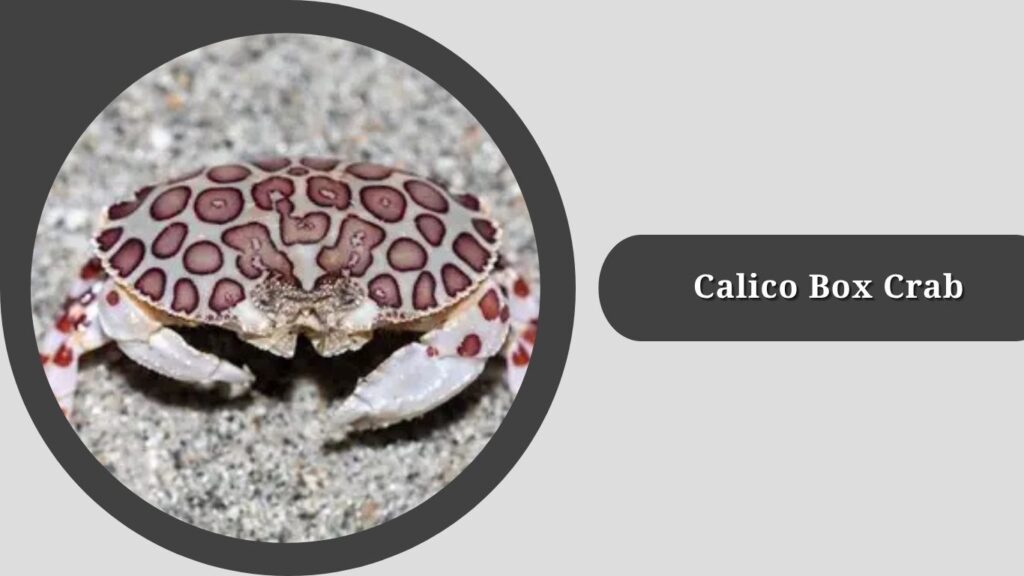
The calico box crab (Hepatus epheliticus) is named for the striking mosaic of reddish, brown, and purple markings covering its pale shell. Also called the calico crab or Dolly Varden crab, it is found in the western Atlantic and is frequently encountered on sandy coastal seabeds.
Identification
- Broad, oval, highly arched carapace
- Cream, yellow, or pale gray base color
- Irregular red, burgundy, brown, or purple markings
- Pattern resembles printed calico fabric
- Smooth central shell with slightly toothed edges
- Claws patterned with colorful spots and bands
- Small walking legs that can tuck beneath the shell
- Adults may reach several inches across
Habitat and Distribution
Calico box crabs occur from Chesapeake Bay and the southeastern United States through the Gulf of Mexico and parts of the Caribbean. Their range includes Cuba, Jamaica, the Dominican Republic, and the western Bay of Campeche. They favor sandy or muddy coastal bottoms, where they can remain partly buried.
Diet and Feeding Behavior
The calico box crab is an opportunistic carnivore. It consumes mollusks, worms, small crustaceans, dead animals, and other edible material found on the seafloor. Its claws help it dig through sediment and handle hard or slippery prey. It may also prey on small snails and tube-dwelling invertebrates.
Burrowing and Defense
During the day, the crab may bury most of its body beneath the sand, leaving only its eyes and part of its shell exposed. Its mottled pattern breaks up its outline and makes it difficult for fish to notice. If uncovered, it uses its hard carapace and claws for protection or quickly digs back into the seabed.
10. Flecked Box Crab
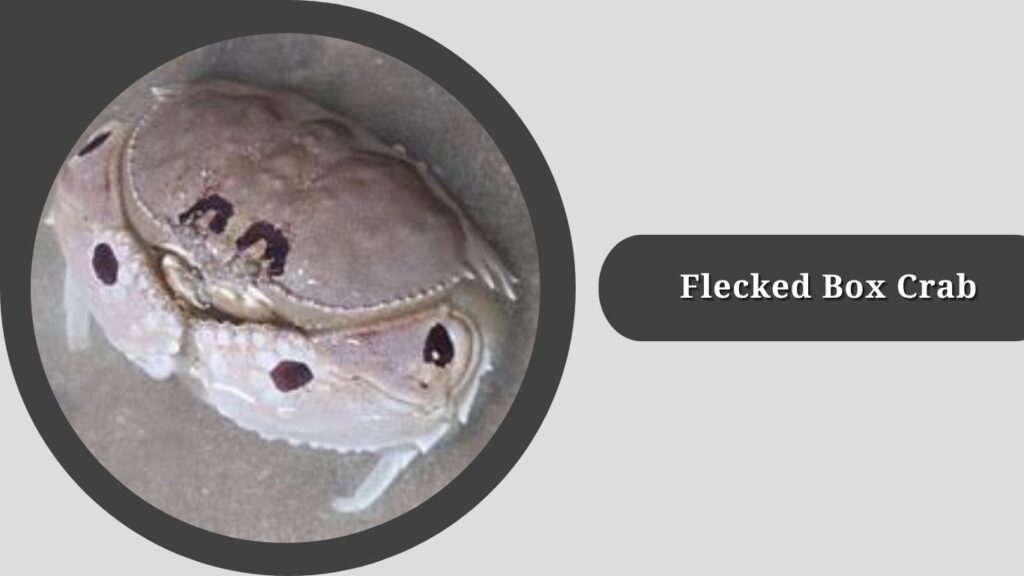
The flecked box crab (Hepatus pudibundus) is a rounded marine crab covered with small spots, patches, and irregular markings. It is especially common along parts of the Brazilian coast, where it is frequently collected unintentionally by shrimp fisheries. It is related to the calico box crab but represents a separate species.
Identification
- Broad, rounded, convex carapace
- Pale cream, yellowish, tan, or pink base color
- Numerous red, brown, or purple flecks
- Short, strong claws positioned near the face
- Curved shell margins partially cover the legs
- Males usually have proportionally larger claws
- Females have a wider, rounded abdomen
- Compact body adapted for burrowing
Habitat and Distribution
Flecked box crabs occur in Atlantic waters, with major populations along the coast of Brazil. Their wider range includes parts of the western Atlantic, Caribbean region, Gulf of Mexico, and eastern Atlantic. They live on fine sand, clay, silt, and mixed soft sediments, moving between shallow and deeper water as environmental conditions change.
Diet and Feeding Behavior
This species is an opportunistic feeder that consumes mollusks, worms, foraminiferans, smaller animals, planktonic material, and organic detritus. It searches through surface sediments with its legs and claws, taking advantage of whatever suitable food is available.
Reproduction and Survival
Flecked box crabs may reproduce through much of the year in warm regions, although reproductive activity can peak seasonally. Females carry fertilized eggs beneath their abdomens until the larvae hatch. The species is regularly caught as shrimp-trawl bycatch, but many individuals survive handling and are returned to the water.
11. Japanese Shame-Faced Crab
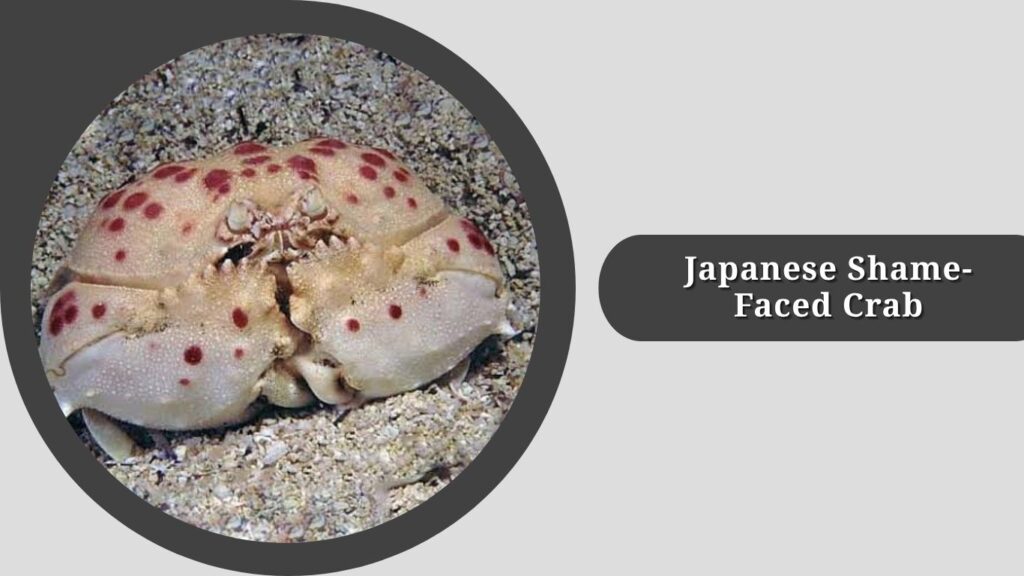
The Japanese shame-faced crab (Calappa japonica) is a large and colorful box crab named for the way it folds its claws across its face. Originally described from Tokyo Bay, it has since been recorded across a much wider region, including the Indian Ocean, Red Sea, Africa, and Western Australia.
Identification
- Large, broad, strongly curved carapace
- Bright yellow, orange, and reddish coloration
- Numerous small bumps covering the shell
- Seven sharp teeth along each expanded rear margin
- Enormous flattened claws that cover the face
- Strong right claw designed for breaking shells
- Narrower left claw used for extracting meat
- Walking legs hidden beneath the shell when resting
Habitat and Distribution
Japanese shame-faced crabs live on sandy, muddy, and shelly bottoms in the Indo-Pacific. Although first known from Japan, the species has been documented from the Red Sea and Africa to Australia. It is often a deeper-water crab and has been recorded at depths of approximately 250 meters.
Diet and Feeding Behavior
This crab preys on oysters, marine snails, other mollusks, and smaller crustaceans. Its powerful right claw works like a shell-breaking tool. After cracking or peeling the prey’s shell, the crab uses its longer, more pointed left claw to pull out the soft tissue.
Shame-Faced Defense
When disturbed, the crab retracts its walking legs and raises both claws in front of its eyes and mouth. This posture produces the appearance of an animal hiding its face in embarrassment. In reality, it forms a compact armored barrier that protects the crab’s vulnerable front and underside from predators.
12. Spotted Box Crab
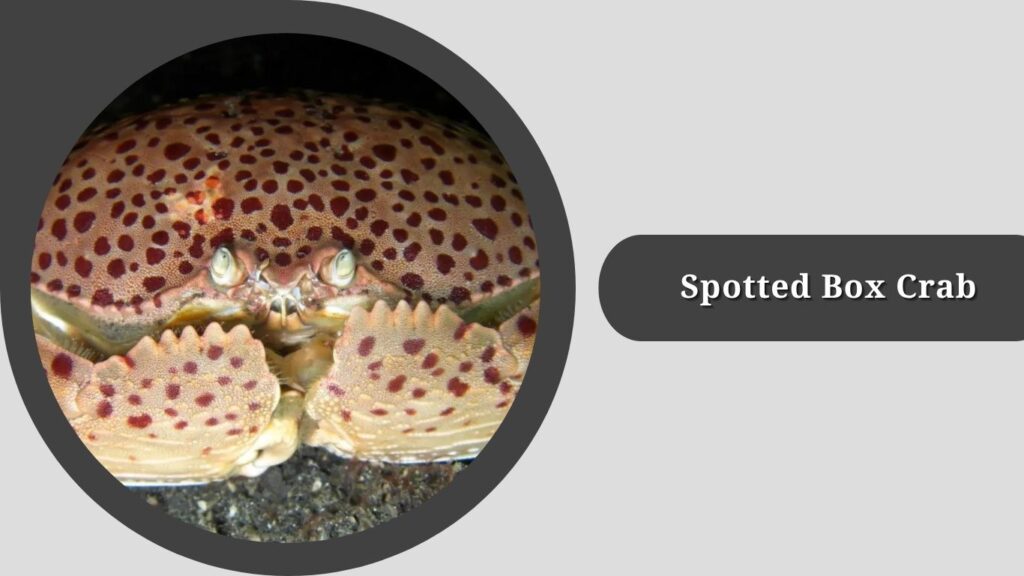
The spotted box crab (Calappa rubroguttata) is an eastern Atlantic species distinguished by prominent red spots and patches across its pale carapace. Its scientific name refers to its red-spotted appearance. Like other Calappa crabs, it possesses broad shielding claws and strong adaptations for digging and opening mollusk shells.
Identification
- Wide, strongly rounded carapace
- Maximum recorded width of approximately 10.8 centimeters
- Cream, pale yellow, or light brown background
- Distinct red, orange, or reddish-brown spots
- Enlarged rear shell margins covering parts of the legs
- Broad claws held vertically across the face
- One claw heavier and stronger than the other
- Small eyes visible above the folded claws
Habitat and Distribution
Spotted box crabs inhabit the eastern Atlantic Ocean, particularly warm waters along western Africa. They occur from the shoreline to depths of about 90 meters and are most frequently recorded between approximately 4 and 40 meters. Typical habitats include sand, fine gravel, and mixed sediment bottoms.
Diet and Feeding Behavior
The spotted box crab likely feeds mainly on marine snails, clams, smaller crustaceans, worms, and carrion. Its stronger claw can crush or peel the edge of a mollusk shell, while the more pointed claw holds the prey and removes its flesh.
Activity and Defense
This species spends considerable time buried in sand or fine gravel. Remaining beneath the surface protects it from predators and allows it to surprise nearby prey. When exposed, it folds its claws across its face and tucks in its walking legs, transforming its body into a compact, well-protected box.
FAQs
What are box crabs?
Box crabs are marine crabs known for their broad, rounded shells and oversized claws. Many species fold their claws across the front of the body, creating a protective shield. They usually live on sandy or muddy seafloors and often bury themselves during the day.
Why are box crabs called shame-faced crabs?
Some box crabs are called shame-faced crabs because they hold their large claws in front of their eyes and mouth when threatened. This posture makes them look as if they are hiding their faces, but it actually protects the softer and more vulnerable parts of the body.
What do box crabs eat?
Most box crabs feed on snails, clams, oysters, hermit crabs, worms, and other bottom-dwelling animals. Their claws are specially adapted for opening shells. One claw usually crushes or peels the shell, while the other holds the prey and removes the soft tissue.
Are box crabs dangerous to humans?
Box crabs are not venomous and do not normally attack people. However, their claws can deliver a painful pinch if they are handled carelessly. It is best to observe them without touching them and avoid placing fingers near their powerful claws.
Where are box crabs commonly found?
Box crabs occur in tropical, subtropical, and temperate oceans worldwide. They are commonly found on sandy, muddy, gravelly, or shelly seabeds, often near coral reefs and coastal habitats. Many species remain partly buried and become more active at night.