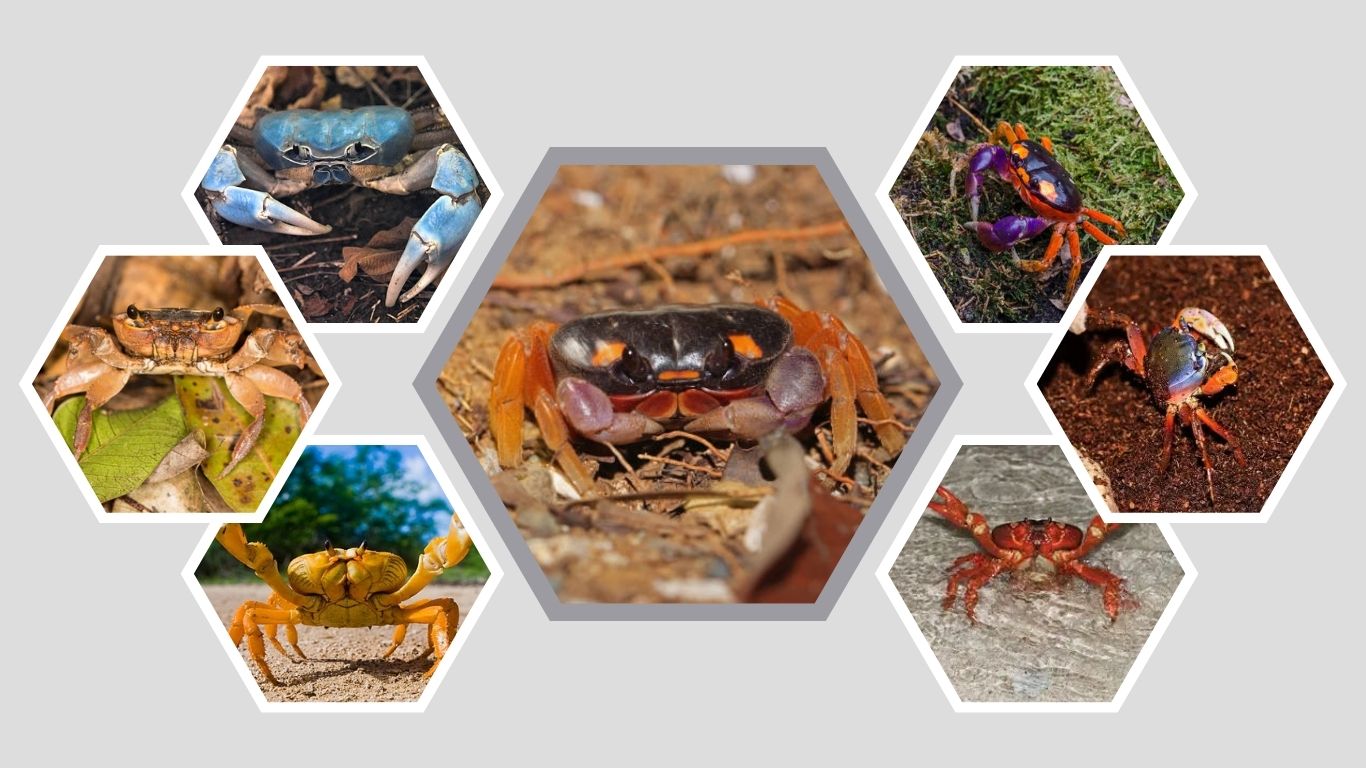
Land crabs are fascinating crustaceans that spend most of their adult lives on land while remaining closely connected to the ocean for reproduction. They occur in tropical forests, mangroves, wetlands, beaches, and coastal islands around the world. Many species dig deep burrows to stay cool and moist, while others migrate long distances to release their eggs into seawater. Land crabs display remarkable colors, from bright red and blue to yellow, purple, and black. This guide explores 11 types of land crabs, including their identification features, habitats, diets, migration patterns, and important ecological roles in coastal and island environments.
1. Christmas Island Red Crab
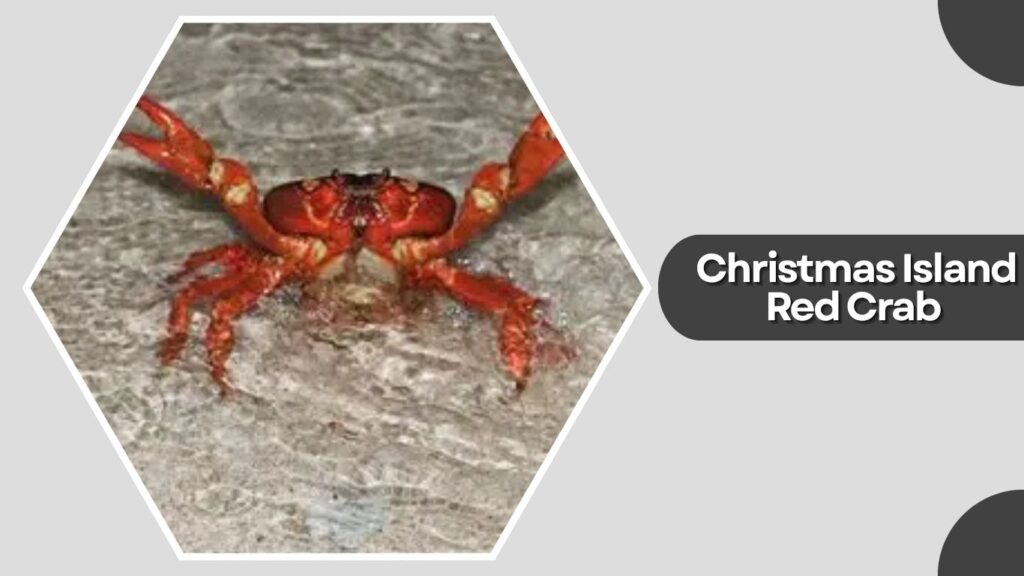
The Christmas Island red crab (Gecarcoidea natalis) is a brightly colored land crab famous for its enormous annual migration. It lives mainly in the rainforests of Christmas Island, an Australian territory in the Indian Ocean. Although adults spend most of their lives on land, they must return to the coast to reproduce.
Identification
- Broad, rounded carapace
- Bright red, orange-red, or deep crimson color
- Strong walking legs adapted to traveling over land
- Two claws that are approximately equal in size
- Dark markings may appear near the eyes
- Males are generally larger than females
- Females have broader abdomens for carrying eggs
- Adults may grow to approximately 5 inches across
Habitat and Distribution
Christmas Island red crabs are strongly associated with the island’s tropical rainforest. They shelter in burrows, rock crevices, and beneath vegetation, where humidity protects them from drying out. During dry periods, they may remain inside their burrows and block the entrance with leaves to preserve moisture.
Diet and Ecological Role
These crabs mainly eat fallen leaves, fruits, flowers, and young seedlings. They may also consume dead animals, other crabs, birds, and introduced giant African snails. By removing leaf litter, turning over soil, and distributing nutrients through their waste, they strongly influence the structure and health of the rainforest.
Migration and Reproduction
At the beginning of the wet season, millions of adults leave the forest and travel toward the coastline. Mating occurs near the shore, after which females carry their eggs until they are ready for release into the ocean. The larvae develop in seawater before young crabs return to land and begin moving inland.
2. Blue Land Crab
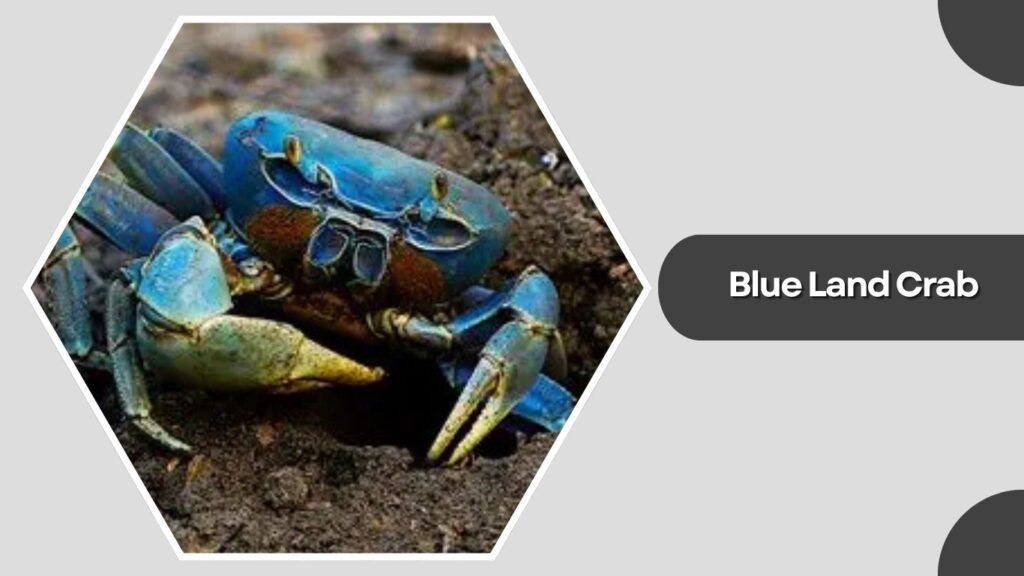
The blue land crab (Cardisoma guanhumi) is a large, burrowing crab found in warm coastal regions of the western Atlantic. Adults may display striking blue, violet, or gray shells, while younger crabs are usually brown or tan. Although this species spends most of its adult life on land, females must return to seawater to release their eggs.
Identification
- Broad, smooth, oval-shaped carapace
- Adult shell may be blue, violet, gray, or whitish
- Juveniles are commonly tan or brown with orange legs
- One claw is usually much larger than the other
- Thick walking legs adapted for traveling over land
- Raised eyes positioned on short stalks
- Males are usually larger and more colorful than females
- Carapace may reach approximately 12.7 centimeters across
Habitat and Distribution
Blue land crabs occur around the Gulf of Mexico, Caribbean, southeastern United States, Central America, northern South America, and numerous Caribbean islands. They usually live within several hundred meters of the coast, especially beside estuaries, riverbanks, mangroves, wetlands, and other areas with moist soil.
Diet and Feeding Behavior
This species mainly eats leaves, fruits, grasses, seeds, flowers, and other plant materials. However, it is an opportunistic omnivore and may also consume insects, carrion, smaller crabs, and household food scraps. Most feeding occurs around dawn, dusk, or nighttime, when conditions are cooler and more humid.
Burrowing and Reproduction
Blue land crabs dig deep burrows that may extend down to groundwater. These shelters protect them from heat, dehydration, and predators. During the rainy season, egg-carrying females leave their burrows and migrate toward the coast. They release their eggs into the sea, where the larvae develop before returning to coastal land as young crabs.
3. Rainbow Land Crab
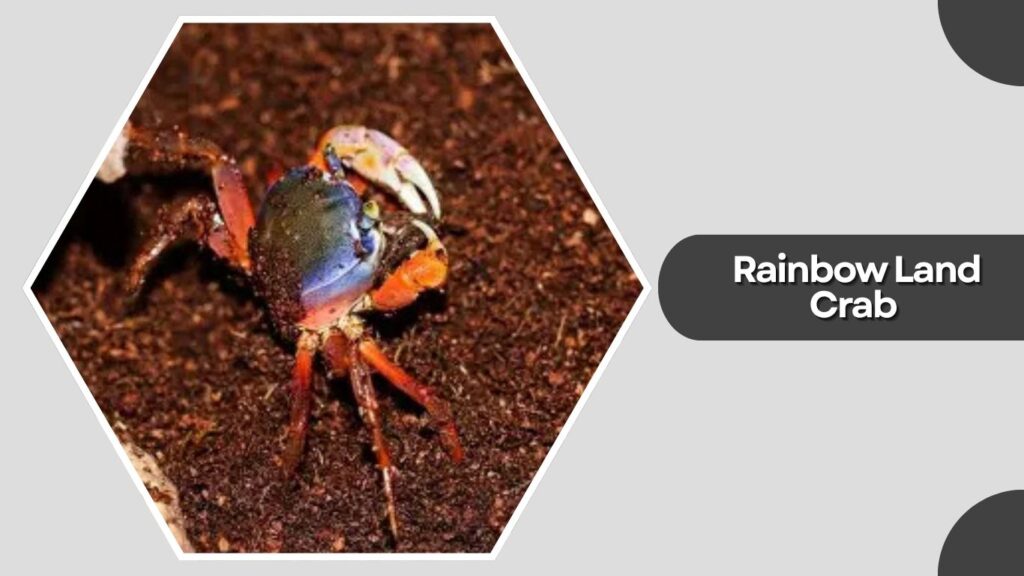
The rainbow land crab (Cardisoma armatum) is a brightly colored West African species also known as the African rainbow crab or patriot crab. Its blue or violet shell, orange-red legs, and pale claws create its distinctive appearance. Adults live mainly on land in humid coastal habitats but remain dependent on water for reproduction.
Identification
- Smooth, broad, blue or violet carapace
- Bright orange, red, or brick-colored walking legs
- Large cream, white, or pale yellow claws
- One claw may be larger than the other
- Strong legs adapted for walking and digging
- Prominent dark eyes on raised stalks
- Younger crabs usually have the brightest colors
- Colors may become duller or browner with age
Habitat and Distribution
Rainbow land crabs are native to coastal West Africa, including areas from Senegal toward Angola, the Cape Verde islands, and river deltas such as the Volta Delta. They inhabit mangrove edges, estuaries, coastal swamps, riverbanks, and other humid areas where the soil is deep enough for burrowing.
Diet and Feeding Behavior
The rainbow land crab is an opportunistic omnivore. Most of its natural diet consists of fruits, leaves, vegetation, and dead organic material. It may also capture or scavenge insects, mollusks, fish, amphibians, smaller crabs, and other available animals. Its strong claws allow it to cut plant matter and handle tougher food.
Behavior and Reproduction
Rainbow land crabs are territorial burrowers that are most active at night. Adults spend the majority of their time on land and should not be regarded as fully aquatic animals. Females migrate to coastal water to release eggs, and the young pass through aquatic larval stages before returning to land.
4. Brown Land Crab
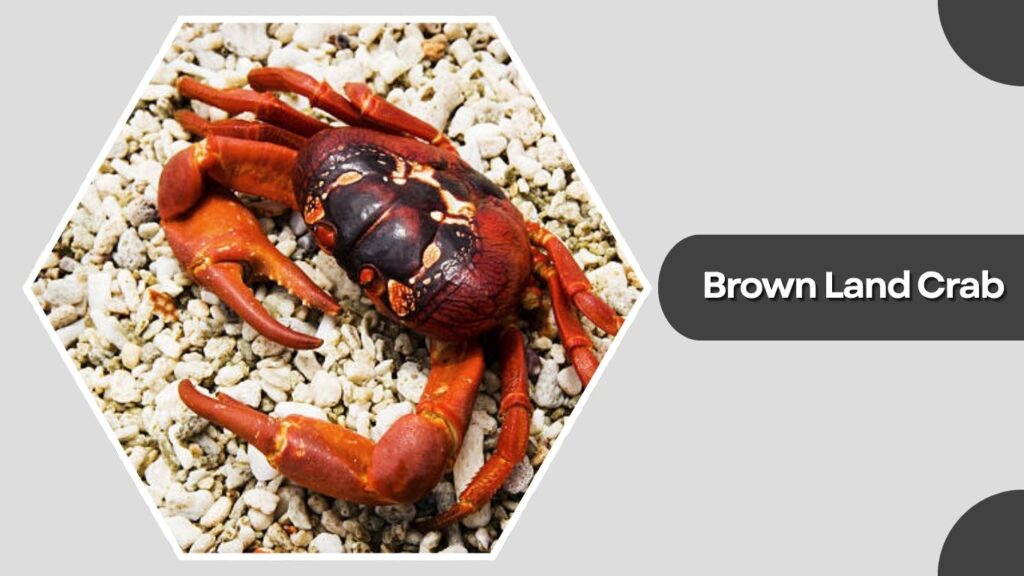
The brown land crab (Cardisoma carnifex) is a large Indo-Pacific species recognized by its smooth brownish shell and powerful claws. It lives in coastal areas where moist soil, mangroves, and brackish water allow it to maintain the humidity needed for survival. Much of its daily activity takes place after sunset.
Identification
- Broad, swollen, oval carapace
- Smooth upper shell with few noticeable ridges
- Brown, reddish-brown, gray-brown, or purplish color
- Pale cream or whitish claws
- One claw is greatly enlarged in many adult males
- Strong, thick walking legs
- Upright eyes carried on short stalks
- Carapace may reach approximately 12 centimeters across
Habitat and Distribution
Brown land crabs occur from eastern Africa and the Red Sea across the Indian Ocean and much of the tropical Indo-Pacific. They commonly occupy back-mangrove areas, brackish wetlands, coastal forests, muddy riverbanks, and islands. Their burrows are often constructed inland from the shoreline but close enough to moist ground and coastal water.
Diet and Feeding Behavior
This land crab feeds heavily on fallen leaves and other plant material. It may drag leaves into its burrow and leave fragments behind for younger crabs. It can also eat fruits, seeds, carrion, insects, smaller crustaceans, and other animal matter when available, making it an adaptable omnivore.
Burrowing and Life Cycle
Brown land crabs dig substantial tunnels that provide moisture and protection from daytime heat. Adults are mainly terrestrial, but reproduction remains connected to the ocean. Egg-bearing females travel toward the coast and release their eggs into seawater, where the larvae develop before young crabs settle into coastal habitats.
5. Black Land Crab
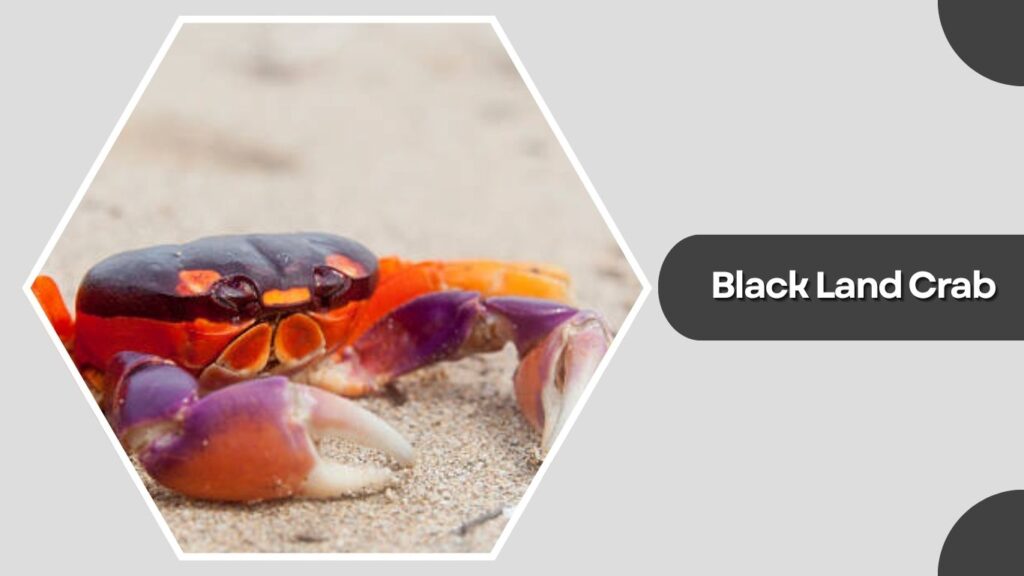
The black land crab (Gecarcinus ruricola) is a highly terrestrial Caribbean crab also known as the purple land crab, zombie crab, or red land crab. Individuals can differ greatly in color, ranging from glossy black and deep purple to reddish, yellowish, or greenish shades. It is among the land crabs most strongly adapted to living away from permanent water.
Identification
- Large, rounded, strongly curved carapace
- Shell may be black, dark purple, red, yellow, or green
- Legs often appear reddish, orange, or purple
- Powerful claws with dark or pale tips
- Thick walking legs suited to terrestrial movement
- Smooth, shiny upper shell
- Females have a wider abdomen for carrying eggs
- Color alone may not reliably identify the species
Habitat and Distribution
Black land crabs occur from western Cuba through the Bahamas and Caribbean islands as far east as Barbados. They live in coastal forests, limestone areas, scrubland, plantations, and other humid terrestrial environments. Adults may occur farther inland than many other land crabs, although females still need access to the sea for reproduction.
Diet and Feeding Behavior
The species is an omnivorous scavenger but feeds mainly on leaves, fruits, seedlings, and other plant matter. It may also consume carrion, animal remains, and small organisms. By shredding vegetation and moving organic matter into burrows, black land crabs contribute to decomposition and nutrient movement in island forests.
Activity and Reproduction
Black land crabs are primarily nocturnal, reducing water loss by remaining sheltered during hot daylight hours. During the breeding season, females migrate toward the coast to release eggs into seawater. The oceanic larvae eventually transform into young crabs that leave the water and continue their development on land.
6. Blackback Land Crab
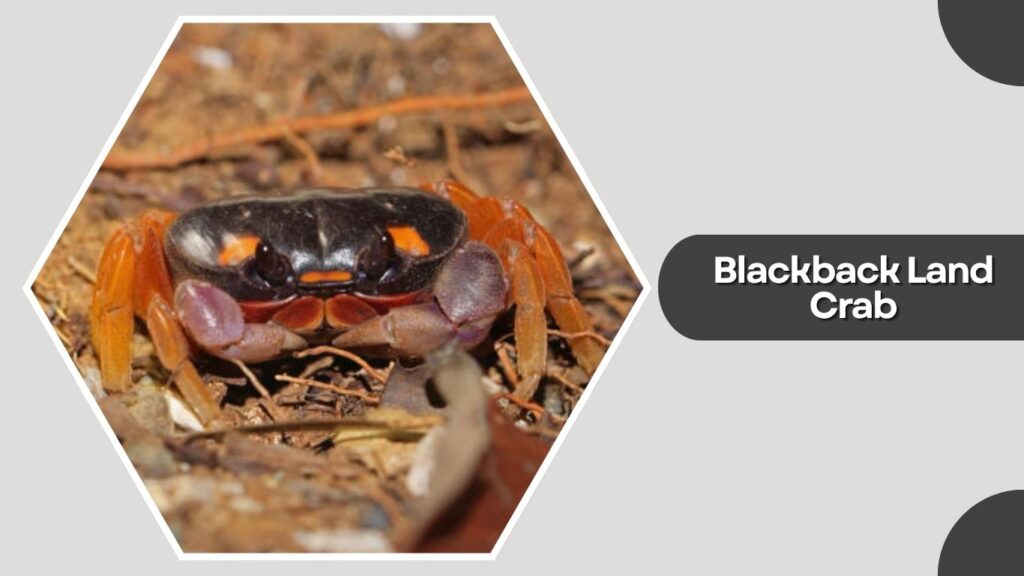
The blackback land crab is currently classified as Hartnollius lateralis and was formerly known as Gecarcinus lateralis. Its glossy dark central shell contrasts sharply with its reddish-orange sides, legs, and claws. This distinctive crab lives in warm coastal environments of the western Atlantic and Caribbean.
Identification
- Rounded, slightly heart-shaped carapace
- Large black or very dark patch across the back
- Bright red, orange, or yellow-orange shell margins
- Orange-red walking legs and claws
- Thick, sturdy legs adapted for digging
- Short eyestalks with dark rounded eyes
- Strong claws used for defense and feeding
- Color pattern resembles a dark cap over the shell
Habitat and Distribution
Blackback land crabs occur along warm Atlantic and Caribbean coasts, from southern areas of North America through Central America, northern South America, Bermuda, and numerous Caribbean islands. They inhabit sandy coastal forests, wooded areas, mangrove margins, dunes, and dry ground above the high-tide line.
Diet and Feeding Behavior
This species is mainly herbivorous, eating fallen leaves, seedlings, fruits, flowers, and other vegetation. It may also consume carrion, insects, smaller crabs, or other animal material when opportunities arise. Feeding usually takes place at night or during damp conditions, when the risk of dehydration is lower.
Burrowing and Reproduction
Blackback land crabs dig burrows in loose soil, often beneath coastal vegetation and tree roots. They use these shelters for resting, molting, mating, and protection from dry weather. Egg-carrying females must eventually travel from their inland burrows to the sea, where they release thousands of eggs and begin the species’ aquatic larval stage.
7. Halloween Moon Crab
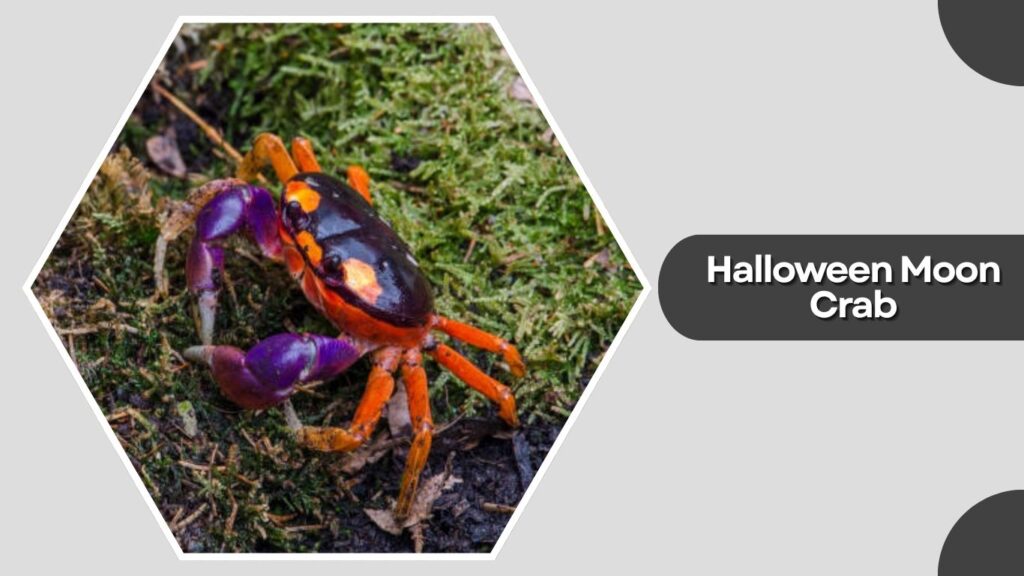
The Halloween moon crab (Gecarcinus quadratus) is a colorful terrestrial crab native to the Pacific coast of Central America. Also called the harlequin land crab or whitespot crab, it is recognized by its dark shell, orange legs, purple claws, and pale markings. Adults live on land but remain dependent on the ocean for reproduction.
Identification
- Broad, smooth, almost square-shaped carapace
- Dark purple, brown, or nearly black upper shell
- Bright orange or reddish walking legs
- Large purple or violet claws
- Yellow, orange, or cream patches behind the eyes
- Two pale spots near the lower front of the carapace
- Raised black eyes on short stalks
- Carapace may grow to approximately 5–6 centimeters wide
Habitat and Distribution
Halloween moon crabs inhabit humid coastal forests, mangrove margins, sandy dunes, and vegetated areas above the high-tide line. Their range extends along the Pacific coast from southern Mexico through parts of Central America, particularly Costa Rica, Nicaragua, and Panama. They dig deep burrows that provide moisture, cooler temperatures, and protection from predators.
Diet and Feeding Behavior
This crab feeds primarily on fallen leaves, fruits, seeds, seedlings, and other plant material found on the forest floor. It may also consume insects, carrion, animal remains, and smaller invertebrates when available. Halloween moon crabs are mainly nocturnal, emerging from their burrows after sunset or during damp weather to search for food.
Reproduction and Life Cycle
Although adults are highly terrestrial, females must travel to the coastline to release their eggs into seawater. The larvae develop as part of the marine plankton before transforming into young crabs and returning to land. This dependence on the ocean keeps wild populations relatively close to suitable coastal environments.
8. Yellow Land Crab
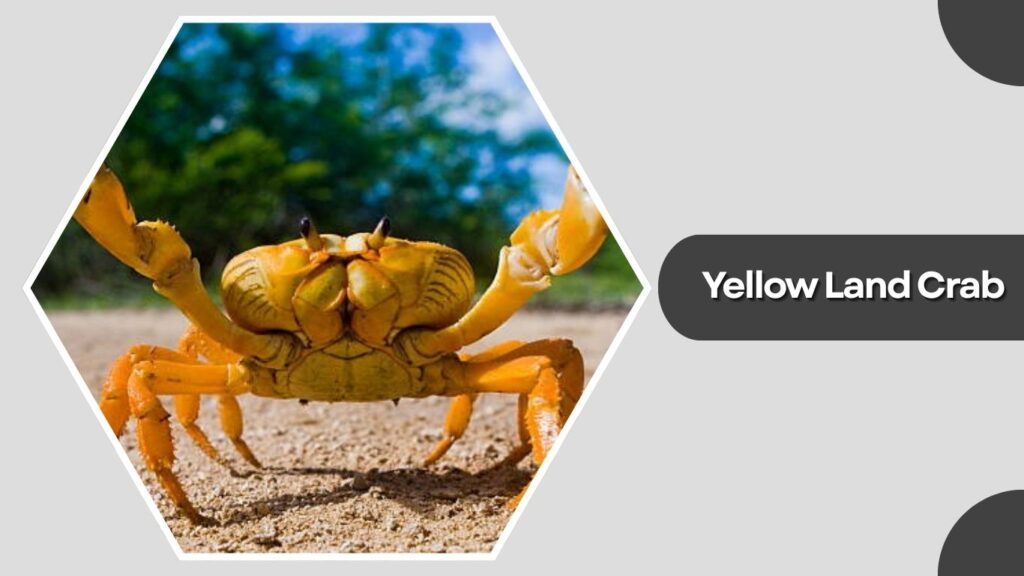
The yellow land crab (Johngarthia lagostoma) is a large island-dwelling species known for its golden-yellow shell and powerful claws. Purple individuals also occur, but the yellow form is especially common on Ascension Island. It is the island’s largest native land animal and completes a remarkable seasonal migration to the coast.
Identification
- Large, broad, smoothly rounded carapace
- Golden-yellow, orange-yellow, or pale brown coloration
- Purple individuals and mixed-color forms also occur
- Thick walking legs adapted for climbing rough terrain
- Large, powerful claws
- Dark eyes positioned on short stalks
- Adult carapace may reach approximately 11 centimeters wide
- Males are often larger and have heavier claws
Habitat and Distribution
Yellow land crabs occur on only a few South Atlantic islands, including Ascension Island, Trindade, Fernando de Noronha, and Rocas Atoll. On Ascension, they are concentrated around the humid slopes of Green Mountain, where vegetation and moisture provide suitable living conditions. They shelter in deep burrows and usually emerge at night or after rainfall.
Diet and Feeding Behavior
Plant material forms most of the yellow land crab’s diet. It eats green leaves, fallen vegetation, fruits, flowers, and decaying organic matter. However, it is an adaptable omnivore and may scavenge dead animals or capture small prey. Records also show individuals eating seabird eggs, chicks, and newly hatched sea turtles.
Migration and Reproduction
Adults migrate from inland habitats to the coast during the breeding season. On Ascension Island, migration generally occurs from January to May and often peaks during March. Females release their eggs near the shoreline, and the larvae develop in seawater before young crabs eventually return to land.
9. Pacific Land Crab
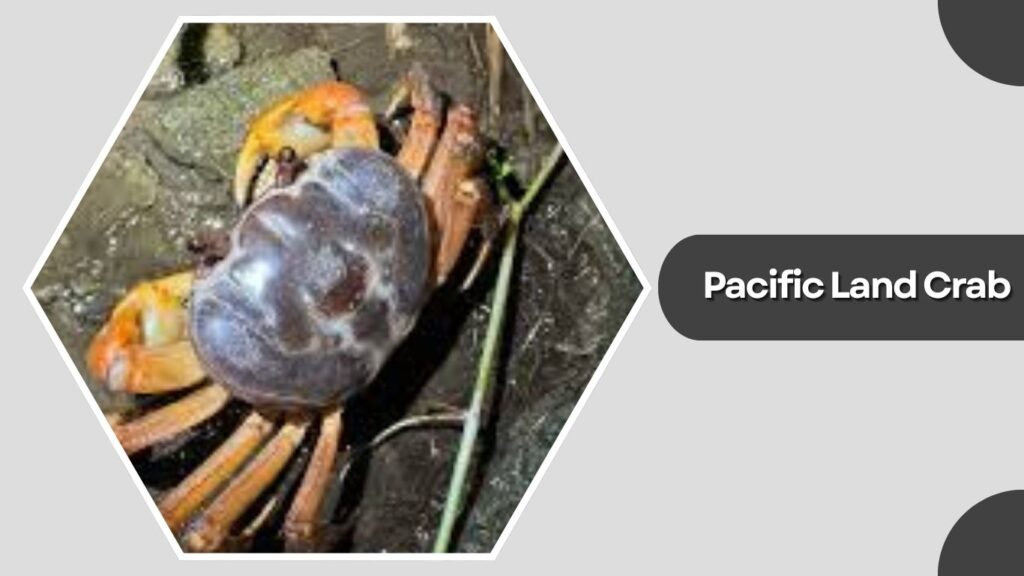
The Pacific land crab (Tuerkayana hirtipes), formerly classified as Discoplax hirtipes, is a large terrestrial crab found across tropical western Pacific islands and coastlines. It has a smooth, swollen shell and frequently lives in coastal forests where its burrows reach moist soil or freshwater.
Identification
- Broad, smooth, strongly inflated carapace
- Dark brown, blue-brown, gray, or nearly black shell
- Thick legs with noticeable hairs
- Hairy rectangular area beside the mouthparts
- Large pale, brown, or orange-toned claws
- One claw may be larger than the other
- Strong legs adapted for burrowing and land travel
- Large adults may have a carapace wider than 10 centimeters
Habitat and Distribution
Pacific land crabs occur throughout much of the tropical western Pacific, including southern Japan, Taiwan, the Philippines, Malaysia, Indonesia, Palau, Guam, Fiji, New Caledonia, the Solomon Islands, and parts of eastern Australia. They inhabit mangroves, coastal swamps, beaches, and inland coastal forests. Their burrows often extend to groundwater, helping the crabs keep their respiratory surfaces moist.
Diet and Feeding Behavior
The Pacific land crab is an omnivorous scavenger that feeds mainly on leaves, fruit, seeds, and decaying vegetation. It may also eat carrion and small animals when opportunities arise. Individuals generally remain sheltered during hot, dry periods and emerge at night, after heavy rain, or during humid weather.
Reproduction and Coastal Migration
Females migrate from forest burrows toward the ocean to release their eggs. In some parts of the range, spawning movements occur during summer spring tides and take place mainly at night. The larvae develop in the sea, while the later juvenile stages return to land and establish burrows in moist coastal habitats.
10. Rugose Land Crab
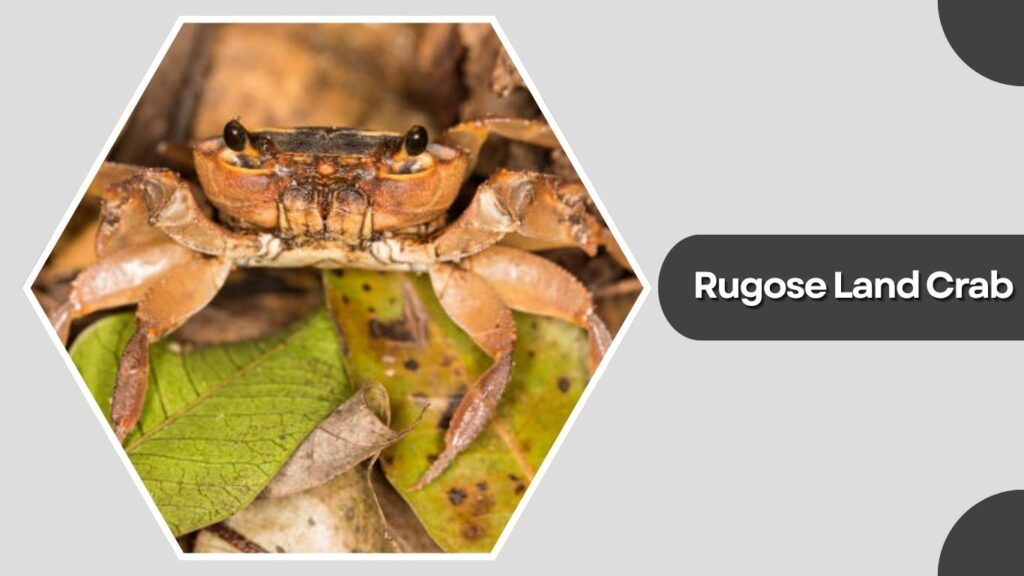
The rugose land crab (Tuerkayana rotundum), formerly known as Discoplax rotunda, is a medium-sized Indo-Pacific land crab. Its common name refers to the textured or slightly wrinkled appearance of its shell. It is widely distributed but is often less conspicuous than larger, more brightly colored land crabs.
Identification
- Broad, rounded, slightly flattened carapace
- Textured, granulated, or faintly wrinkled shell
- Dark brown, black, gray, purple, or reddish coloration
- Purple, red, or orange tones on the claws and legs
- Sturdy walking legs with scattered hairs
- Strong but moderately sized claws
- Dark eyes carried on short stalks
- Carapace may reach approximately 7.5 centimeters wide
Habitat and Distribution
Rugose land crabs occur from the western Indian Ocean through Southeast Asia and into the western Pacific. They are found on numerous tropical islands, including parts of Japan’s southern island groups. The species favors sandy coastal forests, reef terraces, vegetation near beaches, and areas containing moist soil or natural shelters.
Diet and Feeding Behavior
Detailed studies of its natural diet remain limited. However, the rugose land crab is generally regarded as an opportunistic omnivore that consumes fallen leaves, fruit, decomposing plant matter, carrion, and small invertebrates. It usually forages after dark, when cooler and more humid conditions reduce the risk of dehydration.
Burrowing and Reproduction
The crab shelters in holes beneath roots, rocks, and forest debris or digs burrows into suitable soil. These retreats help maintain the moisture required for breathing. Like other members of the land crab family, it remains linked to the sea for reproduction, with females releasing eggs into coastal water so the larvae can complete their early development.
11. Blue Christmas Island Crab
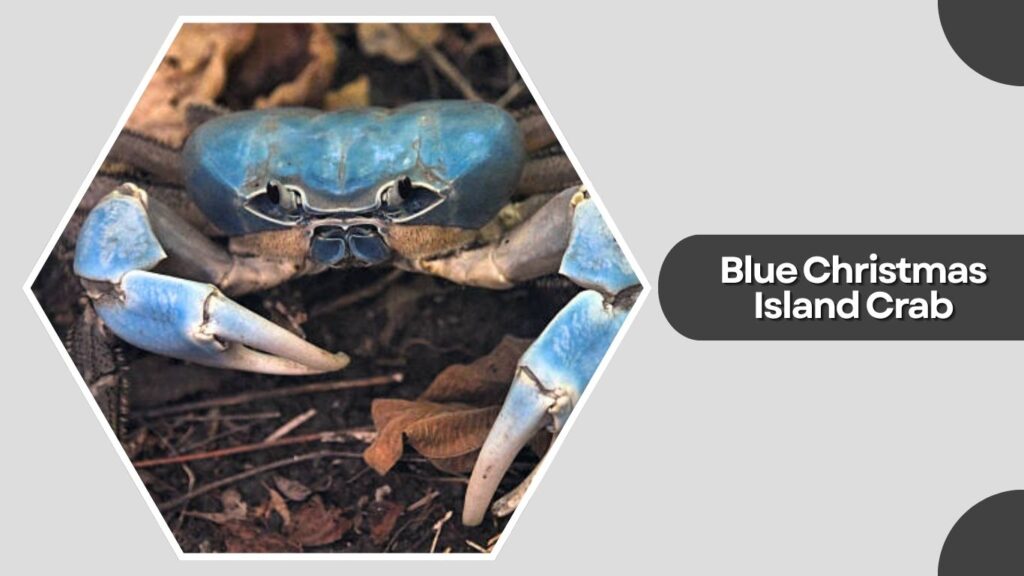
The blue Christmas Island crab (Tuerkayana celeste) is a striking sky-blue land crab found nowhere outside Christmas Island. It was once confused with the Pacific land crab but was formally recognized as a separate species in 2012. Unlike many land crabs, it is strongly associated with permanent freshwater streams.
Identification
- Smooth, strongly rounded carapace
- Porcelain-blue, sky-blue, or blue-gray body
- Large white, cream, or pale blue claws
- Pale blue or brownish walking legs
- Dense hairs covering parts of the legs
- Dark eyes positioned on short stalks
- Broad, heavy body adapted for burrowing
- Carapace may grow beyond 10 centimeters wide
Habitat and Distribution
This crab is endemic to Christmas Island in the Indian Ocean. It lives in muddy burrows beside freshwater streams and seepages, especially in areas such as the Dales. Individuals are frequently seen standing or partly submerged in freshwater. Its extremely restricted habitat makes healthy streams and surrounding forests essential to its survival.
Diet and Feeding Behavior
Adult blue crabs feed mainly on fallen leaves and fruits. They gather food from the forest floor and may carry pieces back toward sheltered areas. By consuming plant litter and returning nutrients to the soil, the crabs contribute to decomposition and nutrient recycling around Christmas Island’s freshwater habitats.
Reproduction and Conservation
Females release their eggs into the ocean, but the developing young later move into freshwater streams and travel upstream toward adult habitat. Because the species depends on both marine and freshwater environments, disruption to either can affect its life cycle. The crab has been fully protected on Christmas Island since 1980.
FAQs
What are land crabs?
Land crabs are terrestrial crabs that spend most of their adult lives on land. They usually inhabit coastal forests, mangroves, islands, wetlands, and areas with moist soil. Although adults breathe air, most species must return to seawater to release their eggs.
What do land crabs eat?
Most land crabs are omnivores that feed mainly on fallen leaves, fruits, flowers, seeds, grasses, and decaying vegetation. They may also eat insects, carrion, mollusks, smaller crabs, bird eggs, and other available animal matter when plant food is limited.
Why do land crabs migrate to the ocean?
Female land crabs migrate to the ocean because their eggs and larvae require seawater for development. After mating, females carry thousands of eggs beneath their abdomens and release them near the shoreline. The young later leave the water and begin living on land.
Are land crabs dangerous to humans?
Land crabs are not venomous and generally avoid people. However, their strong claws can deliver a painful pinch when they are handled, trapped, or threatened. Large species should be observed from a safe distance, especially during migration when they may gather in enormous numbers.
Where do land crabs live?
Land crabs occur in tropical and subtropical coastal regions around the world. They live in rainforests, mangroves, beaches, dunes, wetlands, rocky islands, and coastal woodlands. Most dig burrows or shelter beneath roots and rocks to maintain moisture and avoid extreme heat.