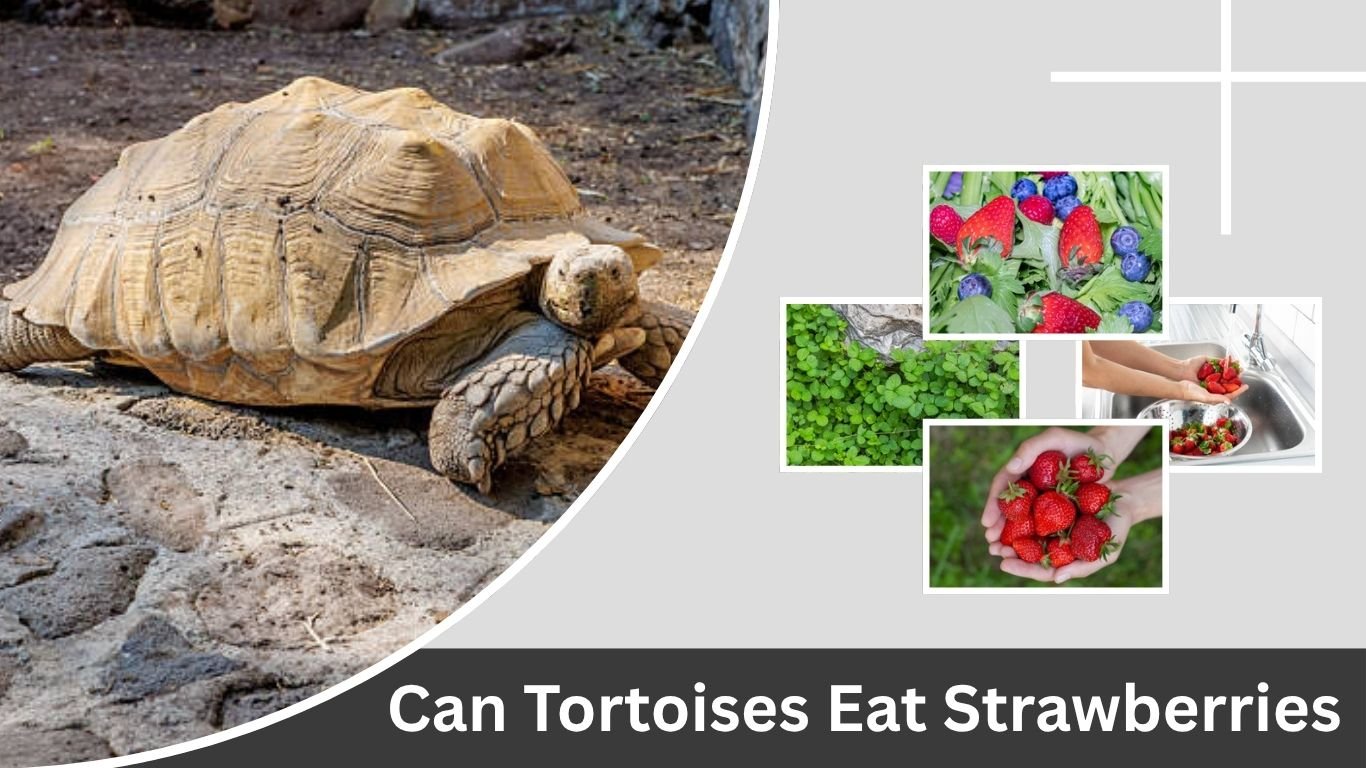
Strawberries are a popular fruit, and many tortoise owners wonder if they can safely share them with their pets. The short answer is yes—tortoises can eat strawberries, but only in moderation. While they are not toxic, strawberries contain high levels of natural sugar, which makes them unsuitable as a regular food. For most tortoise species, fruit should only be an occasional treat rather than a dietary staple.
Can Tortoises Eat Strawberries Safely?
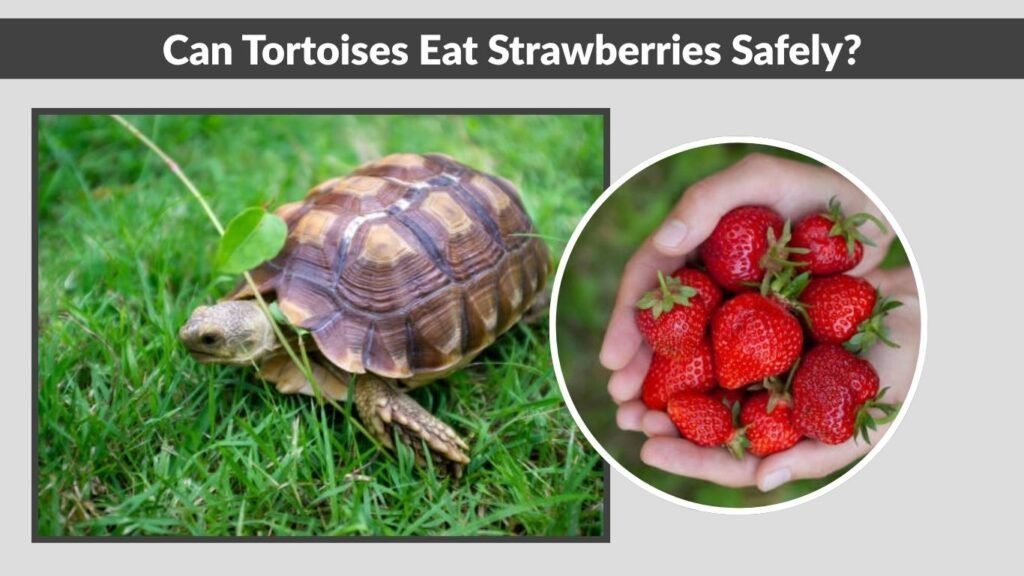
Strawberries are safe for tortoises when offered in small amounts. Unlike some plants that can be harmful, strawberries do not pose any immediate danger.
- They are non-toxic and easy to eat
- Provide hydration due to high water content
- Contain vitamins like Vitamin C
- Should only be fed occasionally
Even though strawberries are safe, they do not match the natural diet of most tortoises. In the wild, tortoises mainly consume grasses, weeds, and leafy plants, which are much higher in fiber and lower in sugar.
Are Strawberries Good or Bad for Tortoises?
Strawberries have both benefits and drawbacks, so it’s important to understand how they affect your tortoise’s health.
Benefits:
- Provide small amounts of essential vitamins
- Help with hydration
- Can add variety to the diet
Risks:
- High sugar content can upset gut balance
- Too much can lead to diarrhea
- May reduce appetite for healthier foods
Tortoises rely on a delicate balance of gut bacteria to digest fibrous foods. Too much sugar can disrupt this balance, leading to digestive problems over time.
Can Tortoises Eat Strawberries Every Day?
No, tortoises should not eat strawberries daily. Feeding fruit too often can create serious dietary imbalances.
- High sugar intake can harm digestion
- Daily feeding may lead to dependency on sweet foods
- Tortoises may start rejecting leafy greens
- Long-term health issues can develop
A better approach is to offer strawberries only once every one to two weeks. This keeps them as a treat rather than a regular food source.
Can Baby Tortoises Eat Strawberries?
Baby tortoises are more sensitive than adults, making their diet especially important.
- Their digestive systems are still developing
- High sugar foods can cause imbalance quickly
- Growth requires calcium-rich, fibrous greens
- Strawberries should be extremely limited or avoided
If you choose to feed strawberries to a baby tortoise, it should be a very small piece and only on rare occasions. In most cases, it’s better to focus entirely on proper greens during early growth stages.
Can Different Tortoise Species Eat Strawberries?
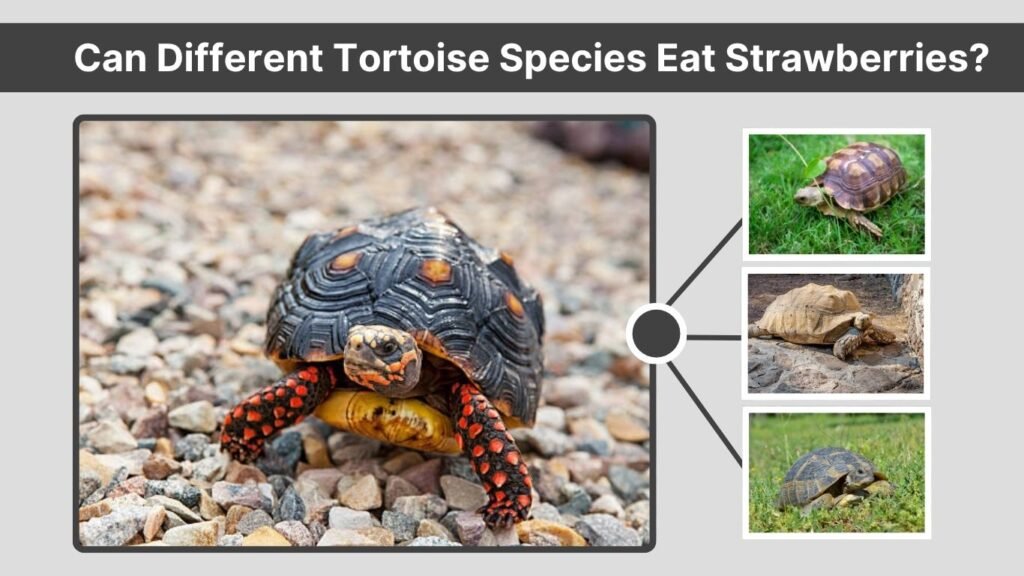
Different tortoise species have slightly different dietary needs, especially when it comes to fruit.
Russian (Horsefield) Tortoises
Russian tortoises primarily eat weeds and leafy greens. Strawberries can be given occasionally, but they should not become a regular part of the diet.
Sulcata (African Spurred) Tortoises
Sulcatas are grazing tortoises that require a high-fiber diet based on grasses and hay. Strawberries should be extremely rare treats, if offered at all.
Hermann’s & Greek Tortoises
These Mediterranean species thrive on fibrous plants and greens. Fruit intake should be minimal, with strawberries given only occasionally.
Leopard & Desert Tortoises
These species are adapted to dry environments and high-fiber diets. Strawberries are not ideal and should be fed sparingly.
Gopher Tortoises
Gopher tortoises have a natural herbivorous diet similar to wild grazing species. Strawberries can be eaten occasionally but are not necessary.
Red-Footed Tortoises
Red-footed tortoises are an exception. They naturally consume more fruit than other species.
- Strawberries can be included more often
- Still should not dominate the diet
- Balance with vegetables and greens
Can Tortoises Eat Strawberry Leaves, Tops, or Stems?
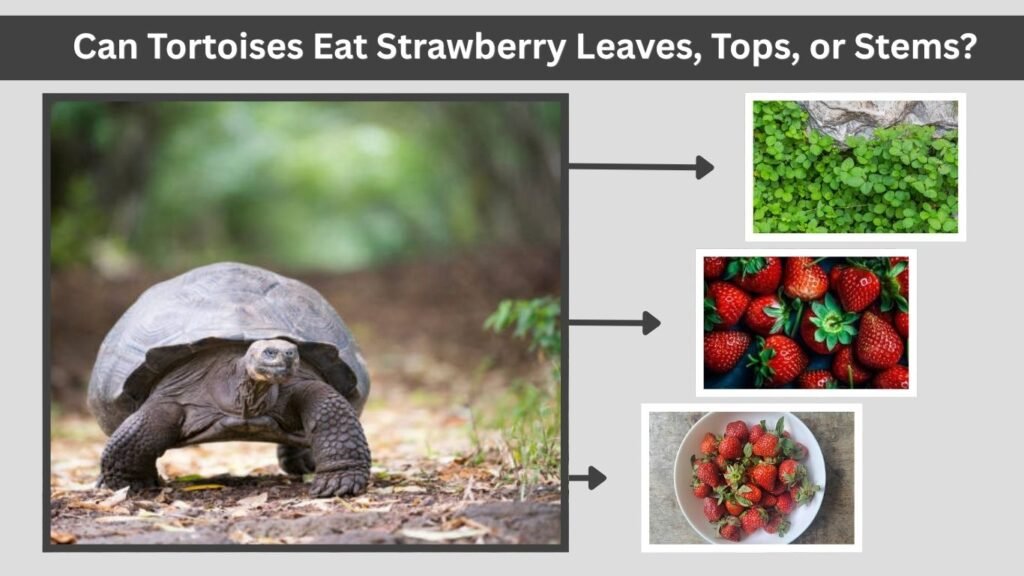
Many owners don’t realize that the green parts of the strawberry plant are also edible—and sometimes even better than the fruit itself.
- Leaves: Safe and lower in sugar than the fruit
- Tops (green caps): Completely edible
- Stems: Non-toxic but not very nutritious
- Whole plant: Safe if pesticide-free
In fact, strawberry leaves can be a healthier option because they align more closely with a tortoise’s natural diet. They contain less sugar and more fiber compared to the fruit.
Can Tortoises Eat Strawberry Plants?
Strawberry plants as a whole are generally safe for tortoises, but there are a few important considerations before feeding them.
- Safe if grown without pesticides or chemicals
- Leaves and stems are more suitable than the fruit
- Can be offered as part of a mixed diet
- Should not replace staple greens
If you grow strawberries at home, they can be a convenient and natural addition to your tortoise’s diet. Just make sure they are clean and free from any harmful treatments.
Best Way to Feed Strawberries to Tortoises
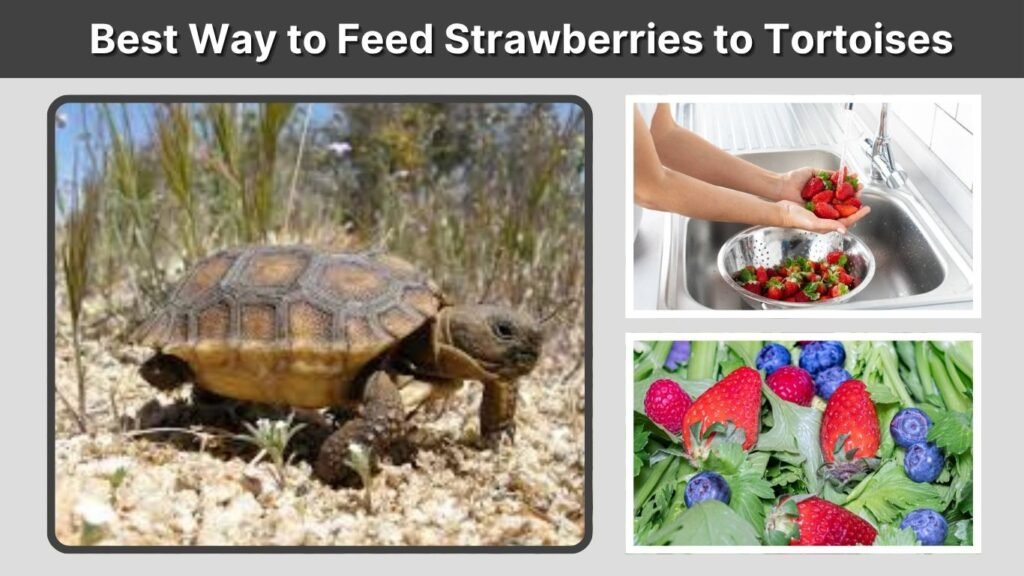
If you decide to give strawberries, proper preparation helps reduce risks and ensures your tortoise eats safely.
- Wash thoroughly to remove dirt and chemicals
- Cut into small, manageable pieces
- Offer in small portions only
- Mix with leafy greens to balance the meal
- Remove uneaten fruit to prevent spoilage
Feeding strawberries alongside healthier greens can help prevent your tortoise from becoming too focused on sweet foods.
How Often Can Tortoises Eat Strawberries?
Frequency is one of the most important factors when feeding fruit to tortoises.
- Most species: once every 1–2 weeks
- Red-footed tortoises: slightly more often (in moderation)
- Never feed daily
- Keep fruit as less than 10% of the overall diet
Maintaining this balance ensures your tortoise gets the benefits without the risks associated with excess sugar.
Signs Your Tortoise Is Eating Too Much Fruit
Too many strawberries—or fruit in general—can lead to noticeable health issues over time. Recognizing the signs early can help you adjust their diet quickly.
- Loose stool or diarrhea
- Reduced interest in leafy greens
- Weight gain or bloating
- Low energy or sluggish behavior
If you notice these symptoms, reduce fruit intake immediately and return to a more natural, fiber-rich diet.
Better Alternatives to Strawberries
While strawberries can be given occasionally, there are far better daily food options for tortoises that support long-term health.
- Dandelion greens: Rich in calcium and ideal for regular feeding
- Collard greens: Excellent calcium-to-phosphorus balance
- Hibiscus leaves: Natural and highly nutritious
- Mulberry leaves: Great fiber content and safe for most species
- Plantain weeds: Common, natural, and well-suited to tortoise diets
These foods provide the nutrients tortoises actually need, without the drawbacks of high sugar content.
FAQs
Can tortoises eat strawberries regularly?
No, strawberries should only be fed occasionally. While they are safe, their high sugar content can disrupt digestion and gut bacteria if offered too often. A tortoise’s diet should mainly consist of leafy greens and fibrous plants to maintain proper health.
Can Russian tortoises eat strawberries?
Yes, Russian tortoises can eat strawberries, but only rarely. Their natural diet consists mostly of weeds and greens, so fruit should be limited to avoid digestive issues and ensure balanced nutrition.
Can sulcata tortoises eat strawberries?
Sulcata tortoises can eat strawberries in very small amounts, but fruit is not ideal for them. Their diet should primarily include grasses and hay, with strawberries given only as an occasional treat.
Are strawberry leaves safe for tortoises?
Yes, strawberry leaves are safe and often a better option than the fruit. They contain less sugar and more fiber, making them more suitable for a tortoise’s natural diet when offered in moderation.
What happens if a tortoise eats too many strawberries?
Eating too many strawberries can lead to diarrhea, digestive imbalance, and reduced appetite for healthier foods. Over time, excessive sugar intake may negatively affect the tortoise’s overall health and nutrition.