
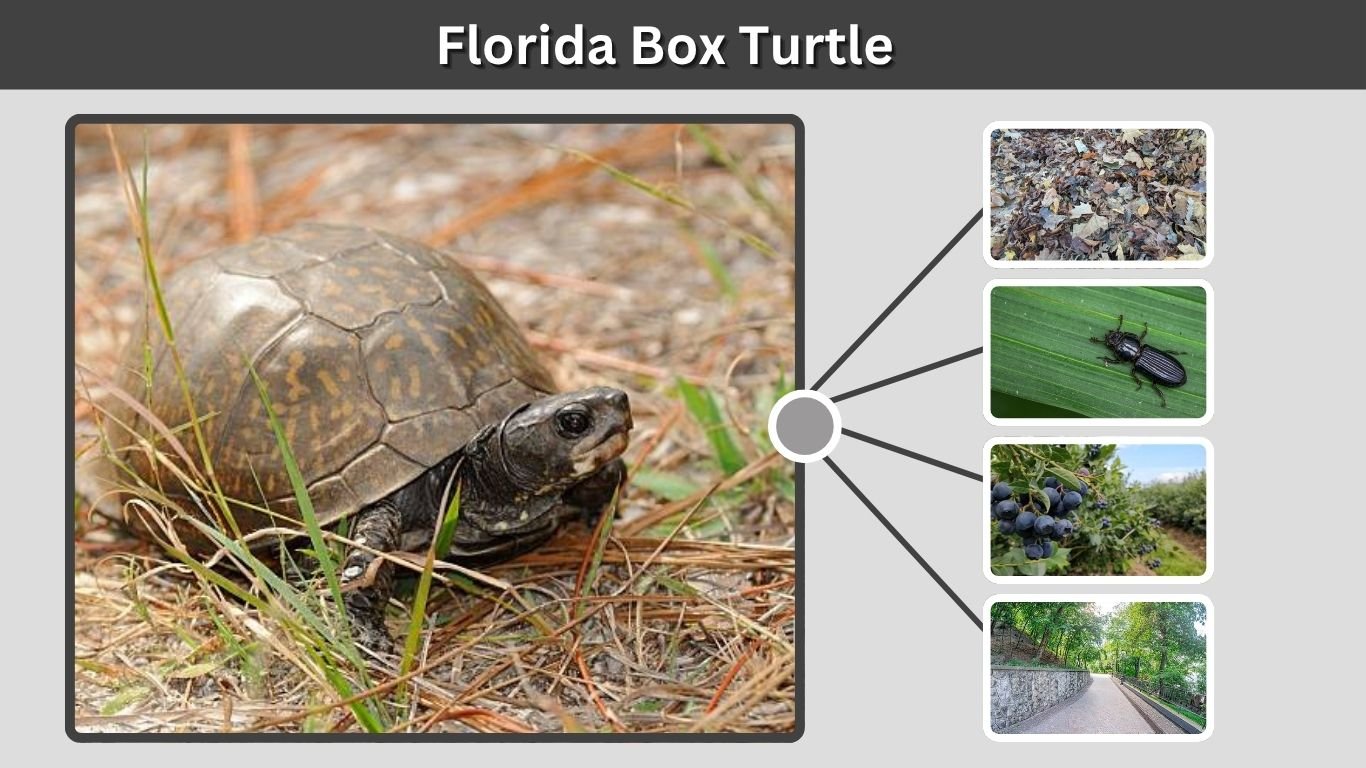
Florida box turtles are among the most colorful and fascinating reptiles found in the southeastern United States. Known for their bright shell patterns and unique ability to completely close themselves inside their shells, these land-dwelling turtles are both resilient and delicate at the same time. Whether you’ve spotted one in the wild or are considering keeping one as a pet, understanding their needs is essential.
These turtles are not just ordinary reptiles—they play an important role in their ecosystem by controlling insect populations and helping spread seeds. However, their populations are slowly declining due to habitat loss, road accidents, and human interference. This makes it even more important to learn how to properly care for and protect them.
What Is a Florida Box Turtle?
The Florida box turtle (Terrapene carolina bauri) is a colorful, land-dwelling turtle native to Florida and parts of the southeastern United States. It is a subspecies of the eastern box turtle, known for its dome-shaped shell and unique hinged plastron that allows it to completely close itself inside for protection.
Unlike aquatic turtles, Florida box turtles spend most of their lives on land, favoring moist, shaded environments. Their bright shell patterns—often streaked with yellow, orange, or gold—make them one of the most visually striking turtle species in North America.
Florida Box Turtle Characteristics
Florida box turtles are easy to recognize due to their vibrant appearance and sturdy build. They are relatively small but highly adapted for life on land.
Size and Appearance
Adult Florida box turtles typically grow between 5 and 7 inches in shell length. Their shells are high-domed and often feature radiating yellow or orange lines on a dark brown or black background. Each turtle has a unique pattern, much like a fingerprint.
Their skin is usually dark with bright markings, especially on the head and legs. These vivid colors help distinguish them from other box turtle subspecies.
Male vs Female Differences
There are several noticeable differences between male and female Florida box turtles:
- Males often have red or orange eyes, while females usually have brown or yellow eyes
- Males tend to have longer, thicker tails
- The plastron (bottom shell) of males is slightly concave, while females have a flat plastron
These differences are helpful when identifying the sex of a mature turtle.
Florida Box Turtle Habitat and Range in Florida
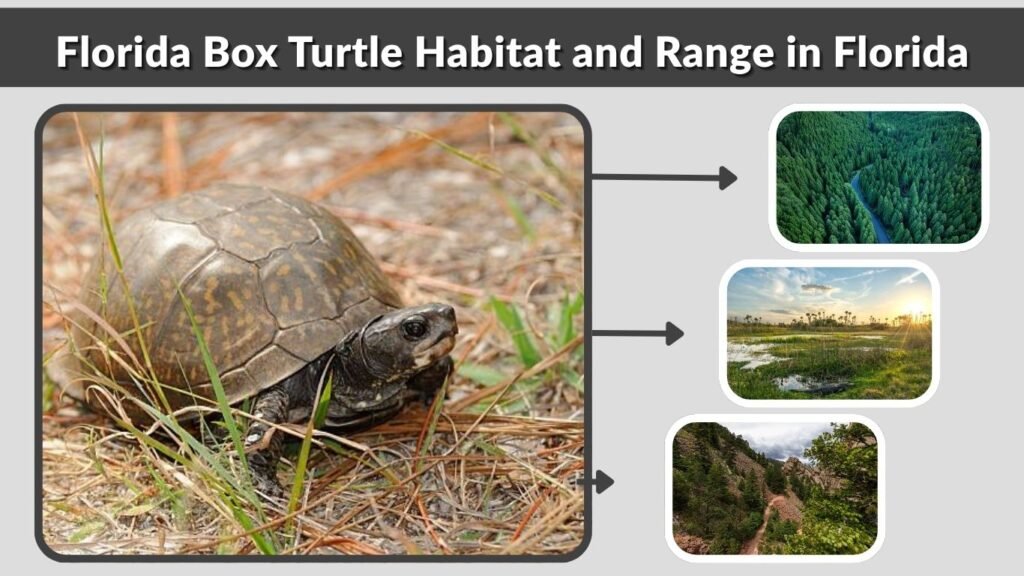
Florida box turtles thrive in warm, humid environments where they can easily find food and shelter. Their habitat plays a major role in their survival.
Natural Habitat
These turtles prefer moist areas such as forests, swamps, marsh edges, and grassy fields. They are commonly found in places with loose soil, leaf litter, and plenty of ground cover.
Access to water is important, but they do not live in water like aquatic turtles. Instead, they rely on damp environments to stay hydrated and regulate their body temperature.
Geographic Range
Florida box turtles are found throughout the state of Florida and are especially common in central and northern regions. They are often spotted near shaded trails, wooded areas, and even suburban gardens.
They tend to stay within a small home range and rarely travel far, which makes habitat destruction a serious threat to their populations.
What Do Florida Box Turtles Eat?
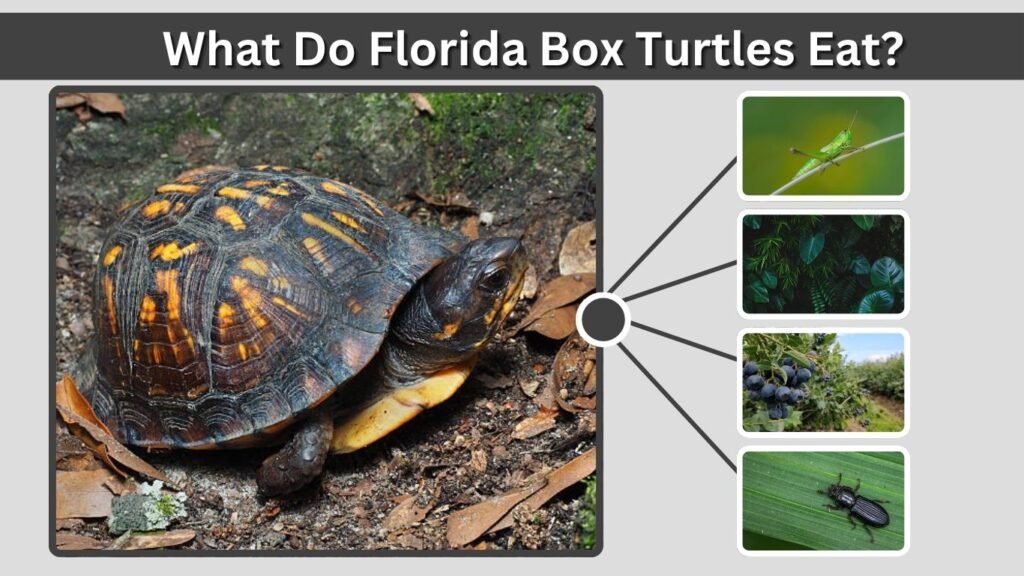
Florida box turtles are omnivores, meaning they eat both plant and animal matter. Their diet varies depending on what is available in their environment.
Natural Diet in the Wild
In the wild, Florida box turtles consume a wide variety of foods, including:
- Insects such as beetles, grasshoppers, and worms
- Snails and other small invertebrates
- Fruits like berries and fallen soft fruits
- Mushrooms and leafy plants
Their diet changes with the seasons, with more protein consumed during warmer months and more plant matter during cooler periods.
Diet in Captivity
When kept as pets, Florida box turtles require a balanced diet that mimics their natural feeding habits. A healthy captive diet includes:
- Protein sources like earthworms or cooked eggs
- Fresh vegetables such as leafy greens
- Occasional fruits as treats
Foods high in salt, sugar, or artificial additives should always be avoided to maintain their health.
Florida Box Turtle Lifespan and Life Cycle
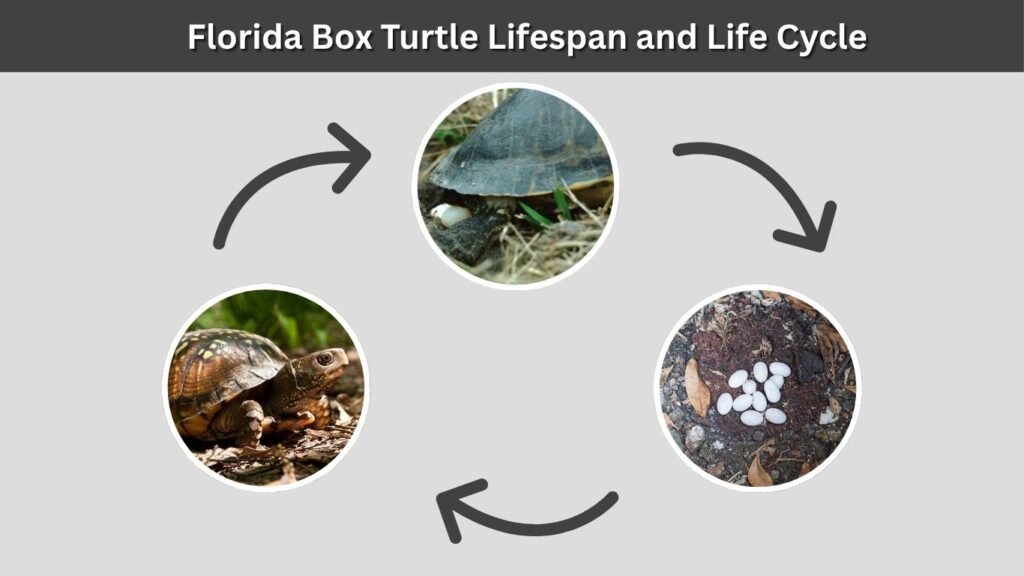
Florida box turtles are known for their long lifespan and slow development. With proper conditions, they can live for several decades.
Most Florida box turtles live between 30 and 50 years in the wild, although some may live even longer in protected environments. Their life cycle begins as eggs, which hatch into small, vulnerable turtles.
Hatchlings are independent from birth and must immediately find food and shelter. As they grow, their shells harden, and their chances of survival increase. However, reaching adulthood can take several years due to their slow growth rate.
Florida Box Turtle Reproduction and Eggs
Reproduction in Florida box turtles typically occurs during warmer months when conditions are favorable.
Mating Behavior
Mating usually takes place in spring and early summer. Males may compete for females and use visual displays or gentle nudging during courtship.
Eggs and Incubation
After mating, females lay small clutches of about 3 to 8 eggs in sandy or loose soil. The incubation period usually lasts around 70 to 90 days, depending on temperature and humidity.
Once hatched, baby turtles are on their own. They are highly vulnerable to predators and environmental conditions, making early survival one of the most challenging stages of their life.
Do Florida Box Turtles Hibernate?
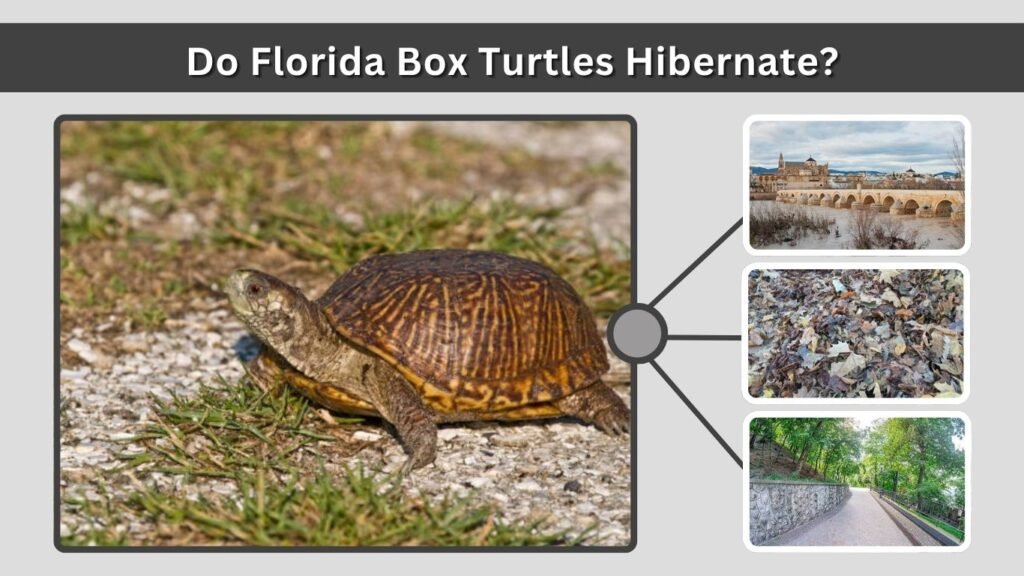
Florida box turtles do not hibernate in the traditional sense but instead enter a state called brumation.
Brumation is similar to hibernation but less intense. During cooler months, turtles become less active and may burrow into soil or leaf litter to stay warm. In Florida’s mild climate, this period is often shorter and less extreme compared to colder regions.
Temperature changes and daylight reduction typically trigger this behavior. Even during brumation, turtles may occasionally become active on warmer days.
Florida Box Turtle Care Guide
Caring for a Florida box turtle requires attention to diet, environment, and overall well-being. They are not low-maintenance pets and need proper care to thrive.
Basic Care Needs
A healthy Florida box turtle requires:
- A varied and balanced diet
- Constant access to clean, fresh water
- A safe and stress-free environment
Handling should be kept minimal, as excessive interaction can cause stress and health issues.
Baby Florida Box Turtle Care
Caring for hatchlings requires extra attention because young turtles are more delicate and sensitive to their environment.
Baby Florida box turtles need higher humidity levels to prevent dehydration and support healthy shell growth. Their diet should include small, soft foods such as finely chopped worms, insects, and tender greens. Providing hiding spots is also essential, as hatchlings can become stressed easily.
Frequent monitoring is important during this stage to ensure proper growth and to prevent illness.
Enclosure Setup for Florida Box Turtles
A proper enclosure is critical for maintaining a healthy and active turtle in captivity.
Indoor Enclosure
Indoor setups should mimic the turtle’s natural habitat as closely as possible. A large enclosure with enough space for movement is ideal.
Key elements include:
- Soft substrate like soil or coconut fiber
- A basking area with proper lighting
- Temperature gradient (warm and cool zones)
- A shallow water dish for soaking
UVB lighting is important to help turtles process calcium and maintain strong shells.
Outdoor Enclosure
Outdoor enclosures are often the best option in warm climates like Florida.
They should include natural soil, plants, and shaded areas. The enclosure must be secure to prevent escapes and protect the turtle from predators. A mix of sun and shade allows the turtle to regulate its body temperature naturally.
Florida Box Turtle Laws and Protection
Florida box turtles are protected under state wildlife regulations, and it’s important to understand the laws before interacting with them.
In many cases, it is illegal to collect wild turtles without proper permits. Even when allowed, there are limits on how many turtles a person can keep. These laws are designed to protect declining populations and prevent over-collection.
Because of their slow reproduction rate and long lifespan, removing turtles from the wild can have lasting impacts on local ecosystems.
Florida Box Turtle Predators and Threats
Florida box turtles face several threats in the wild, especially during their early life stages.
Common predators include raccoons, birds of prey, snakes, and small mammals. Eggs and hatchlings are particularly vulnerable, with many not surviving to adulthood.
Human-related threats are also significant. Road accidents, habitat destruction, and pollution all contribute to population decline. Because these turtles tend to stay within a small area, changes to their habitat can be especially harmful.
Florida Box Turtle vs Eastern Box Turtle
Florida box turtles are often confused with eastern box turtles because they belong to the same species group.
The main differences are in appearance and location. Florida box turtles usually have more pronounced striping and brighter colors, while eastern box turtles often have more blotchy patterns.
Geographically, Florida box turtles are mainly found in Florida, while eastern box turtles have a broader range across the eastern United States. Despite these differences, their behavior and care needs are quite similar.
FAQs
How long do Florida box turtles live?
Florida box turtles typically live between 30 and 50 years in the wild. With proper care in captivity, some individuals can live even longer, making them a long-term commitment for pet owners.
What does a Florida box turtle eat?
They are omnivores and eat a mix of insects, fruits, vegetables, and fungi. A varied diet helps ensure they receive the nutrients needed for growth and overall health.
Are Florida box turtles endangered?
They are not officially classified as endangered, but their populations are declining due to habitat loss, road mortality, and human interference. Conservation efforts are important for their survival.
Are box turtles legal to own in Florida?
Yes, but ownership is regulated. In many situations, collecting turtles from the wild requires permits, and there are limits in place to protect natural populations.
How big do Florida box turtles get?
Most adult Florida box turtles grow to about 5 to 7 inches in shell length. Their size depends on factors such as diet, habitat, and overall health.