
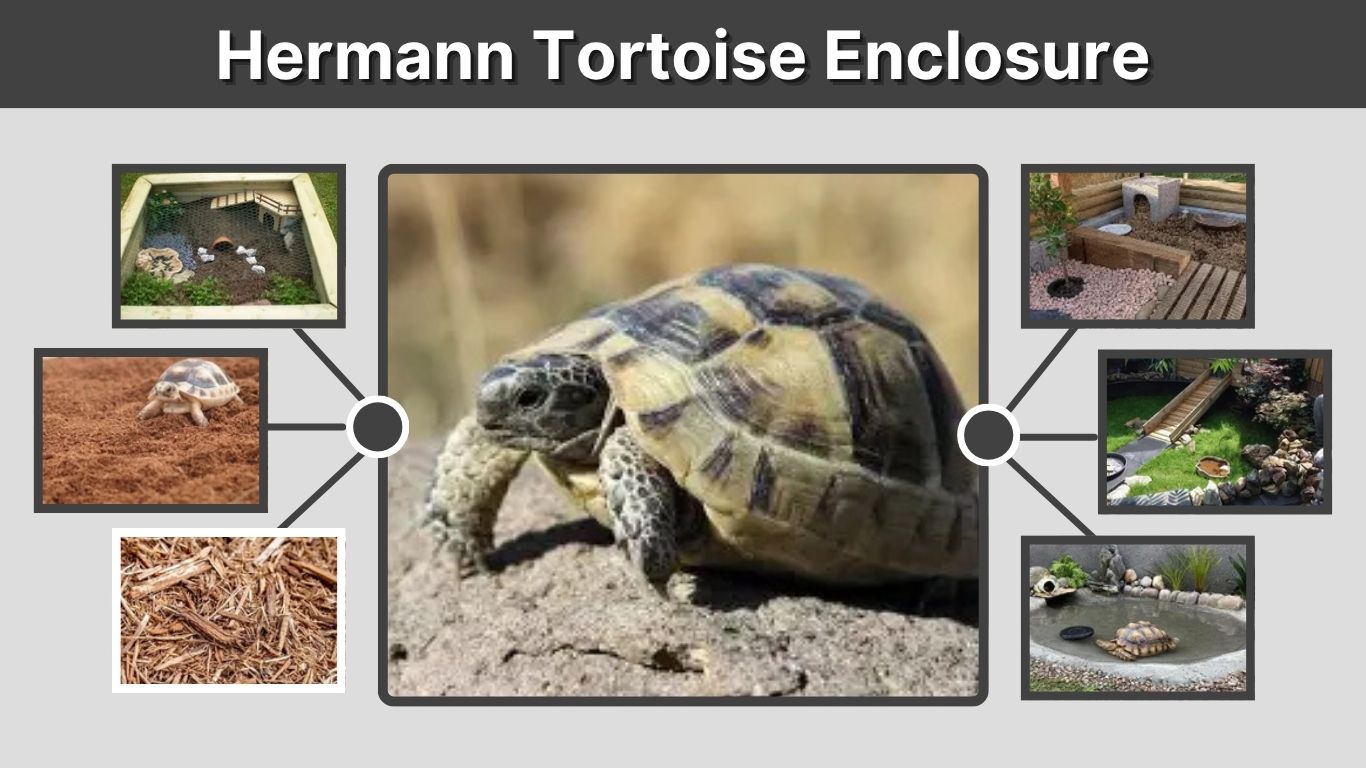
A Hermann tortoise enclosure should be spacious, warm, secure, and designed for natural behavior. Hermann’s tortoises like to walk, dig, graze, hide, and bask, so a small tank is not a good long-term home. The best enclosure for a Hermann tortoise depends on its age, local climate, and whether it lives indoors or outdoors. This guide explains Hermann tortoise enclosure size, setup, temperature, safe plants, and indoor and outdoor enclosure ideas.
Hermann Tortoise Enclosure Requirements
A proper Hermann’s tortoise enclosure should copy a dry Mediterranean-style habitat. It needs a warm basking area, cooler retreat, dry hiding place, safe substrate, shallow water dish, and enough space for daily movement.
Basic enclosure requirements include:
- Large floor space
- UVB lighting indoors
- Basking heat
- Dry and shaded hiding areas
- Diggable substrate
- Shallow water dish
- Safe edible plants
- Secure walls
- Predator protection outdoors
Hermann’s tortoises are active and curious. They should not be kept in a tiny glass tank because poor airflow, stress, and limited walking space can affect long-term health.
Hermann Tortoise Enclosure Size
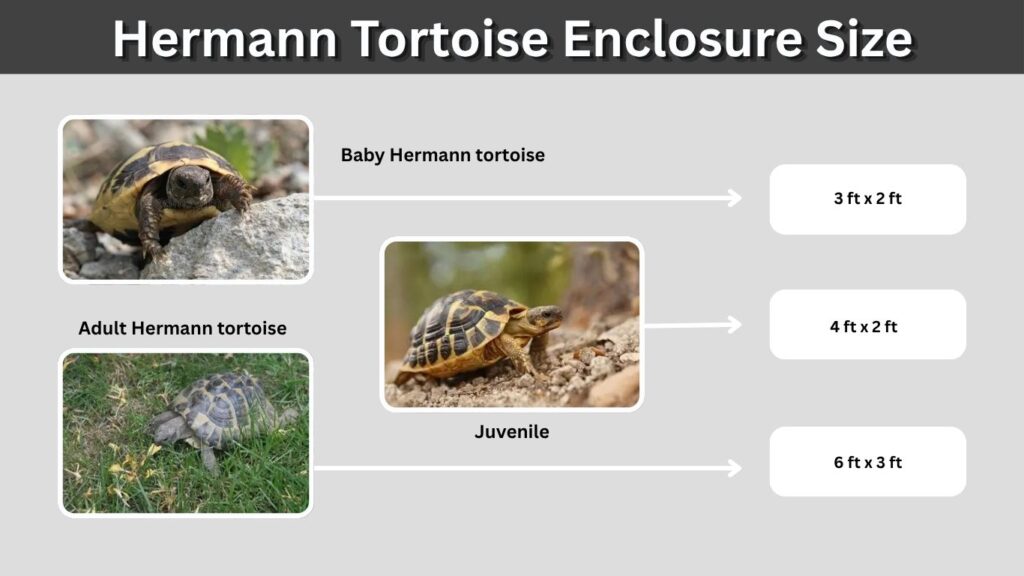
Enclosure size is one of the most important parts of Hermann tortoise care. Bigger is almost always better. These tortoises may be small compared with sulcata tortoises, but they still need room to explore.
| Tortoise Age | Minimum Enclosure Size | Better Long-Term Size |
| Baby Hermann tortoise | 3 ft x 2 ft | 4 ft x 2 ft or larger |
| Juvenile | 4 ft x 2 ft | 6 ft x 3 ft |
| Adult Hermann tortoise | 6 ft x 3 ft | 8 ft x 4 ft or larger |
| Outdoor enclosure | 8 ft x 4 ft | Larger secure garden pen |
How Big Should a Hermann Tortoise Enclosure Be?
An adult Hermann tortoise enclosure should be at least 6 feet long and 3 feet wide, but more space is better. Outdoor pens can be much larger if they are secure. A larger enclosure allows better temperature zones, more exercise, and more natural grazing behavior.
Baby Hermann Tortoise Enclosure Size
A baby Hermann tortoise enclosure can start smaller than an adult setup, but it should not be tiny. Hatchlings still need space for a basking area, cooler side, humid hide, food dish, water dish, and walking room. As the tortoise grows, upgrade the enclosure quickly.
Indoor Hermann’s Tortoise Enclosure
An indoor Hermann’s tortoise enclosure is useful for cold climates, hatchlings, sick tortoises, or winter housing. The best indoor enclosure is usually a tortoise table or large open-top wooden pen. Glass aquariums are less ideal because they trap heat, limit airflow, and may stress the tortoise.
Indoor Enclosure Setup
A good indoor Hermann tortoise enclosure setup should include:
- Open-top tortoise table
- UVB tube light
- Basking lamp
- Cool side
- Hiding box
- Shallow water dish
- Flat feeding stone
- Deep substrate
- Thermometer and hygrometer
The enclosure should have a clear temperature gradient. One end should be warm for basking, while the other side should stay cooler. This lets the tortoise choose the temperature it needs.
Best Indoor Enclosure Ideas
Good indoor enclosure ideas include wooden tortoise tables, large bookcase-style enclosures, custom PVC pens, and indoor garden beds. The enclosure should be wide and long rather than tall. Hermann’s tortoises need floor space more than height.
Avoid placing the enclosure directly beside cold windows, heaters, air conditioners, or drafty doors. Sudden temperature changes can stress the tortoise.
Outdoor Hermann Tortoise Enclosure
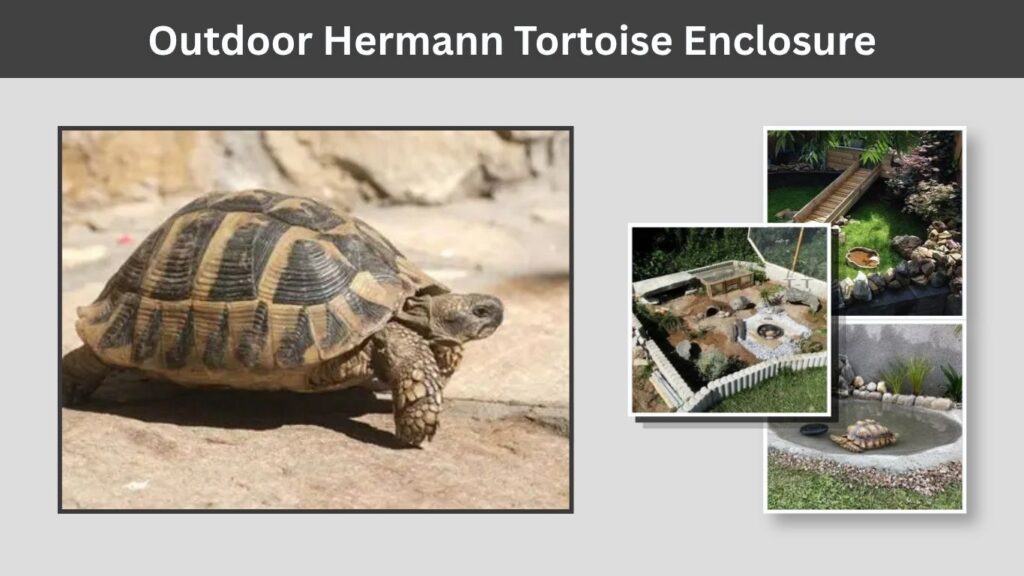
An outdoor Hermann tortoise enclosure is often the best option when the climate is safe. Natural sunlight, fresh air, soil, weeds, and seasonal changes can support healthy behavior. However, outdoor housing must be secure because tortoises can escape and predators can attack.
Outdoor Enclosure Requirements
An outdoor enclosure should include:
- Strong walls
- Buried edges to prevent digging out
- Locked mesh top if predators are present
- Sunny basking area
- Shaded retreat
- Dry shelter
- Safe plants
- Shallow water dish
- Drainage after rain
The walls should be tall enough that the tortoise cannot climb over them. Solid walls are better than wire walls because tortoises often try to walk through visible barriers.
Hermann Tortoise Outside Enclosure Safety
Outdoor safety is extremely important. Dogs, rats, raccoons, birds, foxes, and other animals can injure or kill a tortoise. Even a friendly dog should not be trusted around a tortoise without supervision.
A safe outside enclosure should protect against:
- Predators
- Escape
- Flooding
- Overheating
- Cold nights
- Toxic plants
- Lawn chemicals
- Sharp objects
Hermann Tortoise Enclosure Temperature
Temperature control is essential in both indoor and outdoor enclosures. Hermann’s tortoises need heat to digest food and stay active. If the enclosure is too cold, the tortoise may stop eating or become weak.
| Enclosure Area | Ideal Temperature |
| Basking spot | 90–100°F |
| Warm side | 80–85°F |
| Cool side | 70–75°F |
| Night temperature | Around 60–70°F |
| Baby enclosure | Slightly more stable warmth |
Use a digital thermometer or temperature gun to measure the basking surface. Do not guess by touching the floor with your hand.
Substrate for Hermann’s Tortoise Enclosure
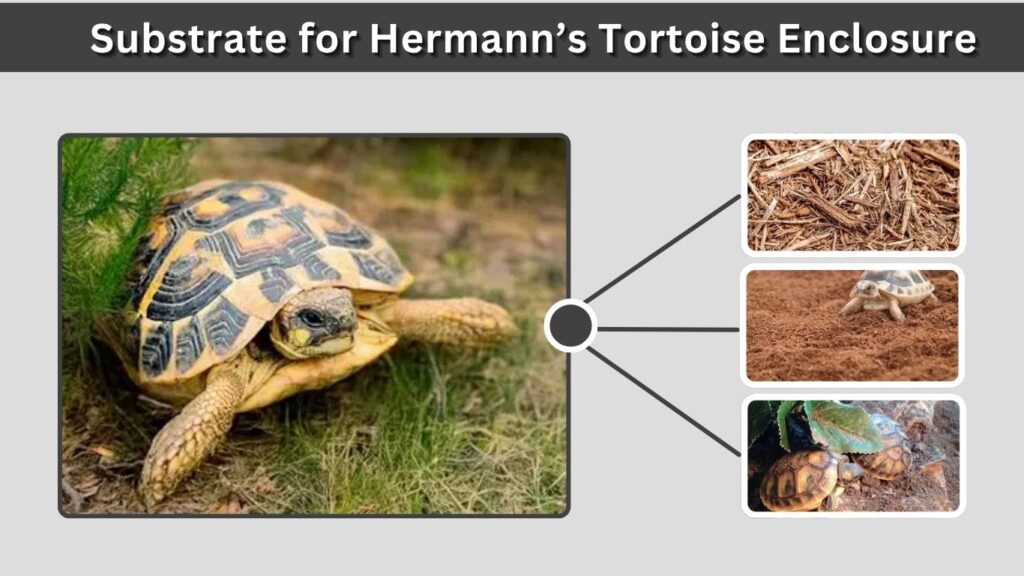
Substrate should allow digging, hold slight moisture in some areas, and stay safe if accidentally eaten. It should not be dusty, moldy, or sharp.
Good substrate options include:
- Organic topsoil without fertilizer
- Coconut coir
- Cypress mulch
- Soil and coco coir mix
- Soil and sand mix in small amounts
Avoid cedar, pine shavings, cat litter, gravel, reptile carpet, and newspaper as a full-time substrate. Reptile carpet can trap waste and does not allow natural digging.
Plants for Hermann Tortoise Enclosure
Plants make the enclosure more natural and useful. They provide shade, grazing, enrichment, and hiding places. However, only safe plants should be used.
Safe Plants for Hermann’s Tortoise Enclosure
Good plant choices include:
- Dandelion
- Plantain weed
- Clover in moderation
- Hibiscus
- Mulberry
- Grape vine leaves
- Mallow
- Chickweed
- Pansy
- Nasturtium
- Opuntia cactus pads
- Safe grasses
Never use plants treated with pesticides, herbicides, or chemical fertilizers. Store-bought plants should be washed and kept chemical-free before adding them to the enclosure.
Eastern Hermann’s Tortoise Enclosure
An eastern Hermann’s tortoise enclosure is very similar to a general Hermann tortoise setup. Eastern Hermann’s tortoises may grow slightly larger than western Hermann’s tortoises, so they benefit from extra space. A large outdoor pen is ideal in suitable weather.
Eastern Hermann’s tortoises need:
- Spacious floor area
- Dry shelter
- Warm basking zone
- UVB indoors
- Edible weeds
- Digging substrate
- Secure walls
The enclosure should not be constantly damp. Good ventilation and dry hiding areas help prevent shell and respiratory problems.
Best Enclosure for Hermann Tortoise
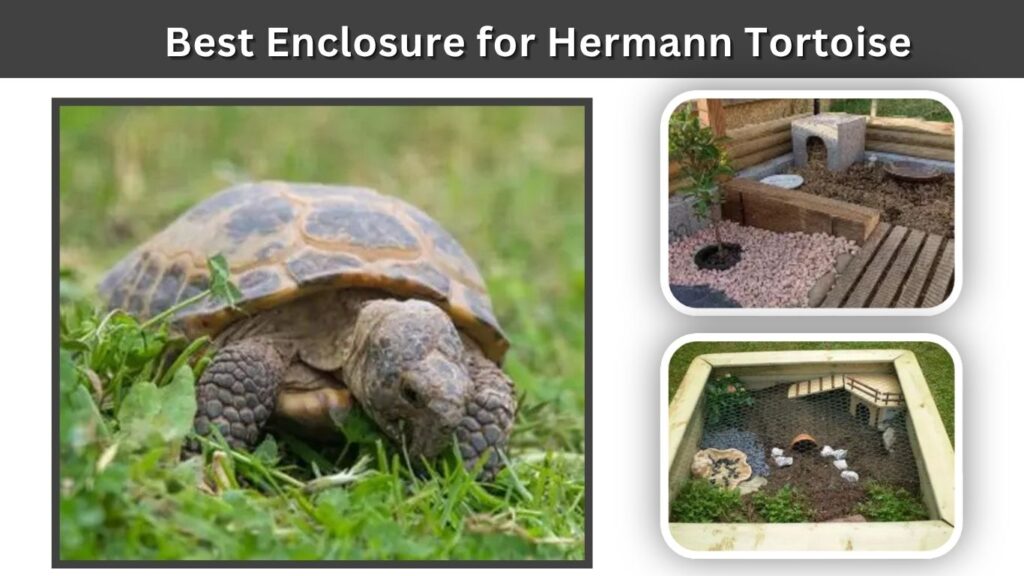
The best enclosure for Hermann tortoise care is usually a secure outdoor pen during warm weather and a large indoor tortoise table when outdoor housing is not possible. The exact setup depends on climate, tortoise age, and safety.
Best enclosure features include:
- Large walking area
- Natural sunlight when possible
- UVB backup indoors
- Several hides
- Safe soil
- Edible plants
- Predator-proof design
- Easy cleaning access
A good enclosure should encourage natural behavior, not just contain the tortoise.
Common Hermann Tortoise Enclosure Mistakes
Many enclosure problems come from small or poorly planned setups. These mistakes can affect health, appetite, shell growth, and activity.
Common mistakes include:
- Using a small glass tank
- No UVB light indoors
- Enclosure too cold
- No cool side
- No hiding areas
- Unsafe substrate
- Toxic plants
- Outdoor pen without predator protection
- Walls that are too low
- Damp enclosure with poor drainage
A Hermann’s tortoise enclosure should be checked daily for temperature, water cleanliness, food waste, and safety issues.
FAQs
How big does a Hermann’s tortoise enclosure need to be?
An adult Hermann’s tortoise enclosure should be at least 6 ft x 3 ft, but 8 ft x 4 ft or larger is better. Outdoor enclosures can be even bigger. More space allows better exercise, grazing, temperature zones, and natural behavior.
What is the best enclosure for a Hermann tortoise?
The best enclosure for a Hermann tortoise is a secure outdoor pen in suitable weather and a large indoor tortoise table when kept inside. It should include heat, UVB, safe substrate, hiding areas, clean water, edible plants, and strong escape-proof walls.
Can Hermann’s tortoises live outside?
Yes, Hermann’s tortoises can live outside in safe weather if the enclosure is secure, dry, sunny, and predator-proof. They need shade, shelter, water, safe plants, and protection from cold nights, flooding, dogs, rats, raccoons, and birds.
What temperature should a Hermann tortoise enclosure be?
A Hermann tortoise enclosure should have a basking spot around 90–100°F, a warm side around 80–85°F, and a cool side around 70–75°F. Night temperatures can be cooler, but babies need more stable warmth than adults.
What plants are safe for a Hermann tortoise enclosure?
Safe plants include dandelion, plantain weed, hibiscus, mulberry leaves, grape leaves, mallow, chickweed, pansy, nasturtium, clover in moderation, and safe grasses. Avoid plants sprayed with pesticides, herbicides, or chemical fertilizers.