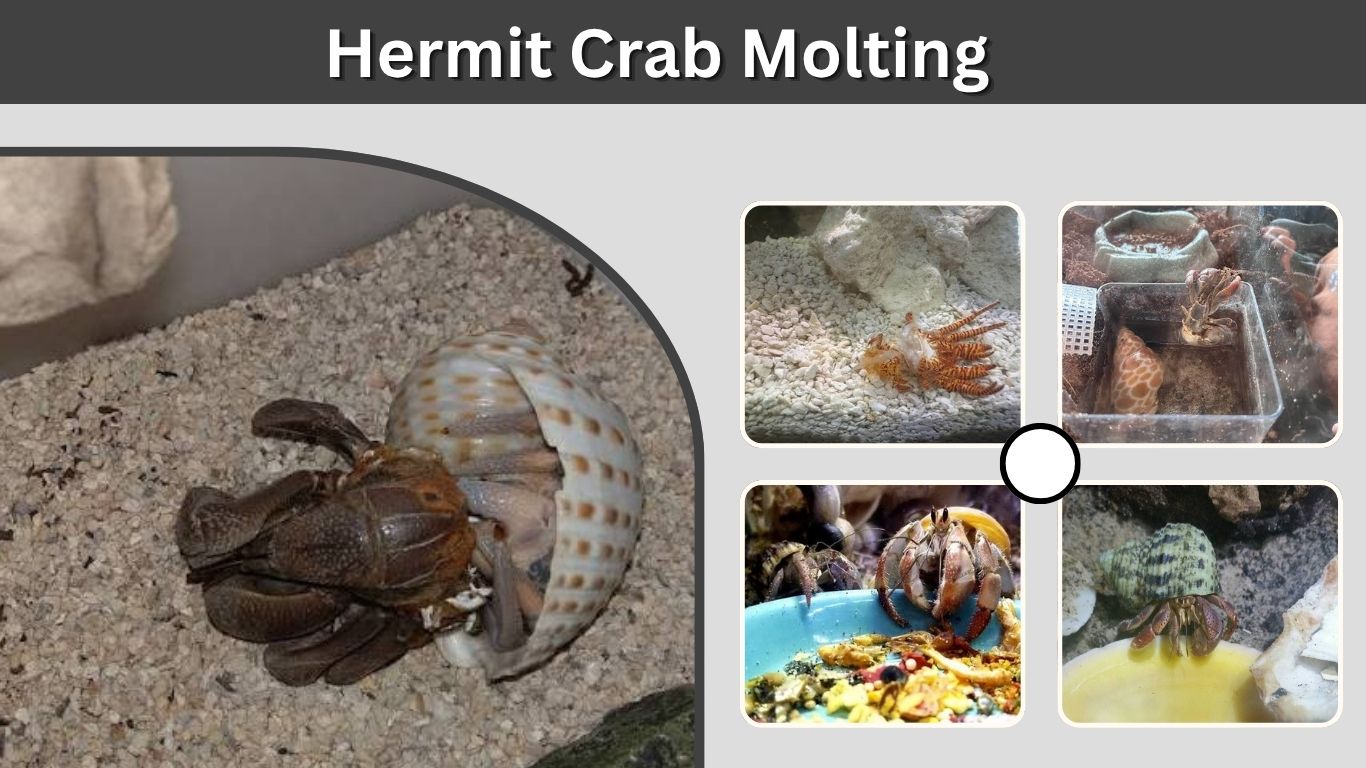
Hermit crab molting is a natural but vulnerable process in which the crab sheds its old exoskeleton and develops a larger one. A molting crab may disappear underground, stop moving, lie on its side, or appear dead. Although these behaviors can worry owners, unnecessary handling or digging can cause serious injury. Understanding the signs, stages, duration, and proper care will help you protect your hermit crab until it safely completes its molt.
What Is Hermit Crab Molting?
Molting is the process through which a hermit crab sheds its hard external covering, known as an exoskeleton. Because this covering cannot expand as the crab grows, it must periodically be replaced.
Before shedding, the crab forms a new, soft exoskeleton beneath the old one. It then increases the water pressure inside its body until the old covering splits. After emerging, the new exoskeleton is soft and must gradually harden.
Molting also allows hermit crabs to repair injuries and regenerate missing legs or claws. The borrowed snail shell is different from the crab’s exoskeleton. Many land hermit crabs remain inside their shell while molting, although shell changing may happen before or after the process.
Signs a Hermit Crab Is Preparing to Molt
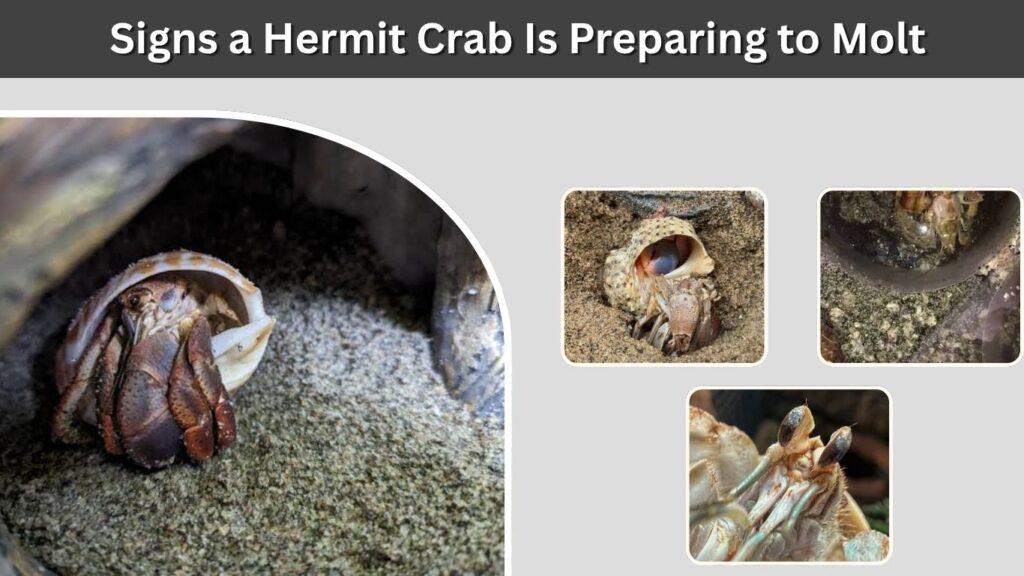
Not every hermit crab displays the same pre-molt behavior. Some show noticeable changes for several days or weeks, while others bury themselves with almost no warning.
Common Pre-Molt Signs
A hermit crab preparing to molt may show:
- Increased digging or testing different areas of the substrate
- Greater interest in protein, calcium, and mineral-rich foods
- Increased drinking or time spent near water dishes
- Sudden restlessness or unusual daytime activity
- Reduced activity and longer periods of hiding
- Cloudy, dull, or less reflective eyes
- Drooping eyestalks
- Spending more time alone or beneath decorations
- A swollen or fluid-filled appearance inside the shell
Appetite can increase or decrease before molting. Therefore, appetite alone cannot confirm that a molt is approaching. Several signs appearing together provide a better indication.
Hermit Crab Molting Stages
Molting is more than the moment when the old exoskeleton comes off. It includes preparation, shedding, hardening, and recovery.
| Molting stage | What happens |
| Pre-molt | The crab stores water and nutrients, changes its behavior, and searches for a safe location. |
| Burial | The crab usually digs into deep substrate and creates a protected underground chamber. |
| Shedding | The old exoskeleton separates and the crab slowly pulls its body free. |
| Soft-shell stage | The new exoskeleton is pale, flexible, and extremely vulnerable to damage. |
| Hardening | The crab eats much of its old exoskeleton and uses the recovered minerals during hardening. |
| Post-molt | The crab regains strength, becomes more active, and eventually returns to the surface. |
A freshly molted hermit crab may appear pale, bluish, pinkish, or unusually clean. Its legs and claws can initially look soft or slightly swollen. The old exoskeleton should not be removed because the crab may eat it to recover calcium, minerals, and other nutrients.
How Long Does Hermit Crab Molting Take?
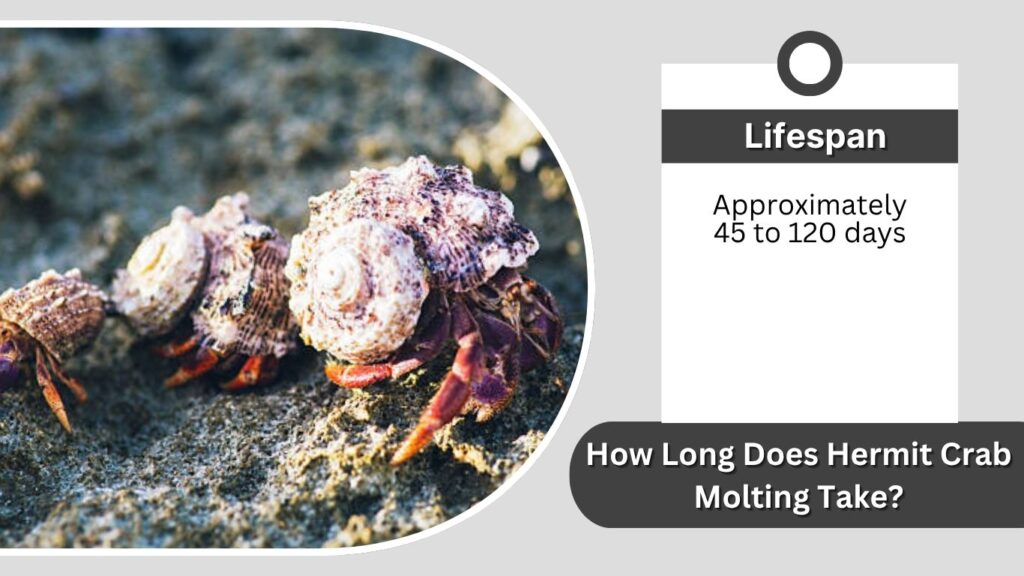
A hermit crab may remain underground for several weeks or several months. The Smithsonian notes that molting can take approximately 45 to 120 days in some hermit crabs, although the exact period varies greatly.
The duration depends on:
- Species
- Body size
- Age
- Health and nutritional condition
- Habitat temperature and humidity
- Time required for the new exoskeleton to harden
Small or young crabs generally grow more quickly and may molt more frequently. Larger adults tend to remain underground longer and may molt less often. However, there is no reliable calendar that applies to every crab. Growth and molting frequency vary according to species, size, age, and health.
Molting Hermit Crab vs. Dead Hermit Crab
A surface-molting hermit crab can look dead because it may lie on its side, remain motionless, and partially hang from its shell. Do not assume that a motionless crab has died.
Signs the Crab May Be Molting
A molting crab may:
- Lie on its side in a curled position
- Show little or no visible movement
- Have an intact body without decomposition
- Have a duplicate-looking exoskeleton nearby
- Appear pale or soft after shedding
- Remain close to its discarded exoskeleton
The shed exoskeleton can resemble a dead crab because it includes empty legs, claws, eyestalk coverings, and other body-shaped sections.
Signs the Crab May Have Died
Possible signs of death include a strong decaying odor, limp tissue falling from the shell, visible decomposition, or a complete lack of response combined with worsening physical condition. No single sign is always conclusive, so avoid pulling the crab from its shell or immediately disposing of it.
Never dig up a buried crab simply to determine whether it is alive. Digging can collapse its chamber, damage its soft body, interrupt shedding, or kill it.
How to Care for a Molting Hermit Crab
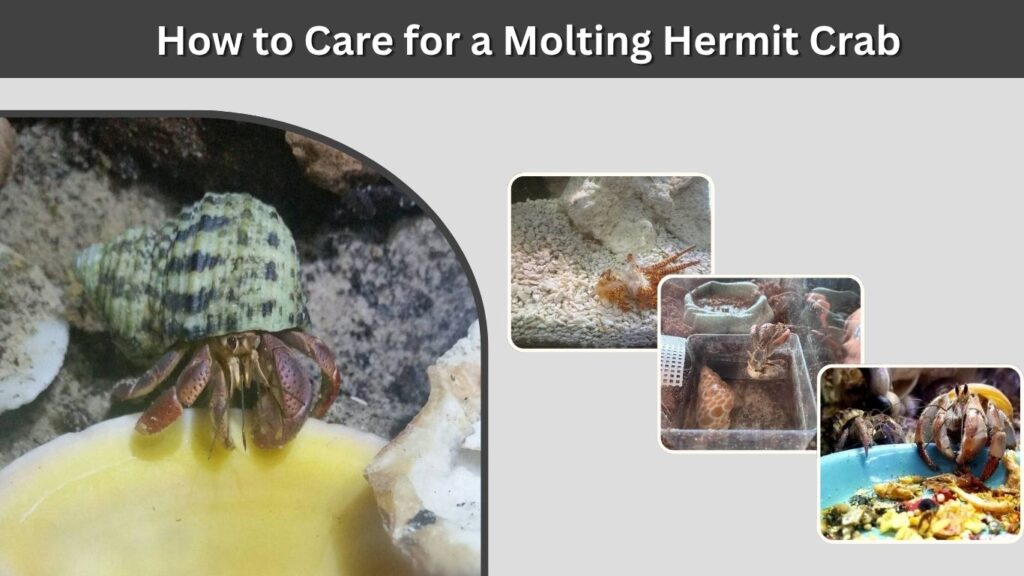
The safest care method is usually non-interference. Your responsibility is to maintain suitable conditions while allowing the crab to complete the process naturally.
Keep the Habitat Stable
Maintain stable, species-appropriate warmth and humidity. Land hermit crabs require humid air for proper respiration, and sudden environmental changes can interfere with recovery.
The enclosure should contain substrate deep enough for the largest crab to bury itself completely. LHCOS recommends a depth of at least three times the height of the largest crab. The substrate should hold tunnels without being soaked or waterlogged.
Avoid Digging and Handling
Do not dig up, touch, relocate, bathe, or repeatedly check a molting hermit crab. Even gentle handling can damage the crab’s soft new exoskeleton. Movement and vibration around the enclosure should also be minimized.
Continue Providing Essential Resources
Even when one crab is underground, continue supplying:
- Fresh, varied food
- Protein-rich foods
- Calcium and mineral sources
- Dechlorinated fresh water
- Properly prepared marine saltwater
- Natural, unpainted shells in several sizes
Once the crab returns to the surface, it may be hungry, weak, and interested in changing shells. Immediate access to food, minerals, water, and suitable shells supports post-molt recovery.
What to Do About a Surface Molt
A surface molt occurs when a hermit crab sheds its exoskeleton above the substrate instead of inside an underground chamber. It can happen when the substrate is too shallow or unsuitable, conditions are unstable, or the crab is too weak to finish digging.
Do not pick up or reposition the crab. Protect it from tank mates by carefully placing a secure barrier around the molting area. The barrier should reach the bottom of the enclosure so other crabs cannot dig underneath it.
Keep the discarded exoskeleton beside the crab, reduce light and vibration, and maintain stable habitat conditions. The barrier should provide protection without requiring the molting crab to be moved. Seek advice from an experienced exotic veterinarian when the crab is injured, completely out of its shell, or visibly deteriorating.
Hermit Crab Care After Molting
A hermit crab may remain weak and inactive after returning to the surface. Give it time to regain strength before handling or making major enclosure changes.
Provide protein, calcium, trace minerals, fresh water, marine saltwater, and several correctly sized natural shells. Watch for aggression from tank mates without repeatedly disturbing the recovering crab. Reduced competition and easy access to resources are especially important during this period.
FAQs
How often do hermit crabs molt?
Molting frequency depends on the crab’s species, size, age, health, diet, and growth rate. Young and small crabs may molt more frequently, while large adults generally have longer intervals between molts. No fixed schedule applies to every hermit crab.
Can I touch a molting hermit crab?
No. A molting crab has a soft, fragile exoskeleton that can be injured by handling. Do not touch, lift, dig up, or relocate it unless a qualified professional identifies an immediate life-threatening emergency.
Do hermit crabs eat while molting?
Hermit crabs generally do not leave their protected chamber to visit the food dish during an underground molt. However, they commonly eat their discarded exoskeleton, which provides minerals and nutrients needed for recovery and hardening.
Do hermit crabs change shells when they molt?
Molting and shell changing are separate processes. The crab molts its body exoskeleton, not its borrowed snail shell. It may change shells before or after molting if its previous shell no longer fits comfortably.
Can hermit crabs die during molting?
Yes. Molting is one of the most physically demanding stages of a hermit crab’s life. Poor nutrition, shallow substrate, unstable humidity, disturbance, aggression, and underlying health problems can increase the risk of an unsuccessful molt.