
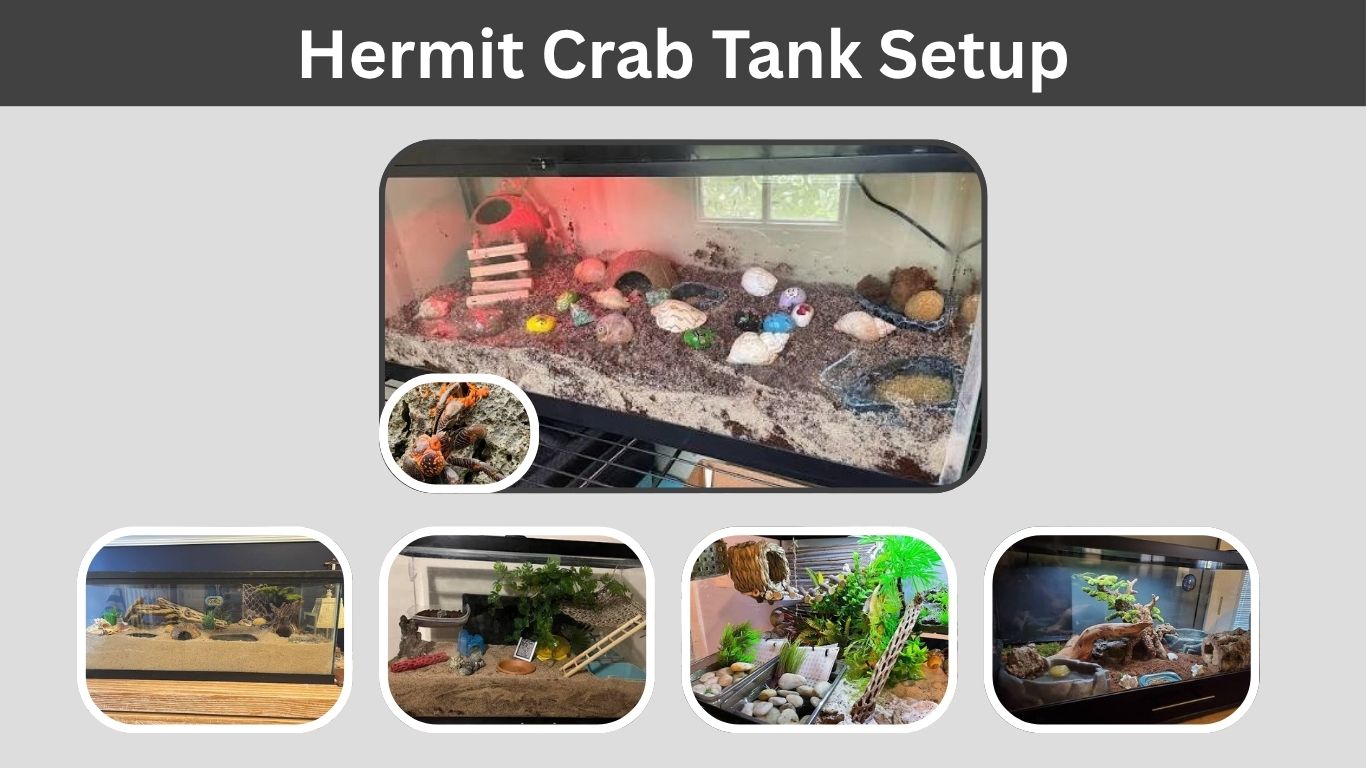
A proper hermit crab tank setup should recreate the warm, humid conditions of a tropical coastal environment. Land hermit crabs need much more than a small plastic carrier with gravel. Their tank must provide deep substrate for molting, separate fresh and saltwater pools, stable heat and humidity, natural shells, hiding places and climbing structures. Setting up the habitat before bringing the crabs home reduces stress and creates an environment where they can breathe, explore, grow and display natural behaviors.
What Size Tank Do Hermit Crabs Need?
Tank size affects how much room is available for substrate, pools, shells and enrichment. A glass aquarium with a secure lid is generally the best option because it retains heat and humidity better than an open cage or small plastic container.
Five-Gallon Hermit Crab Tank
A five-gallon tank is too small for a permanent hermit crab habitat. Once deep substrate, two water pools and hiding areas are added, very little usable space remains.
It may serve as temporary emergency housing, but owners should upgrade to a larger glass aquarium as soon as possible.
10-Gallon Hermit Crab Tank Setup
A 10-gallon glass tank is generally considered the minimum for up to two adult hermit crabs. It should have a tightly fitting lid, at least six inches of suitable substrate when possible and enough space for two accessible water pools.
A 10-gallon setup can become crowded quickly, especially with medium or large crabs. Use compact climbing structures and stackable enrichment to maximize the available space.
20-Gallon Hermit Crab Tank Setup
A 20-gallon tank is a more practical choice for a small group. PetMD recommends adding approximately five gallons of capacity for every additional crab beyond the first two and gives a 20-gallon tank as an example for four crabs.
| Tank size | General use |
| 5 gallons | Temporary housing only |
| 10 gallons | Up to two crabs |
| 20 gallons | Small group or roomier beginner setup |
| 30–40 gallons | Several medium or growing crabs |
| Larger tanks | Large crabs or established colonies |
These are starting guidelines. The crabs’ size, number and available floor space should always be considered.
Hermit Crab Tank Setup Supplies
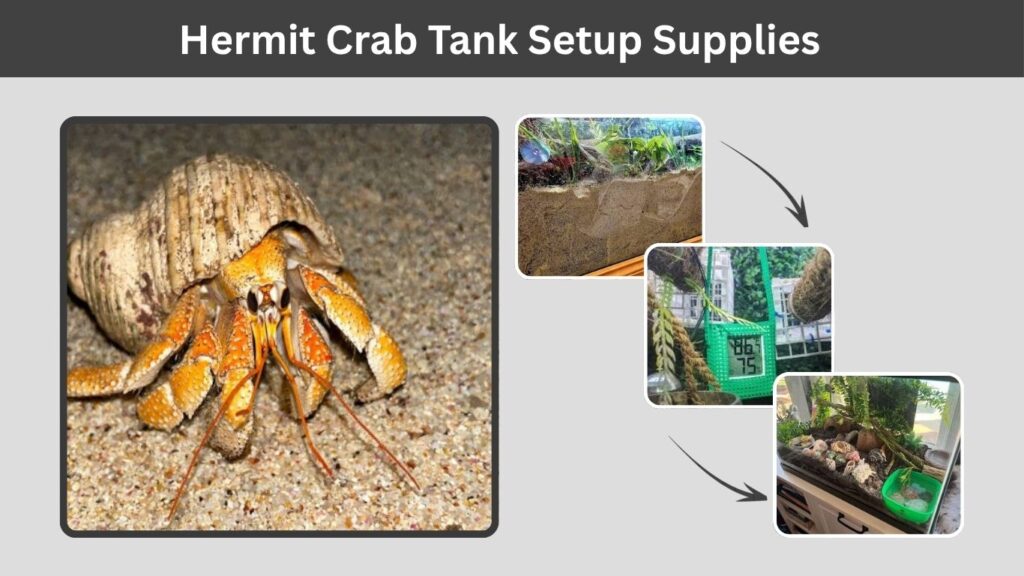
Prepare and test the tank before adding hermit crabs. The habitat should be able to maintain its target temperature and humidity for at least a day without major fluctuations.
Essential Equipment
A beginner setup should contain:
- Glass aquarium with a fitted lid
- Digital thermometer and hygrometer
- Thermostatically controlled heat source
- Sand and coconut-fiber substrate
- Freshwater and marine saltwater pools
- Water conditioner
- Marine aquarium salt mix
- Food dish and calcium source
- Natural, unpainted shells
- Hides, branches and climbing surfaces
Many commercial starter kits exclude important items or include a tank that is too small. Buying the equipment separately usually produces a more suitable long-term habitat. Small plastic carriers, wire cages and novelty tanks cannot reliably support the heat, humidity or substrate depth land hermit crabs require.
How to Set Up a Hermit Crab Tank
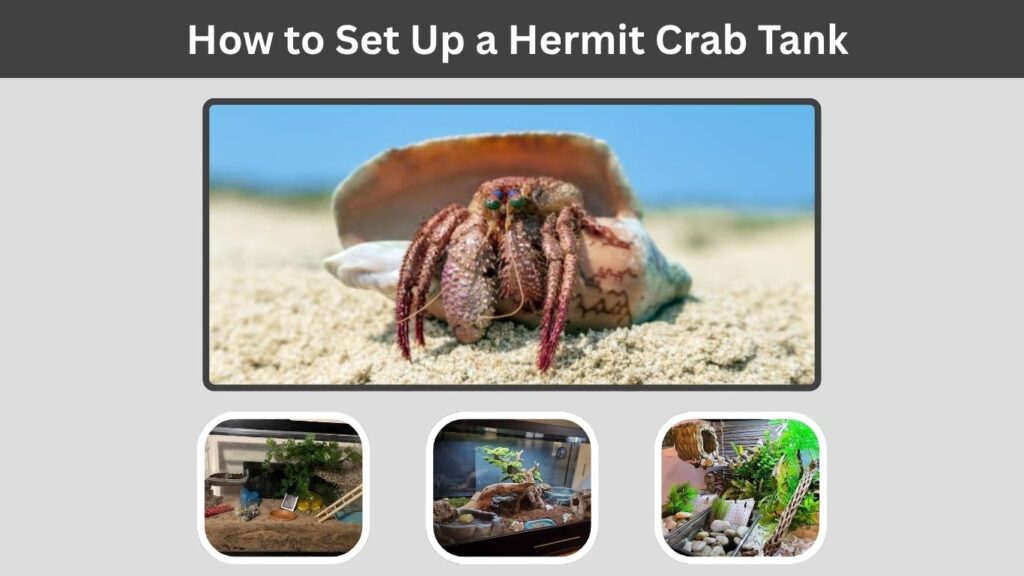
Build the habitat from the bottom upward. Substrate, water and environmental controls are more important than decorative accessories.
1. Prepare Deep Substrate
Hermit crabs bury themselves to molt, rest and regulate moisture. Use substrate at least three times deeper than the height of the largest crab. The Smithsonian increased its land hermit crab substrate to six inches to provide room for digging and molting.
A commonly recommended mixture is approximately five parts clean sand to one part coconut fiber. Add treated water gradually until the mixture holds the shape of a tunnel when pressed but does not drip when squeezed.
Avoid gravel, calcium sand, pine shavings and cedar shavings. Wood shavings may contain oils that irritate hermit crabs, while loose gravel cannot support safe molting tunnels.
2. Install the Heat Source
Create a warm area and a slightly cooler area so the crabs can move between them. A useful general target is approximately 80°F on the warm side and around 70°F on the cooler side or during nighttime. Check both areas daily with digital thermometers.
Any heating device should be regulated by a thermostat. Avoid hot rocks because direct contact can cause burns. Keep the tank away from air conditioners, cold drafts and direct sunlight.
3. Maintain Proper Humidity
Land hermit crabs breathe using modified gills that must remain moist. Most commonly kept species require consistently high humidity, generally around 75–85%, although individual species may have slightly different needs.
Use a fitted glass, acrylic or polycarbonate lid to retain moisture. Water pools, damp substrate and moss can also support humidity. Do not depend entirely on frequent misting because excessive water may flood the substrate.
Place the hygrometer near the center of the tank, close to the level where the crabs spend most of their time.
4. Add Fresh and Saltwater Pools
Land hermit crabs need continuous access to two separate pools: one containing dechlorinated freshwater and another prepared with a marine aquarium salt mix. These pools support hydration, shell-water balance and normal behavior.
Each pool should be stable and large enough for the biggest crab to submerge. Add plastic mesh, stones or another textured ramp so smaller crabs can enter and exit safely.
Never make saltwater with ordinary table salt. Use a marine aquarium product designed to reproduce seawater minerals.
5. Create a Shell Shop
Provide several natural, unpainted shells in different sizes and opening shapes. A good starting point is at least three to five alternatives for each crab. New options should include shells slightly larger than the crab’s current one.
Place the shells together in a shallow container or open section of the tank. Painted shells should be avoided because coatings can peel, alter the shell’s surface or contaminate the habitat.
6. Add Hides and Climbing Areas
Hermit crabs are active climbers and benefit from using vertical space. Suitable tank-setup ideas include:
- Cork bark and driftwood
- Coconut-shell hides
- Cholla wood
- Rope or plastic climbing mesh
- Artificial aquarium plants
- Raised moss baskets
- Leaf litter
- Secure branches
Provide multiple hiding places and routes through the tank. Plants, cover, elevated platforms and climbing structures increase usable space while supporting natural exploration and foraging.
Make sure heavy decorations cannot fall or collapse into the substrate where a crab may be molting.
Land vs Marine Hermit Crab Tank Setup
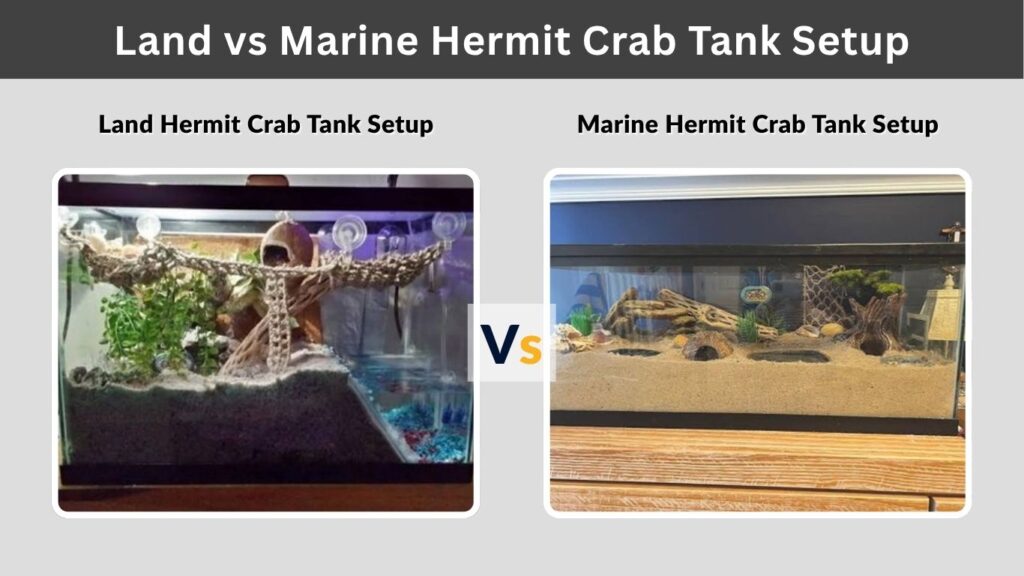
Land and marine hermit crabs require completely different habitats. A typical pet land hermit crab needs a humid terrestrial tank with deep substrate and two water pools.
Marine hermit crabs live underwater and require a fully cycled saltwater aquarium with suitable salinity, filtration, oxygenation and marine tank mates. They cannot survive long-term in a land-based crab tank.
Identify the species before creating the setup. Never place a marine hermit crab in a mostly dry tank or submerge a land hermit crab permanently in an aquarium.
Maintaining the Tank
Remove spoiled food and visible waste daily. Refill or change the pools as needed, inspect the equipment and confirm that the temperature and humidity remain stable.
Do not perform unnecessary complete substrate changes. A hermit crab may remain buried for weeks while molting, and digging it up can cause serious injury or death.
Check wooden decorations, moss and hidden areas for mold. Small surface patches can be removed, but widespread mold, standing water or a sour odor may indicate excessive moisture or spoiled food.
Common Tank Setup Mistakes
The most common errors include:
- Using a five-gallon or plastic carrier permanently
- Leaving the tank uncovered
- Providing shallow or dry substrate
- Offering only freshwater
- Using untreated tap water
- Heating without a thermostat
- Using painted shells
- Disturbing buried crabs
- Housing land and marine species together
- Keeping only one crab without considering its social needs
Land hermit crabs require warmth, humidity, deep molting substrate, fresh and marine saltwater, appropriate shells, a varied diet and opportunities to climb and interact. These are fundamental care requirements rather than optional decorations.
FAQs
What is the best hermit crab tank setup for beginners?
A 20-gallon glass aquarium with a fitted lid is a practical beginner option. Include deep sand-and-coconut-fiber substrate, regulated heating, a digital thermometer and hygrometer, fresh and saltwater pools, natural shells, hides and climbing structures.
Can two hermit crabs live in a 10-gallon tank?
Up to two adult hermit crabs may be housed in a 10-gallon tank as a minimum. However, a 20-gallon tank provides more room for deep substrate, full-size water pools, shells and enrichment.
Does a hermit crab tank need a lid?
Yes. A tightly fitting lid helps retain the high humidity land hermit crabs need for breathing and prevents them from escaping. Glass, acrylic or polycarbonate covers usually retain moisture better than an open mesh top.
How deep should the substrate be?
The substrate should be at least three times the height of the largest crab, with approximately six inches being a useful target for many setups. Larger crabs may require considerably deeper substrate to molt safely.
Can hermit crabs live in a regular fish tank?
A standard glass fish tank can become an excellent land hermit crab habitat after modification. Add a fitted lid, deep substrate, environmental monitors, heating, separate water pools and terrestrial furnishings. Do not fill it as an aquatic aquarium unless the species is a marine hermit crab.