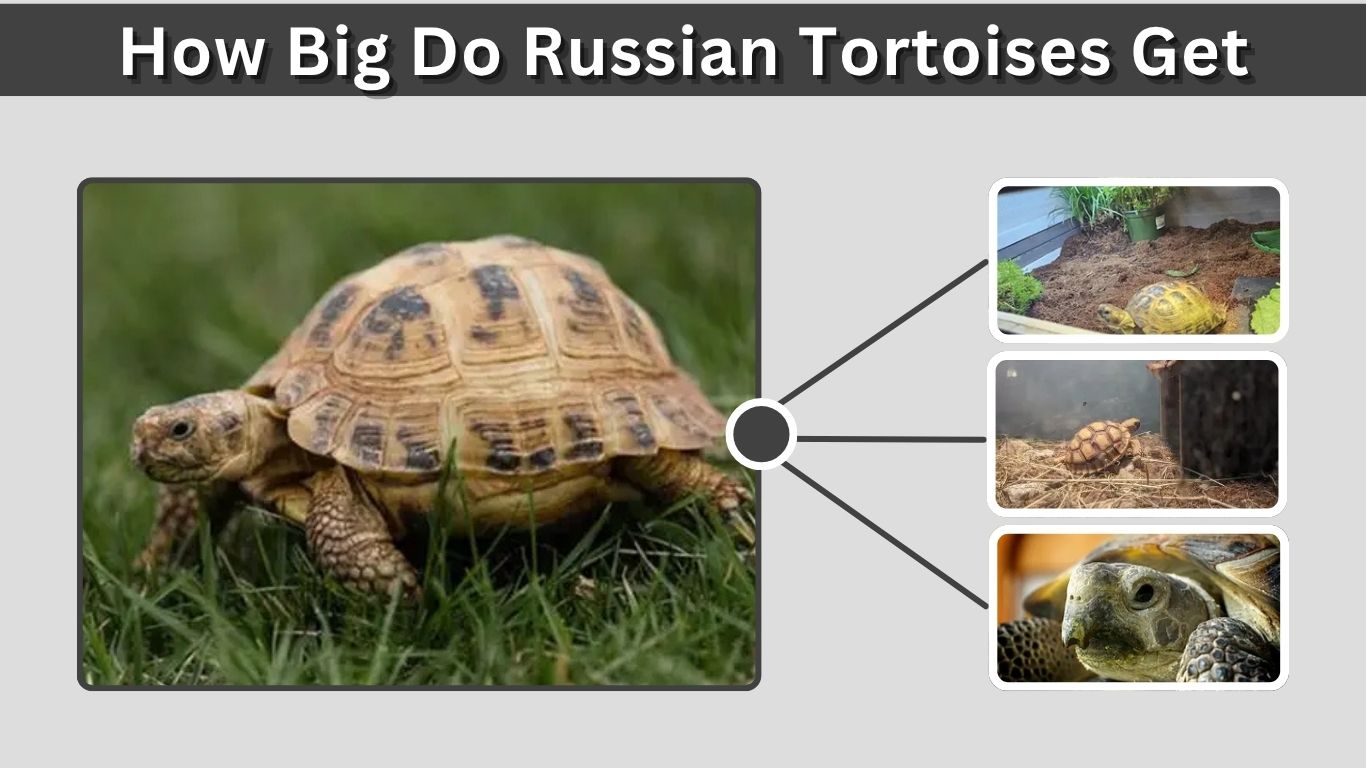
Russian tortoises stay small compared with many other pet tortoises, but they still need more space than many beginners expect. Most adults reach about 6 to 10 inches long, with females usually growing larger than males. Their final size depends on age, sex, diet, UVB lighting, exercise, and overall care. This guide explains their adult size, growth, weight, and housing needs.
How Big Do Russian Tortoises Get?
Russian tortoises are considered small tortoises, which is one reason they are popular pets. However, “small” does not mean they can live in a tiny tank. They are active walkers, strong diggers, and need enough floor space to move naturally.
Most adult Russian tortoises grow about 6 to 10 inches long. Males are usually closer to the smaller end, while females often grow larger and heavier. Some individuals may stay smaller, especially if they are male, young, or had poor early care. Others may become broad, heavy adults when raised well.
| Russian Tortoise Type | Common Adult Length | General Build |
| Adult male | 5–8 inches | Smaller, lighter, longer tail |
| Adult female | 7–10 inches | Larger, wider, heavier |
| Juvenile | 2–5 inches | Still growing, hard to sex |
| Full-grown adult | 6–10 inches | Compact but active |
Average Adult Size
A full-grown Russian tortoise is usually small enough to hold with two hands, but it still has a strong, solid body. The shell is rounded and low compared with some larger tortoise species. Adults usually look compact, sturdy, and built for digging.
Their size makes them easier to house than large tortoises like sulcatas. Still, they should not be treated like a small lizard or turtle that can live in a narrow glass tank. Russian tortoises need horizontal space because they walk and graze throughout the day.
Do Russian Tortoises Get Big?
Russian tortoises do not get huge. They stay much smaller than many other pet tortoise species. This makes them a manageable choice for keepers who want a tortoise but do not have space for a giant species.
However, they do get big enough to need a proper enclosure. A small baby may look fine in a small tank, but it will outgrow that setup. Even a 6-inch adult needs a wide enclosure with a basking area, cool side, hides, water, and deep substrate.
How Big Can a Russian Tortoise Get?
Most Russian tortoises stay under 10 inches, but larger females may reach the upper end of the range. A very large female may look much bigger than a male because she has a wider shell and heavier body.
A tortoise’s final size is affected by genetics and care. Good food, UVB lighting, calcium, and exercise support normal growth. Poor care may stunt growth, but stunted size is not healthy. A smaller tortoise is not always a healthier tortoise.
Male vs Female Russian Tortoise Size
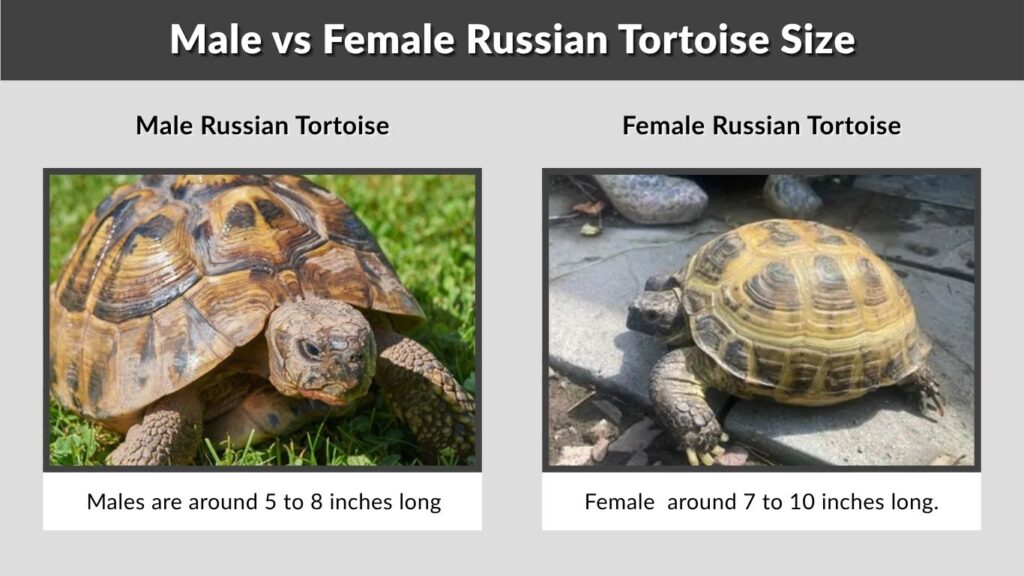
Male and female Russian tortoises often differ in size once they mature. Females are usually bigger because their bodies need room for egg production. Males are generally smaller but may have longer tails and more noticeable mating behavior.
How Big Do Male Russian Tortoises Get?
Male Russian tortoises usually stay smaller than females. Many adult males are around 5 to 8 inches long. They may look more compact and lighter, with a longer tail that is often tucked to the side.
A male’s smaller size can make him easier to handle, but he still needs a large enclosure. Some males are very active and may pace if kept in a cramped space. Males may also become territorial, especially if another tortoise is nearby.
How Big Do Female Russian Tortoises Get?
Female Russian tortoises are usually larger, often reaching around 7 to 10 inches long. They may look broader and heavier than males. This larger body size helps support egg development.
Because females are bigger, they may need more space, deeper substrate, and good calcium support. A female can lay infertile eggs even without mating, so she should have a safe area for digging and nesting. Her larger size also means she may eat more than a smaller male.
Which Is Bigger, Male or Female?
Females are usually bigger than males. This is one of the common ways keepers compare adult Russian tortoises. However, size alone should not be used to identify sex because age, diet, and health can change growth.
A young female may be smaller than an older male. A poorly raised female may also stay small. Tail shape and cloaca position are better signs for sexing adults, while size works best as a supporting clue.
Russian Tortoise Growth Rate
Russian tortoises grow slowly compared with many common pets. They do not become full-sized in a few months. Their growth depends on food quality, lighting, heat, hydration, exercise, and general health.
Baby to Juvenile Growth
Baby Russian tortoises are small and delicate. During the early years, they grow gradually as their bones, shell, and muscles develop. They need proper UVB lighting, safe heat, hydration, and a high-fiber diet.
Young tortoises should not be overfed to make them grow faster. Fast growth can lead to shell problems and poor health. Slow, steady growth is better. A healthy juvenile should be active, alert, and gaining size at a natural pace.
When Do Russian Tortoises Stop Growing?
Russian tortoises continue growing for several years. Growth becomes slower as they mature. They may reach most of their adult size after several years, but shell shape and body weight can still change with age and care.
A tortoise may look “full grown” but still gain weight or broaden slightly over time. Healthy adult growth should be gradual. Sudden weight gain usually means overfeeding or too little exercise, not healthy development.
Why Some Russian Tortoises Stay Small
Some Russian tortoises stay small because they are male, young, or naturally smaller individuals. Others stay small because of poor care. Lack of UVB, weak diet, low temperatures, dehydration, and small enclosures can all affect growth.
A small tortoise is not always a problem, but poor growth should be checked. If the tortoise has soft shell areas, swollen eyes, weakness, poor appetite, or trouble walking, it may need veterinary care.
Weight and Body Condition
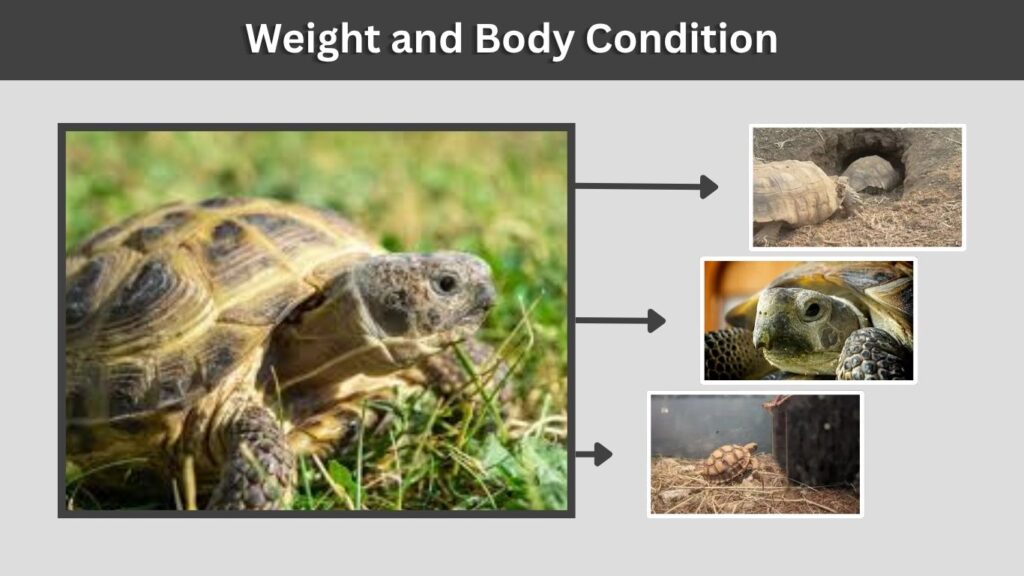
Size is not only about shell length. Weight and body condition also matter. A Russian tortoise should feel solid but not swollen or overly heavy. It should be able to walk strongly and pull its legs into the shell.
How Heavy Do Russian Tortoises Get?
Adult Russian tortoises can vary in weight depending on sex, age, and body size. Females are often heavier because they are larger. Males are usually lighter and more compact.
Weight is best judged over time. A single number may not tell the whole story. Regular weighing helps owners notice weight loss, dehydration, or unhealthy weight gain. Sudden changes should not be ignored.
Signs of a Healthy Size
A healthy Russian tortoise should have a firm shell, clear eyes, steady movement, and a good appetite. Its legs should look strong, not thin or swollen. The body should not bulge excessively from the shell.
Healthy size signs include:
- Firm, well-shaped shell
- Strong walking and digging
- Clear, open eyes
- Steady appetite
- Normal waste passing
- Gradual growth in young tortoises
- Stable weight in adults
- Active basking and exploring
If the tortoise looks weak, underweight, bloated, or inactive, care conditions should be reviewed.
Overweight Russian Tortoises
Russian tortoises can become overweight if they eat too much rich food and do not have enough space to move. Overfeeding can stress the body and make movement harder. A tortoise should not be fed like a mammal or given frequent treats.
Avoid fruit, pellets as the main diet, and high-protein foods. Their diet should be based on safe weeds, grasses, leafy greens, and edible flowers. Exercise space is just as important as food quality.
Enclosure Size for Russian Tortoises
Russian tortoises need a large floor area because they are active. They walk, dig, climb, explore, and graze. A small tank may seem convenient, but it can lead to stress and poor health over time.
What Size Tank Should I Get?
A 20-gallon tank is too small for a Russian tortoise. Even juveniles benefit from more floor space. Adults need a wide enclosure, not a tall one. Floor area matters more than height because they are ground-dwelling reptiles.
Glass tanks can also cause pacing because the tortoise may try to walk through the clear walls. Tortoise tables, large indoor pens, or safe outdoor enclosures are usually better choices. The setup should include a warm basking side, a cooler side, hides, water, and deep substrate.
Why Floor Space Matters
Russian tortoises are natural roamers. In the wild, they move across dry grasslands and rocky areas while searching for food. A cramped enclosure does not allow enough movement.
More floor space helps with:
- Exercise
- Digging
- Healthy weight
- Natural grazing
- Temperature choice
- Reduced stress
- Better muscle strength
- More enrichment
A larger enclosure also makes it easier to create a proper temperature gradient. The tortoise can choose warm or cool areas as needed.
Can a Russian Tortoise Live Outside?
A Russian tortoise can live outside in safe climates and secure enclosures. Outdoor living can provide natural sunlight and more room to move. However, the enclosure must be dry, escape-proof, predator-proof, and free from pesticides.
They should not be left outside in unsafe cold, flooding, extreme heat, or constant dampness. In many areas, a mixed setup works best: outdoor time during safe weather and indoor housing during poor weather.
Factors That Affect Russian Tortoise Size
A Russian tortoise’s adult size is shaped by both natural and care-related factors. Genetics sets the basic range, but daily care determines whether the tortoise grows normally and stays healthy.
Diet and Nutrition
A proper diet supports steady growth. Russian tortoises need high-fiber, low-sugar foods. Good choices include dandelion greens, plantain leaves, clover, hibiscus leaves, mulberry leaves, grasses, and safe leafy greens.
Avoid feeding fruit often. Also avoid meat, dairy, dog food, cat food, bread, and processed foods. These foods do not match their natural diet and may cause long-term health problems.
UVB, Calcium, and Shell Growth
UVB lighting and calcium are essential for shell and bone development. Without UVB, a Russian tortoise cannot use calcium properly. This can lead to metabolic bone disease, weak bones, soft shell problems, and poor growth.
Indoor tortoises need a high-quality UVB light replaced on schedule. They also need calcium support, especially growing juveniles and egg-laying females. Natural sunlight is helpful, but sunlight through glass does not provide useful UVB.
Temperature and Activity
Temperature affects digestion, appetite, and activity. If the enclosure is too cold, a Russian tortoise may become sluggish and stop eating. If it is too hot without a cool area, it may become stressed or dehydrated.
A proper basking spot and cooler zone help the tortoise regulate body temperature. Active tortoises digest food better, exercise more, and maintain healthier body condition.
Should You Get a Russian Tortoise?
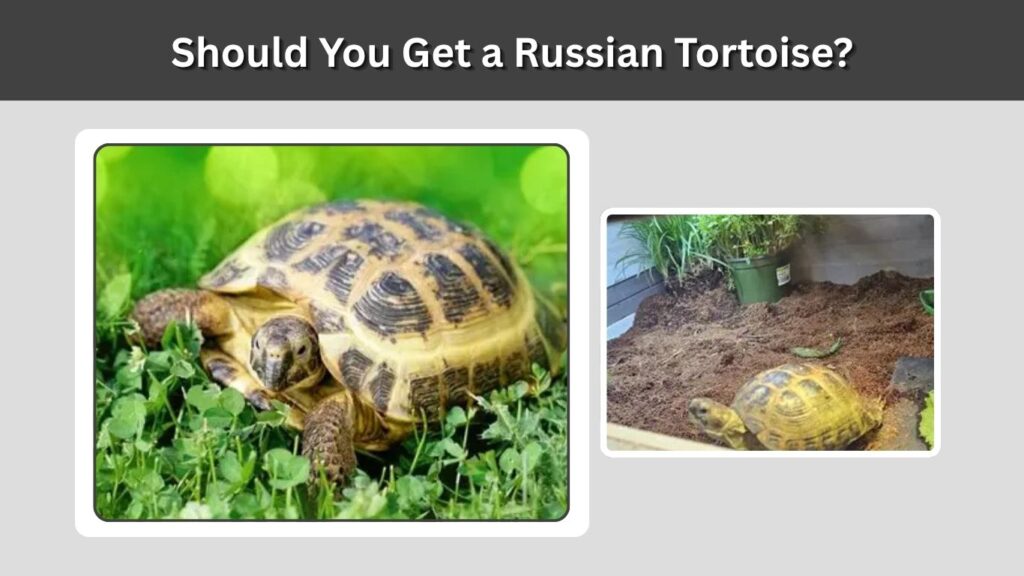
Russian tortoises can be good pets for people who understand their long-term needs. They stay small compared with many tortoises, but they still require space, lighting, heat, diet planning, and decades of care.
Are Russian Tortoises Good for Beginners?
Russian tortoises can be suitable for beginners who are prepared. They are hardy, small, and usually active during the day. However, they are not low-effort pets. Poor care can cause serious health problems.
Beginners should learn about UVB lighting, basking temperatures, calcium, diet, enclosure size, and hydration before buying one. A healthy setup should be ready before the tortoise comes home.
Do Russian Tortoises Get Lonely?
Russian tortoises do not need another tortoise for companionship. They are generally solitary animals and often do best alone. Keeping two together can cause bullying, chasing, biting, or food competition.
A single Russian tortoise can live a healthy life with proper care and enrichment. Hides, digging space, safe plants, and outdoor time are better than adding another tortoise just for company.
Things to Know Before Getting One
Before getting a Russian tortoise, think about space, cost, lifespan, and daily care. These tortoises can live for decades, so they are a long-term commitment. They also need more floor space than many pet store setups suggest.
Important things to know:
- They need a large enclosure
- They require UVB lighting indoors
- They should eat mostly weeds and greens
- They do not need a companion
- They can dig and escape
- They may live for decades
- They should not live with other reptiles
- They need dry, well-managed housing
Buying the tortoise is only the first step. The enclosure, lighting, diet, and long-term care matter more.
Common Size and Growth Problems
Russian tortoises are hardy, but size and growth problems can happen when care is incorrect. Slow growth, poor appetite, weak shell, and low activity often point to husbandry issues.
Why Is My Russian Tortoise Not Eating?
A Russian tortoise may stop eating if it is too cold, stressed, dehydrated, sick, or adjusting to a new home. Poor UVB lighting and wrong foods can also reduce appetite.
First, check the enclosure temperature and lighting. A tortoise that cannot warm up properly may not digest food well. Offer safe greens and weeds, provide clean water, and make sure the enclosure has hiding areas. If appetite does not return, contact a reptile vet.
Do Russian Tortoises Get Sluggish When Cold?
Yes, Russian tortoises can become sluggish when temperatures are too low. They rely on external heat to stay active and digest food. A cold tortoise may sleep more, eat less, and move slowly.
Cold conditions should not be ignored. If the enclosure is too cool for too long, the tortoise may become weak or sick. A proper basking area and temperature gradient are necessary for normal activity.
Can a Russian Tortoise Outgrow Its Enclosure?
Yes, a Russian tortoise can outgrow a small starter enclosure. A baby or juvenile may seem comfortable at first, but adults need much more room. If the tortoise paces, scratches at walls, or constantly tries to escape, the enclosure may be too small or poorly designed.
Upgrading the enclosure improves movement, enrichment, and stress control. A larger setup also helps maintain better heat zones and natural behavior.
FAQs
How big do Russian tortoises get?
Most Russian tortoises grow about 6 to 10 inches long as adults. Males are usually smaller, often around 5 to 8 inches, while females are commonly larger and heavier. Their final size depends on sex, age, diet, UVB lighting, and general care.
How big do female Russian tortoises get?
Female Russian tortoises usually grow larger than males. Many adult females reach about 7 to 10 inches long and have a wider, heavier body. Their larger size helps support egg production. Females also need enough space, calcium, UVB, and a suitable digging area.
How big do male Russian tortoises get?
Male Russian tortoises are usually smaller than females. Many adult males are about 5 to 8 inches long. They may have a longer tail and a lighter body. Even though males are smaller, they still need a large enclosure with room to walk and dig.
Can a Russian tortoise live in a 20-gallon tank?
A 20-gallon tank is too small for a Russian tortoise, especially long term. These tortoises need wide floor space for walking, digging, basking, and hiding. A larger tortoise table, indoor pen, or safe outdoor enclosure is much better for healthy movement and stress control.
Should I get a Russian tortoise?
A Russian tortoise can be a good pet if you can provide proper space, UVB lighting, heat, diet, and long-term care. They stay small compared with many tortoises, but they are not low-maintenance. They also live for decades and do not need a companion.