
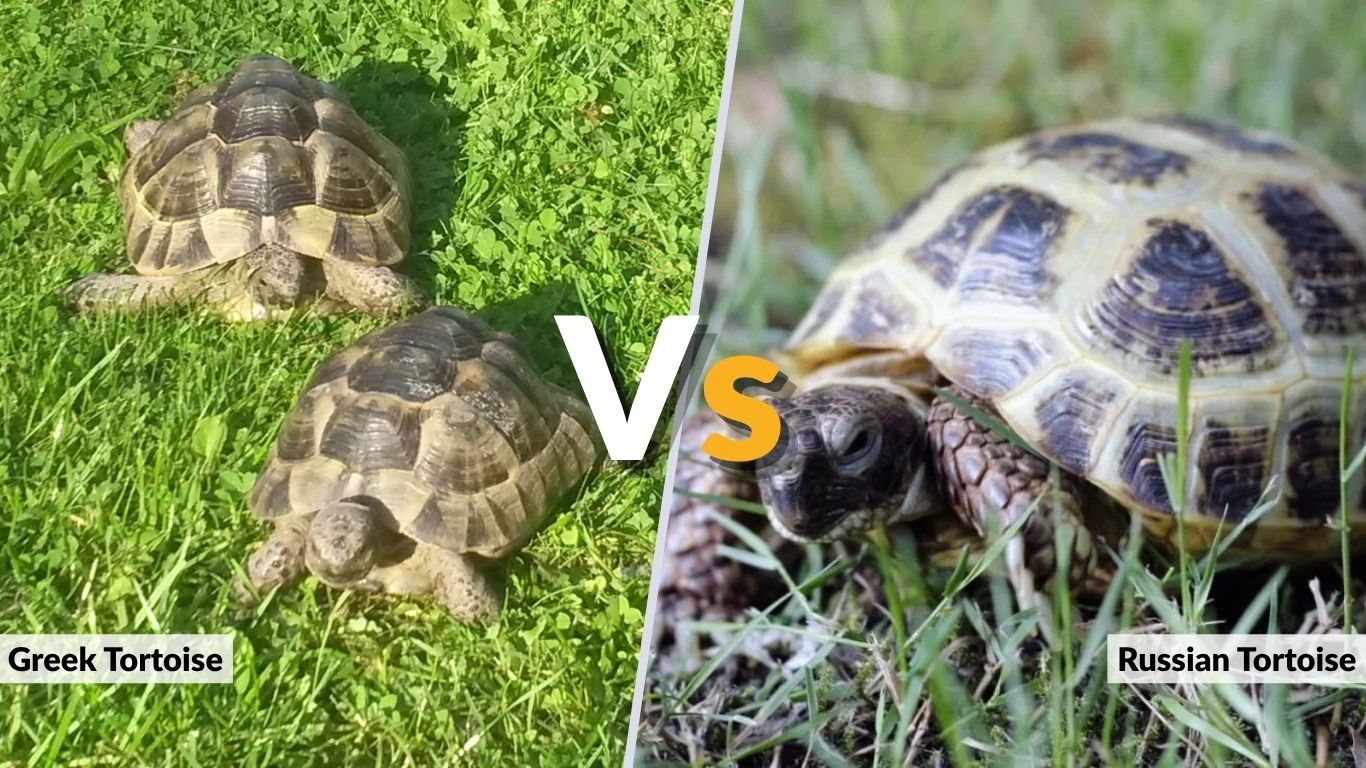
Greek and Russian tortoises are two of the most popular pet tortoises for beginners. Both stay small, eat leafy plants, and need warm, dry enclosures with UVB lighting. However, they are not the same. Their shell shape, activity level, digging habits, climate needs, and personality can feel different in daily care. This guide compares them with other common tortoise choices too.
Greek vs Russian Tortoise: Quick Comparison
Greek and Russian tortoises are both small Testudo-type tortoises, which is why many new keepers compare them first. They are easier to house than giant species, but they still need long-term care, proper lighting, safe food, and enough floor space. The best choice depends on your climate, enclosure plan, and handling expectations.
| Feature | Greek Tortoise | Russian Tortoise |
| Scientific name | Testudo graeca | Testudo horsfieldii |
| Common name | Spur-thighed tortoise | Horsfield’s or four-toed tortoise |
| Adult size | Usually 5–8 inches | Usually 5–8 inches |
| Shell shape | More domed and rounded | Flatter, rounder, compact shell |
| Activity style | Calm browser and shelter seeker | Very active digger and explorer |
| Best for | Keepers wanting a hardy Mediterranean species | Beginners wanting an active small tortoise |
| Main challenge | Correct humidity and subspecies needs | Escape-proof housing and burrowing control |
Appearance and Shell Shape
Greek tortoises usually have a sturdy, high-domed shell with yellow, tan, brown, or dark markings. Their pattern can vary a lot because different regional forms exist. Many Greek tortoises also have small spurs on the thighs, which is why they are often called spur-thighed tortoises.
Russian tortoises look more compact. Their shell is often rounder, flatter, and more rugged. They usually have olive, tan, brown, or dark shell markings. One of the easiest signs is the foot structure. Russian tortoises are often called four-toed tortoises because they have four toes on each foot.
Size and Growth
Both species stay small compared with red-footed, leopard, or sulcata tortoises. This makes them more practical for indoor and outdoor enclosures. A healthy adult Greek tortoise is often around 5–8 inches, though some local types may grow slightly larger.
Russian tortoises are also small, usually around 5–8 inches. Females are often larger than males. Their compact size makes people think they need little space, but that is not true. They are active animals and need room to walk, dig, graze, and thermoregulate.
Temperament and Activity
Greek tortoises are usually steady, alert, and calm when kept correctly. They enjoy basking, walking, grazing, and hiding under shelters. Some individuals become confident around their keeper, especially when food is involved. Still, they do not enjoy frequent handling like a dog or cat.
Russian tortoises are often more energetic. They are famous for digging, climbing corners, testing barriers, and exploring their enclosure. They can be bold and food-motivated. This makes them entertaining pets, but it also means their enclosure must be secure.
Care Needs and Daily Husbandry
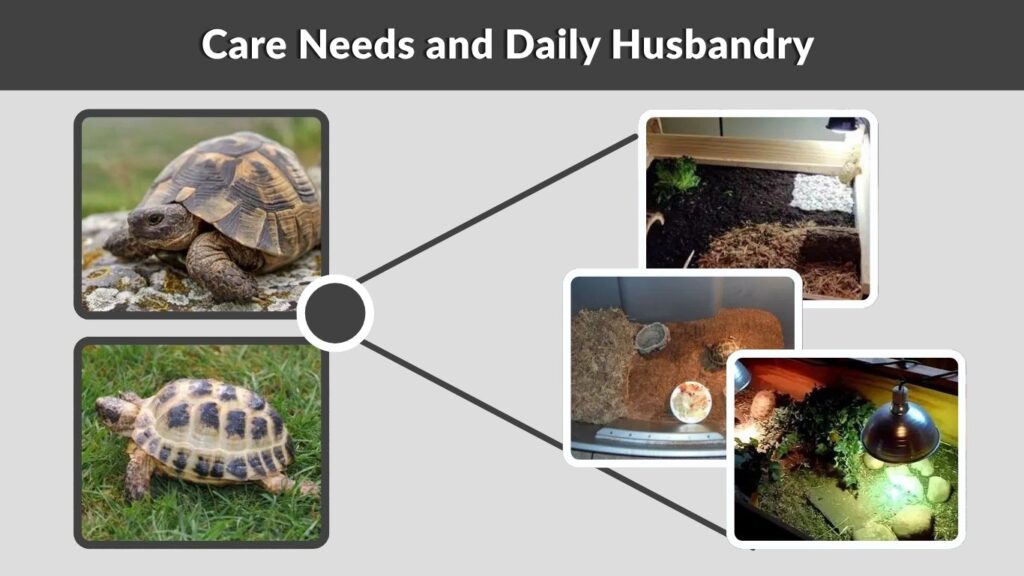
Care is the most important part of choosing between a Greek and Russian tortoise. Both need UVB, heat, safe substrate, clean water, and a high-fiber diet. They are not low-effort pets. A good setup prevents shell problems, respiratory issues, poor appetite, and stress.
Enclosure Setup
Both tortoises do best with as much floor space as possible. A small glass tank is not ideal for an adult. A tortoise table, large indoor pen, or secure outdoor enclosure is better. Outdoor time is helpful when the weather is safe, warm, and dry.
Russian tortoises need extra escape protection. They dig under walls and push against weak corners. Outdoor fencing should go below the soil line. Greek tortoises also need secure housing, but they are usually less extreme diggers than Russians.
Temperature, UVB, and Lighting
Both species need a warm basking area, a cooler side, and UVB lighting if kept indoors. UVB helps them use calcium and maintain healthy bones and shells. Without proper lighting, tortoises may develop metabolic bone disease.
A heat gradient is important. The tortoise should move between warm and cooler areas during the day. Night temperatures should not stay too cold or damp. Greek tortoises often do well in Mediterranean-style dry warmth. Russian tortoises prefer dry, well-ventilated conditions and should not be kept in wet bedding.
Diet and Feeding
Greek and Russian tortoises are herbivores. Their diet should be high in fiber and low in sugar. Safe weeds, grasses, leafy greens, and flowers are better than fruit-heavy meals. Fruit should be avoided or given very rarely, depending on the species and vet advice.
Good foods may include dandelion greens, plantain leaves, clover, endive, escarole, mulberry leaves, hibiscus leaves, and safe pesticide-free weeds. Avoid feeding too much spinach, lettuce-only diets, dog food, cat food, bread, or high-protein foods.
Greek Tortoise vs Russian Tortoise as Pets
Both can be good pets, but only for owners ready for decades of care. They are not short-term animals. Their small size is helpful, yet their needs are still serious. The right tortoise is the one that matches your space, climate, and patience.
Which Is Better for Beginners?
Russian tortoises are often recommended for beginners because they are hardy, active, and widely kept. They can adapt well when given dry housing, strong lighting, and a secure enclosure. However, they are escape artists, so careless housing can become a problem quickly.
Greek tortoises can also be beginner-friendly, especially captive-bred individuals from reliable sources. The challenge is that Greek tortoises have different regional types. Some may need slightly different humidity or seasonal care. New keepers should learn the exact background of the animal before buying.
Handling and Personality
Neither Greek nor Russian tortoises should be handled too often. They are ground-dwelling reptiles and may feel stressed when lifted. Gentle health checks are fine, but daily carrying is not needed.
Russian tortoises may seem more interactive because they walk toward food and explore boldly. Greek tortoises may appear calmer and more reserved. Personality varies by individual, so choose based on care needs first, not only behavior.
Lifespan and Long-Term Commitment
Both species can live for many decades with proper care. A tortoise may stay with one family for 40, 50, or more years. This means the owner must plan for future housing, veterinary care, diet, and possible relocation.
Before buying one, ask yourself if you can provide care through different life stages. A small tortoise is easy to buy, but responsible care lasts a very long time.
Russian Tortoise vs Other Tortoises
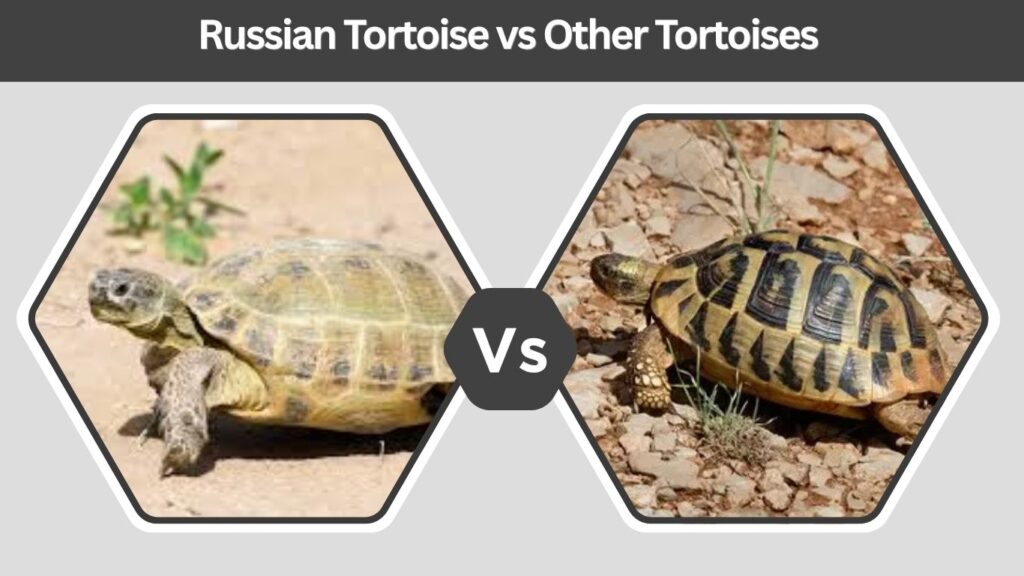
Many searches compare Russian tortoises with Hermann’s, red-footed, sulcata, leopard, box turtle, and desert tortoises. These comparisons matter because size and habitat needs are very different. A Russian tortoise is small and dry-climate adapted, while many other species need much larger or more humid setups.
| Comparison | Main Difference | Better for Small Spaces? |
| Russian vs Hermann’s tortoise | Hermann’s has stronger yellow-black shell markings and Mediterranean origin | Both can work |
| Russian vs Greek tortoise | Greek is more domed; Russian is more compact and active | Both can work |
| Russian vs red-footed tortoise | Red-footed needs more humidity and grows larger | Russian |
| Russian vs sulcata tortoise | Sulcata becomes huge and needs massive space | Russian |
| Russian vs leopard tortoise | Leopard grows much larger and needs more space | Russian |
| Russian vs box turtle | Box turtles are turtles, need different humidity and habitat | Depends on setup |
| Russian vs desert tortoise | Desert tortoises are often protected and not regular pets | Russian |
Hermann’s Tortoise vs Russian Tortoise
Hermann’s tortoises are another popular Mediterranean species. They often have bright yellow and black shell patterns and a gentle personality. Like Russian tortoises, they stay fairly small and can be suitable for experienced beginners.
The Russian tortoise is usually more compact and more intense about digging. Hermann’s tortoises may be slightly more colorful and are often described as calm. Both need UVB, heat, a high-fiber diet, and outdoor-safe space when possible.
Russian Tortoise vs Red-Footed Tortoise
Red-footed tortoises are very different from Russian tortoises. They usually grow larger and need more humidity. They also have different diet needs and come from more tropical environments.
A Russian tortoise is usually better for a dry, open, Mediterranean-style setup. A red-footed tortoise is better for someone who can manage warmth with higher humidity. Mixing these species is not recommended because their care needs do not match.
Russian Tortoise vs Sulcata Tortoise
This is one of the biggest differences. Russian tortoises stay small. Sulcata tortoises become very large and powerful. A baby sulcata may look manageable, but adults need huge outdoor space, strong fencing, and large amounts of food.
For most homes, a Russian tortoise is much more practical. A sulcata is only suitable for keepers with serious space, warm climate options, and long-term resources.
Male vs Female Russian Tortoise
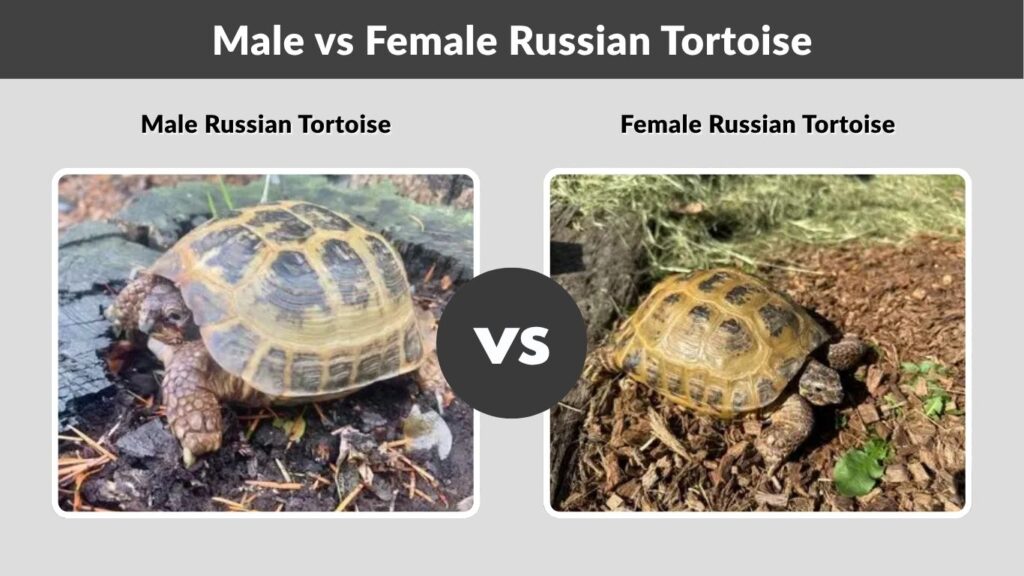
Male vs female Russian tortoise searches are common because sexing helps with housing and behavior. Adult tortoises are easier to sex than babies. Young tortoises may not show clear signs, so it is better to wait until they are mature.
Size, Tail, and Plastron Differences
Female Russian tortoises are usually larger than males. Males often have longer tails, and the vent is positioned closer to the tail tip. Females usually have shorter tails, and the vent sits closer to the body.
The plastron, or lower shell, may also help. Males can have a slightly concave plastron, which helps during mating. Females often have a flatter plastron. These signs are easiest to compare when the tortoise is fully grown.
| Feature | Male Russian Tortoise | Female Russian Tortoise |
| Adult size | Usually smaller | Usually larger |
| Tail | Longer and thicker | Shorter and smaller |
| Vent position | Farther from shell, toward tail tip | Closer to body |
| Plastron | May be slightly concave | Usually flatter |
| Behavior | More likely to ram or chase | Often calmer, but varies |
Behavior Differences
Male Russian tortoises may show more territorial behavior. They can chase, ram, or mount other tortoises. Two males should not be housed together because fighting can cause stress and injury.
Females may be calmer, but they still need space. A female may dig when preparing to lay eggs, even if she has not been with a male. Every tortoise has its own personality, so behavior alone is not enough for sexing.
Can You Keep Male and Female Together?
It is usually better not to keep a male and female together full time. Males may repeatedly chase or stress females. If breeding is not planned, separate housing is safer.
Even groups need careful monitoring. Tortoises are not social pets in the same way mammals are. They do not need a companion to be happy. A single well-kept tortoise can live a healthy and low-stress life.
Choosing the Right Tortoise
Choosing a tortoise should never be based only on looks or price. You need to think about space, climate, adult size, diet, legal rules, and veterinary access. Captive-bred animals from responsible breeders are usually the best choice.
Choose a Greek Tortoise If
A Greek tortoise may be a good choice if you want a small, hardy, Mediterranean tortoise with a calm nature. It is also a good option if you can provide a dry, warm enclosure and learn about the exact type you are keeping.
Greek tortoises are beautiful and long-lived. They are best for keepers who enjoy careful habitat management and do not need a pet that enjoys frequent handling.
Choose a Russian Tortoise If
A Russian tortoise may be better if you want a small, active, bold tortoise with strong personality. They are popular for a reason. They are hardy, entertaining, and usually manageable in size.
However, they need secure walls, digging space, and daily observation. A Russian tortoise is not a good match for a weak enclosure or a keeper who wants a pet to carry around often.
Avoid These Common Mistakes
Many new keepers buy the wrong tortoise because hatchlings look cute. A baby sulcata, leopard, or red-footed tortoise may seem easy at first, but their adult needs are very different from a Russian or Greek tortoise.
Do not mix species in one enclosure. Do not use only lettuce as food. Do not skip UVB lighting indoors. Do not keep tortoises on wet, dirty substrate. Do not assume a small tortoise can live in a tiny tank.
FAQs
Is a Greek tortoise better than a Russian tortoise?
Neither is always better. Greek tortoises are calm, attractive, and hardy when kept correctly. Russian tortoises are active, bold, and beginner-friendly, but they dig and escape easily. The better choice depends on your enclosure, climate, and experience.
Is a Russian tortoise the same as a Greek tortoise?
No. They are different species. Greek tortoises are usually called Testudo graeca, while Russian tortoises are Testudo horsfieldii. They are both small herbivorous tortoises, but they differ in shell shape, natural range, digging behavior, and some care details.
How can I tell if my Russian tortoise is male or female?
Adult males are usually smaller with longer tails. Their vent is farther toward the tail tip. Females are often larger with shorter tails and a flatter lower shell. Young Russian tortoises are hard to sex accurately, so wait until they mature.
Is a Hermann’s tortoise better than a Russian tortoise?
Hermann’s and Russian tortoises are both good small pet tortoises. Hermann’s tortoises are often colorful and calm. Russian tortoises are usually very active and strong diggers. Both need UVB, heat, a high-fiber diet, and a secure enclosure.
Can Russian and Greek tortoises live together?
It is not recommended. Different species can have different care needs, stress levels, and disease risks. Even tortoises of the same species may fight or bully each other. Separate housing is safer, cleaner, and easier to manage correctly.